The Only I.M. Pei Building in Macau, the Wynn Bar With 310 Japanese Single Malt Labels & the 2021 Junket Collapse That Shifted Macau From VIP to Mass Market
The Macau Science Center as the only I.M. Pei building in the city; the Wynn Macau's 310-label Japanese whisky selection as the largest in Asia outside Japan; the Suncity junket collapse following Alvin Chau's 2021 arrest reducing VIP gaming from 70% to 20% of revenue; Matteo Ricci's 1582 Macau studies before writing the first accurate maps of China and translating Euclid's Elements; Macau's USD 39,700 per capita gaming revenue as the highest per capita economic output of any single activity; and the Zhuhai Chimelong Ocean Kingdom's 48.75 million liter volume as the world's largest aquarium.
- 1
Macau's Tippling Culture – Wine, Beer & Spirits
The Macau drinking culture (the alcoholic beverage traditions that reflect the city's Portuguese and Chinese heritage): the bar and spirits guide. The Portuguese wine tradition in Macau (the Portuguese colonial administration imported wine directly from the Douro and Alentejo regions of Portugal—the wine-drinking culture in Macau predates any other wine culture in China by 400 years): the current Portuguese wine scene (Macau has the most developed Portuguese wine retail and restaurant selection in Asia—the specialty wine shops on the Rua Central carry the broadest range of Vinho Verde, Alentejo Reserva, and Bairrada wines available in East Asia). The Macau beer (the San Miguel beer plant that operated in Macau from 1948 to 2001—the first beer brewed in Macau): the Macanese craft beer scene (the Tap Rooms at the Old Ladies' House (仁慈堂婆仔屋—the restored colonial almshouse turned arts complex): the taproom that opened in 2019 offers the only craft beer brewed in Macau). The whisky rooms (Macau has the highest concentration of Japanese whisky bars in the Greater China region—the whisky room at the Wynn Macau's Whisky Bar has the largest selection of Japanese single malts (310 labels) of any bar in Asia outside Japan). The baijiu dimension (the mainland China visitors' preference for baijiu (白酒—the Chinese grain spirit, most commonly Moutai (茅台) in Macau's casino culture): the Moutai corner at the Lisboa Casino bar where high-roller tables are served 500ml bottles of Moutai at HKD 3,000–15,000 per bottle depending on vintage).
- 2
Macau's Taipa Village – Portuguese Colonial Neighborhood
Taipa Village (氹仔村—the historic residential neighborhood of Taipa Island): the most intimate and best-preserved colonial residential neighborhood in Macau—the alternative to the Cotai Strip for the visitor seeking the non-gambling Macau. The village (the grid of Portuguese-influenced low-rise buildings from the early 20th century, centered on the Rua do Cunha (官也街) food street and the Carmo Church (嘉模圣母堂—1885 CE—the primary Catholic church on Taipa Island)): the Taipa Houses Museum (龙环葡韵住宅博物馆—the 5 restored 1920s Portuguese colonial villas on the Avenida da Praia waterfront—the most complete example of middle-class Portuguese colonial residential architecture in Macau): the villa contents (the 5 villas are preserved as: the Macanese house (with period furniture and family photographs documenting a typical 1920s Macanese family life); the island residents' house; the regional gastronomy house (a kitchen museum documenting Macanese cooking equipment); the Macau collection (a decorative arts collection); and the reception hall): the Taipa village character (the village is most lively on weekend evenings when Macau residents use the Rua do Cunha restaurants for family dinners—the opposite of the Cotai Strip experience: no gambling, no tourists, the most authentic Macau family life visible).
- 3
Macau for Families – Non-Gambling Entertainment
The Macau family travel guide (the destination with more non-gambling entertainment infrastructure than any other major gambling destination): the family guide. The Macau Science Center (澳门科学馆—the I.M. Pei-designed planetarium and science museum on the NAPE waterfront—the only building in Macau designed by I.M. Pei): the Macau Giant Panda Pavilion (澳门大熊猫馆—the 2 giant pandas (Kai Kai (开开) and Xin Xin (心心)) donated by mainland China to Macau as the first pandas to reside outside mainland China and Hong Kong—the panda pavilion in the Seac Pai Van Park (石排湾郊野公园) on Coloane Island). The Hác-Sá water park (the Hác-Sá Resort (黑沙水上乐园) adjacent to the black sand beach—the water slides and outdoor pool complex on Coloane Island). The Macau Fisherman's Wharf (渔人码头—the themed entertainment complex designed as a port of the world with replica architecture from Rome, Cape Town, and Amsterdam clustered around the outer harbor—the most child-targeted themed environment in Macau): the gondola rides in the Venetian Macao (the indoor Grand Canal gondola ride at The Venetian—the gondoliers trained in Venice, the canal with sky-painted ceiling above—the most Disney-like experience in a casino resort globally, consistently rated the most child-enjoyed activity in Macau by family travelers).
- 4
The Jesuits in Macau – The Asian Mission Base
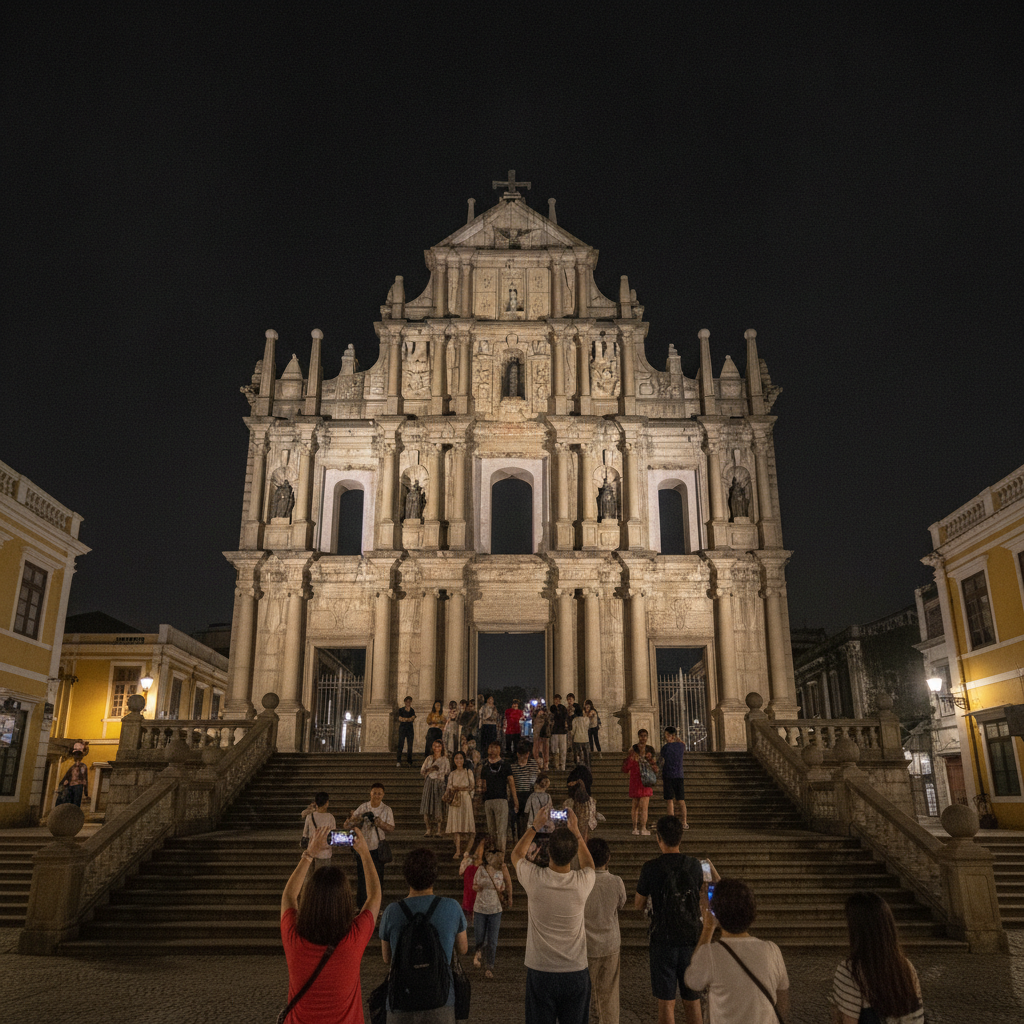
The Jesuit mission in Macau (the role of the Society of Jesus (the Jesuits) in using Macau as their primary base for the Christian mission to Asia): the most consequential use of the Portuguese colonial port for a purpose other than trade. The Jesuit establishment (the Jesuits arrived in Macau in 1563—8 years after the Portuguese established the trading post—and immediately established the St. Paul's College (圣保禄学院, 1594) adjacent to the Church of the Mother of God): the College (the first Western-style university in Asia, teaching Latin, philosophy, theology, mathematics, and medicine to missionaries before their dispatch into China, Japan, and Southeast Asia). The Matteo Ricci connection (利玛窦—Matteo Ricci (1552–1610)—the most important Jesuit missionary in China: studied at St. Paul's College in Macau (1582–1583) before proceeding to Zhaoqing (肇庆) and eventually Beijing—Ricci's contribution: the first accurate maps of China using the Chinese naming convention; the introduction of Western mathematics, astronomy, and mechanical clocks to the Ming court; the first Western dictionary of Chinese; and the translation of Euclid's Elements into Chinese): the Japanese connection (Macau was the primary entry point for Christianity in Japan from 1563 to 1614—the St. Paul's Church façade's Japanese craftsmen and the bones of Japanese martyrs in the crypt are the physical evidence of this connection).
- 5
Macau's Gambling Statistics – The Numbers Behind the City
The Macau gambling statistics (the quantitative data that makes Macau the most economically remarkable city in the world per unit area): the numbers. Revenue (peak: 2013—USD 45 billion (6× the Las Vegas Strip in the same year—the single most productive gambling market in human history); 2023: USD 27 billion (recovery to 67% of peak): per capita gambling revenue: Macau generates USD 39,700 per resident per year in gaming revenue (2023)—the highest per capita any economic activity in any city). The table games (the Venetian Macao alone has 800+ gaming tables and 1,600+ slot machines—the largest single gaming floor in the world): the junket operators (the junket system (荣利制度)—the credit-extending intermediaries who arrange travel and credit for mainland Chinese high rollers—junket operators were the primary mechanism for VIP gaming in Macau (VIP gaming represented 70% of total gaming revenue in 2013)—the junket industry collapsed following the 2021–2022 anti-corruption crackdown by the Chinese government, with the arrest of Alvin Chau (周焯华, the largest Suncity junket operator) reducing VIP gaming from 70% to 20% of total revenue): the mass market shift (Macau's gaming industry has fundamentally shifted from VIP junket to mass market (walk-in) gaming following the 2021 junket collapse—the Cotai Strip integrated resorts with family entertainment are the primary beneficiaries of the shift).
- 6
Macau Itinerary – 1 Day, 2 Days & Weekend
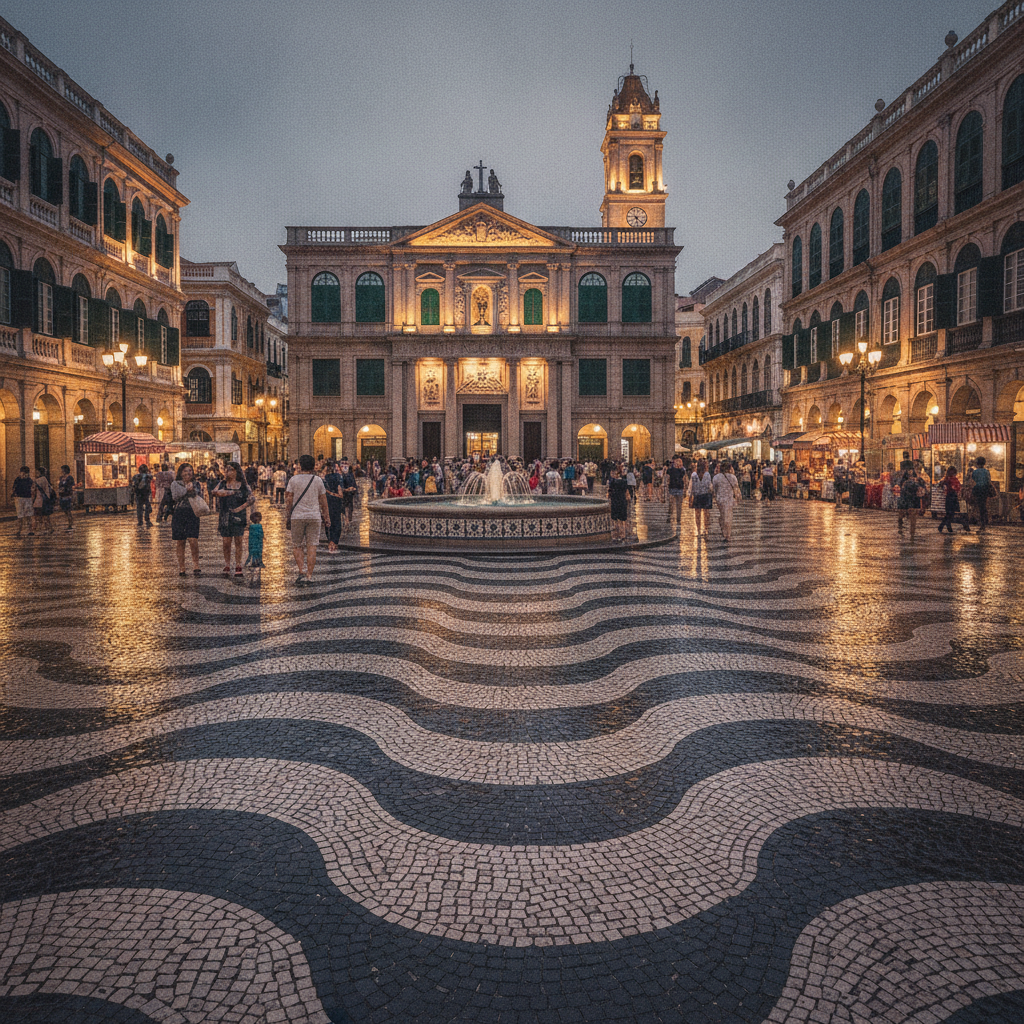
The Macau itinerary planner (the optimal route through Macau for visits of 3 different durations): 1-Day Itinerary (the day trip from Hong Kong): Ferry from Hong Kong (first boat 07:00)—Senado Square (walk the Portuguese cobblestone square)—Ruins of St. Paul's (the UNESCO façade—45 minutes)—A-Ma Temple (the oldest temple—30 minutes)—Mandarin's House (the Qing Dynasty courtyard mansion—45 minutes)—Macanese lunch (pork chop bun at Café Seng Cheong)—Monte Fort (the fortification and city views)—Guia Fortress (the lighthouse)—Taipa Village evening (Rua do Cunha restaurants for dinner)—return ferry to Hong Kong (last TurboJet at 00:00). 2-Day Itinerary: Day 1 as above; Day 2: Cotai Strip (The Venetian morning—Grand Canal gondola): Coloane afternoon (Lord Stow's egg tart at the village square + Hác-Sá black sand beach): Wynn Macau Performance Lake show at 20:30. Weekend Itinerary (3 days): Day 1 (historic peninsula): Day 2 (Cotai + Coloane): Day 3 (Taipa village + day trip to Zhuhai (珠海—the adjacent mainland city accessible by land crossing): the Zhuhai extension (Zhuhai Chimelong Ocean Kingdom (珠海长隆海洋王国)—the largest aquarium in the world by volume (48.75 million liters)—the 30-minute bus from the Macau Border Gate).
Walk this route with audio
Stories play automatically as you reach each stop — no tapping needed.
More in Macau
The Man Who Held the Gambling Monopoly for 40 Years and Married 4 Women Simultaneously, the World's Most Densely Populated Territory & How Macau's Gaming Revenue Is 3× Las Vegas Despite Half Its Size
The Façade That Survived the 1835 Fire With Chinese Peonies in a Christian Composition, the 40-Year Casino Monopoly & the 1989 Egg Tart That Launched the Global Egg Tart Industry
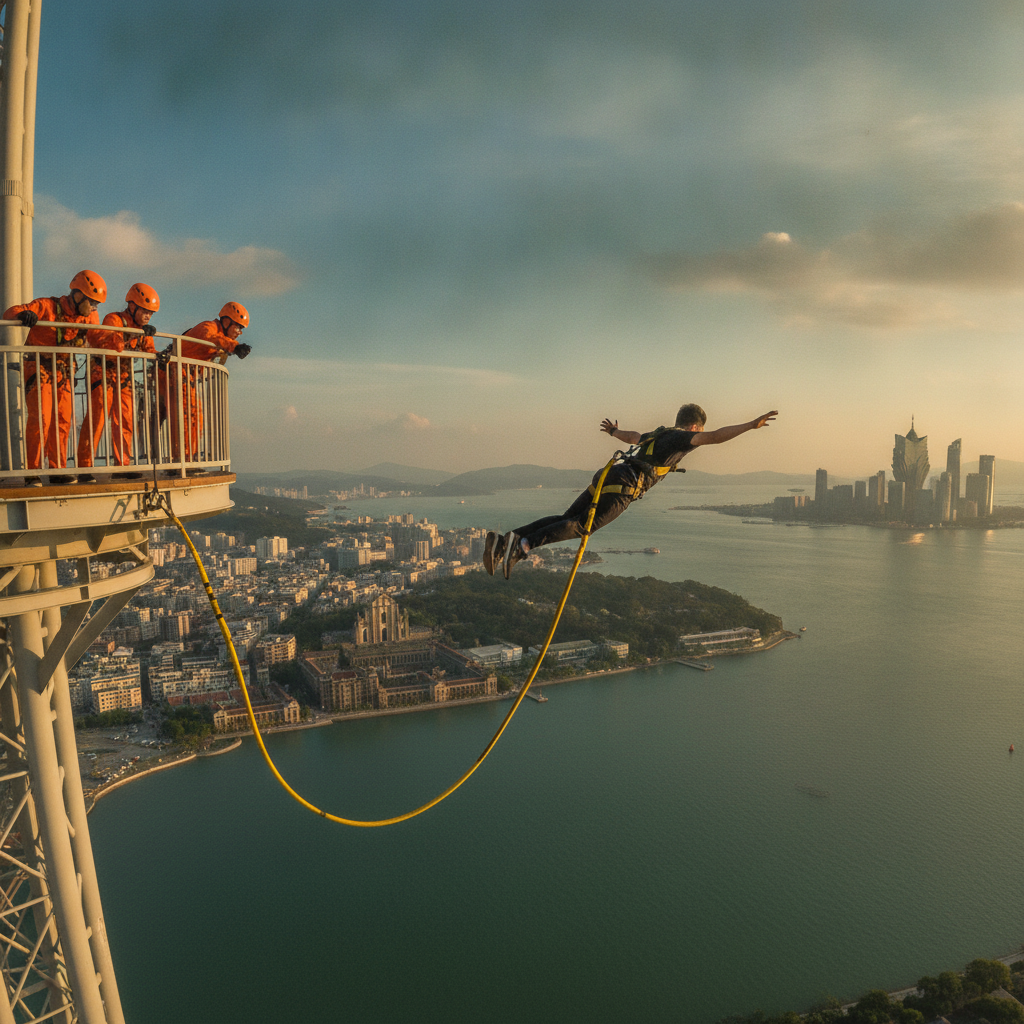
The 50 Remaining Speakers of the Macanese Creole Language, the World's Highest Commercial Bungee Jump & Why Macau Has Set the Same Diversification Target Every Government Since 1999 Without Achieving It
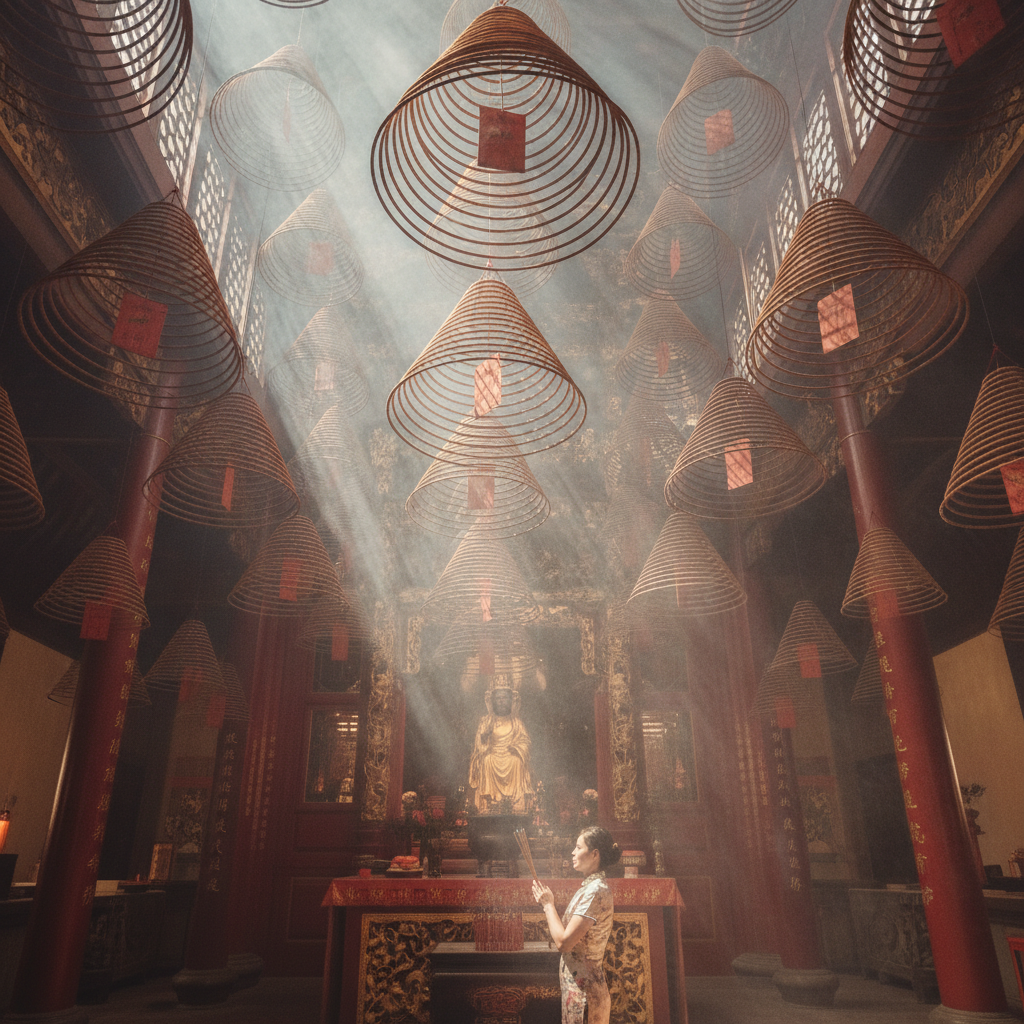
The Man Who Brought Chili Peppers to All of Asia From a Macau Trading Post, the Senate That Called Itself Loyal for Refusing Spanish Rule & the Festival Where You Carry a Dragon and Drink Baijiu