The Façade That Survived the 1835 Fire With Chinese Peonies in a Christian Composition, the 40-Year Casino Monopoly & the 1989 Egg Tart That Launched the Global Egg Tart Industry
The Ruins of St. Paul's cultural-hybrid iconography combining Portuguese heraldry with Chinese peonies and Japanese chrysanthemums; Stanley Ho's 40-year casino monopoly generating the Macau gaming empire; Macau gaming revenue at 6× the Las Vegas Strip at its 2013 peak; Andrew Stow's 1989 Portuguese egg tart licensed by KFC in 1997 to create the global egg tart format; Ayrton Senna's 1983 Formula 3 Macau Grand Prix win establishing his reputation; and the 55km Hong Kong–Zhuhai–Macau Bridge as the world's longest sea crossing fixed link.
- 1
Ruins of St. Paul's & Macau's Portuguese Heritage
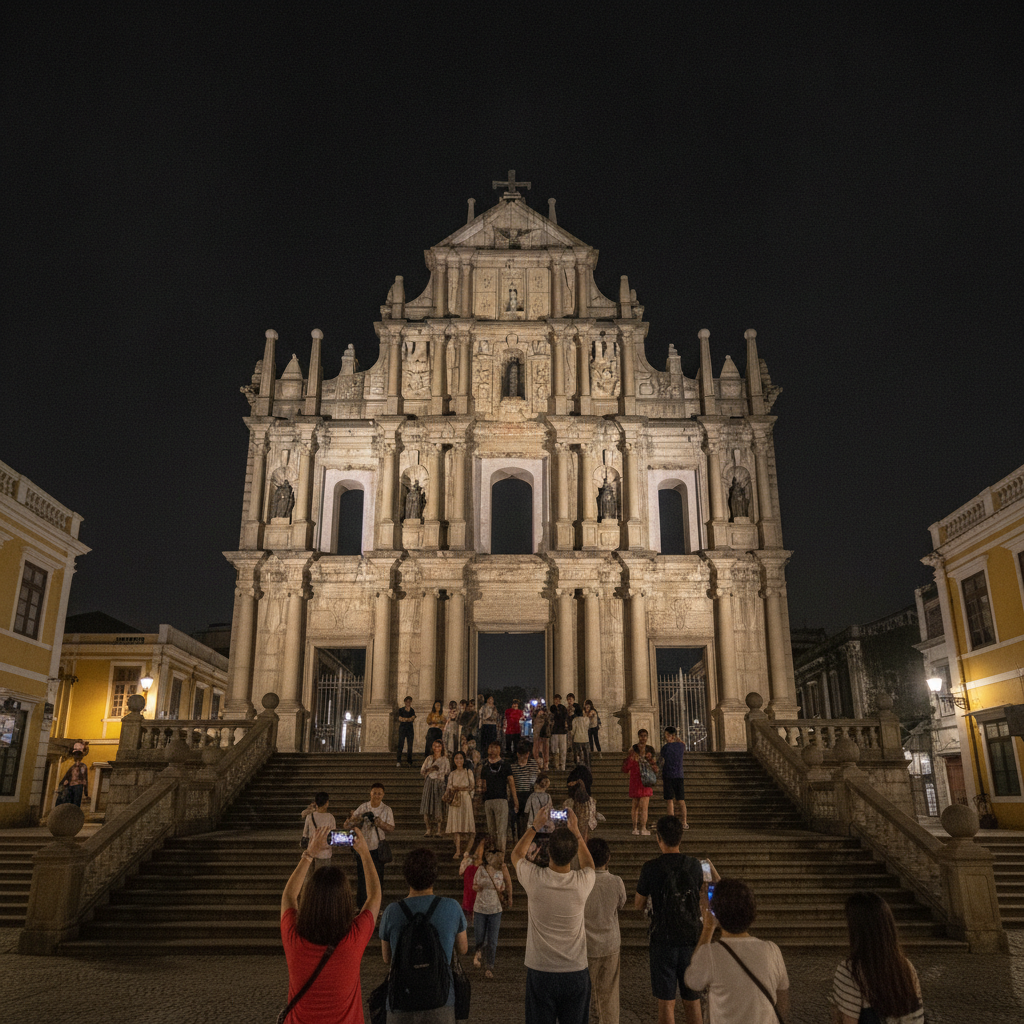
The Ruins of St. Paul's (大三巴牌坊—Dà Sān Bā Pái Fāng—'Large Three Arches Memorial Arch'): the iconic stone façade of the 17th-century Jesuit Church of the Mother of God (Mater Dei)—the most photographed monument in Macau and the emblem of the city's 460-year Portuguese colonial history. The construction (the church was built between 1582 and 1627 CE by Japanese Christian exiles and Chinese craftsmen under the direction of the Jesuit missionary Carlo Spinola—the most technically sophisticated church building in East Asia at the time of construction): the fire (the church burned in 1835 during a typhoon fire that destroyed the nave and interior—the stone façade survived and has stood as a ruin ever since): the façade iconography (the 5-tier stone façade contains: the Portuguese royal coat of arms; the figure of the Virgin Mary surrounded by Chinese peony flowers and Japanese chrysanthemums (the cultural hybrid unique in Christian art); the Latin inscription 'Mater Dei' on the central tympanum; the Jesuit motto 'IHS' (In Hoc Signo); and the dragon and devil trampled under the Virgin's feet—the most iconographically complex single piece of Christian architecture in Asia). The crypt (the Museum of Sacred Art (圣物馆) beneath the façade: the ossuary containing the bones of Japanese Christian martyrs and the Vietnamese martyrs (the first Christian martyrs in Vietnam)—a direct physical link to the Macau-based early Asian Christian missions).
- 2
The Macau Historic Centre – UNESCO World Heritage
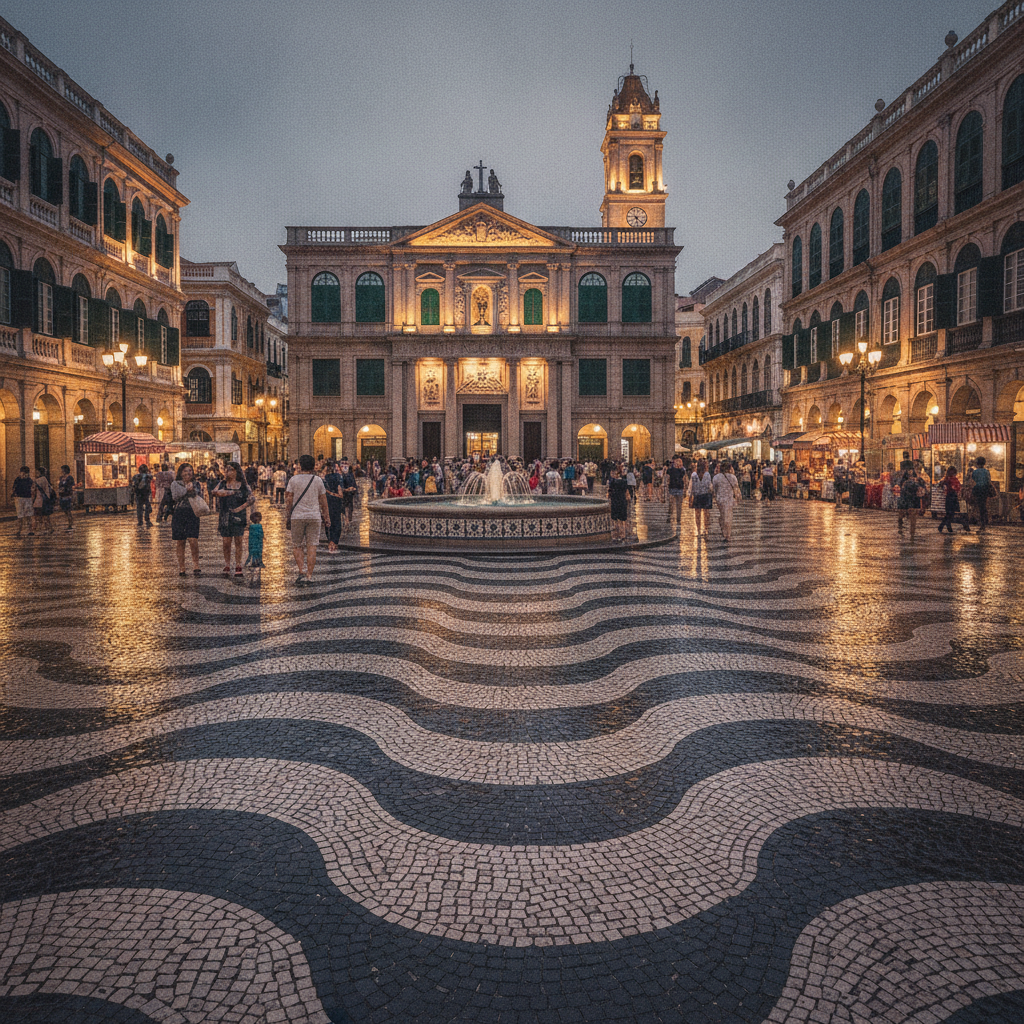
The Historic Centre of Macau (澳门历史城区—UNESCO World Heritage Site, inscribed 2005): the 22-listed monuments and public spaces that constitute the most complete Portuguese colonial urban ensemble in Asia—the only surviving urban center where European and Chinese architectural traditions are physically intermingled for 460 years. The urban layout (the historic center is a network of Portuguese-style cobblestone praças (squares) connected by narrow lanes—the Senado Square (议事亭前地—Yìshì Tíng Qián Dì—'Praça do Leal Senado') with its black-and-white Portuguese wave-pattern stone paving: the central public space of Macau for 400 years): the A-Ma Temple (妈阁庙—Māgé Miào—the oldest temple in Macau, dedicated to the Goddess A-Ma (Mazu, the patron of sailors): built in 1488 CE—the name 'Macau' derives from 'A-Ma-Gaos' ('Bay of A-Ma') which the Portuguese heard from local fishermen in 1557 when asking the name of the place): the Mandarin's House (郑家大屋—the 19th-century traditional Chinese compound residence of the Qing official and reformer Zheng Guanying (郑观应)—the largest traditional Chinese house in Macau with 60 rooms in 4 courtyards): the Protestant Cemetery (基督教坟场—the 1821 burial ground where the artist George Chinnery (the most important Western painter in Asia in the 19th century) and the medical missionary Robert Morrison (the first Protestant missionary to China) are buried).
- 3
Macau's Casino Empire – History & Contemporary Scale
Macau's casino economy (the gambling industry that has made Macau the highest-revenue gaming destination on earth—surpassing Las Vegas in gaming revenue since 2006): the complete guide. The history (gambling was legalized in Macau in 1847 under the Portuguese colonial government; the first casino license was issued in 1937; the monopoly license held by Stanley Ho (何鸿燊) from 1962–2002 (40 years) that established the Sociedade de Turismo e Diversões de Macau (STDM) as the primary economic force in Macau): the liberalization (the Macau Special Administrative Region government opened the casino sector to competitive licensing in 2002—the 6 current concessionaires (SJM Holdings (formerly Stanley Ho), MGM China, Wynn Macau, Galaxy Entertainment, Sands China, and Melco Resorts)). The statistics (Macau gaming revenue: 2013 peak ¥360 billion / USD 45 billion (the largest single gambling market in history at the time—6× Las Vegas Strip revenue in that year); 2020 COVID nadir ¥60 billion: 2023 recovery ¥216 billion): the Venetian Macao (the Venetian Macao (威尼斯人—the largest casino in the world by gaming floor area (550,000 sq ft): the building that contains a replica Grand Canal with gondoliers, a 15,000-seat arena, and 3,000 hotel suites—the largest single building in Asia by footprint).
- 4
Macanese Cuisine – The Original Fusion Food
Macanese cuisine (澳門土生葡菜—the creole cuisine of Macau developed over 460 years of Portuguese, Chinese, African, Indian, and Malay culinary interaction): the oldest and most complex fusion cuisine in Asia. The history (the Portuguese traders who settled in Macau from 1557 brought cooking techniques from Portugal and from their prior colonial posts in Africa (Mozambique), India (Goa), and Malacca (Malaysia)—the Macanese women who combined these ingredients with the local Cantonese vegetables and condiments created a cuisine found nowhere else on earth): the defining dishes: the African chicken (Galinha à Africana—the roast chicken with a peanut and coconut-based African spice sauce, derived from Mozambican peri-peri cooking—the most famous single Macanese dish): the Macanese pork chop bun (豬扒包—Pork Chop Bun at the Café Seng Cheong (勝香園) near the Bun Stall: a deep-fried pork chop in a Portuguese bread roll—the most-lined-up snack in Macau at breakfast time): the egg tart (葡式蛋撻—Pastel de Nata—the Portuguese custard tart baked in a flaky pastry shell at Lord Stow's Bakery (安德鲁饼店) in Coloane Village—the egg tart that launched the global egg tart trend (Andrew Stow opened Lord Stow's in 1989—the KFC chain in Hong Kong licensed the Macau-Portuguese egg tart recipe in 1997, spreading the format across Asia)): the minchi (免治—the Macanese spiced minced pork/beef dish with soy, potato, and egg—the Macanese 'comfort food' home cooking dish).
- 5
Macau Grand Prix – The Street Circuit
The Macau Grand Prix (澳門格蘭披治大賽車—the annual motorsport event held on the Guia Circuit in the historic city streets of Macau): the most prestigious street circuit race in the world outside Formula 1 and the race that launched the careers of Ayrton Senna, Michael Schumacher, Kimi Räikkönen, and Lewis Hamilton. The circuit (the Guia Circuit—6.120 km, 23 corners, the Lisboa Bend (the most famous single corner in street circuit racing—the 2nd-gear right-angle corner at the end of the main straight that has been the site of the most race-defining incidents in the event's history)): the event (the Macau Grand Prix has been held annually since 1954—the 71st anniversary in 2024): the race categories (the event is a multi-class meeting: the FIA Formula 3 Macau Grand Prix (the most prestigious junior single-seater race in the world); the GT World Cup (the Macau GT race); the Macau Motorcycle Grand Prix (the most dangerous race in the world for motorcycles—15 fatalities since 1967)): the Senna record (Ayrton Senna won the Macau Formula 3 race in 1983 from pole position on his first attempt—the performance widely cited as the race that established his reputation for exceptional car control on street circuits).
- 6
Macau Practical Guide – Getting There & Island Hopping
The Macau practical guide. Access: Macau International Airport (MFM—the airport on Taipa island (the southern island connected to mainland Macau by 3 bridges)—direct flights: Taipei 1h30m, Bangkok 3h, Seoul 4h, Tokyo 4h30m): the ferry (the TurboJet high-speed ferry from Hong Kong International Airport or Hong Kong–Macau Ferry Terminal to Macau: 55–70 minutes crossing, 24-hour service, departures every 15 minutes at peak): the Hong Kong–Zhuhai–Macau Bridge (港珠澳大橋—the 55 km sea bridge/tunnel crossing between Hong Kong, Zhuhai (mainland China), and Macau—opened 2018—the longest sea crossing fixed link in the world: the drive from Hong Kong airport border to Macau is 40 minutes): the crossing tip (the bridge is for motorized vehicles (private cars with cross-boundary permits or the Golden Bus service)—the most comfortable option is the Golden Bus shuttle from the Hong Kong airport to the Macau Border Gate: ¥65, no booking required). The 2 islands (Macau is organized on 3 land masses: the Macau Peninsula (historic center + casinos), Taipa Island (the Venetian + Cotai Strip casinos), and Coloane Island (the village + Lord Stow's bakery + beaches)): the Coloane day trip (the Coloane Village (路环村): the most historically intact village in the Macau SAR, with the Chapel of St. Francis Xavier (圣方济各圣堂) and the most relaxed beach (Hác-Sá Beach (黑沙海滩))). The Macau visa (visa-free entry for most nationalities for up to 30 days).
Walk this route with audio
Stories play automatically as you reach each stop — no tapping needed.
More in Macau
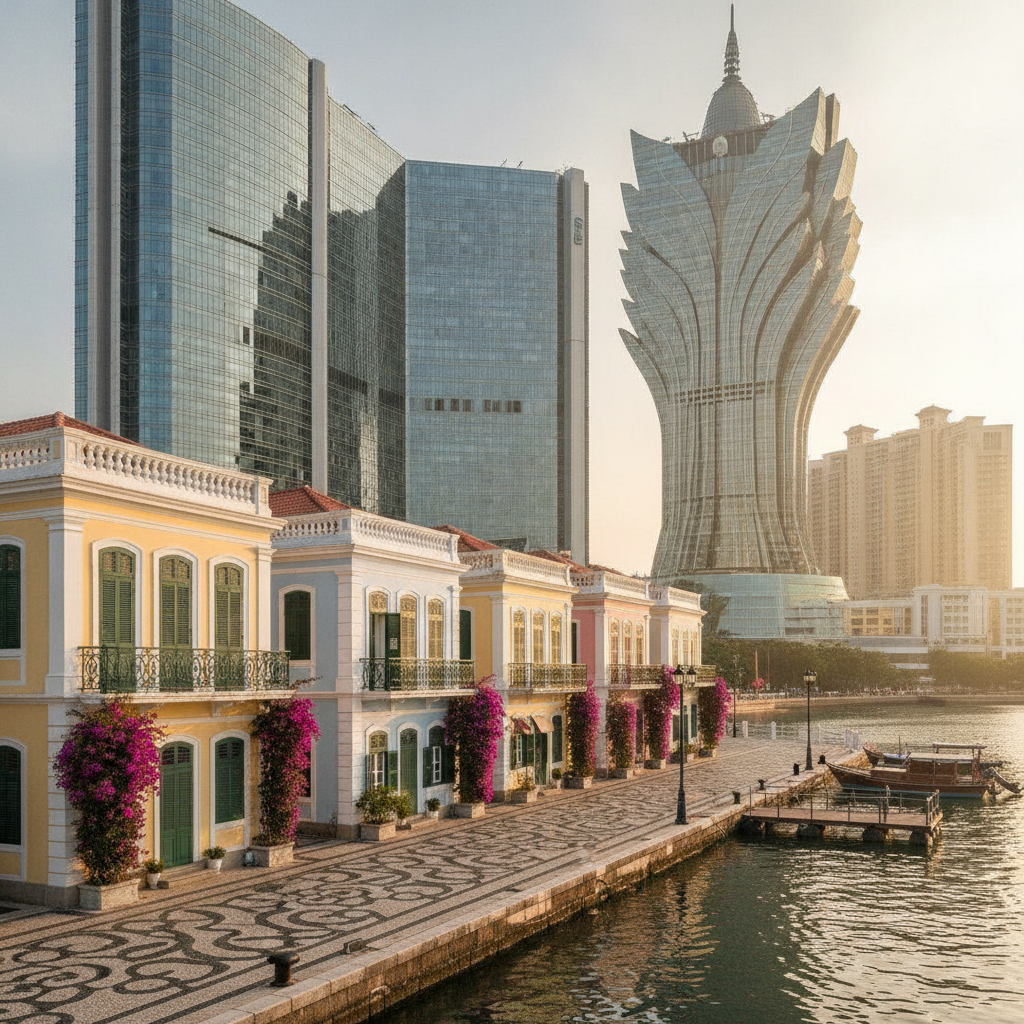
The Only I.M. Pei Building in Macau, the Wynn Bar With 310 Japanese Single Malt Labels & the 2021 Junket Collapse That Shifted Macau From VIP to Mass Market
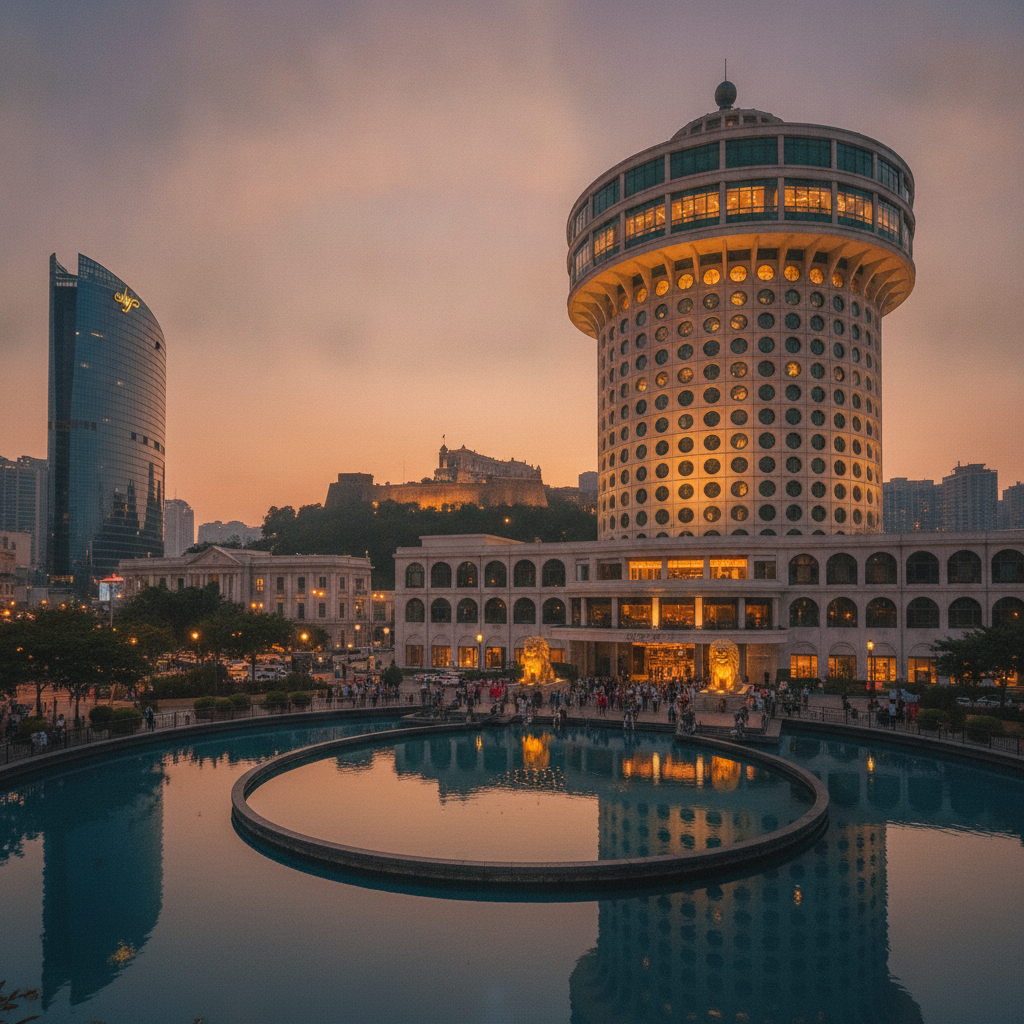
The Man Who Held the Gambling Monopoly for 40 Years and Married 4 Women Simultaneously, the World's Most Densely Populated Territory & How Macau's Gaming Revenue Is 3× Las Vegas Despite Half Its Size
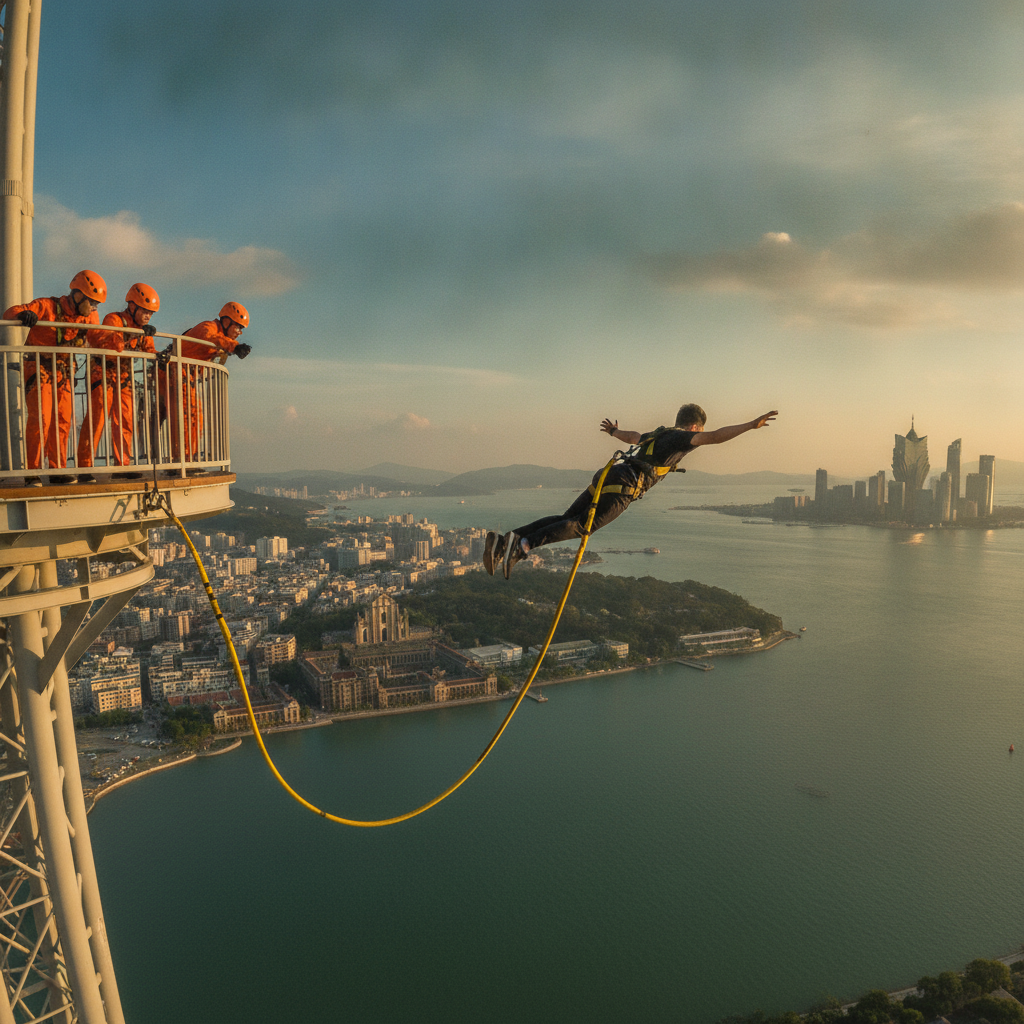
The 50 Remaining Speakers of the Macanese Creole Language, the World's Highest Commercial Bungee Jump & Why Macau Has Set the Same Diversification Target Every Government Since 1999 Without Achieving It
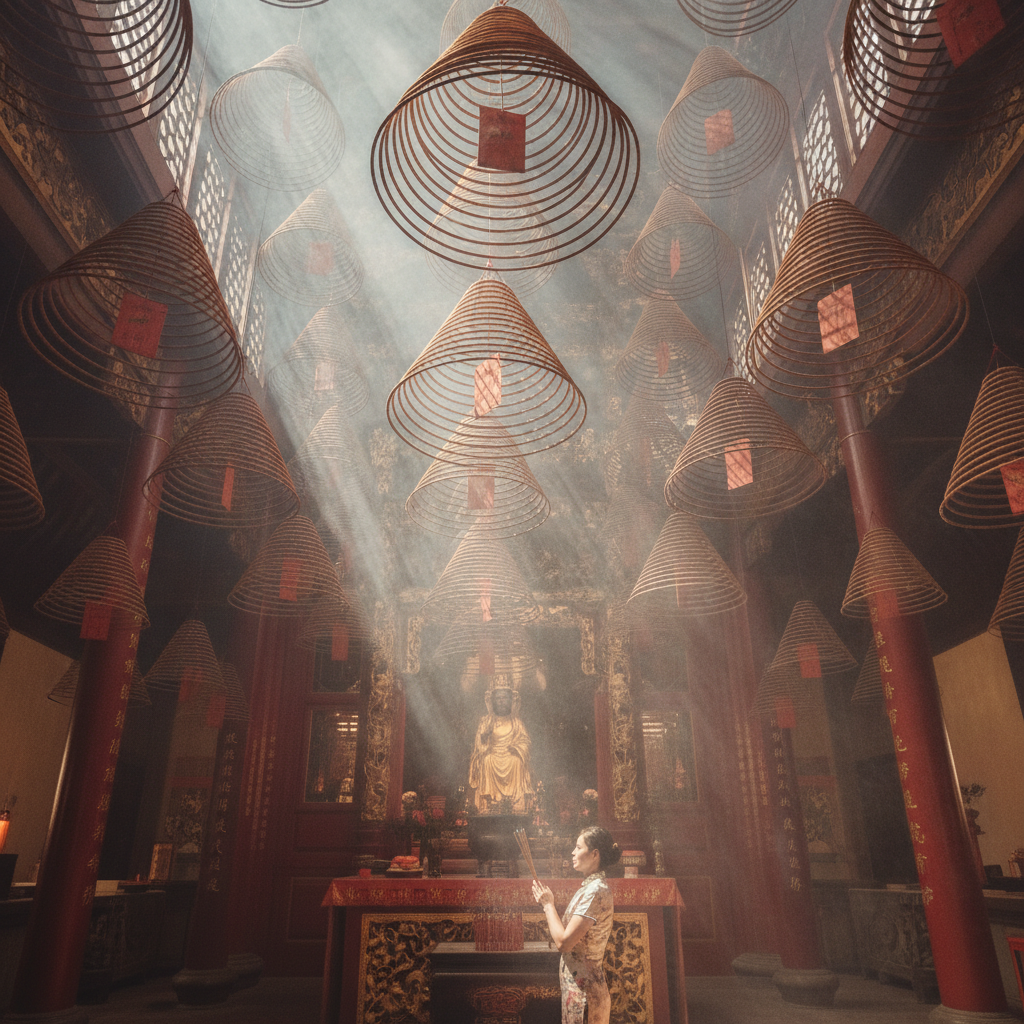
The Man Who Brought Chili Peppers to All of Asia From a Macau Trading Post, the Senate That Called Itself Loyal for Refusing Spanish Rule & the Festival Where You Carry a Dragon and Drink Baijiu