The Art Golden Triangle: Prado, Thyssen & Reina Sofía
Within a 10-minute walk of each other on the Paseo del Prado, three of the world's greatest art museums sit side by side: the Prado (Spanish Golden Age and old masters), the Thyssen-Bornemisza (medieval to Pop Art) and the Reina Sofía (Picasso, Dalí, Miró and 20th-century Spanish art). This is one of the highest concentrations of great art in any European city. The route also takes in the Retiro park for a break and the Fuente de Cibeles—Madrid's most iconic fountain.
- 1
Museo del Prado — Spain's National Museum
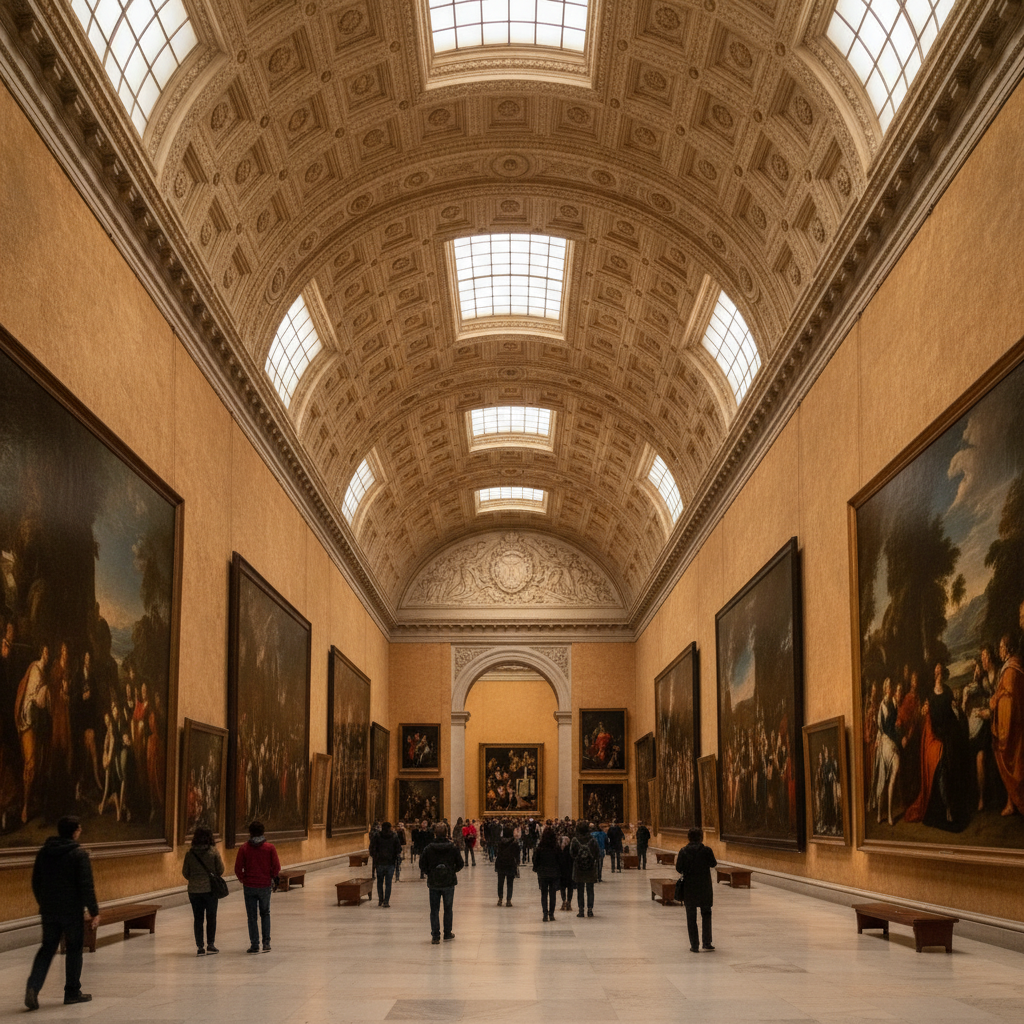
The Prado's collection of 8,000 works is one of the finest in the world, built from the personal collections of Spanish royalty. Do not try to see everything—it's impossible in a day. Instead, focus on: Las Meninas by Velázquez (Room 12, the most discussed painting in history); Goya's Pinturas Negras—the harrowing Black Paintings including Saturn Devouring His Son (Room 67); and El Greco's Adoration of the Shepherds. Allow three hours minimum. The building itself—neoclassical, 1819—is stunning. Book online to skip the queue.
- 2
Parque del Retiro — Breathing Space Between Museums
Cross the Paseo del Prado and enter the Retiro—125 hectares of parkland that was once the private garden of the Spanish royal family. The central boating lake (El Estanque) has rowing boats for rent and a monument to Alfonso XII. The Palacio de Cristal (Crystal Palace), a 19th-century iron and glass pavilion used for contemporary art exhibitions, is 15 minutes' walk inside the park and is one of Madrid's most beautiful buildings. The park is completely free and open from sunrise to midnight.
- 3
Museo Thyssen-Bornemisza — Eight Centuries in One Building
The Thyssen collection was assembled by the Baron von Thyssen-Bornemisza father and son and is unusual in its breadth: it covers eight centuries of Western art, from 13th-century Italian Primitives to late 20th-century Pop Art, in a logical chronological hang. Highlights include Caravaggio's Saint Catherine, Hopper's Hotel Room, and a major van Eyck. The Thyssen is often less crowded than the Prado and has an excellent restaurant. Plan two hours. The permanent collection is supplemented by major temporary exhibitions.
- 4
Fuente de Cibeles — Madrid's Iconic Fountain
Walk north on the Paseo del Prado to the Plaza de Cibeles, the geographical and emotional heart of Madrid. The monumental fountain shows the goddess Cybele on a chariot drawn by lions—she represents the city itself. Real Madrid fans celebrate here after major trophies; Atlético fans do the same at the Neptune fountain two blocks south. The grand building behind it—the Palacio de Cibeles—is the Madrid City Hall, with a free rooftop mirador (great views, take the lift to the top floor).
- 5
Museo Reina Sofía — Guernica & 20th-Century Spain
The Reina Sofía museum is housed in a former 18th-century hospital with two modern glass towers added by Jean Nouvel. The permanent collection focuses on Spanish art 1900–1980. Room 206 contains Picasso's Guernica—the 11×3.5 metre painting depicting the 1937 Nazi bombing of a Basque town, arguably the most politically powerful artwork of the 20th century. Dalí's The Great Masturbator and Miró's major works are also here. The outdoor spaces and rooftop café are free. Allow two hours.
- 6
Mercado de Antón Martín — The Local Foodie Close
End the route at the Mercado de Antón Martín, a five-minute walk from the Reina Sofía. Unlike the tourist-oriented San Miguel, Antón Martín is a working neighbourhood market that has evolved into an excellent food destination while remaining genuinely local. The Japanese food stalls, the wine bar, the pintxos stand, and the craft beer corner all coexist with fruit and vegetable vendors. Dinner here—standing at the counters—is an affordable and authentically Madrileño way to close a long day of art.
Walk this route with audio
Stories play automatically as you reach each stop — no tapping needed.
More in madrid
Madrid from Above: Rooftops, Terraces & Miradores
Retiro Park & La Castellana: Madrid's Green Spine
The Football Pilgrimage: Bernabéu, the City & Metropolitano
La Movida & Malasaña: Madrid's Cultural Revolution
Tapas & Vermut: The La Latina Food Walk