La Movida & Malasaña: Madrid's Cultural Revolution
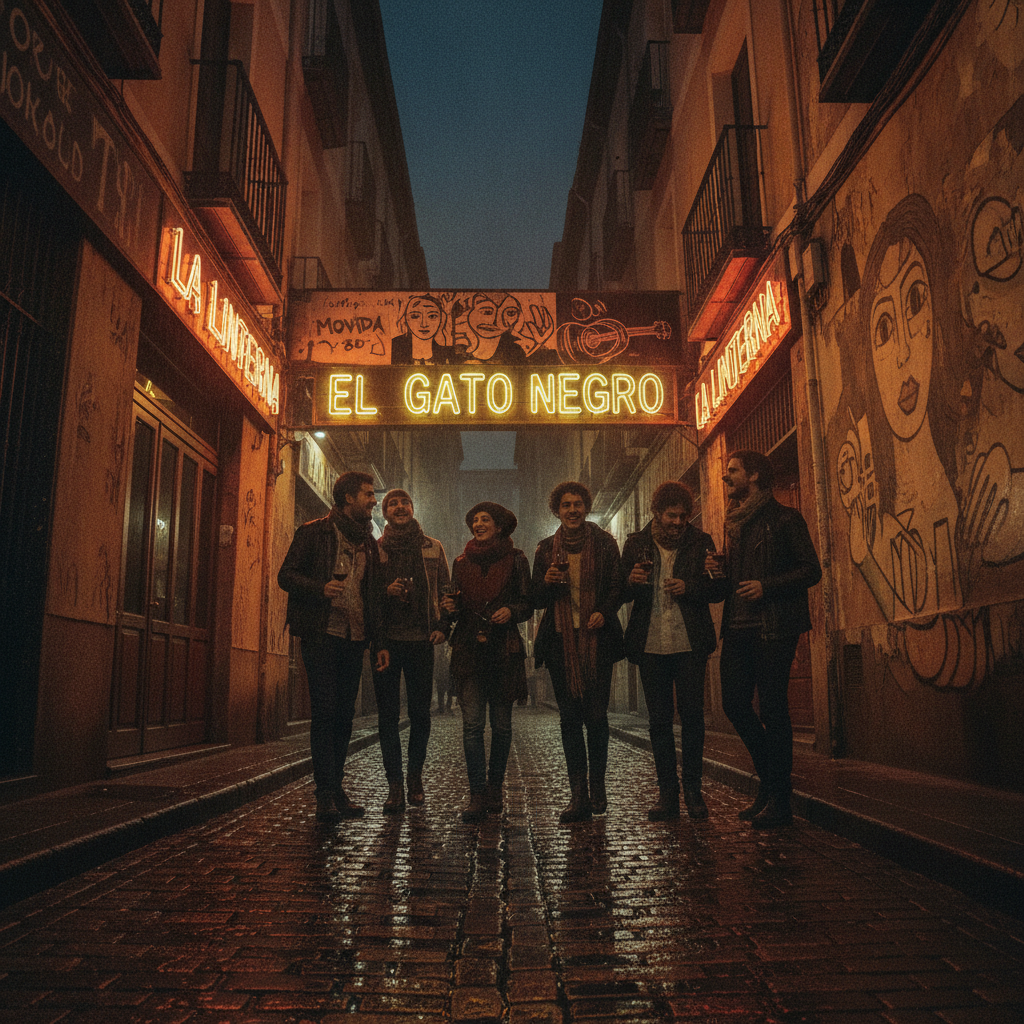
Between 1977 and 1985, after nearly 40 years of Franco's dictatorship, Madrid erupted in a wave of creativity, transgression and hedonism known as La Movida Madrileña. Filmmakers (Almodóvar), musicians, painters, drag artists and clubbers poured into the streets of Malasaña and Chueca in a celebration of newly-won freedom. The neighbourhood still carries that spirit. This evening route explores the bars, plazas, record shops and cultural spaces of the area that became the cradle of modern Spanish pop culture.
- 1
Plaza del Dos de Mayo — The Heart of Malasaña
The Plaza del Dos de Mayo is Malasaña's central square and its emotional core. The 'Dos de Mayo' name commemorates the 2nd of May 1808, when Madrid rose up against Napoleon's occupation—a rebellion that began right here, at what was then the Monteleón artillery barracks. The two cannons on the monument in the square are original. Today the square is surrounded by low-key bars and restaurants and fills with locals on warm evenings—this is as neighbourhood as Madrid gets, an antidote to the tourist circuits. Start with a vermouth at one of the terrace bars and watch the square come alive.
- 2
Calle del Pez — The Street of Record Shops and Vintage Bars
Walk south-east from the plaza down Calle del Pez—the Street of the Fish, named for a long-gone fish shop. Calle del Pez is still one of the most characterful streets in Madrid: low-rent, slightly grungy, with a mix of independent record shops (Discos Castelló nearby, one of Europe's great surviving vinyl stores), vintage clothing, feminist bookshops, and bars that haven't changed their interiors since 1983. La Paloma and El Pez Gordo are institutions. The bar La Vía Láctea on nearby Calle de Velarde is where the Movida crowd first gathered and is now a shrine to that era.
- 3
Museo de Historia de Madrid — Where the City's Story Lives
Tucked into an 18th-century former hospice building with a stunning Churrigueresque (ultra-ornate Baroque) portal on Calle de Fuencarral, the Museum of the History of Madrid is one of the city's most undervisited gems. The collection covers Madrid from the Hapsburg era to the late 20th century through paintings, maps, models, photographs and objects. The highlight is the extraordinary 1830 scale model of the entire city of Madrid—a 5-metre-wide plaster model showing every building, street and open space as it was nearly 200 years ago. The museum is free on Sundays.
- 4
Chueca — Rainbow Flags and Neighbourhood Aperitivo
Walk south from Malasaña into Chueca—Madrid's LGBTQ+ neighbourhood and one of the most vibrant districts in the city. During La Movida, Chueca was the ground zero for queer culture in post-Franco Spain; today it is a lively mainstream neighbourhood that has retained its original spirit. Plaza de Chueca is the focal square—surrounded by bars, the Mercado de San Antón food market is half a block away. The neighbourhood is at its most alive on summer evenings when the outdoor terrace culture expands across the pavements. Madrid Pride (late June) is based here and is one of the largest in Europe.
- 5
Mercado de San Antón — Chueca's Glass-Fronted Food Market
The Mercado de San Antón on Calle de Augusto Figueroa is Chueca's version of a covered market—a three-floor glass-and-steel structure with a food hall on the ground floor, fresh produce on the first floor, and a rooftop restaurant bar with a retractable roof. The food stalls downstairs are excellent (standout: the jamón carving station, the oyster bar, the mini-burger stand) and the atmosphere is lively without being overwhelming. The rooftop bar serves cocktails until late and has great views across the Chueca neighbourhood. Good for a mid-route food break.
- 6
La Vía Láctea — The Movida's Living Monument
End the cultural walk at La Vía Láctea (The Milky Way) on Calle de Velarde in Malasaña—the bar that was the headquarters of La Movida from 1979 onwards, where Almodóvar drank, where bands formed and broke up, where the new Spain was invented night by night. The interior hasn't changed much: still covered in old gig posters, rock memorabilia and the accumulated visual noise of four decades. It opens at 7pm and stays open until 3am (5am on weekends). Order a caña (small beer) or a gin tonic (the Spanish make them in enormous glasses with your choice of botanical) and absorb the spirit of one of Europe's greatest cultural moments.
Walk this route with audio
Stories play automatically as you reach each stop — no tapping needed.
More in madrid
Madrid from Above: Rooftops, Terraces & Miradores
Retiro Park & La Castellana: Madrid's Green Spine
The Football Pilgrimage: Bernabéu, the City & Metropolitano
The Art Golden Triangle: Prado, Thyssen & Reina Sofía
Tapas & Vermut: The La Latina Food Walk