Tapas & Vermut: The La Latina Food Walk
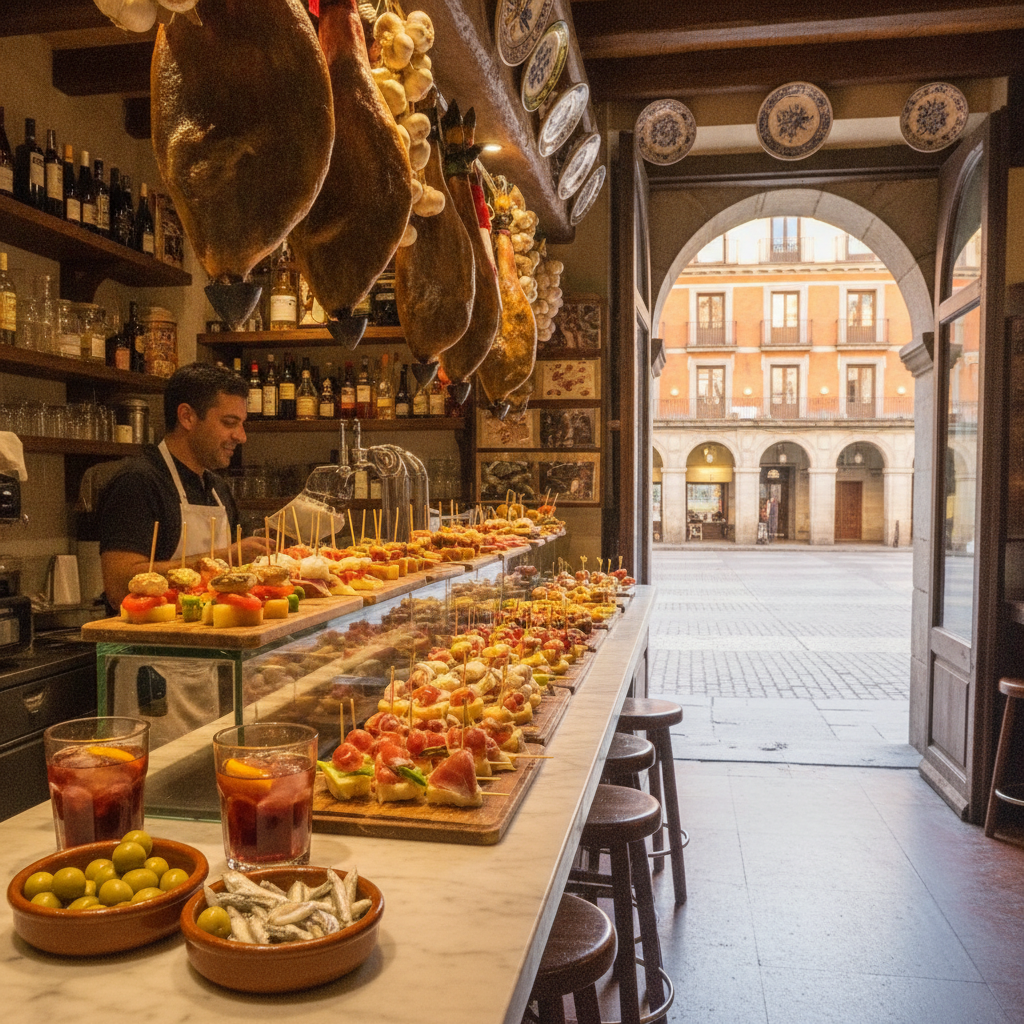
Madrid's tapas culture is not a tourist gimmick—it's the social fabric of the city. Every evening from 7pm, Madrileños pour into the streets to stand at zinc bars and eat small plates with wine, vermouth or cold beer. This Saturday afternoon walk begins at the Mercado San Miguel (the city's most beautiful covered market) and threads through La Latina—the dense, ancient neighbourhood where Madrid's tapas tradition is most alive. Plan for Sunday when El Rastro flea market adds an extra layer.
1. Mercado San Miguel — Iron & Glass Gourmet Market
- 1
Mercado San Miguel — Iron & Glass Gourmet Market
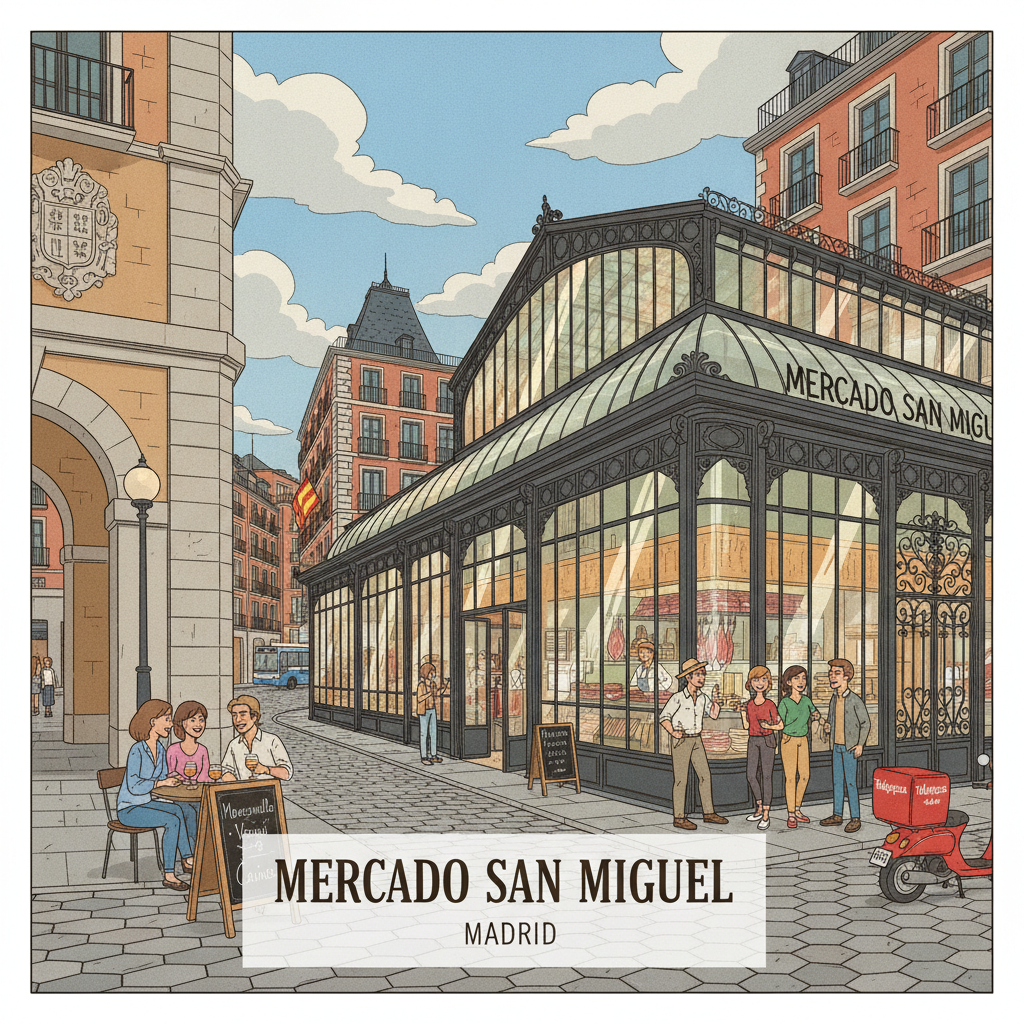
Built in 1916 and restored in 2009, Mercado San Miguel is a cast-iron pavilion filled with some of Madrid's finest food stalls. Unlike a regular market, this one is designed for eating on the spot: grab a glass of Manzanilla sherry at the wine bar, a plate of anchovies from Cantabria, or a perfectly executed tortilla española. Crowded at weekends but worth it—arrive at opening (10am) or after 6pm when it becomes a standing cocktail bar. This is your first taste of how seriously Madrid takes food.
- 2
Plaza Mayor — The Beating Heart
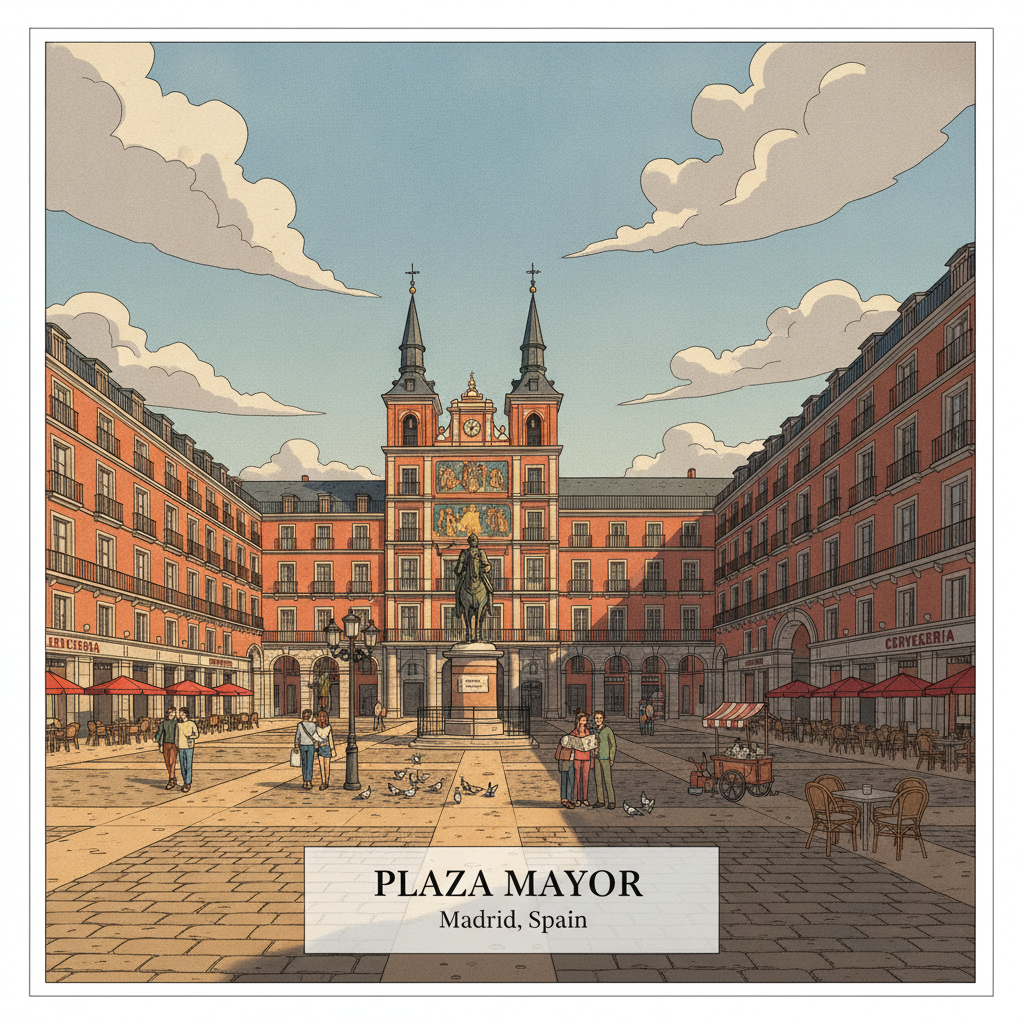
Step outside the market and cross into Plaza Mayor, the grand 17th-century square ringed by uniform red-brick buildings with painted facades. Philip III's equestrian statue stands in the centre. The square has been a bullfighting ring, a public execution site and an open-air market over the centuries—today the outdoor cafés are overpriced tourist traps, but the architecture is magnificent. Walk through it rather than eating here. Exit through the arched passageways on the south side for the tapas streets of La Latina.
- 3
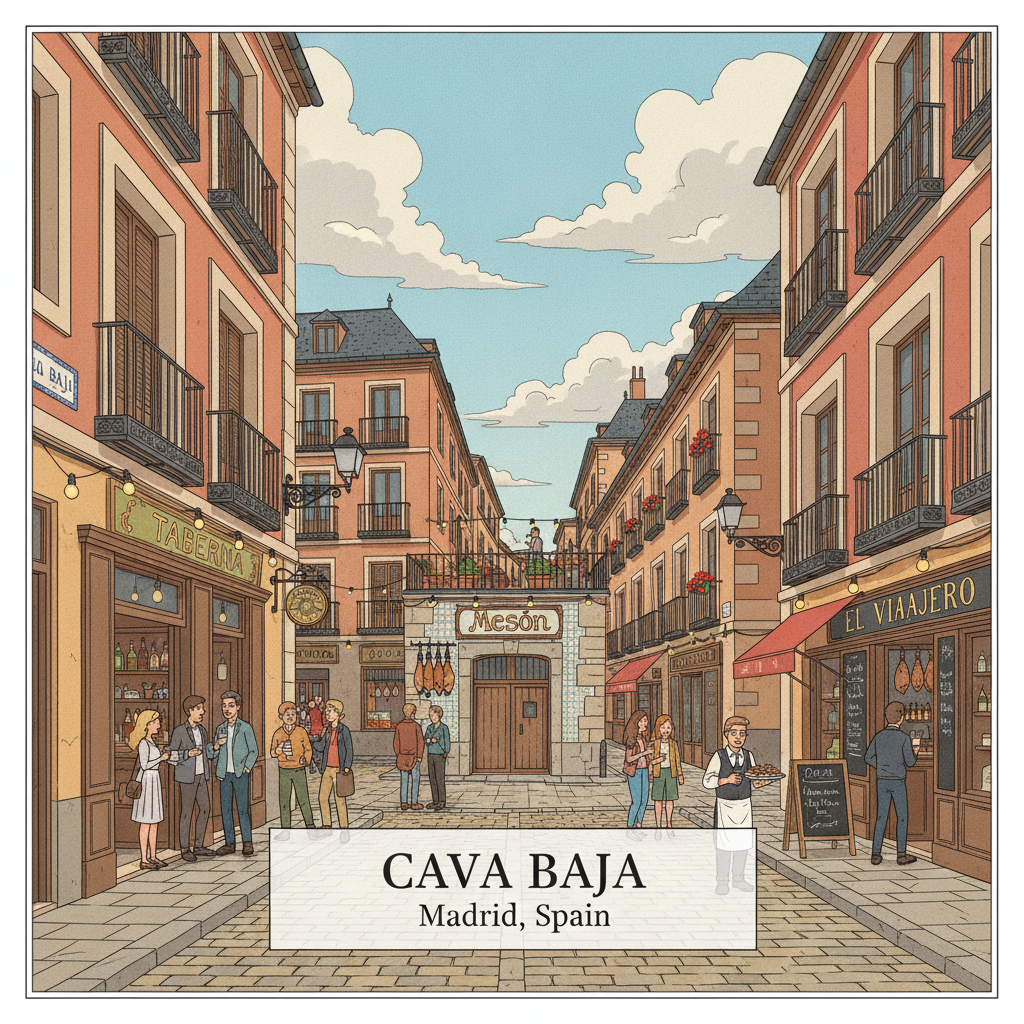
Cava Baja — Madrid's Tapas Spine
Cava Baja is the most important street in Madrid tapas culture. The whole street is dense with traditional tabernas and mesones serving jamón, patatas bravas, croquetas and callos a la madrileña (tripe stew—more delicious than it sounds). Txirimiri, Casa Lucas and El Viajero are all excellent. The custom is to move from bar to bar—one tapa and one drink in each place—so resist the urge to sit down and order everything from the menu. Follow the Madrileños.
- 4
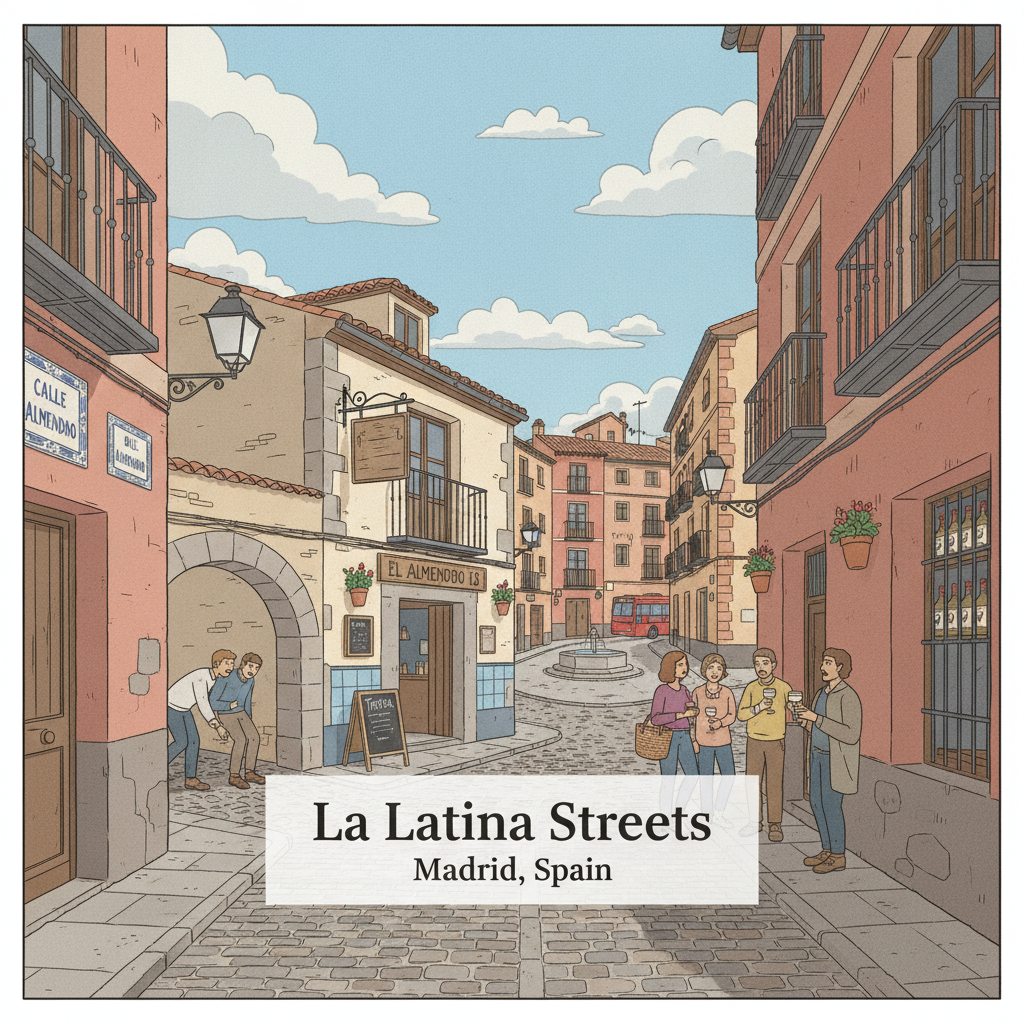
La Latina Streets — El Almendro & Side Alleys
Weave through the medieval street grid of La Latina. Calle del Almendro and Calle de la Cava Alta run parallel to Cava Baja and are slightly less crowded with tourists. El Almendro 13 is a Madrid institution for tostas (open sandwiches) and has been here forever. The neighbourhood's 12th-century Arabic layout means winding alleys, sudden plazas and low doorways—it's one of the oldest continuously inhabited urban textures in Spain.
- 5
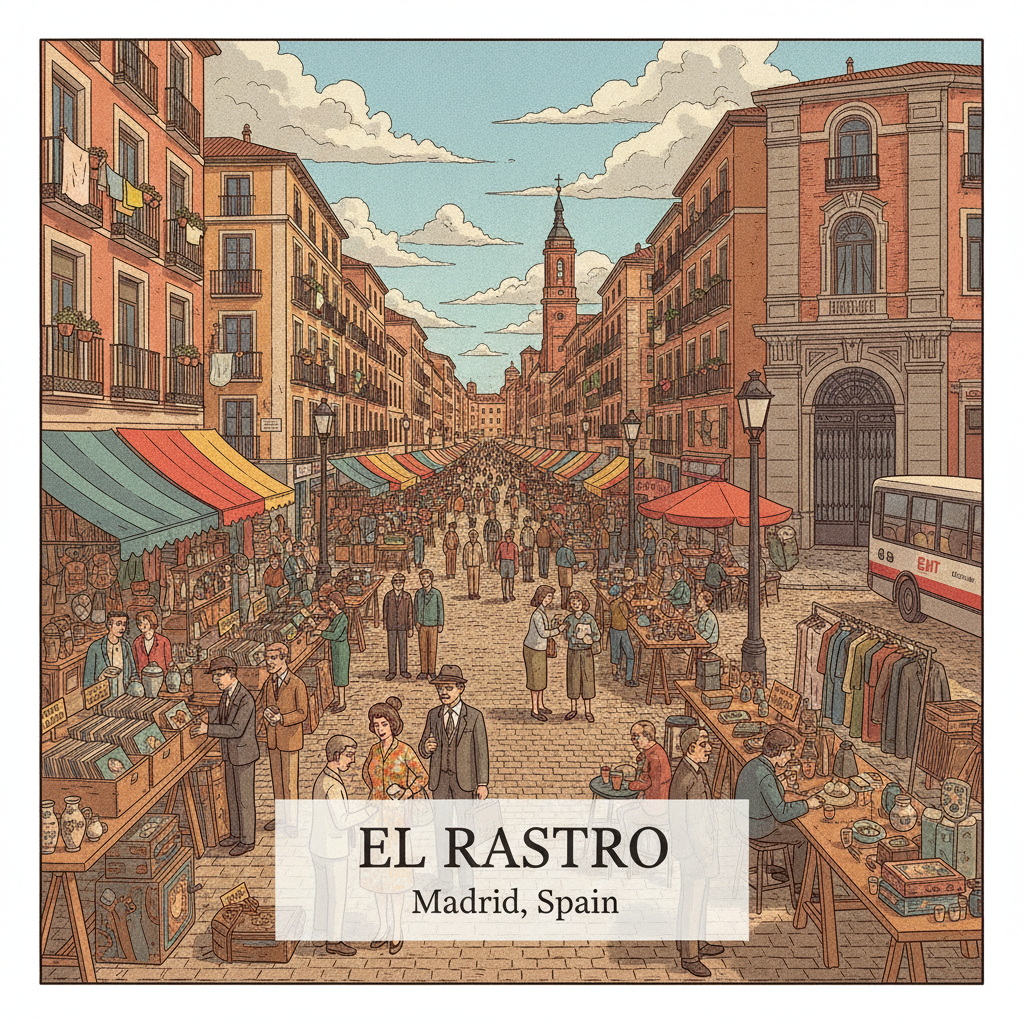
El Rastro — Sunday Flea Market (If Weekend)
On Sunday mornings (9am–3pm), the streets south of La Latina transform into El Rastro, Madrid's legendary flea market, one of Europe's largest. Over a thousand stalls spread down Calle Ribera de Curtidores and its tributaries, selling antiques, vinyl records, vintage clothing, tools and curiosities. Even if you buy nothing, the atmosphere—loud, chaotic, very Madrileño—is an experience in itself. Post-Rastro, the tapas bars of La Latina overflow as locals refuel after the market.
- 6
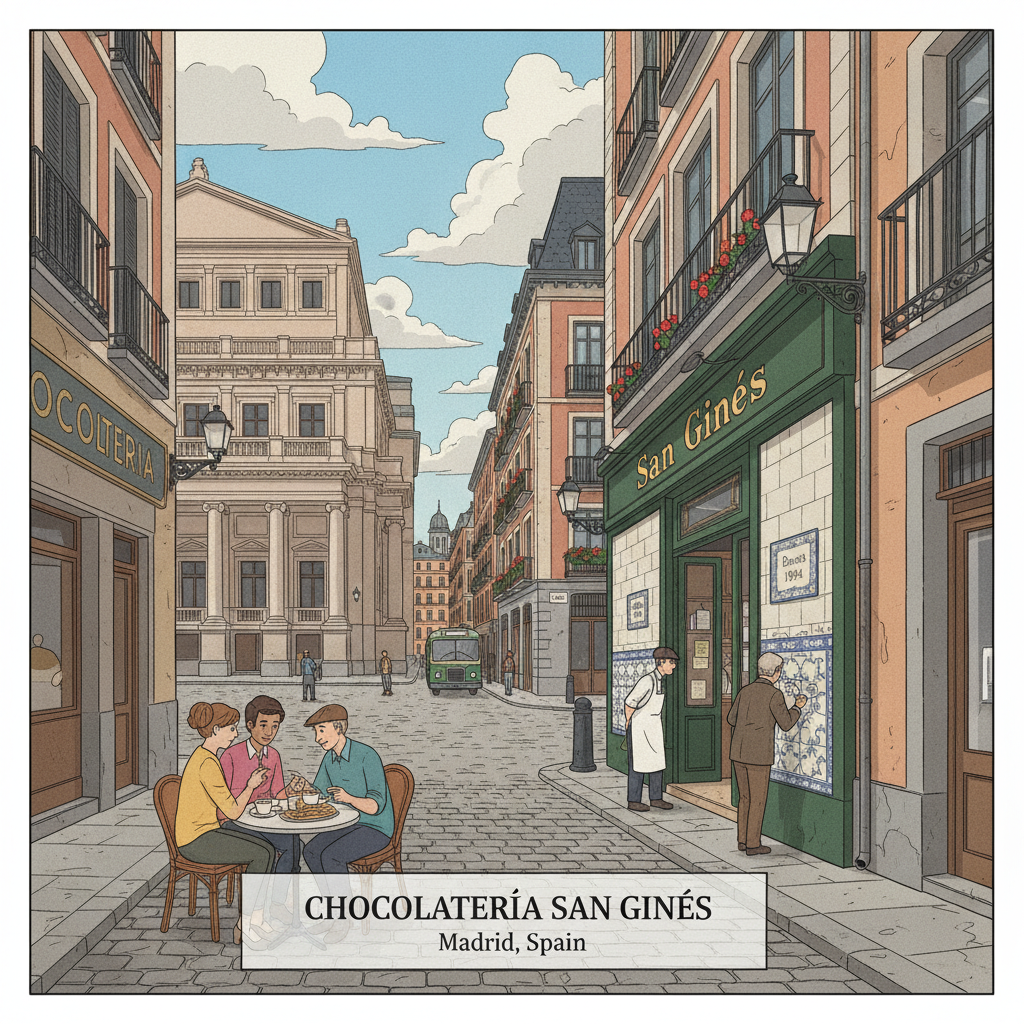
Chocolatería San Ginés — Since 1894
End the route at Chocolatería San Ginés, tucked in an alley off Calle Arenal near the Opera metro. This institution has been serving churros with thick hot chocolate since 1894 and is open 24 hours a day, 365 days a year. The churros are fried to order and the chocolate—dark, dense, almost solid—is unlike anything in Paris or Barcelona. Come back here at 3am after a night out to see the other side of its clientele: clubbers, night workers, and old men who have been coming here for decades.
Walk this route with audio
Stories play automatically as you reach each stop — no tapping needed.
More in madrid
Madrid from Above: Rooftops, Terraces & Miradores
Retiro Park & La Castellana: Madrid's Green Spine
The Football Pilgrimage: Bernabéu, the City & Metropolitano
The Art Golden Triangle: Prado, Thyssen & Reina Sofía
La Movida & Malasaña: Madrid's Cultural Revolution