Manado Tangkoko Reserve Wildlife Walk
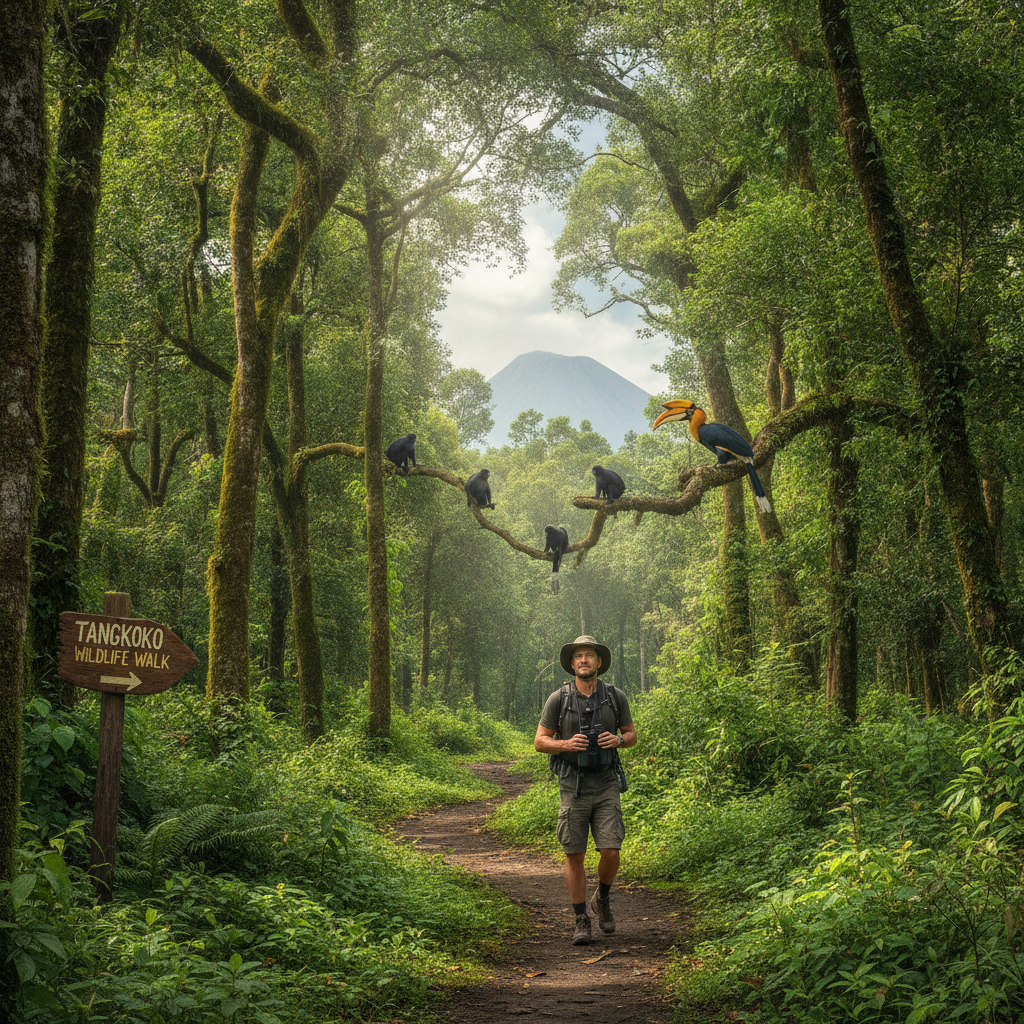
Visit Tangkoko Nature Reserve — the protected forest reserve east of Manado that is the only reliable location to see the tarsier (world's smallest primate), the black macaque (Celebes crested macaque), maleo birds, and the extraordinary birdlife of North Sulawesi in a forest that is one of Indonesia's most accessible wildlife watching destinations.
- 1
Tangkoko Reserve Entrance
Tangkoko-Batuangus Nature Reserve's entrance requires a 2-hour drive from Manado through the northeastern coast of Sulawesi — the reserve protecting 8800 hectares of lowland tropical forest has ranger-guided walks as the only access method, and the guides' expertise in locating the resident wildlife populations has made Tangkoko one of the most effective wildlife watching locations in Indonesia, with tarsier and black macaque sightings almost guaranteed on morning walks.
- 2
Spectral Tarsier Night Walk
The spectral tarsier is Tangkoko's most sought wildlife encounter — the world's smallest primate, with its enormous forward-facing eyes adapted for nocturnal hunting, clings to vertical bamboo stems in family groups at roosting sites that the guides know intimately. The twilight walk to the tarsier roosting sites, arriving as the animals emerge for their night's hunting, is one of the most intimate wildlife encounters available in Sulawesi.
- 3
Celebes Crested Macaque Troop
The Celebes crested macaque (black macaque) troops of Tangkoko have been observed by researchers for decades and have become sufficiently habituated to human presence to allow very close observation — the complex social dynamics of the macaque troop, with its grooming behaviour, dominance displays, and infant-rearing visible at close range, provides one of the most engaging primate watching experiences in Southeast Asia for visitors who spend more than two hours in the reserve.
- 4
Maleo Bird Nesting Beach
The maleo bird nesting beaches at Tangkoko are the most accessible viewing sites for this extraordinary Sulawesi endemic — the maleo, which buries its enormous eggs in warm volcanic or sun-heated sand and relies on the ground temperature to incubate them rather than body heat, nests on specific beaches within the Tangkoko reserve, and the arrival and departure of nesting pairs at dawn and dusk provides a wildlife spectacle specific to this section of the Sulawesi coastline.
- 5
Tangkoko Birdwatching
Tangkoko's birdlife includes multiple Sulawesi endemics — the knobbed hornbill, Sulawesi hawk-eagle, blue-backed kingfisher, and the extraordinary Sulawesi racquet-tail parrot are all present in the reserve forest, and the combination of forest interior, forest edge, and coastal vegetation creates a diversity of habitats that produces a birdwatching list of extraordinary quality for a morning's guided walk from the reserve entrance.
- 6
Coastal Forest Path Return
The return path from Tangkoko's interior through the coastal forest reveals the habitat transition between lowland tropical rainforest and the beach forest edge where different species concentrate — the coconut crabs that emerge at dusk, the sea eagles fishing offshore, and the transition of the macaque troops from the forest interior to the coastal fruiting trees at the reserve boundary document the ecological connections between the Tangkoko forest and the Sulawesi coastal marine environment that Manado's dive tourism celebrates offshore.
Walk this route with audio
Stories play automatically as you reach each stop — no tapping needed.