Manila's Spanish Palimpsest: The 1607 Trompe-l'Oeil Church Ceiling That Survived 1945, Lapu-Lapu Killing Magellan & 8 Million People Carrying the Black Nazarene
San Agustín's 1607 painted vault ceiling survived the 1945 Battle of Manila where 100,000 Filipino civilians died in Japanese massacres—only Warsaw saw comparable proportional WWII urban destruction; Ferdinand Magellan arriving in the Philippines in 1521, converting 800 people in Cebu, then dying at Mactan killed by chieftain Lapu-Lapu 44 years before Legazpi founded Manila on a Muslim sultanate site; Henry Sy's SM Group from a single Quiapo shoe shop in 1958 to the world's most attended malls (400,000 visitors per day at SM City North EDSA); Tagalog's 170–180 Philippine languages and 'Filipino' as a contested post-independence identity project; and the January 9 Black Nazarene procession where 8 million Filipinos compete to touch a 400-year-old darkwood statue of Christ carried through Quiapo's streets.
- 1
The Spanish Colonial Churches of Manila – Four UNESCO Baroque Masterpieces
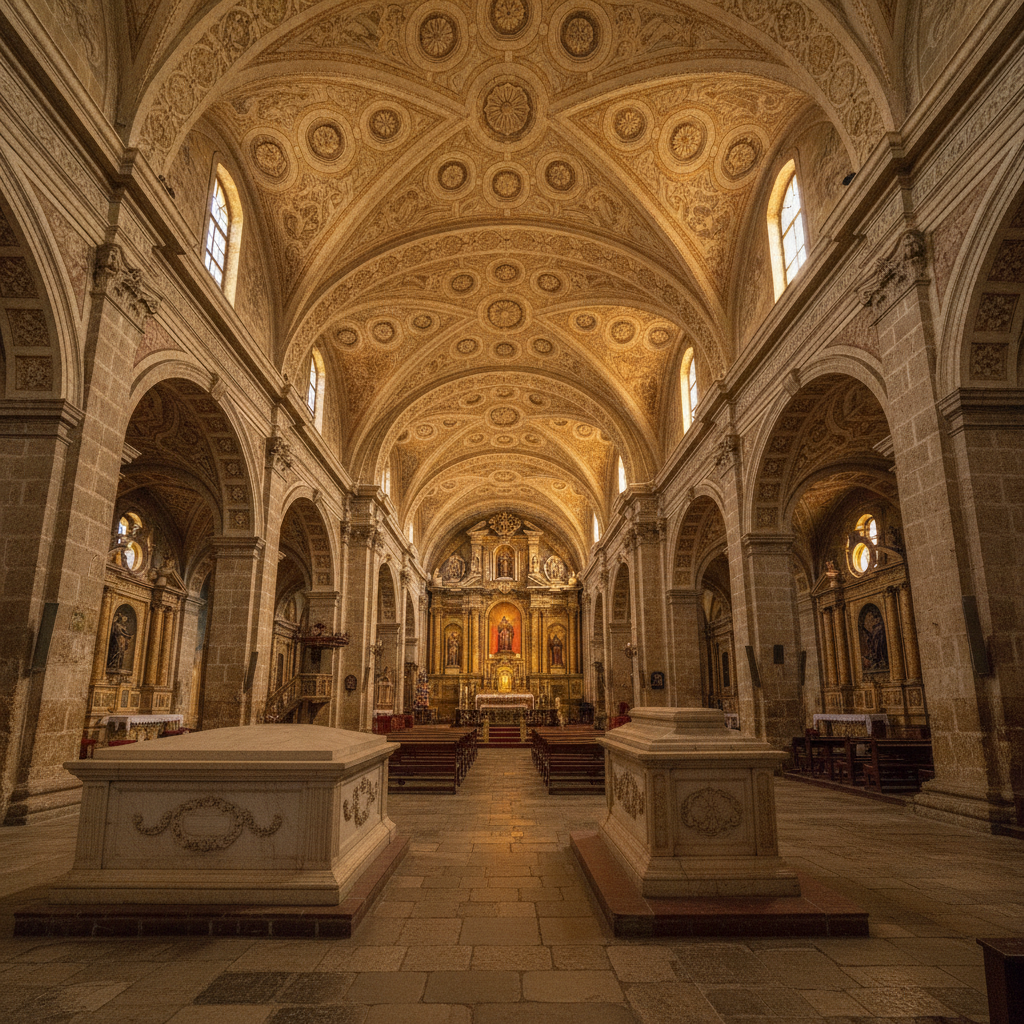
The four Baroque Churches of the Philippines—inscribed as a group by UNESCO in 1993 as 'Baroque Churches of the Philippines'—represent the most significant surviving legacy of the 333-year Spanish colonial period and are the most architecturally important religious buildings in Southeast Asia. San Agustín Church (Intramuros, Manila): the oldest stone church in the Philippines (completed 1607)—the only structure in Intramuros to survive the 1945 Battle of Manila intact (the walls were used as a detention camp by Japanese forces in the war's final days); the interior contains 14 side chapels, a trompe-l'oeil ceiling (painted to simulate vaulting, the only such ceiling in the Philippines), and the tombs of Miguel López de Legazpi (the Spanish conquistador who founded Manila in 1571) and Juan de Salcedo. The other three: Santo Tomás de Villanueva Church in Paoay, Ilocos Norte (the most distinctive Baroque design in the Philippines—with earthquake-resistant buttresses of unique appearance, locally called 'Gothic Renaissance Baroque'); the Nuestra Señora de la Asunción Church in Santa María, Ilocos Sur (the only Philippine church built on a hilltop for defensive purposes, accessed by a stone staircase); and the San Agustín Church in Miag-ao, Iloilo (with a locally unique façade carved with Philippine tropical motifs—papaya trees, coconut palms, and local plants incorporated into the Baroque vocabulary). All four are Filipino UNESCO sites administered by the Augustinian religious order.
- 2
Magellan & the First Circumnavigation – Manila's Pre-Spanish History
Ferdinand Magellan's 1521 arrival in the Philippines (the Visayas, not Manila—Magellan landed at Homonhon island in the Leyte Gulf, then proceeded to Cebu where he was baptised and converted 800 Filipinos to Catholicism before being killed in the Battle of Mactan by the Cebuano chieftain Lapu-Lapu)—initiated the Spanish colonial period, but the Philippines was not a colonial possession at this point; the first permanent Spanish settlement was established 44 years later (1565, in Cebu, by Miguel López de Legazpi) and Manila was founded in 1571 (on the site of a pre-existing Muslim Tagalog sultanate). The pre-colonial Philippines: before the Spanish arrived, Luzon and the Visayas were organised in barangay (small kinship-based communities of 30–100 households) rather than in the states and empires that characterised mainland Southeast Asia; trade connections with China (the Bohol blood compact of 1565 is the oldest recorded treaty between a Southeast Asian leader and a Western power, but earlier Chinese trade records document the Philippines from the Song dynasty); the Muslim Sultanates of Mindanao and the Sulu Archipelago (established from approximately the 14th century—the Sultanate of Sulu was one of the most powerful maritime polities in Southeast Asia, and its incomplete conversion to Catholicism by the Spanish explains the continued Muslim-Christian divide in Mindanao that produces ongoing conflict today).
- 3
The 1945 Battle of Manila & Post-War Reconstruction
The Battle of Manila (February–March 1945)—the final US military campaign to retake the Philippine capital from Japanese occupation—was one of the most destructive urban battles of World War II: approximately 100,000 Filipino civilians were killed in the Japanese army's deliberate massacre and indiscriminate shelling during the battle (the Manila Massacre—documented at the War Crimes Tribunal), and the historic city was reduced to rubble. The destruction: the entire Intramuros district (except San Agustín Church) was destroyed; the Paco and Malate residential areas were flattened; the University of Santo Tomas (which had served as a Japanese internment camp for Allied civilians) was liberated. Only Warsaw (destroyed by the Nazis in 1944) suffered comparable proportional destruction among WWII's urban battles. The post-war reconstruction: the Philippine government prioritised rapid reconstruction over historical preservation, resulting in the loss of most of Manila's colonial architectural heritage (replaced by 1950s–1970s modernist commercial buildings); Intramuros was reconstructed from 1951, but only a fraction of the original 18th-century architecture was rebuilt. The Fort Santiago Rizal Shrine: the site of the Japanese torture chamber during occupation, now memorialising both Rizal's colonial-era imprisonment and the WWII suffering—a palimpsest of Filipino historical trauma at a single site.
- 4
SM Mall of Asia & the Philippine Mall Culture
The SM Mall of Asia (MOA)—in the Pasay reclamation area on Manila Bay, adjacent to the NAIA airport approach—is one of the largest shopping malls in the world: 407,000 m² of gross floor area across three interconnected buildings, housing approximately 700 retail outlets, an IMAX cinema, a concert arena (MOA Arena—capacity 20,000), an ice skating rink, an aquarium (Manila Ocean Park is adjacent), and a 1-km bayfront promenade with a view of Manila Bay. The Philippine mall culture: the Philippines has approximately 1,000 shopping malls across the archipelago (the highest mall per capita density in Southeast Asia)—an extraordinary figure for a middle-income country, driven by the air-conditioning factor (malls provide climate-controlled public space in a city with 35°C average temperatures and 80%+ humidity), the safety factor (the mall's security-screened environment is perceived as safer than the street), and the social factor (Filipino social life is conducted largely in malls, which function as town squares). The SM Group: Henry Sy (1924–2019—a Chinese-Filipino immigrant from Fujian who arrived in the Philippines as a child and built the largest retail empire in Southeast Asian history) created the SM Group from a single shoe store in Manila's Quiapo district in 1958; at his death in 2019, he was worth approximately $19 billion and SM operated the most attended malls in the world (SM City North EDSA in Quezon City processed approximately 400,000 visitors per day at peak periods).
- 5
The Filipino Language & Cultural Identity
Filipino (officially designated Wikang Pambansa—the National Language, based on Tagalog with borrowings from Spanish, English, and regional Philippine languages)—is the mother tongue of approximately 24 million Filipinos (in the Metro Manila and Tagalog regions) and is spoken as a second language by approximately 90% of the Philippine population. The linguistic landscape: the Philippines has 170–180 distinct languages (the exact count depends on the definition of 'dialect' versus 'language'), with eight major regional languages—Tagalog/Filipino, Cebuano, Ilocano, Hiligaynon, Waray, Kapampangan, Bicolano, and Pangasinense—each with a distinct literary and cultural tradition. The Philippine English: Filipino English is distinctive—characterised by specific idioms ('I'll just' used to mean 'I'm going to', 'for a while' meaning 'please hold on', the '-san' suffix used for respect to elders), a rhythmic quality derived from the stress patterns of Tagalog, and a vocabulary that includes Spanish loanwords (baño, sala, aparador), English words with altered meanings, and unique Philippine-English coinages. The 'Filipino' identity question: the diversity of regional identities in the Philippines (Cebuanos, Ilocanos, and Tagalogs have historically had distinct and sometimes competitive identities) means that 'Filipino' as a national identity is a project of post-independence nation-building—more fragile and more contested in regions like Mindanao (Muslim south) and Cordillera (highland indigenous north) than in the Tagalog heartland.
- 6
Manila's Festivals – Sinulog, Ati-Atihan & the Philippine Festival Calendar
The Philippine festival calendar—the most dense in Southeast Asia, with virtually every month dominated by a major religious festival somewhere in the archipelago—produces events that rival the world's great festivals in scale and visual impact. The Sinulog (Cebu City—the third Sunday of January): the largest festival in the Philippines, attended by 1.5–2 million people annually—a street procession and dance festival honouring the Santo Niño (the Child Jesus—the oldest and most venerated Christian statue in the Philippines, brought by Magellan's expedition in 1521, now enshrined in the Basilica del Santo Niño in Cebu). The Ati-Atihan (Kalibo, Aklan, Panay—the third Sunday of January, same week as Sinulog): the oldest festival in the Philippines—participants blacken their faces with soot and wear traditional Ati (indigenous Aeta people) dress, dancing in the streets to drum music; the festival commemorates a 13th-century treaty between Malay settlers and the indigenous Ati people. The Pahiyas Festival (Lucban, Quezon—the third Sunday of May): the harvest festival of the Quezon province town of Lucban, where houses are decorated with coloured rice wafers (kiping) in elaborate patterns—the most visually spectacular domestic decoration festival in the Philippines, producing an entire street of rice-art house facades. The Manila festivals: the Manila Day celebrations (June 24), the Chinese New Year celebrations in Binondo (the most extensive in Southeast Asia outside mainland China), and the Feast of the Black Nazarene (January 9—the raucous 8-million-person procession of the Black Nazarene statue through the streets of Quiapo).
Walk this route with audio
Stories play automatically as you reach each stop — no tapping needed.
More in Manila
Manila's Hidden Layers: Poblacion's Craft Cocktail Scene, Pasig River's Biological Death & Revival & the Jollibee Sweet Spaghetti That Conquered the Filipino Diaspora
Manila's Modern Layers: The 'Thrilla in Manila' Coliseum, Eraserheads' 1993 Debut Album & the 1986 People Power 2-Million-Person EDSA Standoff
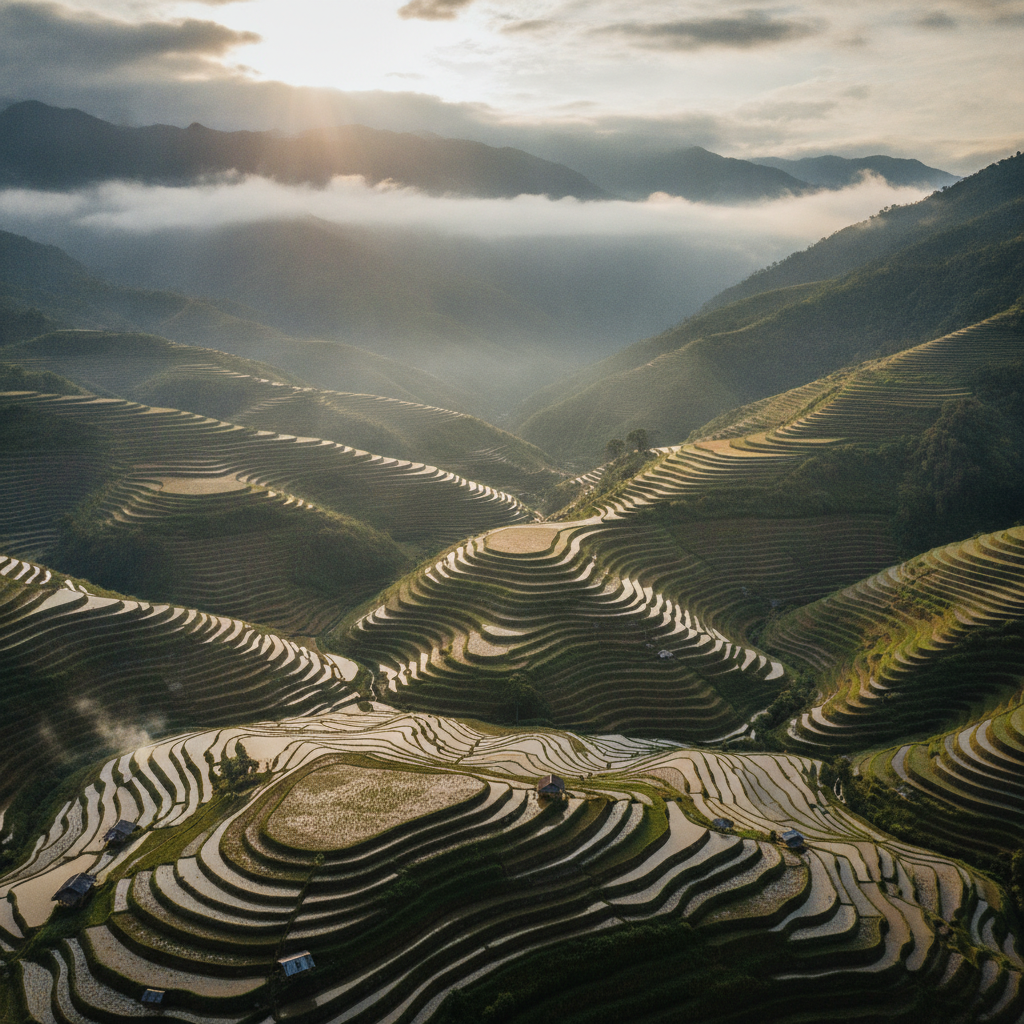
Manila's Philippines: Ifugao's 2,000-Year Terrace Gravity Irrigation, Vigan's 600m Cobblestone Street & Toyo Eatery's Filipino-Ingredients-Only Tasting Menu
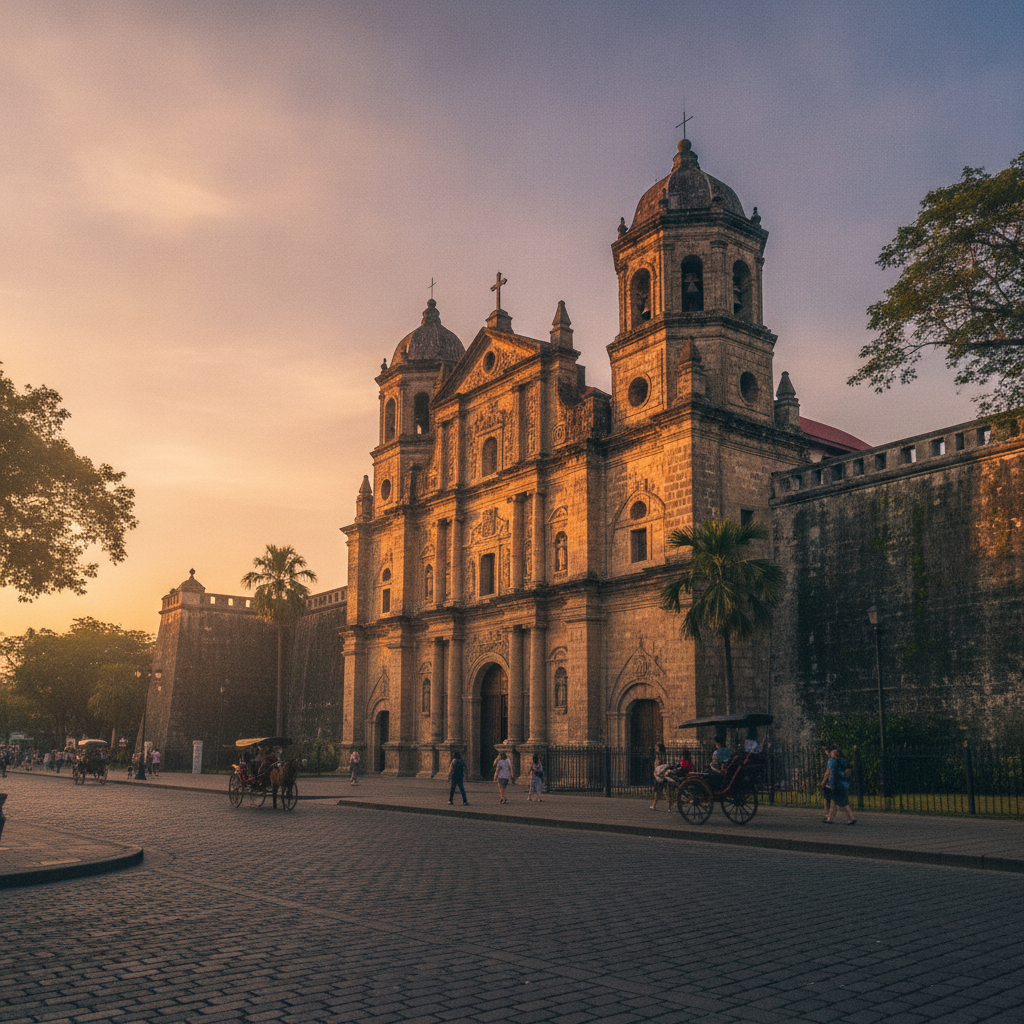
Manila: Intramuros' 1571 Spanish Walls, Binondo's 400-Year-Old Chinatown & the Spoliarium's Gold Medal in Madrid