Manila: Intramuros' 1571 Spanish Walls, Binondo's 400-Year-Old Chinatown & the Spoliarium's Gold Medal in Madrid
José Rizal's farewell poem hidden in an oil lamp in Fort Santiago's cell before his 1896 execution—the walled city he died defending independence from is also where he was imprisoned; the world's oldest Chinatown in Binondo where the Spanish confined the sangley Chinese merchants in 1594 while depending entirely on their trade; the National Museum's Spoliarium—Juan Luna's 1884 Rome gladiator painting that won the Madrid Gold Medal and became the symbol of Filipino artistic ambition during the colonial period; BGC's mural programme on former Fort Bonifacio military land now covered in glass towers; balut vendors on the Roxas Boulevard bayside at sunset; and the NAIA Terminal 1 taxi cartel situation that every Manila arrival guide warns about.
- 1
Intramuros – The Walled City & Spanish Colonial Manila
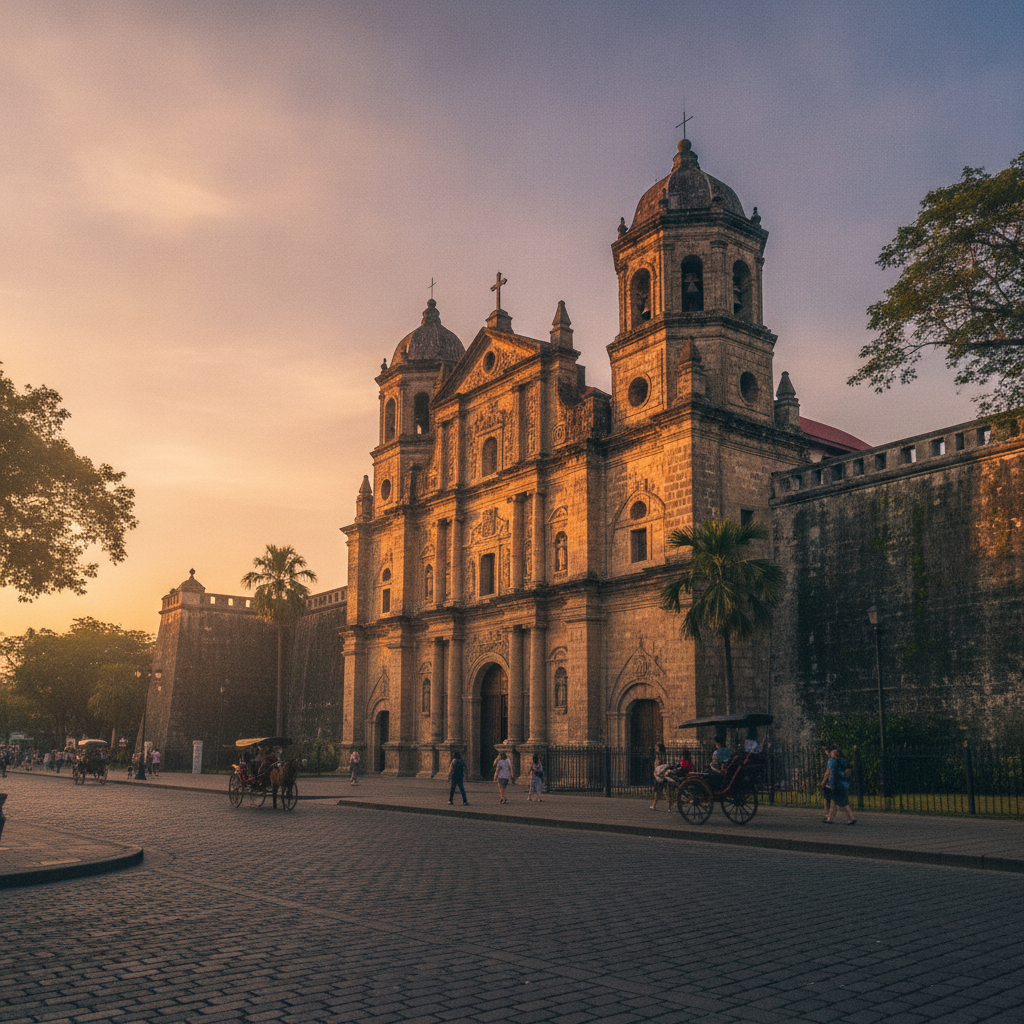
Intramuros ('within the walls'—from the Latin)—the 64-hectare walled city at the mouth of the Pasig River, built by Spanish colonisers from 1571 and still encircled by its original 16th-century stone walls—is the most historically significant site in the Philippines and the physical foundation of Manila's identity as the capital of a 300-year Spanish colonial enterprise. The walls: the 4.5-km circuit of stone-and-brick ramparts (baluartes)—built originally of wood, then replaced in stone through the 17th century—remain largely intact and walkable; the most imposing section is the Fort Santiago (the citadel at the river mouth)—where the Philippine national hero José Rizal was imprisoned before his 1896 execution, and where his farewell poem (Mi Último Adiós) was found hidden in an oil lamp after his death. Fort Santiago: a star fortress with a dry moat, now a park and museum; the Rizal Shrine within Fort Santiago (at the site of his cell) is one of the most visited monuments in the Philippines. The churches: the Intramuros churches—San Agustín Church (the oldest stone church in the Philippines, completed 1607; one of four Baroque Churches of the Philippines inscribed as UNESCO World Heritage Sites), Manila Cathedral (the current structure, the eighth to be built on the site—previous versions were destroyed by earthquake and war), and the various convento ruins—constitute the densest collection of colonial religious architecture in Southeast Asia.
- 2
Rizal Park & the Manila Bayfront
Rizal Park (Luneta Park—a 58-hectare public park along the Manila Bay waterfront, 1 km south of Intramuros)—is the most symbolically important public space in the Philippines: the site of José Rizal's execution by firing squad on 30 December 1896 (the date is a national holiday—Rizal Day), the location of the Philippine Declaration of Independence ceremony of 1946 (independence from the United States, 48 years after independence from Spain), and the most visited urban park in Manila. The Rizal Monument: the centrepiece of the park—a marble and bronze monument to the national hero, with his remains interred in the base; a permanent honour guard stands at the monument. The Manila Bay sunset: the view west across Manila Bay from the Rizal Park bayfront—one of the most famous sunsets in the Philippines, with the sun sinking into the bay's flat horizon. The Roxas Boulevard promenade (running 6 km along Manila Bay from the US Embassy to the SM Mall of Asia): the most famous boulevard in Manila, lined with Art Deco-era buildings and modern hotels; the bayside pavilions and roadside vendors selling barbecue and balut (fertilised duck egg—the Philippines' most notorious street food) in the early evening are the classic Manila Bay experience. The Manila Ocean Park: an adjacent oceanarium and water park—the most popular family destination on the Manila waterfront.
- 3
Binondo – The World's Oldest Chinatown
Binondo (the Manila Chinatown district, immediately north of the Pasig River across the Jones Bridge from Intramuros)—established in 1594 by the Spanish as a controlled district for the Chinese population (the sangley—the Spanish term for Chinese merchants, derived from the Hokkien 'seng-li'—'trading')—is widely described as the oldest Chinatown in the world. The history: the Spanish established Binondo as a segregated district for the Chinese population (required to live separately from the Spanish in Intramuros and the indigenous Filipino population) while depending on Chinese trade and craft skills for the colonial economy—a relationship of economic necessity and social exclusion that defined Manila's development for 300 years. The architecture: the current Binondo streetscape is a mixture of early 20th-century shophouses (the 'Chinese commercial vernacular'—two and three-storey structures with covered walkways at street level, also called arcaded shophouses), Art Deco commercial buildings, and contemporary Chinese-Filipino commercial development. The food: Binondo is the primary destination for authentic Chinese-Filipino food (Hokkien cuisine adapted over 400 years to Filipino ingredients and tastes)—pancit molo (a stuffed dumpling soup from Iloilo, but sold extensively in Binondo), kikiam (fried fish cake), hopia (a flaky pastry with bean or winter melon filling), and the Hokkien pork noodle soups of the Chinatown restaurants. The walking food tour: Binondo food tours (led by guides from tour companies including Ivan Man Dy's 'Old Manila Walks') are the most recommended introduction to the district.
- 4
BGC & Makati – Manila's Contemporary Face
Bonifacio Global City (BGC)—a planned urban development on the former Fort Bonifacio military base in Taguig, 15 km southeast of Intramuros—is the most internationally recognised face of contemporary Manila: a master-planned central business district with glass-and-steel towers, a systematic street grid, high-end shopping malls (High Street, Bonifacio High Street Central), international restaurant options, and the densest concentration of international NGO offices in the Philippines. The BGC character: corporate, planned, and air-conditioned (the covered pedestrian bridges between commercial buildings are the unofficial symbol of BGC's relationship with Manila's climate); notable for the street art scene (the BGC Arts Center and the systematic mural programme on BGC's walls—the most extensive outdoor mural programme in the Philippines). The National Museum of the Philippines (in the Agrifina Circle area between Rizal Park and Intramuros): the recently restored beaux-arts building houses the Spoliarium (Juan Luna's enormous 1884 painting of Roman gladiators—the most celebrated painting in Philippine art history, which won the Gold Medal at the Exposición Nacional de Bellas Artes in Madrid) and an extensive collection of Philippine natural history, archaeology, and fine art. Makati (the original financial district, 10 km south of Intramuros): older than BGC, with a more established residential and commercial character—the Ayala Center mall complex, Greenbelt Park (an open-air lifestyle mall with a genuine park at its centre), and the Forbes Park gated community (where much of Manila's old wealth lives).
- 5
Manila's Street Food & Filipino Cuisine
Filipino cuisine—one of the most underrepresented major Asian food cultures in the international food conversation—is experiencing a significant re-evaluation driven by a generation of Filipino-American chefs (in restaurants including Jeepney in New York, Bad Saint in Washington DC, and Lasa in Los Angeles) and by local Manila restaurants that are articulating the complexity and regional diversity of the Philippine culinary tradition. The canonical Filipino dishes: adobo (the national dish—meat, fish, or vegetables braised in a mixture of vinegar, soy sauce, garlic, and bay leaf; the vinegar acts as a preservative, and the dish's ubiquity across the archipelago's 7,641 islands is partly a function of the pre-refrigeration preservation requirement); sinigang (a sour tamarind-broth soup with vegetables and meat or fish—the most commonly cooked home dish in Manila); lechón (a whole roasted pig, the centrepiece of Filipino celebration feasts—the Cebu version is considered the finest in the Philippines, with the skin achieving a crackling superior to any other preparation). The Manila street food: balut (the fertilised duck egg—one of the most internationally notorious street foods; available from vendors throughout Manila in the evening); fish balls (skewered fried fish cake balls in sweet-spicy sauce—the most common Manila street snack); and isaw (grilled chicken intestines on a stick—the most popular barbecue street snack at the Manila roadside grills).
- 6
Practical Manila – Getting Around, Safety & When to Visit
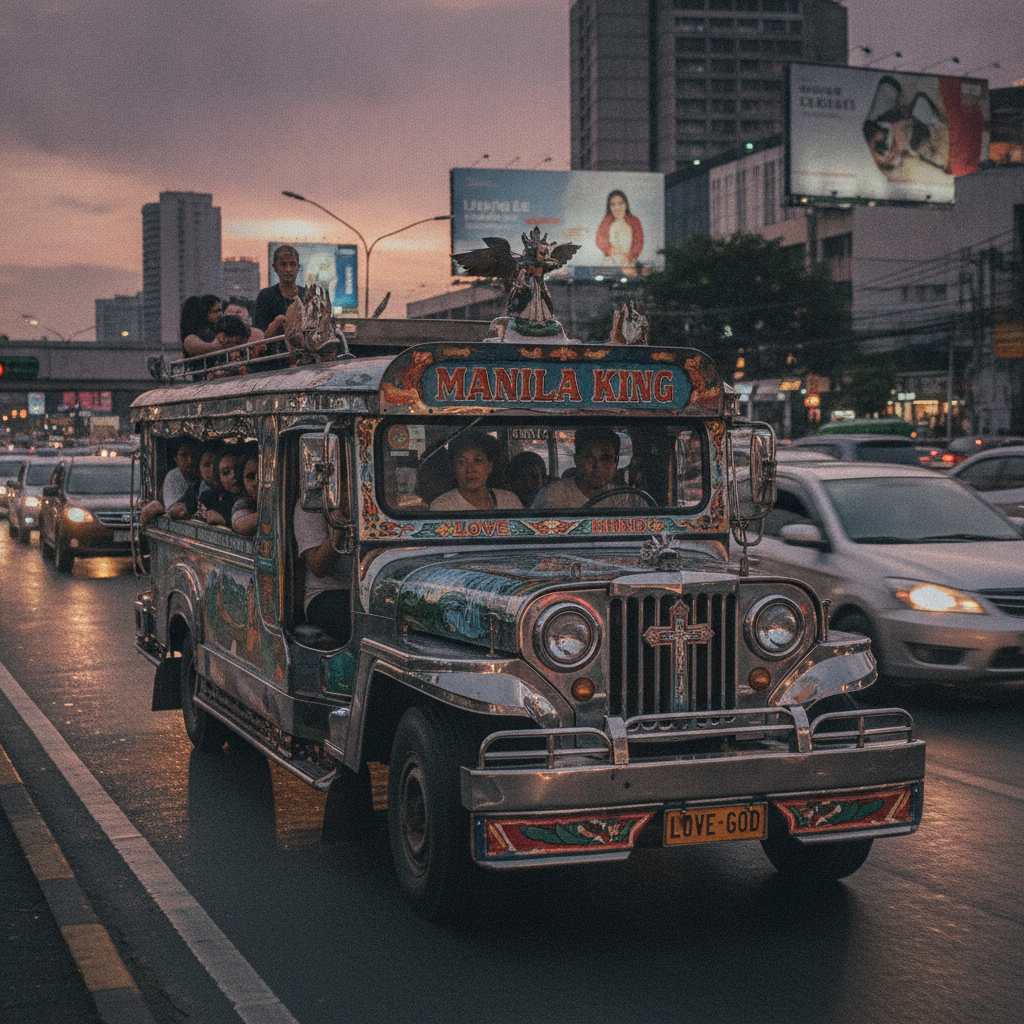
Getting to Manila: Ninoy Aquino International Airport (MNL)—with four terminals (Terminal 1 for most international flights, Terminal 3 for Cebu Pacific and some Philippine Airlines flights, and the newer Terminal 4 for budget domestic services)—is the busiest airport in the Philippines, receiving direct international flights from all major Asian hubs, the Middle East, North America, and Europe. The NAIA terminals are notoriously congested and the taxi/transport situation outside is chaotic: recommended options are the airport-accredited fixed-rate taxi (higher price, reliable), the NAIA Express bus to Pasay, or a booked private transfer. Getting around Manila: the Metro Manila transit system—a mix of MRT (Metro Rail Transit), LRT (Light Rail Transit), PNR (Philippine National Railways), and the famous jeepney (a colourfully decorated shared vehicle, adapted from US military jeeps left after WWII—the most iconic vehicle in the Philippines, though being replaced by modern e-jeepneys). The safety situation: Manila is a city where street crime (petty theft, bag-snatching) is a real risk in crowded areas, and visitors should take basic precautions (no visible expensive jewellery, camera bags kept close, avoiding unlit areas at night); the tourist areas (Intramuros, BGC, Makati's Ayala area) are substantially safer than the market areas. When to visit: the dry season (November–April) is the most comfortable; the wet season (June–October) brings typhoons—Manila is one of the most typhoon-affected major cities in Asia.
Walk this route with audio
Stories play automatically as you reach each stop — no tapping needed.
More in Manila
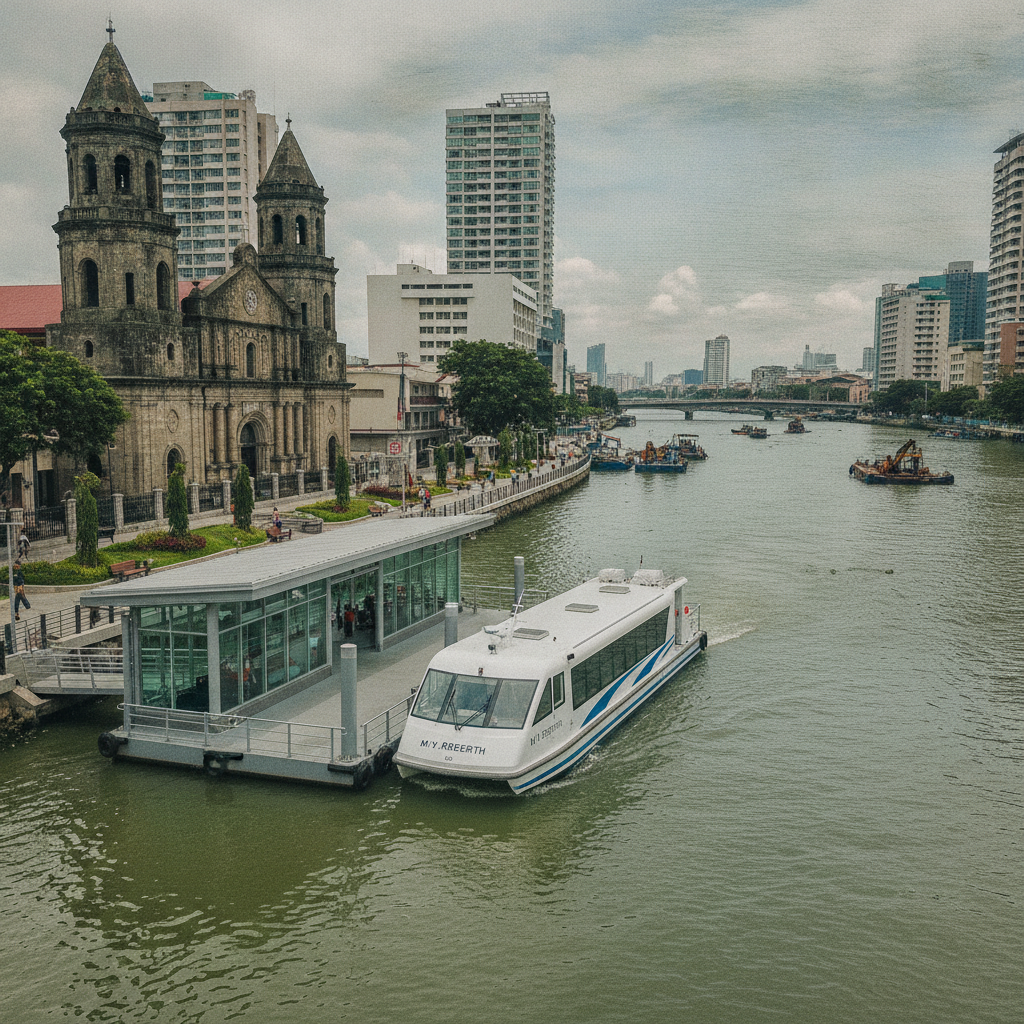
Manila's Hidden Layers: Poblacion's Craft Cocktail Scene, Pasig River's Biological Death & Revival & the Jollibee Sweet Spaghetti That Conquered the Filipino Diaspora
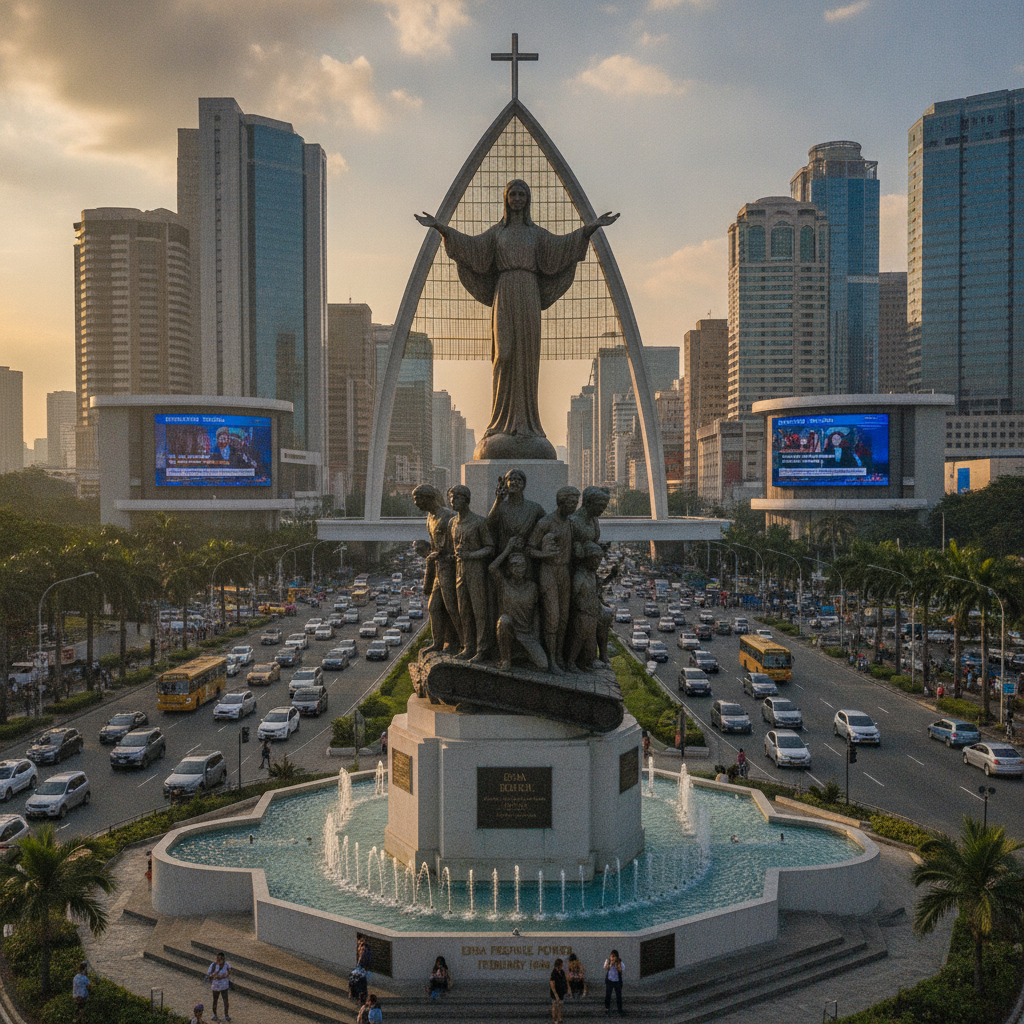
Manila's Modern Layers: The 'Thrilla in Manila' Coliseum, Eraserheads' 1993 Debut Album & the 1986 People Power 2-Million-Person EDSA Standoff
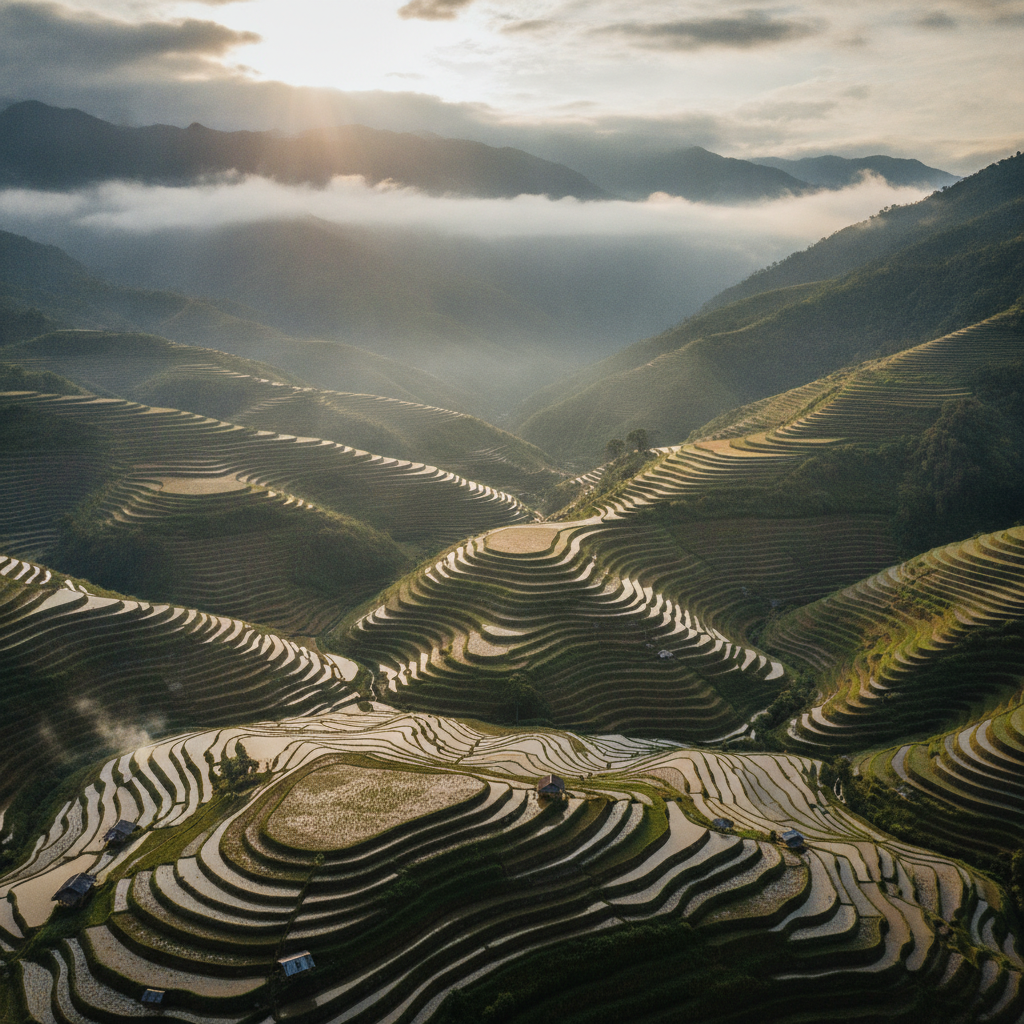
Manila's Philippines: Ifugao's 2,000-Year Terrace Gravity Irrigation, Vigan's 600m Cobblestone Street & Toyo Eatery's Filipino-Ingredients-Only Tasting Menu
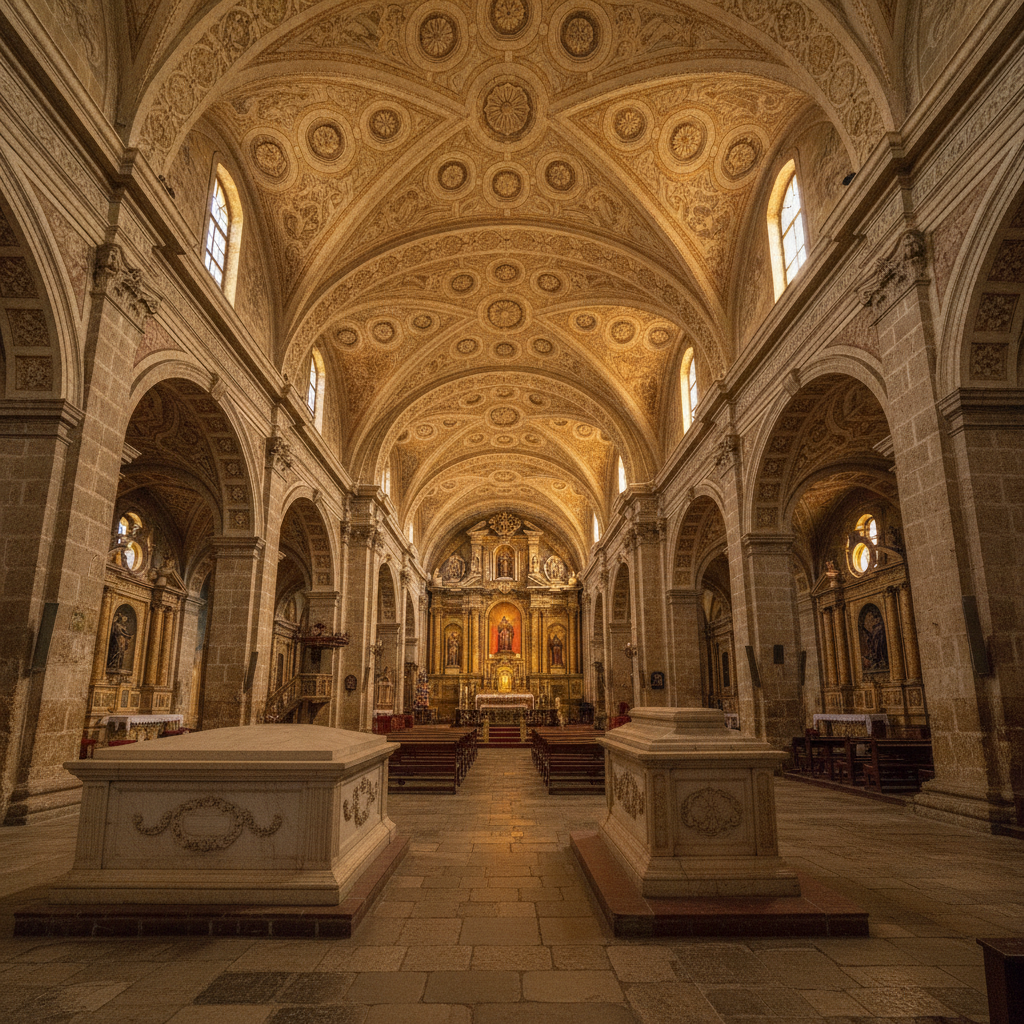
Manila's Spanish Palimpsest: The 1607 Trompe-l'Oeil Church Ceiling That Survived 1945, Lapu-Lapu Killing Magellan & 8 Million People Carrying the Black Nazarene