Manila's Daily Reality: 10 Million OFWs, the Jeepney Modernisation Fight & Kapeng Barako's Liberica Coffee Revival from 1889's Rust Epidemic
10 million Overseas Filipino Workers globally at any given time sending $34 billion annually—9% of Philippine GDP—back in Balikbayan boxes; TomTom's 2019 most-congested city ranking (67 minutes per 10 km) and the MRT-3 running at 20% capacity while WWII jeeps decorated with chrome saints carry 20 passengers each through the gridlock; the Laguna Copperplate Inscription of 900 CE—Old Malay in Kawi script, the oldest written record in the Philippines, found in 1989; the Escolta Art Deco revival with the First United Building's monthly heritage market; the 1889 coffee rust that destroyed Batangas Barako Liberica and the specialty scene now reviving it; and the bamboo organ of Las Piñas built by a Friar in 1824 from local bamboo, still playable, still the subject of an international festival.
- 1
The Filipino Diaspora & Overseas Filipino Workers (OFWs)
The Philippines has one of the world's largest overseas labour diasporas: approximately 10 million Overseas Filipino Workers (OFWs) are deployed globally at any given time (in addition to approximately 4 million permanent overseas Filipinos), working in over 200 countries and territories. The remittance economy: OFW remittances total approximately $34 billion annually (2023 figures)—approximately 9% of Philippine GDP, making remittances the single largest source of foreign exchange and the primary economic safety net for millions of Filipino families. The deployment sectors: domestic workers (in Hong Kong, Singapore, Saudi Arabia, United Arab Emirates, Italy, and other Middle Eastern and East Asian destinations—the Philippines is the world's largest supplier of domestic workers, with the 'domestic worker' category accounting for approximately 35% of all OFW deployments); seafarers (the Philippines supplies approximately 25% of the world's merchant marine workforce—the largest national contingent in global shipping); nurses and medical professionals (particularly in the United States, United Kingdom, and Middle East); and construction and infrastructure workers (in the Gulf states). The cultural impact: the OFW phenomenon has created an entire cultural genre (OFW narratives, soap opera plots about separated families, the Balikbayan box—the large cardboard box of goods sent home by OFWs, a deeply sentimental cultural symbol); the 'hero of the nation' designation given to OFWs by multiple Philippine presidents (Corazon Aquino called them 'the new heroes of our time') reflects their economic indispensability.
- 2
Manila's Traffic & the Jeepney Culture
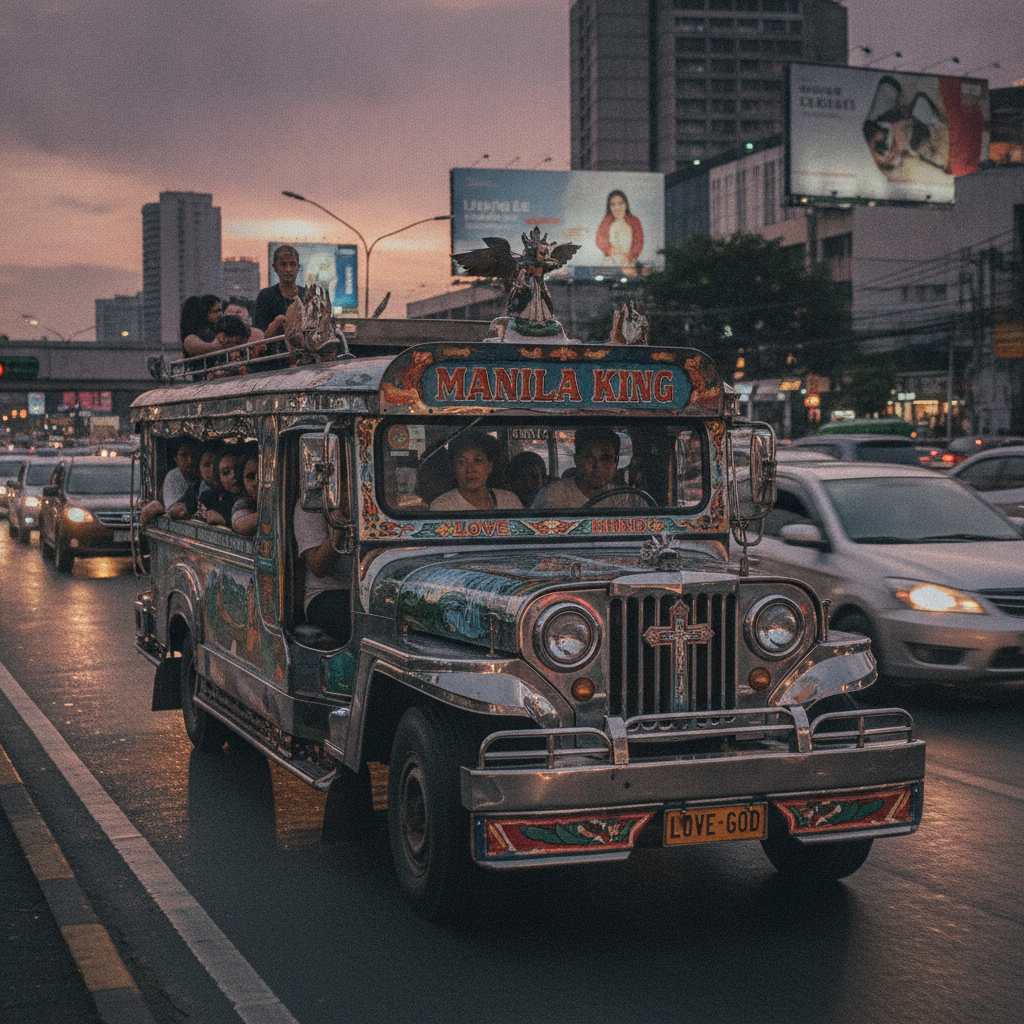
Metro Manila's traffic—consistently ranked among the worst urban congestion in the world (the TomTom Traffic Index placed Manila as the most congested city globally in 2019, with an average travel time of 67 minutes per 10 km)—is the defining quality-of-life challenge of the city and a subject of endless frustration, dark humour, and political debate. The causes: Metro Manila's 13 million urban population (22 million in the broader metropolitan area) concentrated around a road network designed for a fraction of that vehicle volume; inadequate public transit (the MRT-3 line—the most-used in Metro Manila—runs at 20% of designed capacity due to maintenance failures; the LRT lines are overcrowded); and a political culture that has preferred road-building to transit investment for decades. The jeepney: the colourfully decorated shared public utility vehicle—adapted from WWII US military jeeps by Filipino entrepreneurs who purchased the vehicles from the departing US army in 1945, removed the military body, extended it to accommodate 10–20 passengers, and decorated it elaborately—has been the backbone of Manila's informal transit system for 80 years. The jeepney phase-out: the Philippine government's 'jeepney modernisation programme' (launched 2017 under Duterte, continued under Marcos Jr.) mandates the replacement of all jeepneys older than 15 years with modern Euro-4 emission vehicles—a policy that has generated intense controversy, as most jeepney operators cannot afford the new vehicles and the traditional jeepney body is regarded as an irreplaceable cultural icon.
- 3
The National Museum Complex & Philippine Art History
The National Museum of the Philippines—a complex of three interconnected museums in the Agrifina Circle area between Rizal Park and Intramuros (the National Museum of Fine Arts, the National Museum of Anthropology, and the National Museum of Natural History)—constitutes the most comprehensive public collection of Philippine art, culture, and natural history in the country. The collection highlights: the Spoliarium (Juan Luna, 1884—a 4.22 × 7.675 metre oil painting depicting the aftermath of Roman gladiatorial combat, with nude dead bodies being dragged from the arena; the gold medal winner at the 1884 Exposición Nacional de Bellas Artes in Madrid; the most celebrated painting in Philippine art history, interpreted as an allegory of Spanish colonial oppression); the Bulul (Ifugao rice harvest deity figures—the most significant traditional sculptural tradition in the Philippines, from the Ifugao rice terrace communities of northern Luzon); the Laguna Copperplate Inscription (a 900 CE document written in Old Malay using the Kawi script—the oldest known written record in the Philippines, discovered in 1989 in the Laguna de Bay area). The National Museum of Natural History: housed in the former Agriculture Building (a restored neoclassical structure), with a centrepiece spiral staircase ('Tree of Life') visible from the ground floor to the building's glass dome—the most visually dramatic museum interior in Manila. Admission: the National Museum complex has been free to all visitors since 2018.
- 4
Escolta & Santa Cruz – Old Manila's Commercial Heritage
Escolta (a 400-metre street in the Binondo-Santa Cruz area north of the Pasig River)—Manila's premier commercial street from the Spanish period through the 1960s, lined with Art Deco commercial buildings and the historic department stores of pre-war Filipino commercial life—is undergoing a slow revival as a destination for Manila's heritage tourism and creative economy communities. The Escolta buildings: the First United Building (a 1929 Art Deco landmark—the most intact pre-war commercial building in Manila, now partly occupied by the Escolta Museum and creative economy tenants); the Regina Building; the Capitol Theater (a 1935 Art Deco cinema, now being restored); and the Calvo Building—constitute the most coherent Art Deco streetscape in the Philippines. The Escolta Market: a monthly curated market (typically held on the last Saturday of the month) organised by the Escolta Block Party initiative, featuring Filipino artisans, food producers, and independent designers in the ground floors of the heritage buildings. Santa Cruz (the district surrounding the Santa Cruz Church, adjacent to Escolta): one of the most densely populated and oldest commercial districts in Manila—the Arranque market, the Chinese commercial supply district, and the street-level gold shops of the Santa Cruz jewellery district are the most active surviving elements of Old Manila's commercial geography. The heritage walk: guided heritage walks of the Escolta-Binondo-Santa Cruz area are organised by the Intramuros Administration and several heritage advocacy groups.
- 5
Manila's Coffee Scene & the Third Wave
The Philippines—the world's fourth-largest coffee producer (behind Brazil, Vietnam, and Colombia)—grows four commercially significant coffee species on a single island nation: Arabica (in the highland areas of Mindanao, Sagada in the Cordillera, and Benguet in Luzon), Robusta (in the lowland areas), Liberica (also called Barako—a Philippine specialty, large-beaned and intensely flavoured, grown primarily in Batangas province south of Manila; one of only two countries in the world where Barako coffee is commercially grown), and Excelsa (grown in the Visayas—a rare species accounting for less than 1% of world coffee production). The Barako significance: kapeng barako ('virile/brave coffee'—the Tagalog term for Liberica, referring to the intense flavour) was the dominant Filipino coffee from the colonial period through the mid-20th century; a coffee rust epidemic (1889) destroyed most of the Batangas Barako plantations, and the variety was largely replaced by cheaper imports and instant coffee; the revival of Barako as a premium Philippine specialty is part of the broader Filipino culinary heritage movement. The Manila specialty coffee scene: a significant concentration of specialty roasters and cafés has emerged in BGC, Makati, and QC (the Maginhawa area has one of the highest café per-square-metre ratios in Manila)—Yardstick Coffee (BGC and QC), Commune (Taft Avenue), and Coffee Project (multiple locations) are among the most established third-wave operations.
- 6
Manila for Day Trips – Corregidor, Las Piñas & Laguna de Bay
The most rewarding day trips from Manila escape the Metro Manila traffic to reach destinations within 2–3 hours that contrast sharply with the city's density. Corregidor Island (48 km west of Manila in Manila Bay—accessible by ferry from the CCP Complex pier, 1.5 hours each way): the island fortress where Filipino and American defenders made their last stand against the Japanese invasion in May 1942 (the Bataan-Corregidor siege, ending with the Bataan Death March); the island is largely preserved as a war memorial, with the ruins of the Malinta Tunnel (the Allied headquarters and hospital, carved into the volcanic rock of the island), the Pacific War Memorial, and a light-and-sound show in the tunnel depicting the 1942 fall of Corregidor. Las Piñas (immediately south of Manila—accessible by LRT Line 1): the site of the Bamboo Organ of St. Joseph Parish Church (an 1824 pipe organ built entirely from bamboo by the Augustinian friar Diego Cera de la Peña—one of only two bamboo organs in the world, still functional, the subject of an annual International Bamboo Organ Festival in February). Laguna de Bay (the lake south and east of Manila): the largest lake in the Philippines and the third-largest in Southeast Asia—the Laguna de Bay area towns (Los Baños, Calamba—the birthplace of José Rizal, with a family shrine) provide a cooler, greener alternative to Metro Manila within 1–2 hours; the Enchanted Kingdom theme park in Santa Rosa is the Philippines' most visited amusement park.
Walk this route with audio
Stories play automatically as you reach each stop — no tapping needed.
More in Manila
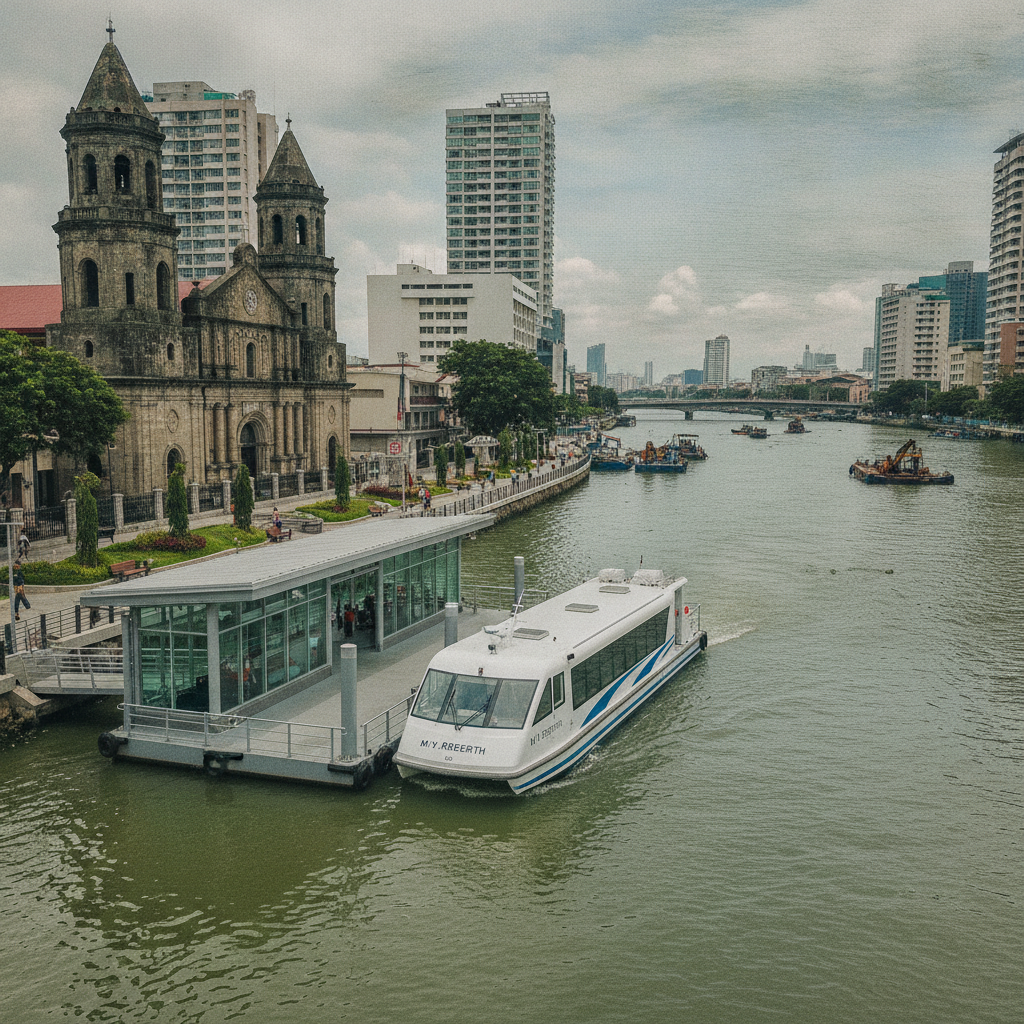
Manila's Hidden Layers: Poblacion's Craft Cocktail Scene, Pasig River's Biological Death & Revival & the Jollibee Sweet Spaghetti That Conquered the Filipino Diaspora
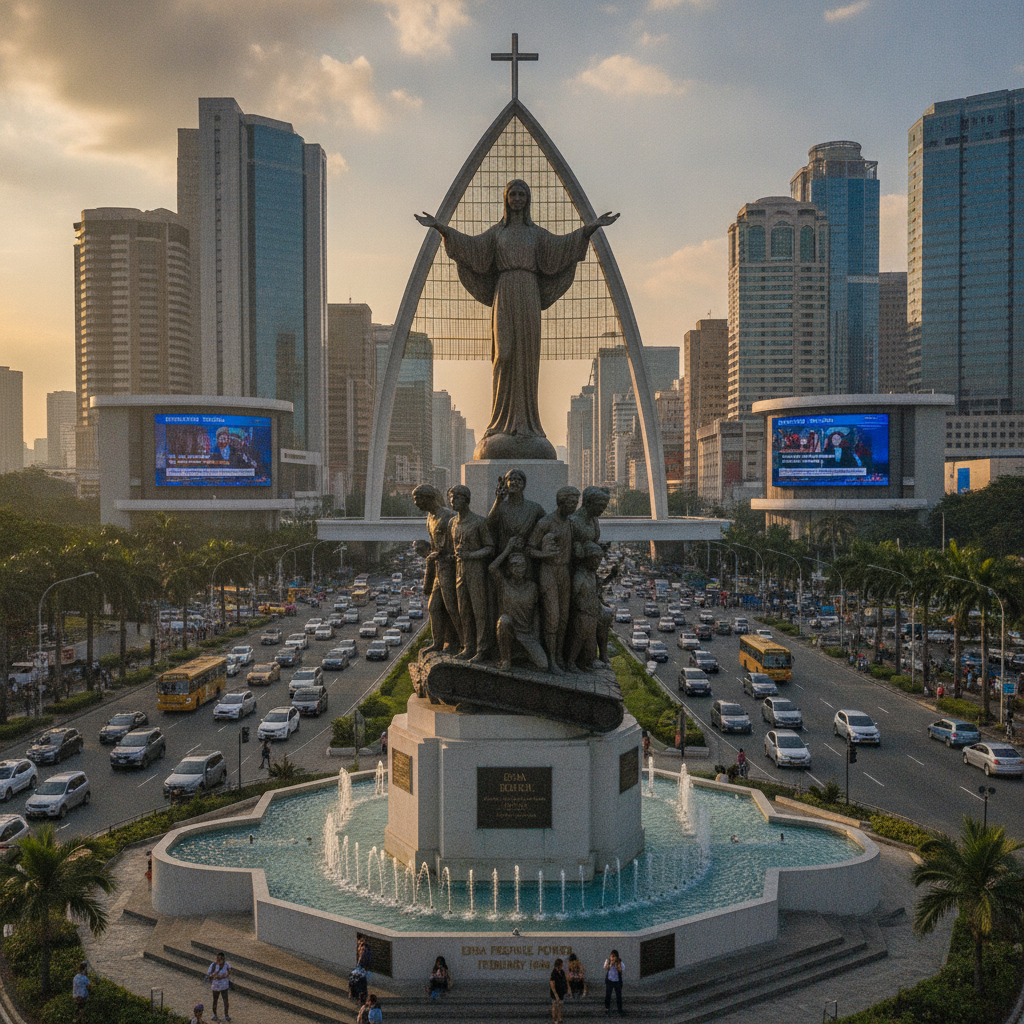
Manila's Modern Layers: The 'Thrilla in Manila' Coliseum, Eraserheads' 1993 Debut Album & the 1986 People Power 2-Million-Person EDSA Standoff
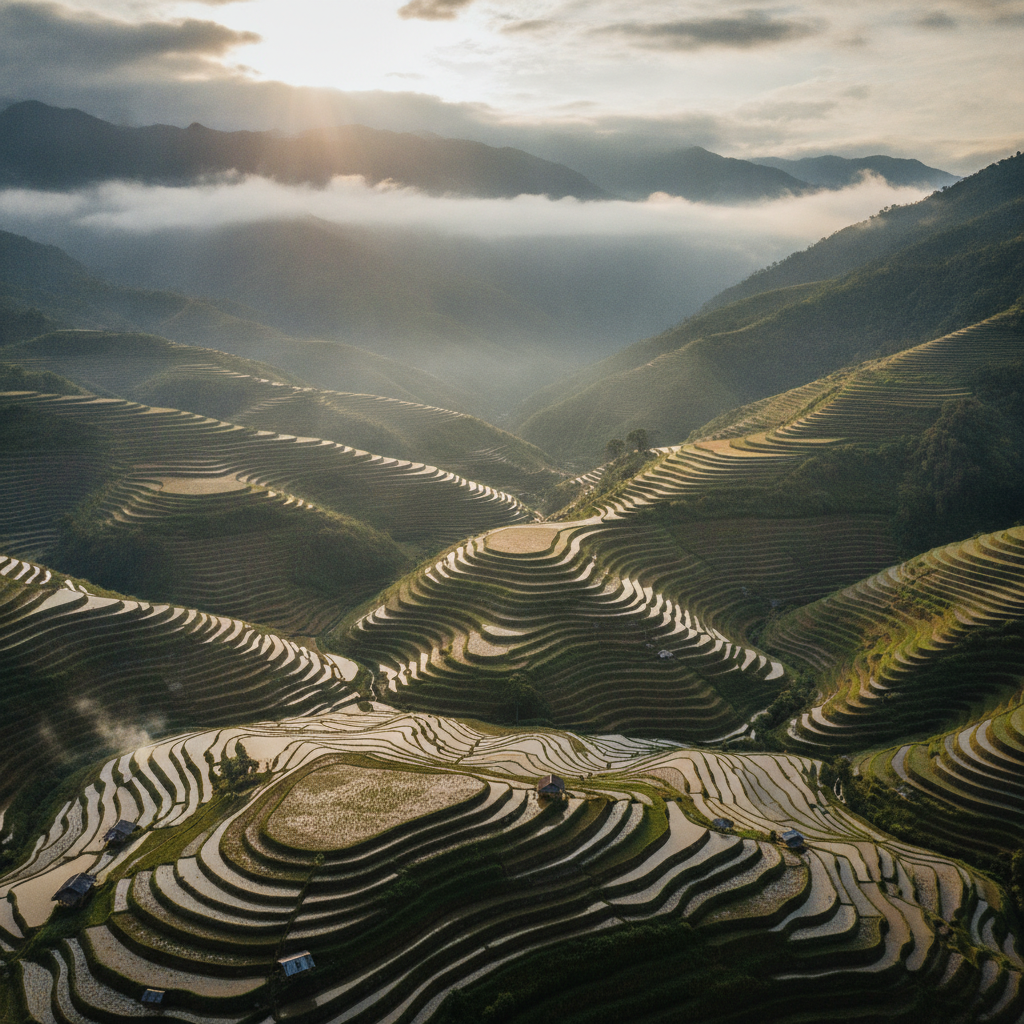
Manila's Philippines: Ifugao's 2,000-Year Terrace Gravity Irrigation, Vigan's 600m Cobblestone Street & Toyo Eatery's Filipino-Ingredients-Only Tasting Menu
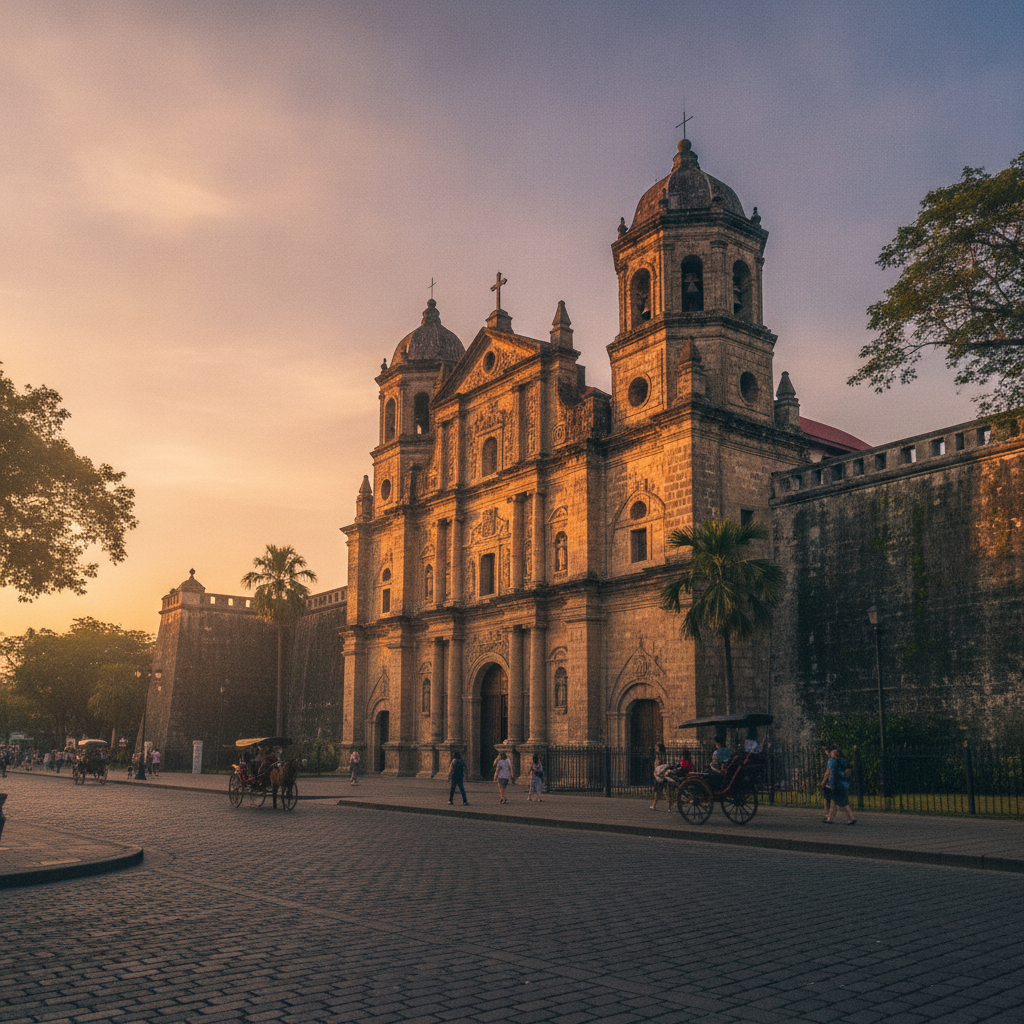
Manila: Intramuros' 1571 Spanish Walls, Binondo's 400-Year-Old Chinatown & the Spoliarium's Gold Medal in Madrid