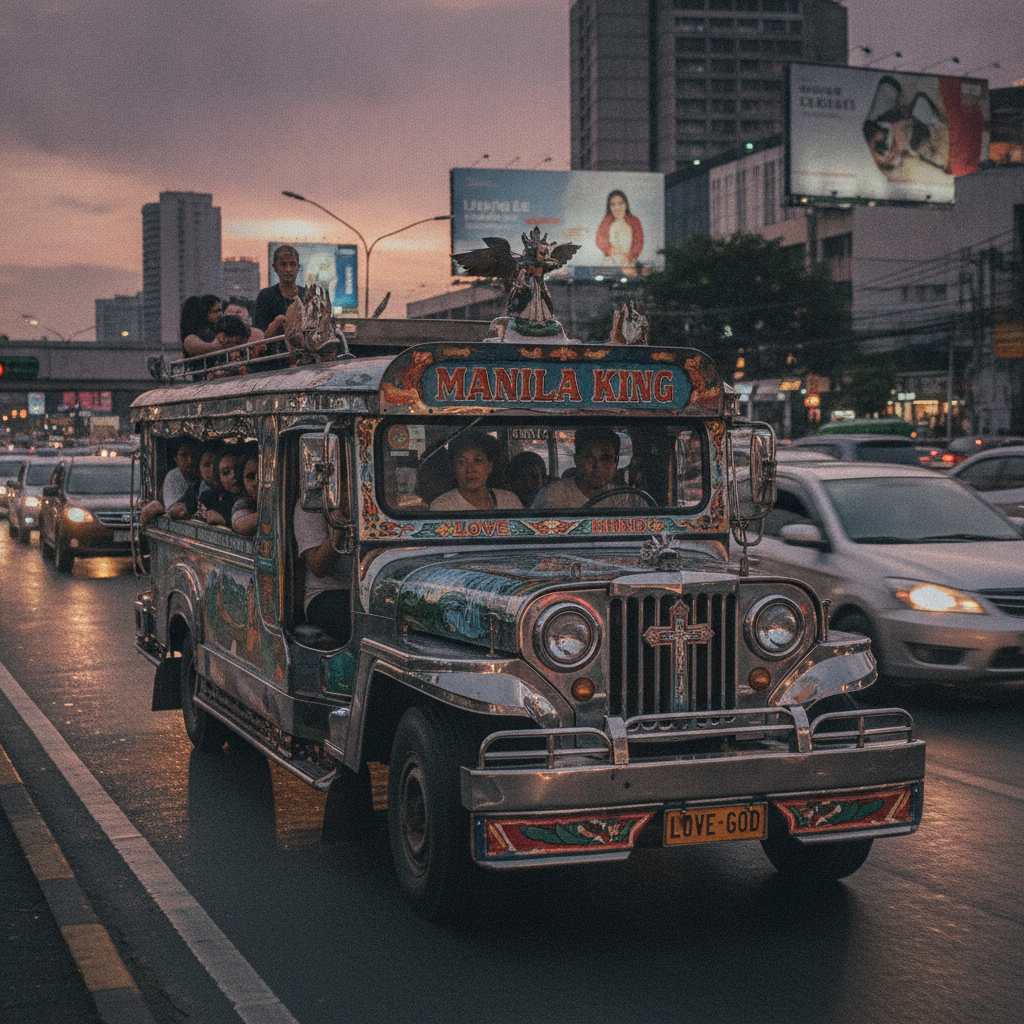
Manila's Modern Layers: The 'Thrilla in Manila' Coliseum, Eraserheads' 1993 Debut Album & the 1986 People Power 2-Million-Person EDSA Standoff
The Araneta Coliseum where Muhammad Ali fought Joe Frazier in 1975's 'Thrilla in Manila' is now the centre of the Cubao district's K-Pop fandom geography; Eraserheads' 'Ultraelectromagneticpop!' of 1993 defined Philippine alternative rock the same year the Taal eruption of 2020 sent pyroclastic surges 15 km and ash to NAIA; the Daniel Burnham 1905 City Beautiful plan for Manila that was only partly executed before WWI; Divisoria's 12-block wholesale market at 50–70% below mall prices in one of the world's most mall-dense countries (SM has 75+ locations); and Ferdinand Marcos Jr.'s 2022 election as President—son of the dictator whose $10 billion kleptocracy ended with 2 million civilians on EDSA in February 1986.
- 1
Quezon City & the Cultural Belt
Quezon City (QC)—the most populous city in Metro Manila (approximately 3.1 million people), designated the national capital from 1948 to 1976 before Marcos restored Manila as capital—is the cultural and educational heart of the Philippines: the location of the University of the Philippines Diliman campus (the country's premier public university), the Quezon Memorial Circle (a public park with a monument to Philippine President Manuel Quezon), and the Cultural Center of the Philippines area. The UP Diliman campus: a 493-hectare campus with the Oblation sculpture (a naked male figure with arms raised—the symbol of intellectual freedom, the most reproduced sculpture in the Philippines), the Main Library, and the Vargas Museum (the finest collection of Philippine modernist art). The Cubao district: the most energetic commercial and entertainment district in Quezon City—the Araneta Coliseum (the 'Big Dome'—one of the largest indoor arenas in Asia, where Muhammad Ali fought Joe Frazier in the 'Thrilla in Manila' in 1975), the Gateway Mall, and the New Frontier Theater (the Philippines' premier concert venue). The Eastwood City: a live-work-play development in Libis, QC—one of the first of the vertical city-within-a-city developments that now define Metro Manila's urban structure. The Maginhawa Food Park (in UP Village, QC): the most active street food park and small-restaurant district in Manila, where university students and the QC creative class eat at the most innovative and affordable end of the Manila food scene.
- 2
The Philippine-American War & the American Colonial Legacy
The American colonial period in the Philippines (1898–1946)—which followed the defeat of Spain in the Spanish-American War and the subsequent US suppression of the Philippine independence movement in the Philippine-American War (1899–1902, officially, though resistance continued until 1913)—left a legacy that is more thoroughly embedded in daily Philippine life than that of any other former colony's colonial power. The language: Filipino English (the Philippines is one of the world's largest English-speaking countries—approximately 95% of Filipinos speak English as a second or third language, more fluently than in any other Southeast Asian country) is the primary language of government, education, business, and social media. The American urban legacy: the Daniel Burnham plan for Manila (1905)—the most ambitious colonial urban plan in Asia, proposing a City Beautiful design for Manila and Baguio—was only partly executed before WWI diverted resources; the Intramuros and Rizal Park areas reflect the plan's partial execution. The Binondo Fire Stations, the post office, and the legislative buildings are among the neoclassical structures built under the American colonial government's architectural programme. The Marcos period (1965–1986): Ferdinand Marcos's authoritarian rule, characterised by martial law (declared 1972), systematic human rights abuses (50,000+ detained, 34,000+ tortured, 3,257 extrajudicial killings documented by Amnesty International), and the kleptocratic extraction of an estimated $10 billion from the Philippine treasury, ended with the 1986 People Power Revolution (EDSA Revolution) that brought Corazon Aquino to power.
- 3
Manila's Music Scene – OPM, Live Music & the Katipunan Strip
OPM (Original Pilipino Music)—the genre category covering Filipino popular music since the 1970s—is one of the most commercially active music industries in Southeast Asia, producing artists that are among the most followed on YouTube in the Philippines (a country where per-capita YouTube viewership is one of the highest in the world). The OPM tradition: beginning with the 'Manila Sound' of the 1970s (melodic rock and pop bands including Hotdog, Asin, and the genre-defining work of Ryan Cayabyab), developing through the 1990s alternative rock scene (Eraserheads—the most significant Philippine band in OPM history, whose 1993 debut 'Ultraelectromagneticpop!' defined a generation), and continuing through the contemporary pop-R&B scene (Ben&Ben, BINI, and the artists of the Star Music, Viva, and indie record labels). The live music venues: 70s Bistro in Quezon City (the classic OPM live music institution, running since the 1970s), Saguijo in Makati (the indie and alternative rock venue most associated with the contemporary Philippine music scene), and the bars of the Poblacion area in Makati (the hipster bar district, where live bands play Thursday–Saturday). The K-Pop intersection: the Philippines has one of the largest and most active K-Pop fandoms in the world outside Korea (particularly ARMY—BTS fandom—and BLINK—BLACKPINK fandom), and this has created a Korean pop-culture district in the Cubao and Quezon Avenue areas of QC.
- 4
Taal Volcano & the Tagaytay Escape
Taal Volcano—located 60 km south of Manila within Taal Lake (itself within a much larger ancient caldera) in the Batangas province—is one of the most unusual volcanic formations in the world: a volcanic island within a lake within a larger lake system, within a caldera—and is one of the Decade Volcanoes (a UN-designated list of the 16 volcanoes considered most likely to cause significant casualties due to their activity and proximity to populated areas). The Taal eruption of January 2020: a sudden eruption sent a pyroclastic surge 10–15 km from the main crater, depositing ash across Metro Manila (temporarily closing NAIA airport, covering Manila in ash visible from satellite), forcing the evacuation of 800,000 people from the Tagaytay and Talisay areas. The eruption destroyed the island's vegetation and caused significant structural damage to properties on the shore of Taal Lake. The current status: post-eruption access restrictions to the main crater island remain variable; the Taal area has gradually reopened, but the main island trek (previously a popular day-trip attraction from Manila) requires checking current Philippine Institute of Volcanology and Seismology (PHIVOLCS) status. Tagaytay City: the ridge city above Taal Lake, at 700 metres altitude—Manila's most popular weekend escape, 60–90 minutes by car from Manila; known for the Taal view (the lake-within-lake volcanic panorama visible from Tagaytay Ridge), the cool highland climate, and the bulalo (beef marrow soup—the regional dish of Batangas, most popular in Tagaytay's ridge restaurants).
- 5
Divisoria & Greenhills – Shopping Manila's Markets
Manila's retail landscape—simultaneously one of the most mall-dense in the world (SM Malls operate 75+ locations in the Philippines, with the SM Mall of Asia being one of the largest shopping malls in the world by gross floor area at 407,000 m²) and home to the most chaotic and price-competitive street markets in Southeast Asia—reflects the full spectrum of Philippine consumer culture. Divisoria (the wholesale market district in Tondo, northern Manila, adjacent to the Divisoria LRT station): the largest and most comprehensive open market in the Philippines—a 12-block area where every form of wholesale and retail goods is sold at Manila's lowest prices; textiles (the Divisoria fabric market is the source for most of Manila's garment industry), clothing, Christmas decorations, toys, electronics, and kitchenware at prices 50–70% below mall retail. The Divisoria experience: extremely crowded (particularly December), requires basic street navigation awareness, and is one of the most intense commercial environments in Asia—but produces prices unavailable elsewhere. Greenhills Shopping Center (in San Juan, between Mandaluyong and Quezon City): the most concentrated electronics and 'ukay-ukay' (secondhand imported clothing—a booming Philippine retail sector driven by the 'ref shop' culture of Filipinos returning from abroad with secondhand goods) market in Metro Manila. The Quiapo market (adjacent to Quiapo Church, near the Quiapo LRT station): the Black Nazarene market, selling religious goods, herbal medicine, and the widest range of pirated goods in Manila.
- 6
The People Power Revolution & Philippine Democracy
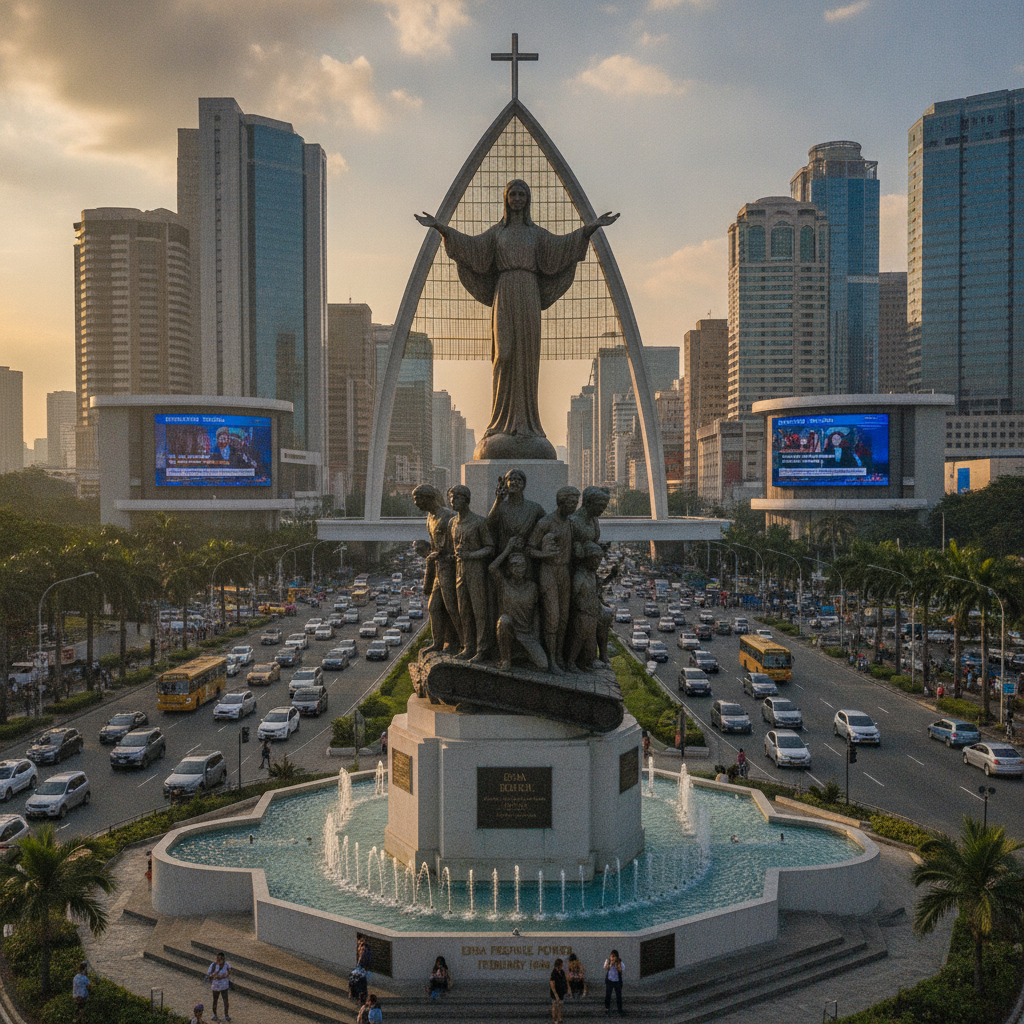
The EDSA People Power Revolution of February 22–25, 1986—the most significant event in modern Philippine history—saw millions of unarmed civilians fill the EDSA (Epifanio de los Santos Avenue) highway in Metro Manila to block military tanks supporting Ferdinand Marcos, ultimately compelling Marcos to flee to Hawaii and installing Corazon Aquino as president in the Philippines' transition to democracy. The four days: beginning with military defections on 22 February (Defence Minister Juan Ponce Enrile and Deputy Chief of Staff Fidel Ramos defecting from Marcos to Aquino), the revolution developed as Radio Veritas and NISA (now DZMM) broadcast the call for civilians to gather on EDSA; by 23 February, 2 million people were on the street between the Ortigas and Camp Crame area; Marcos fled on 25 February 1986. The EDSA Shrine: the monument on EDSA at Ortigas, erected at the site of the most critical standoff between civilians and tanks—a bronze statue of the Virgin Mary surrounded by civilian figures, the most visited memorial of the revolution. The legacy: People Power became a globally recognised model of non-violent regime change (inspiring the Velvet Revolution in Czechoslovakia, Tiananmen Square protests, and subsequent 'Colour Revolutions'); the Philippine democracy that emerged has been unstable (multiple coup attempts, the Arroyo-era electoral fraud, and the 2022 election of Ferdinand Marcos Jr.—son of the dictator—as president, an outcome regarded by historians and human rights organisations with serious concern).
Walk this route with audio
Stories play automatically as you reach each stop — no tapping needed.
More in Manila
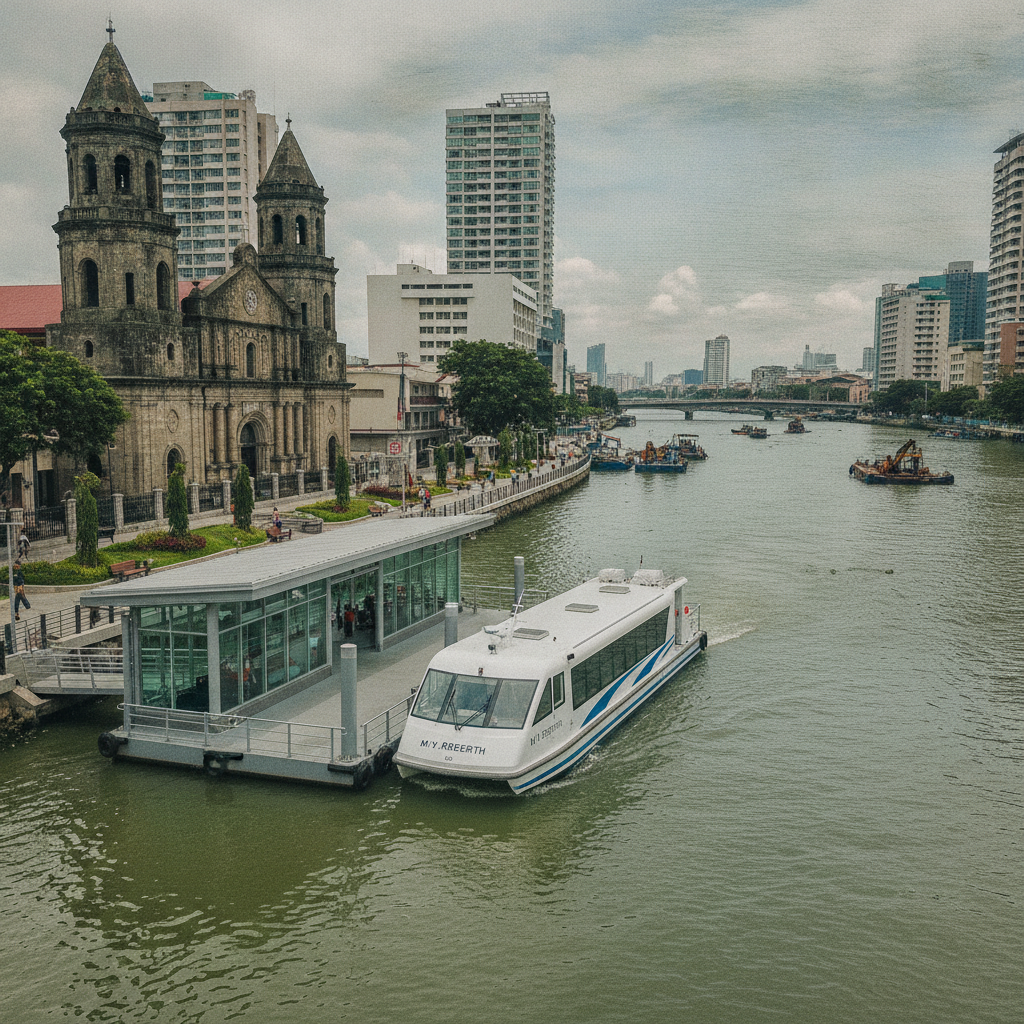
Manila's Hidden Layers: Poblacion's Craft Cocktail Scene, Pasig River's Biological Death & Revival & the Jollibee Sweet Spaghetti That Conquered the Filipino Diaspora
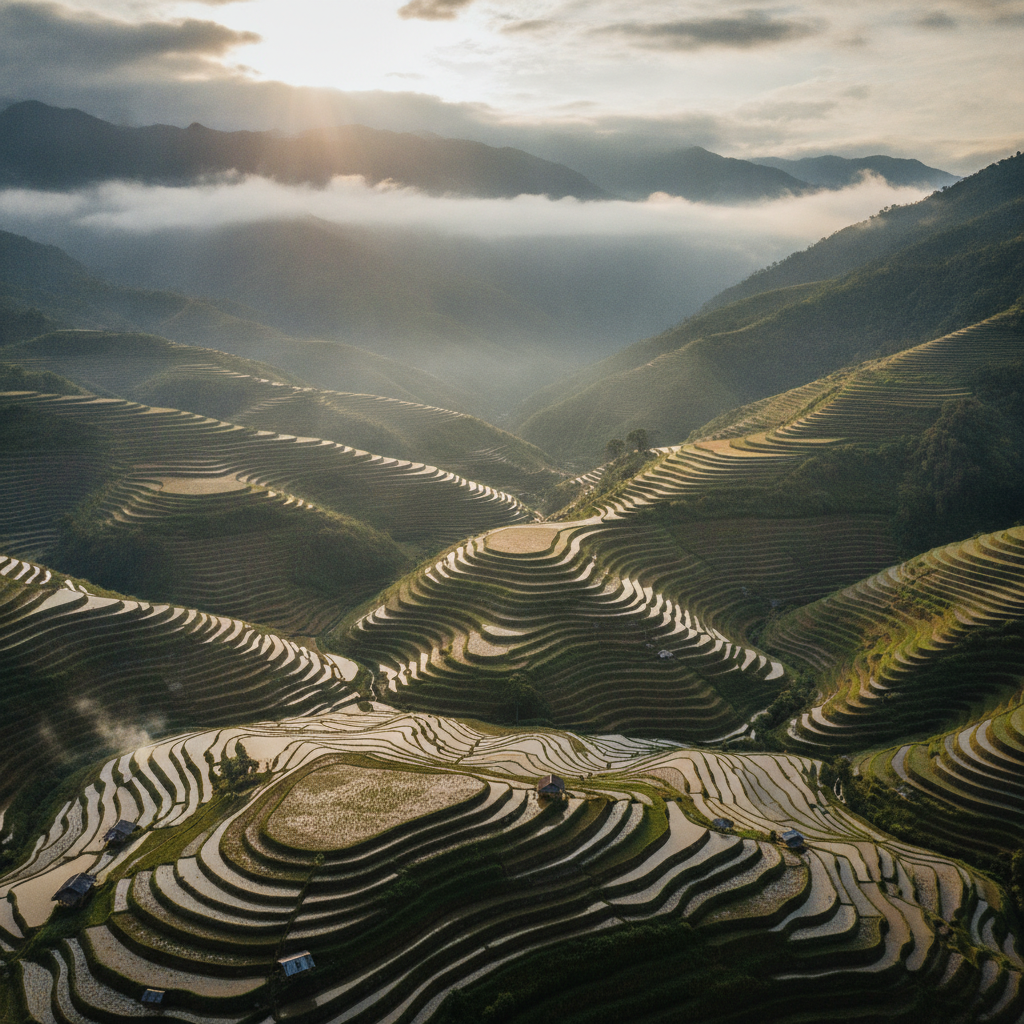
Manila's Philippines: Ifugao's 2,000-Year Terrace Gravity Irrigation, Vigan's 600m Cobblestone Street & Toyo Eatery's Filipino-Ingredients-Only Tasting Menu
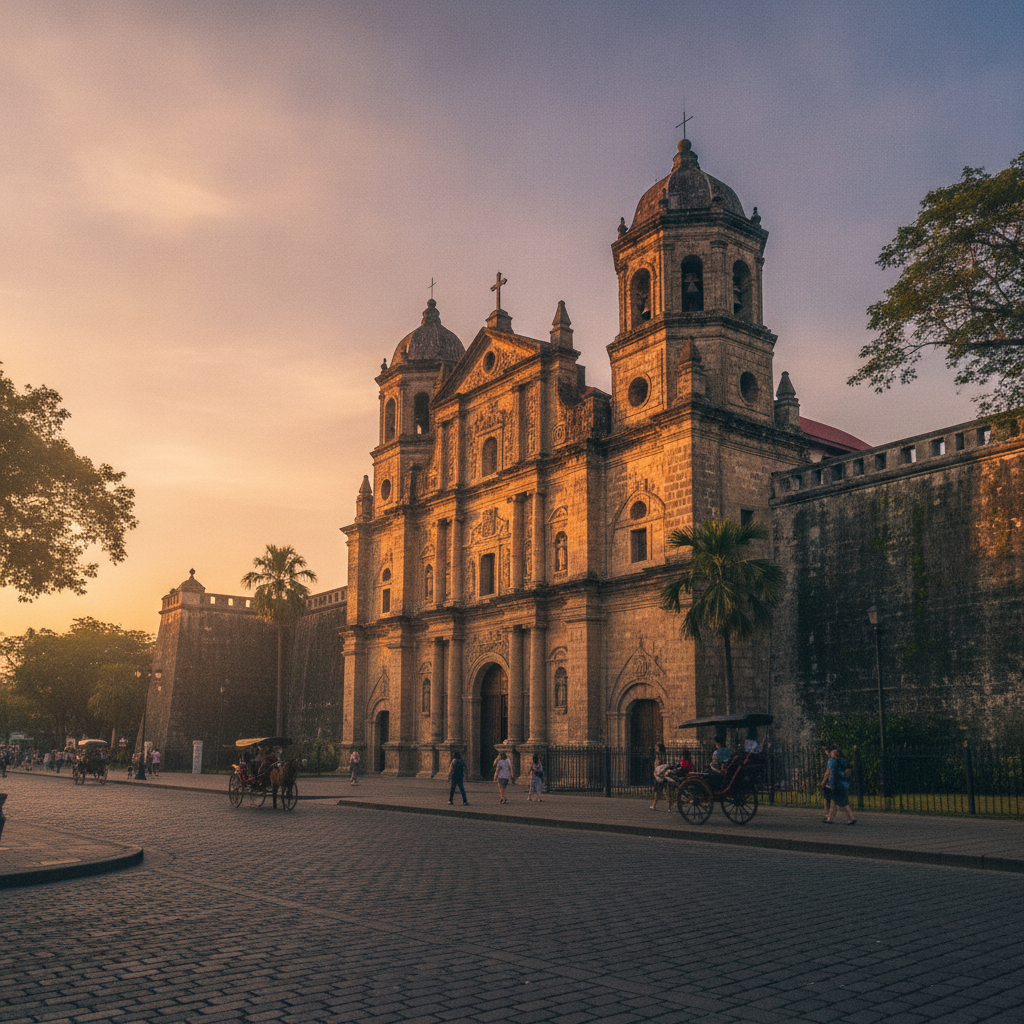
Manila: Intramuros' 1571 Spanish Walls, Binondo's 400-Year-Old Chinatown & the Spoliarium's Gold Medal in Madrid
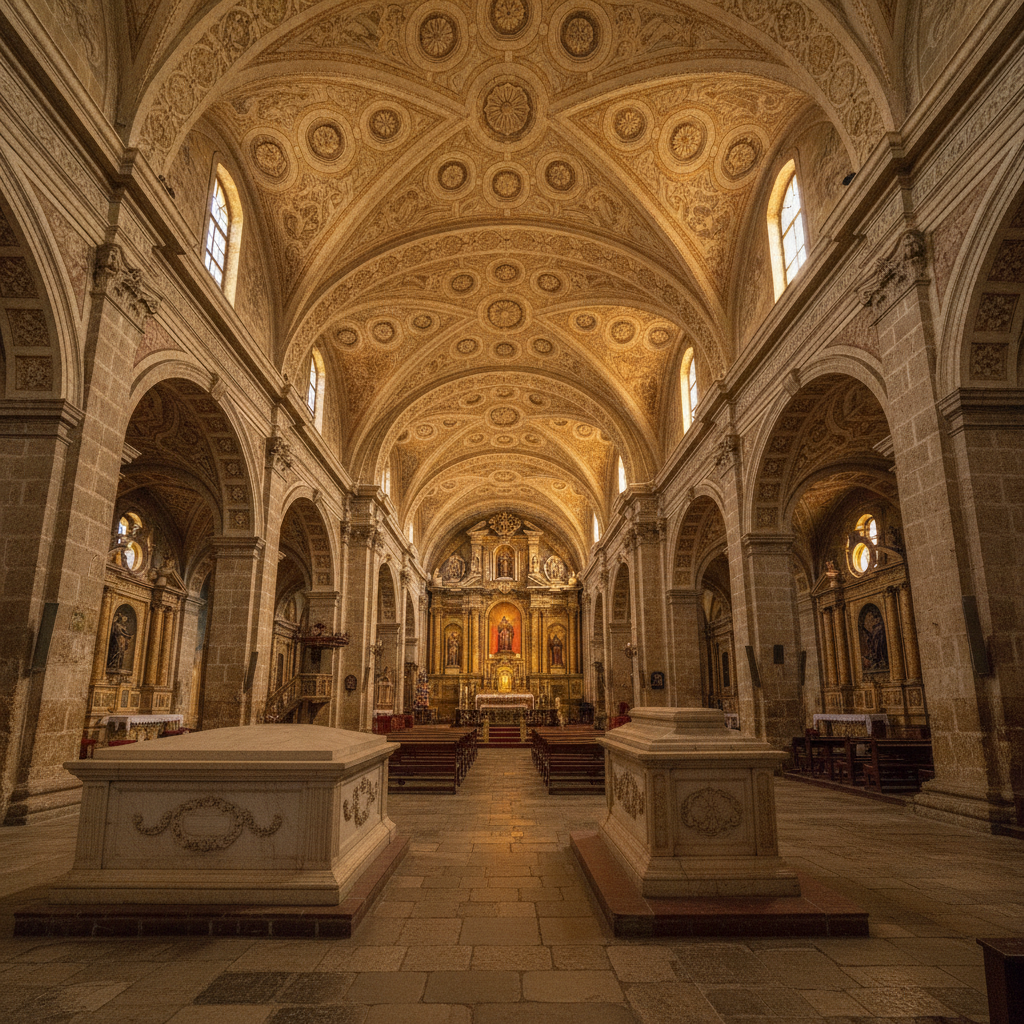
Manila's Spanish Palimpsest: The 1607 Trompe-l'Oeil Church Ceiling That Survived 1945, Lapu-Lapu Killing Magellan & 8 Million People Carrying the Black Nazarene