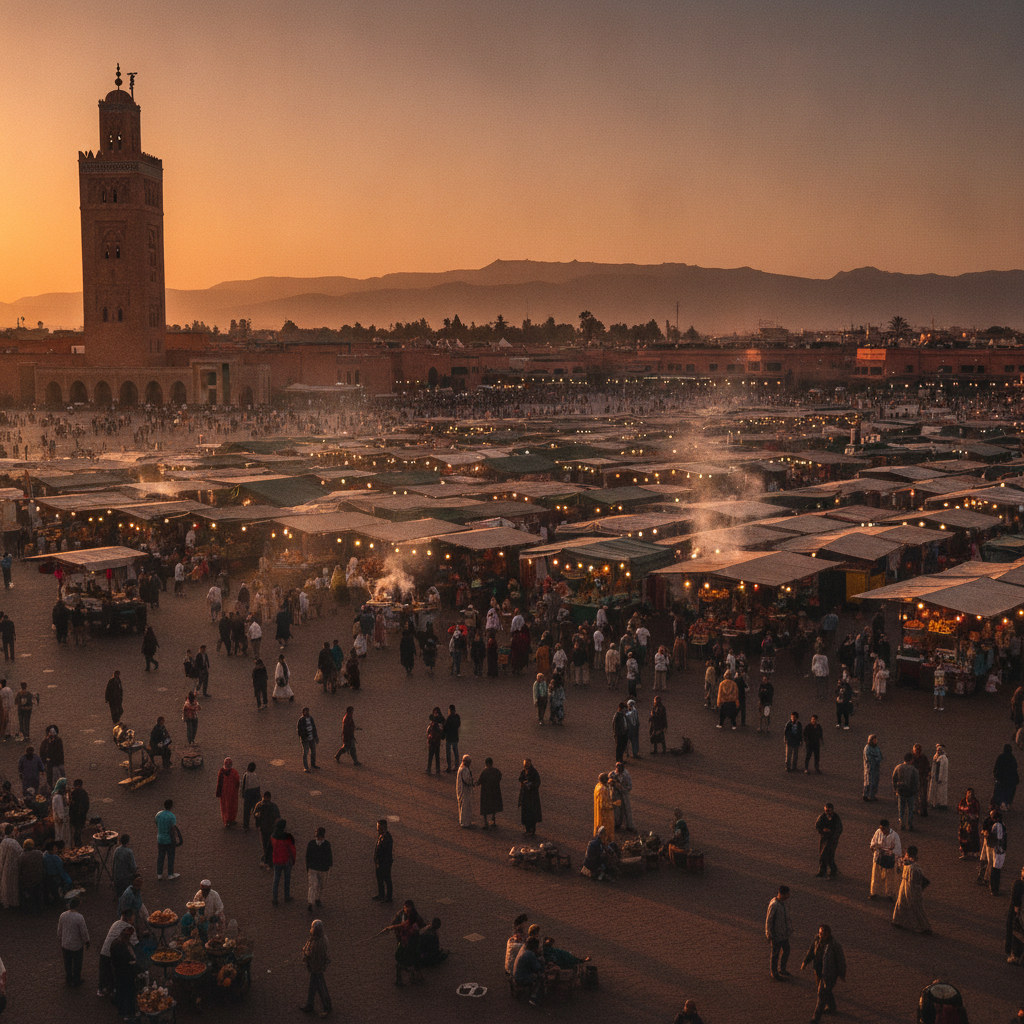
Djemaa el-Fna, the Medina & the Souks — Marrakech's Living UNESCO Heritage
Marrakech (the 'Red City' — the ochre-walled imperial city in the foothills of the Atlas Mountains, population approximately 1 million, founded 1062 by the Almoravid dynasty): Marrakech is the most visited city in Africa and the most internationally recognized Moroccan destination, its medina (the historic walled city, UNESCO World Heritage since 1985) a living medieval urban organism of souks, mosques, palaces, and riads centred on the spectacular Djemaa el-Fna square.
- 1
Djemaa el-Fna — Africa's Greatest Spectacle
Djemaa el-Fna (the large open square at the heart of Marrakech's medina — the name means 'Assembly of the Dead' in Arabic, a reference to its historical use as a place of public execution — recognized by UNESCO in 2001 as an Intangible Cultural Heritage of Humanity, the first non-building inscription in UNESCO heritage history): the square is the most continuously active public space in Africa — from early morning (orange juice sellers and dried fruit vendors) through the afternoon (acrobats (البهلوانيون — al-bahlawaniyun), water sellers (in traditional red costume with brass cups), henna artists, and monkey handlers) to the evening (the most spectacular time, when approximately 100 food stalls are set up in the square, transforming it into an enormous open-air restaurant serving harira (the thick tomato and lentil soup), couscous, lamb brochettes (mechoui), fried fish, sheep's head, and snails); the square's night-time Gnawa musicians (the hereditary musicians descended from sub-Saharan African slaves, playing the guembri (the three-stringed bass lute) and qraqeb (metal castanets) in hypnotic rhythmic trance music) are the most distinctive musical performance in Morocco.
- 2
The Souks — Marrakech's Labyrinthine Markets
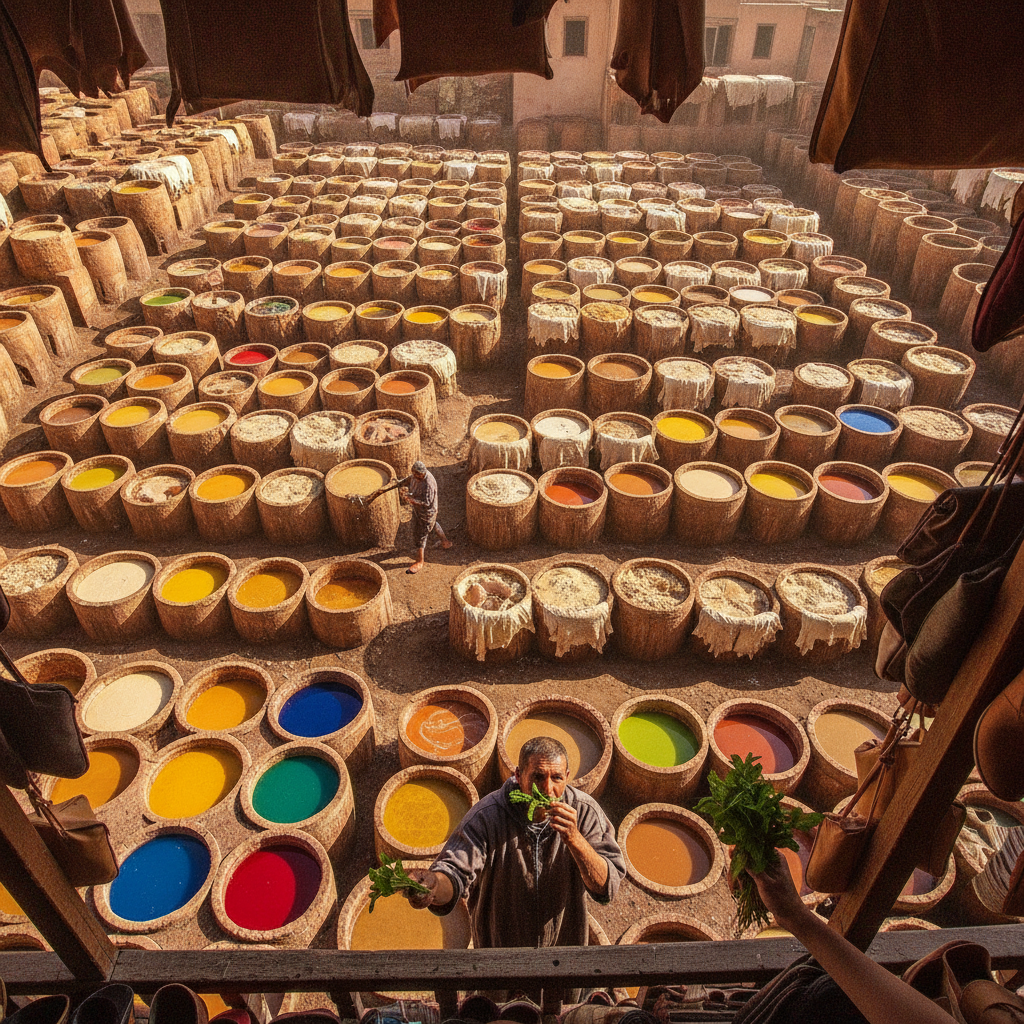
The Marrakech souks (the network of covered and open-air markets in the northern medina, immediately north of Djemaa el-Fna — the most complex and most visited traditional market system in North Africa): the souks are organized by trade, a medieval commercial geography that has survived largely intact: Souk Semmarine (the main covered souk street entering the market from the Djemaa el-Fna, lined with clothing, leather goods, and tourist products), Souk el-Attarin (the spice and perfume souk — the most intoxicating of all the souks, with pyramids of dried spices (cumin, turmeric, coriander, saffron (the finest saffron in the world comes from Taliouine in the Anti-Atlas), paprika, ras el-hanout (the Moroccan spice blend of 20-30 spices)), dried rose petals (from the Dadès rose valley), and argan oil (the Moroccan specialty pressed from the nuts of the endemic argan tree (Argania spinosa), used as cooking oil, cosmetic oil, and the base of amlou (the almond and argan oil paste))), Souk des Teinturiers (the dyers' souk — where the wool hanks in vivid colours hang drying in the lanes), Souk Cherratin (the leather souk), and Souk Haddadine (the metalworkers' souk, where the hammering of copper and brass lanterns can be heard from a distance).
- 3
Koutoubia Mosque — The Minaret That Defined a City
Koutoubia Mosque (Koutoubia Mosque — Rue Koutoubia, at the southwest corner of Djemaa el-Fna — the largest mosque in Marrakech and the most important surviving Almohad monument in Morocco): the Koutoubia minaret (70 metres tall, built 1158-1199 during the reign of the Almohad Caliph Yaqub al-Mansur) is the defining monument of Marrakech and the masterpiece of Almohad architecture in Morocco; the minaret (with its characteristic polylobed arched windows on each face, the geometric plasterwork panels in different geometric patterns on each side, and the lantern tower at the top — the traditional design of the ribbed ceramic tile lantern that was subsequently imitated in the Hassan Tower in Rabat and the Giralda in Seville) established the architectural template for the great minarets of the western Islamic world; the Koutoubia gardens (the formal garden surrounding the mosque, with its rose beds and orange trees) are the finest public gardens in the Marrakech medina.
- 4
Bahia Palace & El Badi Palace — Marrakech's Imperial Palaces
Bahia Palace (Rue Riad Zitoun el Jdid — the late 19th-century palace built by Si Ahmed ibn Moussa (Ba Ahmed), the Grand Vizier of Morocco, in 1894-1900 — the finest example of traditional Moroccan palace architecture open to the public in Marrakech): the palace (the name means 'Brilliance' in Arabic) was built for Ba Ahmed's four wives and 24 concubines, and its 8-hectare complex of 160 rooms around a series of ornamental courtyards (with their characteristic zellij tilework, carved stucco plasterwork, painted cedarwood ceilings, and citrus gardens) is the most elaborate example of Moroccan palatial decoration in Marrakech; El Badi Palace (Place des Ferblantiers — the ruins of the 16th-century palace built by the Saadian Sultan Ahmad al-Mansur (1578-1603) at the height of Moroccan power, following the defeat of the Portuguese at the Battle of the Three Kings (1578) — the most extensive palace ruin in Morocco, with its vast central courtyard (135m × 110m) and the 360 rooms and 40 pavilions visible as rubble and standing walls surrounding the central pool).
- 5
Ben Youssef Madrasa — The Most Beautiful Koranic School in Morocco
Ben Youssef Madrasa (Rue Assouel, in the northern medina — the 14th-century Koranic school (madrasa) restored and enlarged in 1564-1565 by the Saadian Sultan Abdallah al-Ghalib — the largest madrasa in Morocco and the finest example of Marinid and Saadian architecture in Marrakech): the madrasa (the name is from Abu Youssef Yacoub, the Merinid sultan who founded the original 14th-century school on the site) was the most important centre of Islamic learning in Morocco for centuries, housing up to 900 students in its small cells arranged around the central courtyard; the central courtyard (the architectural centrepiece — with its white marble pool, carved cedarwood screens, zellij tile dado (carved tilework in geometric patterns), carved stucco panels in arabesque designs, and the carved cedarwood upper gallery above) is considered the most beautifully decorated interior space in Morocco; the madrasa was closed in 1960 and restored as a tourist site.
- 6
Marrakech's Riads — Living in the Medina
Marrakech's riads (the traditional Moroccan courtyard houses of the medina, typically with an inward-facing design (blank exterior walls, all rooms opening onto a central courtyard) with a garden or fountain in the central courtyard (the word 'riad' derives from the Arabic 'Ryad' (garden)): the conversion of medina riads into boutique hotels and guesthouses has been the defining trend in Moroccan tourism since the 1990s, making Marrakech one of the great hotel destination cities in the world; staying in a riad (with its intimate courtyard, rooftop terrace, traditional Moroccan breakfast of msemen (square flatbread), khobz (round bread), olive oil, honey, amlou paste, and mint tea) is the defining Marrakech experience; the best riad addresses in the medina are concentrated in the Mouassine, Bab Doukkala, and Kennaria neighbourhoods of the northern medina, with the most architecturally significant riads having original zellij tilework, carved plaster, and painted cedarwood ceilings dating to the 17th-19th centuries.
Walk this route with audio
Stories play automatically as you reach each stop — no tapping needed.
More in marrakech
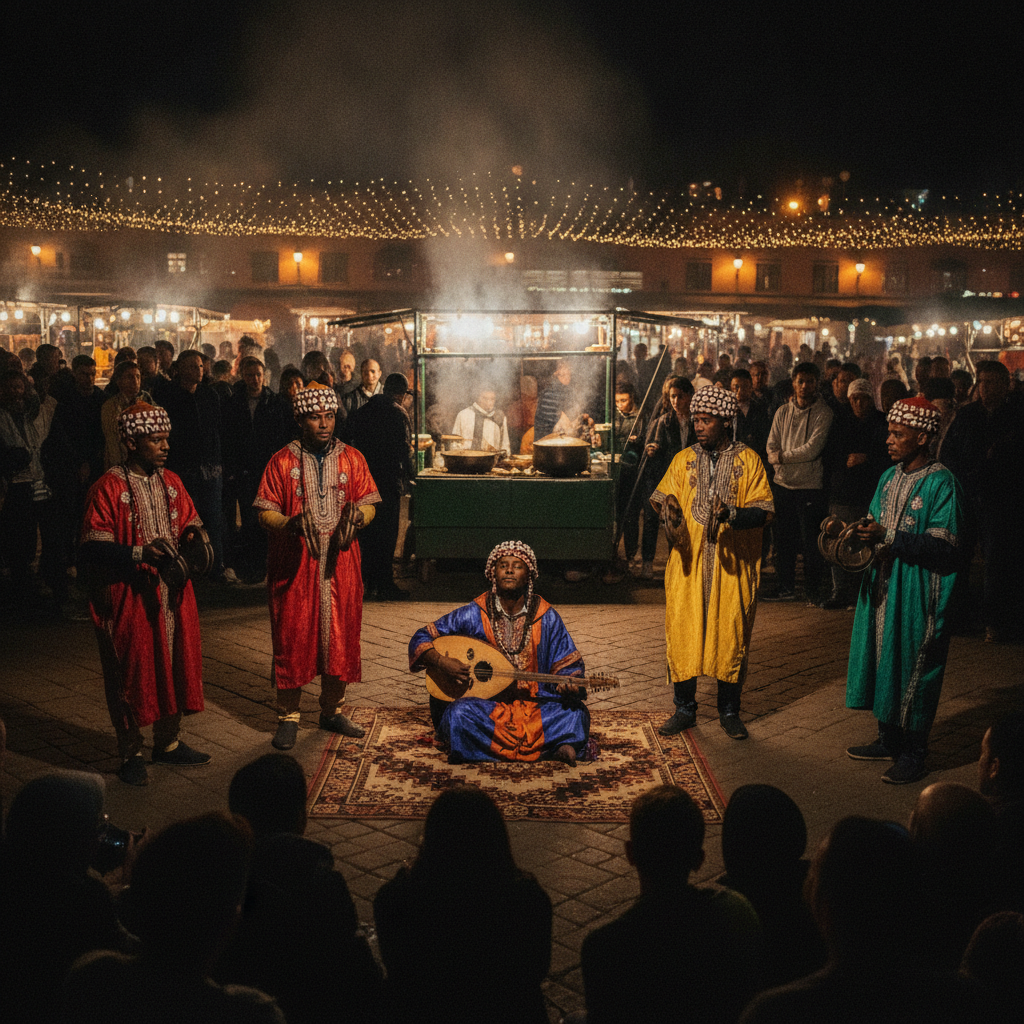
Gnawa Music, Sufi Culture & the Spiritual Heart of Marrakech
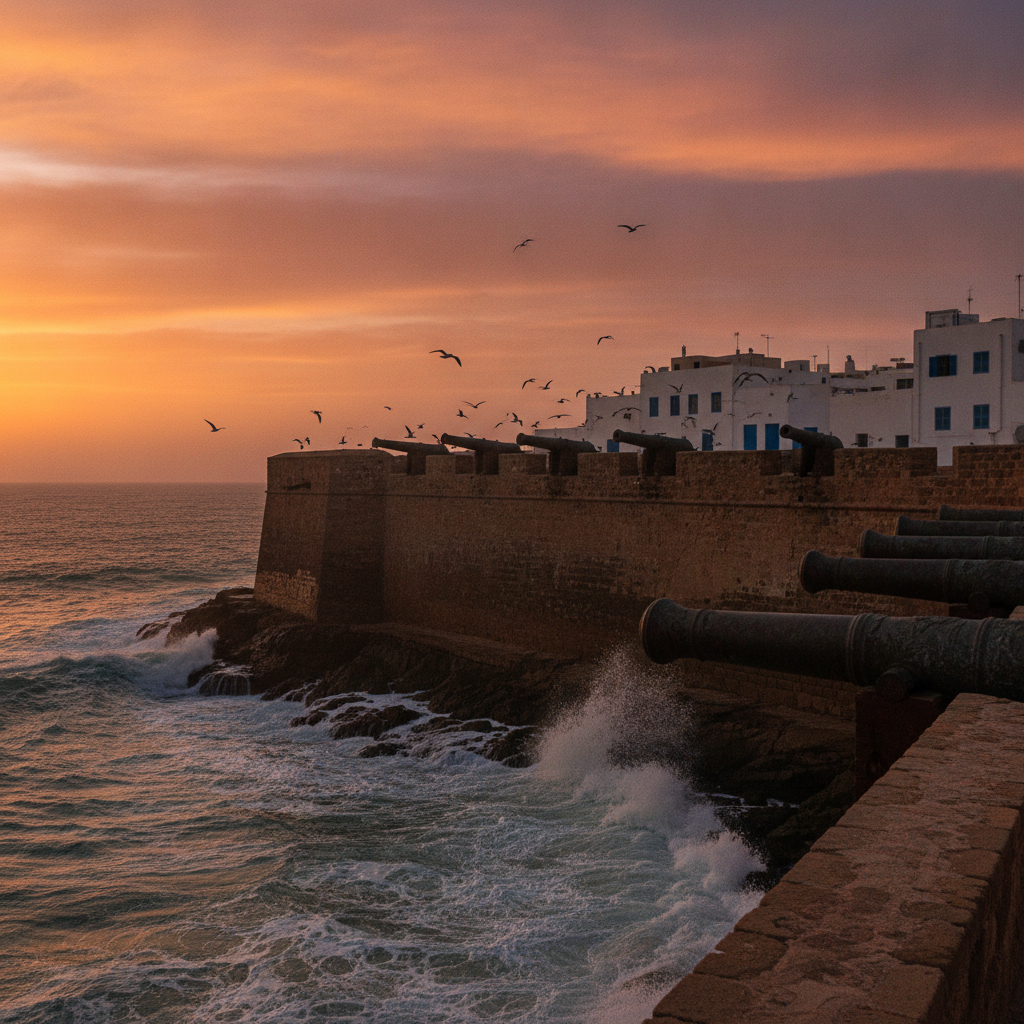
Essaouira — Marrakech's Atlantic Escape
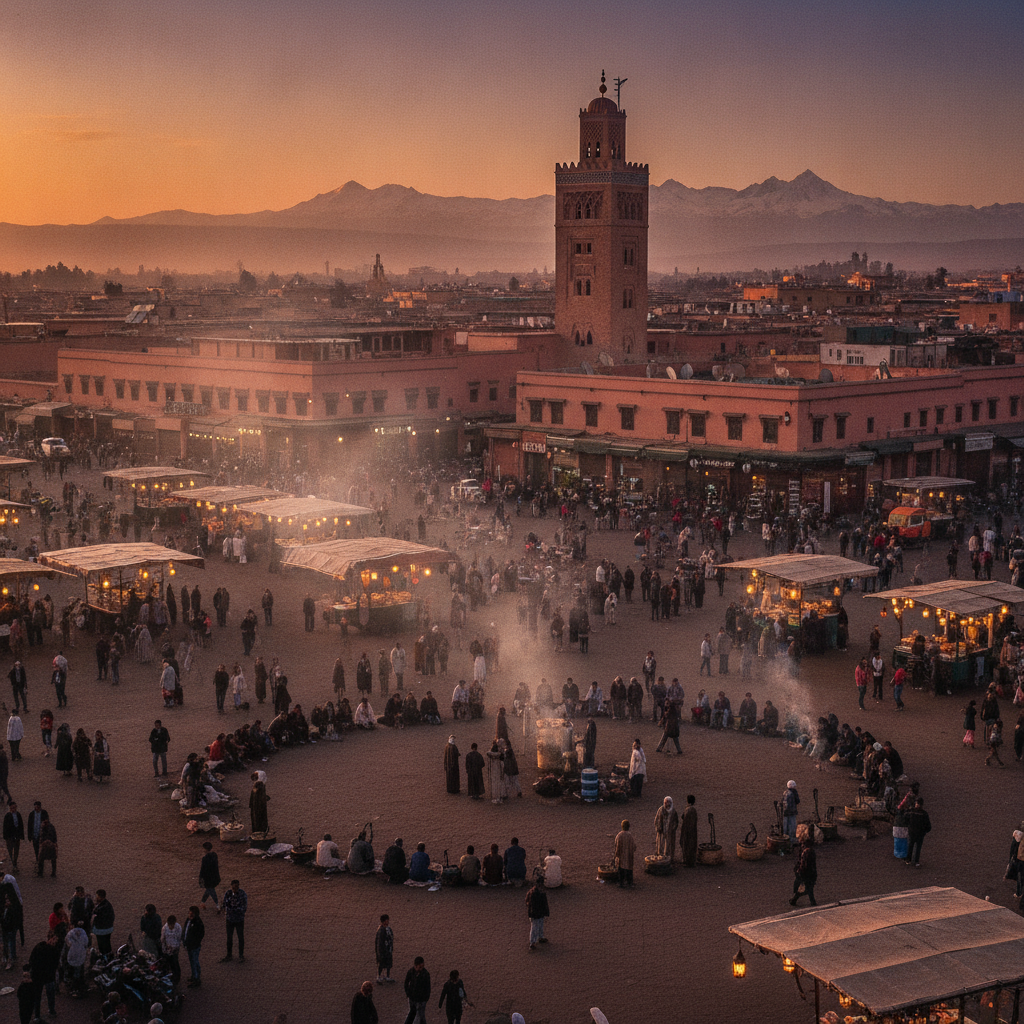
Marrakech Essential: Djemaa el-Fna the Living Square, the Medina Souks, the Koutoubia Mosque, the Bahia Palace, the Saadian Tombs, and the Pink City Character
Moroccan Crafts — Leather Tanneries, Pottery & Artisans

Marrakech Wellness: The Hammam Ritual Bathing, the Riad Spa Culture, Argan Oil Beauty Tradition, the Moroccan Hospitality Ritual, the Henna Art, and the Wellness Tourism
