Melbourne: Yarra Valley Wine and Healesville Sanctuary, Mornington Peninsula Hot Springs, Federation Square and NGV Art Gallery, St Kilda Beach and Luna Park, Fitzroy Creative Heartland, Phillip Island Penguin Parade
Melbourne extended: Yarra Valley Pinot Noir and Puffing Billy steam railway, Mornington Peninsula wine and hot springs, Federation Square and the National Gallery of Victoria, St Kilda beach and penguins, Fitzroy and Collingwood bohemian Melbourne, and Phillip Island (world largest little penguin colony, Penguin Parade).
- 1
Yarra Valley Wine Region - Pinot Noir and Chardonnay 90 Minutes from Melbourne
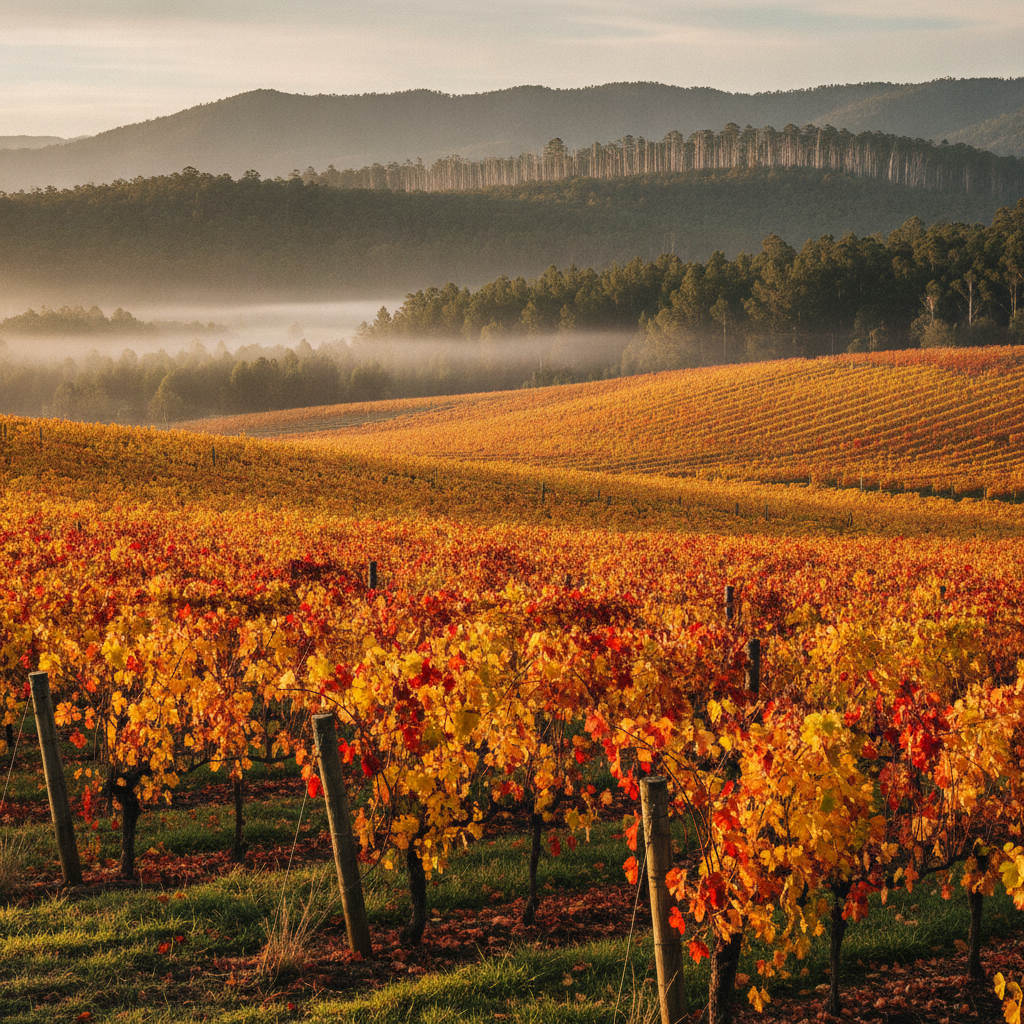
Yarra Valley (the wine region east of Melbourne, approximately 60-80 km from the CBD, 1 to 1.5 hours): the primary wine region within day-trip range of Melbourne and one of the most respected cool-climate wine regions in Australia. The Yarra Valley climate: the valley floor (elevation 50-100 m) and the Upper Yarra (elevation 400-500 m) produce distinctly different wine styles from the same grape varieties; the Upper Yarra produces some of the most elegant and age-worthy Pinot Noir and Chardonnay in Australia. The Yarra Valley wineries: Coldstream Hills (founded by wine critic James Halliday in 1985), Yering Station (the oldest winery in Victoria, established 1838 on the same property), Domaine Chandon (the Moet and Chandon sparkling wine estate), and De Bortoli (the Yarra Valley estate of the De Bortoli family). The Healesville Sanctuary (the wildlife park in the Yarra Ranges, 65 km from Melbourne): the primary Melbourne-area wildlife sanctuary, with platypus, wombat, echidna, Tasmanian devil, and Australian bird species in naturalistic habitats. The Dandenong Ranges (the hills east of Melbourne, 40-50 km from the CBD): the forested ranges with Puffing Billy (the steam railway through the mountain ash forest, operating since 1900).
- 2
Mornington Peninsula - Wine, Hot Springs, and Peninsula Beaches
Mornington Peninsula (the peninsula south of Melbourne, framing Port Phillip Bay on the west and Western Port Bay on the east, approximately 70-90 km from Melbourne CBD): the primary weekend escape destination for Melbourne residents. The Mornington Peninsula wine region: Australia most southerly mainland wine region, with a cool maritime climate producing Pinot Noir and Pinot Gris of distinction. The Mornington Peninsula wineries: Stonier Wines, Paringa Estate, Kooyong, and Main Ridge Estate are among the most respected producers. The Peninsula Hot Springs (at Rye, on the western Mornington Peninsula): the largest hot spring facility in the southern hemisphere, fed by geothermal water from 637 m depth at 51 degrees C and cooled to bathing temperature. The Mornington Peninsula beaches: the bay-side beaches (Mount Martha, Mornington, Dromana, and Rye) are sheltered and warm; the ocean-side beaches (Portsea, Sorrento, and London Bridge rock arch) are wild and surf-exposed. The Point Nepean National Park (at the tip of the Mornington Peninsula): the historic military reserve and quarantine station, with the fort tunnel and the views of the Port Phillip Heads from the cannon emplacements.
- 3
Federation Square, the NGV, and Melbourne Arts Precinct
Federation Square (on the corner of Flinders Street and Swanston Street, completed 2002): the civic gathering place of Melbourne, with the distinctive deconstructivist architecture (the sandstone and zinc facades designed by LAB Architecture Studio). Federation Square institutions: the Ian Potter Centre (the NGV Australia gallery, the Australian art collection of the National Gallery of Victoria), the Australian Centre for the Moving Image (ACMI, the national museum of film, television, and digital culture), and the Melbourne Visitor Centre. The National Gallery of Victoria (the NGV, on St Kilda Road, 500 m south of Federation Square): the most visited art gallery in Australia, with the NGV International collection (European and Asian art, including works by Rembrandt, Monet, Picasso, and Warhol). The Southbank arts precinct: the Arts Centre Melbourne (the performing arts complex with the distinctive spire, on St Kilda Road) comprises Hamer Hall (the 2,661-seat concert hall), the State Theatre (2,079 seats), and the Playhouse. The Melbourne Theatre Company (at the Southbank Theatre, 600 m from the Arts Centre): the primary professional theatre company in Melbourne. The Melbourne Symphony Orchestra (at Hamer Hall): one of the finest orchestras in Australia.
- 4
St Kilda and the Melbourne Beach Scene
St Kilda (the beachside inner suburb, approximately 6 km south of the Melbourne CBD): the most famous suburb of Melbourne and the center of the Melbourne beach and bar culture. The St Kilda Esplanade: the long foreshore promenade along the St Kilda beach, with the Sunday Esplanade Artisan Market (the outdoor arts and crafts market, operating since 1970). The Luna Park St Kilda (the funfair on the St Kilda foreshore, opened 1912): the historic amusement park with the famous grinning face entrance (Mr Moon) and the heritage-listed Scenic Railway (the oldest continuously operating roller coaster in the world, built 1912). St Kilda nightlife: Acland Street (the cake shop street with the Jewish and Eastern European bakeries, pastry shops, and the Sunday street market), and Fitzroy Street (the bar and restaurant strip connecting St Kilda to the St Kilda Junction). The St Kilda penguins: the colony of little penguins (the fairy penguin, Eudyptula minor) that nest in the rocks at the end of the St Kilda Pier; the viewing is free (at dusk, when the penguins return from the sea) and is managed by Park Rangers. The St Kilda Jewish community: the largest concentration of Holocaust survivors in Australia settled in St Kilda in the 1940s-1950s; the Acland Street bakeries reflect this heritage.
- 5
Fitzroy and Collingwood - the Creative Heartland of Melbourne
Fitzroy (the inner suburb north of the CBD, immediately north of the Parliament House and the Carlton Gardens): the bohemian heartland of Melbourne and the most gentrified working-class suburb in the city. Brunswick Street (the primary commercial street of Fitzroy): the center of the Melbourne alternative culture, with independent bookshops, vintage clothing, record stores, vegetarian restaurants, bars, and the Fitzroy pools (the Art Deco public swimming pool). The Fitzroy housing: the Victorian terraces (the narrow two-story terrace houses with iron lacework verandahs) of Fitzroy are the most characteristic Melbourne residential architecture. Collingwood (the suburb east of Fitzroy and north of Richmond): the former working-class suburb that has become the center of the Melbourne creative industries. Smith Street (the commercial strip of Collingwood): bars, restaurants, and the Collingwood arts precinct. The Collingwood Yards (the former industrial precinct converted to creative studios and gallery space): the primary arts hub of Collingwood. The Abbotsford Convent (the former Convent of the Good Shepherd on the Yarra River, converted to an arts and market venue): the Sunday Slow Food Market and the Saturday Farmers Market at the Abbotsford Convent are among the finest food markets in Melbourne.
- 6
Phillip Island Penguin Parade and Wildlife
Phillip Island (the island connected to the mainland by a bridge at San Remo, approximately 140 km southeast of Melbourne, 2 hours): the most visited day trip destination from Melbourne. The Phillip Island Penguin Parade (at the Summerlands Peninsula, Phillip Island): the nightly return of the little penguin (fairy penguin) colony from the sea to their burrows at dusk. Phillip Island has the largest little penguin colony in the world (approximately 32,000 penguins). The penguin experience: the wooden boardwalk and grandstand allow visitors to watch the penguins emerge from the surf and waddle up the beach to their burrows; the Ranger Tours (small groups with rangers, after the general crowds depart) are highly recommended. The Phillip Island Koala Conservation Centre: the koala reserve with free-ranging koalas in the native bush, with elevated boardwalks for viewing at close range. The Phillip Island Grand Prix Circuit: the primary motorcycle racing circuit in Australia, hosting the Australian Motorcycle Grand Prix (October, MotoGP round) and previously hosting the Formula One Australian Grand Prix (1984-1985, before the event moved to Adelaide and then Melbourne). The Seal Rocks (at the western tip of Phillip Island): the largest fur seal colony in Australia (approximately 16,000 seals), viewable from the Nobbies Centre.
Walk this route with audio
Stories play automatically as you reach each stop — no tapping needed.
More in melbourne
Melbourne: Laneways Street Art, Coffee Capital of the World, AFL Football Religion, Most Multicultural City in Australia, Great Ocean Road and Twelve Apostles, Complete Practical Guide
Melbourne: Flinders Street Station and Meeting Culture, Queen Victoria Market Living Heart, Royal Exhibition Building UNESCO Heritage, Kulin Nation Indigenous History, Melbourne versus Sydney Rivalry, and Complete Practical Guide