Memphis: Creative Districts, River Festivals and Living Music
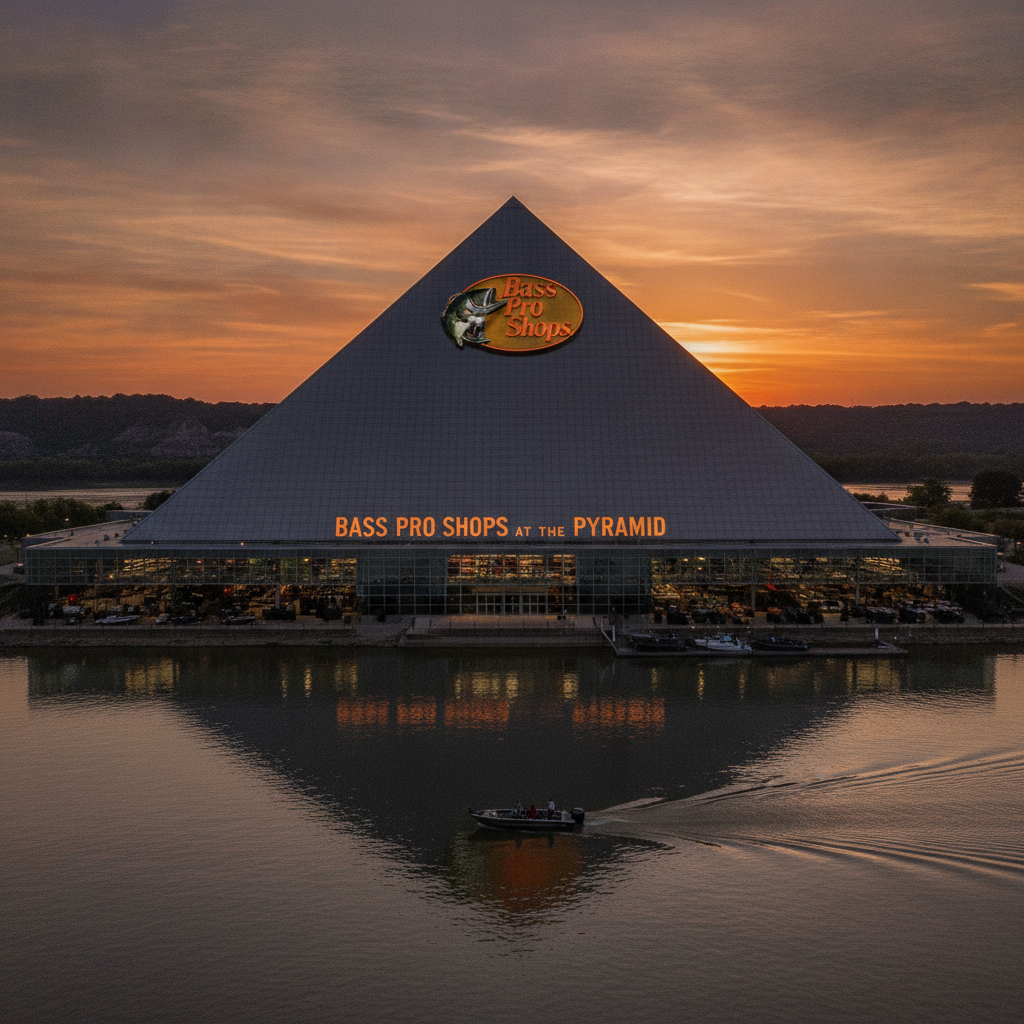
Discover the South Main Arts District and Crosstown Concourse adaptive reuse, join the month-long Memphis in May celebration, follow University of Memphis basketball, cheer the Grizzlies at FedExForum, walk the renovated riverfront, and explore the living blues scene that still makes Memphis the home of American music.
- 1
South Main Arts District
The South Main Arts District, running along South Main Street between Calhoun Avenue and the Mississippi River, has emerged as Memphis primary hub for visual art, boutique dining, and independent retail since the late 1990s. The district occupies former warehouse and light industrial buildings dating from the 1890s through the 1940s. The Crosstown Concourse, a 1.5 million square foot 1927 Sears distribution center converted into a vertical urban village with apartments, studios, restaurants, and a health clinic, opened in 2017 and is considered one of the most successful adaptive reuse projects in American urban history. The South Main Trolley Night on the last Friday of each month draws thousands of visitors to gallery openings and street performances.
- 2
Memphis in May International Festival
Memphis in May is actually a month-long series of distinct events that together constitute one of the largest civic festivals in the American South. The Beale Street Music Festival held in Tom Lee Park over three days in early May consistently features over 60 acts across five stages. The World Championship Barbecue Cooking Contest follows in mid-May with over 250 teams competing in categories including whole hog, ribs, and shoulder. The Sunset Symphony closes the month with a free outdoor classical concert on the river drawing 30,000 to 50,000 people. A different nation is honored each year with cultural programming throughout the month, a tradition since 1976 that has featured over 40 countries and built international cultural ties for the city.
- 3
University of Memphis and Tiger Basketball
The University of Memphis, founded in 1912 as West Tennessee State Normal School, enrolls roughly 22,000 students and is the largest university in Tennessee by enrollment. The athletic program is best known for men basketball, which has produced NBA players including Anfernee Hardaway, who later returned as head coach in 2018. The 2007-2008 team led by freshman Derrick Rose went 38-2 and reached the national championship game before having its wins vacated by the NCAA for eligibility violations. FedExForum, the 18,000-seat downtown arena that also hosts the NBA Memphis Grizzlies, serves as home court for Tiger basketball, an unusual arrangement that keeps university games in a major downtown venue rather than a campus arena.
- 4
Memphis Grizzlies and Professional Sports
The Memphis Grizzlies NBA franchise relocated from Vancouver, British Columbia to Memphis in 2001, becoming the first major professional sports team in Memphis history. The team struggled for its first several seasons before developing a winning culture under coach Lionel Hollins and the Grit and Grind era featuring Marc Gasol, Zach Randolph, Tony Allen, and Mike Conley from roughly 2011 to 2017. The team won 50 or more games in four consecutive seasons and advanced to the Western Conference Finals in 2013. FedExForum opened in 2004 and cost 250 million dollars, of which the city contributed 150 million. The arena also hosts concerts and events that generate substantial economic activity in the downtown core.
- 5
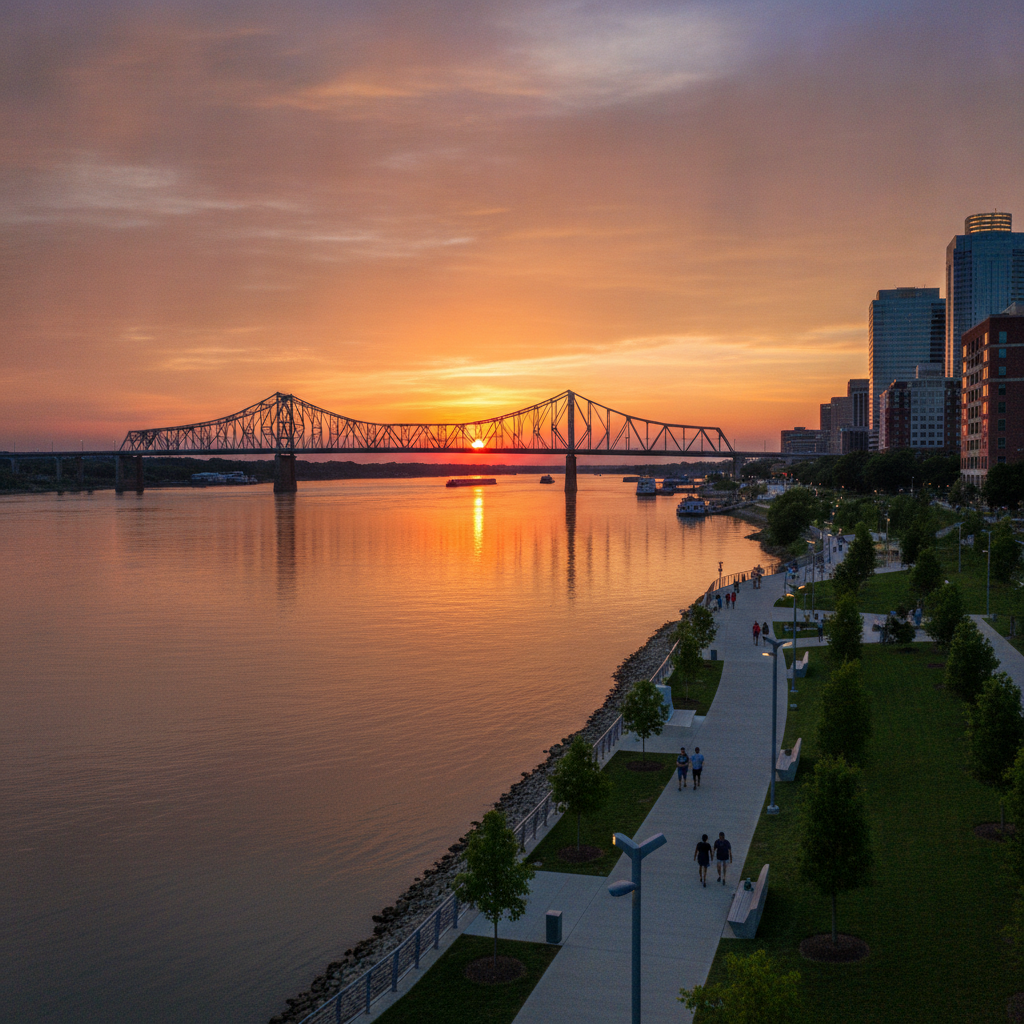
Tom Lee Park and Mississippi Riverfront
Tom Lee Park, named for an African American laborer who saved 32 people from a 1925 Mississippi River steamboat sinking and received only a small plaque for three decades before being properly honored, stretches along the Memphis riverfront between Union Avenue and Beale Street Landing. The park underwent a 60 million dollar renovation completed in 2022, adding shade structures, water features, a beach volleyball area, and improved event infrastructure. The Mississippi River at Memphis is typically 400 to 800 yards wide and one of the most powerful rivers in the world, carrying an average of 600,000 cubic feet per second. The Hernando De Soto Bridge, completed in 1973, carries Interstate 40 across the river and is visible from the park as a twin-arch landmark.
- 6
Memphis Music Foundation and Living Blues Scene
Memphis Music Foundation, established in 2008, works to sustain the city live music ecosystem through venue support, musician grants, and a music industry development program. The city still supports roughly 100 venues with live music, a remarkable density for a city of 650,000 people. The Hi Tone, a converted 1940s movie theater in the Cooper-Young neighborhood, hosts national touring indie acts alongside local blues and roots musicians. The Blues Foundation, headquartered in Memphis since 1980, hosts the International Blues Challenge each January and the Blues Music Awards each May, bringing thousands of musicians and fans to the city. Memphis recording studios including Ardent, where Led Zeppelin and Big Star recorded, continue to attract major artists seeking the acoustic character of the city.
Walk this route with audio
Stories play automatically as you reach each stop — no tapping needed.
More in Memphis
Memphis R3: Sanitation Strike (February 12 1968 65 days, Cole and Walker crushed in truck February 1, I Am a Man signs, King Mountaintop speech April 3 1968, Loeb capitulated April 16 after assassination), Rockabilly (Cash born 1932 died 2003, Jerry Lee Lewis died October 28 2022 last Sun Records survivor, Perkins Carl died 1998, Al Green pastor Full Gospel Tabernacle 1976 hot grits incident 1974), Soul food (Four Way Restaurant 1946 South Memphis MLK Civil Rights musicians, Gus Fried Chicken 1953 Napoleon Vanderbilt, Cozy Corner Raymond Robinson 1977), Neighborhoods (Midtown Cooper-Young Novel bookstore Cooper-Young Festival 110,000 September, Overton Park v Volpe 1971 Supreme Court landmark urban park protection, Orange Mound 1890 oldest Black-developed US neighborhood 45% poverty), Shelby Farms (1800 acres 3x Central Park 50km trails 30 bison, Greenline 10.65km rail-to-trail, Mississippi River Trail 3000km cycling headwaters Minnesota to Gulf), Architecture (Pink Palace Piggly Wiggly Saunders 1916 self-service grocery inventor went bankrupt 1923, Memphis Brooks Museum 9000 works 5000 years, Memphis Zoo panda Ya Ya repatriated April 2023, Autozone Park Triple-A Cardinals).
Memphis R4: Yellow fever epidemics (1873 1878 1879, 5000 dead 1878, population 40,000 to 14,000, municipal charter revoked 1879 operating as taxing district until 1893, Sisters St Mary Episcopal nursed dying, George Waring Memphis Sewer System 1880-1890 first modern US sanitary sewer), Cotton Exchange (84 Union Avenue, 2.2M bales/year 1920s-1930s, cotton compression 40% volume reduction, FedEx founded 1971 Frederick Smith MEM 4th busiest cargo world), Literature and film (Faulkner Oxford 100km south Memphis symbol of urban corruption in Sanctuary Sound and Fury, Guralnick Last Train to Memphis 1994 Careless Love 1999 finest rock biography, Hustle and Flow 2005 Craig Brewer Three 6 Mafia Oscar), African American history (Ida B Wells Memphis Free Speech 1889-1892 anti-lynching journalism exiled after mob destroyed office 1892 Pulitzer Prize 2020 posthumous, Robert Church Sr 1839 first Black millionaire South yellow fever real estate, Church Park 1899 first safe Black public gathering), Music economy (Beale Street USD 150M tourist economy cover bands, Soulsville Charter School 300 students South Memphis, Royal Studios 1320 Soul Avenue Willie Mitchell Al Green Hi Records, GloRilla born 2000 Memphis 2022 national attention, Julien Baker born 1995), Practical (MEM 4M passengers FedEx hub 4th cargo world, Peabody Hotel USD 300-450, April-May Memphis in May best season, 38C summer humidity).
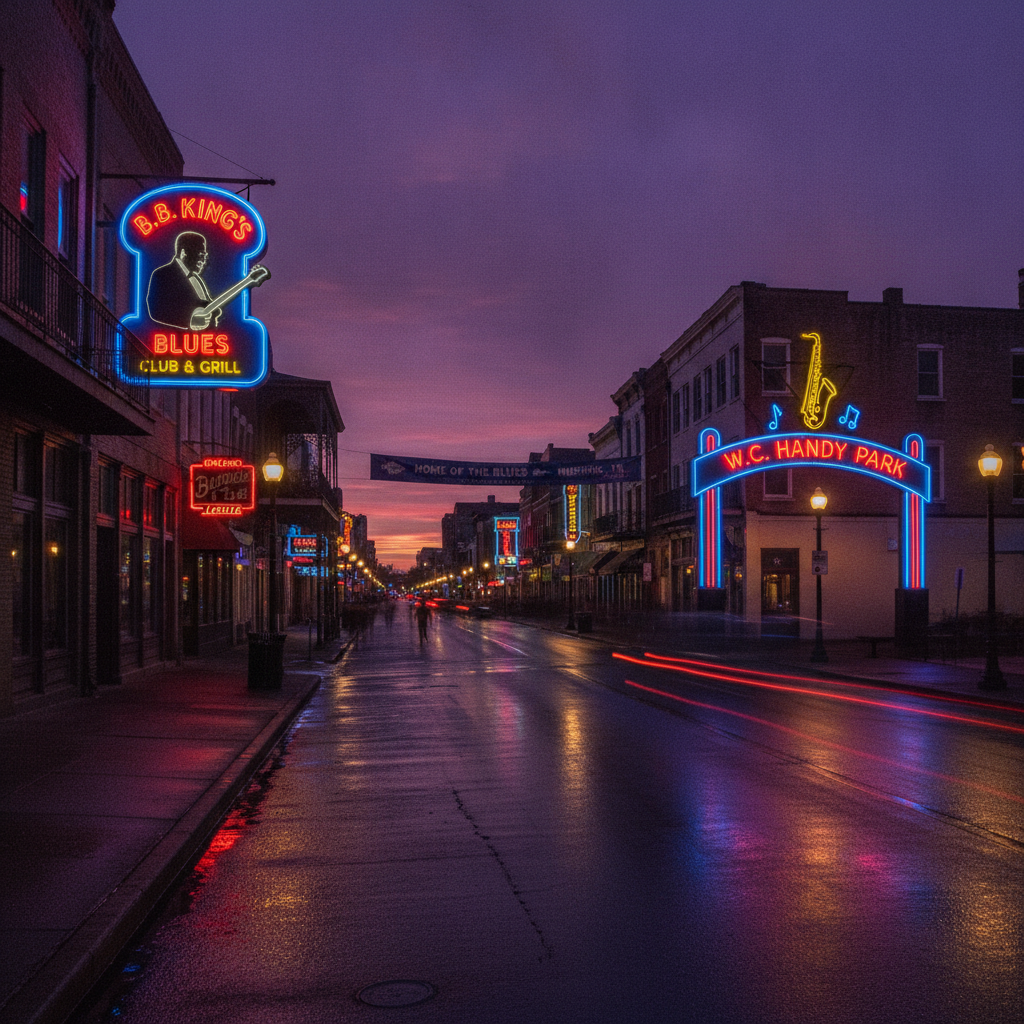
Memphis: Beale Street, Sun Studio, Stax Museum, National Civil Rights Museum, Graceland, and BBQ
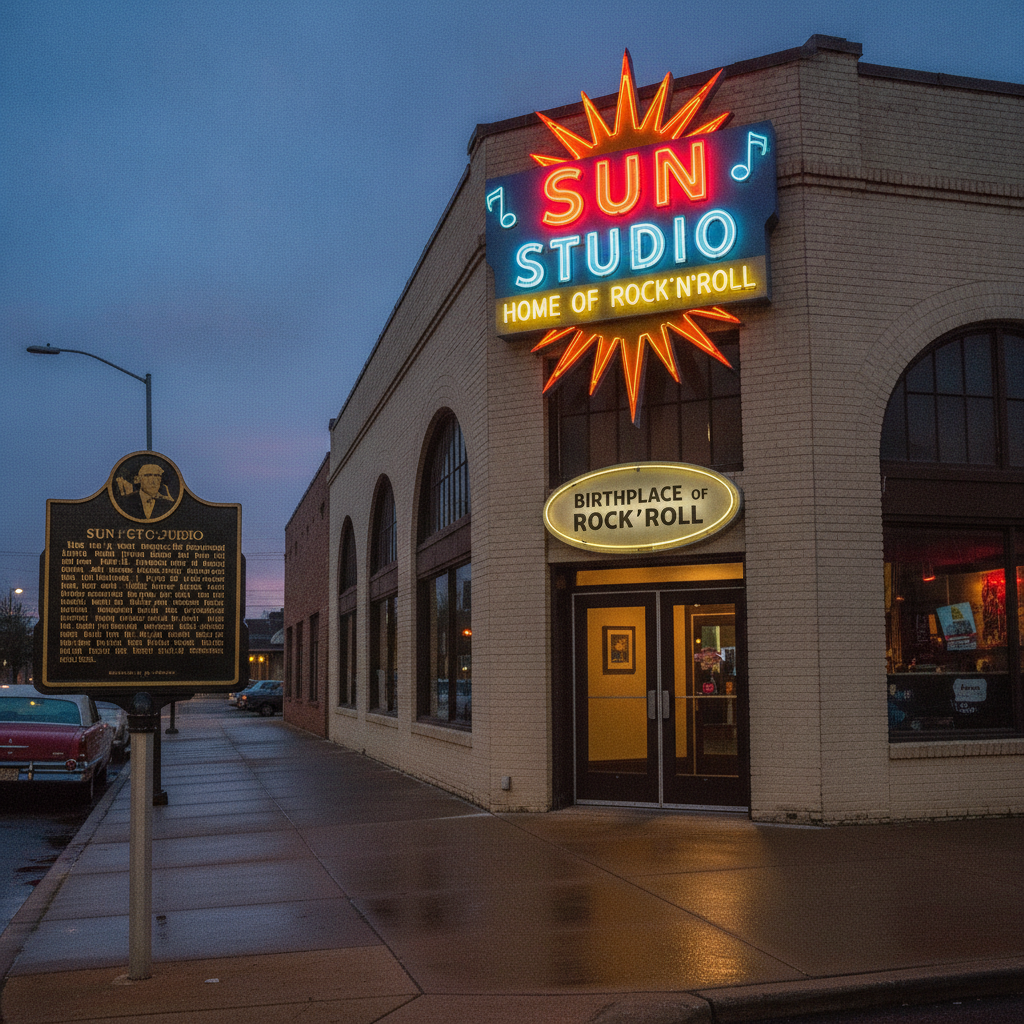
Memphis: River Science, Rock and Roll Origins and Medical Miracles
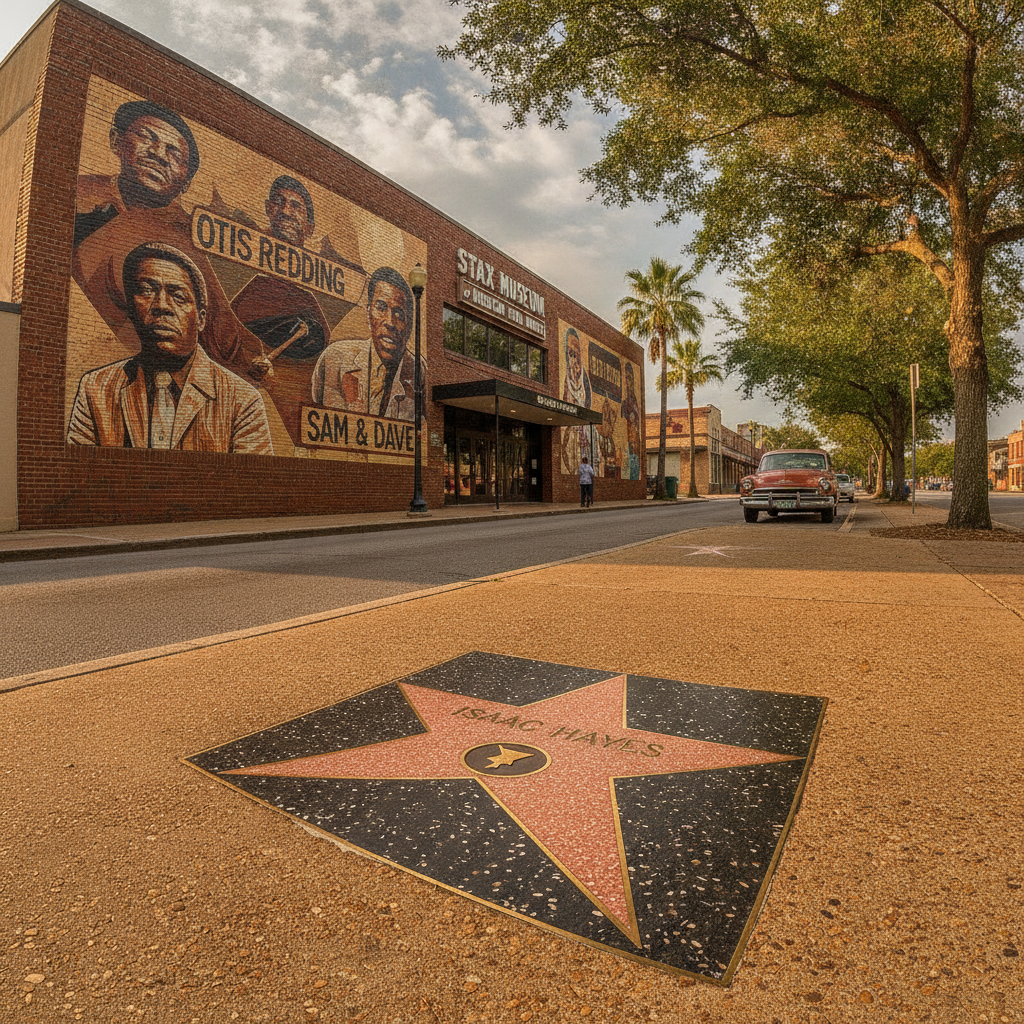
Memphis: Soul Music, Civil Rights and the Taste of the South