Mendoza Birdwatching: Condors, Flamingos, and Andean Endemics
Mendoza province encompasses one of the most dramatic altitudinal ranges of any Argentine province, from the lowland wetlands of the Huanacache lakes in the north to the high Andean peaks exceeding 6,000 meters at the Chilean border, and this altitudinal variation creates a corresponding diversity of bird habitats that supports a remarkable range of species from Andean condors and flamingos to specialized high-altitude endemics found nowhere else in the world.
- 1
Andean Condor: Soaring above the Cuyo
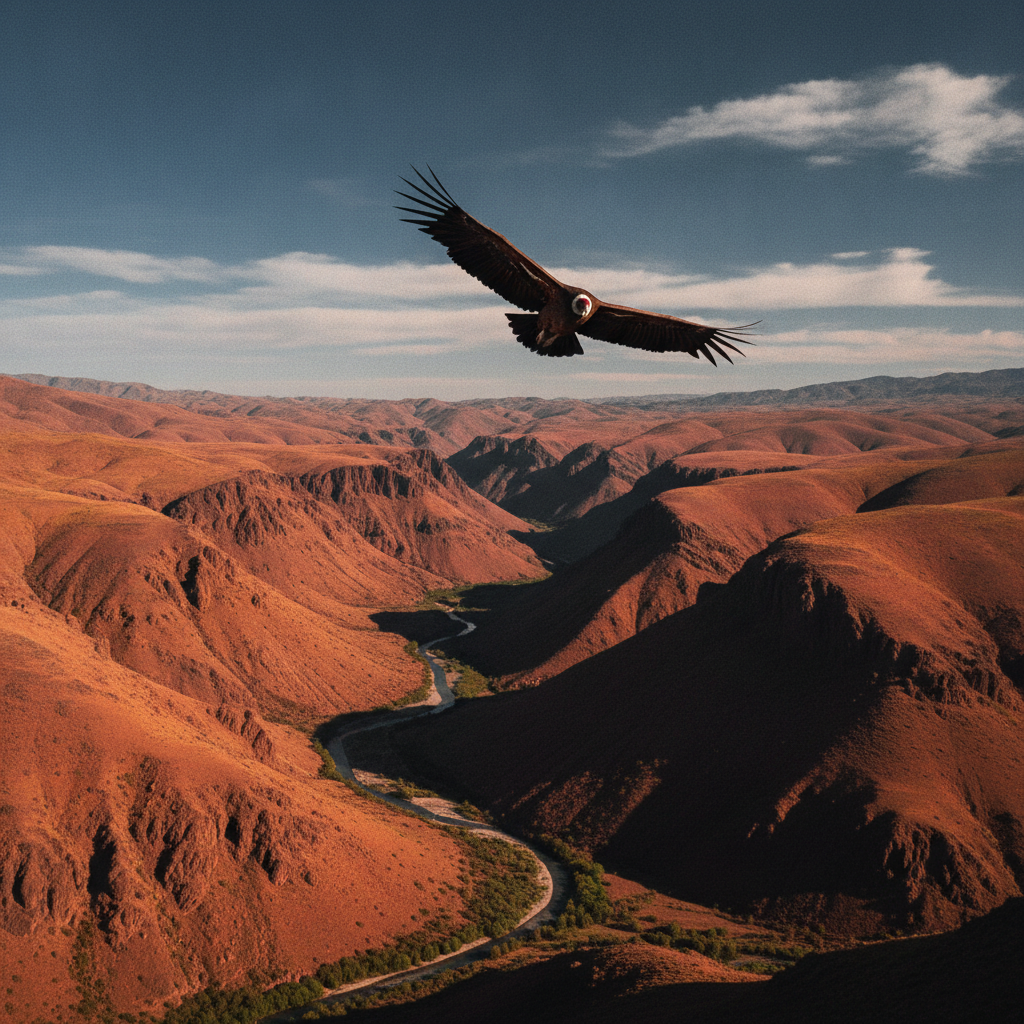
The Andean condor, with a wingspan of up to 3.2 meters the largest flying bird in the world by combined wingspan and weight, is resident in the Mendoza Andes throughout the year and is regularly observed soaring on the thermals above the Villavicencio valley, the Aconcagua Provincial Park approach roads, and the canyon edges of the Potrerillos and Cacheuta gorges. The condor is a scavenger that feeds on large carrion including the carcasses of guanacos, horses, and cattle in the mountain pastures; its survival depends on the continued availability of large ungulate carcasses and the absence of persecution, both of which are generally present in the less-populated mountain areas of the Mendoza Andes. The best time to observe condors in the Mendoza area is from mid-morning onward when the thermal columns have developed sufficiently to support the effortless soaring for which the species is known; early morning visits often yield ground-level observations at roost sites on cliff faces. The social behavior of condors, which roost communally and feed in groups at carcasses, means that sightings often involve multiple individuals rather than solitary birds; groups of 10 to 20 condors at carcasses are not uncommon in the mountain areas of Mendoza province. Conservation programs have increased condor populations in the Argentine Andes over the past decades through reduction of lead poisoning from ammunition in livestock carcasses and public education campaigns; the species is no longer listed as critically endangered but remains vulnerable.
- 2
Laguna del Diamante: High Altitude Flamingos and the Maipo Volcano
The Laguna del Diamante, a high-altitude lake at 3,250 meters in the volcanic landscape of the southern Mendoza Andes near the Chilean border, is one of the most dramatic birdwatching destinations in Argentina and one of the highest-altitude flamingo breeding sites in the world, hosting colonies of all three South American flamingo species including the rare Puna flamingo. The lake sits in the crater of the Maipo caldera with the snow-capped Maipo volcano rising above it at 5,264 meters, creating one of the most scenically dramatic birdwatching environments imaginable. The Puna flamingo, the rarest of the South American flamingo species with a world population estimated at fewer than 50,000 individuals, breeds at a handful of high-altitude salt lakes in Argentina, Chile, and Bolivia of which the Laguna del Diamante is one of the most accessible. Access to the laguna requires a four-wheel drive vehicle and is only possible from late spring through early autumn when the high-altitude road is clear of snow; the journey from San Rafael city takes approximately four hours on dirt roads through the volcanic Payunia landscape. The high-altitude location means that acclimatization is advisable before the visit, and the weather can change rapidly from clear and sunny to snowstorm in summer; appropriate clothing and emergency supplies are essential for the journey.
- 3
Huanacache Wetlands: Waterbirds in the Desert
The Huanacache wetland complex in the northern Mendoza department of Lavalle, where the Mendoza and San Juan rivers disperse into a system of shallow lagoons and marshes in the Cuyo depression, is one of the most important waterbird habitats in the semi-arid zone of central Argentina and the heartland of the contemporary Huarpe indigenous community. The wetlands support large populations of dabbling and diving ducks, herons, egrets, ibis, flamingos, coots, and a variety of shorebirds that use the shallow lakes as feeding and resting habitat; the bird diversity is highest during the spring and autumn migration periods when transient species augment the resident breeding populations. The accessibility of the Huanacache wetlands has been reduced by the hydrological changes caused by upstream water diversion for irrigation, which has reduced the area and permanence of the wetland habitat compared to its historic extent; the remaining wetland areas are increasingly confined to areas where water management supports their maintenance. The Huarpe communities of Lavalle have developed community-based ecotourism programs that combine birdwatching with cultural interpretation of the traditional Huarpe relationship with the wetland landscape; visiting through these community programs supports both the conservation of the wetlands and the economic development of the indigenous community.
- 4
Andean High-Altitude Endemics: From the Puna to the Snowline
The high-altitude zone of the Mendoza Andes above 3,000 meters supports a community of bird species specially adapted to the puna and high-Andean environments, including several species that are endemic to this specific altitudinal zone and found nowhere else in the world. The white-sided hillstar, a hummingbird that survives at altitudes exceeding 4,000 meters by entering torpor on cold nights to conserve energy, is one of the most remarkable physiological adaptations in the avian world and is observable near flowering Polylepis trees in the high Andean valleys of the Aconcagua park approach. The diademed sandpiper-plover, a wader that breeds on the high-altitude puna lakes and bogs above 4,000 meters, is one of the most sought-after birds by visiting birders in the Andean countries and is found in the Mendoza Andes in appropriate high-altitude wetland habitat. The Andean hillstar, the giant hummingbird, the puna canastero, and several species of ground-tyrant flycatcher are reliably present in the high Andean zone accessible from the Uspallata Valley road, and a focused half-day of birding in the appropriate altitude band will typically yield 15 to 25 high-Andean specialist species. The combination of the Aconcagua base camp trek with deliberate attention to birds along the trail yields a species list that includes virtually all of the high-Andean specialists of the Mendoza Andes within a single multi-day excursion.
- 5
La Payunia: Birds of the Volcanic Steppe
The La Payunia provincial reserve in southern Mendoza, the volcanic landscape of cinder cones and lava flows that covers much of the Malargue department, supports a distinct bird community adapted to the harsh semi-arid steppe environment of Patagonian basalt, including the greater rhea, the Darwin's rhea at the northern edge of its range, the suri or Andean rhea, and a variety of open-country raptors and shorebirds. The Patagonian tinamou, a ground-dwelling bird of the open steppe that is often heard before it is seen, is common throughout the Payunia landscape and provides an audio introduction to the reserve as soon as visitors leave the vehicle. The burrowing owl, which excavates nest burrows in the relatively soft volcanic soil of the reserve, is conspicuous on fence posts and mounds at the edges of the reserve road and provides one of the most reliably observed and photographed bird subjects in the Malargue area. The condor is present throughout the La Payunia landscape, soaring over the volcanic terrain in search of the guanaco carcasses that are abundant in a reserve where several thousand guanacos roam the lava fields; the combination of condors overhead and guanaco herds on the ground creates a wildlife spectacle unusual in its density for any Argentine reserve outside Patagonia. The reserve requires a guide and vehicle access permit available from the Malargue tourism office; the drive-through circuit of the reserve takes a full day and rewards visitors who combine wildlife observation with the extraordinary geological scenery of the volcanic landscape.
- 6
Aconcagua Valley Birds: Raptors, Seed-Eaters, and the Treeline Zone
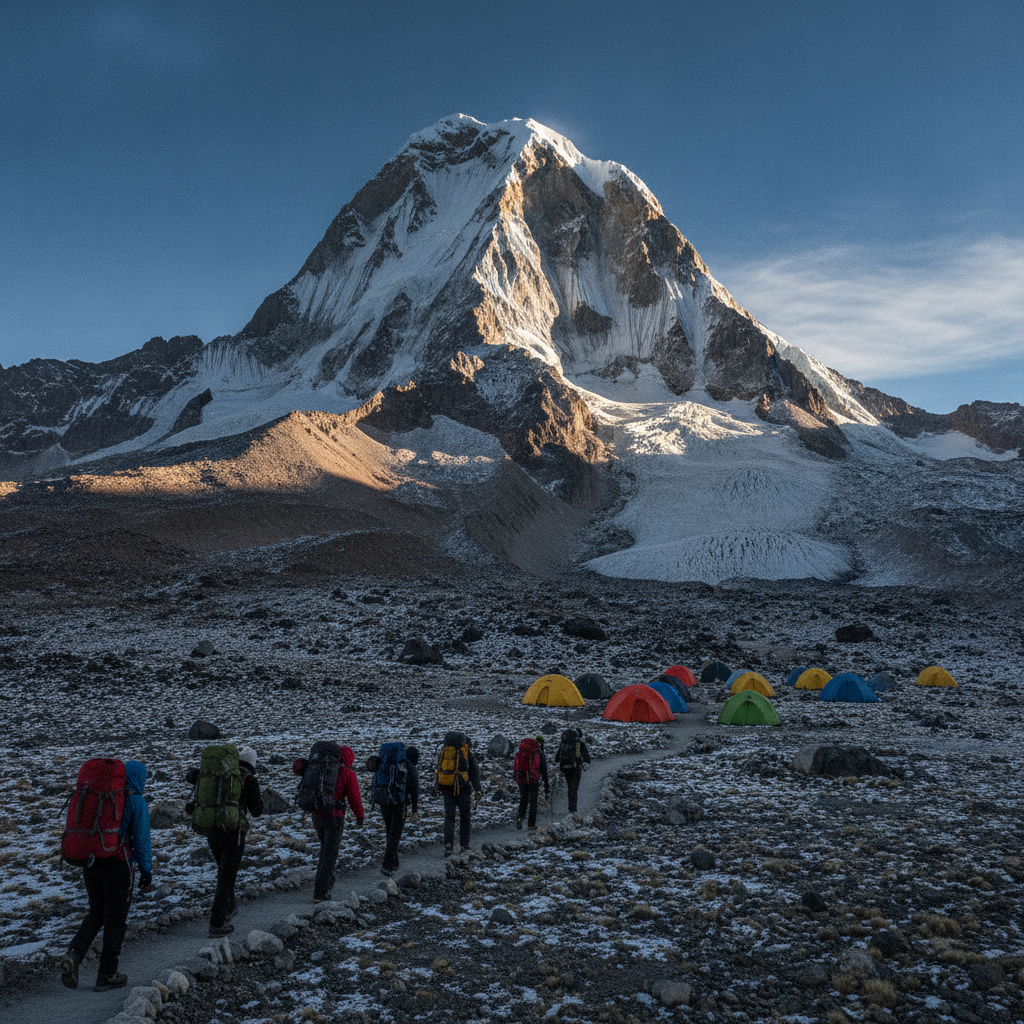
The Aconcagua Provincial Park and the Uspallata Valley approach provide a complete altitudinal transect from the montane scrub zone at the park entrance through the Polylepis woodland zone and the high puna to the permanent snowfields and glaciers of the Aconcagua massif, with a corresponding altitudinal sequence of bird communities that can be sampled efficiently by driving up the valley and making systematic stops at different elevations. The grey-hooded sierra finch, the plain-colored seedeater, and various species of cinclodes are common in the montane scrub zone near the park entrance and respond to pishing by approaching closely enough for photography with modest telephoto lenses. The Polylepis woodland zone between 3,000 and 4,000 meters, where the ancient gnarled trees with their distinctive red peeling bark form open forests in the sheltered gullies and south-facing slopes, supports the most distinctive bird community of the approach, including the white-sided hillstar and several endemic sierra finch and canastero species. The lagoon near Horcones at the park entrance, where the river spreads into a shallow wetland before the approach to the mountain, supports waterfowl including Andean goose, speckled teal, and occasional flamingos from the nearby high-altitude lakes. A birding-focused visit to the Aconcagua park of two or three days, combining the Horcones lagoon with a drive to the Confluencia camp, will typically yield 40 to 60 species representing the full range of high-Andean habitats in the southern Mendoza Andes.
Walk this route with audio
Stories play automatically as you reach each stop — no tapping needed.
More in Mendoza
Mendoza Malbec Deep Dive: Varieties, Terroir, and Tasting Like a Sommelier
Mendoza Day Trips: Potrerillos, Villavicencio, Luján Hot Springs, and Malargue

Mendoza Nightlife, Arts, and the Creative Cuyo Scene
Mendoza Outdoor Adventure: Aconcagua, Rafting, Skiing, and the Andean Frontier

Mendoza History: Huarpe People, Spanish Colonization, the 1861 Earthquake, and San Martin