Mendoza History: Huarpe People, Spanish Colonization, the 1861 Earthquake, and San Martin
Mendoza has a history shaped by four transformative events: the pre-Columbian civilization of the Huarpe people who engineered the acequia irrigation system that still waters the city today; the Spanish colonization and the founding of Mendoza in 1561 as a transit point on the route between Chile and the interior of South America; the catastrophic earthquake of 1861 that destroyed the original city and forced its complete rebuilding; and the role of General San Martin who used Mendoza as the base for preparing and launching the liberation of Chile and Peru from Spanish rule.
- 1
Huarpe Civilization: The Engineers of the Desert
The Huarpe people, who inhabited the Cuyo region when Spanish colonizers arrived from Chile in the 16th century, had developed over centuries a sophisticated irrigation system of canals called acequias that diverted water from the Andean rivers to the desert floor, transforming the arid piedmont into productive agricultural land capable of supporting substantial settled communities. The acequia system inherited by the Spanish colonizers and adapted for grape, grain, and vegetable cultivation formed the hydraulic infrastructure of the colonial city and continues to function as the urban irrigation system of modern Mendoza, giving the tree-lined boulevards their distinctive character and the city its claim to being one of the greenest desert cities in the world. The Huarpe social organization was based on kinship communities along the rivers and wetlands of the Cuyo depression, with a subsistence economy of hunting, fishing, gathering, and the irrigated cultivation of maize and squash; their numbers were dramatically reduced by the mita forced labor system imposed by the Spanish colonizers, which sent Huarpe men to work in the silver mines of Potosí and the encomienda estates of Chile. The contemporary Huarpe community in the Mendoza province, located primarily in the Lavalle department north of the city in the wetland area of the Huanacache lakes, maintains legal recognition as an indigenous people and continues to press for territorial rights and cultural recognition. The Museo de Historia Natural in Mendoza city contains the most significant collection of Huarpe archaeological material in the province, including the extraordinarily well-preserved natural mummies of Huarpe individuals found in the high-altitude dry conditions of the Andes.
- 2
Spanish Founding and the Colonial City
The city of Mendoza was founded in 1561 by the Spanish conquistador Pedro del Castillo under the authority of the Governor of Chile, reflecting the fact that the Cuyo region east of the Andes was administered from Santiago rather than from Buenos Aires until Argentine independence reorganized the territorial structure. The colonial city was built on the grid pattern standard in Spanish colonial urban planning, centered on a central plaza and organized around the acequia system inherited from the Huarpe; the church, cabildo, and residential buildings of the colonial elite occupied the blocks closest to the central plaza while the indigenous and mestizo population settled in the outer neighborhoods. Mendoza occupied a strategic position on the camino real connecting Chile through the Andes to the Atlantic ports and the silver routes of the interior, and the city prospered as a waypoint for the livestock and agricultural products moving between the coastal and interior economies of the Spanish colony. The colonial Mendoza had an economy based on the production of aguardiente, a grape distillate made from the Criolla vines planted by the Jesuits and Franciscans in their mission vineyards, alongside cattle herding, fruit production, and the transit commerce generated by the mountain route to Chile. The Jesuit church and college established in the colonial city was one of the most significant religious and educational institutions of the Cuyo region before the expulsion of the Jesuits in 1767; the ruins of the Jesuit buildings were destroyed in the 1861 earthquake and the site is now preserved as a public archaeological park in the center of modern Mendoza.
- 3
The 1861 Earthquake: Destruction and Rebirth of Mendoza
The earthquake of March 20, 1861, which struck Mendoza at 9:30 in the morning of Holy Saturday when many residents were in church services, had an estimated magnitude of 7.2 and destroyed approximately 90 percent of the built structures of the city, killing between 6,000 and 12,000 people in a population of approximately 18,000; it remains the deadliest earthquake in Argentine history and one of the most destructive in South American history. The fires that broke out in the ruins after the earthquake added to the destruction and consumed many buildings that had survived the initial shaking structurally intact; the combination of collapse and fire left the colonial city nearly completely demolished. The decision to rebuild the new city on a different site 12 blocks south of the ruined colonial center, rather than reconstructing on the original footprint, reflects the practical consideration that the old site was covered in ruins too dangerous for immediate rebuilding. The new city plan, designed in the aftermath of the disaster, featured wider streets, lower maximum building heights, and more open public space between buildings as deliberate earthquake risk reduction measures. The ruins of the colonial city were converted into the Parque General San Martin and the Ruinas de San Francisco archaeological park, where the broken colonial foundations and walls provide a visible memorial to the destroyed settlement. The rapid rebuilding of Mendoza in the 1860s and 1870s coincided with the beginning of the great European immigration period, and the Italian and Spanish immigrants who arrived during the rebuilding period brought the viticulture expertise that transformed the city's economic base from transit commerce to wine production.
- 4
General San Martin: Liberator of the South
Jose de San Martin, the Argentine general who planned and executed the liberation of Chile and Peru from Spanish colonial rule, made Mendoza the base for his preparations from 1814 to 1817 and transformed the city into a military manufacturing center that produced the uniforms, weapons, ammunition, and food supplies for the Army of the Andes that crossed the mountains in January and February of 1817. San Martin was appointed governor of the Cuyo region in 1814 specifically to organize the defense of the region against possible Spanish reconquest from Chile, and he used the four years of his governorship to simultaneously defend the province and prepare the offensive operation that would become the crossing of the Andes. The Cuyo crossing by San Martin's army, bringing approximately 5,200 soldiers and 10,000 horses and mules over the high Andean passes in mid-summer, is considered one of the most audacious military logistics achievements in the history of the Americas; the army emerged on the Chilean side, defeated the Spanish royalist forces at the Battle of Chacabuco, and proceeded to liberate Chile within months and Peru within years. San Martin's relationship with Mendoza was personal as well as strategic: his daughter Mercedes was born in Mendoza, and he maintained a deep affection for the city throughout his subsequent life in exile in Europe. The monument to San Martin on the Cerro de la Gloria in the Parque General San Martin, completed in 1914 for the centenary of his arrival in Mendoza, is the most elaborate memorial to the liberator in Argentina and depicts the Andes crossing in a series of figurative bronze panels around the base of the monument.
- 5
Italian and Spanish Immigration: The Foundation of the Wine Culture
The wave of Italian and Spanish immigration to Mendoza in the late 19th and early 20th centuries, encouraged by Argentine government land-grant and colonization policies, brought the viticultural expertise that transformed the Cuyo economy from the artisanal production of the colonial period to the industrialized wine production that made Argentina one of the world's five largest wine producers. Italian immigrants, predominantly from the wine-producing regions of Piemonte, Friuli, and Calabria, brought with them the technical knowledge of grape cultivation, winemaking, and cellar management that Mendozan production had lacked; Spanish immigrants from Castile, Catalonia, and Galicia brought different but complementary viticultural traditions. The immigrant families who founded the major Mendozan wine dynasties, including the Catena, Arizu, Zuccardi, and Giol families, established their initial bodegas in the late 19th and early 20th centuries and their descendants continue to manage the most significant wine enterprises in the region. The social and cultural impact of the immigration was reflected in the urban character of Mendoza city, which acquired the Italian-influenced architecture, restaurant culture, and social associations that gave the city its distinctly European-Argentine character. The immigrant communities established mutual aid societies, cultural clubs, and Italian-language schools that maintained the connection to the homeland across multiple generations; the Argentine-Italian identity of the Mendoza wine culture is still expressed in the family names on the labels of the most celebrated Malbec wines.
- 6
Vendimia: The Grape Harvest Festival and Mendozan Identity
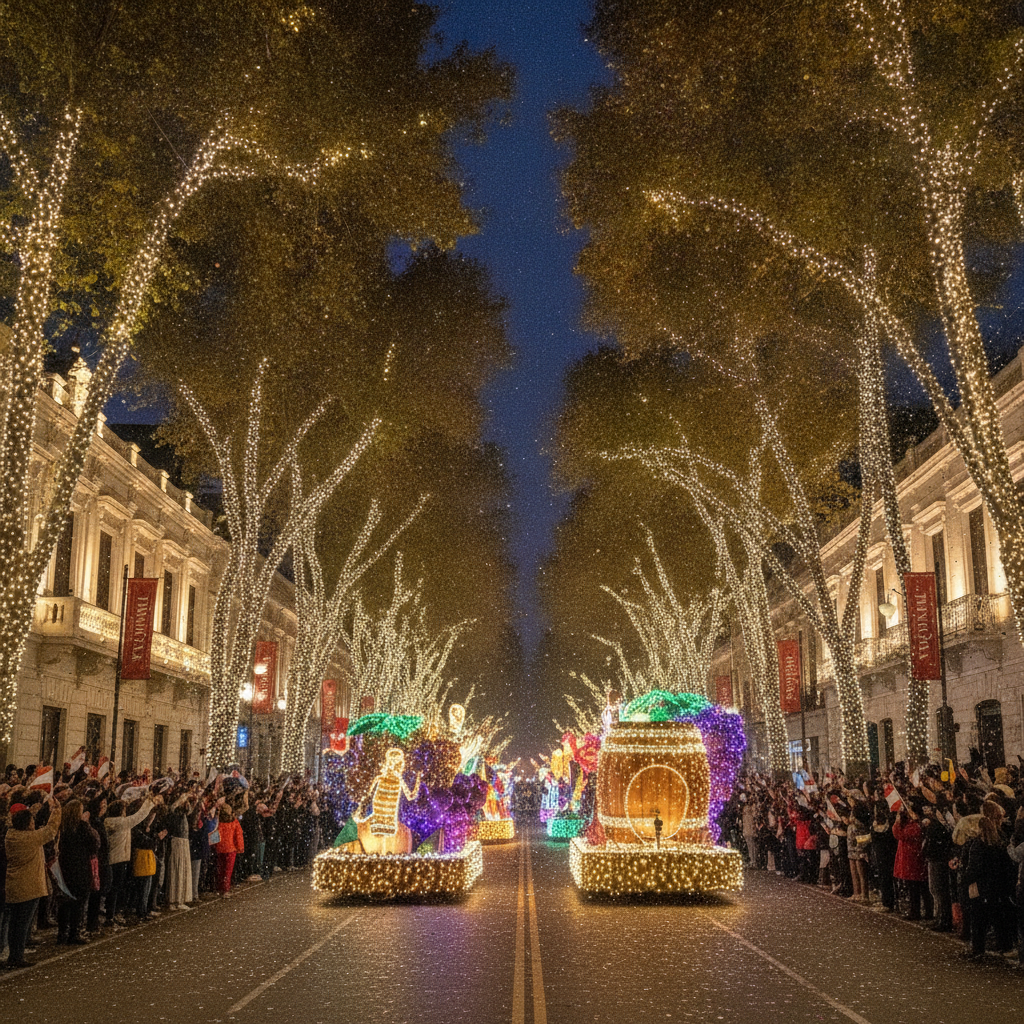
The Vendimia, the annual grape harvest festival celebrated in Mendoza in late February and March, is one of the largest folk festivals in Argentina and the most important cultural event in the Mendozan calendar, combining religious ceremony, folk music and dance, agricultural tradition, and the election of a harvest queen in a weeks-long celebration that draws visitors from throughout Argentina and internationally. The festival begins with the Vía Blanca de las Reinas, a nighttime parade of floats illuminated by thousands of lights that travels through the main avenues of the city center, with each municipality and wine region represented by a queen candidate riding on an elaborately decorated float surrounded by folk dancers and musicians. The central event of the Vendimia is the Gran Acto Central, a large-scale theatrical and musical production staged on the terraced hillside of the Frank Romero Day amphitheater in the Parque General San Martin, combining folk dance, operatic singing, pyrotechnics, and the ceremonial coronation of the Harvest Queen before an audience of 20,000 people; the production values and scale make it one of the most ambitious folk festival performances in South America. The religious dimension of the Vendimia reflects the Catholic tradition of the blessing of the harvest, with a ceremony at the shrine of the Virgen de la Carrodilla, the patron saint of the vineyards, that dates to the colonial period and continues to draw participation from winemaking families who credit the virgin with protection of their crops. The Vendimia festival creates an atmosphere throughout Mendoza during the harvest season of exceptional cultural energy, with concerts, tastings, and events in the wineries and city venues that make late February to early March the most vibrant time to visit the wine capital.
Walk this route with audio
Stories play automatically as you reach each stop — no tapping needed.
More in Mendoza
Mendoza Malbec Deep Dive: Varieties, Terroir, and Tasting Like a Sommelier
Mendoza Day Trips: Potrerillos, Villavicencio, Luján Hot Springs, and Malargue
Mendoza Birdwatching: Condors, Flamingos, and Andean Endemics
Mendoza Nightlife, Arts, and the Creative Cuyo Scene
Mendoza Outdoor Adventure: Aconcagua, Rafting, Skiing, and the Andean Frontier