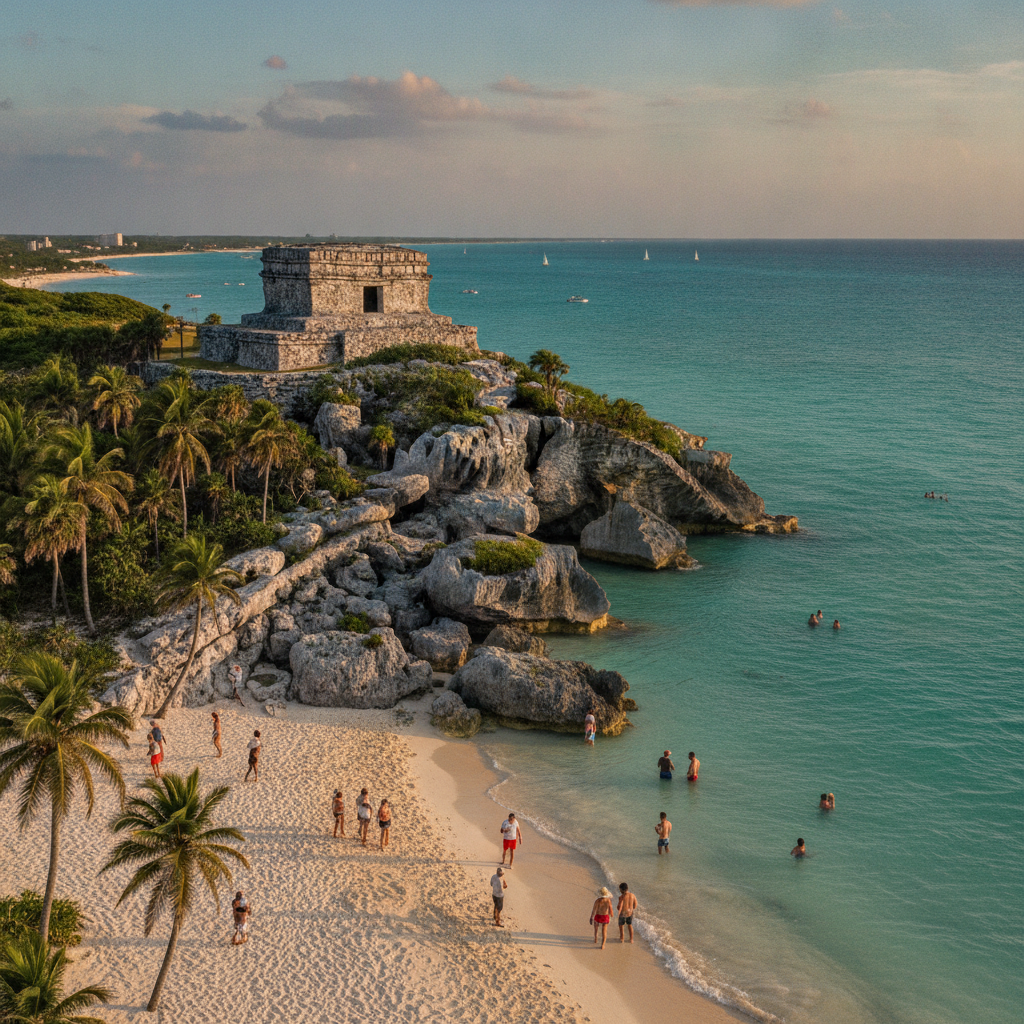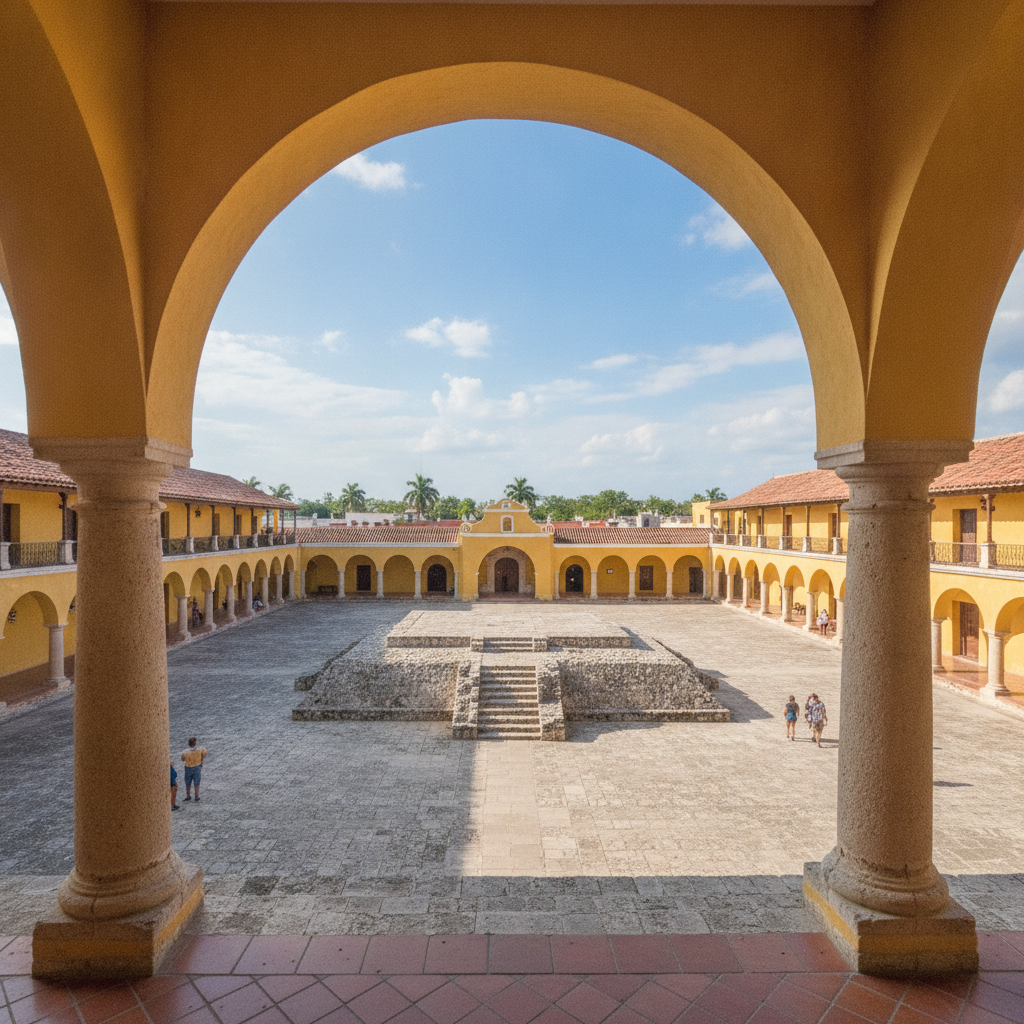
Yucatan Colonial Churches and the Franciscan Campaign That Replaced Every Maya Pyramid With a Monastery: How the 16th-Century Mass Conversion Program Produced the Most Impressive Monastic Architecture in the Americas
The Franciscan missionaries who arrived in the Yucatan Peninsula beginning in 1540 under the leadership of Fray Diego de Landa and Fray Juan de Mérida implemented the most ambitious architectural building program of any missionary order in the Americas, constructing fortified open-air chapel and atrium complexes in 49 communities across the peninsula in the period between 1540 and 1600, using Maya labor and Maya building expertise to construct massive stone church and convento buildings that in many cases incorporated the actual stones of the Maya temple pyramids that occupied the same sites. The theological justification for building on Maya sacred sites was explicit: the Christian sacred landscape had to occupy and displace the indigenous sacred landscape to prevent the continuation of Maya religious practice at the old sites. The result, 50 years later, was a network of fortress-monastery complexes distributed across the Yucatan that constitute one of the most architecturally significant ensembles of colonial religious architecture in the Americas, with the Izamal monastery built on the largest Maya platform in the peninsula, the Merida Cathedral built with Maya pyramid stones, and the Maní monastery where Diego de Landa conducted the 1562 auto-de-fe that burned the Maya books, each representing a specific episode in the colonial replacement of one sacred landscape by another. The Yucatan monastery network is designated a UNESCO tentative list candidate for World Heritage status, recognizing the architectural and historical significance of the ensemble even as the manner of its creation is an unambiguous record of colonial destruction.
- 1
Izamal Yellow City and Franciscan Monastery
Izamal, the colonial city 70 kilometres east of Merida whose buildings are painted entirely in yellow ochre by municipal decree creating the only monochrome-painted historic city in Mexico, contains the Franciscan monastery of San Antonio de Padua built between 1553 and 1561 on the massive platform of the Maya pyramid Ppapp-Hol-Chac, which at 180 metres by 170 metres at the base is the largest single Maya pyramid platform in the Yucatan Peninsula and provides the elevated base on which the Franciscan atrium and church sit, creating the most explicit architectural statement of colonial superimposition in Mexico. Pope John Paul II visited Izamal in 1993 and said mass in the monastery atrium in a visit that drew 500,000 people to the small city, elevating the Izamal monastery to national religious prominence. The monastery atrium, one of the largest open-air atrium spaces in the colonial Americas at 8,000 square metres, was designed to accommodate the mass conversion of the indigenous population in outdoor religious ceremonies when the church interior was insufficient for the numbers. The four posas chapels at the corners of the atrium, small domed pavilions used as stations in the procession of the mass, are among the best-preserved examples of 16th-century Franciscan atrium architecture in Mexico. The yellow paint of Izamal, applied to every building in the historic center including the monastery, the municipal buildings, and private houses, was reportedly chosen because it was the favorite color of the Virgin of the Immaculate Conception, the patron of Izamal. Pope Francis also visited in 2016.
- 2
Mani and the Burning of the Books
Mani, the small town 85 kilometres south of Merida where the Franciscan missionary Diego de Landa conducted the auto-de-fe of July 12, 1562, burning an estimated 27 Maya codices, 5,000 ceramic vessels with cultural imagery, and an unknown quantity of other objects that he described as works of the devil, is the location of one of the most consequential acts of cultural destruction in human history, the elimination of a substantial portion of the textual heritage of the Maya civilization in a single afternoon fire. Landa justified the destruction in his Relacion by claiming the objects were instruments of indigenous religious practice that were preventing the conversion of the Maya population to Christianity. The Maya witnesses to the burning, who included Maya leaders who had cooperated with the Spanish colonial administration, described the event as a profound grief and a loss that they compared to the death of their entire community, a testimony that Landa recorded in the same document that described the destruction. The Franciscan monastery of San Miguel Arcangel in Mani, built in 1549 using stones from the Maya structures that had occupied the site, is now a museum that documents the history of the auto-de-fe and the pre-Columbian culture destroyed in it. The irony of the Mani case is that Landa, who ordered the destruction, also wrote the most complete European description of Maya culture and script available from the 16th century, making him simultaneously the most important and the most destructive figure in the history of Maya knowledge.
- 3
Yucatan Cathedral and Santo Cristo de las Ampollas
The Cathedral of San Ildefonso in Merida, completed in 1598 as one of the earliest cathedrals completed in the Americas, houses the Cristo de las Ampollas, the Black Christ statue carved from the wood of a tree that burned for an entire night without being consumed during an 1645 fire in the town of Ichtmul, after which the statue was brought to the Merida Cathedral where a 1915 fire destroyed the Cathedral interior while leaving the statue unharmed. The Cristo de las Ampollas, the blistered Christ, is the most venerated religious object in the Yucatan and is carried in procession through the streets of Merida during its annual October feast, drawing the largest crowds of any religious event in the state. The Cathedral itself, built in the Renaissance-Herreran style associated with Philip II of Spain, has a austere facade that contrasts with the Baroque elaboration of most Mexican colonial churches, using the simple grid of pilasters and round-arched niches without the decorative excess of the Churrigueresque. The Cathedral was pillaged during the Mexican Revolution when troops under Salvador Alvarado stripped the interior of its colonial artworks, leaving the building substantially bare of its original artistic program. The fortified character of the Merida Cathedral, with its thick walls, small windows, and crenellated roofline, reflects the dual function of many early colonial churches in the Yucatan as places of worship and defensible fortifications against potential Maya uprising in the first decades of Spanish control.
- 4
Maya Calendar and Astronomical Tradition
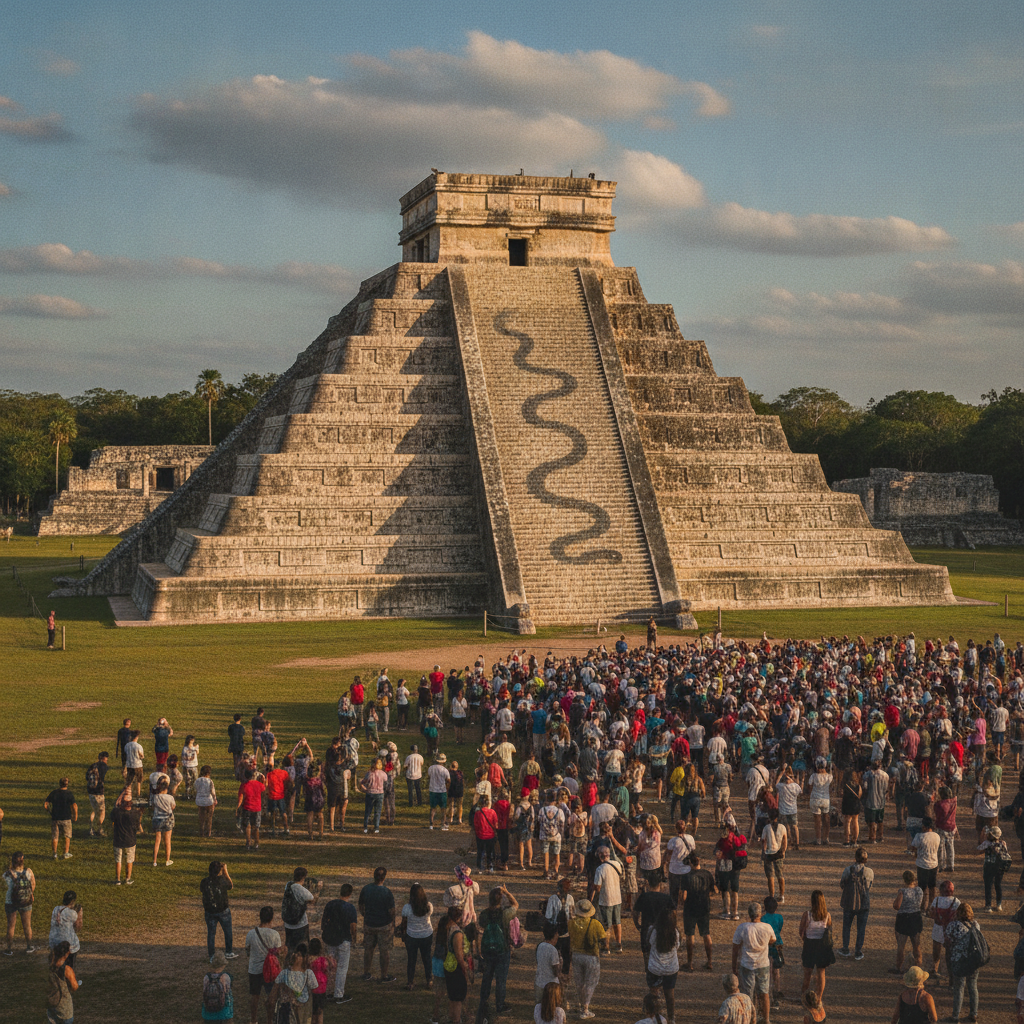
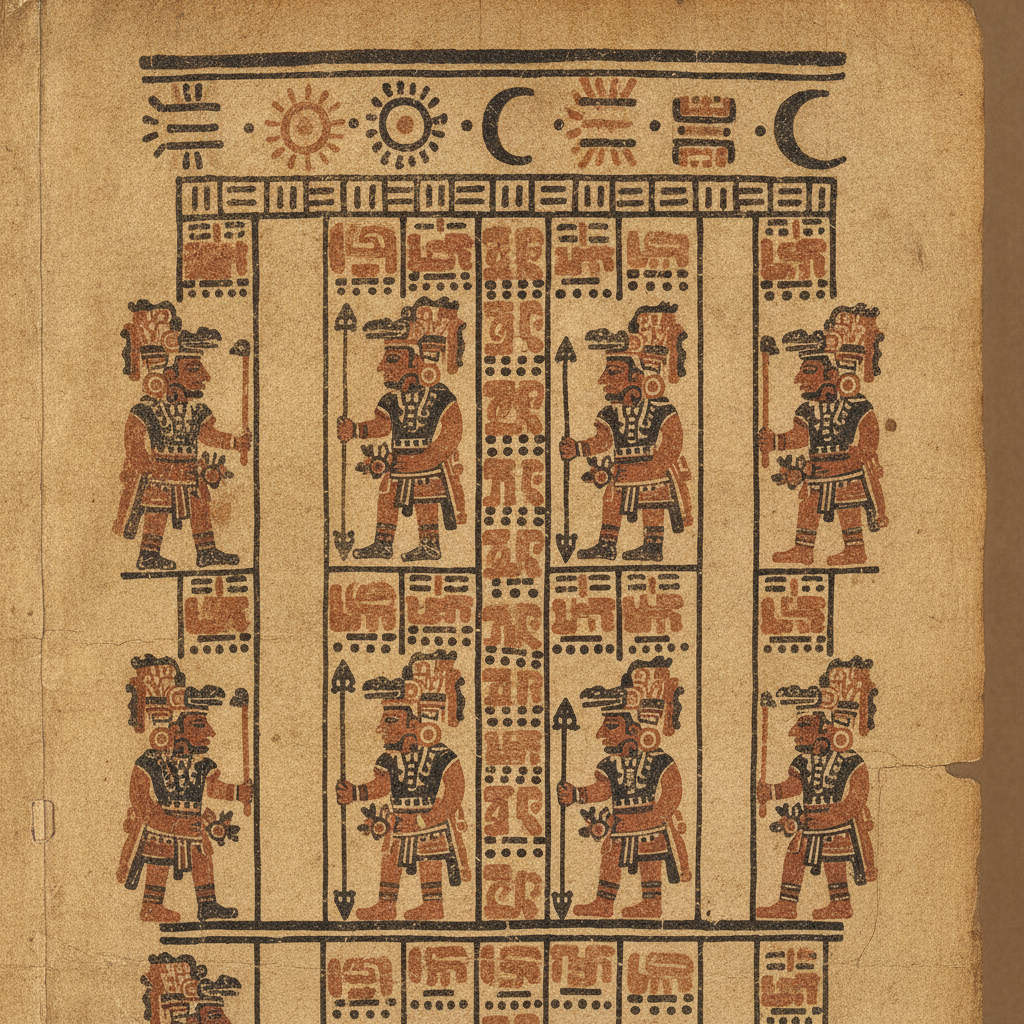
The Maya calendar system, the most complex and accurate of any pre-Columbian astronomical tradition in the Americas, combined multiple interlocking calendar cycles including the 260-day ritual calendar called the Tzolkin, the 365-day solar calendar called the Haab, the 52-year Calendar Round created by the intersection of the Tzolkin and the Haab, and the Long Count calendar that measured time from a mythological creation date of August 11, 3114 BCE in the most common correlation with the Gregorian calendar, creating a system capable of specifying any date within a range of millions of years with day-level precision. The astronomical accuracy of the Maya calendar tradition, documented in the Dresden Codex Venus tables that predicted Venus appearances accurate to a half-day error over 65 years, and in the solar eclipse table that predicted eclipse seasons with accuracy comparable to contemporary computational methods, was achieved through naked-eye observation recorded over centuries of systematic documentation by a class of specialist astronomers who recorded their observations in the books that Landa subsequently burned. The Maya astronomical tradition influenced the design of specific buildings at Chichen Itza, where the El Caracol circular observatory building is aligned with specific Venus rising positions and the El Castillo equinox shadow phenomenon was designed into the pyramid orientation, as well as at Dzibilchaltun where the Temple of the Seven Dolls is aligned with the equinox sunrise, and at Uxmal where the Governor Palace is aligned with Venus rising. The Maya Long Count calendar reached the end of its 13th b'ak'tun cycle on December 21, 2012, a date that generated the 2012 apocalypse narrative in popular media that Maya scholars universally rejected as misinterpretation of a calendar cycle completion as an ending rather than a new beginning.
- 5
Yucatan Cuisine Tradition Deep History
The Yucatecan culinary tradition, rooted in the Maya agricultural system of the milpa, the intercropped field of corn, squash, beans, and chile that has fed the Yucatan Peninsula for 4,000 years, and modified by the Spanish introduction of pork, cattle, citrus, and the cooking techniques of Andalusia and the Canary Islands, produces the most distinctively regional cuisine in Mexico, with flavor profiles that are immediately distinguishable from any other Mexican state and that reflect the specific ingredient environment of a tropical karst peninsula without mountain ranges, without highland chile varieties, without the Pacific coastal ingredients, but with the bitter orange of the Seville orange variety brought by the Spanish that gave Yucatecan meat preparation its characteristic citrus-achiote foundation. The achiote paste, called recado rojo, made from annatto seed, Mexican oregano, cumin, black pepper, and charred chile, is the defining spice base of Yucatecan meat preparation and the ingredient that gives cochinita pibil, pollo pibil, and poc chuc their characteristic orange-red color and complex flavor. The papadzul, considered the oldest Yucatecan dish, consists of corn tortillas dipped in a sauce of toasted pumpkin seeds and epazote herb, filled with hard-boiled eggs, and covered with a tomato sauce, a preparation that uses pre-Hispanic ingredients without Spanish additions and is documented in 16th-century colonial sources as an existing Maya dish. The habanero chile, native to the Yucatan and the hottest commercially cultivated chile in the Americas, is used as a condiment rather than a cooking ingredient in Yucatecan cuisine, appearing as a salsa on the side rather than incorporated into the dish.
- 6
Merida Contemporary Culture and Safety
Merida regularly appears in surveys of the safest large cities in Mexico, a distinction that reflects the absence of the organized crime dynamics that affect other major Mexican metropolitan areas and that has made the city attractive to Mexican families from Monterrey, Mexico City, and other cities seeking a safer urban environment, contributing to a domestic migration pattern that drives the gentrification of the historic center and adjacent neighborhoods. The safety record of Merida, which derives partly from the geographic isolation of the Yucatan Peninsula from the drug trafficking corridors that cross the mainland Mexican states, and partly from the social cohesion of the Yucatecan community culture that has maintained lower crime rates than comparable cities, has become the primary marketing message for Merida as a retirement and relocation destination. The contemporary cultural scene of Merida includes the Olimpo cultural center on the Plaza Grande, a contemporary art and performance space operated by the city in a colonial building; the Macay museum of contemporary Yucatecan art; and the annual Merida Fest international arts festival in January that brings dance, theater, and music from across Mexico and internationally to the city plazas and cultural venues. The Fundacion Henrique Iglesias, the cultural foundation of the Merida business community, funds programming at several venues. The Merida fashion design scene, concentrated in the colonia Santa Catarina and the Paseo Montejo area, produces a regional fashion identity incorporating the Yucatecan guayabera, the embroidered shirt that has been the formal wear of the Yucatecan professional and political class for a century, updated for contemporary markets. The guayabera, exported from the Yucatan to Cuba and the Caribbean in the colonial period, returned to Mexico as the Caribbean equivalent of formal wear.
Walk this route with audio
Stories play automatically as you reach each stop — no tapping needed.
More in Merida
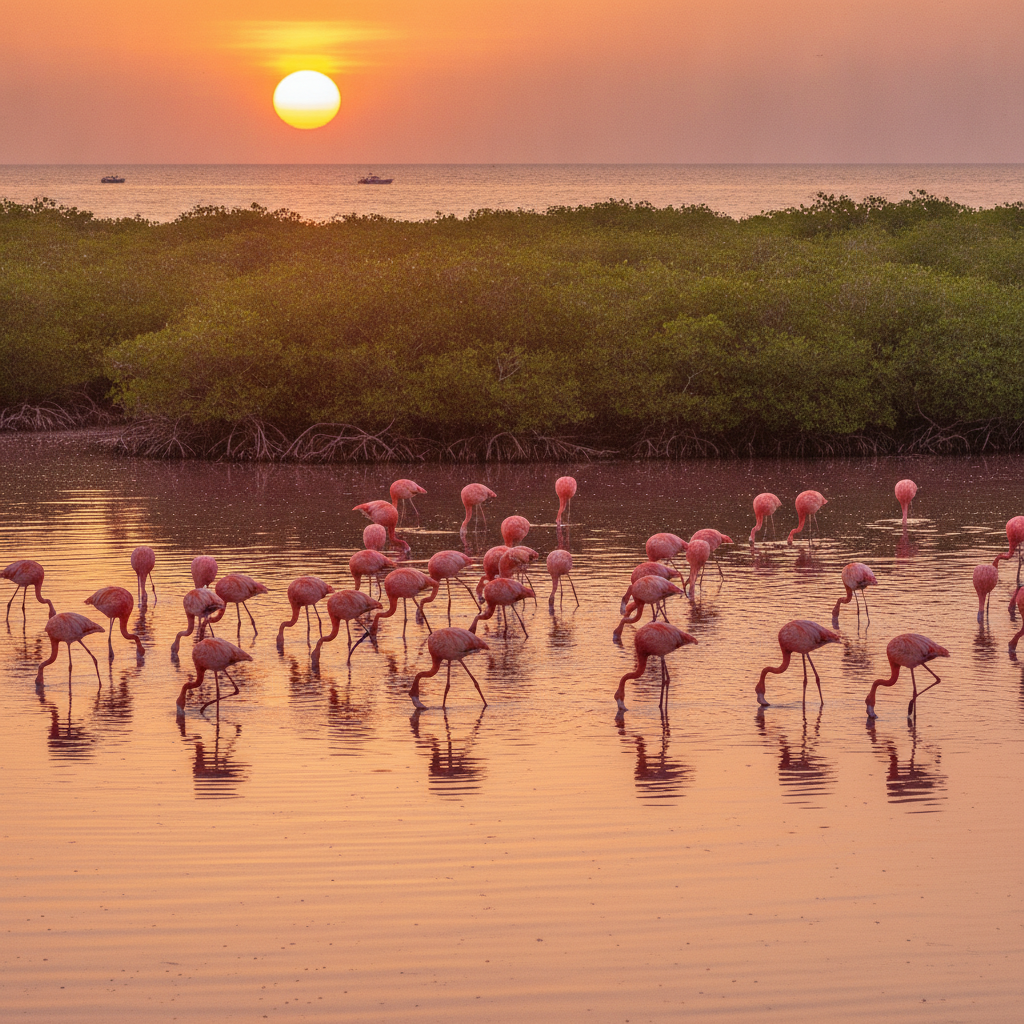
Merida Hacienda Hotels and the Yucatan Countryside: Swimming Pools in Converted Sisal Vats, Flamingo Lagoons at Celestun and the Biosphere Reserve Where Jaguars and Manatees Still Exist Within Two Hours of a Colonial Capital
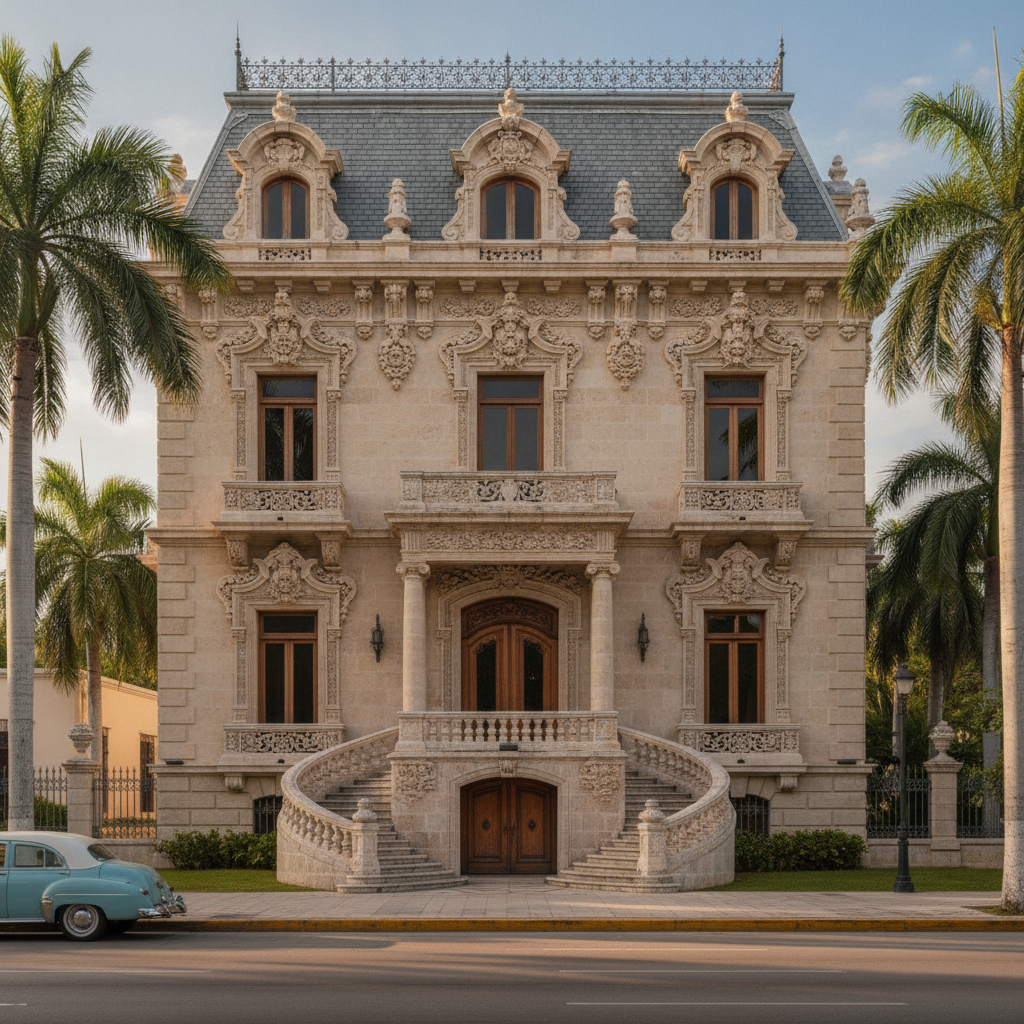
Merida Colonial Architecture Walking Tour: Cantera Limestone Mansions of the Calle 60 Corridor, the Plateresque Doorways of the Historic Center and the Architectural Inventory That Makes Merida the Best-Preserved Colonial City in Mexico After Oaxaca
Merida: The White City of the Yucatan Peninsula Where Henequen Millionaires Built Beaux-Arts Mansions on a Maya Foundation and Where Chichen Itza Is Ninety Minutes Away and Cenotes Are Everywhere Beneath the Flat Limestone Plain
Maya Civilization in the Yucatan: The Writing System That Scholars Could Not Read for 150 Years, the Dresden Codex Astronomical Tables That Are More Accurate Than European Medieval Equivalents, and the Debate About Who Built Chichen Itza
Merida and Yucatan Water Crisis: How the Aquifer That Feeds 5 Million People Is Being Contaminated by Pig Farms Pesticides and Hotel Septic Systems While the Government Issues New Tourism Development Permits