Frida Kahlo, Diego Rivera, Coyoacán & Xochimilco
The southern neighbourhoods of Mexico City — the bohemian colonial enclave of Coyoacán (home of Frida Kahlo's Blue House museum and Diego Rivera's studio), the canal network of Xochimilco (a UNESCO World Heritage Site, the last remnant of the lake-and-island system on which Aztec Mexico was built), and the Museo Anahuacalli (Diego Rivera's own collection of pre-Hispanic art) — represent the cultural and historical roots of Mexican identity south of the historic centre.
1. La Casa Azul — Frida Kahlo's Blue House Museum
- 1
La Casa Azul — Frida Kahlo's Blue House Museum
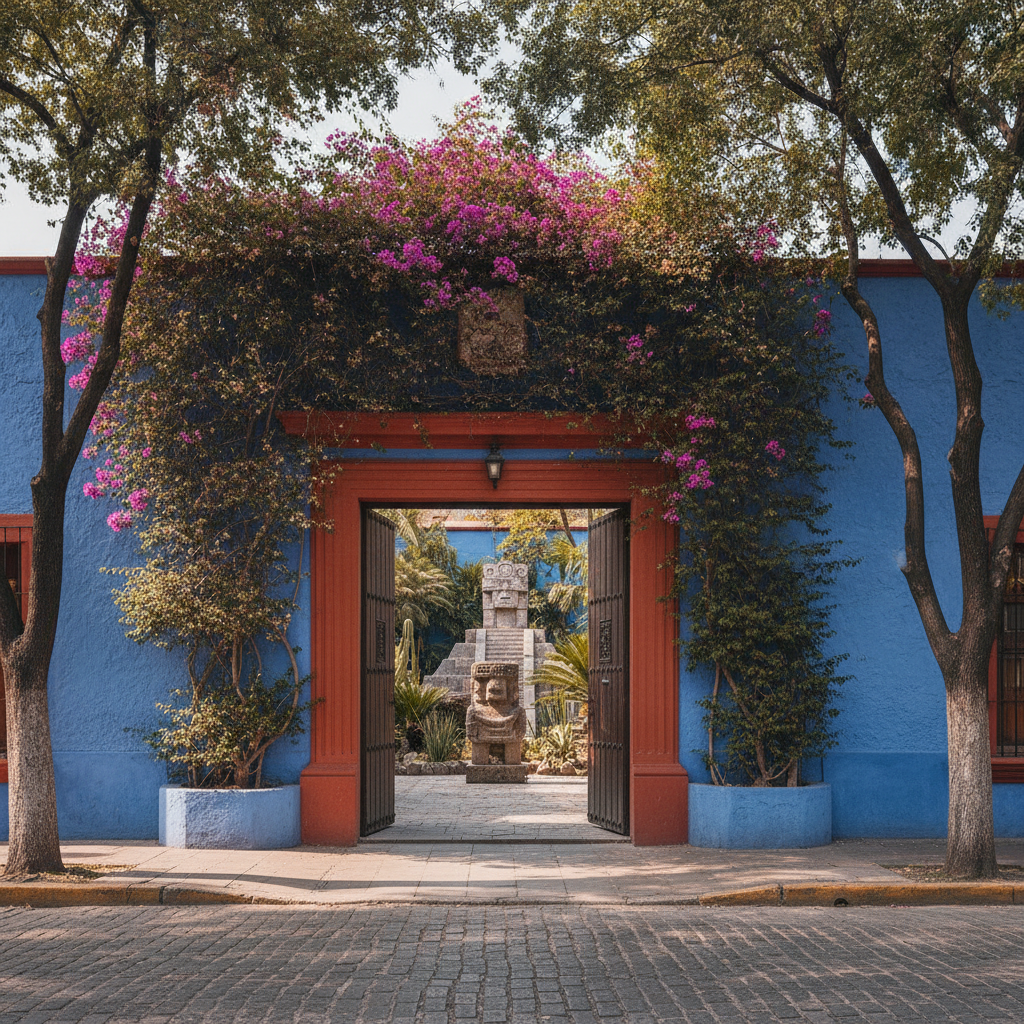
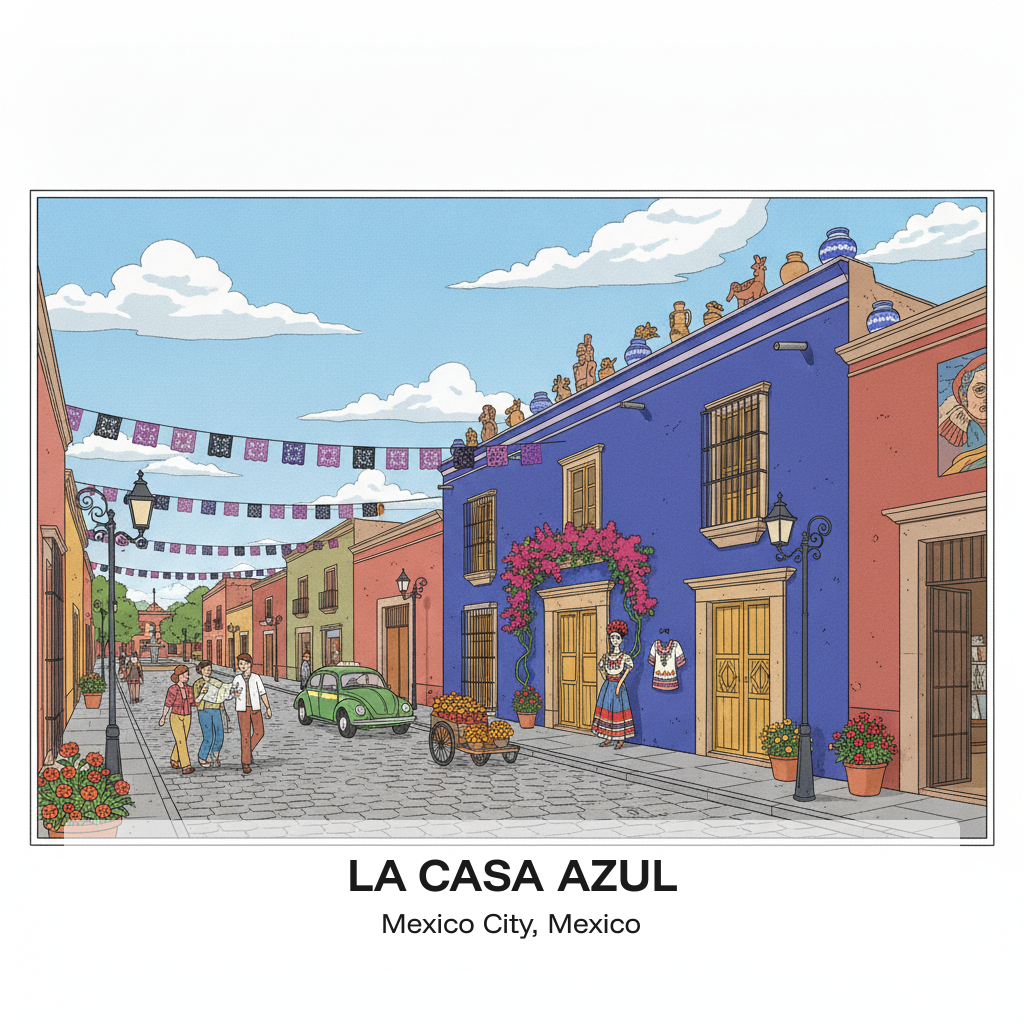
La Casa Azul (The Blue House, Museo Frida Kahlo, Londres 247, Coyoacán — the house where Frida Kahlo (1907-1954) was born, spent her childhood, and returned to live and work in until her death): Frida Kahlo, born Magdalena Carmen Frida Kahlo y Calderón in Coyoacán, Mexico City, July 6, 1907, was the daughter of German-Hungarian-Jewish photographer Guillermo Kahlo and his mestiza wife Matilde Calderón y González; she contracted poliomyelitis at age 6 (which left her right leg thinner than her left), survived a near-fatal bus accident at age 18 (which fractured her spinal column, collarbone, ribs, and pelvis, shattered her right leg in 11 places, crushed her right foot, dislocated her shoulder, and impaled her with a steel handrail), and spent the remainder of her life in chronic pain while producing 143 paintings (55 of which are self-portraits) of extraordinary psychological intensity; she married Diego Rivera twice (1929-1939, 1940-1954), became internationally celebrated during her lifetime particularly in France and the United States, and has become the most recognized female artist in the world in the decades since her death; the museum contains her most personal possessions, her studio, her wardrobes of Tehuana dresses, and her collection of pre-Hispanic art.
- 2
Coyoacán — The Colonial Village Within the City
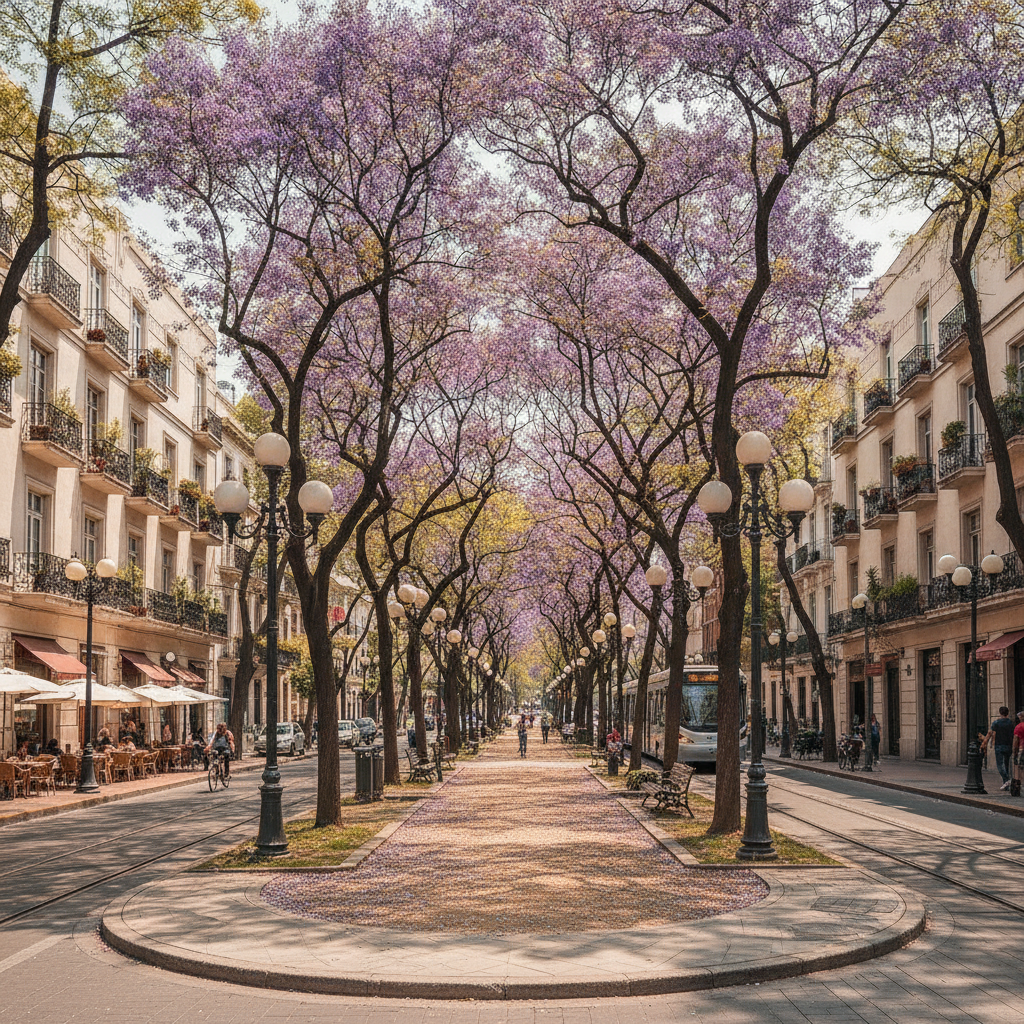
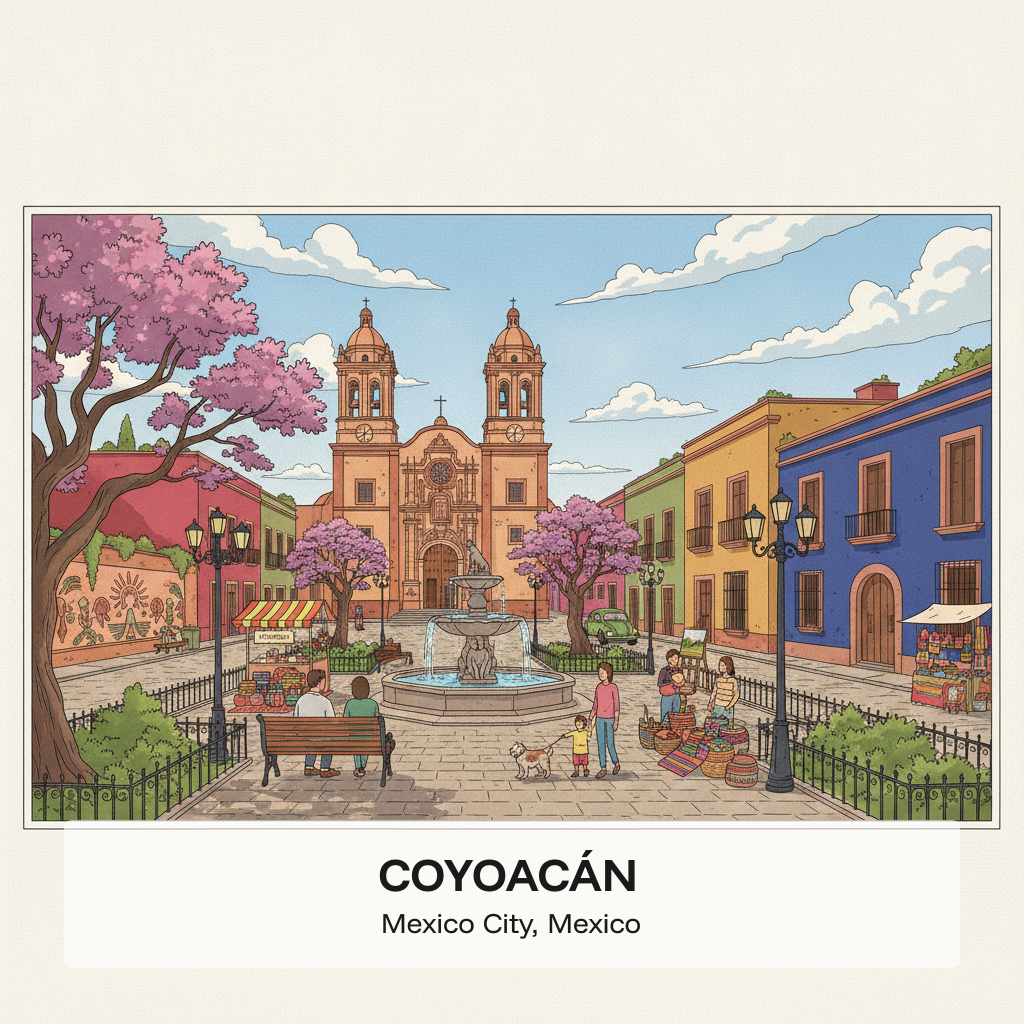
Coyoacán (meaning 'place of the coyotes' in Nahuatl — the historically separate village 15 kilometres south of the historic centre of Mexico City, absorbed into the urban fabric of the expanding metropolis in the 20th century but retaining its distinct colonial character, tree-lined streets, Saturday market, and intellectual-bohemian atmosphere): Coyoacán has an extraordinary concentration of historical significance: it was the headquarters of Hernán Cortés (the base from which the Spanish conducted the Siege of Tenochtitlan in 1519-1521); the site of the first municipal seat of New Spain; the location of the house-arrest and subsequent assassination of Leon Trotsky (Avenida Viena 45, now the Museo Casa de León Trotsky — the Russian revolutionary exiled from the Soviet Union and granted asylum in Mexico in 1937, assassinated by Stalinist agent Ramón Mercader in 1940); and the birthplace and lifelong home of Frida Kahlo; the cobblestone streets, colonial churches, artisan market, and café culture of the Jardín Centenario make Coyoacán the most pleasant neighbourhood in Mexico City to explore on foot.
- 3
Diego Rivera's Studio & the Museo Anahuacalli
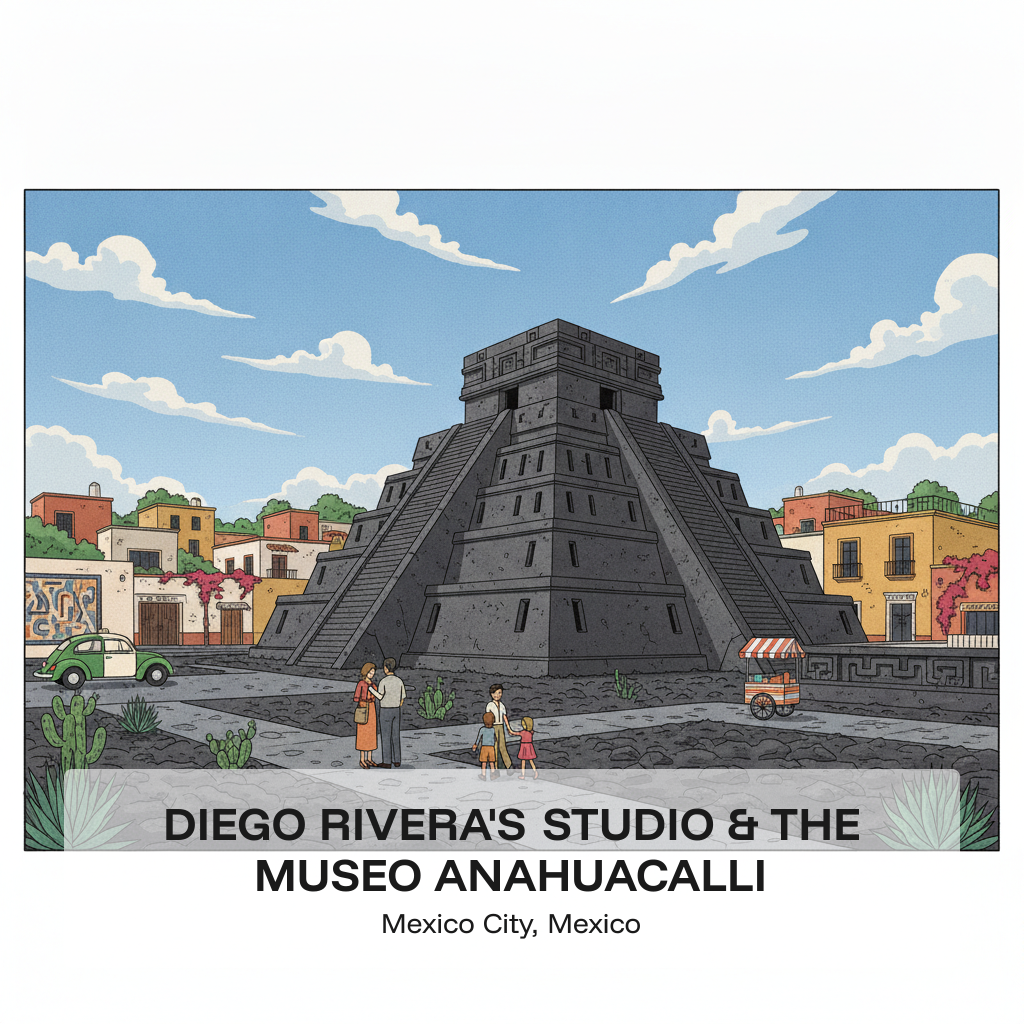
Diego Rivera (1886-1957, born Diego María de la Concepción Juan Nepomuceno Estanislao de la Rivera y Barrientos Acosta y Rodríguez in Guanajuato, Mexico) was the most celebrated Mexican muralist and one of the most politically significant artists of the 20th century: his vast public murals (the murals of the Palacio Nacional, the murals of the SEP (Ministry of Public Education), the murals of the UNAM cultural centre, and 'Man at the Crossroads' in the Palacio de Bellas Artes (the original was destroyed by the Rockefeller Center in 1934 after Rivera included a portrait of Lenin)) defined the visual language of Mexican revolutionary identity and influenced the development of public art worldwide; the Museo Anahuacalli (Calle del Museo 150, Coyoacán — the lava-stone pyramid designed by Diego Rivera to house his collection of 50,000+ pieces of pre-Hispanic art, completed after his death by Juan O'Gorman in 1964, a unique hybrid of pre-Hispanic architecture and Art Deco), and Rivera's San Ángel studio (now the Museo Casa Estudio Diego Rivera y Frida Kahlo, Altavista 47, San Ángel) are the two best places to experience Rivera's world.
- 4
Xochimilco — The Aztec Floating Gardens on the Ancient Lake
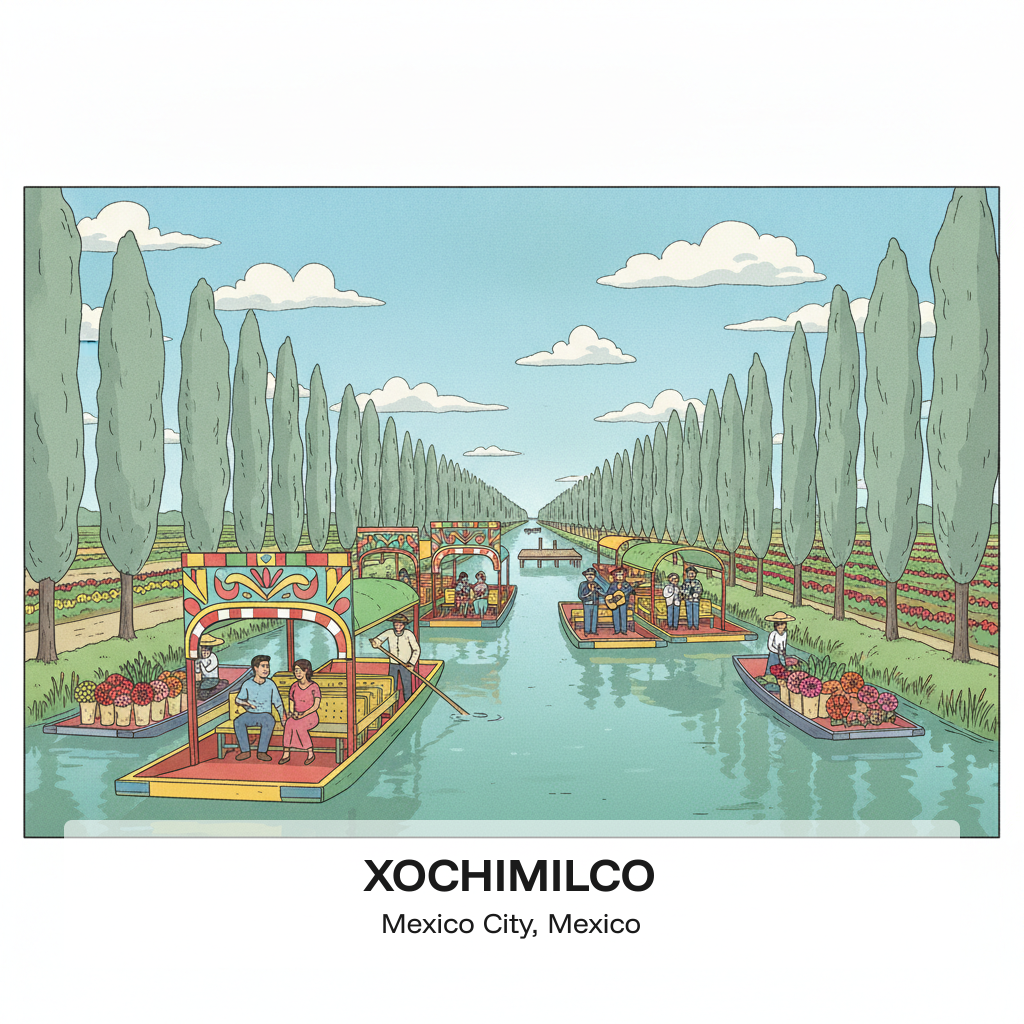
Xochimilco (meaning 'where the flowers grow' in Nahuatl — the network of canals and chinampas (artificial islands) in the southern part of Mexico City, designated UNESCO World Heritage Site in 1987 along with the historic centre of Mexico City): Xochimilco is the last surviving remnant of the extensive network of lakes, canals, and chinampas that covered much of the Valley of Mexico before the Spanish began draining them in the 17th century; the chinampas ('floating gardens') were strips of land created by the Aztecs (and their predecessors) by layering aquatic vegetation, mud, and soil between wooden stakes driven into the lake bed, building up over centuries into fertile agricultural islands that could be used to grow crops within the city; the Xochimilco canals are still used for agricultural production but are now primarily a tourist attraction — visitors board colourfully decorated flat-bottomed boats called trajineras, which are poled by boatmen through the canals, with floating food and music boats pulling alongside to sell food, drinks, and mariachi music.
- 5
UNAM Cultural Circuit — University City & Mexican Muralism
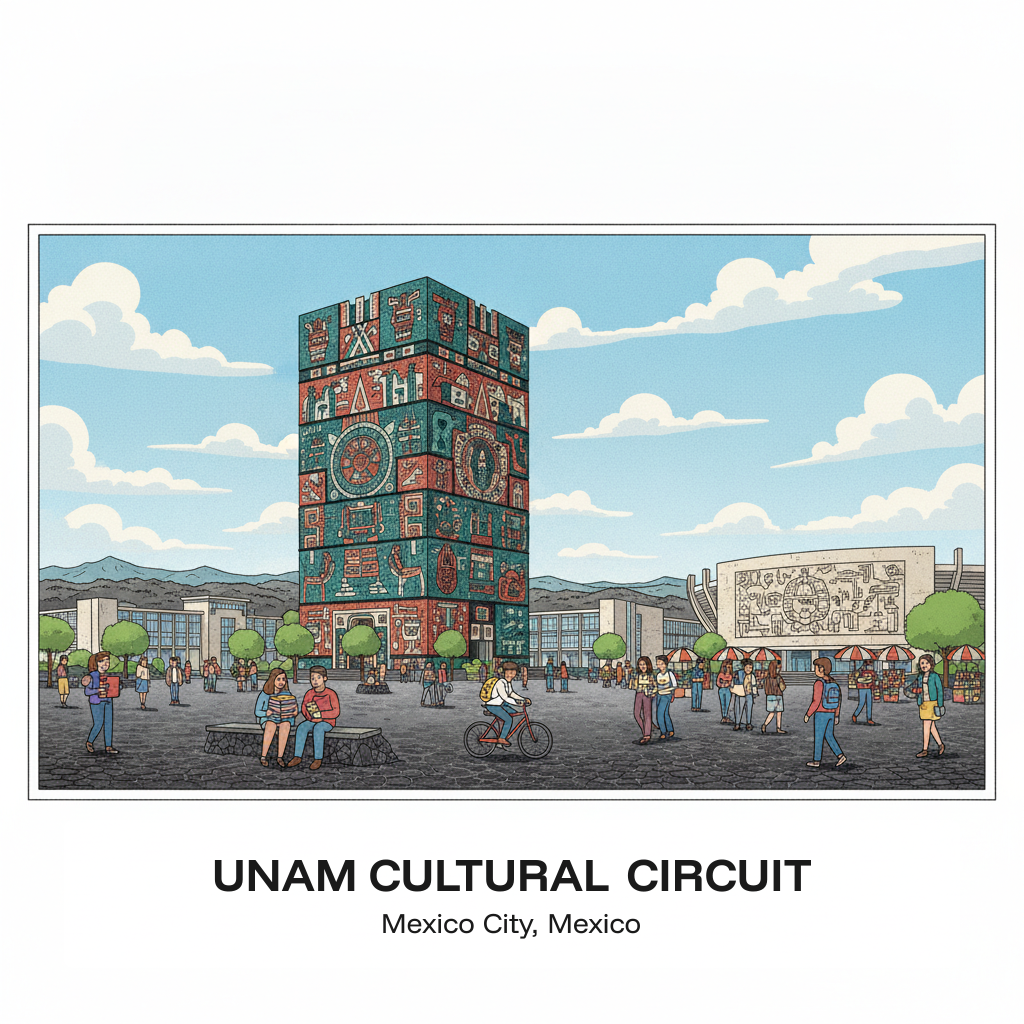
Universidad Nacional Autónoma de México (UNAM), Ciudad Universitaria (University City, Coyoacán) — UNESCO World Heritage Site: the main campus of UNAM (the largest university in Latin America by enrollment, with 350,000 students across all campuses) was designed and built between 1949 and 1952 by a team of architects led by Mario Pani and Enrique del Moral, with public art by Diego Rivera, David Alfaro Siqueiros, Juan O'Gorman, and Francisco Eppens; the Central Library building (Biblioteca Central, designed by Juan O'Gorman, 1956) is entirely covered on all four exterior walls with a mosaic made from natural stone (approximately 7.5 million pieces of stone in 37 colours) that presents the history of Mexico from the pre-Hispanic period to the modern era on the north and south facades, the colonial period on the east facade, and the modern era on the west facade — the largest mosaic mural in the world.
- 6
San Ángel & the Bazar del Sábado — Artisan Mexico City
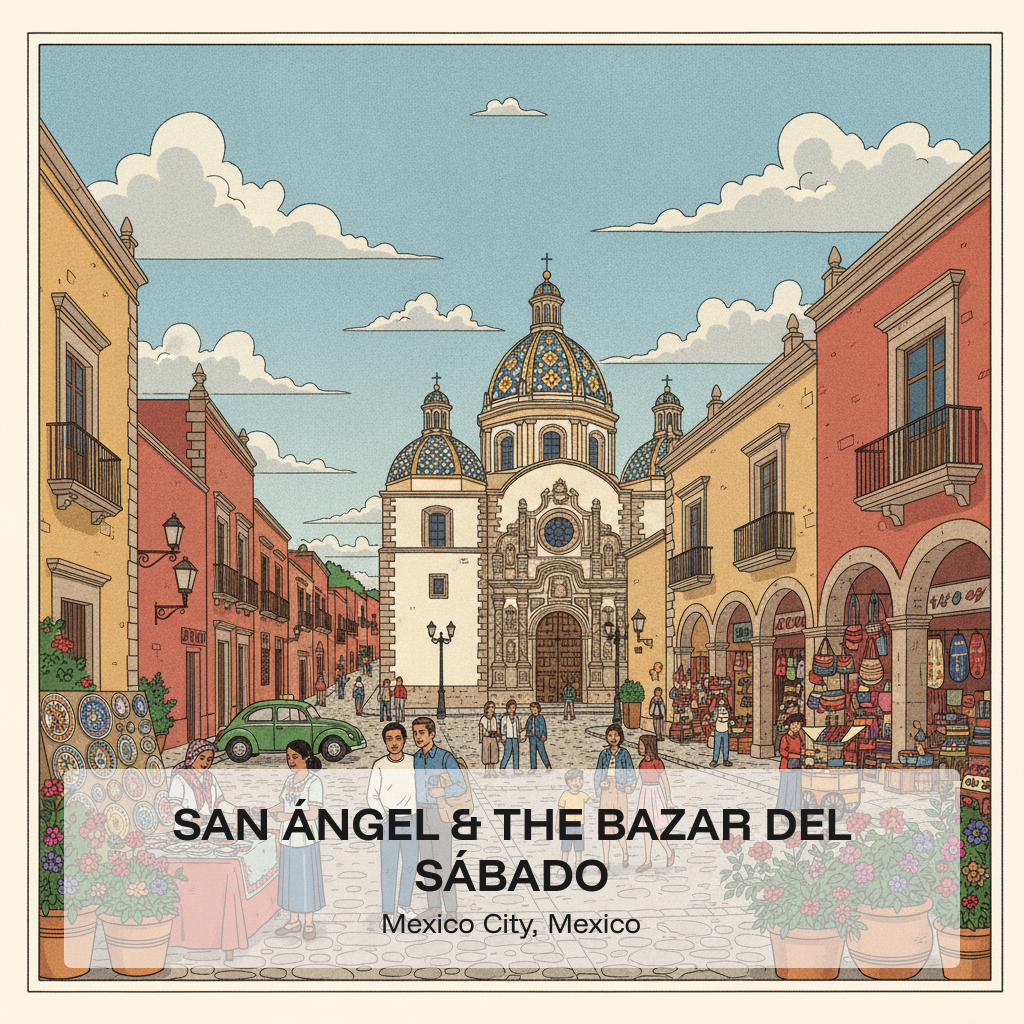
San Ángel (the historical village-within-the-city approximately 12 kilometres south of the Zócalo, adjacent to Coyoacán, similarly retaining its colonial character within the metropolitan sprawl): San Ángel developed in the 17th and 18th centuries as an aristocratic resort outside the city, where wealthy Mexico City families built summer houses; the neighbourhood today is characterized by 17th-18th century colonial mansions (several now operating as restaurants), cobblestone streets, the Plaza San Jacinto (the main square), the Bazar del Sábado (the Saturday artisan market held every Saturday in the mansions surrounding the plaza — the finest artisan craft market in Mexico City, with 700+ artisans selling ceramics, textiles, jewelry, leather goods, and fine art), and the Iglesia de El Carmen (the 1615 Carmelite church with its distinctive multi-coloured tiled domes, connected to the adjacent Ex-Convento del Carmen which contains the mummified remains of 12 individuals in its crypt).
Walk this route with audio
Stories play automatically as you reach each stop — no tapping needed.
More in mexico-city
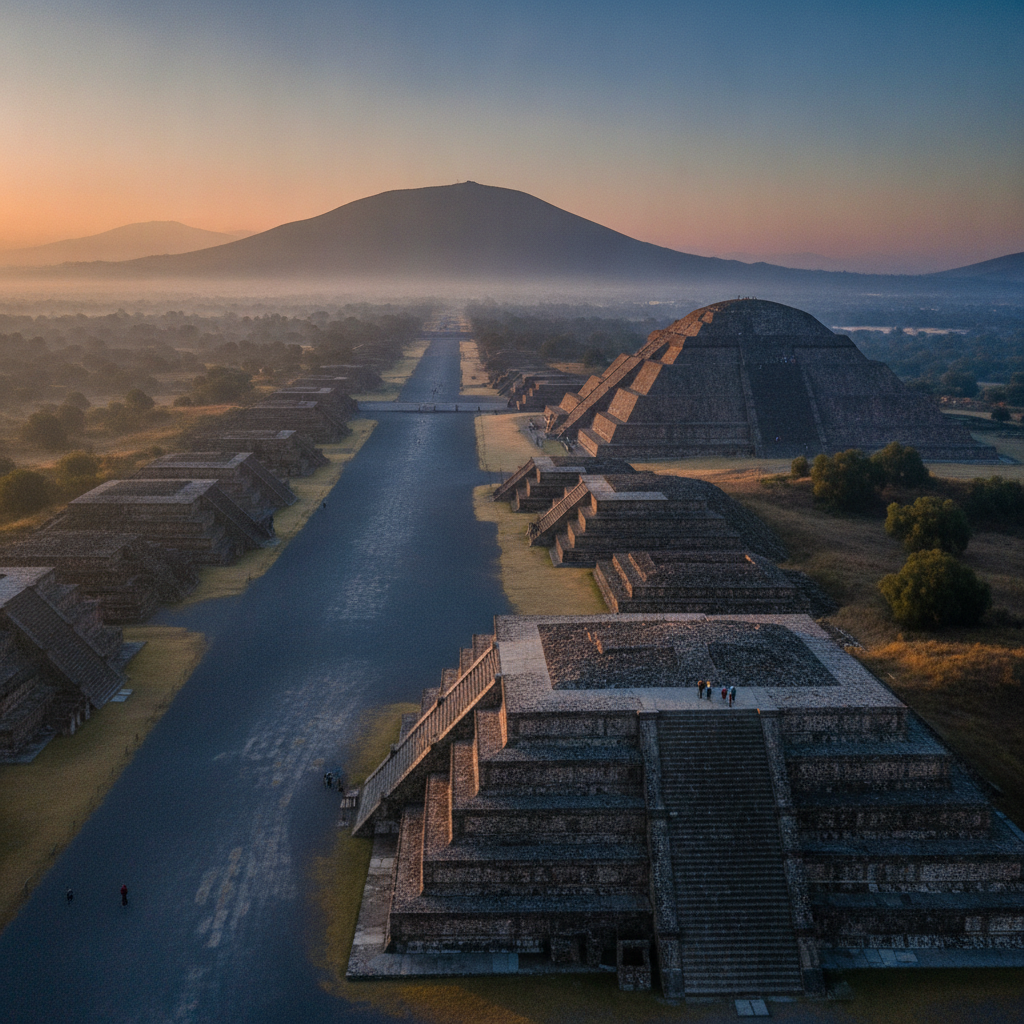
Teotihuacan — The Pyramids of the Sun and Moon
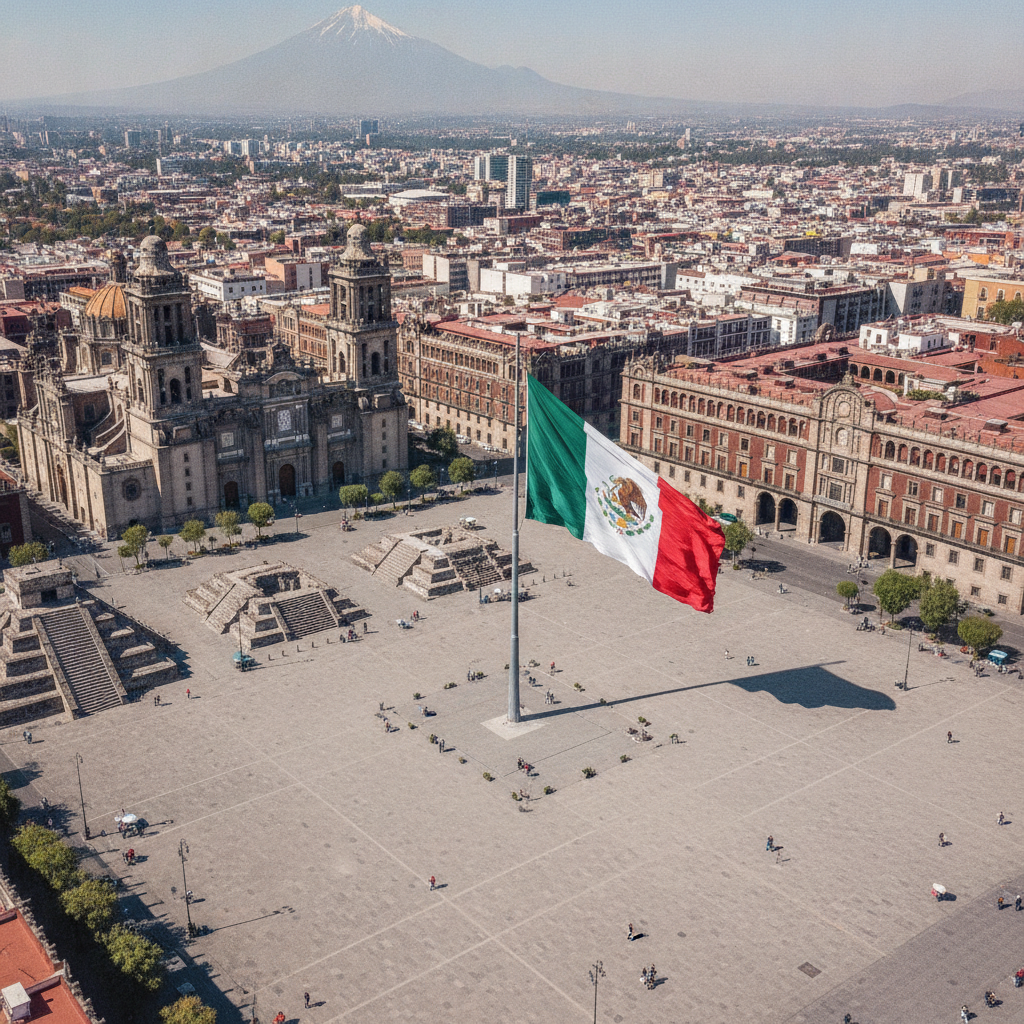
Zócalo, Templo Mayor & the Historic Centre — Aztec and Colonial Mexico City
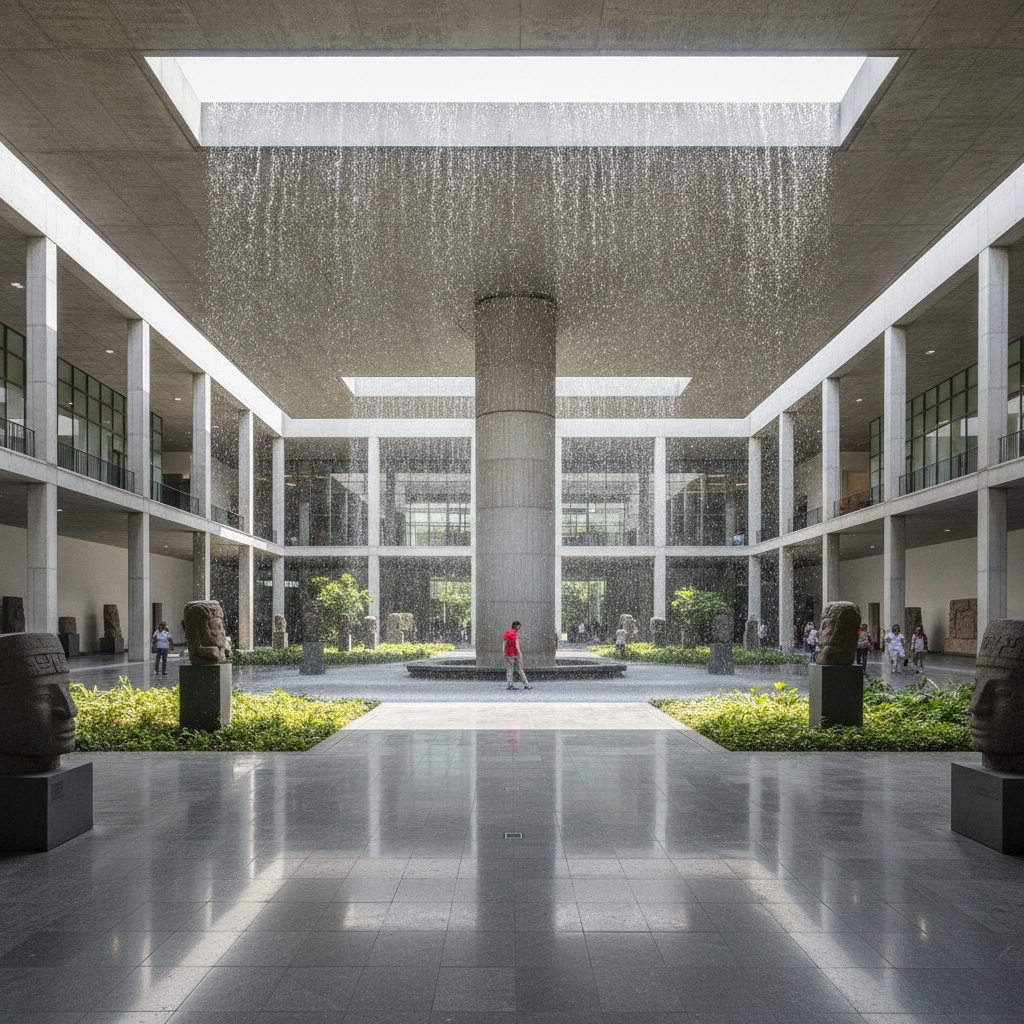
National Museum of Anthropology & Chapultepec Castle
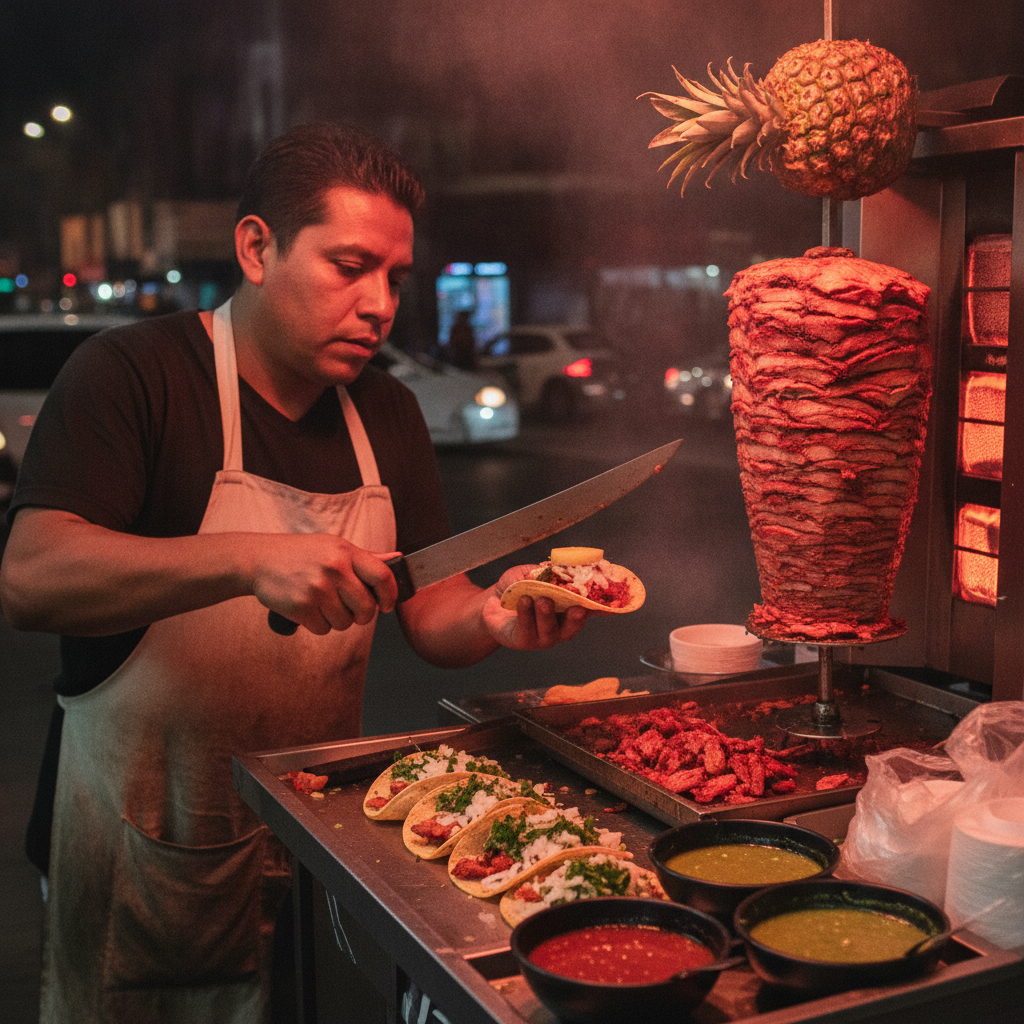
Mexican Food Culture — Tacos, Tamales, Mole & the Market Tradition
Lucha Libre — Arena México & the Art of Mexican Wrestling