Teotihuacan — The Pyramids of the Sun and Moon
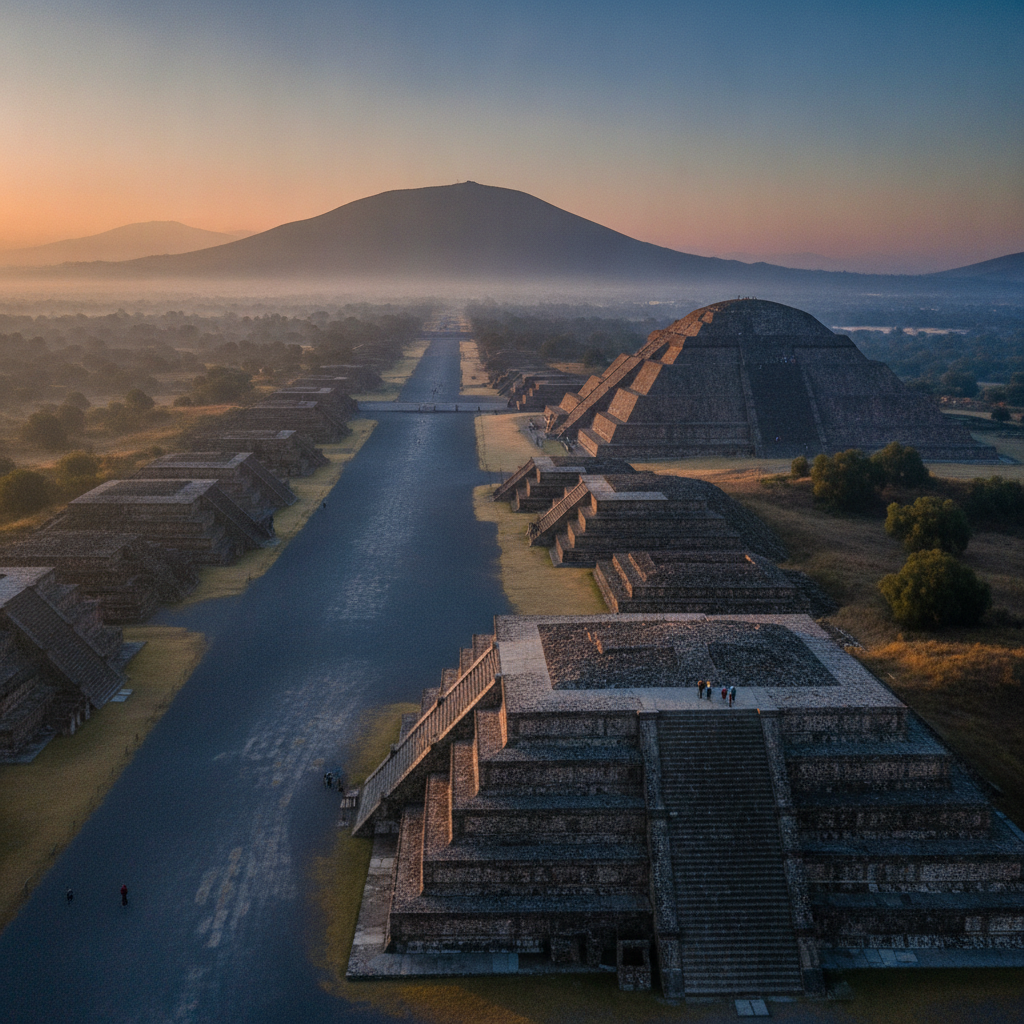
Teotihuacan ('the place where the gods were created', 50 kilometres northeast of Mexico City, UNESCO World Heritage Site) was the largest city in the pre-Columbian Americas and one of the largest cities in the world in the 5th century CE, with an estimated population of 100,000-200,000 people; its two great pyramids (the Pyramid of the Sun and the Pyramid of the Moon) and the 2-kilometre Avenue of the Dead constitute one of the most extraordinary archaeological sites in the world.
- 1
Pyramid of the Sun — The Third-Largest Pyramid in the World
Pyramid of the Sun (Pirámide del Sol, Teotihuacan — 225 metres per side at the base, 65 metres high, the third-largest pyramid in the world by volume after the Great Pyramid of Cholula and the Great Pyramid of Giza; built in two phases approximately 100 CE and 200 CE): the Pyramid of the Sun stands on the east side of the Avenue of the Dead approximately 1 kilometre from the Pyramid of the Moon; the pyramid is aligned so that the sun sets directly in front of its west face on the days of the zenith passage (approximately May 17 and July 26, the two annual dates when the sun passes directly overhead at the latitude of Teotihuacan); a cave with a four-leaf-clover plan was discovered directly beneath the geometric centre of the pyramid in 1971, containing offerings and evidence of human occupation from before the construction of the pyramid above it — the cave may have been considered the entrance to the underworld and the site sacred before the pyramid was built on top of it; the summit was originally crowned with a temple, now lost.
- 2
Pyramid of the Moon — The Ceremonial Heart of Teotihuacan
Pyramid of the Moon (Pirámide de la Luna, Teotihuacan — 150 metres by 120 metres at the base, 43 metres high — built in seven construction phases between approximately 100 CE and 450 CE, making it the most recently completed of the major structures at Teotihuacan): the Pyramid of the Moon terminates the northern end of the Avenue of the Dead and together with the open plaza in front of it (the Plaza of the Moon, also called the Plaza of the Four Temples) formed the primary ceremonial focus of the ancient city; the view from the top of the Pyramid of the Moon down the Avenue of the Dead to the south is one of the most dramatic urban vistas from the ancient world — the full 2-kilometre length of the avenue, with the Pyramid of the Sun dominating the right side and dozens of smaller temple platforms lining both sides, stretches away to the distant Ciudadela; twelve individuals (mostly men) were found sacrificed and entombed beneath the pyramid in positions suggesting ritual dedication.
- 3
The Avenue of the Dead — The Spine of an Ancient Metropolis
The Avenue of the Dead (Calzada de los Muertos, Teotihuacan — the 2.4-kilometre ceremonial avenue running north-south through the centre of Teotihuacan, approximately 40 metres wide, aligned 15.5 degrees east of true north to align with the sunset on the zenith passage days and with the orientation of the Pleiades star cluster at the horizon at sunset): the Avenue of the Dead is not a road for transportation but a ceremonial procession route lined on both sides with platforms (adorosatorios), temple complexes, and the residential compounds of the priestly elite; the name 'Avenue of the Dead' was given by the Aztecs (who visited and revered the ruins of Teotihuacan 1,000 years after its collapse) in the belief that the platforms lining the avenue were tombs — in fact they were temple platforms; Teotihuacan at its height (400-550 CE) was one of the five largest cities in the world.
- 4
The Ciudadela & Temple of Quetzalcoatl
The Ciudadela ('The Citadel', Teotihuacan — the large sunken platform complex at the southern end of the Avenue of the Dead, approximately 400 metres per side, enclosing the Temple of the Feathered Serpent (Templo de la Serpiente Emplumada, also known as the Temple of Quetzalcoatl)): the Temple of the Feathered Serpent (built approximately 200 CE, subsequently partially buried under a later pyramid) is the most elaborately decorated structure at Teotihuacan — the multiple projecting stone heads of alternating Feathered Serpents (Quetzalcoatl, the plumed serpent deity) and Rain Gods (Tlaloc) that decorate each terrace of the pyramid represent the most sophisticated sculptural programme in pre-Classic Mesoamerican architecture; approximately 200 human sacrificial victims were found buried around and beneath the temple, mostly military captives sacrificed at the temple's dedication approximately 200 CE.
- 5
Teotihuacan's Apartment Compounds & Mural Art
The residential and commercial areas of Teotihuacan (the apartment compounds (conjuntos habitacionales) that housed the city's population of 100,000-200,000 — large multi-room compound buildings organized around interior courtyards, each housing an extended family group of 60-100 people): the apartment compounds are the most distinctive element of Teotihuacan's urban form — unlike most ancient cities, which had a hierarchical gradation from elite centre to poor periphery, Teotihuacan's residential compounds were relatively uniform in quality across the city, suggesting a more egalitarian social organization; the Tetitla, Atetelco, Tepantitla and Zacuala compounds (west of the Avenue of the Dead) preserve elaborate murals of the Teotihuacan style — the most important surviving body of pre-Columbian mural painting.
- 6
Teotihuacan Museum & the Mystery of the City's Fall
The Site Museum of Teotihuacan (Museo de Sitio de Teotihuacan, at the south entrance of the archaeological zone): the museum displays the most important artifacts from the Teotihuacan excavations, including the large obsidian mask and figurines from elite tombs, ceramic incense burners in the distinctive Teotihuacan style, and displays interpreting the urban organization and social structure of the ancient city; the mystery of Teotihuacan's collapse (approximately 550-650 CE, when the city was deliberately burned — apparently by its own population in a class uprising against the theocratic elite, based on the evidence that only elite and ceremonial buildings were targeted while residential compounds were left intact) remains one of the great unsolved questions of New World archaeology; after Teotihuacan's fall, the Aztecs venerated the site as the place where the sun and moon were created and buried their own offerings there.
Walk this route with audio
Stories play automatically as you reach each stop — no tapping needed.
More in mexico-city
Zócalo, Templo Mayor & the Historic Centre — Aztec and Colonial Mexico City
Frida Kahlo, Diego Rivera, Coyoacán & Xochimilco
National Museum of Anthropology & Chapultepec Castle
Mexican Food Culture — Tacos, Tamales, Mole & the Market Tradition
Lucha Libre — Arena México & the Art of Mexican Wrestling