Wynwood, Design District & Little Haiti — Miami's Creative Soul
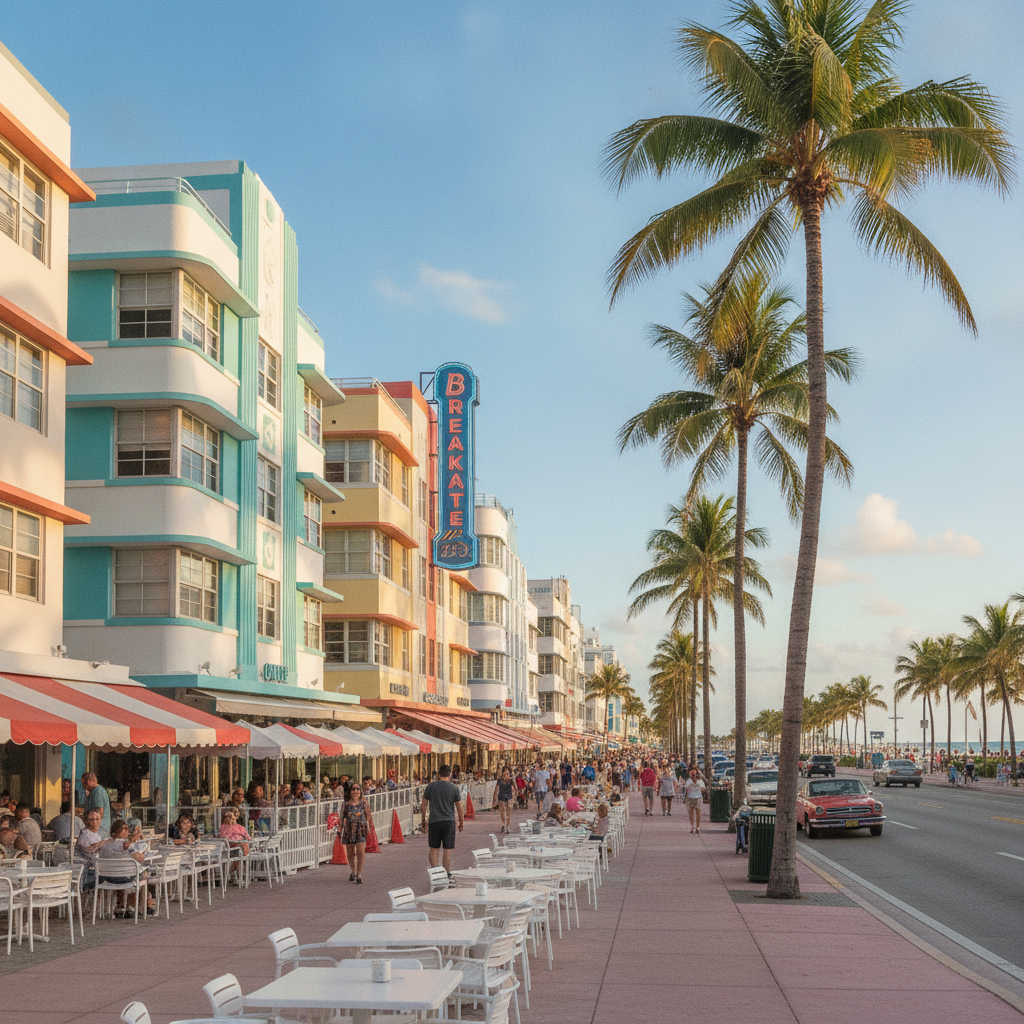
The Wynwood Arts District and the adjacent Miami Design District are the creative and cultural heart of contemporary Miami — the neighbourhoods that have transformed a formerly industrial and overlooked section of the city into one of the most dynamic arts and design destinations in the Americas, driven by the annual Art Basel Miami Beach fair and the real estate investment it has attracted.
- 1
Wynwood Walls — The World's Most Famous Street Art Museum
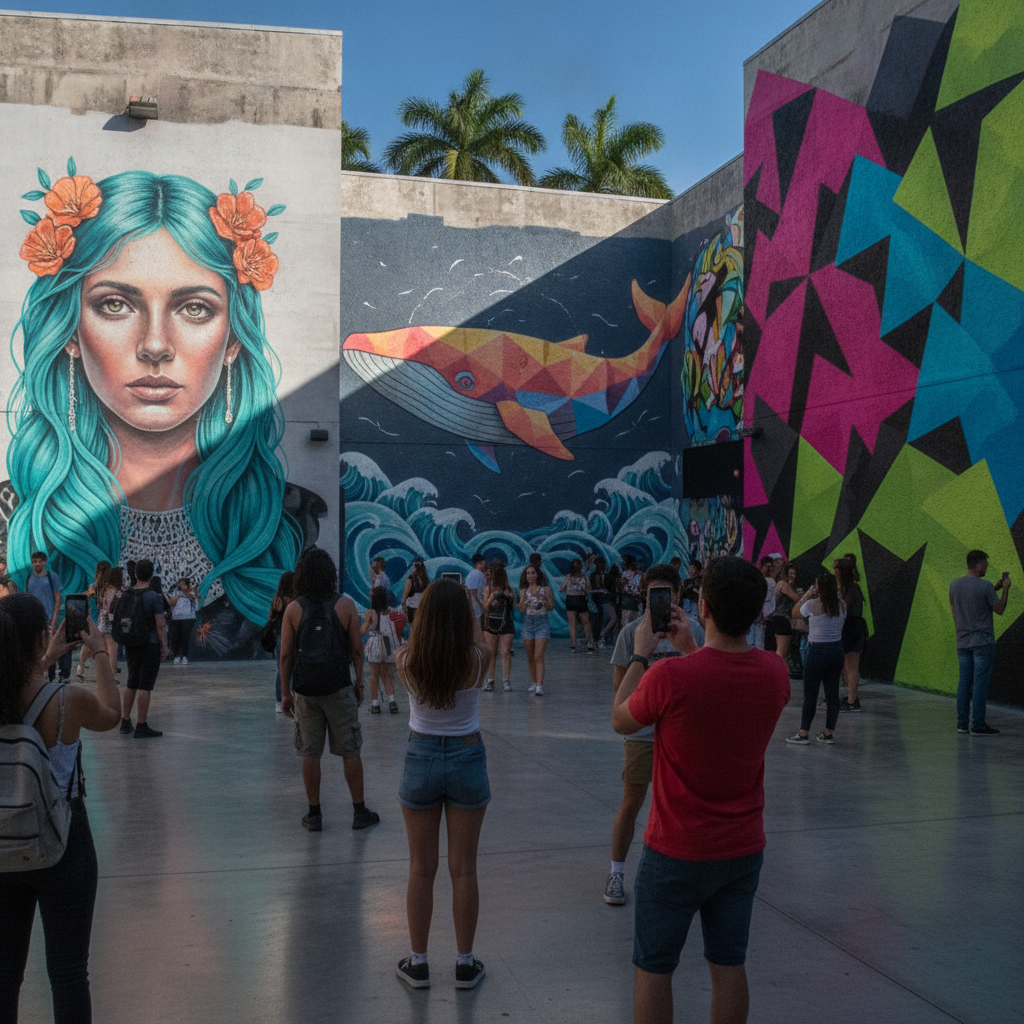
Wynwood Walls (the outdoor mural art exhibition at the corner of NW 2nd Avenue and NW 26th Street in the Wynwood Arts District — the most famous outdoor art installation in the United States and the site that launched the global street art / mural art movement of the 2010s): the Wynwood Walls (conceived and created by the New York real estate developer Tony Goldman (1942-2012), who purchased a cluster of warehouse buildings in the then-derelict Wynwood district in 2009 and invited internationally recognized street artists to cover the exterior walls in murals, launching the project with an event in December 2009 featuring artists from Brazil, the US, Japan, and Europe) now cover approximately 80,000 square feet of exterior walls with murals that are replaced and updated every year (each December during Art Basel week, new murals are commissioned and painted over the previous year's work, maintaining the freshness of the installation); the permanent exhibition (the 'gallery' section of the Wynwood Walls, with rotating exhibitions of contemporary art in the interior spaces of the warehouse complex) supplements the outdoor murals; the surrounding Wynwood Arts District (the approximately 70-square-block area extending from NW 20th to 29th Streets between NW 1st and 5th Avenues) has developed into the most concentrated arts district in the American South, with over 70 galleries, studios, and art spaces.
- 2
Miami Design District — Luxury & Culture
Miami Design District (the luxury retail and design destination in the NE 2nd Avenue area between NE 36th and 42nd Streets — the neighborhood that has transformed from a furniture showroom district into one of the most exclusive retail destinations in the United States): the Design District (developed by the real estate developer Craig Robins (b.1964), who began purchasing the area's mid-century commercial buildings in the 1990s and envisioned a neighbourhood that would combine luxury retail with contemporary art and design, a concept he called 'luxury and culture in the same basket') is now home to the flagship stores of virtually every major international luxury brand (Louis Vuitton, Dior, Hermès, Gucci, Prada, Chanel, Cartier, Bulgari — each store designed by the brand's preferred architect (the Louis Vuitton Miami store was designed by Jun Aoki, the Hermès store by RDAI, the Dior store by Dior's in-house architecture team)), the Pérez Art Museum Miami (PAMM — on Biscayne Bay at Museum Park), the Institute of Contemporary Art Miami (ICA Miami — in the heart of the Design District, the most important contemporary art institution in Miami), and the Locust Projects (the experimental art space that has exhibited the most challenging contemporary art in Miami since 1998); the street art (the commissioned murals and site-specific art installations in the alleys and on the building facades throughout the Design District) represents the finest integration of art and luxury retail in the United States.
- 3
Little Haiti & Haitian Cultural Arts
Little Haiti (the Haitian-American neighbourhood in the NE 2nd Avenue corridor between NE 54th and 79th Streets in Miami — the largest Haitian diaspora community in the United States and the second-largest outside of Haiti (after the Haitian community in Metropolitan New York)): the Haitian community in Miami (the approximately 150,000-200,000 Haitian-Americans in Miami-Dade County, the descendants of the multiple waves of Haitian immigration to Miami (the economic migration of the 1970s-1980s, the 'boat people' era when Haitian asylum seekers arrived by wooden sailboat (kanaval — the term for both the Haitian Carnival celebration and the type of wooden boat used to cross the Windward Passage from Haiti to the Bahamas and Florida), and the wave following the 2010 Haiti earthquake)) has created one of the most distinctive immigrant cultural neighbourhoods in the United States; the Caribbean Marketplace (Marché Caraïbe — the Haitian-style market in the heart of Little Haiti, modelled on the famous Iron Market (Marché de Fer) in Port-au-Prince, with the characteristic Haitian market architecture of brightly painted stalls) and the Little Haiti Cultural Complex (the cultural centre and performance space hosting Haitian music (kompa — the Haitian popular music genre developed in the 1950s by bandleader Nemours Jean-Baptiste), Haitian dance, and visual arts) are the cultural heart of the neighbourhood.
- 4
Pérez Art Museum Miami & Museum Park
Pérez Art Museum Miami (PAMM — the contemporary art museum at 1103 Biscayne Boulevard in Museum Park (Maurice A. Ferré Park), on Biscayne Bay in downtown Miami — the most important art museum in Miami and one of the finest contemporary art museums in the American South): the museum (opened December 2013 in the building designed by the Swiss architecture firm Herzog & de Meuron (the same firm that designed the Tate Modern in London, the Beijing Olympic Stadium 'Bird's Nest', and the Elbphilharmonie in Hamburg) — the distinctive PAMM building (the suspended 'hanging gardens' (the cascading tropical plants that hang from the roof overhangs in thousands of planting containers connected by a drip irrigation system — the most photographed architectural feature of the building and the signature image of Museum Park) over a ground floor that opens completely to the bay breeze through retractable glass walls, the main galleries on the upper floors with bay views) is the finest contemporary museum building in Florida): the permanent collection (approximately 3,500 works of 20th and 21st century international art, with particular strengths in Latin American art and Caribbean contemporary art) and the temporary exhibitions (the museum's programme of major international contemporary art exhibitions, typically featuring artists from Latin America, the Caribbean, and African-American communities underrepresented in the US museum system) make PAMM the most intellectually engaged museum in Miami.
- 5
Coconut Grove — Miami's Bohemian Village
Coconut Grove (the historic neighbourhood in the south-central part of the City of Miami, directly south of Brickell — the oldest continuously inhabited neighbourhood in Miami, established approximately 1825 (before the city of Miami was founded in 1896) by Bahamian settlers and New England intellectuals, the birthplace of Miami's bohemian and arts culture): the Grove (as residents call it) retains a distinctly different character from the rest of Miami — a village-scale walkable neighbourhood of banyan trees (Ficus benghalensis — the massive aerial-rooted trees whose canopies can cover entire city blocks, the most dramatic trees in the Miami urban landscape), Victorian and Mediterranean Revival houses, independent bookshops, and the Coconut Grove Playhouse (the historic 1927 theatre, the most important theatre in Miami history and the venue where Samuel Beckett's 'Waiting for Godot' received its US premiere in 1956)); Calle Ocho-adjacent: the Village of Merrick Park (the upscale open-air shopping mall in Coral Gables, the planned city directly south of Miami developed from 1921 by George Merrick in the Mediterranean Revival style — the finest example of planned city design in the early 20th century United States, with the signature coral rock buildings and Spanish Renaissance fountain plazas) and the Vizcaya Museum and Gardens (the 1916 Italian Renaissance villa and formal gardens on Biscayne Bay — the finest Gilded Age estate in Florida and the finest Italian formal garden in the United States).
- 6
Miami Nightlife — Clubs, Latin Music & the Night Economy
Miami's nightlife (the most internationally celebrated club scene in the United States, centred on South Beach but extending throughout the Miami metropolitan area — the nightlife economy that was catalysed by the South Beach renaissance of the early 1990s (when the models, musicians, fashion photographers, and club promoters who 'discovered' South Beach transformed the derelict Art Deco district into the epicentre of American style culture) and has continued to evolve as new venues, neighbourhoods, and music scenes have emerged): the defining characteristics of Miami nightlife are: the late start (few Miami clubs reach peak activity before 1-2 AM, with many staying open until sunrise), the Latin music influence (salsa, bachata, reggaeton, and Electronic Dance Music (EDM) in the Miami bass (the Miami hip-hop subgenre characterized by heavy bass lines and Roland TR-808 drum machine patterns, developed in the early 1980s by DJs and producers in the African-American and Caribbean-American communities of Miami) and house music traditions), and the multiple neighbourhoods (South Beach / Ocean Drive (the original club district), Wynwood (the newer arts-district bar scene), Brickell (the financial district rooftop bars), Overtown (the historic African-American jazz and blues neighbourhood with roots going back to the 1900s), and the Latin club scene of Little Havana and Calle Ocho); the Ultra Music Festival (the annual electronic music festival held in March in Bayfront Park in downtown Miami — one of the three largest electronic music festivals in the world, alongside Tomorrowland in Belgium and Electric Daisy Carnival in Las Vegas) is the most important annual music event in Miami.
Walk this route with audio
Stories play automatically as you reach each stop — no tapping needed.
More in miami

Everglades & Biscayne National Park — The Wilderness at Miami's Door
Florida Keys & Key West — The End of the Road and the Reef
Miami's Global Table — Cuban, Haitian, Venezuelan & Caribbean Cuisine
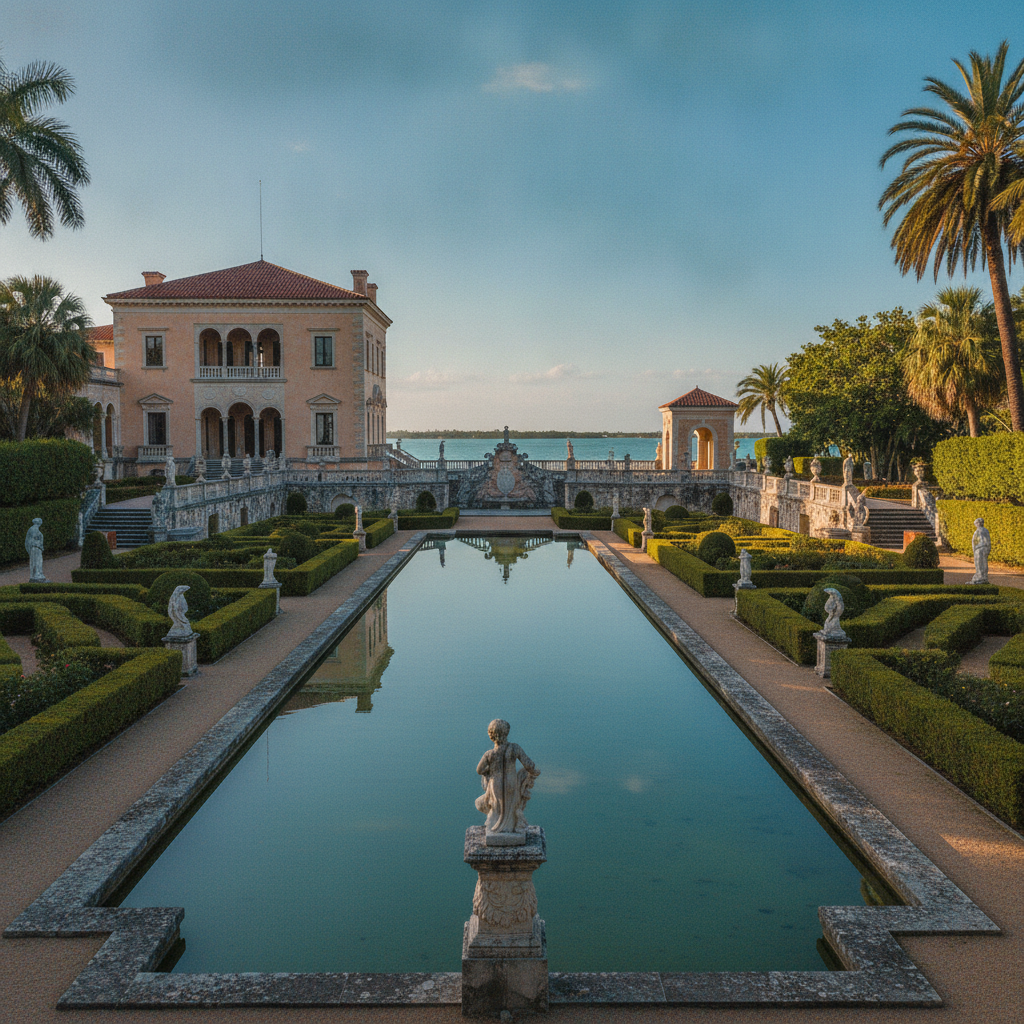
Vizcaya, Coconut Grove & Miami's Historic Soul
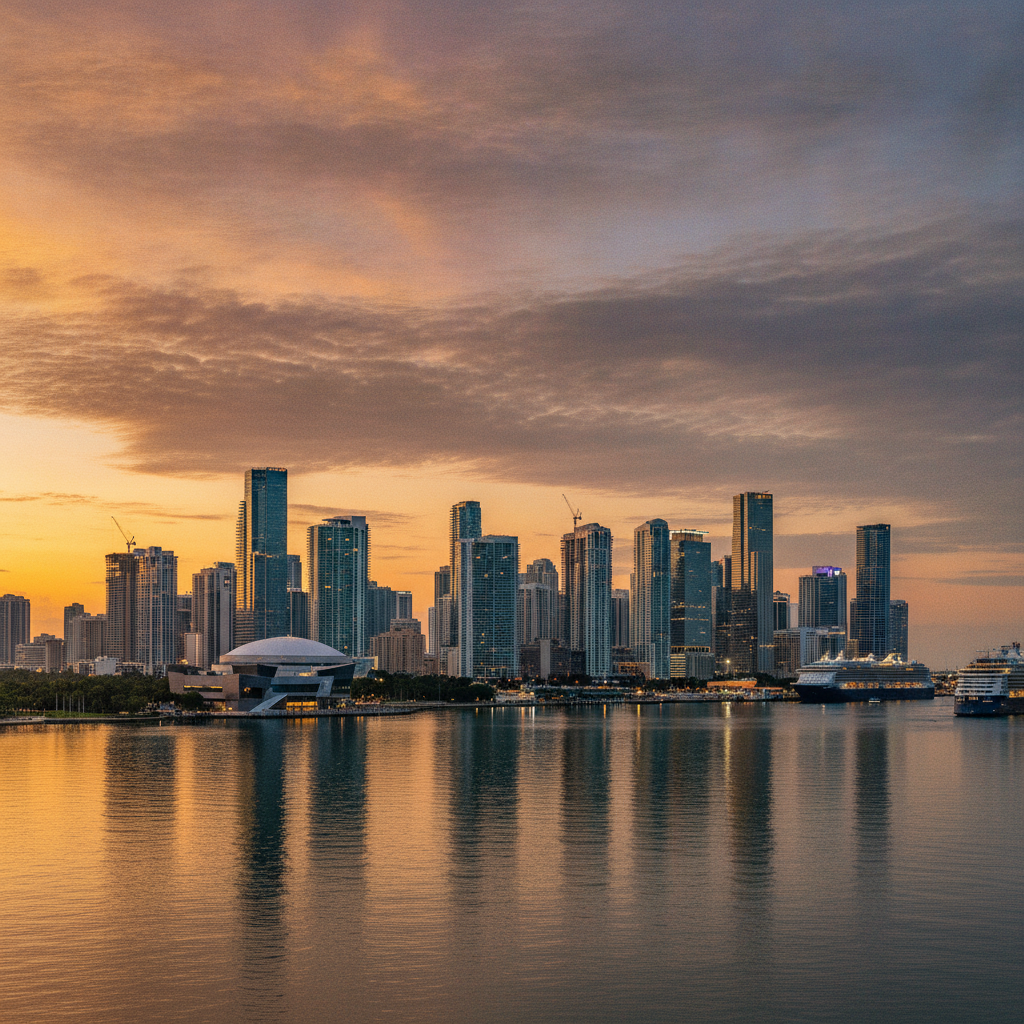
Brickell, Downtown & Miami's Soaring Financial District