The Duomo, Galleria Vittorio Emanuele II & Piazza del Duomo
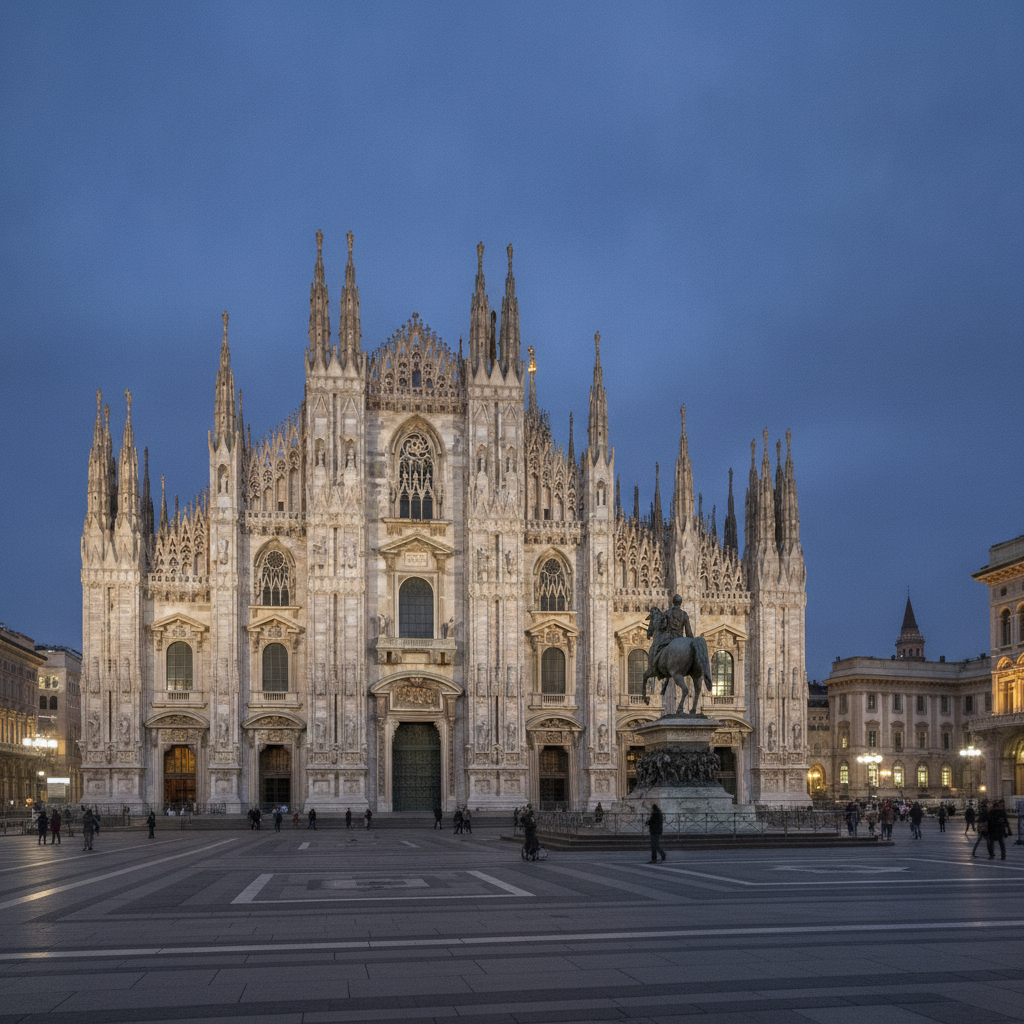
The Piazza del Duomo — the central square of Milan, dominated by the largest Gothic cathedral in the world and flanked by the most magnificent 19th-century shopping arcade in Europe — is the physical and symbolic heart of the city and the ensemble that defines Milan's identity as both a medieval ecclesiastical capital and a modern commercial metropolis.
- 1
Duomo di Milano — The Gothic Cathedral Forest of Spires
The Duomo di Milano (Piazza del Duomo, the Cathedral of the Nativity of the Virgin Mary, begun in 1386 under Archbishop Antonio da Saluzzo with the patronage of Gian Galeazzo Visconti, substantially built over the following century and a half in the Flamboyant Gothic style, with the facade completed in the Neoclassical-Gothic style between 1806 and 1813 under Napoleon's orders to prepare for his coronation as King of Italy): the Duomo is the largest Gothic cathedral in the world by volume (after Saint Peter's Basilica in Rome and the Catedral de Sevilla in Spain), measuring 157 metres long, 92 metres wide at the transepts, and 108 metres tall to the tip of the central spire; the exterior is covered in 3,400 statues, 135 marble spires (pinnacles), and elaborate Gothic tracery carved from white Candoglia marble (from the Val d'Ossola quarries west of Lake Maggiore, the same marble used since the 14th century — a dedicated canal system (Naviglio Grande and Naviglio della Martesana) was built in part to transport the marble from the quarries to the cathedral building site); the cathedral took nearly six centuries to complete (a Milanese expression for something that will never be finished is 'fabbrica del Duom' — 'cathedral building site'); the interior (157 metres long, seating 40,000 people) is the largest church interior in Italy and features 52 enormous columns supporting the nave and five aisles, 3,600 square metres of stained glass windows (dating from the 14th to the 20th centuries, the largest collection of stained glass windows in the world in a single building), and the Veneranda Fabbrica del Duomo museum.
- 2
Duomo Rooftop — Walking Among the Spires
The Duomo Rooftop Terraces (accessible via stairs (250 steps) or lift from the north and south sides of the cathedral exterior — the most unusual and dramatic experience the Duomo offers, and one of the most extraordinary architectural promenades available in any city in the world): the roof of the Duomo is a forest of marble spires, flying buttresses, and pinnacles, each topped with a gilded copper statue, through which visitors can walk at roof level; the central spire (the Guglia Maggiore or 'Great Spire', 108.5 metres above the piazza) is topped by the gilded copper statue of the Madonnina (the 'Little Madonna', installed 1774, 4 metres tall, the unofficial symbol of Milan); according to Milanese tradition no building in the city was permitted to rise above the height of the Madonnina until the 1950s (the rule was never formally codified but was treated as sacrosanct until the construction of Torre Branca in 1933 and the Pirelli Tower in 1958); from the roof there are panoramic views over the city and, on clear days, to the Alps to the north.
- 3
Galleria Vittorio Emanuele II — The Salotto di Milano
The Galleria Vittorio Emanuele II (Piazza del Duomo, the glass-and-iron arcade connecting Piazza del Duomo with Piazza della Scala, designed by architect Giuseppe Mengoni and inaugurated in 1867 — Mengoni died by falling from the scaffolding the day before the official inauguration): the Galleria is one of the finest surviving examples of the 19th-century European covered shopping arcade (the type that Walter Benjamin made famous through his 'Arcades Project') and is arguably the most magnificent of all European shopping arcades — it is an octagonal crossing of two glass barrel-vaulted galleries (each approximately 196 metres long and 15 metres wide) beneath a central glass dome 47 metres tall; the floor of the octagon contains one of the most famous mosaics in Italy — the four allegorical figures representing the cities of Turin, Florence, Rome and Milan (in the form of their respective female personifications), with the Turin bull mosaic whose testicles visitors traditionally spin on with their right heel for good luck (the habit has gradually worn a deep hollow in the marble floor); the Galleria contains Milan's oldest cafés (Camparino in Galleria, the historic home of the Campari Spritz and the Negroni), the flagship stores of Prada, Louis Vuitton, Gucci, and other luxury brands, and the historic Ricordi music store.
- 4
Museo del Novecento — 20th Century Art in the Arengario
The Museo del Novecento (Via Marconi 1, Piazza del Duomo, the museum of 20th-century Italian art housed in the Palazzo dell'Arengario — a Fascist-era building of 1939-1956 designed by Giovanni Muzio and others, connected by a glass walkway bridge to the adjacent Palazzo Reale): the museum's collection covers Italian art from the early 20th century Futurist movement (Umberto Boccioni, Carlo Carrà, Giacomo Balla) through the abstract art of the post-war period to the Arte Povera movement and Conceptual art of the 1960s-1970s; the collection of approximately 400 works includes Boccioni's 'The City Rises' (1910, the most important Futurist painting) and Lucio Fontana's 'Spatial Concept — Expectations' (1959, the slashed canvas works that made Fontana internationally famous); the building's external balconies offer an extraordinary direct view of the Duomo facade at close range.
- 5
Palazzo Reale & the Royal Collections
The Palazzo Reale (Piazza del Duomo 12, the former Royal Palace of Milan, the official residence of the Spanish governors of Milan (1535-1706), the Austrian Habsburgs (1706-1797), Napoleon (1797-1814), and the House of Savoy (1861-1946), adjacent to the Duomo on its south side): the Palazzo Reale today functions primarily as a major temporary exhibition venue (hosting the largest temporary art exhibitions in Milan, typically three or four annually) but also preserves several historic rooms including the Neo-Classical interiors designed by Giuseppe Piermarini for Maria Theresa of Austria (c.1768-1778) and the Sala delle Cariatidi — the ballroom whose ceiling and walls were destroyed by Allied bombing in August 1943 and deliberately left in its ruined, fire-blackened state as a war memorial; the Museo del Duomo inside the Palazzo Reale contains architectural models, stained glass cartoons, and sculpture removed from the cathedral for conservation.
- 6
Piazza Mercanti — The Medieval Core of Milan
The Piazza Mercanti (the medieval commercial square immediately behind the Palazzo dei Giureconsulti northwest of the Duomo — the historic economic center of Milan predating the Piazza del Duomo, and the only significant surviving medieval urban space in the center of Milan): the piazza contains the Palazzo della Ragione (the Broletto Nuovo, 1233, the seat of medieval Milanese civic government — a Lombard Romanesque building with an arcaded loggia on the ground floor), the Loggia degli Osii (1316), the Palazzo delle Scuole Palatine (1645), and a column with the Verruca (the head of a bearded man in relief, probably a 12th-century carving) mounted at its top; the piazza represents the medieval city that preceded the Visconti, Sforza, Spanish, Austrian, French, and Savoy successors who each left their architectural imprint on Milan.
Walk this route with audio
Stories play automatically as you reach each stop — no tapping needed.
More in milan
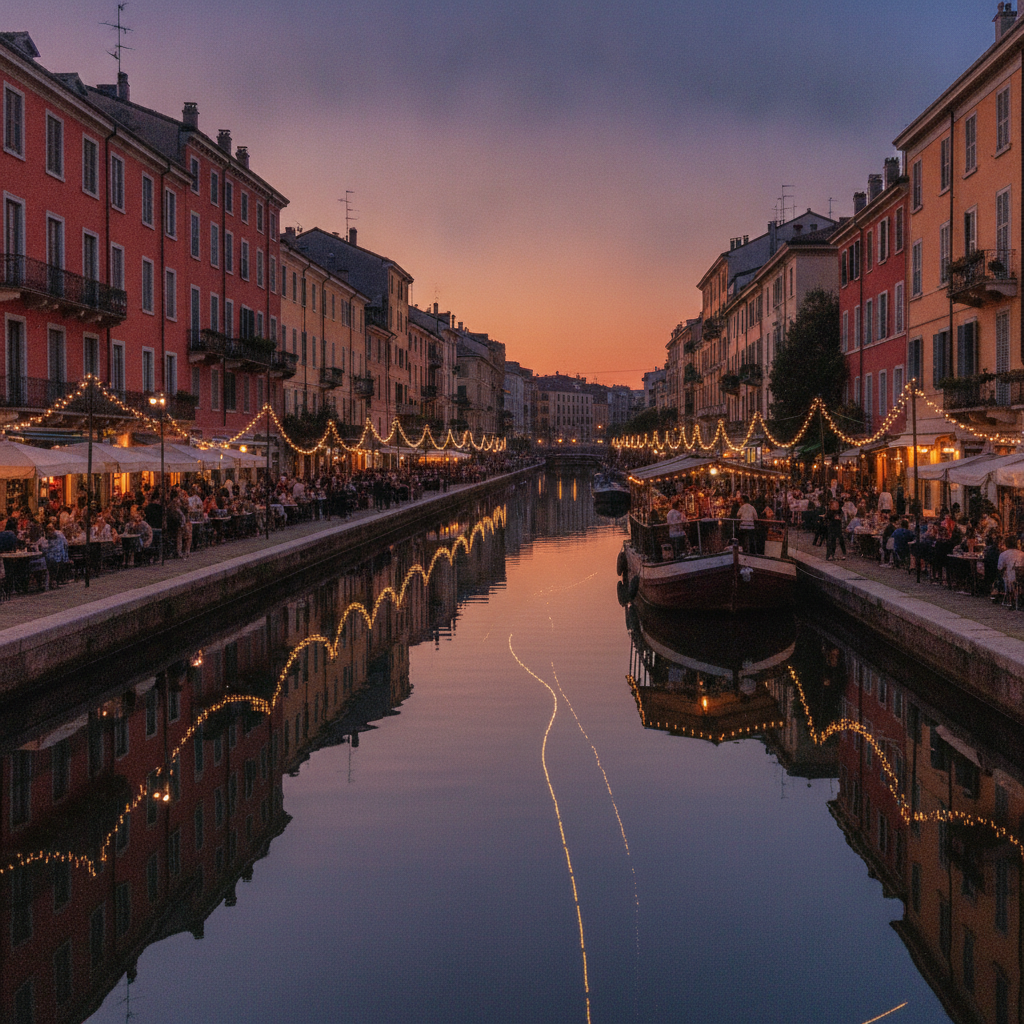
The Navigli Canals, Darsena & Porta Ticinese — Milan's Canal District
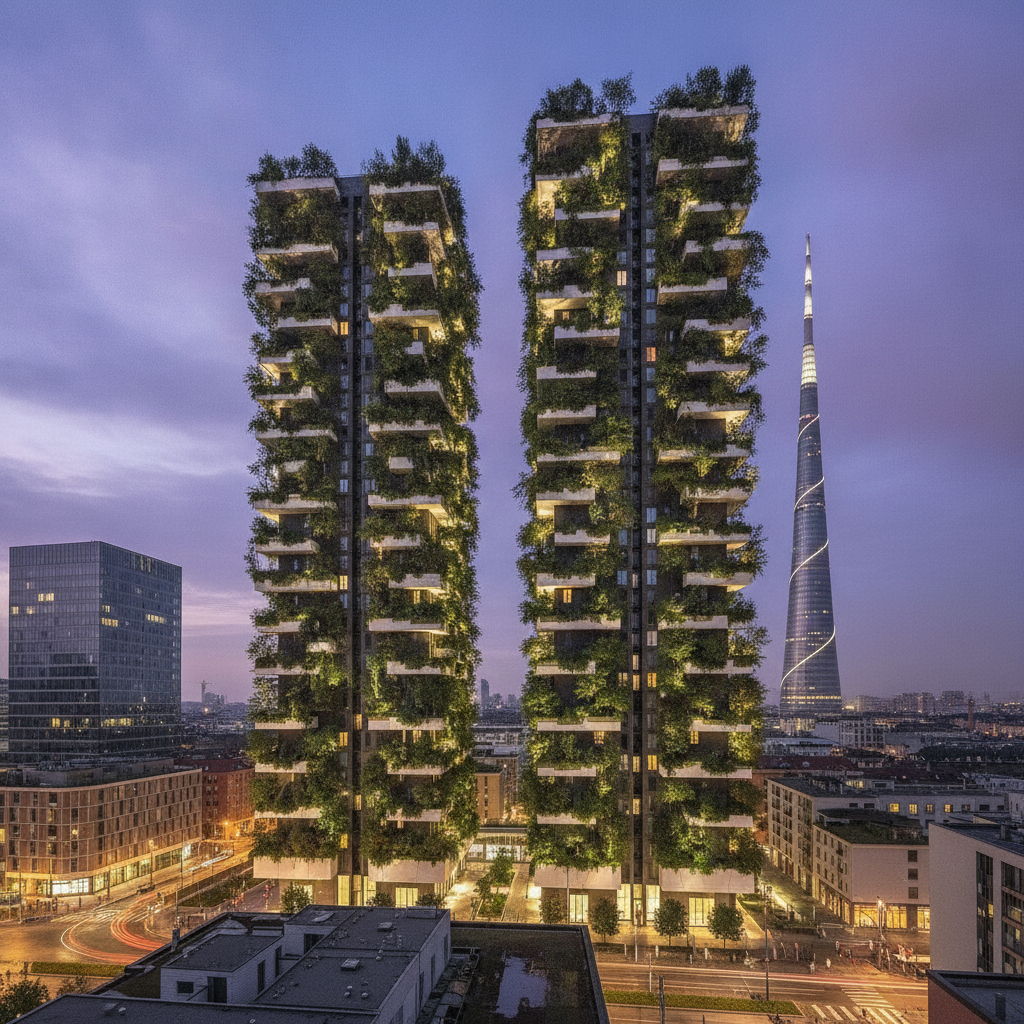
Isola, Porta Nuova & the Bosco Verticale — Milan's New Skyline
The Triennale Design Museum, Salone del Mobile & Milan's Design Legacy
The Fashion Quadrilateral — Via Montenapoleone, Via della Spiga & Milan's Luxury Heart
Sant'Ambrogio Basilica, the Columns of San Lorenzo & the Ticinese Quarter