The Fashion Quadrilateral — Via Montenapoleone, Via della Spiga & Milan's Luxury Heart
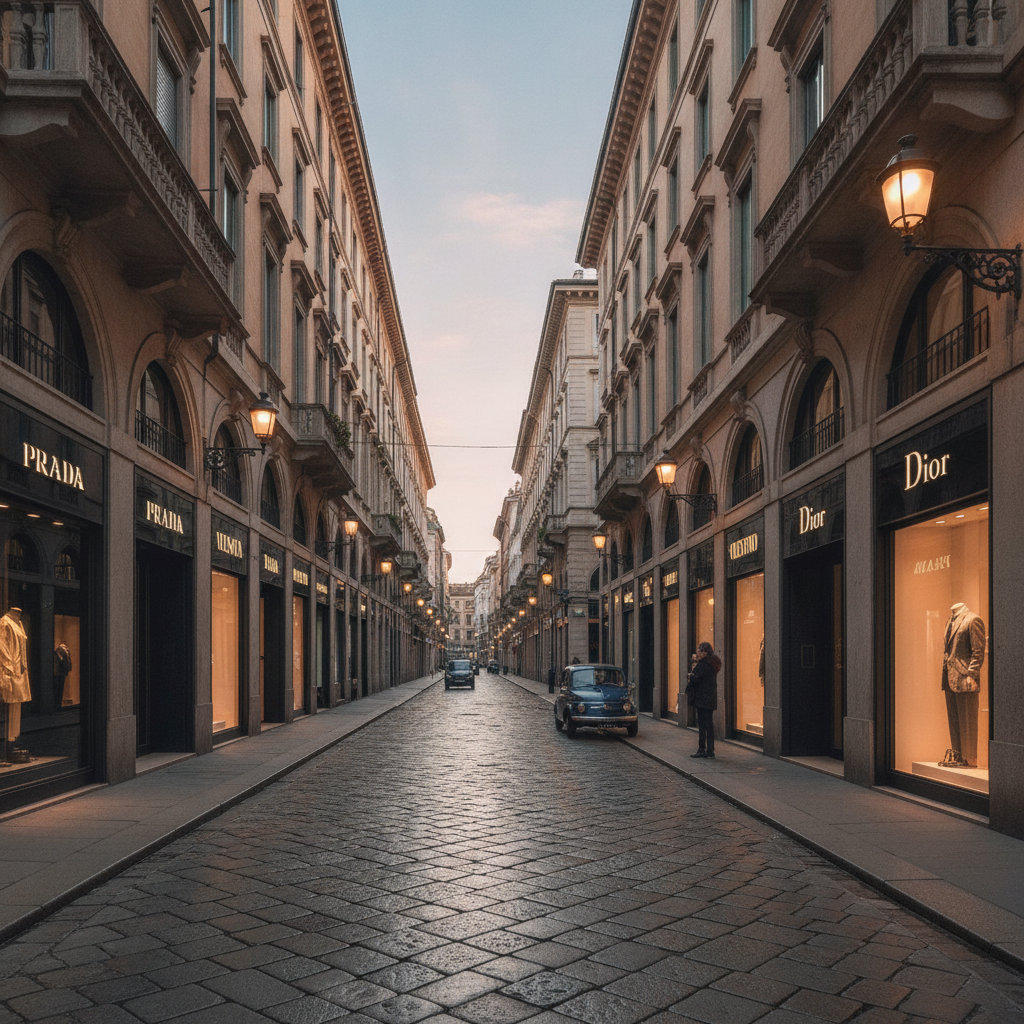
The Quadrilatero della Moda (the Fashion Quadrilateral, the roughly rectangular area bounded by Via Montenapoleone, Via della Spiga, Via Sant'Andrea and Via Alessandro Manzoni) is the most prestigious luxury shopping district in the world — a concentration of Italian and international haute couture, high fashion, and luxury goods that has no equivalent in density or prestige in any other city, including Paris.
- 1
Via Montenapoleone — The World's Most Prestigious Shopping Street
Via Montenapoleone (the approximately 500-metre-long street running roughly north-south through the Fashion Quadrilateral — the street takes its name from a bond (the 'Monte Napoleone', a government bond of the Napoleonic Kingdom of Italy issued in 1800 to finance the Lombard infrastructure programme, the offices of which were housed on this street)): Via Montenapoleone is consistently ranked by international surveys as the most expensive shopping street in the world by retail rent per square metre (ahead of Fifth Avenue in New York, Champs-Élysées in Paris, and New Bond Street in London); the street houses the flagship stores of every major Italian fashion house (Prada, Gucci, Valentino, Dolce & Gabbana, Versace, Bottega Veneta, Giorgio Armani, Max Mara, Zegna, Ferragamo) as well as the principal European flagship stores of the major French and American luxury brands (Chanel, Louis Vuitton, Hermès, Cartier, Rolex, Bulgari); the buildings lining the street are predominantly 18th-19th century Milanese townhouses and palazzi, which gives the street a more intimate, aristocratic scale than the wider luxury shopping streets of Paris or New York.
- 2
Via della Spiga — The Secret Street of Fashion
Via della Spiga (the pedestrianized street running parallel to Via Montenapoleone one block to the east — 'the street of the wheat ear', named after a family of medieval Milanese grain merchants who lived here): Via della Spiga is generally considered the more exclusive and less tourist-oriented of the Fashion Quadrilateral's two main axes — while Via Montenapoleone is the more famous and more heavily trafficked, Via della Spiga is where the Milanese themselves (or at least the wealthiest of them) prefer to browse; the street contains boutiques of many of the same brands as Via Montenapoleone but also a higher proportion of independent Italian designers and less internationally famous luxury names; the street is fully pedestrianized and lined with private townhouse facades, giving it a more human scale than Via Montenapoleone.
- 3
Corso Venezia & the Palazzi of the Fashionable Milan
Corso Venezia (the broad avenue running northeast from Piazza San Babila to Porta Venezia, lined with some of the finest Neoclassical palazzo facades in Milan — the street was developed in the late 18th and early 19th centuries as the primary avenue of the Milanese upper class residential quarter north of the Duomo): Corso Venezia contains a remarkable sequence of aristocratic palazzi including the Casa Fontana-Silvestri (c.1565, one of the few surviving Renaissance domestic buildings in Milan), the Seminario Arcivescovile (1564, one of the oldest surviving institutional buildings in the city), and the Villa Reale di Monza axis; the Casa Museo Boschi-Di Stefano (Via Giorgio Jan 15, a private apartment containing one of the most important private collections of 20th-century Italian art in Milan, collected by the industrialist Antonio Boschi and his wife Marieda Di Stefano in the 1920s-1950s, open to the public by appointment) is a short distance north.
- 4
Sant'Ambrogio di Monza Axis — The Aristocratic Northeast
Piazza San Babila (the busy square at the southeast end of Corso Vittorio Emanuele II, immediately east of the Galleria Vittorio Emanuele and the Duomo — the traditional transition point between the commercial heart of Milan and the residential and aristocratic quarter of the northeast): the piazza is dominated by the Romanesque church of San Babila (12th century, substantially rebuilt in the 19th century), and is surrounded by 20th-century commercial buildings; heading north along Corso Venezia from here leads into the most characteristic aristocratic residential quarter of Milan — a zone of late 18th and 19th century palazzi, private gardens (hidden behind the street facades), private clubs, and the gardens of the Villa Reale (now public garden) at its northern end.
- 5
Armani Silos & Via Tortona — Milan's Design District
The Via Tortona area (the industrial and now design district of southwestern Milan, approximately 2 kilometres southwest of the Duomo, easily reached by Metro M2 to Porta Genova): the Via Tortona area has been transformed since the 1990s from an industrial zone of textile and small manufacturing workshops into the principal design and creative hub of Milan — the area around the Via Tortona, Via Savona and Via Bergognone is now the densest concentration of design showrooms, architecture studios, and contemporary art galleries in Milan; the Armani Silos (Via Bergognone 40, the museum opened by Giorgio Armani in 2015 in a converted silo building from the 1950s) presents a retrospective collection of approximately 600 looks from Armani's 40-year career in fashion; the Fondazione Prada (Largo Isarco 2, the art foundation of Miuccia Prada and Patrizio Bertelli, opened in 2015 in a complex of renovated industrial buildings designed by Rem Koolhaas/OMA — the most architecturally ambitious and programmatically serious of the Milanese fashion-house foundations) presents major exhibitions of contemporary art and architecture.
- 6
Quadrilatero after Dark — Aperitivo Culture
Milan's Aperitivo Culture (the Milanese institution of the early evening 'aperitivo' — the pre-dinner drink accompanied by a generous spread of snacks/food served with every drink in bars throughout the city, effectively a free early meal included with the price of a Campari Spritz, Negroni, Aperol Spritz or Prosecco): the aperitivo tradition is unique to Milan (and Lombardy more broadly) and represents one of the most immediately accessible aspects of Milanese culture for visitors — virtually any bar in the city between approximately 6pm and 9pm will serve an extensive buffet of cured meats, cheeses, risotto, pasta, fried snacks and salads with every drink purchased; the most celebrated aperitivo bars in and around the Fashion Quadrilateral include Bulgari Hotel's Bar Bvlgari (Via Privata Fratelli Gabba 7b), the Terrazza Triennale (the rooftop bar at the top of the Palazzo dell'Arte in Parco Sempione), and the historic Bar Basso (Via Plinio 39) — the bar credited with inventing the 'Negroni Sbagliato' (the 'wrong Negroni', made with Prosecco instead of gin) in the 1960s.
Walk this route with audio
Stories play automatically as you reach each stop — no tapping needed.
More in milan
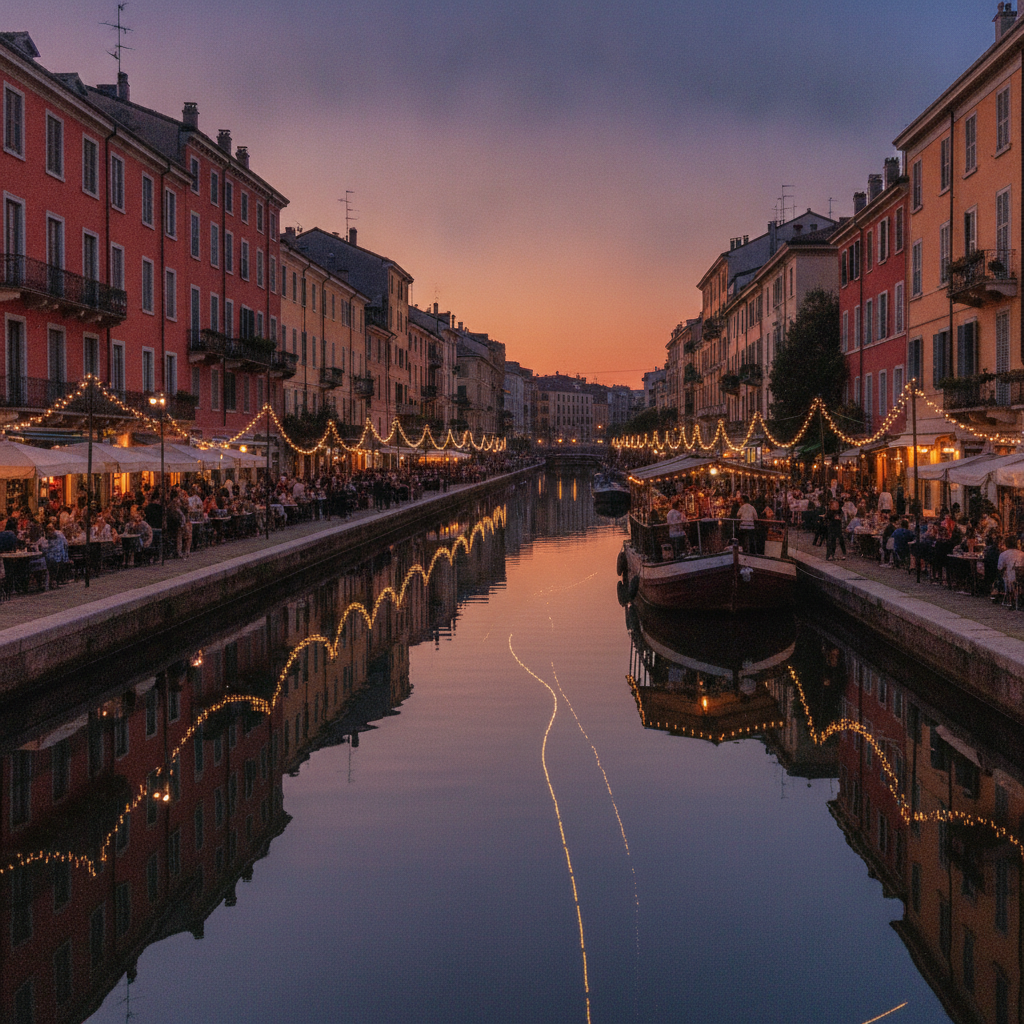
The Navigli Canals, Darsena & Porta Ticinese — Milan's Canal District
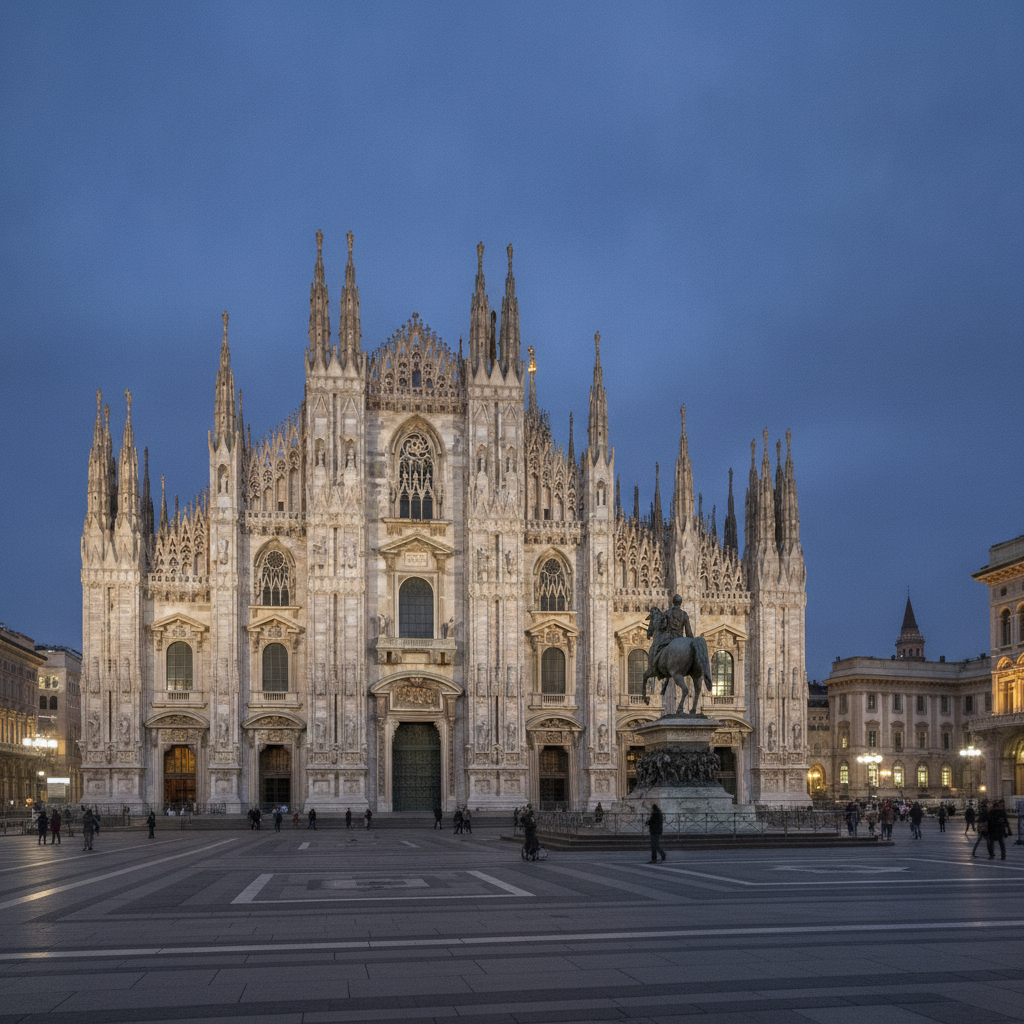
The Duomo, Galleria Vittorio Emanuele II & Piazza del Duomo
Isola, Porta Nuova & the Bosco Verticale — Milan's New Skyline
The Triennale Design Museum, Salone del Mobile & Milan's Design Legacy
Sant'Ambrogio Basilica, the Columns of San Lorenzo & the Ticinese Quarter