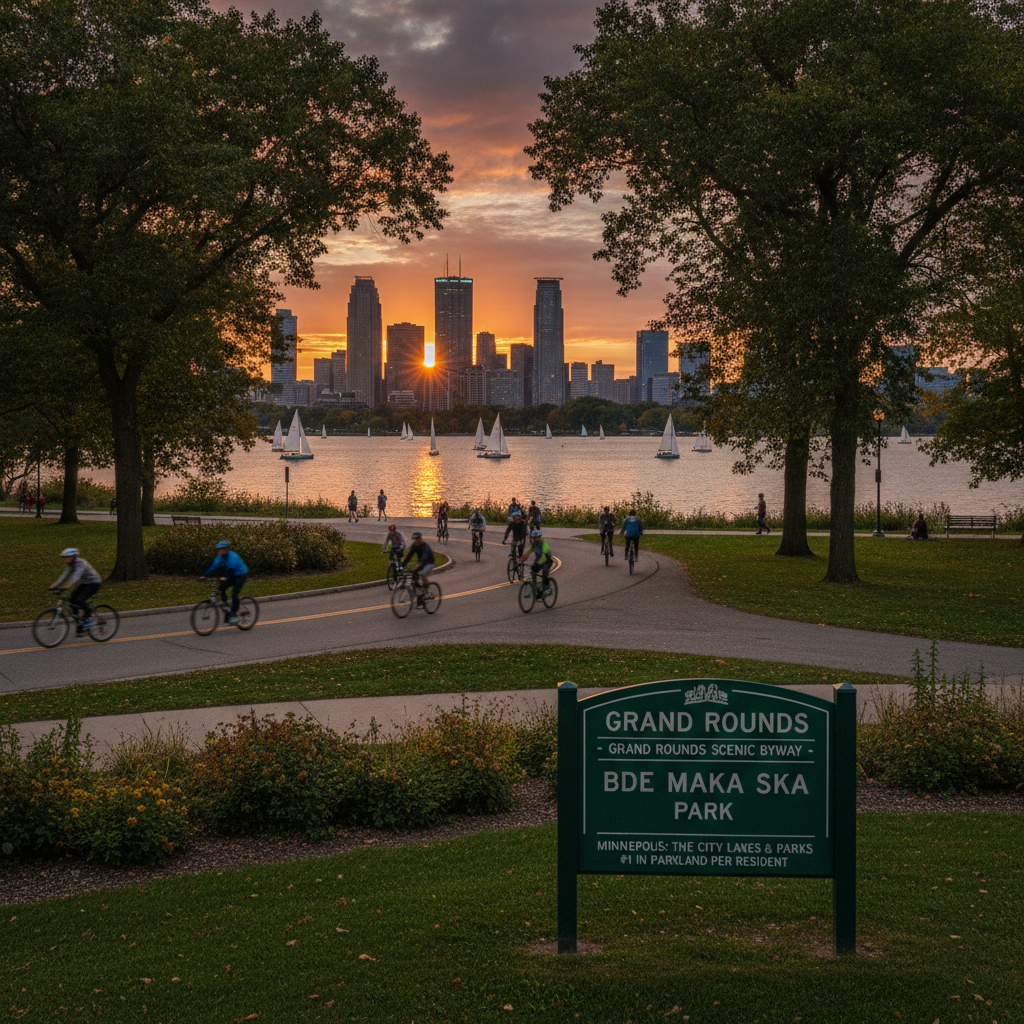
Minneapolis: F. Scott Fitzgerald Summit Avenue, Guthrie Theater Over the River and 9 Miles of Indoor Skyways
Shop 500 stores at Mall of America where Minnesota no-tax on clothing law draws out-of-state visitors to the nation second most visited attraction, see Saint Paul Victorian grandeur on Summit Avenue where Fitzgerald grew up under the second-largest self-supporting dome after Rome, browse 90000 objects in the free Minneapolis Institute of Art permanent collection, understand Minneapolis reckoning after George Floyd at 38th and Chicago where the memorial remained for two years, see the Guthrie Endless Bridge cantilevered 178 feet over Mississippi mill ruins, and navigate downtown in January through 9.5 miles of heated second-floor Skyway bridges.
- 1
Mall of America and Bloomington
The Mall of America in Bloomington, opened in 1992 on the site of the former Metropolitan Stadium where the Twins and Vikings once played, is the largest shopping mall in the United States at 5.6 million square feet and the second most visited tourist attraction in the United States after Times Square, drawing over 40 million visitors annually. The mall contains Nickelodeon Universe, a seven-acre indoor amusement park with 27 rides including roller coasters, as well as an aquarium, a mirror maze, mini golf, and over 500 stores. The mall generates no state sales tax on clothing and food under Minnesota law, which significantly boosts its appeal to out-of-state visitors. The nearby Minneapolis-Saint Paul International Airport handles over 37 million passengers annually and is a major Delta Air Lines hub. The Bloomington strip along Interstate 494 near the mall contains one of the densest concentrations of hotels in the state.
- 2
Como Zoo and Saint Paul
Como Park Zoo and Conservatory in Saint Paul, which opened in 1897 and admits visitors entirely free of charge through a voluntary donation model, is the oldest zoological attraction in Minnesota and contains animals including polar bears, gorillas, giraffes, and sea lions alongside a Victorian-era conservatory with major flower shows. Saint Paul, the state capital immediately east of Minneapolis on the Mississippi River, has a more European urban character than Minneapolis with compact neighborhoods, traditional brick commercial buildings, and strong Irish and Italian Catholic heritage. The Minnesota State Capitol, designed by Cass Gilbert and completed in 1905, has the second-largest self-supporting dome in the world after St. Peters in Rome. Summit Avenue, the longest surviving stretch of Victorian residential architecture in the country, runs four miles from the cathedral to the river. F. Scott Fitzgerald was born in Saint Paul in 1896 and lived on Summit Avenue.
- 3
Minneapolis Institute of Art
The Minneapolis Institute of Art at 2400 Third Avenue South, founded in 1883 and free to the general public for permanent collection visits, is one of the largest art encyclopedic museums in the United States with a collection of over 90,000 objects spanning 5,000 years from ancient Egypt through contemporary art. The collection is particularly strong in Japanese prints, European Old Masters, contemporary American art, African art, and decorative arts. The building, designed by McKim Mead and White in 1915 and expanded by Kenzo Tange in 1974 and Michael Graves in 2006, reflects its era of museum design. The Third Avenue South corridor between the Mia and the Minneapolis College of Art and Design is the heart of the Whittier arts neighborhood. Mia free permanent collection admission, combined with the Walker and Sculpture Garden, makes Minneapolis one of the strongest value propositions for art tourism of any American city.
- 4
Northside and North Minneapolis
North Minneapolis, separated from downtown by Interstate 394 and from Brooklyn Center and other northern suburbs by the Minneapolis city limits, is the largest predominantly African American neighborhood in Minnesota and has historically been underserved in city investment while facing disproportionate poverty, policing controversy, and housing instability. The death of George Floyd in the Powderhorn neighborhood in south Minneapolis on May 25, 2020 sparked the global George Floyd protests and a national reckoning with policing, racial justice, and urban policy. The Minneapolis City Council voted to dismantle the police department and rebuild public safety, though the city voters rejected the specific ballot measure in November 2021. The intersection of 38th Street and Chicago Avenue South where Floyd died became a community memorial and gathering place called George Floyd Square that remained closed to traffic for over two years. The event reshaped Minneapolis civic politics and national conversations permanently.
- 5
Guthrie Theater and Theater District
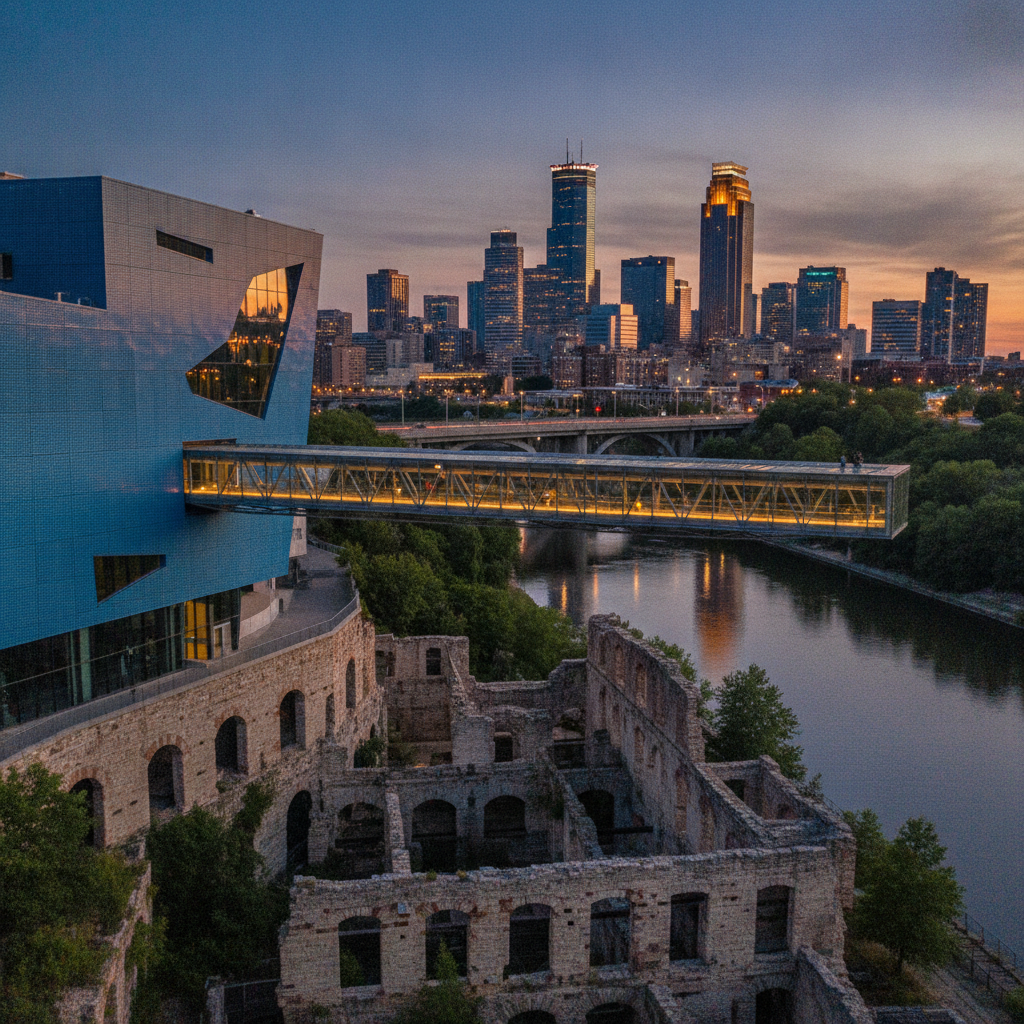
The Guthrie Theater, founded in 1963 by Sir Tyrone Guthrie, Peter Zeisler, and Oliver Rea as one of the first regional theaters in the United States and now housed in a dramatic building cantilevered over the Mississippi River designed by Jean Nouvel and opened in 2006, is one of the most admired regional theater companies in the country and produces a year-round season of classical and contemporary drama. The Endless Bridge cantilevered lobby extends 178 feet over the mill district ruins and offers one of the best views of the Mississippi River gorge and the St. Anthony Falls area in Minneapolis. The Guthrie helped inspire the regional theater movement that created professional theater across American cities. The adjacent Mill City Museum and the Mill Ruins Park preserve the landscape of the flour milling industry that powered the city. Mixed Blood Theatre, the Jungle Theater, and dozens of other companies make Minneapolis theater among the strongest in the Midwest.
- 6
Minneapolis Winter Culture
Minneapolis has the longest average stretch of subzero temperatures of any major American city and has developed a distinctive culture of winter embrace rather than retreat. The outdoor skating rink on Lake of the Isles and the Loppet Nordic Festival on Theo Wirth Parkway are community winter gatherings. The Holidazzle winter market on Nicollet Mall operates outdoors in December. The downtown Skyway System, a network of enclosed second-story pedestrian bridges connecting 80 city blocks across 9.5 miles, allows workers and visitors to move through the core of downtown without outdoor exposure during extreme cold. The system handles over 150,000 pedestrian trips daily in winter. The Minneapolis Institute of Art and the Walker are designed as winter cultural anchors. Average January high temperature is 21 degrees Fahrenheit with multiple periods each winter when temperatures fall below minus 20 with wind chill. The city hosts the Twin Cities Marathon each October in peak fall color, consistently rated one of the most beautiful marathon courses in America.
Walk this route with audio
Stories play automatically as you reach each stop — no tapping needed.
More in Minneapolis
Minneapolis: Cuba-Touring Orchestra, Indigenous James Beard Winner and 150 Miles of Lake Superior Cliffs
Minneapolis: Mississippi River national park and 22 city lakes (best urban park system US, Grand Rounds 87km loop, Bde Maka Ska), Prince and Paisley Park (Purple Rain 1984, First Avenue nightclub, 100M records, Paisley Park museum), Mall of America (largest US mall, 40M visitors, Nickelodeon Universe, Walker Art Center Spoonbridge and Cherry, Guthrie Theater Jean Nouvel), Twin Cities food and diversity (Somali diaspora largest US 70,000-100,000, Hmong Village Saint Paul, Juicy Lucy invention, Minnesota State Fair 2M visitors), George Floyd Square (May 25 2020, Darnella Frazier, largest US protest movement 15-26M people, Chauvin convicted 2021), Practical (skyway system 13km longest world, Vikings 4 Super Bowls 0 wins, MSP airport Delta hub, Metro Blue Line airport rail)
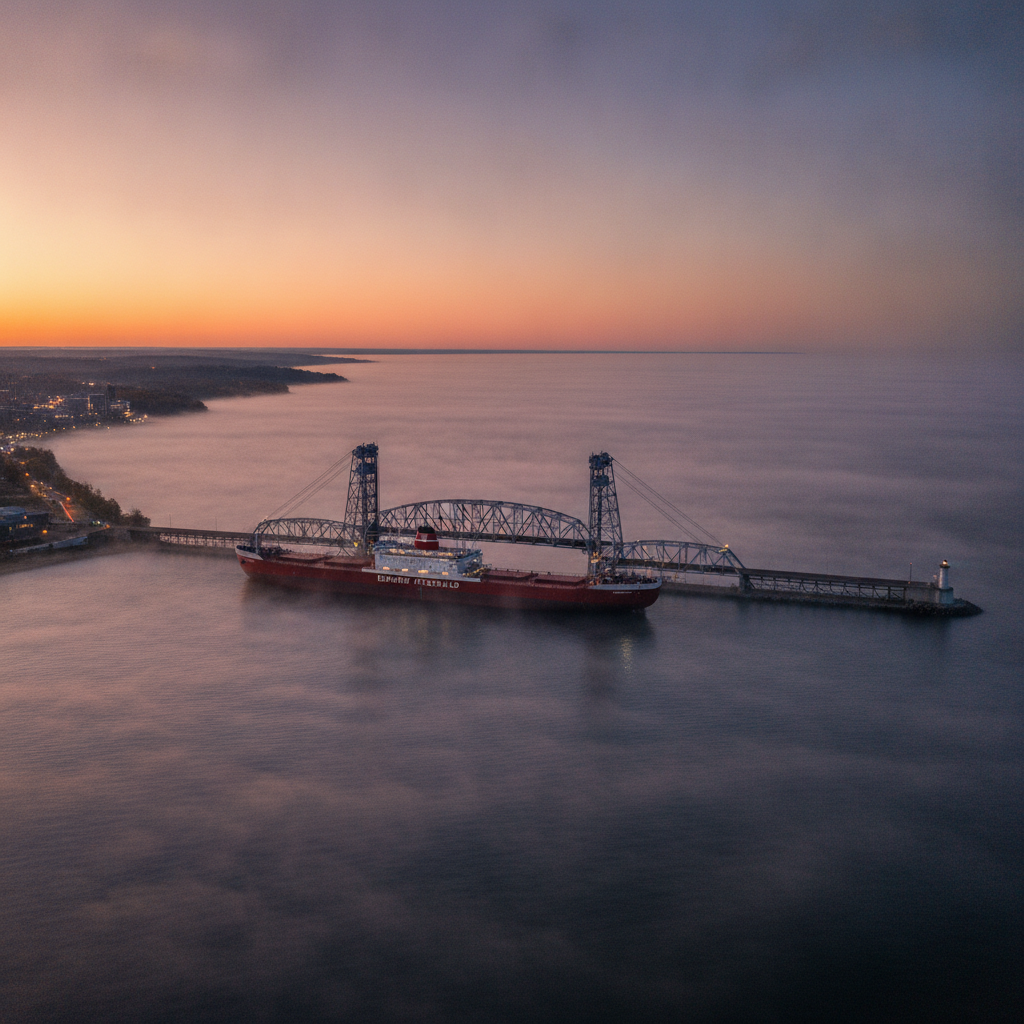
Minneapolis R2: Nicollet Mall and downtown architecture (IDS Center Philip Johnson 1972, Foshay Tower 1929 W Hotel, Mary Tyler Moore statue, Hennepin Ave theater district), University of Minnesota (51,000 students, 29 Nobel laureates, Norman Borlaug Green Revolution 1 billion deaths prevented, Bob Dylan Dinkytown 1959-1960), Boundary Waters Canoe Area (1.1M acres, 1,175 lakes, most visited US wilderness, Twin Metals mining controversy), Saint Paul (Minnesota State Capitol Cass Gilbert, Summit Avenue F. Scott Fitzgerald, Cathedral of Saint Paul), Minnesota Scandinavian heritage (1.5M Norwegian descent, Minnehaha Falls Longfellow, lutefisk Lutheran church suppers, Lake Wobegon Garrison Keillor), Day trips (Duluth Lake Superior Aerial Lift Bridge, Mayo Clinic Rochester, Stillwater Victorian birthplace of Minnesota)
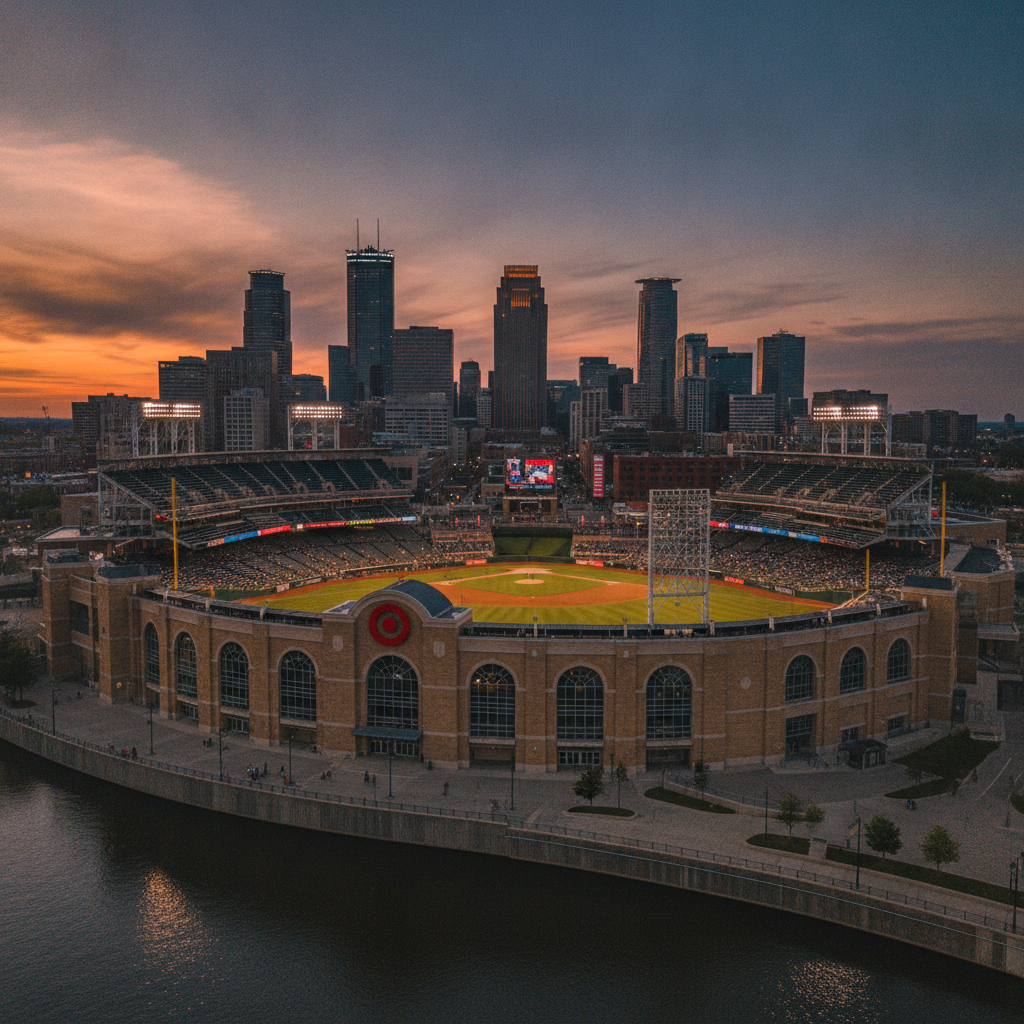
Minneapolis: Bob Dylan Dinkytown Coffeehouses, East African Little Mogadishu and Gehry Campus
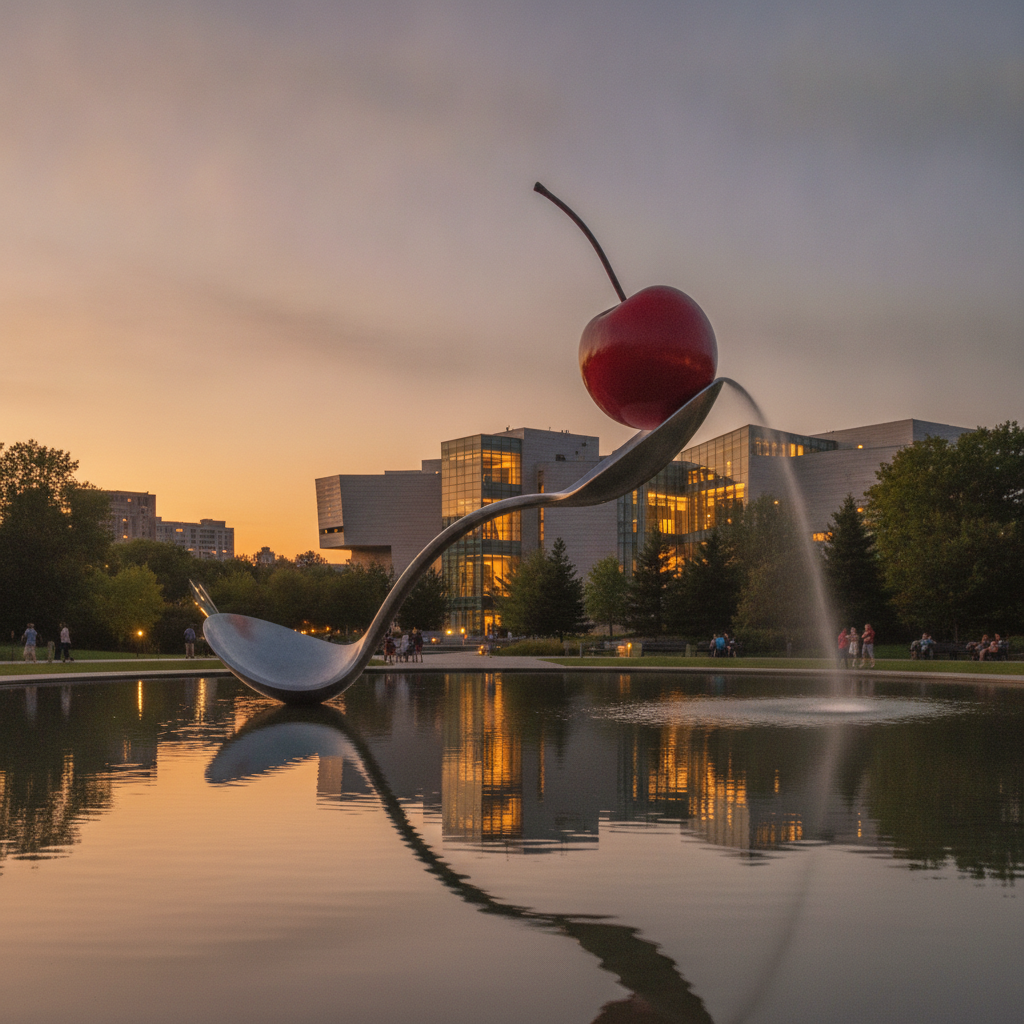
Minneapolis: Prince Paisley Park, Spoonbridge Cherry and the Busiest Wilderness in America