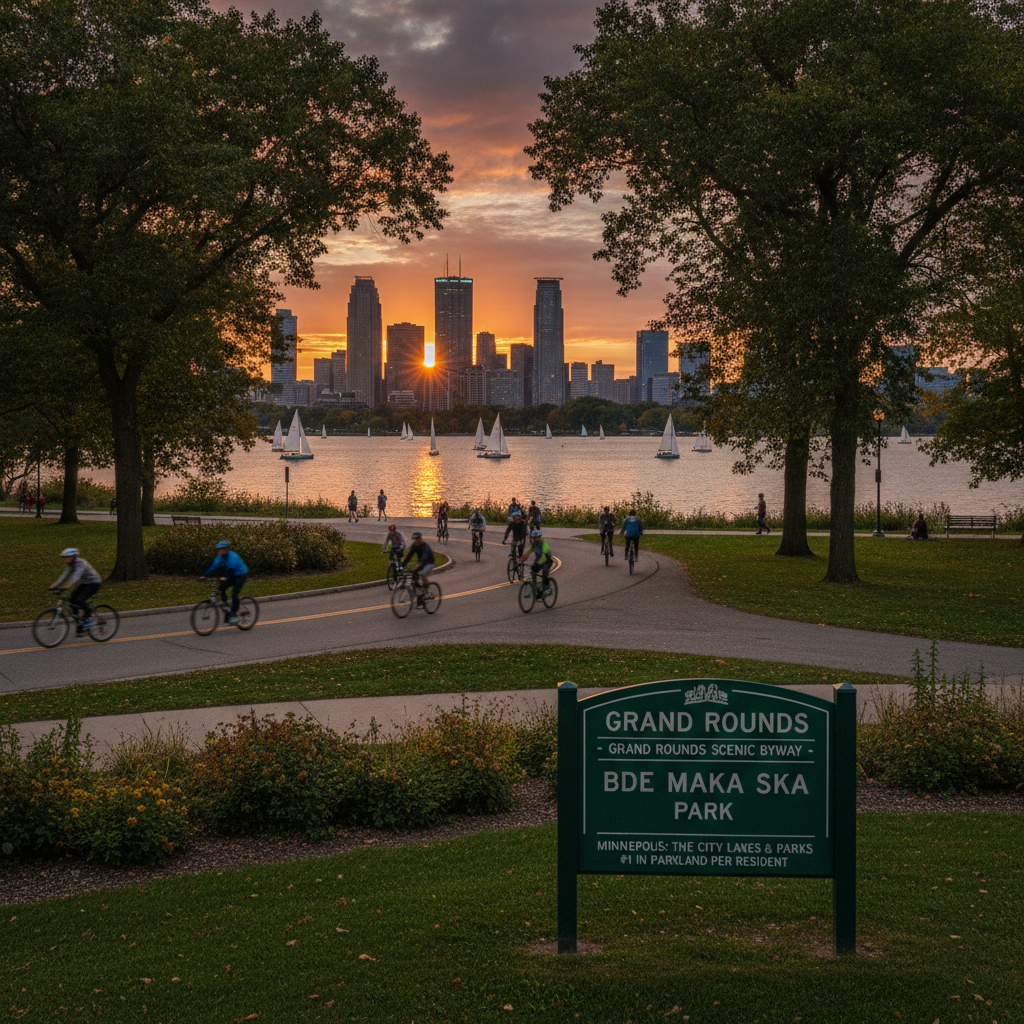
Minneapolis: Cuba-Touring Orchestra, Indigenous James Beard Winner and 150 Miles of Lake Superior Cliffs
Hear the Minnesota Orchestra that toured Cuba in 2014 after a 16-month lockout nearly destroyed it, eat at Owamni where Sean Sherman won Best New Restaurant James Beard using only Indigenous ingredients, walk Nicollet Mall where the Mary Tyler Moore Show tossed her hat in the 1970s first modern American pedestrian corridor, drive Highway 61 Bob Dylan road past Split Rock Lighthouse on 130-foot Lake Superior basalt cliffs, land at MSP airport for direct Delta flights to Tokyo and London then take the Blue Line train downtown in 25 minutes, and bike the 13-mile Chain of Lakes trail on a summer morning.
- 1
Minnesota Orchestra and Classical Music
The Minnesota Orchestra, based at Orchestra Hall on Nicollet Mall since 1974, is one of the top American orchestras and gained particular international attention for its historic 2014 tour to Cuba, the first visit by an American orchestra since the Cold War began, led by music director Osmo Vanska. The tour followed a bitter 16-month labor lockout from 2012 to 2014 that nearly destroyed the ensemble. The Saint Paul Chamber Orchestra, founded in 1959, is the only full-time professional chamber orchestra in the United States and performs at the Ordway Center for the Performing Arts. The Ordway also presents Broadway touring productions and Opera Minnesota seasons. The Fitzgerald Theater in Saint Paul, the oldest surviving theater in the city, hosts Garrison Keillor A Prairie Home Companion radio program recordings in front of live audiences, a show that broadcast Saturday evenings from 1974 to 2016 and helped define a specific Midwestern American cultural sensibility for public radio audiences nationally.
- 2
Minneapolis Food Scene and James Beard
Minneapolis has developed one of the most acclaimed restaurant scenes in the Midwest over the past two decades, receiving increasing attention from national food media and James Beard Award recognition. Chef Gavin Kaysen returned to his hometown from New York to open Spoon and Stable in the North Loop, bringing fine dining technique to local ingredients. Owamni by the Sioux Chef, operated by Sean Sherman using exclusively Indigenous ingredients from Native American culinary traditions, won the James Beard Award for Best New Restaurant in 2022, bringing national and international attention to Minneapolis as a dining destination and to Indigenous food sovereignty as a culinary movement. The Midtown Global Market in the Midtown Exchange building, a converted Sears catalog distribution warehouse, houses food vendors from over 20 countries reflecting the immigrant diversity of the surrounding Phillips neighborhood. The North Loop neighborhood has the highest concentration of new restaurants per block in the city.
- 3
Nicollet Mall and Downtown Minneapolis
Nicollet Mall, a 12-block pedestrian-priority retail and transit corridor through downtown Minneapolis from Washington Avenue to Grant Street, was developed in 1967 as the first modern American pedestrian mall, though it retained bus and taxi access. The corridor was reconstructed in 2017 at a cost of 50 million dollars. The original design was by Lawrence Halprin. The IDS Center at 8th and Nicollet, designed by Philip Johnson and John Burgee and opened in 1973, was the first skyscraper in Minneapolis to exceed the height of the Foshay Tower and its Crystal Court atrium was a landmark in American atrium design. The Mary Tyler Moore Show used Nicollet Mall for its opening sequence from 1970 to 1977, embedding the street in American television consciousness. The 50th and France commercial district in the Edina suburb is the highest-grossing retail corridor per block in Minnesota.
- 4
Great River Road and River Towns
The Great River Road, a national scenic byway following the Mississippi River from its source at Lake Itasca in northern Minnesota to the Gulf of Mexico, is one of the most distinctive long-distance road trips in the United States. The Minnesota segment passes through Red Wing, Wabasha, Winona, and other river towns with well-preserved Victorian commercial architecture. Red Wing, 55 miles southeast of Minneapolis, produces Red Wing work boots that have been manufactured there since 1905 and are among the most durable and widely collected American footwear. Wabasha is home to the National Eagle Center, where rescued bald eagles are maintained as education animals. The bluffs of southeastern Minnesota above the Mississippi rise to over 600 feet and provide some of the most dramatic river scenery between Minnesota and Missouri. Lanesboro in the Root River valley is a bicycle touring destination with 60 miles of paved trail along the river.
- 5
Minneapolis Practical Guide
Minneapolis-Saint Paul International Airport is a major Delta Air Lines hub with direct service to over 150 domestic and international destinations including Tokyo, London, Paris, Amsterdam, and Mexico City. The Blue Line light rail connects the airport to downtown Minneapolis and the University of Minnesota in 25 minutes. The Green Line connects downtown Minneapolis to downtown Saint Paul. The Hiawatha Line bike trail parallels the Blue Line. The Nicollet Mall bus corridor is the primary downtown transit spine. Average January temperature is 13 degrees Fahrenheit. July averages 83 degrees Fahrenheit with high humidity. Spring and fall are the most comfortable seasons. Minneapolis hotels are concentrated downtown and in Uptown, with rates modest compared to coastal cities. The Twin Cities combined population of 3.7 million makes the metropolitan area the 16th largest in the United States. Minnesota has among the lowest unemployment and highest educational attainment rates in the country.
- 6
Lake Superior North Shore
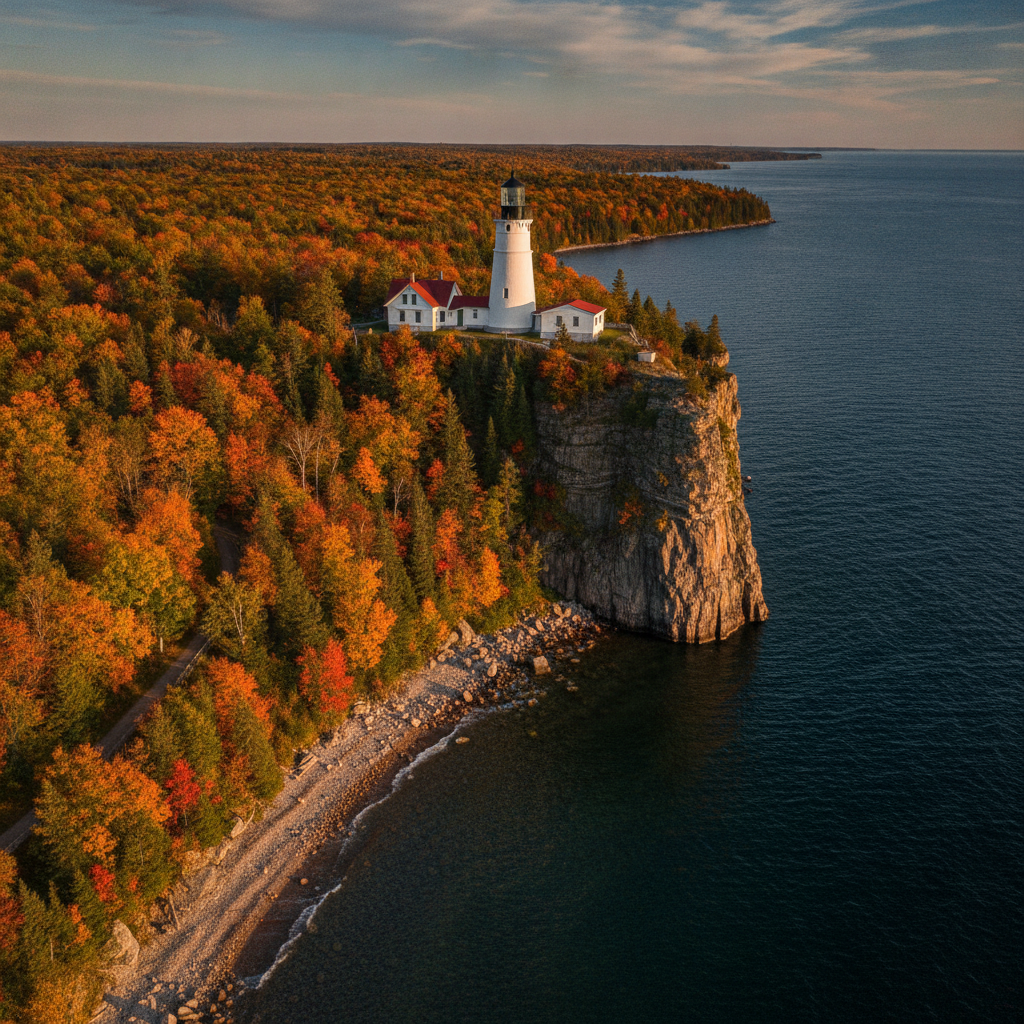
The North Shore of Lake Superior stretching 150 miles northeast of Duluth to the Canadian border at Grand Portage is one of the premier scenic drives in the American Midwest, following Highway 61 made famous by Bob Dylan along basalt cliffs and cobble beaches on the largest freshwater lake by surface area in the world. Duluth, 150 miles north of Minneapolis at the western tip of Lake Superior, is the westernmost ocean port in the world due to the St. Lawrence Seaway connection, handling over 36 million tons of cargo annually. Gooseberry Falls State Park, Split Rock Lighthouse State Park with its 1910 lighthouse dramatically perched on a 130-foot cliff, Temperance River State Park, and Grand Portage National Monument along the North Shore are among the most visited state parks in Minnesota. The Superior Hiking Trail extends 310 miles along the ridgeline above the lake. Fall color on the North Shore, typically peaking in late September and early October, draws massive crowds from the Twin Cities region.
Walk this route with audio
Stories play automatically as you reach each stop — no tapping needed.
More in Minneapolis
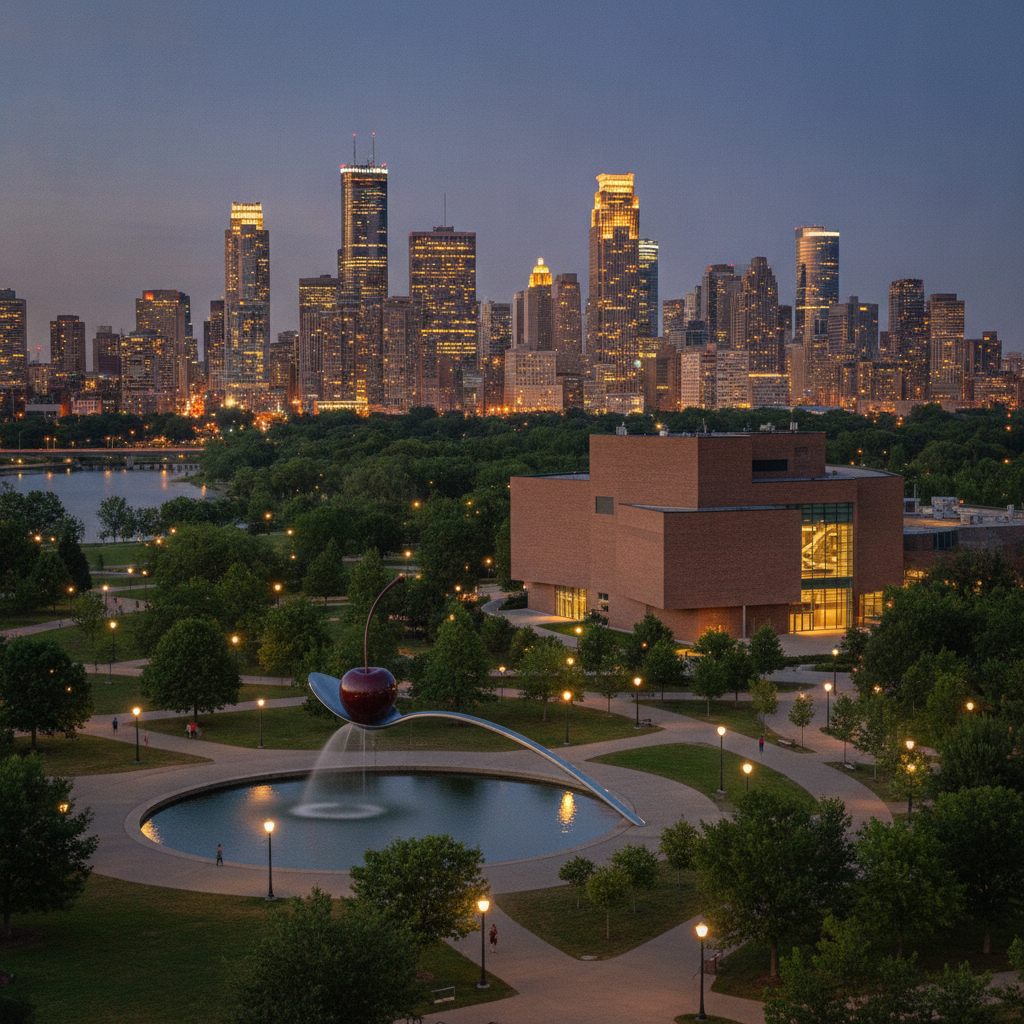
Minneapolis: Mississippi River national park and 22 city lakes (best urban park system US, Grand Rounds 87km loop, Bde Maka Ska), Prince and Paisley Park (Purple Rain 1984, First Avenue nightclub, 100M records, Paisley Park museum), Mall of America (largest US mall, 40M visitors, Nickelodeon Universe, Walker Art Center Spoonbridge and Cherry, Guthrie Theater Jean Nouvel), Twin Cities food and diversity (Somali diaspora largest US 70,000-100,000, Hmong Village Saint Paul, Juicy Lucy invention, Minnesota State Fair 2M visitors), George Floyd Square (May 25 2020, Darnella Frazier, largest US protest movement 15-26M people, Chauvin convicted 2021), Practical (skyway system 13km longest world, Vikings 4 Super Bowls 0 wins, MSP airport Delta hub, Metro Blue Line airport rail)
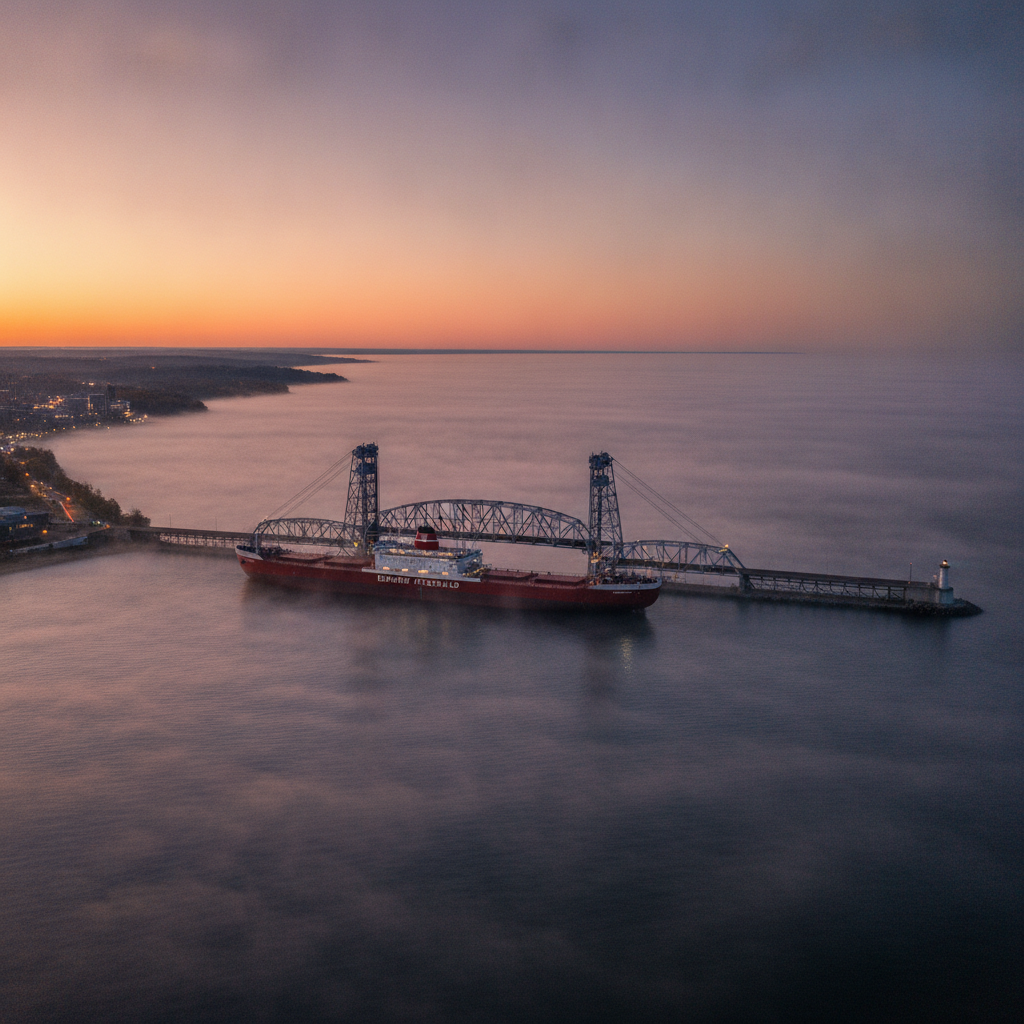
Minneapolis R2: Nicollet Mall and downtown architecture (IDS Center Philip Johnson 1972, Foshay Tower 1929 W Hotel, Mary Tyler Moore statue, Hennepin Ave theater district), University of Minnesota (51,000 students, 29 Nobel laureates, Norman Borlaug Green Revolution 1 billion deaths prevented, Bob Dylan Dinkytown 1959-1960), Boundary Waters Canoe Area (1.1M acres, 1,175 lakes, most visited US wilderness, Twin Metals mining controversy), Saint Paul (Minnesota State Capitol Cass Gilbert, Summit Avenue F. Scott Fitzgerald, Cathedral of Saint Paul), Minnesota Scandinavian heritage (1.5M Norwegian descent, Minnehaha Falls Longfellow, lutefisk Lutheran church suppers, Lake Wobegon Garrison Keillor), Day trips (Duluth Lake Superior Aerial Lift Bridge, Mayo Clinic Rochester, Stillwater Victorian birthplace of Minnesota)
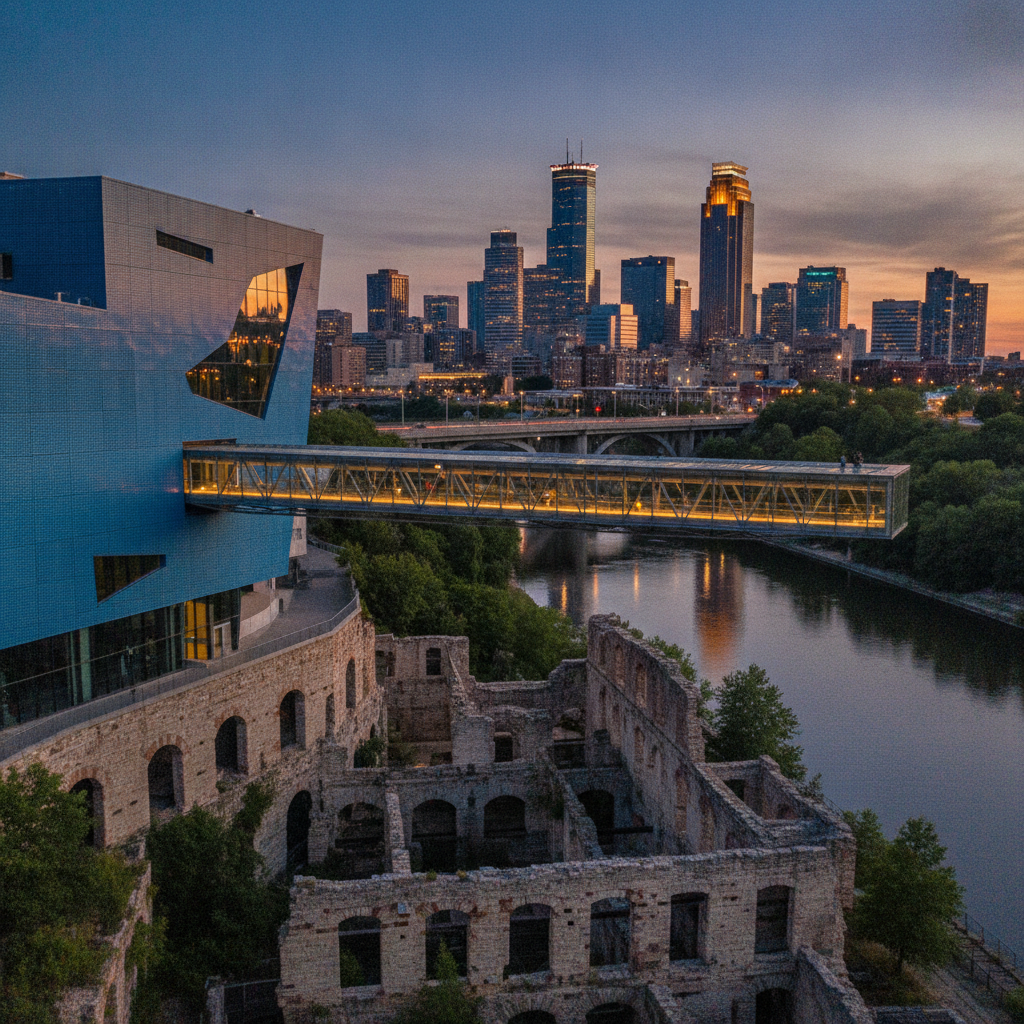
Minneapolis: F. Scott Fitzgerald Summit Avenue, Guthrie Theater Over the River and 9 Miles of Indoor Skyways
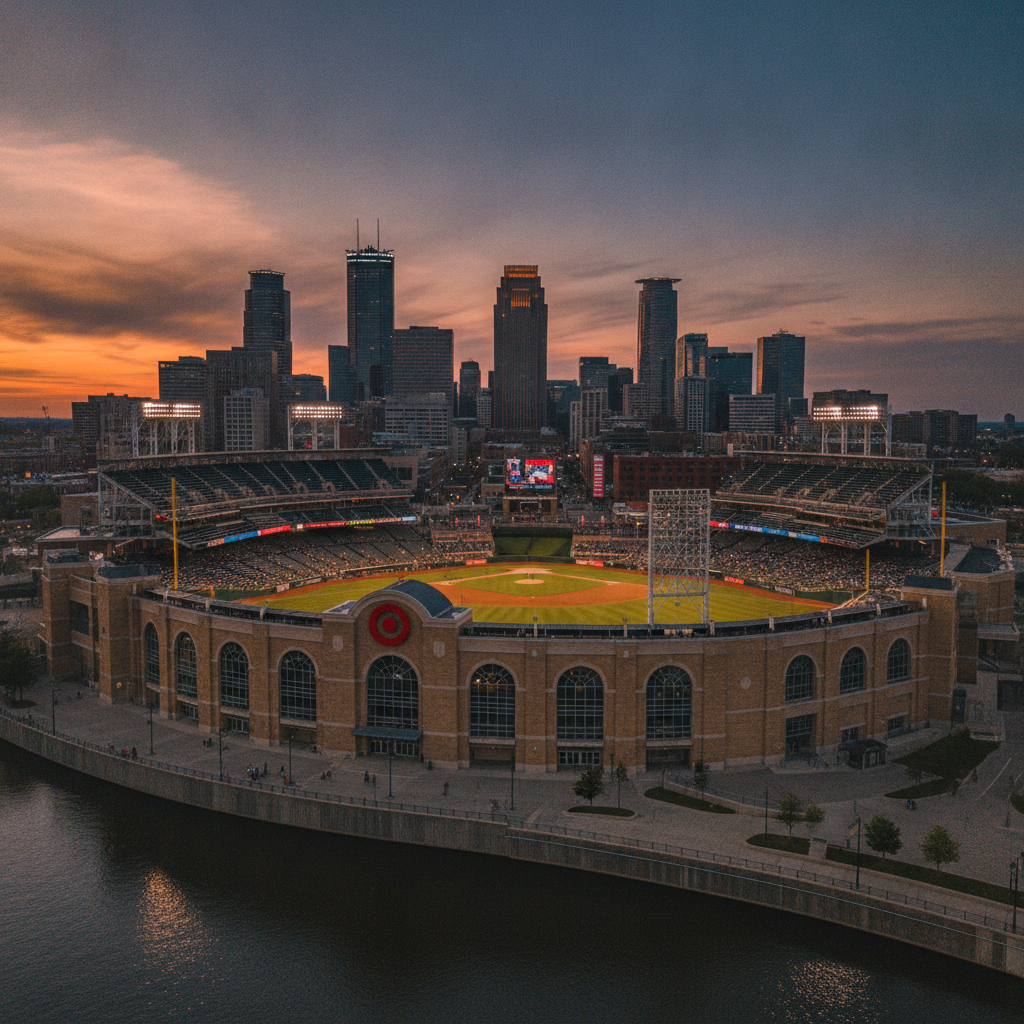
Minneapolis: Bob Dylan Dinkytown Coffeehouses, East African Little Mogadishu and Gehry Campus
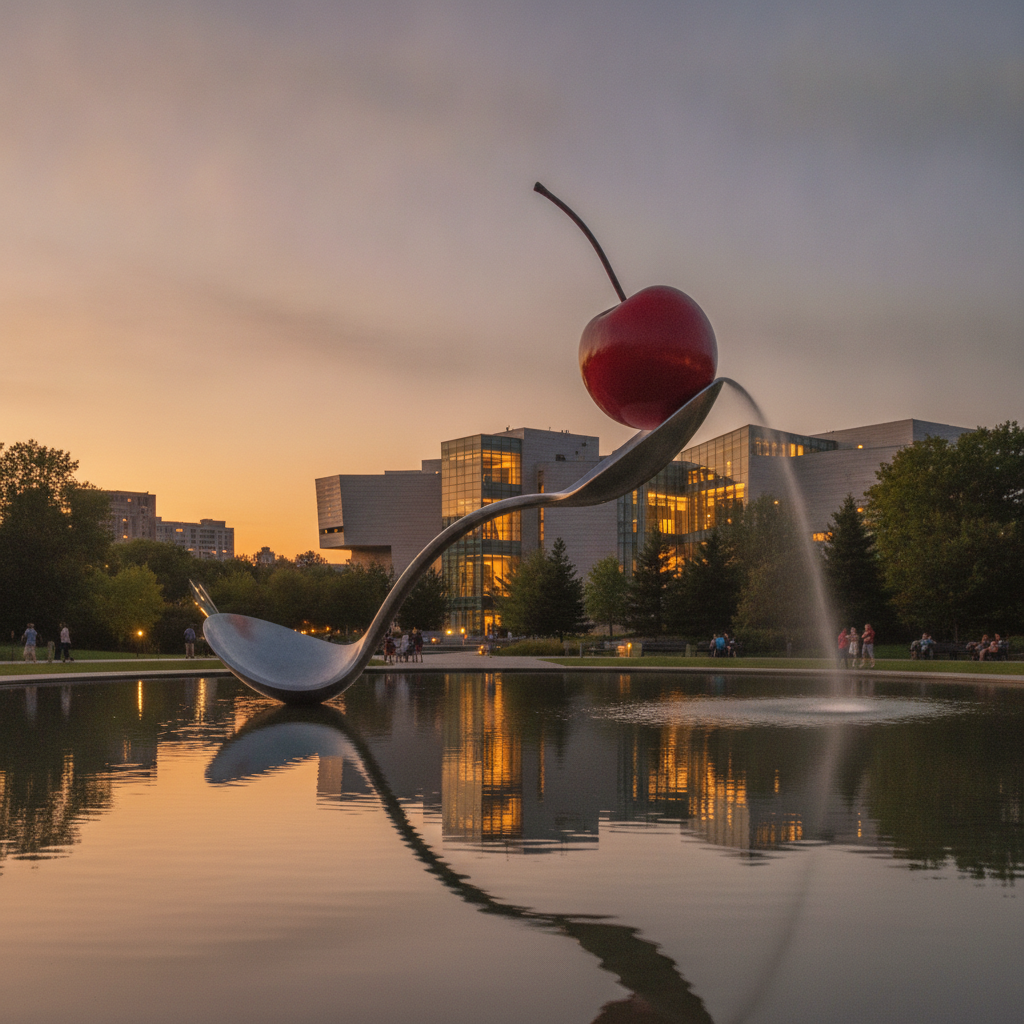
Minneapolis: Prince Paisley Park, Spoonbridge Cherry and the Busiest Wilderness in America