Monterrey Colonial History and Nuevo Leon Founding: The Crypto-Jewish Settlers of Luis de Carvajal the Younger, the Failed First Settlements and the 1596 Establishment That Finally Survived
Monterrey was founded on its current site in 1596 by Diego de Montemayor, a Spanish conquistador who named the settlement Ciudad Metropolitana de Nuestra Señora de Monterrey after the Viceroy of New Spain Gaspar de Zuñiga y Acevedo, Count of Monterrey, making it one of the last major Spanish colonial cities founded in the 16th century and establishing the permanent settlement after at least two previous failed attempts to colonize the Nuevo Leon valley. The most significant figure in the early colonial history of Nuevo Leon is not Montemayor but Luis de Carvajal the Younger, the nephew of the governor Luis de Carvajal y de la Cueva who governed the Kingdom of Nuevo Leon and who brought with him to the colony a group of Converso Jewish families fleeing the Spanish Inquisition, hoping that the remote northern frontier would provide sufficient distance from the Inquisition's reach. Luis de Carvajal the Younger, who secretly returned to Judaism in New Spain and documented his spiritual struggle in journals that constitute the most extraordinary personal document of crypto-Jewish life in the Americas, was eventually captured by the Inquisition, recanted, was released, returned to Jewish practice, was captured again, and burned at the stake in Mexico City in 1596, the same year Monterrey was permanently founded. The journals of Carvajal the Younger, discovered in the 20th century and published as the sole surviving first-person account of Converso religious experience in colonial New Spain, connect Monterrey history to the global story of Jewish diaspora and religious persecution.
- 1
Luis de Carvajal and the Crypto-Jewish Colony
Luis de Carvajal y de la Cueva, the Spanish conquistador appointed governor of the Kingdom of Nuevo Leon in 1579 with authority over a vast territory in northeastern Mexico, brought to his colony a group of Converso Jewish families who had converted to Christianity under the Spanish Inquisition while secretly maintaining Jewish practice, a dangerous religious double life that the frontier distance from the Inquisition's centers of power in Mexico City and Cartagena seemed to make survivable. His nephew Luis de Carvajal the Younger, born in Portugal as the son of a family that had converted under duress, reverted to Judaism in New Spain and documented his inner spiritual life in journals written in colonial Spanish that describe his prayer practices, his mystical experiences, and his terror of discovery in language of extraordinary personal urgency. The Inquisition arrested the Carvajal family in 1589, released Luis the Younger after he recanted and confessed, and re-arrested him in 1595 when he was discovered to have returned to Jewish practice. He was burned at the stake in Mexico City in December 1596 along with several female members of his family in an auto-de-fe, a public ceremony of execution by the Inquisition. The governor Luis de Carvajal y de la Cueva was also prosecuted by the Inquisition and died in prison in 1591. The journals of Carvajal the Younger, discovered in the 20th century in the Mexican national archive, provide the only surviving first-person account in the Americas of the inner life of a crypto-Jewish convert.
- 2
Nuevo Leon Colonial Settlement History
The colonial settlement of Nuevo Leon proceeded in stages of failure and restart that reflect the difficulty of establishing permanent communities in the semi-arid mountains and plains of northeastern Mexico, where the indigenous Chichimec groups known as the Gran Chichimeca mounted effective resistance to Spanish penetration for decades longer than the indigenous groups of central Mexico. The first attempt to settle the Nuevo Leon valley was made in 1577 by Luis de Carvajal y de la Cueva, who established a camp at a site called Ciudad de Leon that was abandoned after indigenous attacks. A second attempt in 1582 established Santa Lucia, which was also abandoned. The permanent settlement of Monterrey on its current site in 1596 by Diego de Montemayor with a group of 12 Spanish families and their servants succeeded where the previous attempts had failed partly because of the availability of water from the Santa Catarina River and partly because the military suppression of the Gran Chichimeca resistance had progressed sufficiently to make the settlement defensible. The Nuevo Leon colony grew slowly through the 17th century as a cattle and silver mining economy, with the mining district of the Cerro del Topo in the Sierra Madre east of Monterrey producing the first significant economic output of the region. The 17th-century colonial architecture of Monterrey was largely destroyed by floods, the Reform War, and the Macroplaza demolition, leaving the Obispado hill mansion as the primary surviving colonial structure.
- 3
Obispado Hill and Colonial Monuments
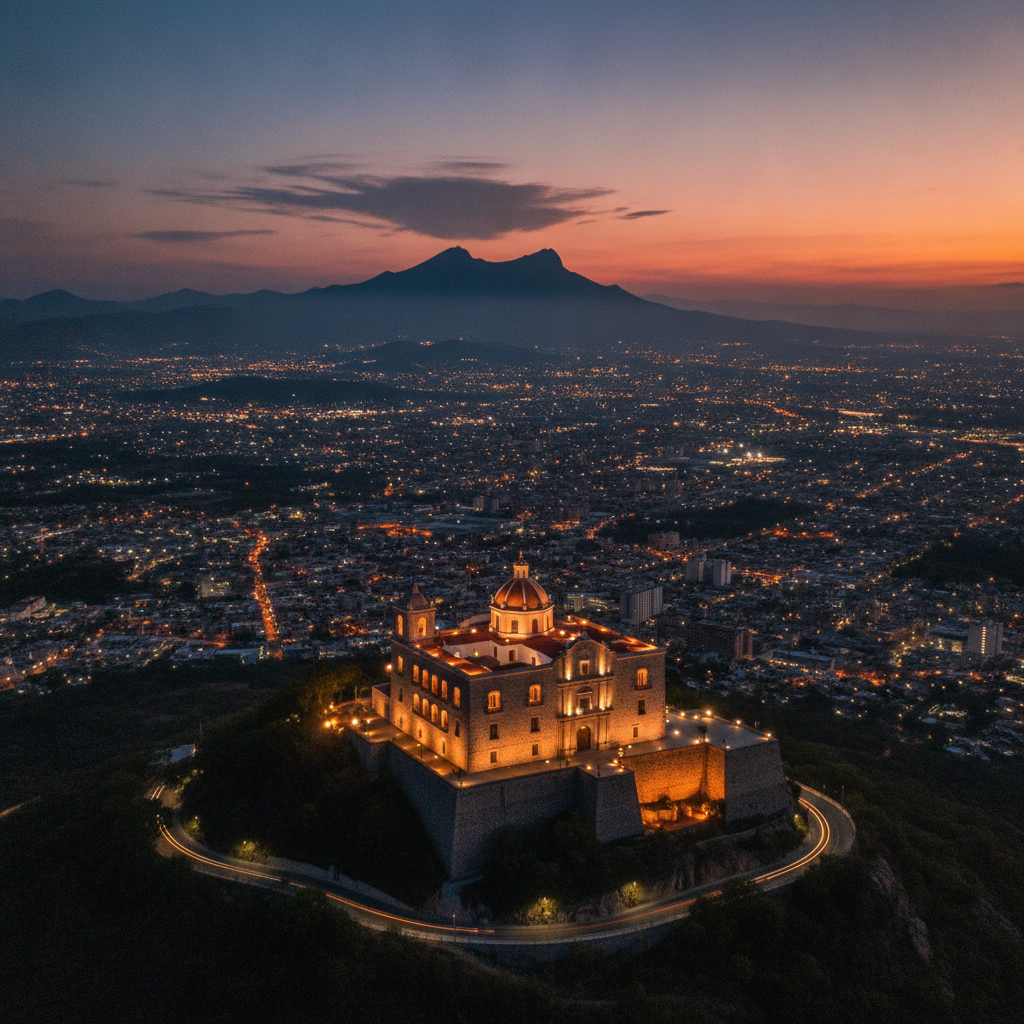
The Obispado, the Bishop Palace built between 1787 and 1792 on a hill overlooking the Monterrey valley as the residence of the Bishop of Linares, is the most significant surviving colonial architectural monument in Monterrey and the building that provides the panoramic viewpoint over the metropolitan area from which the relationship of the city to the surrounding Sierra Madre mountains is most clearly visible. The building was used as a military fortification by both sides in successive conflicts: by the Texan and US forces during the Mexican-American War of 1846 to 1848, during which Monterrey was captured by General Zachary Taylor's army in a three-day battle that is commemorated at the museum within the Obispado; and by the French Imperial forces during the 1863 to 1867 occupation of Mexico. The Museo Regional de Nuevo Leon within the Obispado holds collections of colonial and 19th-century art, historical documents related to the founding and development of the colony, and exhibits documenting the Mexican-American War engagement at Monterrey. The hill on which the Obispado stands provides a visual anchor for the western side of the Monterrey urban landscape and is the subject of the iconic Monterrey postcard image showing the colonial building in the foreground and the Cerro de la Silla in the background. The chapel of the Obispado contains colonial-era religious paintings and carved altarpieces in a style consistent with late 18th-century New Spain provincial ecclesiastical art.
- 4
Mexican-American War and Monterrey Battle
The Battle of Monterrey in September 1846, in which US forces under General Zachary Taylor captured the city from the Mexican army commanded by General Pedro de Ampudia in three days of urban combat that included house-to-house fighting through the streets of the historic center, was one of the most significant military engagements of the Mexican-American War and the first major urban battle fought by the US Army since the War of 1812. The battle demonstrated the difficulty of urban warfare for a conventional army: Taylor's forces advanced through the streets by breaking holes through the walls of adjacent buildings to avoid the exposed streets, a tactic called mouseholing that required axes and pickaxes carried by the infantry. The Mexican forces, after a determined defense, accepted surrender terms that allowed them to withdraw with their arms, terms that Taylor granted partly because his army had taken significant casualties and partly because he believed a negotiated end to the battle would facilitate a broader peace settlement. The peace terms were repudiated by President Polk in Washington, who ordered Taylor to resume hostilities. The Mexican-American War resulted in the Treaty of Guadalupe Hidalgo in 1848, under which Mexico ceded approximately half its territory including California, New Mexico, Arizona, Nevada, Utah, and parts of Colorado to the United States, one of the largest territorial transfers in modern history. The significance of the Monterrey battle in the sequence of events leading to this transfer is documented at the Museo Regional de Nuevo Leon in the Obispado.
- 5
Monterrey in the Reform War and French Intervention
Monterrey played a significant role in the liberal-conservative conflicts of the Reform War period, with the city serving as the capital of the liberal government of Benito Juarez during the period 1864 when the liberal forces were driven north by the advancing French Imperial army that installed Emperor Maximilian I in Mexico City. Juarez established his government in Monterrey for several months in 1864 and 1865 before moving further north to Chihuahua as French forces advanced, maintaining the constitutional government in exile during the period of maximum French military control of central Mexico. The Nuevo Leon liberal tradition, which aligned the state with the Reform War liberals and the subsequent secular constitution, shaped the political culture of the state in ways that distinguished it from the conservative Catholicism of the Jalisco highlands: Nuevo Leon was both deeply Catholic in religious practice and strongly committed to secular liberal governance in political organization, a combination that the regiomontano political culture maintained through the 20th century. The French intervention forces briefly occupied Monterrey in 1864 but could not maintain a garrison in the northern city given the demands of controlling the more populous central Mexican territories. The era of Reform War and French intervention is documented in the Museo Regional de Nuevo Leon and commemorated in the naming of streets and plazas throughout the Monterrey historic center.
- 6
Monterrey Practical Guide and Logistics
Monterrey is served by the General Mariano Escobedo International Airport, the third busiest airport in Mexico after the Mexico City and Cancun airports, with direct flights to over 30 US cities reflecting the intense business and family travel between Monterrey and the United States. The distance from Monterrey to Laredo, Texas is approximately 230 kilometres and to the US border at Nuevo Laredo 235 kilometres, making Monterrey the most accessible major Mexican city from the US border by road. The metro system of Monterrey, the second metro system built in Mexico after Mexico City, operates two lines connecting the historic center to the Tecnologico de Monterrey campus and the Garza Garcia municipalities, with expansion lines under various stages of planning and construction. The climate of Monterrey is subtropical continental with hot summers reaching 40 Celsius and winters that occasionally bring frost and rarely snow to the valley floor, though the surrounding mountains receive snow several times per winter. The business hotel infrastructure of Monterrey is extensive, with most international brands represented in the Valle and Garza Garcia districts adjacent to the corporate headquarters cluster. The US dollar is widely accepted in Monterrey's commercial establishments, particularly in the business hotel and restaurant districts, reflecting the high proportion of US business visitors and Mexican Americans visiting family. The peso-dollar exchange and the informal acceptance of dollars in Monterrey distinguish the city from most other Mexican cities where dollar acceptance is limited to formal exchange offices.
Walk this route with audio
Stories play automatically as you reach each stop — no tapping needed.
More in Monterrey
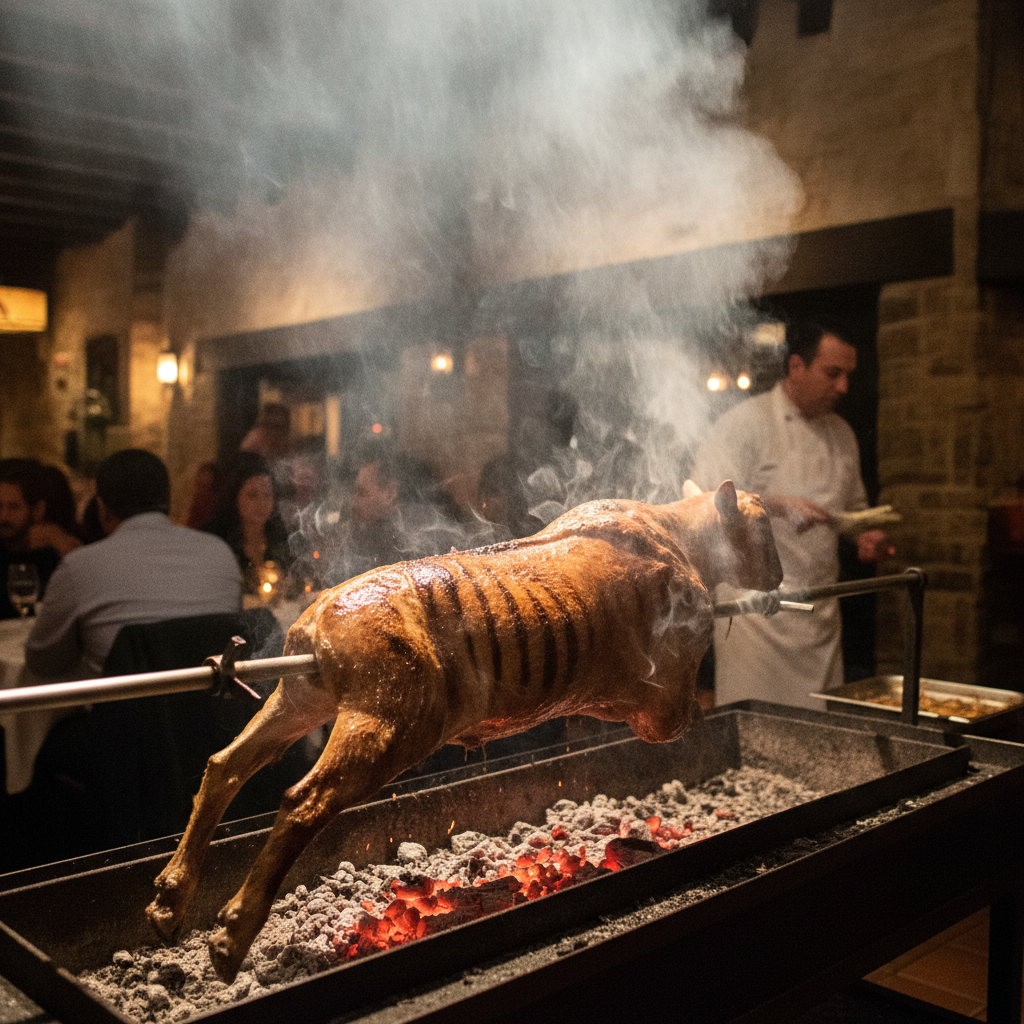
Monterrey Food Culture: Cabrito Roasted Kid Goat, Carne Asada the Northern Mexican Grill Tradition, Pan de Polvo Cookies and the Machaca Dried Beef That Defines the Northern Mexican Ranching Table
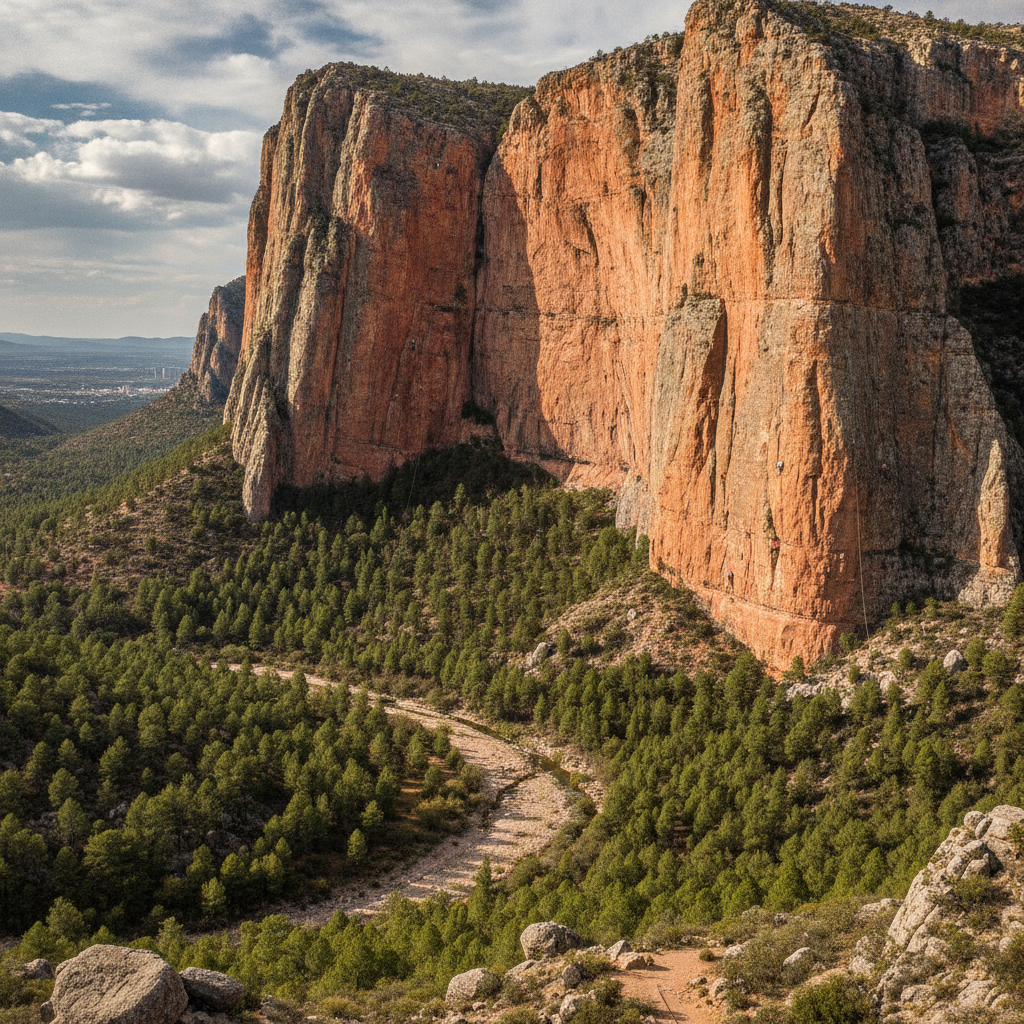
Monterrey Mountains and Nature: Grutas de Garcia Limestone Caves, Cola de Caballo Waterfall, Chipinque Ecological Park and the Sierra Madre Canyon System That Makes This the Most Dramatically Situated Industrial City in Mexico
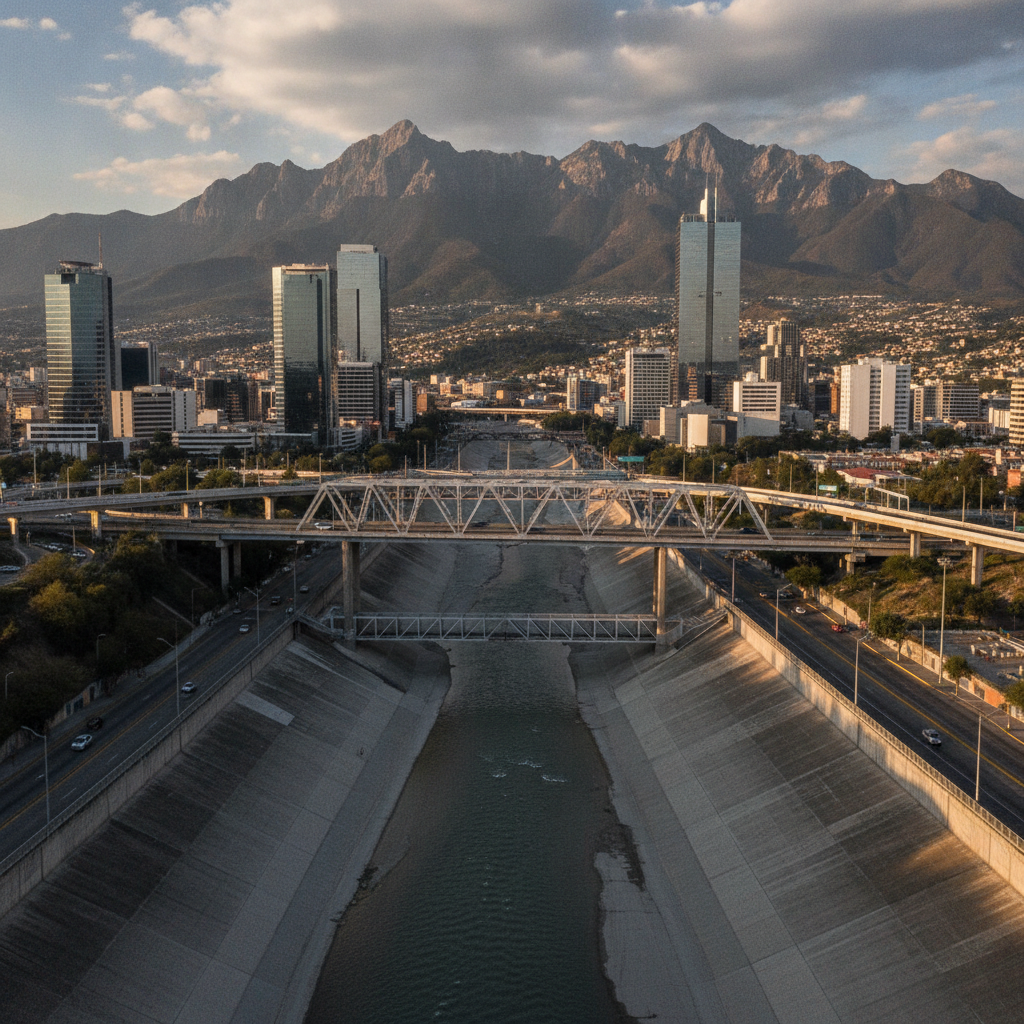
Monterrey Water Crisis, Urban Heat and the Environmental Cost of Industrial Growth in the Semi-Arid Nuevo Leon Valley Where Summer Temperatures Hit 45 Celsius and the Metropolitan Area Ran Out of Tap Water in 2022
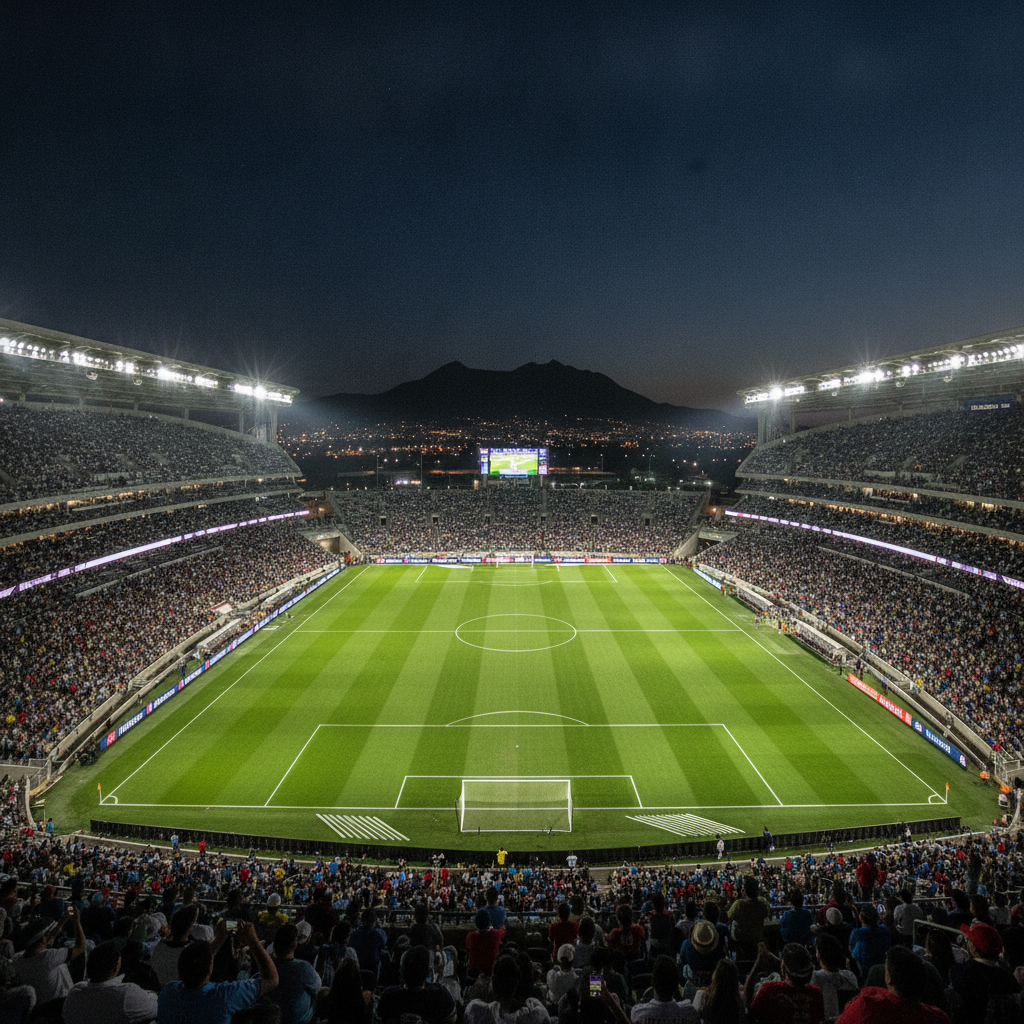
Monterrey Sport and Stadium Culture: Tigres and Rayados Football Rivalry, the PPG Paints Arena Boxing Tradition and the Regiomontano Sports Identity That Turns Two Football Clubs Into a Proxy for Class Division
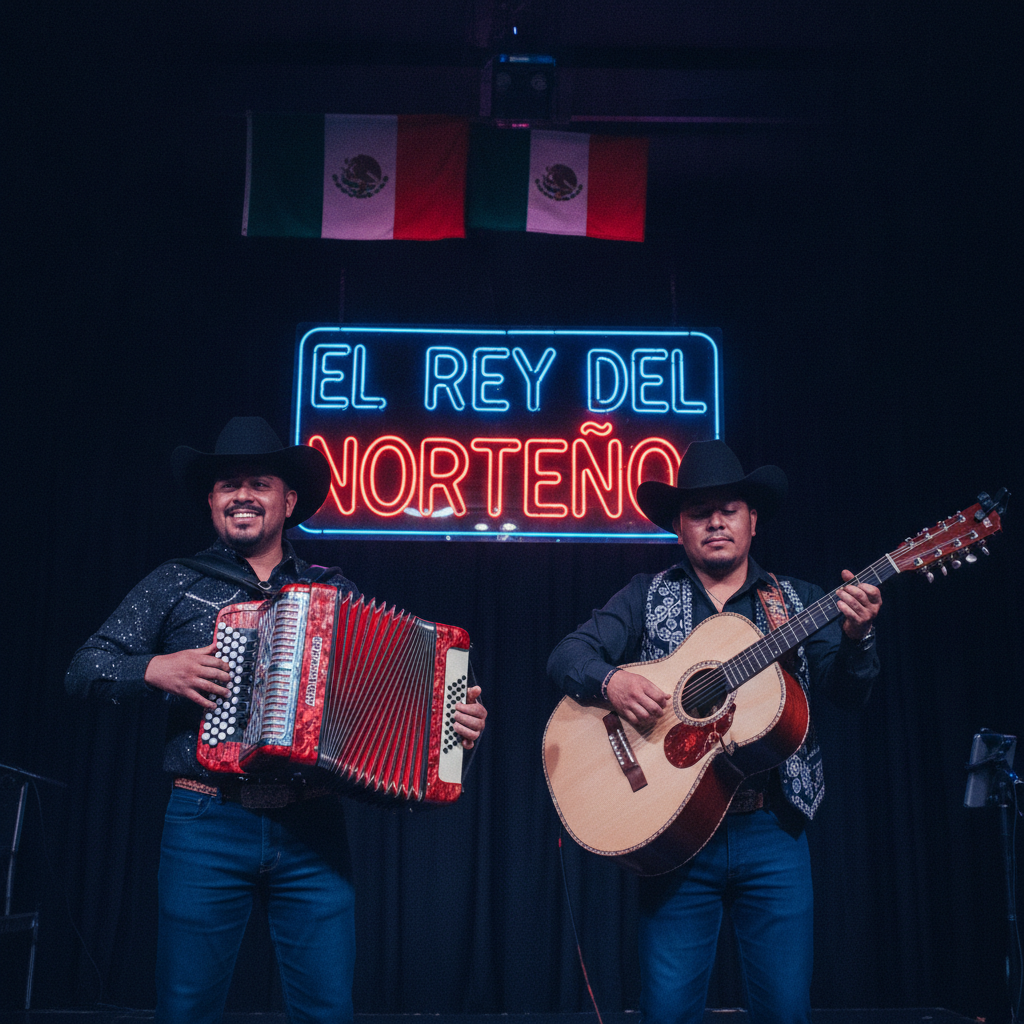
Monterrey Music Identity: Norteño and Grupero Accordion Music from the Nuevo Leon Border Corridor That Became the Soundtrack of the Mexican Diaspora and the Cultural Background of 35 Million Mexican Americans