Monterrey Sport and Stadium Culture: Tigres and Rayados Football Rivalry, the PPG Paints Arena Boxing Tradition and the Regiomontano Sports Identity That Turns Two Football Clubs Into a Proxy for Class Division
Monterrey is the only major Mexican city with two football clubs competing in the top division of Liga MX simultaneously, and the rivalry between Club de Futbol Monterrey, called Rayados, founded in 1945 and associated with the working-class and middle-class northern areas of the metropolitan area, and Club Tigres de la Universidad Autonoma de Nuevo Leon, called Tigres, founded in 1960 and associated with the university community and the eastern industrial municipalities, functions as the defining social division of the city in a way that the Mexico City rivalry between America and Chivas of Guadalajara or the Guadalajara rivalry between Chivas and Atlas does not quite replicate because in Monterrey the two rivals share the same city and the same stadium, the Estadio BBVA and the Estadio Universitario being within 8 kilometres of each other and serving populations that genuinely interpenetrate in workplace, family, and neighborhood. The class dimension of the Monterrey football rivalry, with Rayados associated with the San Pedro Garza Garcia corporate class and Tigres with the student and industrial worker population of the UANL university community, makes the clásico regiomontano a twice-annual restatement of the social geography of the metropolitan area that residents follow with an intensity that briefly displaces the normally dominant subject of work and money from the center of Monterrey conversation. The boxing tradition of Monterrey and the adjacent border region has produced multiple world champions including Erik Morales and Marco Antonio Barrera.
- 1
Rayados and Tigres Football Rivalry
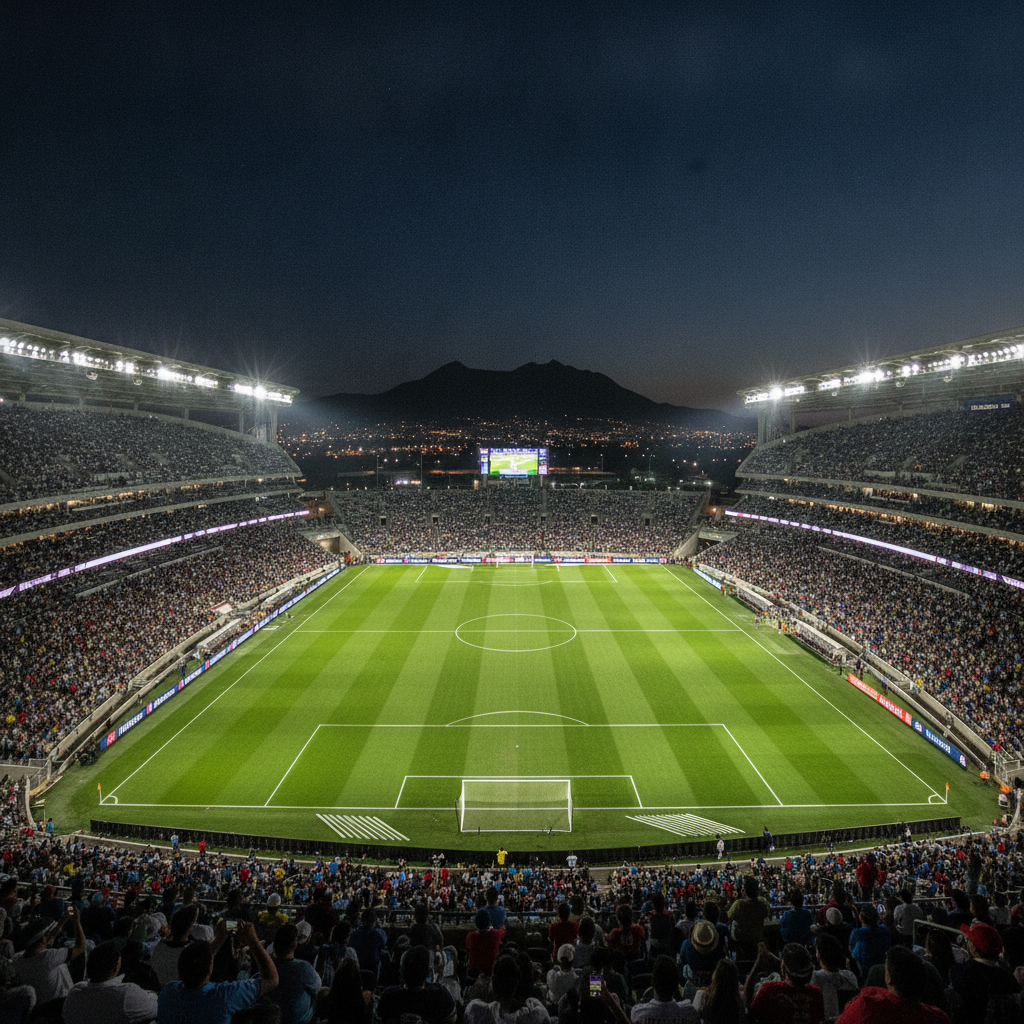
Club de Futbol Monterrey, the Rayados, blue and white striped since their founding in 1945 and owned by the FEMSA corporation controlled by the Garza Lagera family branch of the Monterrey Group, and Club Tigres UANL, the gold and blue team of the Universidad Autonoma de Nuevo Leon founded in 1960 and owned by the university, share the Monterrey metropolitan area as competitors in Liga MX and create a crosstown rivalry unlike any other in Mexican football because both clubs have been simultaneously competitive at the national and continental level during the same period. Tigres won the Liga MX championship five times between 2011 and 2019 while Rayados won it twice in the same period, making the two Monterrey clubs the most successful in Mexico during that decade. The CONCACAF Champions League final of 2020, played without fans due to the pandemic, matched Tigres against Club America and Rayados had won the same competition in 2019, giving Monterrey clubs consecutive continental championship appearances. The Estadio BBVA, the Rayados home opened in 2015 in the municipality of Guadalupe with a capacity of 53,000 and a mountain panorama backdrop, is considered the finest football stadium in Mexico and one of the best in North America. The Estadio Universitario, the Tigres home opened in 1967 in San Nicolas de los Garza, seats 42,000 and is surrounded by the UANL campus in the working-class northern municipality of the metropolitan area.
- 2
Monterrey Boxing Heritage
The boxing tradition of Monterrey and the Nuevo Leon-Tamaulipas-Coahuila border region has produced a remarkable concentration of world champions in the lighter weight classes from the 1980s through the 2010s, including Erik Morales from Tijuana who was closely associated with the Monterrey boxing circuit, Marco Antonio Barrera who grew up in Mexico City but whose professional career was built through the Monterrey promoter network, and the Nuevo Leon-born fighters who competed in the regional boxing circuit that supplied contenders to the WBC, WBA, IBF, and WBO world championships. The Monterrey boxing audience, which fills the Arena Monterrey for major bouts and crowded the smaller venues of the Barrio Antiguo and industrial neighborhoods for regional cards, is among the most knowledgeable and loudest in Mexico, with a fighting tradition rooted in the physical toughness mythology of the northern Mexican working class. The promoter network of Monterrey, connected to the US boxing promoters of San Antonio, Houston, and Las Vegas through the border corridor, managed the careers of boxers who were competitive internationally while maintaining a regional audience base that could sell out the Arena Monterrey on the basis of local names alone. The weight class traditions of Monterrey boxing skew toward featherweight, super featherweight, and lightweight, reflecting the body types of the border region population, and the technical boxing style influenced by Mexican boxing coaches who emphasized the jab-and-cross combination fighting approach over the brawling style associated with some Latin American boxing traditions.
- 3
Lucha Libre in Monterrey
The lucha libre tradition of Monterrey, part of the national Mexican lucha libre circuit that operates from the Consejo Mundial de Lucha Libre and other promotions based in Mexico City but with significant regional promotions throughout the country, fills the Arena Coliseo Monterrey on Friday and Sunday nights with the working-class audience that made lucha libre the most popular live sporting entertainment in Mexico outside football. The Monterrey lucha libre audience has a preference for the technically skilled wrestling style over the pure spectacle of the most theatrical performers, reflecting the northern Mexican preference for competence over flamboyance that the regiomontano self-image valorizes across all domains. The mask tradition of lucha libre, in which wrestlers perform in elaborate masks representing animals, supernatural beings, or Mexican cultural icons and defend the mask in high-stakes matches where the loser must unmask and reveal their real identity, is particularly powerful in Monterrey where the unmasking of a beloved local wrestler is treated as a serious loss by the fan community. El Hijo del Santo, the son of the legendary El Santo whose silver mask is the most recognized symbol in Mexican popular culture, has performed in Monterrey throughout his career, and several Nuevo Leon-born wrestlers have competed at the highest levels of the Mexican lucha libre circuit.
- 4
Estadio BBVA Architecture and Fan Culture
The Estadio BBVA, opened in August 2015 in the municipality of Guadalupe on a site adjacent to the Cerro del Topo in the Sierra Madre Oriental foothills 9 kilometres east of the Monterrey city center, was designed by the architecture firm Populous in collaboration with the Monterrey architectural office Canavati, with a design that takes advantage of the mountain backdrop by orienting the open end of the stadium toward the Cerro de la Silla, creating the most dramatic stadium view in Mexico and making the mountain peak visible as a framed image from within the stands during evening matches. The stadium was built by Rayados and FEMSA with an investment of approximately 2 billion Mexican pesos and is considered the standard for private football stadium development in Mexico, with corporate suite capacity, premium hospitality, and fan experience amenities comparable to major league stadiums in the United States. The fan culture of Rayados centers on the La Adiccion ultras group, whose section behind the goal at the Estadio BBVA produces the organized supporter atmosphere of continuous chanting, tifo displays, and coordinated motion that the European ultras tradition has inspired throughout Latin American football. The clásico regiomontano between Rayados and Tigres, played twice per Liga MX season with the match location alternating between the two stadiums, generates a security mobilization involving hundreds of additional police and generates the social media content that defines Monterrey's football identity to the rest of Mexico.
- 5
Marathon Running and Urban Athletics
Monterrey has developed one of the most active running communities in Mexico, driven by the mountain landscape that provides trail running terrain within the urban area, the corporate wellness culture of the San Pedro Garza Garcia business district where running clubs associated with major companies meet before work on weekday mornings, and the Monterrey Marathon, held annually in December, which has grown to attract over 30,000 participants from Mexico and internationally and is the second largest marathon in Mexico after the Mexico City Marathon. The trail running culture of Monterrey, centered on the Chipinque Ecological Park and the Huasteca and Potrero Chico canyons, has produced a competitive ultra-distance running community that competes in events throughout Mexico and in international 50K and 100K races. The cycling culture of Monterrey, supported by dedicated cycling infrastructure in the Parque Fundidora area and the cycling lanes along the Santa Catarina River, has grown significantly since the 2010s, with the Via RecreActiva, a Sunday morning car-free route through major streets of the city, attracting tens of thousands of cyclists and pedestrians. The triathlon tradition of Monterrey, with events held at the Parque La Huasteca and in the Santiago municipality canyon system, connects the swimming, cycling, and running athletic communities. The extreme heat of Monterrey summers, reaching 40 Celsius in July and August, concentrates outdoor athletic activity in the October through April cooler season, which aligns with the prime mountain trail conditions.
- 6
Monterrey US Border Connection and Cross-Border Life
The proximity of Monterrey to the United States border, 230 kilometres from Laredo Texas and 200 kilometres from McAllen Texas, has created a cross-border social and economic relationship more intensive than any other major Mexican city experiences, with Monterrey families maintaining homes on both sides of the border, Monterrey businesses operating distribution networks that cross daily through the Laredo and McAllen international bridges, and Monterrey residents shopping in the Texas border cities for goods cheaper in the United States than in Mexico, particularly electronics and clothing. The Laredo-Nuevo Laredo crossing on the US-Mexico border is the busiest trade crossing in the world by value of goods transported, with the majority of manufactured goods exchanged under the USMCA trade agreement passing through this crossing in both directions, making the Laredo-Monterrey corridor the most economically significant segment of the entire US-Mexico border. The maquiladora manufacturing industry of the Monterrey metropolitan area, which produces electronics, automotive components, appliances, and consumer goods for export to the United States under preferential tariff arrangements, employs over 200,000 workers in the industrial parks of the eastern and northern municipalities and represents the integration of the Monterrey economy into the North American manufacturing supply chain that the USMCA formalized. The Monterrey business community's orientation toward the US market rather than the Mexico City market is reflected in the US dollar acceptance at commercial establishments, the prevalence of US fast food chains, and the bilingual English-Spanish professional communication in the corporate sector.
Walk this route with audio
Stories play automatically as you reach each stop — no tapping needed.
More in Monterrey
Monterrey Colonial History and Nuevo Leon Founding: The Crypto-Jewish Settlers of Luis de Carvajal the Younger, the Failed First Settlements and the 1596 Establishment That Finally Survived
Monterrey Food Culture: Cabrito Roasted Kid Goat, Carne Asada the Northern Mexican Grill Tradition, Pan de Polvo Cookies and the Machaca Dried Beef That Defines the Northern Mexican Ranching Table
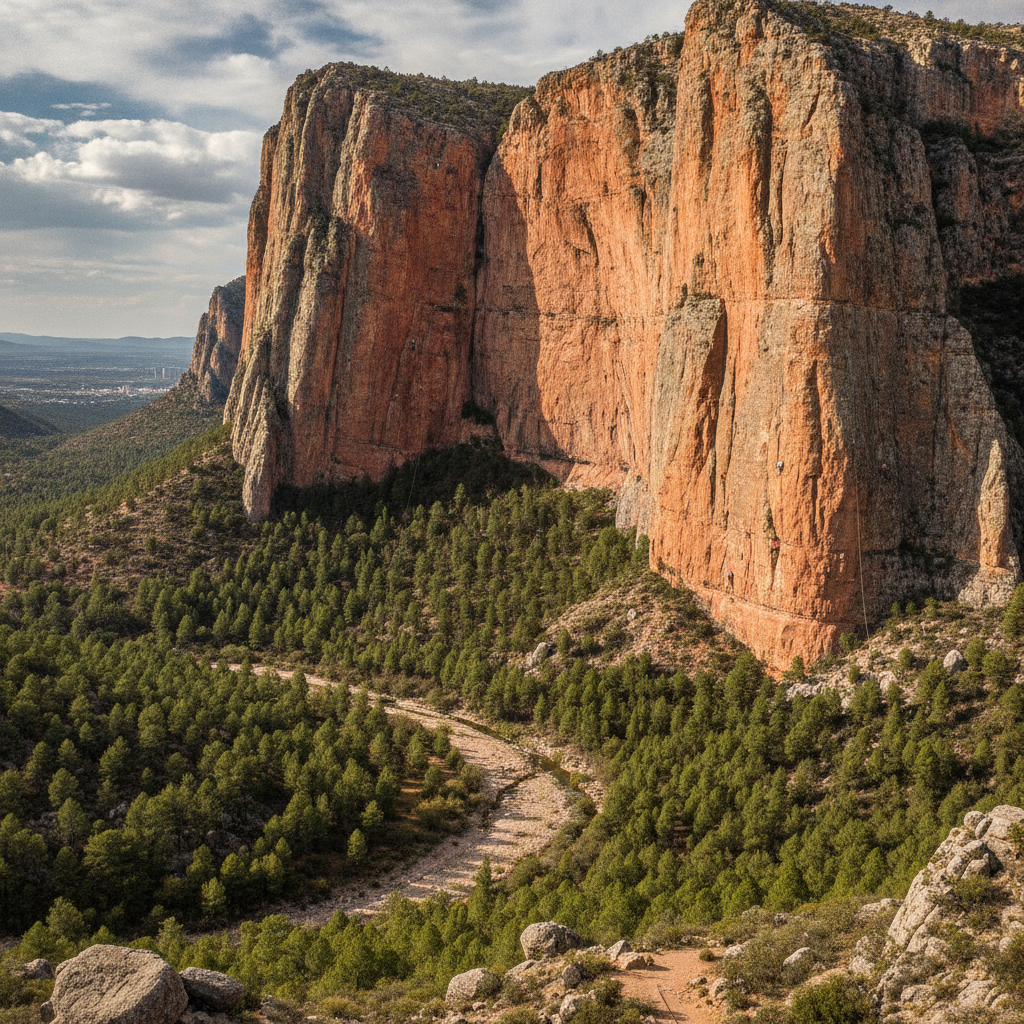
Monterrey Mountains and Nature: Grutas de Garcia Limestone Caves, Cola de Caballo Waterfall, Chipinque Ecological Park and the Sierra Madre Canyon System That Makes This the Most Dramatically Situated Industrial City in Mexico
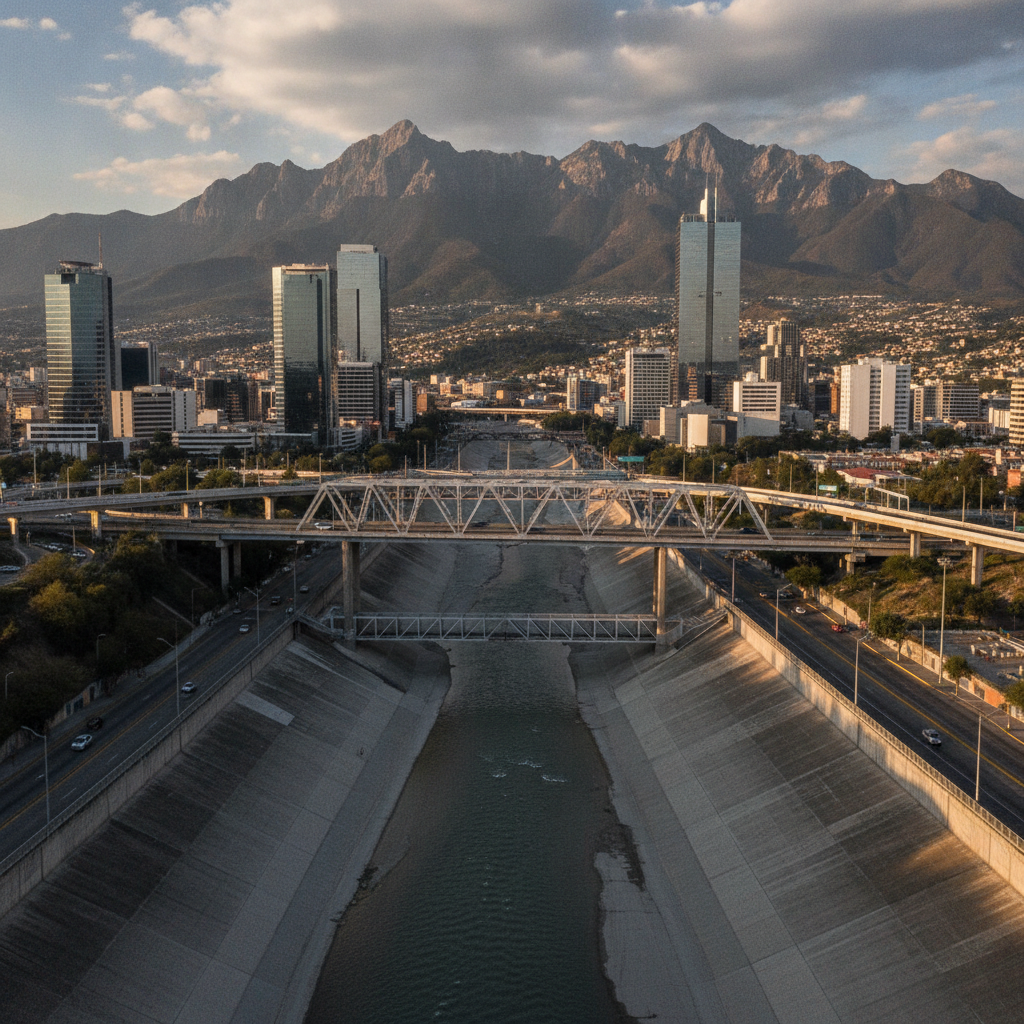
Monterrey Water Crisis, Urban Heat and the Environmental Cost of Industrial Growth in the Semi-Arid Nuevo Leon Valley Where Summer Temperatures Hit 45 Celsius and the Metropolitan Area Ran Out of Tap Water in 2022
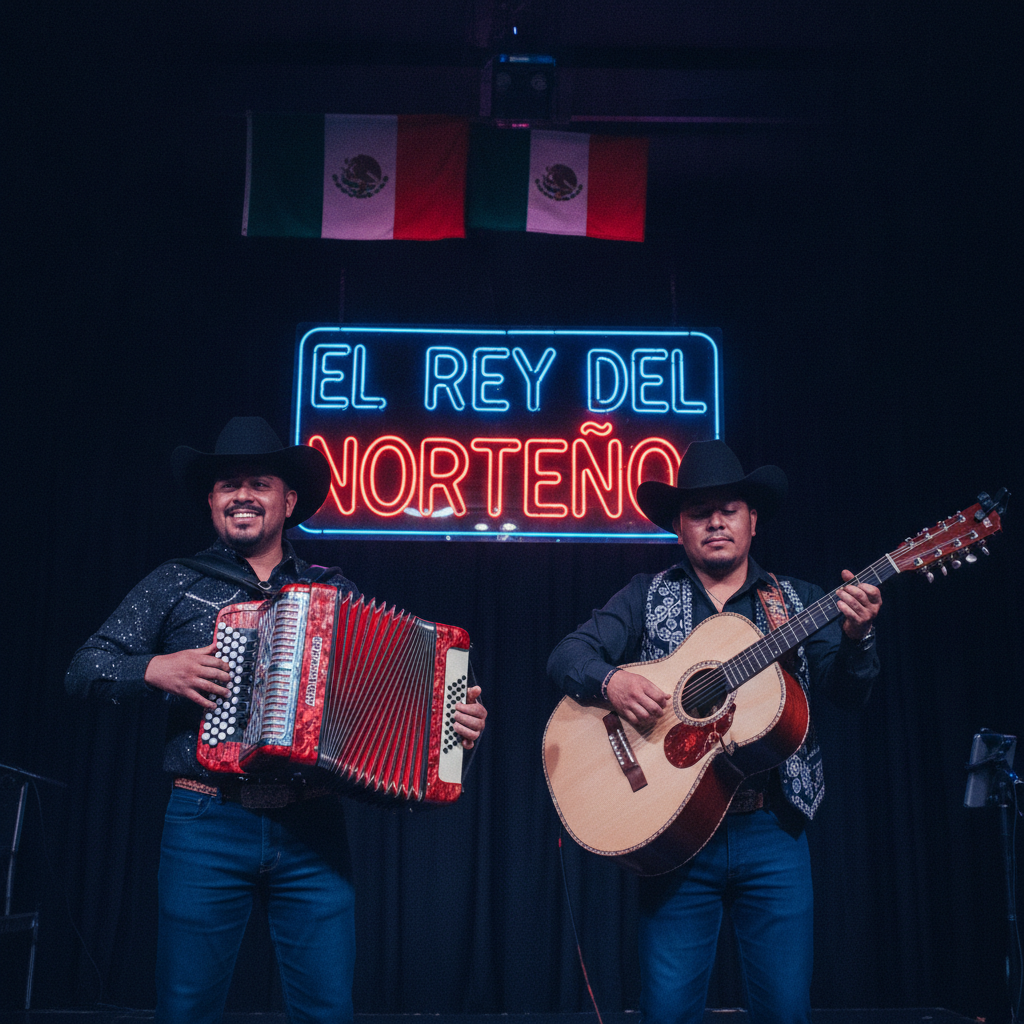
Monterrey Music Identity: Norteño and Grupero Accordion Music from the Nuevo Leon Border Corridor That Became the Soundtrack of the Mexican Diaspora and the Cultural Background of 35 Million Mexican Americans