Birdwatching in Monteverde: 500 Species, Hummingbird Gardens, and Dawn Walks
Monteverde holds one of the most concentrated birdwatching opportunities in the Americas, with 500 recorded species across the reserve and surrounding private forests representing approximately 10 percent of all bird species on Earth in an area of a few dozen square kilometers. The combination of cloud forest, forest edge, and the hummingbird feeders maintained at several lodges and gardens produces a visitor experience of extraordinary avian diversity. This route maps the birdwatching landscape of Monteverde from the pre-dawn reserve walks to the afternoon hummingbird gardens and the specialized nightjar and owl walks.
- 1
Pre-Dawn Reserve Entry and the First Hour of Light
The most productive birdwatching in the Monteverde Reserve occurs in the first hour after dawn, before the tourist groups arrive and when avian activity is at its peak. The reserve opens at 7 AM, and guided groups that have arranged early entry permits can be in the forest by 6 AM. The first light in the cloud forest is filtered, soft, and frequently foggy, creating ideal conditions for seeing the cloud forest canopy species that move higher as the day warms. The quetzal, the bellbird, and the bare-necked umbrellabirdare the three most sought-after species; all are reliably found by guides who maintain current knowledge of territory locations and have spent years learning the calls that betray their presence before they become visible.
- 2
Three-Wattled Bellbird: The Loudest Bird in the Americas
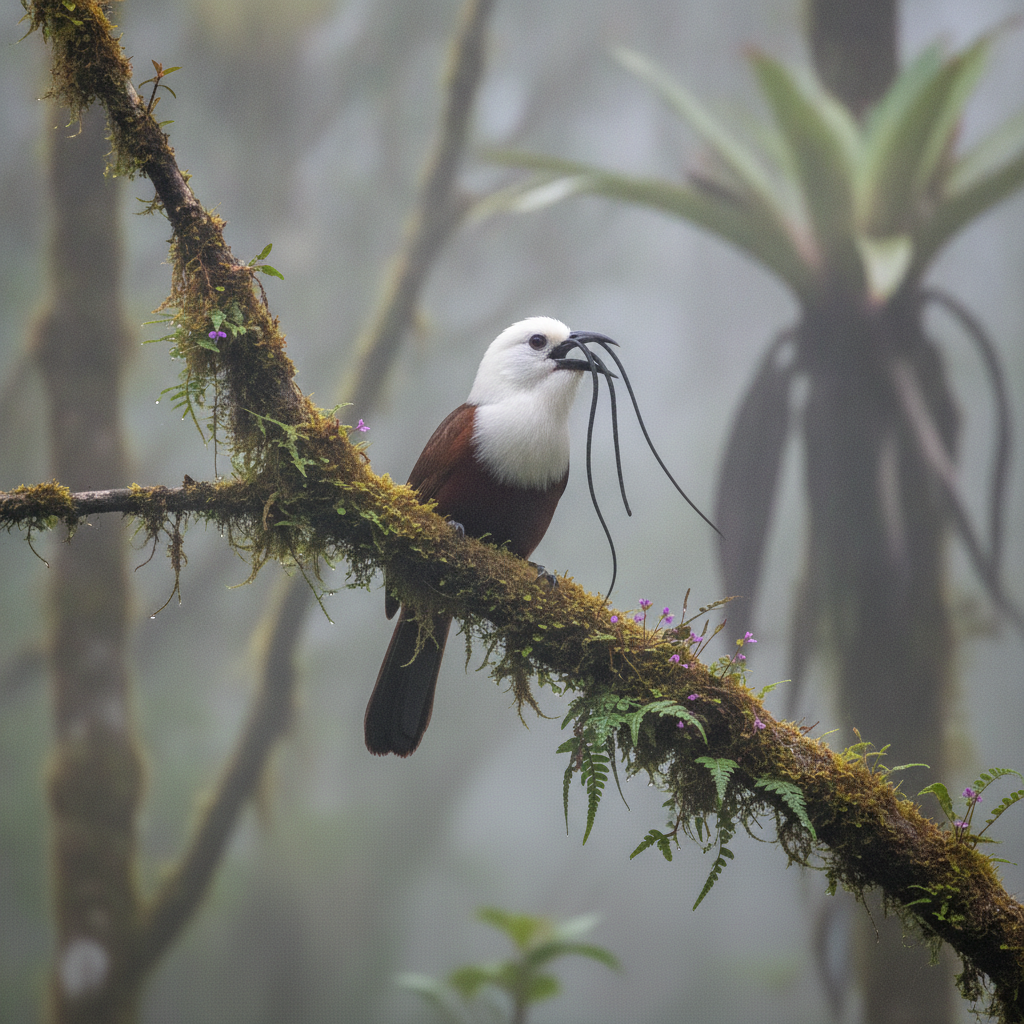
The three-wattled bellbird (Procnias tricarunculatus) produces one of the loudest and most bizarre calls of any bird: a metallic clang audible at distances of over one kilometer that the male delivers from a display perch, swinging three worm-like wattles from the base of the bill while calling. The bellbird is the signature sound of the Monteverde high season from February through July, when the birds are in the reserve breeding. In the dry season the population migrates to lower elevations on both Pacific and Caribbean slopes. The call is immediately recognizable as unlike any other bird sound, and hearing it for the first time is a reliable strong reaction from visiting birdwatchers. The wattled plumage of the male is among the most extraordinary of any bird species.
- 3
Hummingbird Galleries: Twenty Species at the Feeders
Monteverde is one of the best sites in the world for observing multiple hummingbird species simultaneously. The Monteverde Hummingbird Gallery and the feeders maintained at several lodges attract up to twenty hummingbird species to a single point, allowing extended observation and photography at close range. Species regularly present include the violet sabrewing (the largest hummingbird in Central America), the green hermit, the purple-throated mountain-gem, the white-bellied mountain-gem, and the coppery-headed emerald, a Costa Rican endemic. The hummingbird feeders work as a photographic opportunity regardless of birding skill level and are a reliable experience even for visitors primarily interested in mammals or other wildlife.
- 4
Night Birding: Owls, Nightjars, and the Nocturnal Forest
The cloud forest at night holds a different bird community from the daytime fauna. The footsteps-by-night walk program operated by the reserve and several private operations accesses the nocturnal species that are never encountered by day visitors. The bare-shanked screech owl, the mottled owl, and the Costa Rican pygmy owl are present throughout the year. The pauraque nightjar freezes on the forest floor and is visible only when a torch catches its eyeshine. The specialist ornithologist target for the Monteverde night is the dusky nightjar, found in the highland edge habitat rather than the forest interior. The night walks also access the amphibians, reptiles, and mammals of the nocturnal forest in a single session.
- 5
Altitudinal Migrants and Seasonal Specialties
Several bird species found in Monteverde are altitudinal migrants that move between the highland cloud forest and the lowland rainforest in response to seasonal food availability. The quetzal migration from Monteverde to the Pacific slope lowlands in October through January, following the wild avocado fruiting cycle, means the bird is absent from the reserve for part of the year. The resplendent trogon, the black guan, and the blue-and-gold tanager are present year-round in the forest. December through March brings North American migrant warblers to the forest edge: Tennessee, chestnut-sided, and golden-winged warblers winter at this altitude. The birding calendar of Monteverde is therefore genuinely different across the year, rewarding repeat visits at different seasons.
- 6
Finca Ecologica and Private Reserve Birding
Several private reserves adjacent to the national reserve network offer birding in a quieter setting than the main Monteverde Reserve trails. Finca Ecologica is a family-run private reserve of 35 hectares with a well-maintained trail network and a strong track record for quetzal sightings. The Curi-Cancha Reserve, operated by the Monteverde community, has developed a reputation for reliable quetzal encounters and limits daily visitors to maintain a high-quality experience. The private reserves provide an alternative to the main reserve when the official park reaches its daily visitor limit or when a visitor wants a slower, less crowded forest walk. The guides at these smaller reserves often have deeper site-specific knowledge accumulated over years of daily observation of the same forest patch.
Walk this route with audio
Stories play automatically as you reach each stop — no tapping needed.
More in Monteverde
Monteverde Cloud Forest: Quetzals, Suspension Bridges, and the Quaker Colony
Guanacaste and the North Pacific: Day Trips from Monteverde
Climate Change and the Future of Monteverde Cloud Forest
Monteverde Cheese, Coffee, and the Agricultural Community Economy

Conservation History: How Monteverde Became a Global Model for Ecotourism