Montevideo Food: Asado, Chivito, Dulce de Leche, and the Uruguayan Table
Uruguayan food culture is anchored by beef more completely than almost any other national cuisine in the world: Uruguay has the highest per capita beef consumption and one of the highest cattle-to-human ratios on Earth, and the asado grilled beef tradition shapes every aspect of social eating from family Sunday gatherings to restaurant culture to street food. The chivito sandwich is Uruguay's contribution to the global sandwich canon, the dulce de leche caramel spread is the foundational Uruguayan sweet, and the alfajor cookie sandwich with dulce de leche filling is the most exported Uruguayan food product. The Italian immigration of the late 19th century left a pasta tradition that runs through Uruguayan home cooking alongside the beef culture, and the gnocchi on the 29th of each month is a ritual that every Uruguayan household observes regardless of ethnicity.
- 1
The Asado: Beef as Religion and Social Practice
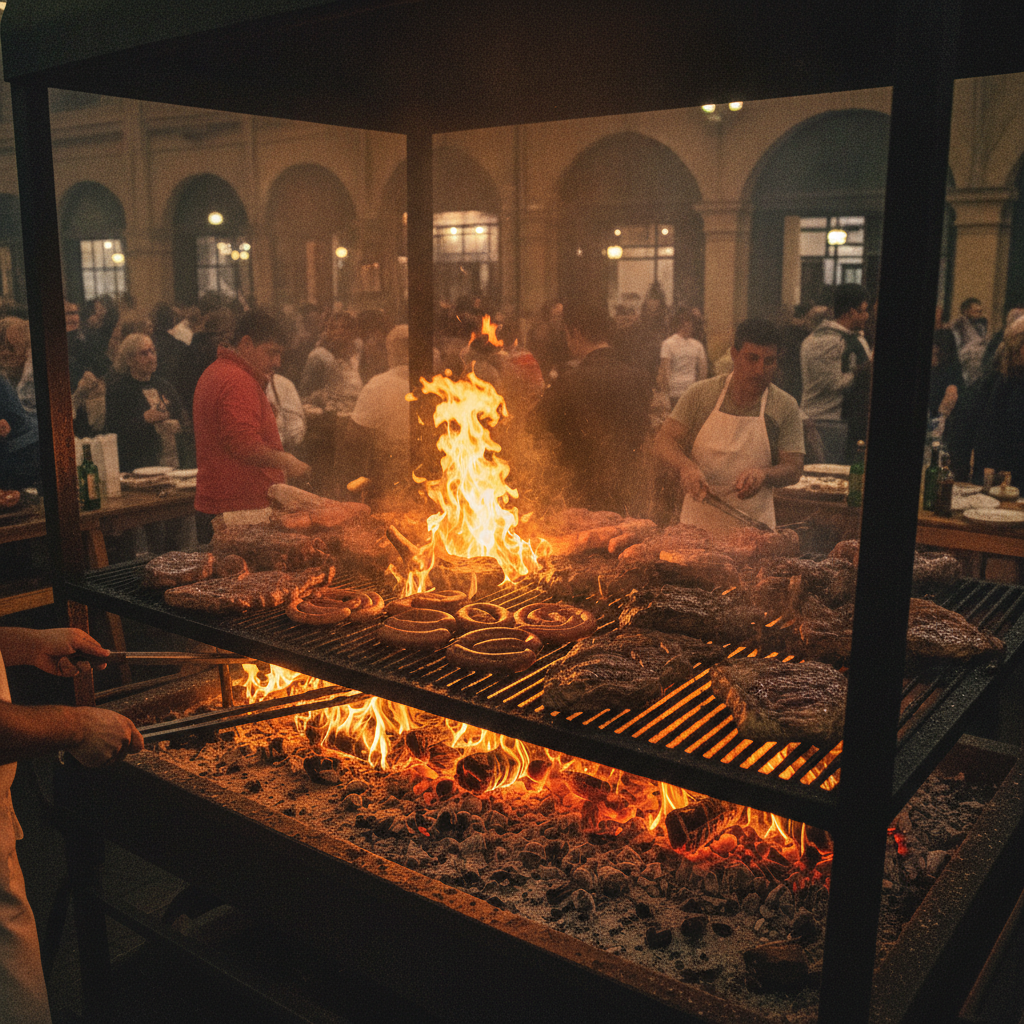
The Uruguayan asado, the social institution of grilling beef over wood or charcoal for a gathering of family or friends, is as close to a religious practice as any secular activity in Uruguayan culture: the parrillero who manages the fire and the meat occupies a ritual position of authority, the process is slow and deliberate rather than rushed, and the quality of the result is discussed with the seriousness applied to fine wine in other cultures. Uruguay produces approximately 30 million cattle for a human population of approximately 3.4 million, giving it one of the most extreme cattle-to-human ratios in the world, and the quality of Uruguayan beef, raised on natural grass pastures on the rolling plains of the Uruguayan interior, is consistently ranked among the finest in the world alongside Argentine and Brazilian grass-fed beef. The asado in Uruguay is not a quick backyard barbecue but a multi-hour social event beginning in the afternoon with the fire preparation and ending in the early evening after multiple courses of different cuts. The sequence typically proceeds from embutidos sausages, morcilla blood sausage, and mollejas sweetbreads through the main beef cuts of vacio flank, tira de asado short rib, and entraña skirt steak. The parrilla in a Montevideo restaurant, where the same tradition is applied in a commercial context, is the standard format for casual dining throughout the city.
- 2
The Chivito: Uruguay's National Sandwich
The chivito, the Uruguayan national sandwich, was reportedly created in the early 1960s at a Montevideo restaurant called El Mejillon when a customer from the Argentine province of Córdoba requested a dish similar to chivito, kid goat, which the restaurant did not have. The owner improvised a sandwich of thin-sliced churrasco beef with ham, mozzarella cheese, lettuce, tomato, fried egg, and olives on a soft white roll, which the customer declared excellent; the combination became the signature Uruguayan sandwich and is now found throughout the country in variations ranging from the basic al pan version to the completo with multiple additional toppings. The chivito al pan costs a few hundred Uruguayan pesos at a basic sandwich shop; the restaurant version served on a plate with french fries and salad is more elaborate. The standard quality of the chivito depends primarily on the quality of the beef, which in Uruguay is generally high regardless of the venue; a roadside kiosk chivito in a small Uruguayan town is often as good as a restaurant version in Montevideo. The chivito has become a symbol of Uruguayan food identity in the same way that the asado defines the social eating culture, and Uruguayans abroad miss the chivito as a marker of home.
- 3
Dulce de Leche and the Uruguayan Sweet Tradition
Dulce de leche, the thick caramel spread made by slowly cooking sweetened milk until it reduces and caramelizes to a deep amber paste, is the foundational sweet of Uruguay and Argentina and the ingredient in the majority of Uruguayan pastries, desserts, and confections. Uruguay and Argentina contest the origin of dulce de leche with the same energy they apply to the tango debate, with each country claiming the authentic version; in practical terms, the Uruguayan version tends toward a slightly lighter color and thinner consistency than the Argentine. The alfajor, two soft cornstarch cookies filled with dulce de leche and rolled in powdered sugar or dipped in chocolate, is the most universal Uruguayan sweet snack, consumed as a dessert, a mid-morning snack, and a coffee accompaniment throughout the day and available at every bakery, supermarket, and kiosk in the country. The torta de cumpleanos birthday cake in Uruguay is almost invariably filled and frosted with dulce de leche. The chajá, a specifically Uruguayan dessert of sponge cake, dulce de leche, whipped cream, and peach slices topped with meringue pieces, originated in the Paysandu region and is considered the national dessert. The combination of European baking traditions brought by Italian, Spanish, and German immigrants with the local dulce de leche product created a distinctive Uruguayan pastry tradition.
- 4
Pasta on the 29th: Italian Heritage and the Gnocchi Ritual
The tradition of eating gnocchi on the 29th of each month is practiced universally in Uruguay, regardless of whether the household is of Italian descent, and involves placing money under the plate of gnocchi before eating to attract prosperity in the coming month. The tradition arrived with the massive Italian immigration of the late 19th and early 20th centuries, when approximately 100,000 Italians settled in Uruguay and profoundly shaped the national cuisine, but the gnocchi ritual has been adopted so completely by the broader Uruguayan population that it now functions as a distinctively Uruguayan custom rather than an Italian one. The 29th of the month is the most busy day for pasta restaurants in Montevideo; supermarkets display fresh gnocchi prominently; and the social ritual of placing coins, bills, or a combination under the plate is observed by people who have never thought about its Italian origin. The Italian immigration also established the pasta traditions of homemade tagliatelle, canelones stuffed pasta, and the Sunday pasta lunch culture that runs alongside the asado tradition. The Montevideo neighborhood of Pocitos has the highest concentration of Italian-heritage restaurants and pastry shops, some dating to the early 20th century and still operated by the same families.
- 5
Mercado del Puerto: Theater of Smoke and Fire
The Mercado del Puerto, the 19th century iron market hall adjacent to the Montevideo port that was repurposed from a produce market to a concentration of parrillas grilled meat restaurants, is the most theatrical and tourist-visible eating experience in Montevideo: a wood-framed iron market structure filled with multiple competing asado restaurants, each with its own massive open parrilla grill burning real wood fires, visible from the restaurant entrance and producing a smoky environment that permeates the clothing of everyone who enters. The market opens primarily for lunch and closes by mid-afternoon; arriving at peak lunch hours on a weekday involves navigating the competing offers of waiters from each restaurant positioned at the market entrance to attract customers. The food at Mercado del Puerto restaurants is genuinely good if tourist-priced: the standard combination of a mixed asado platter with short rib, skirt steak, sausage, and black pudding, served with chips and salad and accompanied by Uruguayan Tannat wine, represents the full expression of the Uruguayan meat culture in a single meal. The market structure itself, designed by the Uruguayan engineer Bernardo Poncini and completed in 1868, is an excellent example of 19th century iron prefabrication architecture and retains its original market character.
- 6
Tannat Wine and the Uruguayan Wine Country
Uruguay is the fourth-largest wine producer in South America behind Argentina, Chile, and Brazil, and its distinctive contribution to the wine world is the Tannat grape, a variety originating in the Madiran region of southwestern France that arrived in Uruguay with Basque immigrant farmers in the late 19th century and has become the country's signature red variety, now responsible for approximately 30 percent of Uruguayan wine production. The Tannat grape, which produces wines of deep color, firm tannin, and aging potential in its French home, has adapted in the maritime climate of Uruguay to produce wines that are typically richer in fruit and rounder in tannin than the French original while maintaining the variety's characteristic structure. The Uruguayan wine regions are concentrated in the departments of Canelones, immediately surrounding Montevideo, and Maldonado near Punta del Este, both in the southern coastal area where the Atlantic maritime influence moderates temperatures. Several Uruguayan wineries offer visitor facilities including tastings, restaurant meals, and accommodation in the wine country accessible as a day trip from Montevideo. The combination of Uruguayan grass-fed beef and Tannat wine is promoted as the national food pairing, and the two products together represent Uruguay's most distinctive gastronomic identity in international markets.
Walk this route with audio
Stories play automatically as you reach each stop — no tapping needed.
More in Montevideo
Montevideo Architecture and Neighborhoods: Art Deco, Pocitos, and the Coastal Suburbs

Montevideo: The Rambla, Tango, and the Most Liveable Capital in Latin America
Montevideo Practical Guide: Getting There, Transport, Buenos Aires Ferry, and Uruguay Circuit
Montevideo Carnival: The Longest Carnival in the World and the Murga Tradition