Montevideo: The Rambla, Tango, and the Most Liveable Capital in Latin America
Montevideo, the capital and only major city of Uruguay with approximately 1.4 million residents in the metropolitan area, spreads along the northern shore of the Rio de la Plata estuary where the Uruguay and Parana rivers meet the Atlantic, giving it a coastal character unlike any other South American capital. The city consistently ranks as the most liveable city in Latin America in quality of life surveys, reflecting Uruguay's progressive social policies, high levels of social equality by regional standards, functional public institutions, and a relaxed urban culture that values quality of life over economic growth. The 22-kilometer Rambla coastal promenade is the defining public space of Montevideo, where residents jog, cycle, fish, and socialize at all hours. Tango, shared with Buenos Aires across the estuary, claims Uruguayan roots in the conventillo tenement houses of Montevideo's port neighborhood.
- 1
The Rambla: 22 Kilometers of Coastal Urban Life
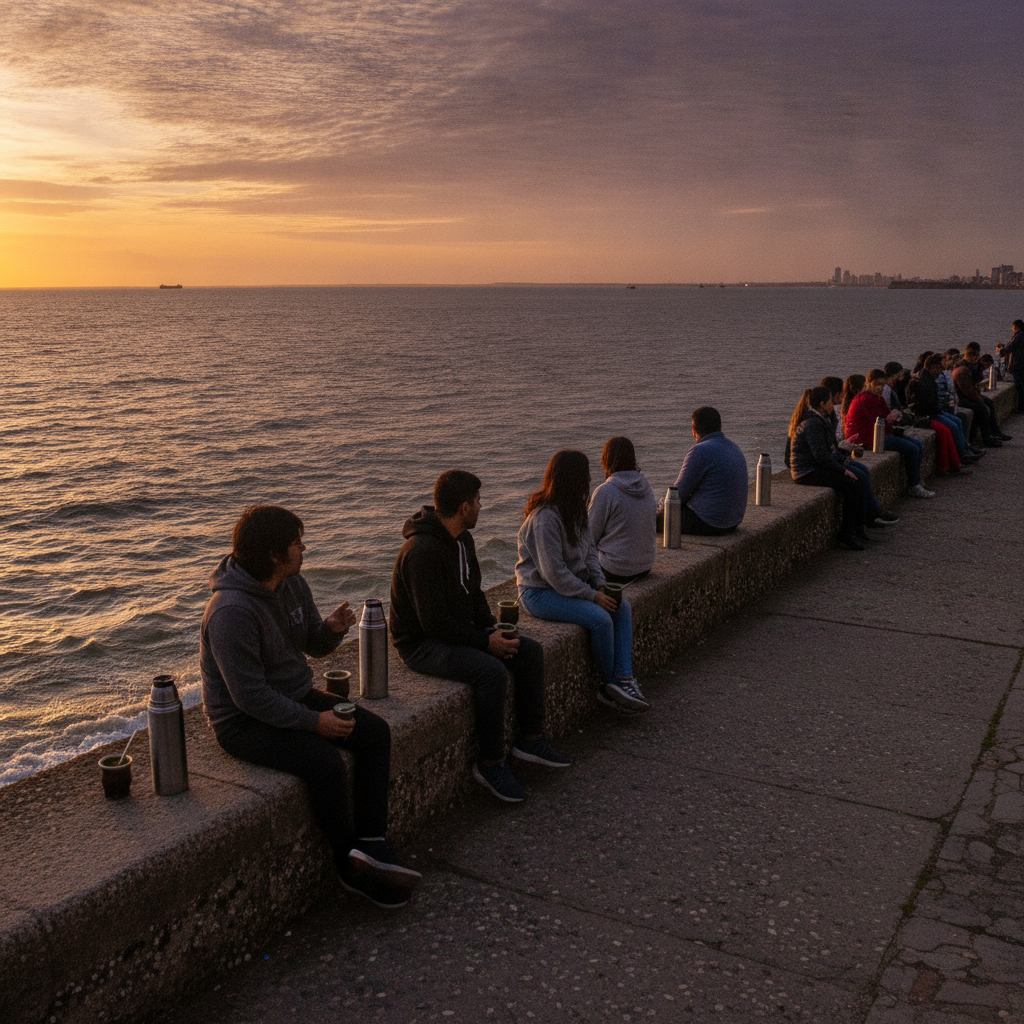
The Rambla de Montevideo, the coastal promenade that extends for 22 kilometers along the Rio de la Plata shore from the Ciudad Vieja in the west to the Carrasco neighborhood in the east, is the most important public space in Uruguay and the physical expression of the relationship between Montevideo and its river-sea. The Rambla is not a beach promenade in the conventional resort sense but a wide multi-lane coastal road with a broad sidewalk and sea wall on the river side, used by Montevideans of all ages and social backgrounds for jogging, cycling, walking dogs, fishing from the rocks, sitting on the seawall with a thermos of mate, and socializing at the benches and small plazas that punctuate its length. The river water is often murky with sediment from the Rio de la Plata and is not consistently swimmable at the urban sections; the beach sections at Pocitos, Buceo, and Carrasco to the east are the primary summer bathing beaches. The Rambla changes character dramatically across its length: the Ciudad Vieja section is flanked by historic port architecture; the Pocitos section has the high-rise residential towers of the upper-middle-class neighborhood above; the Carrasco eastern end approaches the weekend resort atmosphere of the affluent eastern suburbs. The Rambla is the place to understand Montevideo before visiting any specific attraction.
- 2
Ciudad Vieja: The Colonial Core and Port Heritage
The Ciudad Vieja, the old city peninsula that forms the historic core of Montevideo, was the original walled colonial settlement founded by Spanish forces in 1724 as a military fortification to counter Portuguese expansion in the Rio de la Plata. The walls were largely demolished in the 19th century as the city expanded, but the colonial and early republican building stock of the Ciudad Vieja survives in various states of preservation, with fine examples including the Cabildo, the Cathedral, the Teatro Solis opera house, and the Art Deco and neoclassical commercial buildings of the Sarandi pedestrian street. The Plaza Independencia, at the boundary between the Ciudad Vieja and the newer city, contains the equestrian statue of Jose Artigas, the founding hero of Uruguayan independence, and the mausoleum below the plaza where his remains are kept. The Mercado del Puerto, the covered iron market hall adjacent to the historic port, contains the most famous parrillas, grilled meat restaurants, in Montevideo, with massive wood fires visible through the open market structure and waiters navigating the smoke-filled interior with platters of chivito, asado, and mixed grills. The Ciudad Vieja has been the subject of ongoing gentrification and cultural investment, with the conversion of former warehouses into galleries and the establishment of artisan workshops and design studios alongside the historic institutional buildings.
- 3
Uruguayan Tango: The Conventillo Roots and the Montevideo Claim
The origins of tango are one of the most contested cultural history questions in the Rio de la Plata, with Buenos Aires and Montevideo each asserting primary claim to the birthplace of the music and dance that became the most internationally recognized cultural export of the region. The Uruguayan claim centers on the conventillos, the crowded tenement houses of the Montevideo port neighborhood called the Barrio Sur and Palermo, where Italian and Spanish immigrants mixed with African-descended Uruguayans to create the musical and social conditions from which tango emerged in the late 19th century. The candombe, the Afro-Uruguayan drumming tradition brought by enslaved Africans and their descendants, contributed rhythmic elements to the early tango that distinguish the Uruguayan interpretation from the Argentine one. The Uruguayan tango composer and lyricist Gerardo Matos Rodriguez wrote La Cumparsita in Montevideo in 1916, and the piece became the most internationally recognized tango composition in history; the Uruguayan side points to this as evidence of the Montevideo contribution. The Milonga, one of the antecedents of tango, also has strong Uruguayan associations. The tango tradition in Montevideo is maintained through milongas, informal dance events, in venues throughout the city and through the summer Carnival period when the street candombe drumming provides the percussive backdrop to the tango season.
- 4
Candombe: The Afro-Uruguayan Drumming Tradition
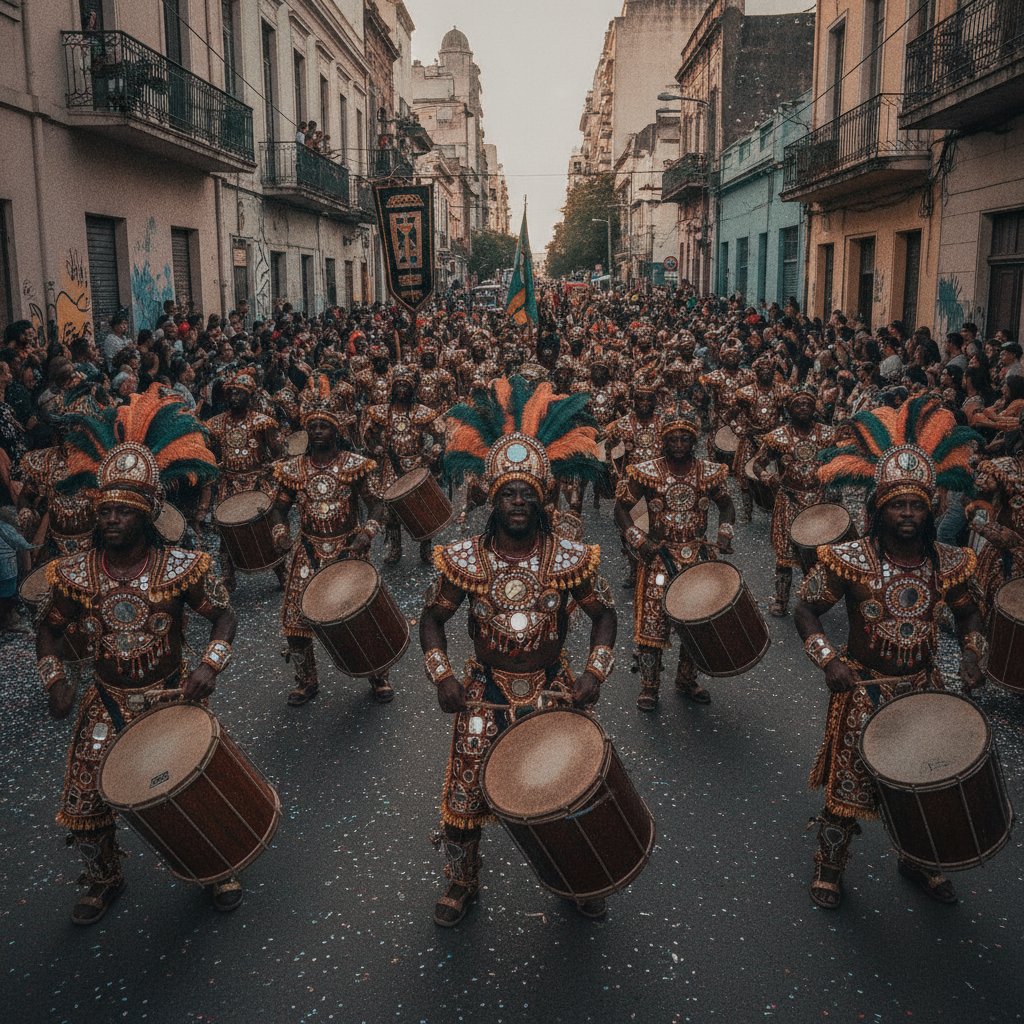
Candombe, the percussion-driven music of the Afro-Uruguayan communities descended from enslaved Africans brought to the Rio de la Plata region, is recognized by UNESCO as an Intangible Cultural Heritage of Humanity and is the most distinctively Uruguayan cultural contribution to the global musical heritage. The music is played on three types of drum, the piano bass drum, the chico highest drum, and the repique medium drum, in ensembles called cuerda that march through the streets of Montevideo's Barrio Sur and Palermo neighborhoods in the llamadas, the drum call processions that are the central public expression of the candombe tradition. The Llamadas festival, held during the February Carnival period, is the most spectacular public expression of candombe, with dozens of cuerda from different groups called comparsas marching through the barrio streets in a competition of musical intensity, dance, and elaborate costuming. The candombe tradition has persisted through periods of active suppression during colonial slavery, through subsequent marginalization, and through the military dictatorship of 1973 to 1985 that banned public gatherings; its survival and revitalization is credited to the community transmission within the Afro-Uruguayan families of the Barrio Sur and Palermo. Contemporary Uruguayan popular music, including the rock-candombe fusion, incorporates candombe rhythms in ways that have brought the tradition to younger Uruguayan audiences.
- 5
Mate Culture: The Social Ritual of the Rambla
The mate, a hot beverage made by steeping the dried leaves of the yerba mate plant in hot water in a hollow gourd and drinking through a metal straw called a bombilla, is the defining social ritual of Uruguay and Argentina, and in Montevideo the practice is so embedded that the sight of a person walking along the Rambla with a thermos of hot water under one arm and a gourd in hand is as characteristic of the city as any architectural landmark. Uruguay has the highest per capita mate consumption in the world, with average consumption of over 8 kilograms of yerba per person per year. The gourd, bombilla, and thermos are considered personal equipment as essential as a wallet and phone; mate thermoses are sold everywhere from supermarkets to design shops, and the gourd and bombilla are often decorated or personalized. Mate is drunk alone, shared with family and friends in a circle where the same gourd is passed from person to person, refilled from the thermos after each person drinks, and the order and etiquette of passing the mate in a group are specific: the cebador, the person preparing and refilling the mate, passes it to each person in order and the gourd is returned after drinking without comment unless one has finished, in which case saying gracias indicates no more is wanted. Offering mate to a visitor is a gesture of inclusion and friendship; refusing without an explanation is considered slightly rude.
- 6
Mercado Agricola and the Montevideo Food Culture
The Mercado Agricola de Montevideo, a large 19th century iron market structure in the Villa Dolores neighborhood restored and reopened in 2013, is the best place to encounter the full range of Uruguayan food culture in a single visit, combining fresh produce vendors selling the vegetables and fruits of the Uruguayan countryside with artisan food producers, a food court of prepared food stands representing Uruguayan and international cuisines, a craft beer section, and the weekend market atmosphere that makes it a social destination as much as a practical shopping venue. The Uruguayan food tradition is built primarily around beef, the asado grilled meat culture that dominates social eating, and the chivito, the Uruguayan national sandwich of thin-sliced churrasco beef with ham, mozzarella, tomato, egg, and olive or mayonnaise on a soft roll that is simultaneously a fast food item and a serious gastronomic object of local pride. The Mercado del Puerto in the Ciudad Vieja offers the most theatrical asado experience, with massive parilla grills cooking over wood fires in the enclosed iron market while diners eat at communal tables; the prices are tourist-oriented but the experience is genuine. The Montevideo restaurant scene beyond the asado tradition includes strong Italian heritage cuisine, notable for the pasta traditions brought by the waves of Italian immigration in the late 19th century, and a growing contemporary cuisine scene in the Punta Carretas and Pocitos neighborhoods.
Walk this route with audio
Stories play automatically as you reach each stop — no tapping needed.
More in Montevideo
Montevideo Architecture and Neighborhoods: Art Deco, Pocitos, and the Coastal Suburbs
Montevideo Food: Asado, Chivito, Dulce de Leche, and the Uruguayan Table
Montevideo Practical Guide: Getting There, Transport, Buenos Aires Ferry, and Uruguay Circuit
Montevideo Carnival: The Longest Carnival in the World and the Murga Tradition