Poutine, Smoked Meat & Montreal's Extraordinary Food Culture
Montreal's food culture (the culinary tradition of a city that has produced two of the most distinctively Canadian foods (the poutine and the Montreal smoked meat sandwich), the finest bagels in the world (according to virtually every bagel expert who has written on the subject), and a restaurant scene of exceptional quality driven by the city's French cultural heritage and its multi-ethnic immigrant communities): Montreal is the most exciting food city in Canada and one of the most underrated food cities in the world.
- 1
Schwartz's Hebrew Delicatessen — The Greatest Smoked Meat in the World
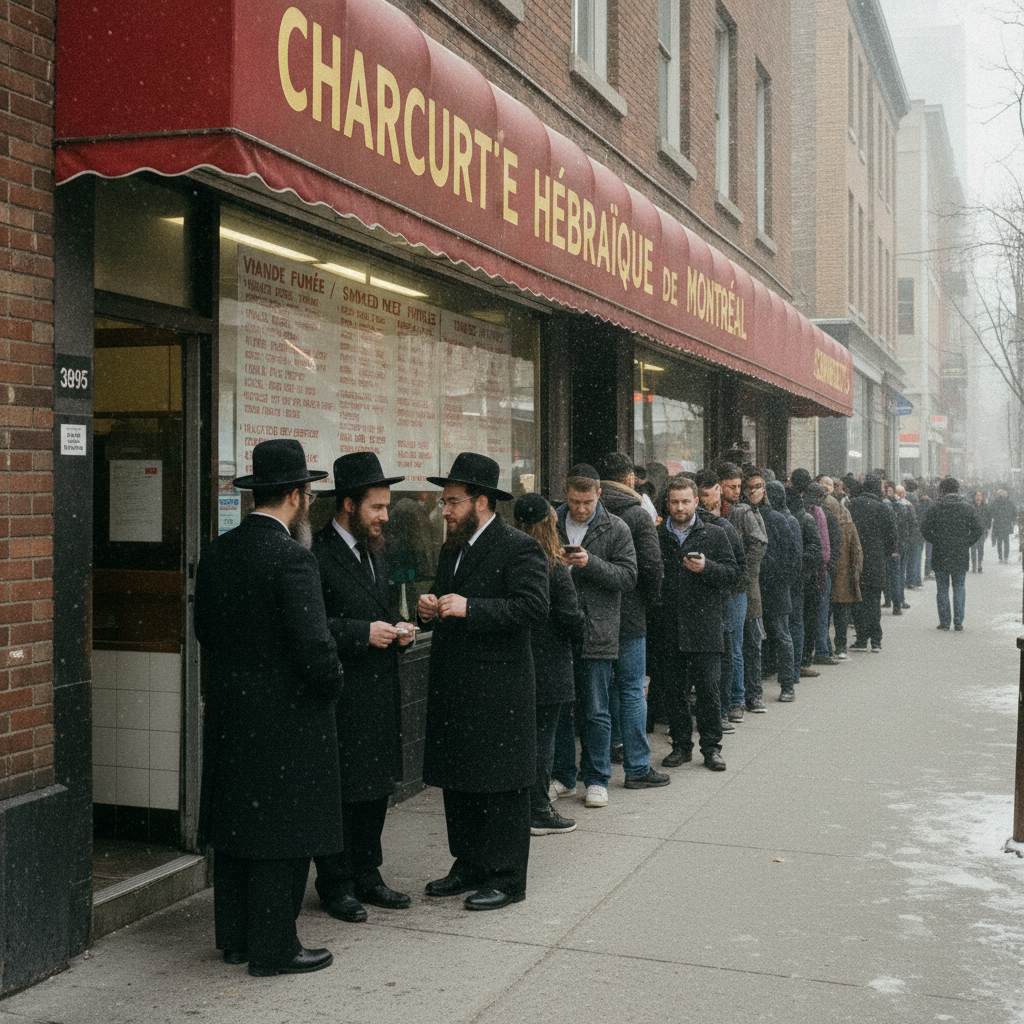
Schwartz's Charcuterie Hébraïque de Montréal (3895 Boulevard Saint-Laurent, Mile End — the Hebrew delicatessen established 1928 by Reuben Schwartz, a Romanian Jewish immigrant, in the Mile End neighbourhood of Montreal): the Montreal smoked meat (the 'viande fumée' — the cured and smoked beef brisket that is Montreal's equivalent of the New York pastrami and the most celebrated cured meat product in Canada): the Schwartz's process (the brisket (the USDA or Canadian equivalent-graded beef brisket, the pectoral muscle of the cattle) that is cured for 8-10 days in Schwartz's proprietary dry rub (the mixture of black pepper, garlic, coriander, and numerous other spices — the exact recipe has been kept secret since 1928), then smoked for 8-10 hours in the wood-fired smokers in the back of the delicatessen, then steamed for several hours until tender): the sandwich (the Schwartz's smoked meat sandwich — the impossibly tall pile of hand-sliced medium-fat smoked meat (the customer specifies the fat content: 'lean', 'medium', 'medium-fat', or 'fat' — the food experts who have written extensively about Schwartz's unanimously recommend 'medium-fat' as the optimal specification, since the fat provides the moisture and flavour that makes the sandwich exceptional) on two slices of rye bread (the deli rye bread, not the caraway seed rye (the 'Jewish rye') of New York delis) with yellow mustard (Schwartz's smoked meat is served with yellow ballpark mustard only — no other condiment is available or appropriate)): the experience (the communal tables, the shared plates, the no-alcohol policy (Schwartz's does not serve alcohol and does not allow alcohol to be brought in), the indifferent service (the service at Schwartz's is famously brusque — the servers are efficient but not warm, a characteristic of the authentic deli experience)).
- 2
La Banquise — Montreal's Premier Poutine Restaurant
La Banquise (994 Rue Rachel Est, Plateau-Mont-Royal — the poutine restaurant established 1968 (originally as an ice cream parlour, converted to a poutine restaurant in 1968), operating 24 hours a day, 7 days a week (one of the few restaurants in Montreal that never closes) — the restaurant with the widest selection of poutine variations of any restaurant in Montreal (approximately 30 different poutine combinations on the menu)): the poutine (the 'poutine' — the Quebec dish consisting of French fries (the 'frites' — the hand-cut, twice-fried potato fries (the preferred style for poutine is a medium-cut fry that is crispy on the outside and still has some give on the inside — not the thin, uniformly crispy fast food fry and not the thick, soft 'steak fry')) topped with cheese curds (the 'fromage en grains' — the fresh, slightly rubbery, squeaky cheese curds made from the morning's production at a Quebec dairy, the curds that have not been pressed or aged, the curds that 'squeak' against the teeth when bitten — the squeaking is the test of freshness) and covered with hot beef (or chicken) gravy (the gravy that partially melts the cheese curds while leaving them in recognizable pieces — the balance of melting and squeaking is the hallmark of the perfectly executed poutine)): the La Banquise specialties (the 'T-Rex' poutine (the poutine with bacon, pepperoni, and smoked meat in addition to the standard cheese curds and gravy — the most ordered poutine at La Banquise), the 'Kamikaze' (the poutine with ground beef, green peppers, mushrooms, and jalapeños), and the 'Rachel' (the poutine with bacon, mushrooms, green peppers, and onions — named for the street the restaurant is on)).
- 3
Fairmount Bagel & the Montreal Bagel
Fairmount Bagel (74 Avenue Fairmount Ouest, Mile End — the bagel bakery established 1919 (the oldest continuously operating bagel bakery in Montreal and one of the oldest in North America), operating 24 hours a day, 7 days a week): the Montreal bagel (the 'bagel montréalais' — the distinctive bagel style developed in Montreal by Jewish immigrant bakers from Eastern Europe in the early 20th century, distinct from the New York bagel in several fundamental ways: the Montreal bagel is smaller and thinner (the typical Montreal bagel is approximately 9 cm (3.5 inches) in diameter vs. the New York bagel's 12 cm (4.7 inches)); it is denser and chewier (the Montreal bagel dough contains less water and no salt (the traditional Montreal bagel recipe uses only flour, yeast, eggs, oil, and a generous amount of honey or malt sugar)); it is sweeter (the honey or malt sugar in the dough gives the Montreal bagel a distinctly sweeter flavour); and it is baked in a wood-fired oven (the traditional wood-fired oven (the 'fourneau au bois') that is still used at Fairmount Bagel and at its rival, St-Viateur Bagel (263 Rue Saint-Viateur Ouest — the bagel bakery established 1957 by Myer Lewkowicz, the Fairmount Bagel's closest competitor and the bagel bakery most preferred by Montreal residents (the 'Fairmount vs. St-Viateur' debate is the most passionate food debate in Montreal))): the varieties (the sesame (the most popular Montreal bagel), the poppy seed, and the plain).
- 4
Au Pied de Cochon — Martin Picard's Temple of Quebec Excess
Au Pied de Cochon (536 Avenue Duluth Est, Plateau-Mont-Royal — the restaurant established 2001 by chef Martin Picard (the most celebrated and most influential Quebec chef of the 21st century), the restaurant that more than any other has defined the current identity of Montreal restaurant cooking): the Au Pied de Cochon concept (the restaurant whose name translates as 'At the Pig's Foot' — the restaurant dedicated to the excess, richness, and carnivorous abundance of traditional Quebec cuisine, the 'pied de cochon' (the braised pig's trotter) being the emblem of the nose-to-tail philosophy that Picard practises): the signature dishes (the 'PDC foie gras poutine' — the poutine topped with a whole lobe of seared Quebec foie gras in addition to the cheese curds and gravy (the single most excess dish in the history of Montreal restaurant food, and the dish most associated with Martin Picard's restaurant in the popular imagination); the 'Canard en Conserve' (the 'Duck in a Can' — the whole duck served in a sealed can that is opened tableside, releasing the steam and the aromas of the duck braised with foie gras and vegetables inside, the most theatrically presented dish in Montreal); and the 'Côte de bœuf' (the massive bone-in rib of beef served for two or four)): the Cabane à Sucre (the seasonal sugarhouse ('Sugar Shack') that Martin Picard operates at his farm in Saint-Benoît-de-Mirabel, north of Montreal, each spring (late February through April) — the annual maple syrup season event that has become the most coveted dining reservation in Quebec, offering a prix-fixe menu of maple syrup-drenched Quebec dishes.
- 5
Chinatown & the Saint-Laurent Boulevard Multicultural Mile
Boulevard Saint-Laurent (the 'Main' — the informal name for Boulevard Saint-Laurent, the street that has historically divided Montreal linguistically (French-speaking East Montreal vs. English-speaking West Montreal) and that has served as the primary settlement street for successive waves of immigrants to Montreal since the late 19th century — the Jewish immigrants (the 'Main Street' of the Jewish Mile End neighbourhood from the 1880s through the 1960s), the Italian immigrants (the Italians of Little Italy, immediately north of the Mile End, who established the Italian community of Boulevard Saint-Laurent in the early 20th century), the Portuguese immigrants, the Greek immigrants, and the current wave of young Quebecers who have established the restaurant and bar scene that makes Saint-Laurent one of the finest dining and nightlife streets in Canada): Chinatown (the Montreal Chinatown — the small but dense Chinese neighbourhood bounded by René-Lévesque Boulevard, Viger Avenue, Jeanne-Mance Street, and Saint-Urbain Street in the Ville-Marie borough, immediately north of Old Montreal — the oldest surviving Chinatown in Canada, established in the 1860s by Chinese workers who came to Montreal after the completion of the Canadian Pacific Railway): the Chinatown experience (the Gate (the ceremonial entrance gates on Rue de la Gauchetière — the most visible element of Montreal's Chinatown) and the restaurants and herbalists on Rue de la Gauchetière (the pedestrianized street that is the heart of Montreal's Chinatown)).
- 6
Montreal's Craft Beer Scene & Mile End Bars
Montreal's craft beer scene (the beer culture of a city that is the most bar-dense city in Canada (more bars and licensed restaurants per capita than any other Canadian city) and that has produced some of the finest craft breweries in the country): the Montreal craft beer tradition (Montreal has been a centre of craft brewing since the late 1980s, when the Unibroue brewery (the brewery founded 1990 in Chambly, Quebec, now a major Quebec craft brewery known for the La Fin du Monde (the triple ale named 'the end of the world'), the Maudite (the 'damned one' — the amber ale named for the Quebec legend of the 'chasse-galerie' (the flying canoe of the Quebec folk tradition)), and the Trois-Pistoles (the dark strong ale)) pioneered Quebec craft brewing): the craft breweries (Dieu du Ciel! (29 Avenue Laurier Ouest, Mile End — the brewpub established 1998, the most critically acclaimed small brewery in Quebec, known for its experimental and seasonal beers including the Péché Mortel (the imperial coffee stout — the beer that is consistently rated among the top 10 stouts in the world by RateBeer and BeerAdvocate)), Benelux (245 Rue Sherbrooke Ouest — the downtown Montreal brewpub with the widest selection of house-brewed beers), and Le Cheval Blanc (809 Rue Ontario Est — the bar established 1986, the first brewpub in Quebec and one of the first in Canada, the granddaddy of the Montreal craft beer scene)): the terrasse culture (the outdoor café terrace culture of Montreal — the 'terrasse' (the outdoor terrace of a Montreal café or bar, which operates from May through October and is the primary social gathering space of the city during the Montreal summer, when the city compensates for its brutal winter with an intensity of outdoor socializing that is unmatched in any other Canadian city)).
Walk this route with audio
Stories play automatically as you reach each stop — no tapping needed.
More in montreal
Montreal in Winter — Skating, Snowshoeing & Embracing the Cold
Montreal's Gay Village, Pride Festival & LGBTQ+ Culture
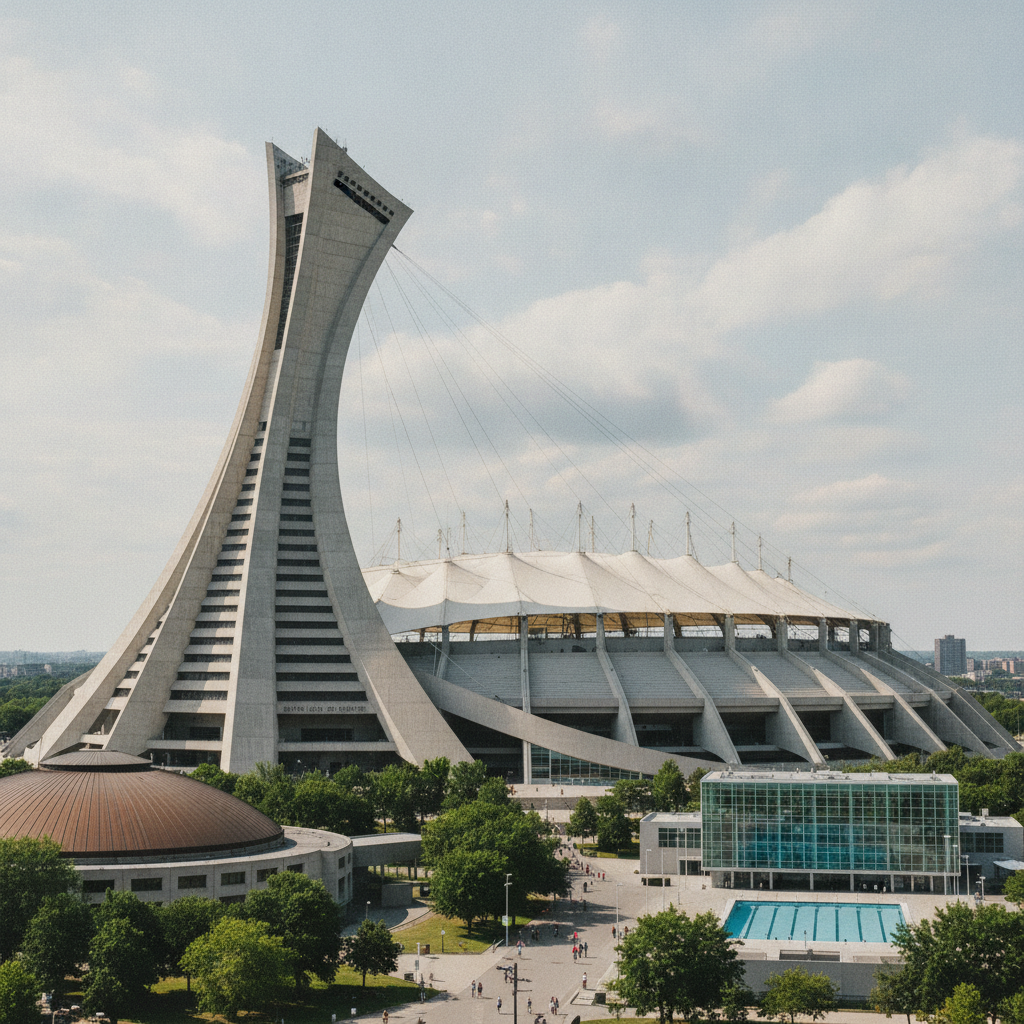
The Olympic Stadium, Biodôme & Parc Jean-Drapeau
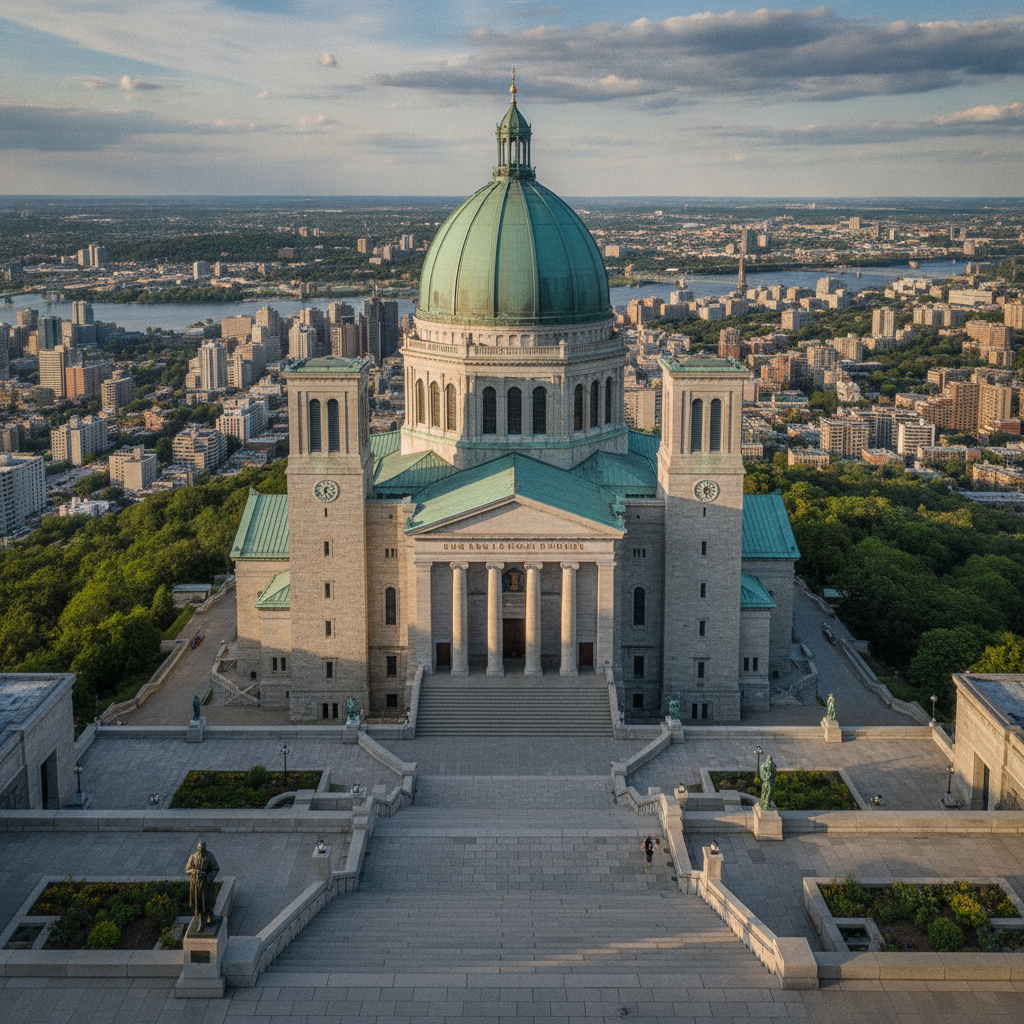
Saint Joseph's Oratory, Brother André & Montreal's Religious Heritage
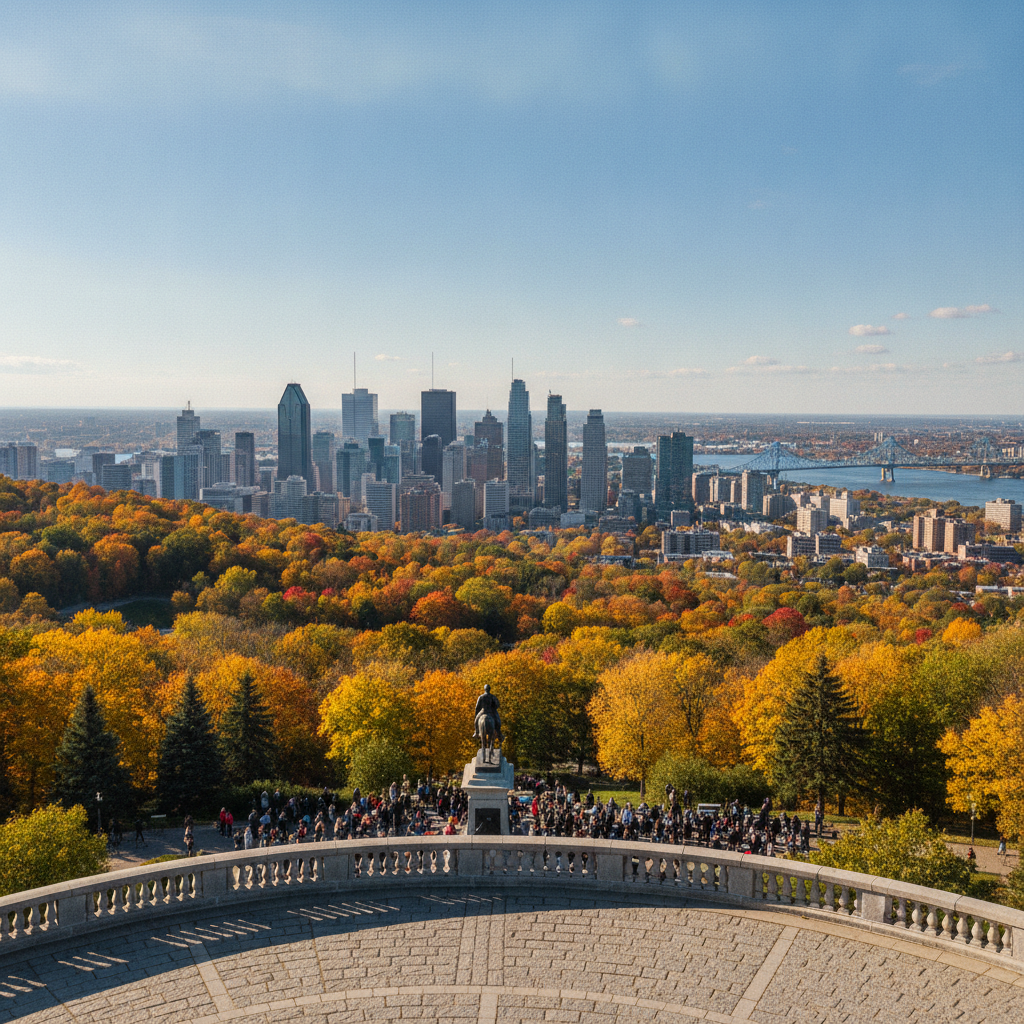
Mount Royal Park, the Plateau & Montreal's Bohemian Heart