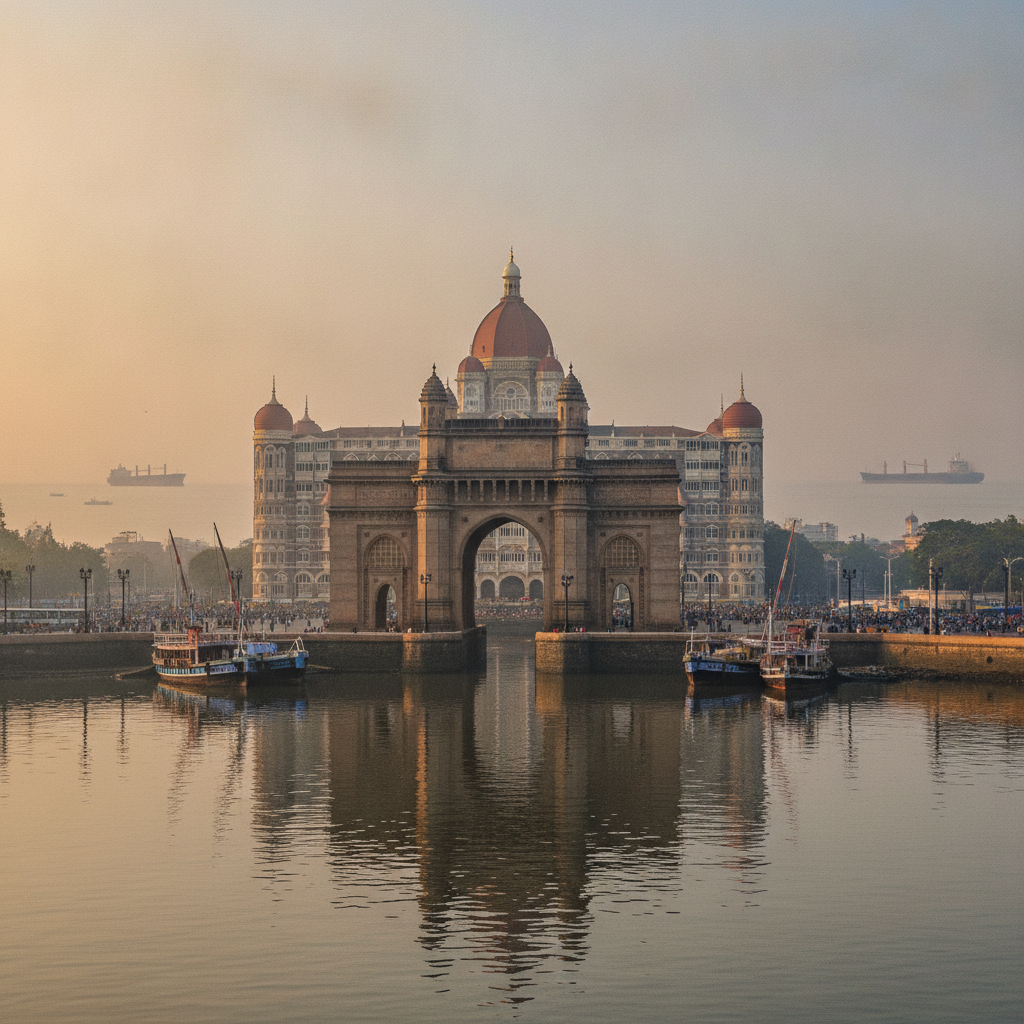
Chhatrapati Shivaji Terminus, Art Deco Oval Maidan & Marine Drive
The Victorian Gothic and Art Deco architectural heritage of South Mumbai — the UNESCO World Heritage Victorian Gothic CST railway station (1888), the Art Deco buildings of the Oval Maidan precinct (the world's second largest concentration of Art Deco buildings after Miami Beach), and Marine Drive (the 3.6-kilometre seafront promenade known as the 'Queen's Necklace') — constitutes one of the finest urban architectural ensembles of the 19th and 20th centuries, also a UNESCO World Heritage Site since 2018.
- 1
CST — UNESCO Victorian Gothic Railway Terminus
Chhatrapati Shivaji Maharaj Terminus (CST, known as Victoria Terminus until 1996 — Dr. Dadabhai Naoroji Road, South Mumbai — the UNESCO World Heritage railway terminus built 1878-1888 by architect Frederick William Stevens in the Victorian Gothic style, the headquarters of the Central Railway): CST is the busiest railway station in Asia, handling approximately 3.5 million passengers per day (approximately 700 long-distance and 1,800 suburban train services); the building (inspired by St. Pancras station in London but incorporating Indian elements including chhajjas (stone sun-shades), jalis (stone lattice screens), and the pointed turrets and domes of the Mughal and Islamic traditions alongside the Gothic pointed arches and gargoyles) took 10 years to build and cost Rs. 16 lakhs (approximately £160,000 at the time); the central dome (55 metres) is surmounted by a cast-iron figure representing 'Progress' by the sculptor Thomas Earp; the UNESCO inscription (2004, jointly with the Victorian Gothic and Art Deco Ensembles of Mumbai 2018) recognizes CST as 'an outstanding example of Victorian Gothic Revival architecture in India, blending with themes deriving from Indian traditional architecture.'
- 2
Oval Maidan Art Deco Precinct — The World's Second Largest Art Deco District
Oval Maidan Art Deco Precinct (the large public ground (maidan) in South Mumbai, surrounded by the most concentrated collection of Art Deco buildings in Asia and the second most concentrated in the world after Miami Beach — UNESCO World Heritage Site since 2018, jointly inscribed with the Victorian Gothic buildings): the Art Deco buildings of Mumbai (built approximately 1930-1950, when Bombay was the second city of the British Empire and one of the wealthiest cities in the world) represent a distinctive 'Indo-Deco' style — Indian architects trained in Europe absorbed the international Art Deco style and adapted it to the Indian context by incorporating traditional Indian motifs (floral patterns, geometric symbols, sun burst designs in the manner of traditional Indian textile art) into the Art Deco vocabulary; the most celebrated buildings in the precinct include the Eros Cinema (1938), the Regal Cinema (1933), the New India Assurance Company Building (1936), and the dozens of residential apartment blocks on Warden Road and Marine Drive.
- 3
Marine Drive — The Queen's Necklace
Marine Drive (Netaji Subhash Chandra Bose Road — the 3.6-kilometre C-shaped seafront boulevard running along the Backbay (the southern arc of Back Bay between Nariman Point and Chowpatty Beach) — known as the 'Queen's Necklace' for the appearance of the street lights as a string of pearls when seen from the elevated vantage points of Malabar Hill at night): Marine Drive is the most romantic and most used public promenade in Mumbai, a broad pavement running the full length of the seafront between the Art Deco apartment buildings on one side and the low sea wall on the other, overlooking the open Arabian Sea; the drive (built on land reclaimed from the Backbay in 1920) is used continuously from before dawn (when joggers, yoga practitioners, and the elderly gather for morning exercise) through the afternoon and evening (families, couples, friends walking and sitting on the sea wall) to midnight and beyond (the insomniacs, the lovers, and the people-watchers of Mumbai for whom the Marine Drive sea wall is the primary public social space in the city centre).
- 4
Chowpatty Beach & the Ganesh Festival
Chowpatty Beach (the urban beach at the northern end of Marine Drive, at the foot of Malabar Hill — the social beach of central Mumbai, used almost exclusively by Mumbaikars rather than tourists, for picnicking, swimming, street food, and entertainment): Chowpatty is most famous for two things: the Ganesh Chaturthi Festival (the 10-day Hindu festival celebrating the birth of the elephant-headed god Ganesh, celebrated in Mumbai with extraordinary intensity — at the conclusion of the festival, enormous plaster-of-Paris statues of Ganesh (some 7-8 metres tall) are carried through the streets in procession and immersed in the sea at Chowpatty Beach in a ceremony called Ganpati visarjan, with an estimated 150,000 statues immersed in Mumbai's waters on the final day (Anant Chaturdashi) — the most spectacular public religious event in Mumbai, when the entire population of the city seems to converge on the waterfront), and the Chowpatty street food scene (bhel puri, sev puri, pani puri, pav bhaji, and kulfi ice cream — the classic Mumbai street snacks).
- 5
Malabar Hill — Hanging Gardens & the Towers of Silence
Malabar Hill (the affluent residential headland at the northern end of Marine Drive, the most expensive real estate area in India and one of the most expensive in Asia, home to the Governor of Maharashtra's official residence (Raj Bhavan), the Chief Minister's official residence, and the densest concentration of heritage bungalows in Mumbai): the Hanging Gardens (Pherozeshah Mehta Gardens — the formal terraced gardens on the summit of Malabar Hill (60 metres), built over the municipal water reservoirs in 1881, with topiary animals and a splendid view over Marine Drive and the Queen's Necklace) and the Kamala Nehru Park (the adjacent park with the famous 'Old Woman's Shoe' children's park installation and the best public view over Marine Drive from above) are the most accessible public attractions on Malabar Hill; the Doongerwadi (the Towers of Silence — the traditional Zoroastrian sky burial towers on the forested ridge of Malabar Hill, where the Parsi Zoroastrian community of Mumbai has practiced their traditional sky burial (exposing the dead to vultures on the circular platforms of the towers) for approximately 300 years) is one of the most unique aspects of Mumbai's extraordinary cultural diversity.
- 6
Banganga Tank & the Walkeshwar Temple Complex
Banganga Tank (the ancient sacred tank (stepped water reservoir) at Walkeshwar on the western slope of Malabar Hill, believed to date to approximately the 12th century CE and surrounded by a complex of over 130 temples): Banganga is one of the most extraordinary urban sacred sites in India — a large rectangular tank of sacred water (said to have been created when Lord Rama shot an arrow (bana) into the earth and the Ganges (Ganga) emerged) surrounded by ghats (stepped bathing platforms) and the largest concentration of temples in South Mumbai; during morning and evening puja (worship), the tank complex comes alive with the sound of temple bells, the smell of incense and marigold garlands, priests performing rituals, and devotees bathing in the sacred water — creating a scene that has remained essentially unchanged for centuries, surrounded by some of the most expensive real estate in the world.
Walk this route with audio
Stories play automatically as you reach each stop — no tapping needed.
More in mumbai
Juhu Beach, Bollywood Villas & the North Mumbai Coastline
Mumbai Street Food — Vada Pav, Pani Puri, Irani Cafés & Bombay Cuisine
Dharavi, Dhobi Ghat & Mumbai's Local Train — City of Extraordinary Contrasts
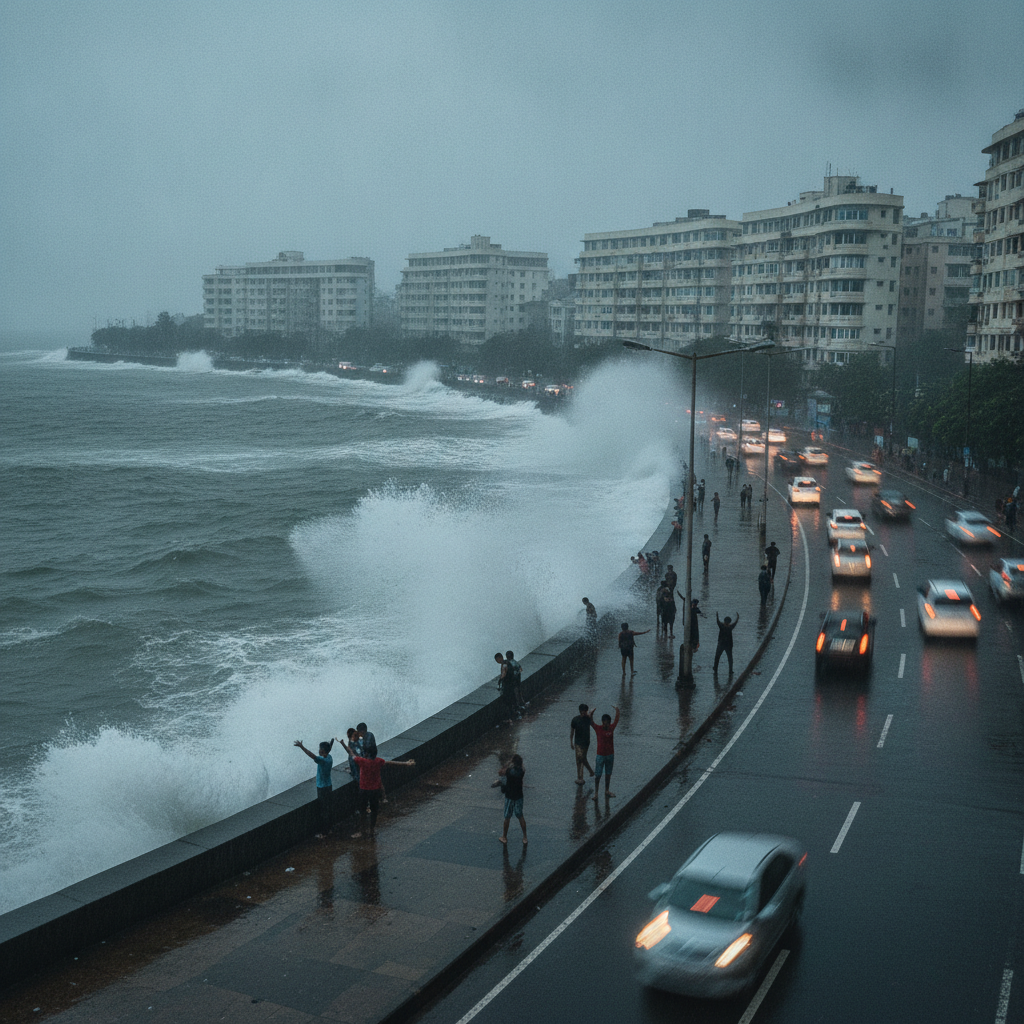
Mumbai Monsoon — The City That Celebrates the Rain
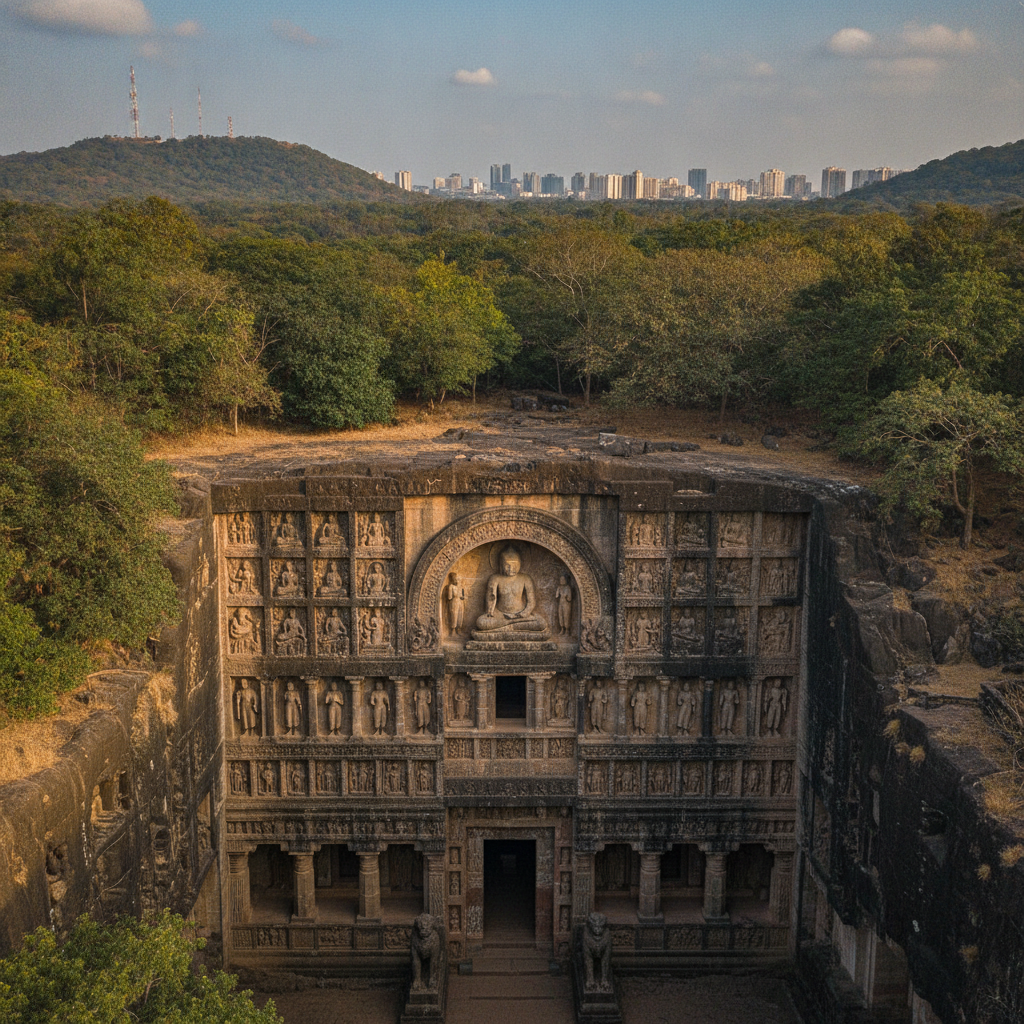
Kanheri Caves, Sanjay Gandhi National Park & Mumbai's Wild Side