Munich — Deutsches Museum, Pinakotheken, FC Bayern, Jewish History & Neighbourhoods
Munich's world-class museums, its honest reckoning with Nazi history, FC Bayern's iconic stadium, and the authentic neighbourhood villages of Haidhausen and the Glockenbach complete the city's portrait.
- 1
The Deutsches Museum — World's Largest Science Museum
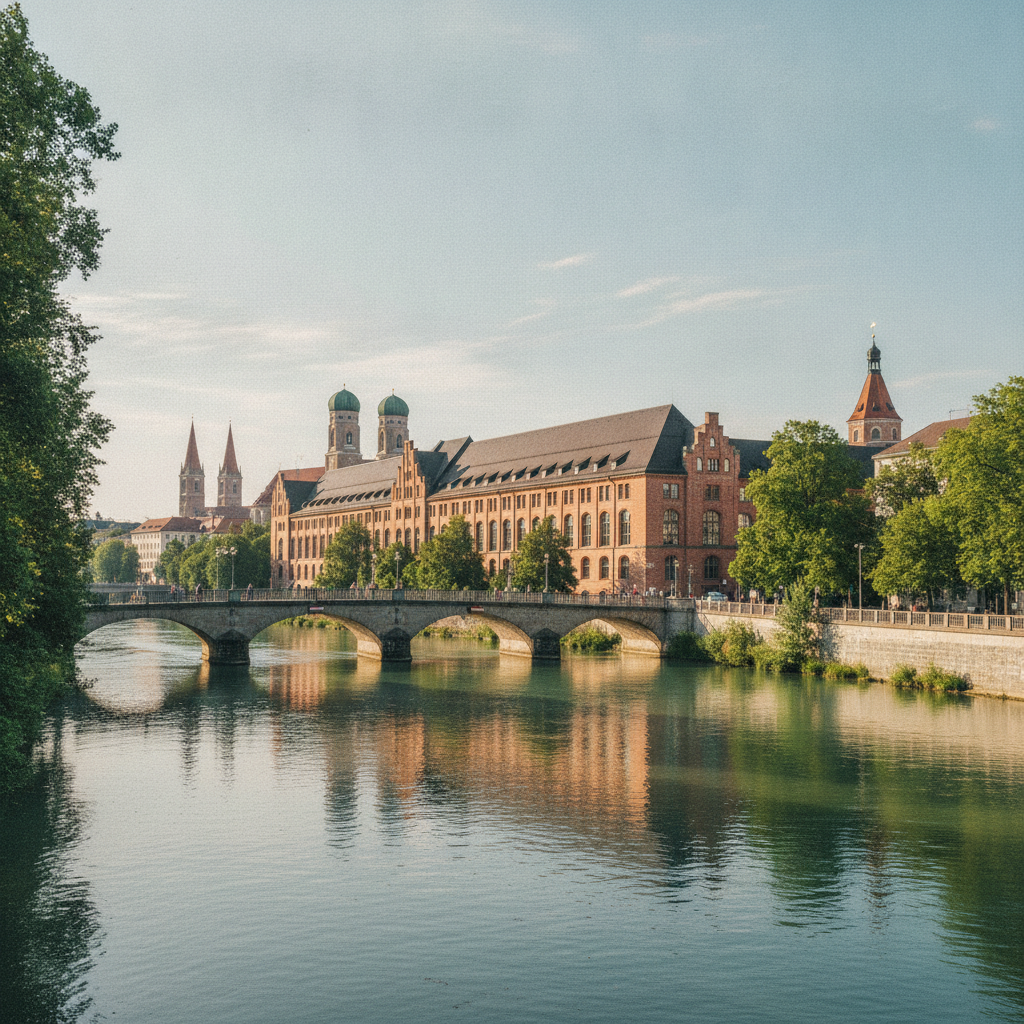
Deutsches Museum (the Deutsche Museum on the Museumsinsel island in the Isar River at Museumsinsel 1, the world's largest science and technology museum at 73,000 square metres across 8 floors — the collection of 28,000 exhibited objects the largest single technical collection in the world, €15 adults, daily 9am-5pm): the aerospace hall (the original V2 rocket — the German ballistic missile of 1944 at 14m height displayed vertically, the most dominating single artefact in the museum; the Ju 52 Junkers transport aircraft of 1932 in original condition; and the Bf 109 Messerschmitt fighter of 1936 the most historically significant single warplane in the aviation hall, the entire aerospace hall the most complete national aviation collection in Germany), the transport section (the Carl Benz Motorwagen of 1885 — the world's first purpose-built automobile displayed on the ground floor, the most historically important single vehicle in the world's automotive history; the German railway history section with the Adler locomotive of 1835 the oldest surviving German railway steam engine; and the 1900-era Munich tram car the most specifically Munich artefact in the transport hall), the underground mines (the walk-through salt and coal mines in the basement — the 1:1 replica underground mine galleries the most atmospherically complete mining exhibition in Europe, the coal mine shoring timbers, the coal-cutting equipment, and the mine ventilation the most experientially physical single exhibit in the Deutsches Museum, the most visited basement exhibit in any European science museum), the Enigma machine (the German WWII Enigma cipher machine in the telecommunications section — the cipher wheel device the most historically consequential single cryptographic object in the museum, the adjacent explanation of the Bletchley Park codebreaking the most comprehensible single-room codebreaking history in the world outside the Bletchley Park museum itself), the planetarium (the Zeiss Planetarium in the Ehrensaal building — the 1925 projection planetarium the third oldest still in operational use, the 30-minute program in German at €3 above the museum entry) and the Museumsinsel (the island location — the museum occupying the entire Museumsinsel island in the Isar River, the riverside terrace at the museum café the most relaxed island-position café seat in Munich, the Ludwigsbrücke the primary pedestrian approach from the Isartor).
- 2
The Pinakotheken — Three Centuries of European Art
Pinakotheken (the 3 Pinakothek galleries in the Kunstareal Munich — the most concentrated single museum complex for the European art history from the 14th century to the present in Germany): the Alte Pinakothek (the Old Pinakothek at Barer Strasse 27, the 1836 Klenze building — the collection of 700 exhibited works covering the 14th-18th century European masters, the essential holdings: Dürer's 'The Four Apostles' 1526 the largest surviving Dürer panel; Rubens' 'The Great Last Judgement' 1617 at 6m × 4.6m the most physically overwhelming single canvas in the gallery; and the Raphael 'Madonna della Tenda', CHF 7 adults, Sunday €1, Tuesday-Sunday 10am-6pm, Thursday to 8pm, the most architecturally distinguished art museum building in Germany), the Neue Pinakothek (the collection covering the 19th century from Romanticism to Jugendstil — the Van Gogh 'Sunflowers' 1888 the single most visited work, CHF 7 adults, closed for renovation — verify reopening date before visiting), the Pinakothek der Moderne (the Pinakothek of Modernity at Barer Strasse 40, the 2002 Stephan Braunfels building — the 4 collections under one roof: the Staatsgemäldesammlungen Modern Art, the Neue Sammlung Design Museum, the Architekturmuseum TU München, and the Staatliche Graphische Sammlung, the Beuys 'Fond VII' installation and the Warhol 'Mao' portraits the most discussed single works, CHF 15 adults, Tuesday-Sunday 10am-6pm, Thursday to 8pm), the Museum Brandhorst (the Brandhorst at Theresienstrasse 35a — the 2009 museum for the private collection of 1,200 works including the world's largest Cy Twombly collection, the building facade of 36,000 coloured ceramic rods the most visually distinctive museum exterior in Munich, CHF 10 adults) and the Glyptothek (the Glyptothek at Königsplatz 3 — the 1830 Klenze neoclassical museum built for the Aegina marbles (the most complete surviving Greek archaic pediment sculpture group) and the Barberini Faun (the sleeping satyr of c. 220 BCE the most sensuously expressive ancient sculpture in Germany), CHF 6 adults, Tuesday-Sunday 10am-5pm, Thursday to 8pm, the building and collection together the most complete surviving early 19th-century museum experience in the world).
- 3
The Maximilianstrasse and Munich's Shopping Districts
Munich shopping (Munich the most retail-diverse city in Germany — the Maximilianstrasse the primary luxury retail street, the Kaufingerstrasse-Neuhauser Strasse pedestrian zone the highest footfall retail street in Germany, and the neighbourhood markets the most authentic food retail): the Maximilianstrasse (the Maximilianstrasse between the Nationaltheater and the Isar — the primary luxury retail street of Munich, the 'Maximilianstil' hybrid Neo-Gothic and Tudor street architecture of 1852 the most visually distinctive luxury retail corridor in Germany, the Hermès, the Armani, the Bulgari, and the Chanel flagship stores occupying the ground floors of the 19th-century palace facades, the Four Seasons Hotel Munich at No. 17 the most architecturally integrated luxury hotel in the Maximilianstrasse streetscape), the Kaufingerstrasse pedestrian zone (the Kaufingerstrasse and the Neuhauser Strasse connecting the Karlsplatz (Stachus) to the Marienplatz — the highest-footfall pedestrian shopping street in Germany at 15,000 pedestrians per hour on Saturday afternoons, the Kaufhof and the Saturn the large-format anchors, the H&M, the Zara, and the mainstream chains for the fast fashion, the Hugendubel bookshop at Marienplatz the largest independent bookshop in Munich), the Elisabethmarkt (the Elisabethmarkt at Elisabethplatz in the Maxvorstadt — the best neighbourhood market in Munich for the fresh food quality and the product variety, the Turkish, Greek, and Italian market stalls the most internationally diverse fresh food selection in Munich outside the Viktualienmarkt, Monday-Saturday 8am-6pm), the Schwabing antiques (the antique dealers on the Türkenstrasse and the Amalienstrasse in the Maxvorstadt — the most concentrated antique and second-hand book shopping in Munich, the Antiquariat Verdau at Türkenstrasse 83 the most comprehensive second-hand book shop in the student quarter) and the Olympia Einkaufszentrum (the OEZ — the Olympia Shopping Centre at the U-Bahn Olympia-Einkaufszentrum station — the largest covered shopping mall in Munich at 70,000 square metres, the most practical rainy-day retail destination for the visitor seeking the full range of German high-street brands under one roof, the REWE and the Rossmann the most practically useful shops for the self-catering visitor).
- 4
Munich's Jewish History and the NS Documentation Centre
Munich Jewish history and NS Documentation Centre (Munich the 'Capital of the Movement' (Hauptstadt der Bewegung) — the city where the NSDAP was founded in 1919 and where Hitler rose to power, and simultaneously the city with one of the most thoroughly documented and honestly confronted Nazi-era histories in Germany): the NS-Dokumentationszentrum (the NS-Dokumentationszentrum München at Max-Mannheimer-Platz 1 — the 2015 documentation centre on the former site of the NSDAP headquarters (the Brown House), the most comprehensively curated museum in Germany specifically addressing the Munich origins and the rise of National Socialism, the permanent exhibition 'Here in Munich' tracing the NSDAP development in the city from 1919, free Sundays, CHF 7 adults otherwise, Tuesday-Sunday 10am-7pm, the museum the most historically uncomfortable and the most intellectually necessary cultural visit in Munich), the Feldherrnhalle (the Feldherrnhalle at the Odeonsplatz — the site of the November 9 1923 Beer Hall Putsch confrontation where the Bavarian state police fired on the NSDAP marchers, Hitler wounded and fled, Goering wounded and escaped, 16 NSDAP marchers killed — the most historically consequential single street corner in the Weimar Republic, the plaque at the Residenzstrasse side wall the most specifically addressed failed putsch monument in European history, free and always accessible), the Munich Jewish community (the Jüdisches Museum München at St-Jakobs-Platz 16 — the 2007 Jewish Museum the most architecturally prominent Jewish cultural institution in southern Germany, the permanent exhibition on the 1,000-year Jewish history in Bavaria, the adjacent Ohel Jakob synagogue 2006 the largest newly built synagogue in Germany at the time of construction, CHF 6 adults, Tuesday-Sunday 10am-6pm, the St-Jakobs-Platz the most symbolically charged single urban square in the Munich Altstadt for the 20th-century history), the Plötzensee memorial (the Gedenkstätte Plötzensee — the Berlin memorial for those executed by the Nazi state 1933-1945, the direct point of connection for the Munich visitors who research the White Rose resistance movement — the White Rose student members from the LMU Munich executed at Stadelheim prison in Munich, not at Plötzensee, but the White Rose memorial room at the LMU Geschwister-Scholl-Platz the most accessible Munich memorial to the anti-Nazi resistance) and the Documentation Site Obersalzberg (the Documentation Site at the former Hitler Berghof on the Obersalzberg above Berchtesgaden, 150km south of Munich — the most architecturally and historically complete Nazi-era site documentation museum in Germany, CHF 10 adults, the most important extended day trip from Munich for the visitor specifically researching the Nazi leadership geography).
- 5
FC Bayern and Munich's Sports Culture
Munich sports culture (Munich the most successful single city for professional sport in Germany — FC Bayern München the most decorated German football club in history and one of the most commercially valuable sports clubs in Europe, the city simultaneously hosting the Bundesliga, Formula 1 at Hockenheim nearby, and the Oktoberfest race): FC Bayern (the Fussball-Club Bayern München — the most successful German football club with 33 Bundesliga titles, 6 Champions League trophies, and the continuous presence in the German top flight since 1965, the squad the most internationally recruited of any Bundesliga club, the matchday tickets from €20 for the standing area (Südkurve) to €180 for the premium seats, the home matches at the Allianz Arena the most atmospherically intense single sporting event in Munich), the Allianz Arena experience (the Allianz Arena at Werner-Heisenberg-Allee 25 — the 2005 Herzog & de Meuron stadium with the 75,000 capacity, the ETFE membrane exterior the most widely recognised illuminated stadium architecture in global football, the Bayern München museum inside the stadium the most visited single football club museum in Germany at 300,000 visitors per year, the stadium tour at CHF 19 adults on non-matchdays, the U6 from the Munich city centre to the Fröttmaning station the most direct public transport to the stadium), TSV 1860 München (the 'Löwen' (Lions) — the second Munich football club, historically the older club founded 1860 versus Bayern's 1900, the Löwen the most supported alternative football identity in Munich, the club in the 3rd Bundesliga after the 2017 financial crisis, the home games at the Grünwalder Stadion at Grünwalder Strasse 114 the most atmospherically traditional football ground in Munich, tickets from €12), the Munich Marathon (the BMW Berlin Munich Marathon — the Munich October marathon the second-largest marathon in Germany after the Berlin Marathon at 22,000 runners, the course from the Olympic Stadium through the English Garden and the Isar banks, the most scenically complete marathon course in a German city, registration at www.muenchenmarathon.de from January for the October race) and the Eisspeedway (the Eisspeedway World Championship at the Olympiahalle — the motorcycle ice racing championship the most specific niche sport with the highest audience in Munich, the Olympiahalle ice track the most unusual re-purposing of an Olympic venue in Germany, the event held each January at tickets from €20 the most unexpected sporting spectacle accessible from the Munich city centre).
- 6
Munich's Neighbourhood Villages — Haidhausen, Au and Neuhausen
Munich neighbourhood districts (the Munich outer Altstadt neighbourhoods that retain the most authentic residential village character — the districts most recommended for the visitor seeking the authentic Munich daily life beyond the tourist infrastructure): Haidhausen (the Haidhausen neighbourhood east of the Isar — the 'Franzosenviertel' (French Quarter) so named for the French prisoners of war housed here after 1870, the most architecturally intact 19th-century residential neighbourhood in Munich with the complete terrace streets, the Innere Wiener Strasse and the Weissenburger Platz the primary street and square, the Weissenburger Platz market on Saturday morning the most neighbourhood-authentic food market in Munich after the Elisabethmarkt, the restaurant density on the Innere Wiener Strasse the most varied non-tourist dining street in the Munich inner suburbs), the Au (the Au neighbourhood southeast of the Haidhausen across the Isar — the most working-class historically grounded district in Munich, the Auer Mühlbach canal the historic millstream defining the neighbourhood boundary, the Auer Dult flea market at the Au meadow 3 times per year the most popular flea market in Bavaria, the Wirtshaus in der Au at Lilienstrasse 51 the most specifically Munich traditional restaurant in the district with the home-brewed wheat beer and the Dampfnudel dessert), Schwabing-West (the Maxvorstadt/Schwabing border at the Münchner Freiheit — the most historically bohemian single intersection in Munich where the art studios, the bookshops, and the cafés of the early 20th-century artistic Munich survive in the post-war rebuilding, the Alter Simpl at Türkenstrasse 57 the most historically continuous bar in Munich open since 1903, the most direct connection to the Schwabing of the Blaue Reiter era), Neuhausen-Nymphenburg (the residential neighbourhood west of the Maxvorstadt towards the Nymphenburg Palace — the Rotkreuzplatz the central square with the Saturday morning market the most well-attended neighbourhood market in the western Munich residential area, the Nymphenburger Strasse the primary commercial street with the most complete range of independent local shops in western Munich, the Neuhausen the most family-residential of all the inner Munich neighbourhoods by demographic composition) and the Glockenbach (the Glockenbachviertel south of the Altstadt between the Sendlinger Tor and the Gärtnerplatz — the most concentrated LGBTQ+ and arts-district neighbourhood in Munich, the Hans-Sachs-Strasse and the Müllerstrasse the primary bar and café streets, the most cosmopolitan of all the Munich inner-city neighbourhoods by cultural diversity and the most vibrant Thursday-Saturday nightlife outside the Oktoberfest season).
Walk this route with audio
Stories play automatically as you reach each stop — no tapping needed.
More in munich
Munich — Residenz, Schleissheim, Starnberger See, Christmas Markets & Parks
Munich — Marienplatz, Englischer Garten, Oktoberfest & the Pinakotheken
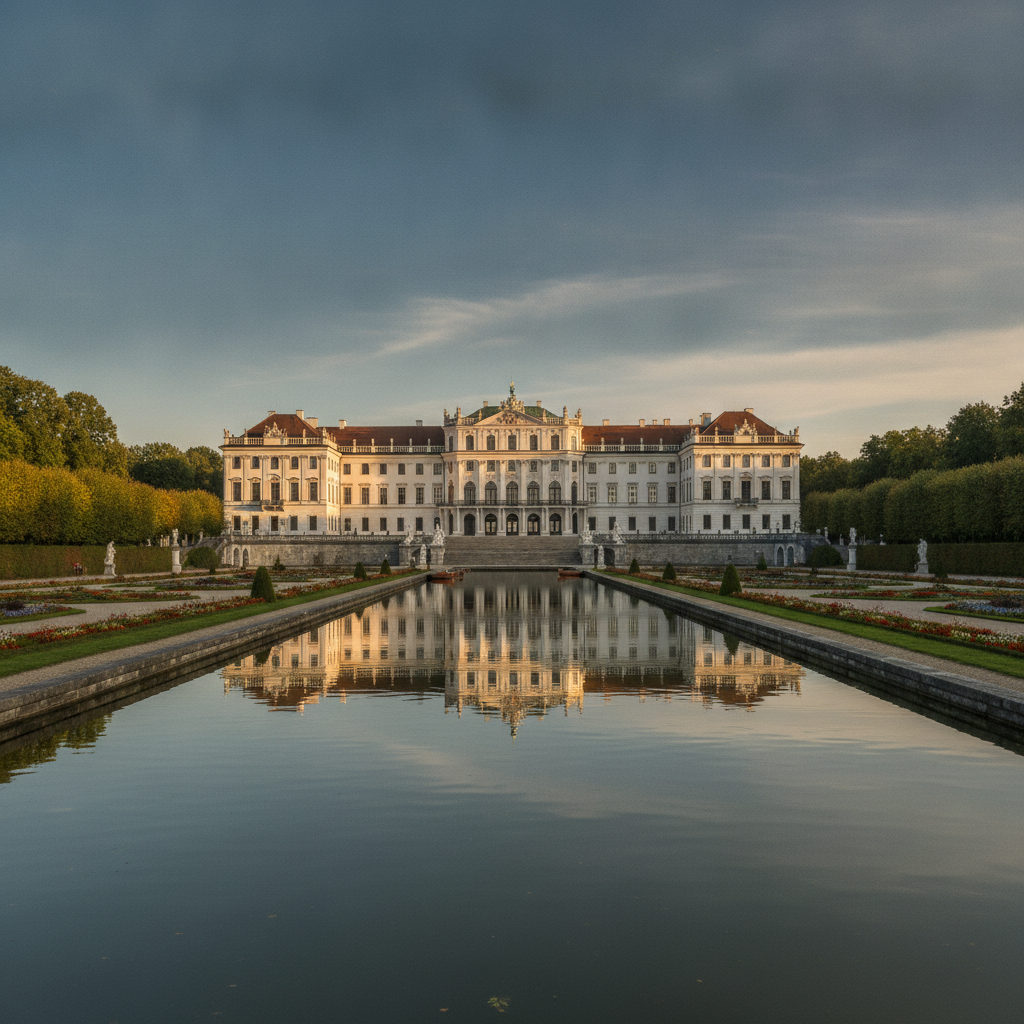
Munich — Nymphenburg Palace, BMW Welt, Opera, Nightlife & the Practical Guide
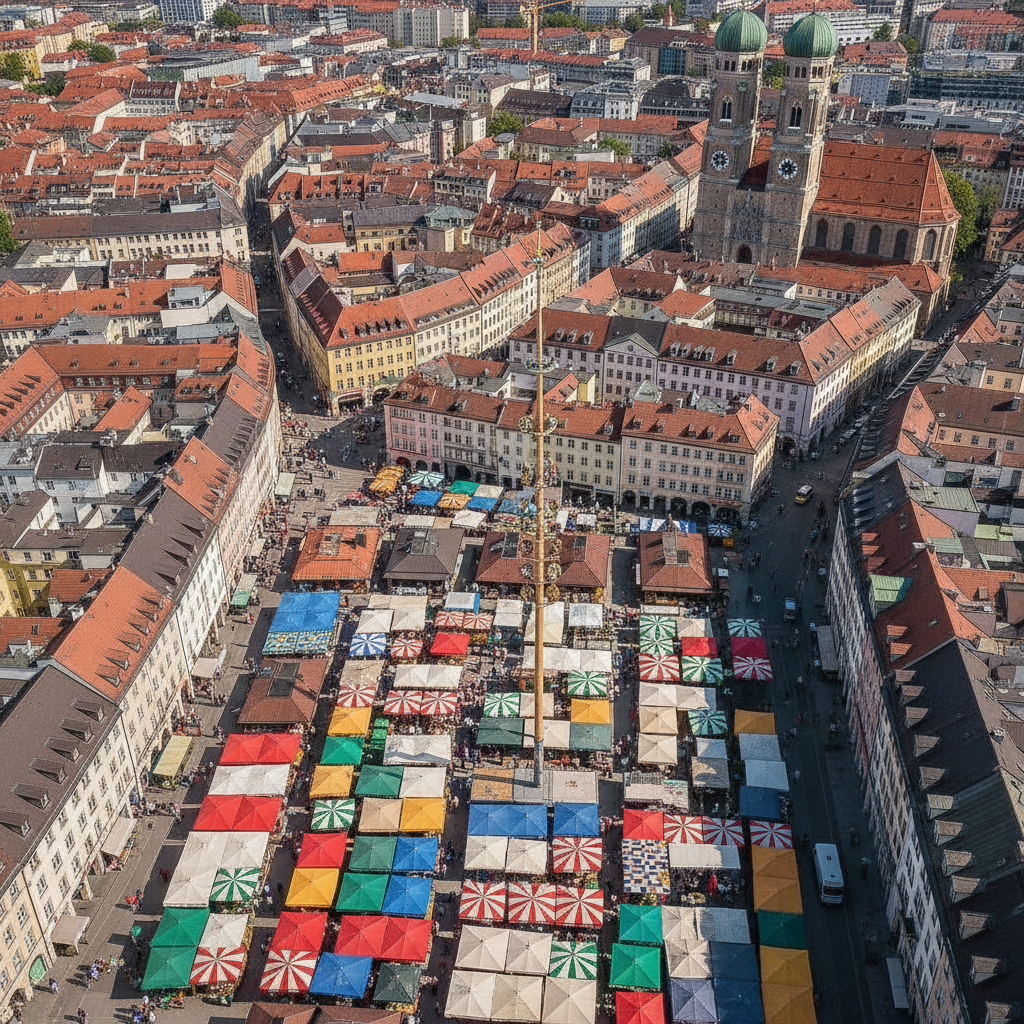
Munich — Viktualienmarkt, Beer Halls, the Isar, Dachau & Day Trips