Munich — Marienplatz, Englischer Garten, Oktoberfest & the Pinakotheken
Munich is Germany's most visited city for tourism — the historic Altstadt, the world's largest science museum, the Oktoberfest, and Bavaria's royal palaces create the most complete city tourism package in the German-speaking world.
1. Marienplatz and the Neues Rathaus Glockenspiel
- 1
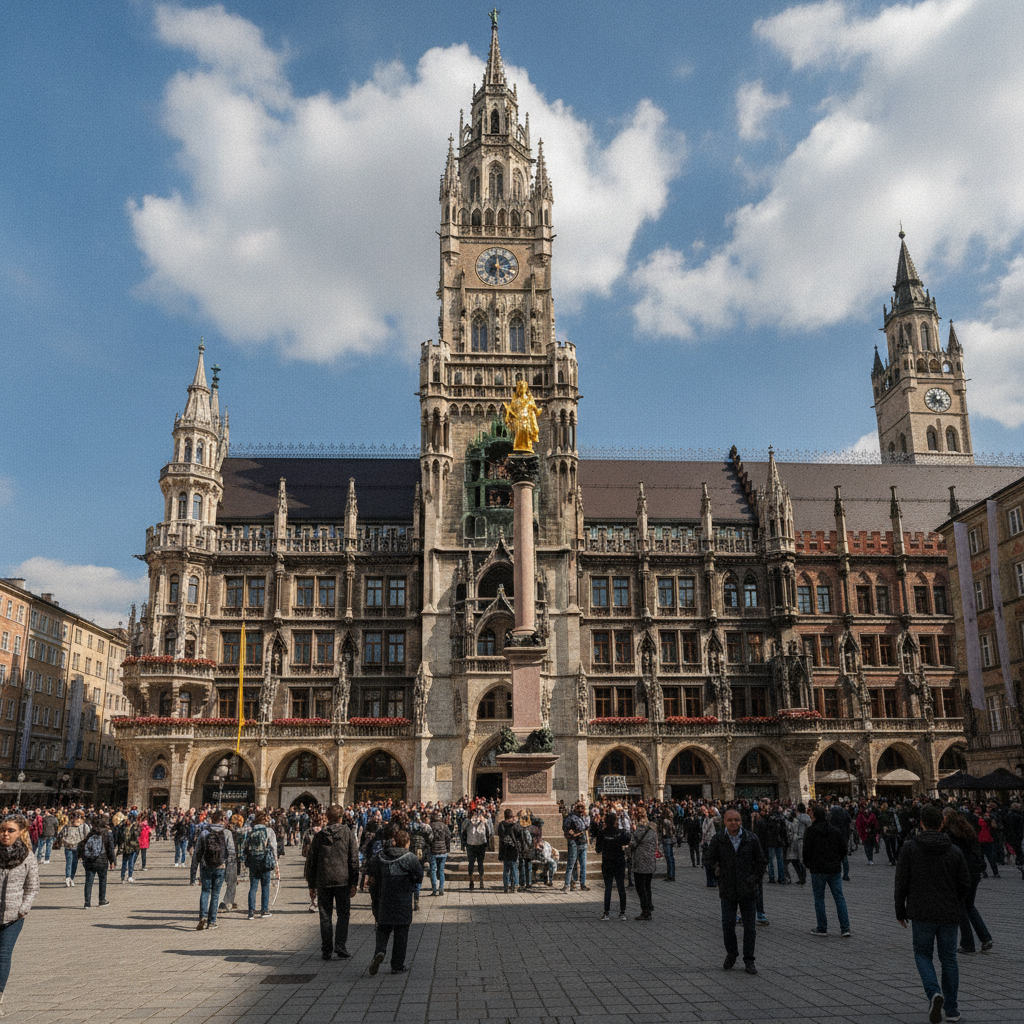
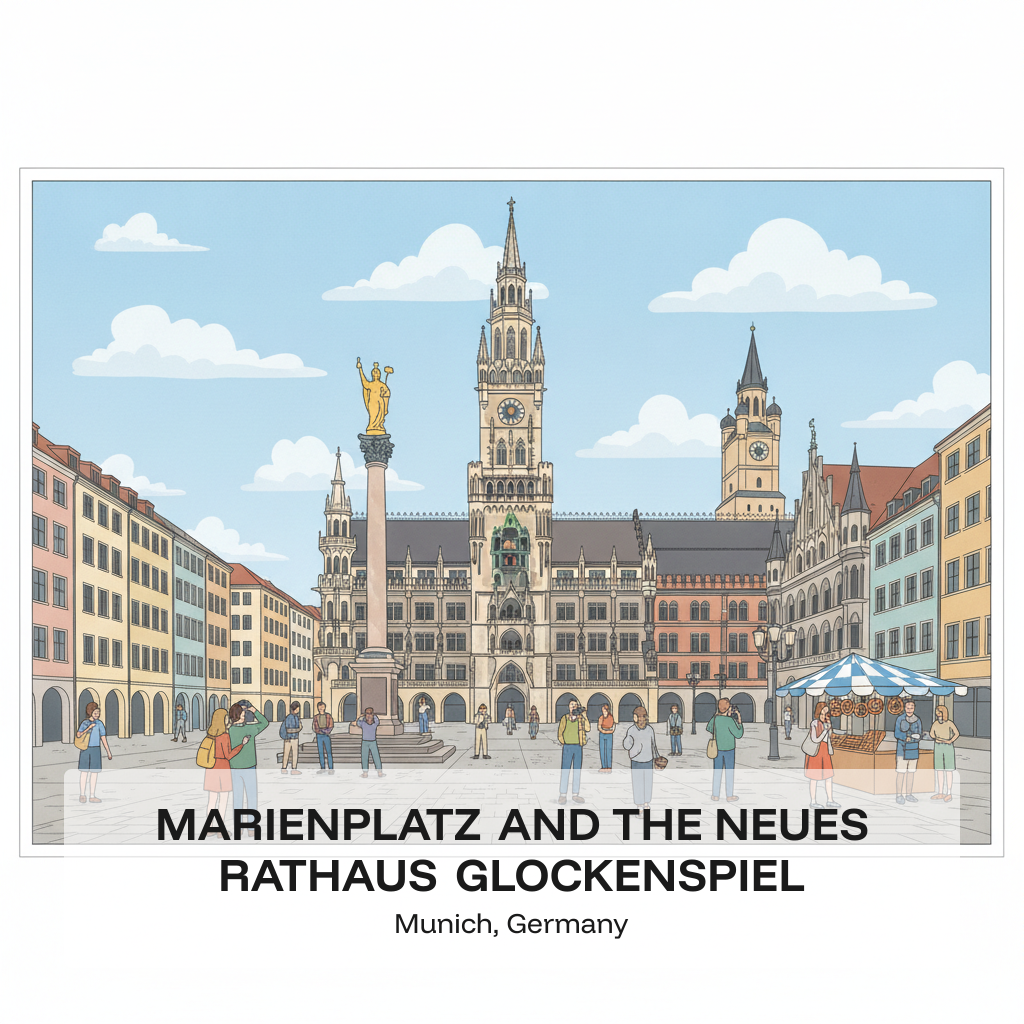
Marienplatz and the Neues Rathaus Glockenspiel
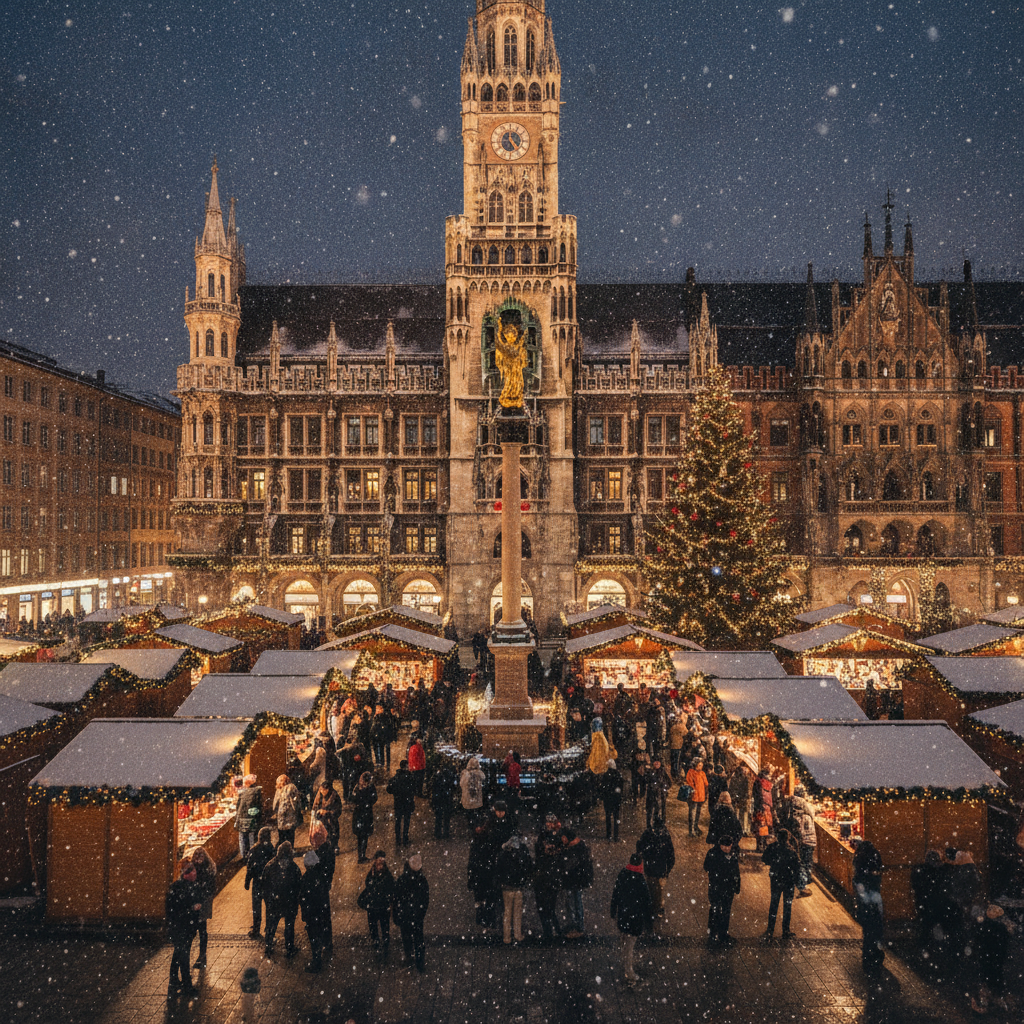
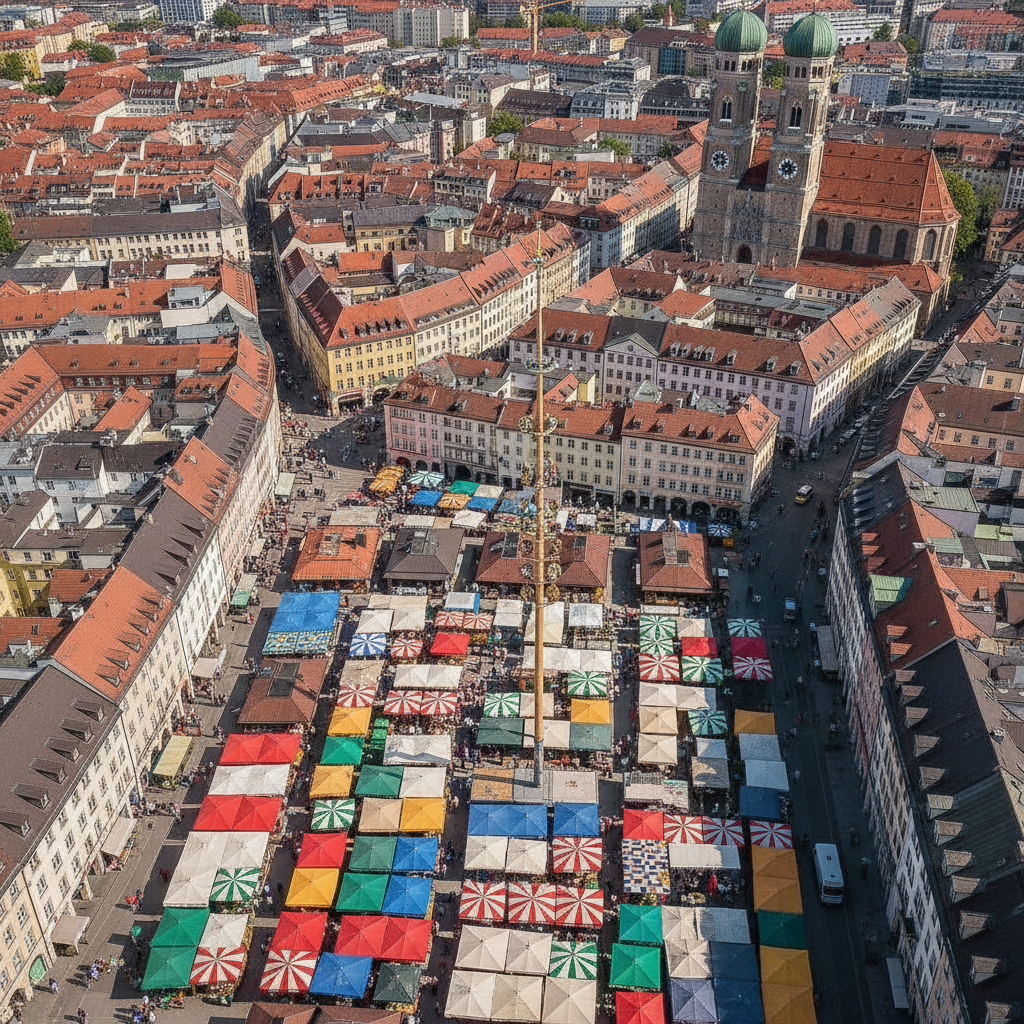
Marienplatz (the central square of Munich since 1158, the historical market square and the most visited single point in Munich at 6 million visitors per year): the Neues Rathaus (the New Town Hall at the north side of the Marienplatz — the neo-Gothic building of 1874-1909 with the 85m tower, the most photographed building in Munich, the Glockenspiel in the tower the most visited mechanical clock in Germany — the 43 bells and 32 life-size figures performing the daily jousting tournament re-enacting the 1568 marriage of Duke Wilhelm V and the plague dance of the Schäffler at 11am daily and additionally at 12pm and 5pm from March to October, 15 minutes per performance, the viewing from the Marienplatz street level free), the Mariensäule (the gilded Virgin Mary column at the centre of the Marienplatz, the 1638 column the oldest surviving civic monument in Munich, the golden figure at the top the symbolic centre of Munich and the point from which all distances to Munich are measured), the Altes Rathaus (the Old Town Hall at the east side of the Marienplatz — the 15th-century Gothic building now housing the Spielzeugmuseum (Toy Museum), CHF 4 adults, the tower the best elevated viewpoint over the Marienplatz roof level), the Viktualienmärkt (the open-air food market immediately south of the Marienplatz — the most famous outdoor food market in Germany with 140 permanent market stalls and 9,000 square metres, the Maypole at the centre the traditional Munich market marker, the beer garden at the market centre the only city-centre beer garden in Munich with the 1,000 seats, the white sausage (Weisswurst) the defining Munich street food at €3-4 per pair with the sweet mustard and the pretzel) and the Hofbräuhaus (the Staatliches Hofbräuhaus am Platzl, the most famous single beer hall in the world — the 1589 brewery building 2 minutes from the Marienplatz with the 3,500 seats, the 1-litre Masskrug of Hofbräu beer at €11.90, the brass band on the ground floor Mondays-Saturdays from 11am, the most atmospherically Munich single evening experience available to the visitor).
- 2
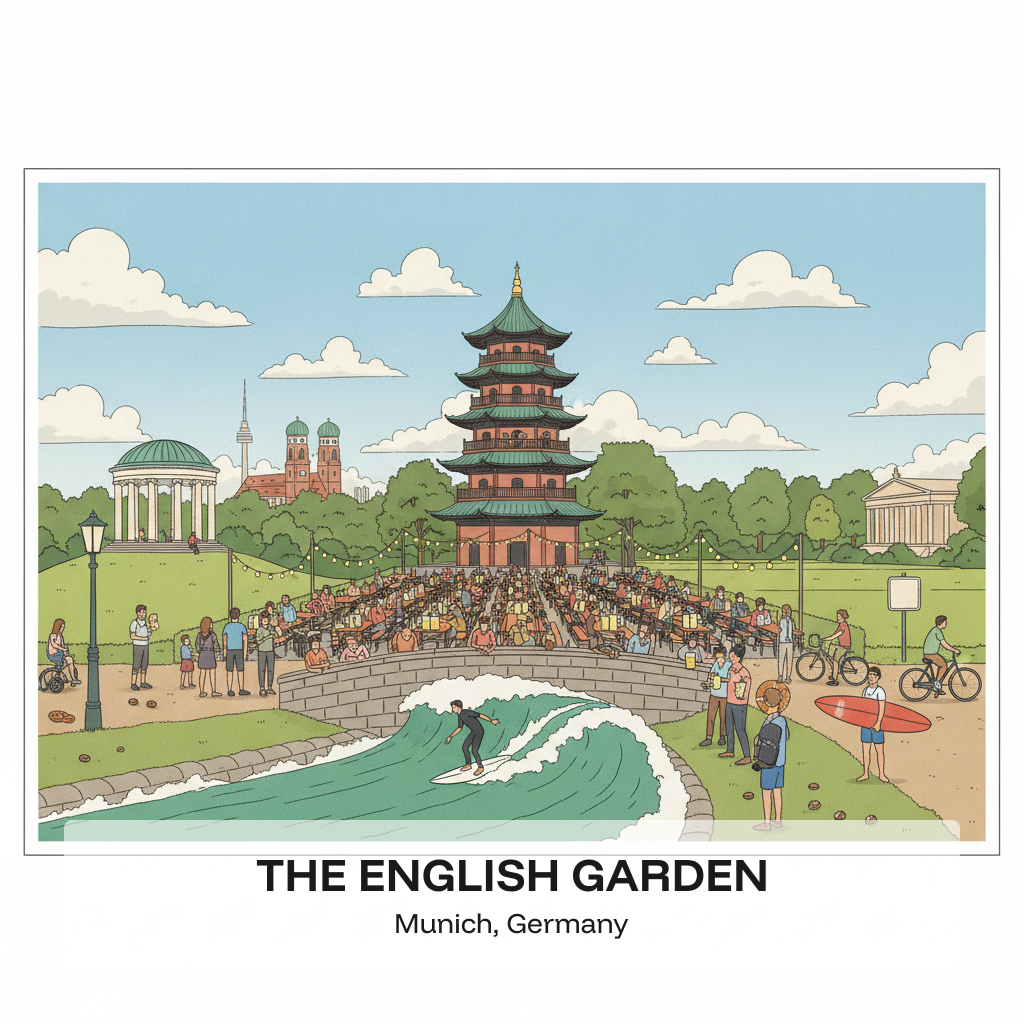
The English Garden — Munich's Urban Alpine Park
Englischer Garten (the English Garden, the 3.7km² park at the northeast of the Munich Altstadt — the largest inner-city public park in the world, larger than Central Park at 3.41km² and Hyde Park at 1.42km²): the Eisbach wave (the artificial standing wave on the Eisbach stream at the south entrance of the English Garden near the Prinzregentenstrasse — the permanent surfing wave in the city centre the most extraordinary single urban sports phenomenon in Germany, the wave surfed year-round by 1-3 surfers at a time from a waiting queue of up to 20, the surfing visible from the Eisbach bridge at no cost, the most watched free sport in Munich, the wave requiring specialist whitewater surfboard and intermediate skill), the Chinese Tower (the Chinesischer Turm pagoda at the centre of the English Garden — the 5-storey Chinese-style wooden tower built 1789 modelled on Kew Gardens, the 7,000-seat beer garden at the base the second-largest beer garden in Munich and the most centrally located, the 1-litre Masskrug of Augustiner at €10.60, the pretzels, radishes, and Obazda cream cheese the traditional accompaniments, the brass band playing at the upper balcony on summer weekends), the Monopteros (the Greek temple rotunda on the artificial hill at the south English Garden — the 1838 neoclassical circular temple on the highest point of the southern English Garden, the view from the temple steps the best single panorama of the Munich city skyline with the Frauenkirche towers and the television tower visible, the most photographed elevated viewpoint in Munich after the Olympiaturm), the Kleinhesseloher See (the artificial lake at the centre of the English Garden, the rowing boats and paddleboats for hire at €6 per hour, the Seehaus restaurant on the north bank the lakeside dining landmark, the beer garden with the lake views the most relaxed drinking environment in the English Garden) and the Haus der Kunst (the Haus der Kunst at the south edge of the English Garden at Prinzregentenstrasse 1, the 1937 Nazi-era exhibition hall now the most prominent venue for contemporary art in Munich — the temporary exhibitions of international contemporary art, no permanent collection, CHF 15-20 adults per exhibition, Tuesday-Sunday 10am-8pm, Thursday to 10pm).
- 3
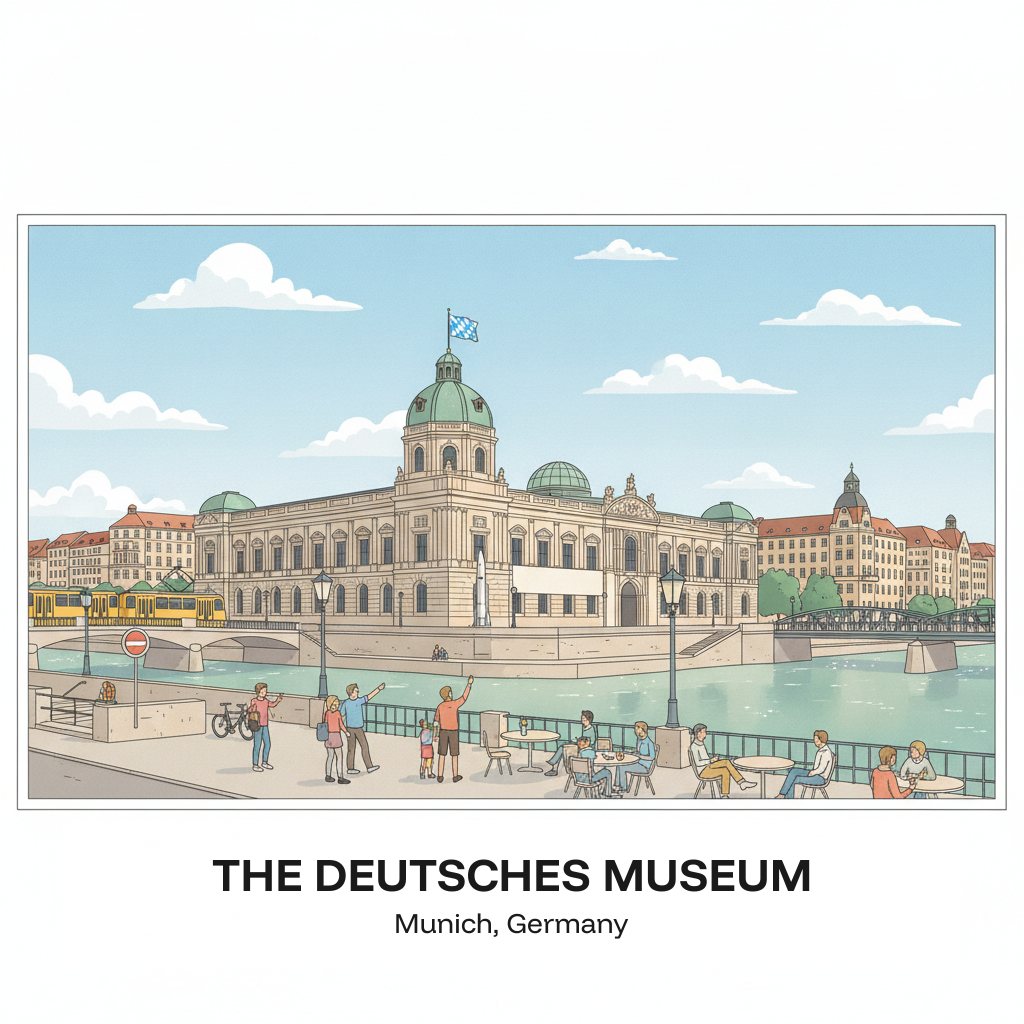
The Deutsches Museum — the World's Largest Science Museum
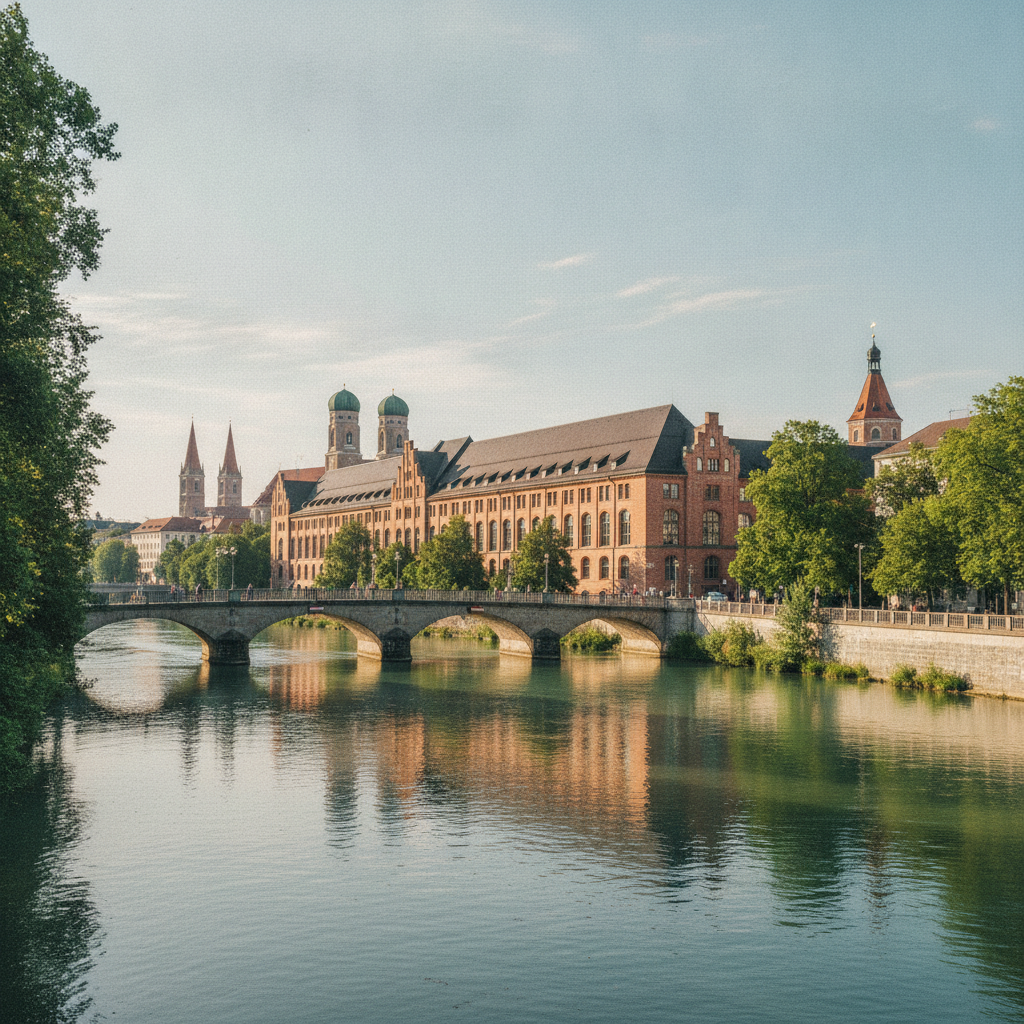
Deutsches Museum (the Deutsche Museum on the Museumsinsel island in the Isar River at Museumsinsel 1, the world's largest science and technology museum at 73,000 square metres of exhibition space across 8 floors — the collection of 28,000 exhibited objects the largest single technical collection in the world): the highlights (the original V2 rocket — the German ballistic missile of 1944 the largest single exhibit in the museum at 14m height, displayed vertically in the aerospace hall on the ground floor; the Enigma cipher machine — the German WWII cryptographic device displayed in the telecommunications section with the demonstration cipher wheel; the Carl Benz Motorwagen — the 1885 Benz Patent-Motorwagen the world's first purpose-built automobile displayed on the ground floor transport section; the Boeing 747 nose section in the aviation hall at full scale; and the walk-through salt and coal mines in the basement — the 1:1 replica underground mine galleries the most atmospherically complete mining exhibition in Europe), the planetarium (the Zeiss Planetarium in the museum's Ehrensaal building — the 1925 projection planetarium the third oldest in the world still in operational use, the 30-minute program in German with simultaneous translation available by request, CHF 3 adults above the museum entry), the Museumsinsel (the island location — the museum occupying the entire Museumsinsel island in the Isar River, the island reached by the Ludwigsbrücke or the Corneliusbrücke from the city, the riverside terrace at the museum café the most relaxed island-position café seat in Munich), the workshops (the demonstration workshops where the museum staff perform live chemical experiments, glass-blowing, and paper-making on a rotating daily schedule — the demonstrations schedule at the museum entrance, the most interactive single science museum activity for the non-German speaker in Munich) and the practical (the museum ticket at €15 adults, €6 children, the family ticket €33 covering 2 adults + all children, the museum open daily 9am-5pm, closed January 1, Good Friday, and December 24-25-31, the Isar Tor tram stop the most direct public transport access).
- 4
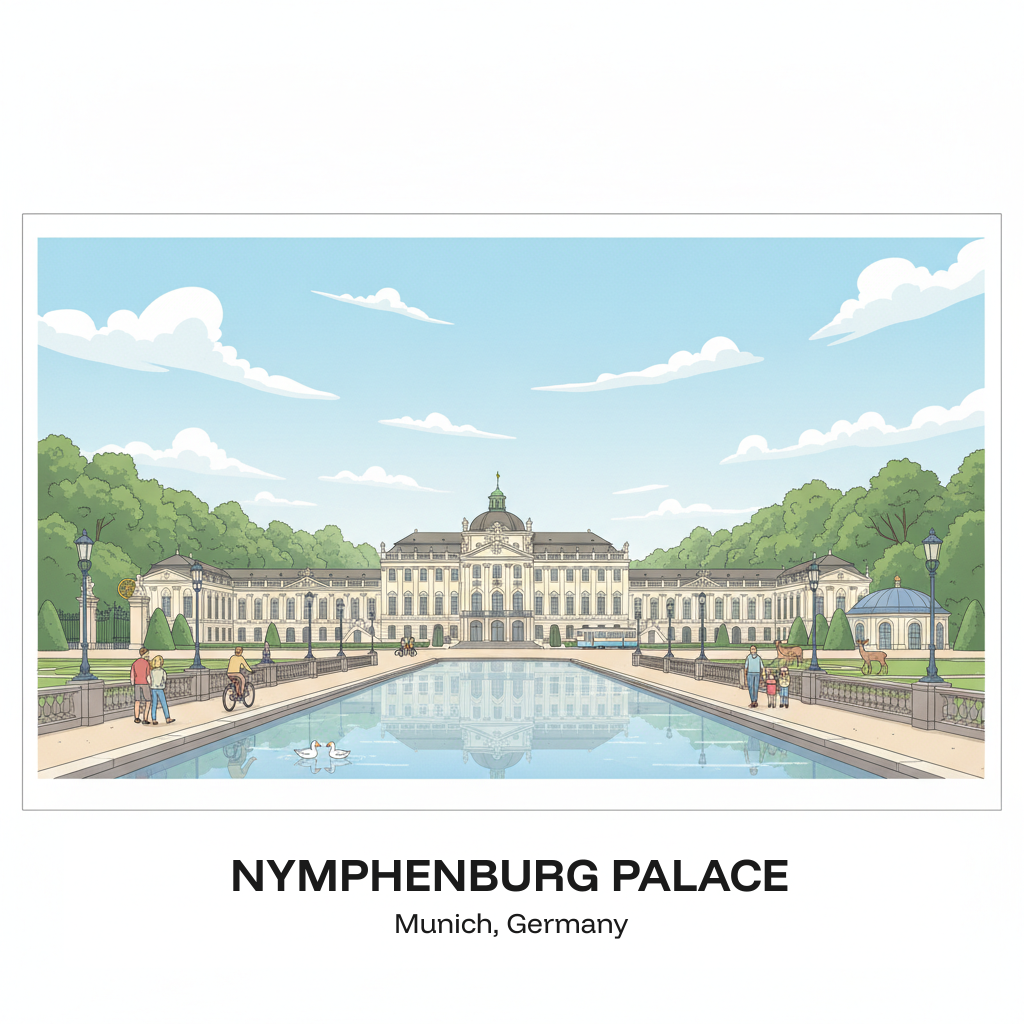
Nymphenburg Palace — Bavaria's Versailles
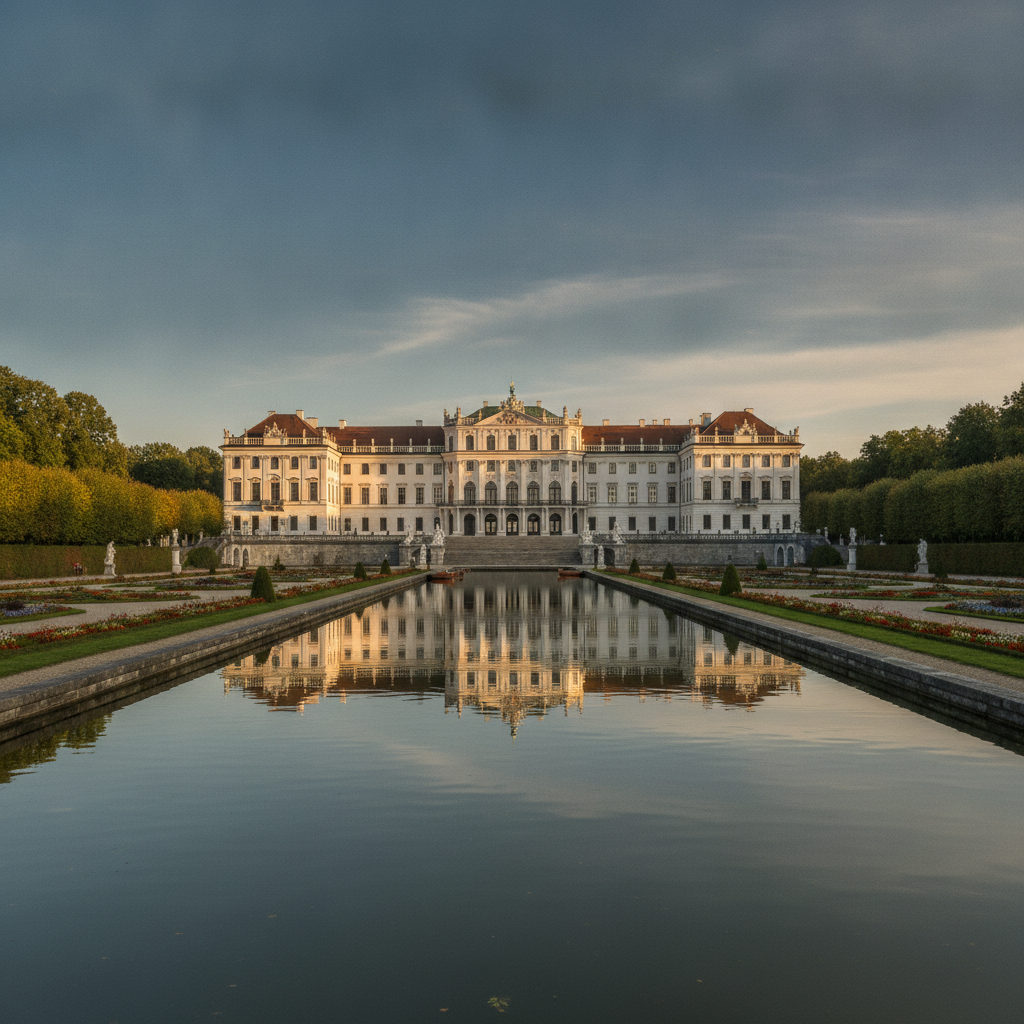
Schloss Nymphenburg (Nymphenburg Palace, the summer residence of the Wittelsbach kings at the west end of Munich — the largest palace in Munich and the most architecturally ambitious Baroque complex in Bavaria, the 600m-wide palace and gardens the most spatially overwhelming royal residence in southern Germany): the palace exterior (the central corps de logis of 1664 with the 5 wings extending 600m, the most horizontally extensive single royal facade in Germany after the Herrenchiemsee — the forecourt (Ehrenhof) approached by the broad avenue from the Rotkreuzplatz tram stop, the triumphal arch at the palace park entrance the most formal royal approach in Munich), the Schönheitsgalerie (the Gallery of Beauties — the collection of 36 portraits of women considered beautiful by King Ludwig I commissioned between 1827-1850 including the dancer Lola Montez whose scandalous affair with Ludwig contributed to his abdication in 1848 — the most gossiped-about single portrait gallery in Bavaria, located in the south wing of the palace, included in the palace ticket at €15 adults), the Amalienburg (the Amalienburg hunting lodge at the southwest corner of the English Garden-style palace park — the 1734 Rococo pavilion designed by François de Cuvilliés the most perfect single Rococo interior room in Germany, the Hall of Mirrors inside the Amalienburg the more intimate and exquisitely decorated counterpart to the Versailles Hall of Mirrors), the Nymphenburg Canal (the 2km-long canal from the palace entrance to the distant Blutenburg, the most atmospherically formal water feature in Munich — the canal the most photographed winter scene in Munich when frozen in January-February, the ice skaters and the winter walkers on the canal banks the most Munich of all winter images), the Marstallmuseum (the royal stables museum with the collection of Wittelsbach royal carriages and sleighs including the golden coronation coach — the most concentrated collection of historic luxury transportation vehicles in Bavaria, included in the Nymphenburg Palace ticket) and the Palace Park (the English Garden-style park with the 180-hectare grounds — the deer free-roaming in the park the most unexpected wildlife encounter in the Munich city limits, the Badenburg lakehouse the rowing-on-the-lake destination within the palace park grounds).
- 5
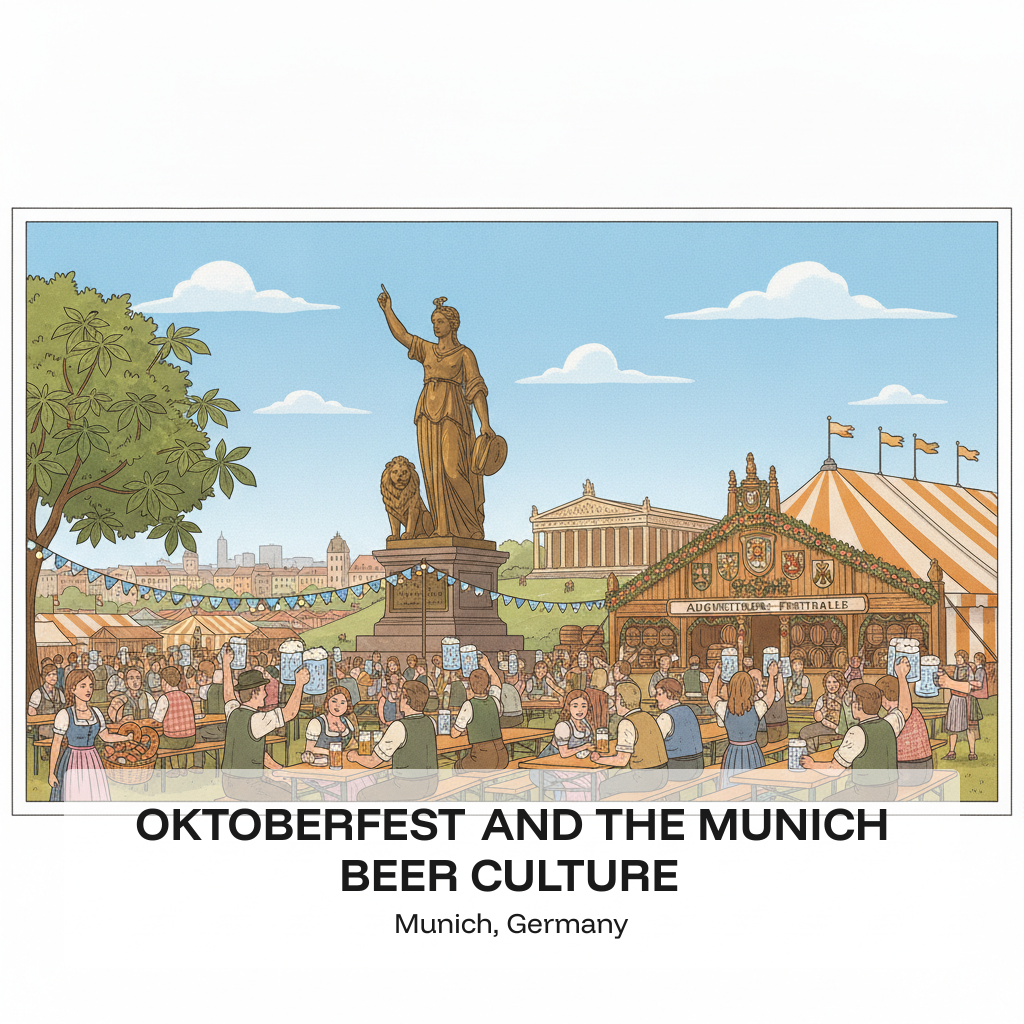
Oktoberfest and the Munich Beer Culture
Munich beer culture (Munich the global capital of beer tourism — the Reinheitsgebot (German Beer Purity Law) of 1516 signed in Munich the most historically significant single legislation in the history of beer, the law specifying that beer may be brewed only from water, barley, and hops still influencing German brewing today, the Munich breweries the 6 traditional Oktoberfest brewery licencees the most tightly regulated beer production system in the world): Oktoberfest (the Munich Oktoberfest on the Theresienwiese the most attended annual event in the world at 6-7 million visitors over 16-17 days from the third Saturday in September to the first Sunday in October — the first Oktoberfest held 1810 for the marriage of Crown Prince Ludwig, the event originally a horse race on the Theresienwiese meadow evolving into the beer festival, the 14 large festival tents of the 6 Munich breweries with 10,000 seats per tent, the Hofbräu-Festzelt and the Augustiner-Festhalle the most traditional, the Masskrug reserved table booking from €200-400 per person for the prime Saturday evening sessions 18 months in advance), the big 6 breweries (the six Munich breweries with the Oktoberfest licence: Augustiner (the oldest, founded 1328), Hofbräu (the state brewery, founded 1589), Paulaner (founded 1634), Hacker-Pschorr (1417, now combined), Löwenbräu (1383), and Spaten (1397) — the 6 breweries collectively producing the only beer served at the Theresienwiese Oktoberfest, the Augustiner Edelstoff the most critically respected Munich lager), the beer gardens (Munich has 100+ beer gardens within the city limits — the 1,000-seat minimum required to be classified as a traditional Biergarten, the right to bring your own food (Mitbringsel) the most distinctive tradition of the Munich Biergarten culture, the Augustiner-Keller at Arnulfstrasse 52 with 5,000 seats the most traditional large beer garden in Munich, the Viktualienmarkt beer garden the most central), the Theresienwiese (the Wiesn — the 42-hectare meadow southwest of the Altstadt, the most spacious single publicly accessible green space near the Munich centre, the Bavaria statue at 18.5m the most imposing single civic statue in Munich, the Ruhmeshalle (Hall of Fame) arcade behind the Bavaria the 1853 neoclassical gallery of Bavarian historical worthies, free, daily) and the Weisswurst tradition (the Munich white veal sausage — the Weisswurst served only until noon (tradition: the sausage should not live to hear the church noon bell), eaten by peeling the skin (zuzeln) or cutting, served with the sweet Bavarian mustard (süßer Senf), a fresh pretzel, and the Weissbier, the most specifically Munich food ritual, available at any traditional Munich Wirtschaft from 7am to noon).
- 6
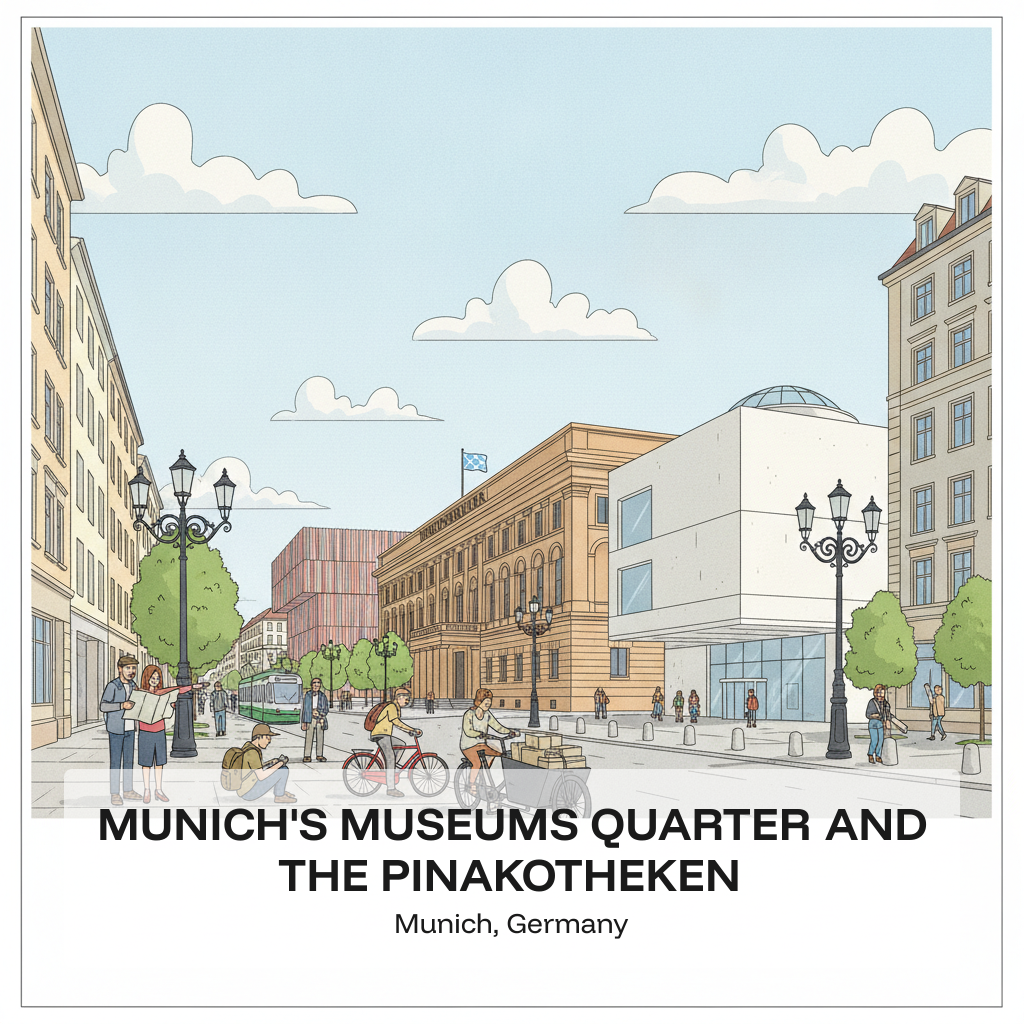
Munich's Museums Quarter and the Pinakotheken
Kunstareal München (the Munich Art Quarter — the museum district at the north edge of the Maxvorstadt neighbourhood containing 5 major museums in a 0.5km² area, the most concentrated single art museum district in Germany): the Alte Pinakothek (the Old Pinakothek at Barer Strasse 27, the 1836 Klenze building the most architecturally distinguished art museum building in Germany — the collection of 700 exhibited works covers the 14th-18th century European masters, the most important holdings: Dürer's 'The Four Apostles' 1526, the largest and last surviving Dürer panel painting; Rubens' 'The Great Last Judgement' 1617 at 6m × 4.6m; and the Raphael 'Madonna della Tenda', CHF 7 adults, Sunday €1, Tuesday-Sunday 10am-8pm, Wednesday-Thursday to 8pm), the Neue Pinakothek (the New Pinakothek covering the 19th-century from Romanticism to Jugendstil, the Van Gogh 'Sunflowers' 1888 the single most visited work, CHF 7 adults, closed for renovation until 2025 — check current status before visiting), the Pinakothek der Moderne (the Pinakothek of Modernity at Barer Strasse 40, the 2002 Stephan Braunfels building — the most architecturally significant new museum building in Germany of the early 21st century, 4 collections under one roof: the Staatsgemäldesammlungen Modern Art, the Neue Sammlung Design, the Architekturmuseum TU München, and the Staatliche Graphische Sammlung — the Beuys 'Fond VII' installation the most discussed single work, CHF 15 adults, Tuesday-Sunday 10am-6pm, Thursday to 8pm), the Museum Brandhorst (the Brandhorst at Theresienstrasse 35a — the 2009 museum for the Brandhorst private collection of 1,200 works including the world's largest collection of Cy Twombly and the major Damien Hirst 'Pharmacy' installation, the building facade of 36,000 coloured ceramic rods the most visually distinctive museum exterior in Munich, CHF 10 adults) and the Glyptothek (the Glyptothek at Königsplatz 3 — the 1830 Klenze neoclassical museum purpose-built by Ludwig I to display the Aegina marbles (the most complete surviving Greek archaic pediment sculpture group) and the Barberini Faun (the sleeping satyr of c. 220 BCE the most sensuously expressive surviving ancient sculpture in Germany) — the building and the collection together the most complete surviving early 19th-century museum experience in the world, CHF 6 adults, Tuesday-Sunday 10am-5pm, Thursday to 8pm).
Walk this route with audio
Stories play automatically as you reach each stop — no tapping needed.
More in munich
Munich — Residenz, Schleissheim, Starnberger See, Christmas Markets & Parks
Munich — Deutsches Museum, Pinakotheken, FC Bayern, Jewish History & Neighbourhoods
Munich — Nymphenburg Palace, BMW Welt, Opera, Nightlife & the Practical Guide
Munich — Viktualienmarkt, Beer Halls, the Isar, Dachau & Day Trips