Munich — Residenz, Schleissheim, Starnberger See, Christmas Markets & Parks
Munich's depth extends from the Wittelsbach Residenz palace complex and the forgotten Schleissheim to the lakeside Ludwig II memorial at Starnberg and the most historically framed Christmas market in Germany.
- 1
The Residenz and Cuvilliés Theatre
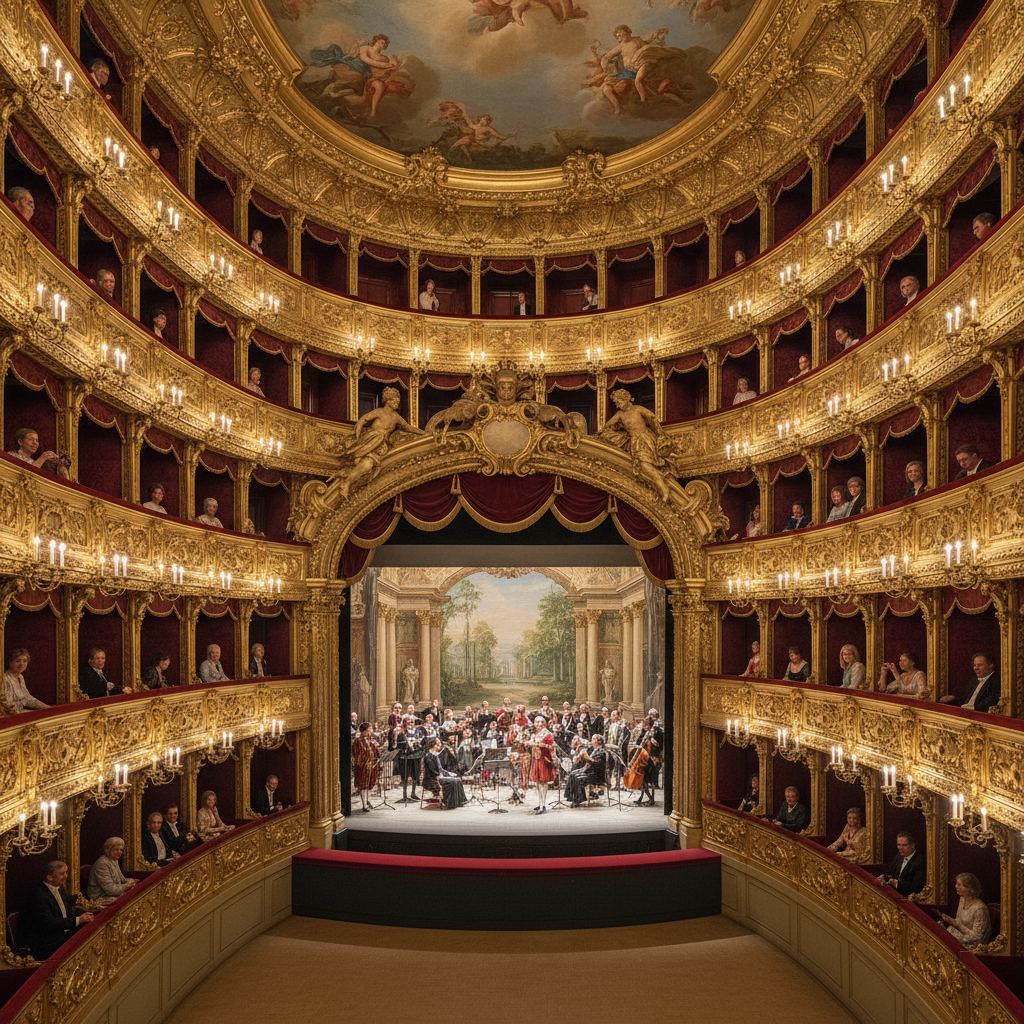
Münchner Residenz (the Munich Residenz at Max-Joseph-Platz 3, the palace complex of the Wittelsbach dynasty covering 130 rooms across 6 courtyards — the largest city palace in Germany): the Antiquarium (the Antiquarium of 1571 — the oldest room in the Residenz and the most impressively large Renaissance secular hall in northern Europe at 69m × 10m, the barrel-vaulted ceiling painted with the Bavarian topographical views, the 100 Roman busts in the cases — the most intact Renaissance hall in Germany), the Cuvilliés Theatre (the Altes Residenztheater — François de Cuvilliés' 1753 Rococo theatre with the gold and red carved wooden gallery tiers, the most perfectly preserved Baroque court theatre in the world, the original woodwork the only surviving complete Rococo theatrical interior in Germany, CHF 5 adults, open for daily 30-minute viewing, the theatre still used for performances September-July), the Treasury (the Schatzkammer — the 10 rooms of Wittelsbach crown jewels including the 12th-century Prayer Book of Charles the Bald, the Golden Statuette of St George on horseback in enamel and diamonds, and the Bavarian Crown Regalia of 1806, CHF 9 adults or included in the combined Residenz ticket at €14), the Hofgarten (the Renaissance garden at the north side of the Residenz — the 1617 Italian-style formal garden with the Diana Temple at the centre, the most atmospherically peaceful garden space in the Munich Altstadt, the arcaded loggia on 3 sides the most pleasant all-weather outdoor seating area in central Munich) and the Ancestral Portrait Gallery (the 121 Wittelsbach portraits spanning 1100-1800 CE — the most complete single-dynasty portrait sequence in any European palace, the 4 Stieler portraits including Ludwig I and the originals by Lucas Cranach the Elder forming the most concentrated German dynastic portrait collection in a single gallery).
- 2
Munich's Frauenkirche and Old Town Churches
Frauenkirche (Dom zu Unserer Lieben Frau at Frauenplatz 1 — the defining Munich skyline silhouette, the twin copper-green onion domes at 99m the protected urban height limit — no building in Munich may exceed 99m within the 4km Altstadt radius): the building (the late-Gothic brick hall church of 1468-1524, the largest Gothic hall church in Bavaria at 109m length, the raw brick facade — no stone carving on the exterior — the deliberate aesthetic choice of the 15th-century Munich city government, the twin onion domes added in 1525 as a temporary wooden solution that became the permanent Bavarian Baroque model for 200 years), the Devil's Footprint (the Teufelstritt — the black footprint-shaped stone at the entrance of the Frauenkirche nave, positioned at the single point where the pillar arrangement completely obscures all 66 windows of the nave — the legend of the devil making a bet with the cathedral architect, the most visited single square metre of stone floor in Munich, free access), the Peterskirche (the 'Alter Peter' at Rindermarkt — the oldest parish church in Munich of 1181, the 91m tower with the 306-step ascent the best Marienplatz rooftop panorama at €5 adults), the Michaelskirche (the Church of St. Michael at Neuhauser Strasse — the 1597 Jesuit church the largest Renaissance church north of the Alps, the most architecturally dramatic interior in the Munich Altstadt with the 20m barrel vault, free daily) and the Asamkirche (the Asamkirche at Sendlingerstrasse 32 — the 1746 private chapel the most excessively decorated Rococo interior in Munich, the 9m × 20m single-nave chapel encrusted with gold leaf, frescoes, and stucco from floor to ceiling with no plain surface visible anywhere, free Tuesday-Sunday 9am-5pm).
- 3
The Schleissheim Palace Complex
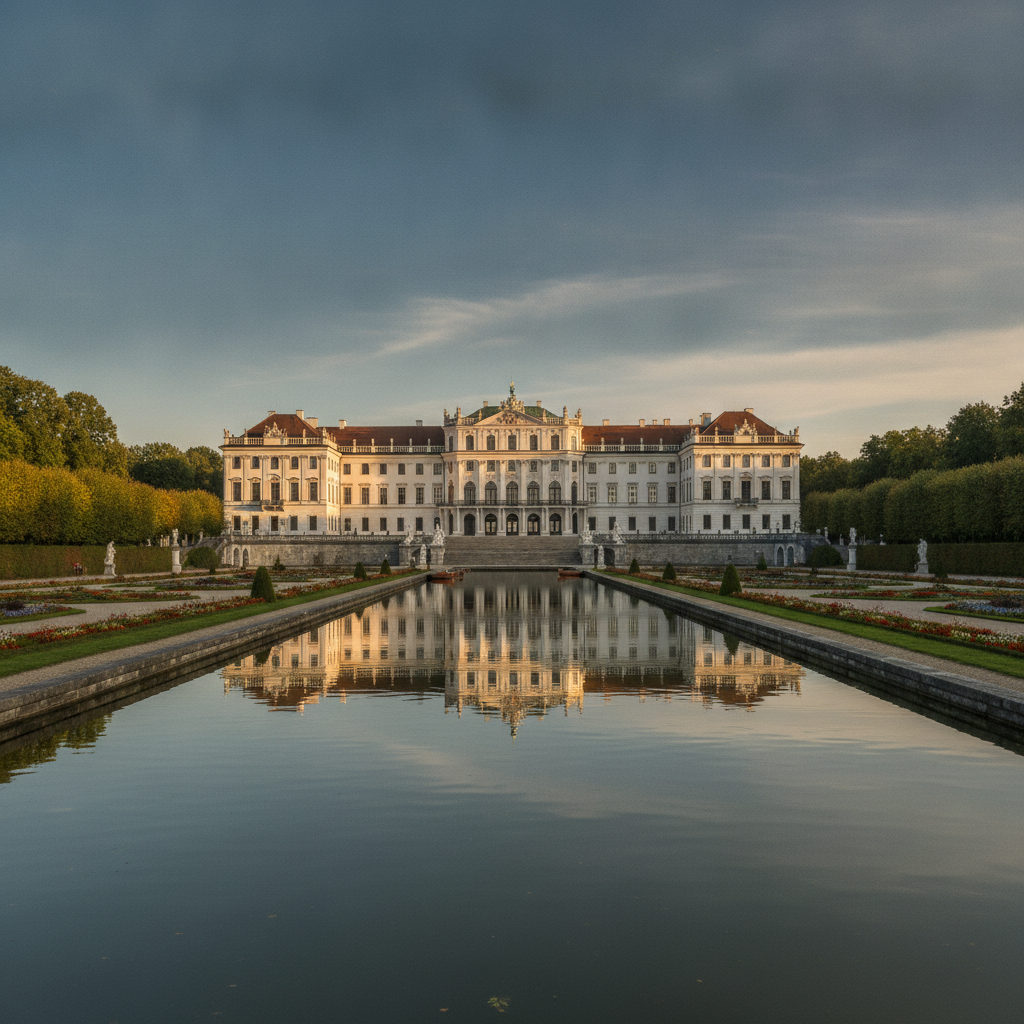
Schloss Schleissheim (the Schleissheim palace complex 14km north of Munich — the 3 palaces on a single axis the most ambitious single royal building project in 17th-18th century Bavaria): the Neues Schloss (the New Palace of 1719 by Effner and Zuccalli — the most architecturally complete Baroque palace exterior in Bavaria, the 330m facade the most horizontally imposing Baroque royal building in Germany after the Nymphenburg, the Baroque fresco cycle in the Great Hall by Jacopo Amigoni the most complete single secular Baroque ceiling painting cycle in Bavaria, CHF 6 adults, Tuesday-Sunday 9am-6pm April-September), the Lustheim (the Lustheim garden pavilion at the east end of the canal axis — the 1684 palace the most perfectly Baroque garden pleasure house in Bavaria, now housing the Meissen porcelain collection: the largest single collection of early Meissen porcelain outside the Dresden Zwinger at 1,800 pieces, the most specifically porcelain-focused museum in Munich, CHF 4 adults), the Altes Schloss (the Old Palace at the west end of the canal — the 1617 Renaissance hunting lodge now housing the collection of sacred art from the Bavarian state church collections, free with the Neues Schloss ticket, the most overlooked of the 3 Schleissheim buildings), the Schleissheim canal (the 1km formal water canal connecting the Lustheim pavilion to the Neues Schloss, the most atmospherically 17th-century formal garden water axis in Germany, the canal visible from the elevated terrace of the Neues Schloss on the rooftop access) and the practical (the Schleissheim complex accessible by S-Bahn S1 from the Hauptbahnhof to the Oberschleißheim station in 28 minutes at €5.80, then a 15-minute walk to the palace entrance, the combined ticket for all 3 palaces at €7 adults the most cost-efficient of all the major Munich royal site visits, the least crowded of the Munich palace day trips with under 100,000 visitors per year versus the 500,000+ at Nymphenburg).
- 4
Starnberger See — Munich's Alpine Lake Escape
Starnberger See (the Starnberger lake 25km south of Munich — the most fashionable lakeside resort region for the Munich residential population and the most accessible Alpine lake day trip from the city centre, the lake 21km long and 5km wide with the Alps rising 60km to the south): the lake (the Starnberger See at 584m altitude, the 5th largest lake in Germany by area and the 3rd deepest at 127m — the glacier-carved lake the most topographically dramatic of the Munich lakes, the southwest shore the most steep-sided and the most naturally scenic, the Alps visible above the south end of the lake on clear days from the Starnberg promenade the most panoramic lake-and-mountain view within the Munich day-trip range), the transport (the S-Bahn S6 from Munich Hauptbahnhof to Starnberg in 35 minutes at €5 — the most efficiently accessible of all Munich-area lakes, the service running every 20 minutes from 6am to midnight, the Starnberg station 5 minutes walk from the lakeside), the Ludwig II memorial (the Votivkapelle (Votive Chapel) and the cross in the lake at Berg — the memorial to Ludwig II at the site of his mysterious death on June 13 1886, the king found drowned in the shallow lake water along with his psychiatrist Dr von Gudden, the cause of death officially drowning but disputed as the most debated royal death in Bavarian history, the chapel at Berg accessible by BSB steamer from Starnberg), the BSB steamer circuit (the Bayerische Seenschifffahrt steamer from Starnberg south to Seeshaupt the most scenic 2-hour lake circuit in the Munich day-trip range, the steamer stopping at Possenhofen — the childhood home of the Empress Elisabeth (Sisi) of Austria opposite the Ludwig II palace Berg across the lake — and Feldafing, the Swiss Travel Pass not valid, the steamer ticket CHF 17 return) and the swimming (the free public swimming at the Starnberg Strandbad at the Starnberg end and the Seeshaupt beach at the south end, the water temperature 22-24 degrees in July-August the warmest swimming accessible by direct S-Bahn from Munich, the Starnberger See public swimming beach the most used single lakeside free swimming area in the Munich metropolitan area with 3,000+ visitors on the peak summer Sundays).
- 5
Munich Christmas Markets and Winter Culture
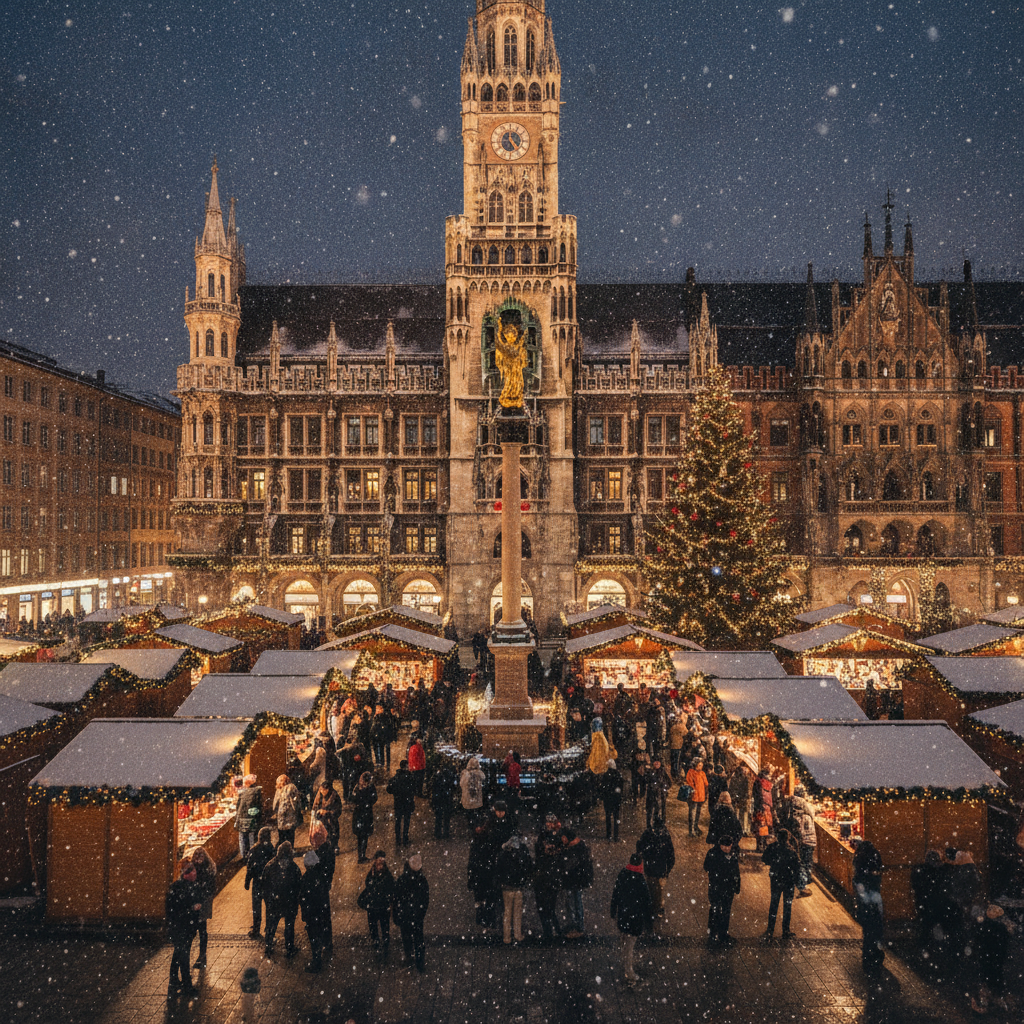
Munich winter (Munich in the Advent season the most atmospherically transformed of the major German cities — the Christmas market tradition at the Marienplatz the most historically framed in Germany, the strong beer festival in March the winter cultural season bookend): the Christkindlmarkt (the Munich Christmas market at the Marienplatz — the Advent market tradition from the 14th century the most historically continuous urban Christmas market in Germany, the market open the first Saturday of Advent to December 24 (9am-9pm), the 100+ stalls selling the Lebkuchen, the Zwetschgenmännle (prune figures), the carved wooden decorations, and the Christbaumschmuck (glass tree ornaments), the glühwein in the ceramic cup at €4-5 the most consumed single item, the Neues Rathaus Glockenspiel on the north of the market square performing at 11am and 5pm the most theatrically complete market backdrop in Germany), the Tollwood Winter Festival (the Tollwood at the Olympiapark Südgelände — the most culturally international outdoor festival in Munich running parallel to the Christkindlmarkt in December, the world music, circus acts, and the alternative food market the most cosmopolitan contrast to the traditional Marienplatz market, the venue the most architecturally dramatic — the festival tents on the Olympiapark grounds with the 1972 stadium tent roof above), the Schwabing Advent market (the Münchner Freiheit Advent market — the most intimate of the Munich Advent markets with the handcraft emphasis and the local food stalls, the Schwabing neighbourhood the most atmospherically village-like of the Munich districts in December), the Starkbierfest (the Paulaner Starkbierfest at the Nockherberg — the Starkbier (strong beer) festival in March the most uniquely Munich seasonal event after the Oktoberfest, the Paulaner Salvator at 7.9% ABV the original monk's Lenten 'liquid bread', the political Derblecken (public mockery of the Bavarian politicians by the carnival comedian) the most specifically Munich political satire tradition, tickets €40-60 with table reservation) and the Fasching (the Fasching (Bavarian Carnival) from January 7 to the Shrove Tuesday — the costume balls at the Hofbräuhaus and the Kursaal, the Viktualienmarkt fish-women rooftop dance the single most specifically Munich Fasching tradition, performed annually on the Fasching Tuesday morning on the Viktualienmarkt stalls roof, the most surreal and most cheerfully bizarre civic ritual in the Munich calendar).
- 6
Munich's Green Spaces Beyond the English Garden
Munich parks and green spaces (Munich the most park-rich major city in Germany by percentage of urban green space — the city's 2,900 hectares of parks the highest ratio of any German city above 1 million population): the Westpark (the Westpark at the southwest of the city — the 1983 International Garden Exhibition park with the preserved Asian garden sections: the Thai sala pagoda, the Chinese rock garden, the Japanese dry garden and the Japanese bridge, the most complete collection of Asian garden styles in a single Munich park, the rose garden and the rock climbing section the most visited in summer, accessible by U-Bahn U6 to the Westpark station), the Olympiapark gardens (the landscape design by Günther Grzimek around the 1972 Olympic buildings — the artificial hills formed from WWII rubble the most historically layered green space in Munich, the Olympiaberg at 56m the highest elevation in the flat Munich plain within the city limits, the view from the Olympiaberg the most panoramic hilltop view over the Munich rooftops accessible on foot without a cable car), the Englischer Garten northern section (the northern English Garden between the Kleinhesselohe lake and the Aumeister restaurant the least visited and the most naturally landscaped section — the meadows, the stream channels, and the old-growth trees the most genuinely landscape-park-like in character, the Aumeister beer garden at the far north the most atmospherically remote beer garden reachable on foot from the Munich centre, 1 hour walk from the Chinese Tower), the Hofgarten (the 1617 formal Italian garden at the north side of the Residenz — the most formally planned green space in the Munich Altstadt, the Diana Temple at the centre the venue for the Tuesday evening chamber music in summer (free), the arcaded loggia the most used all-weather outdoor social space in the Munich centre, the chess players at the Hofgarten tables the most Munich of all urban park scenes) and the Isar valley cycle path (the Isar cycling route from the Flaucher north to the Grosshesseloher Brücke south — the 15km riverside cycle path the most scenically complete urban cycling route in Munich, the gravel banks, the Isar swimming areas, and the Tierpark all accessible from the path, the bicycle rental at €15-25 per day from the MVG Rad station at Marienplatz the most central starting point).
Walk this route with audio
Stories play automatically as you reach each stop — no tapping needed.
More in munich
Munich — Deutsches Museum, Pinakotheken, FC Bayern, Jewish History & Neighbourhoods
Munich — Marienplatz, Englischer Garten, Oktoberfest & the Pinakotheken
Munich — Nymphenburg Palace, BMW Welt, Opera, Nightlife & the Practical Guide
Munich — Viktualienmarkt, Beer Halls, the Isar, Dachau & Day Trips