Naples Historic Centre, Spaccanapoli & the UNESCO Underground City
The historic centre of Naples (the 'Centro Storico di Napoli' — the UNESCO World Heritage Site since 1995, one of the oldest continuously inhabited urban centres in Europe, founded as the Greek colony of 'Neapolis' in the 5th century BC and maintaining the original Greek street grid — the 'insulae' of the ancient city — beneath the modern street plan) is the most densely historic and the most intensely alive city centre in Italy: the Spaccanapoli (the ancient Roman road that bisects the historic centre), the underground Naples (the 'Napoli Sotterranea' — the 40 km network of Greek and Roman tunnels, cisterns, and catacombs beneath the city), and the 448 churches (the most churches per square kilometre of any city in the world).
- 1
Spaccanapoli — The Street That Splits Naples
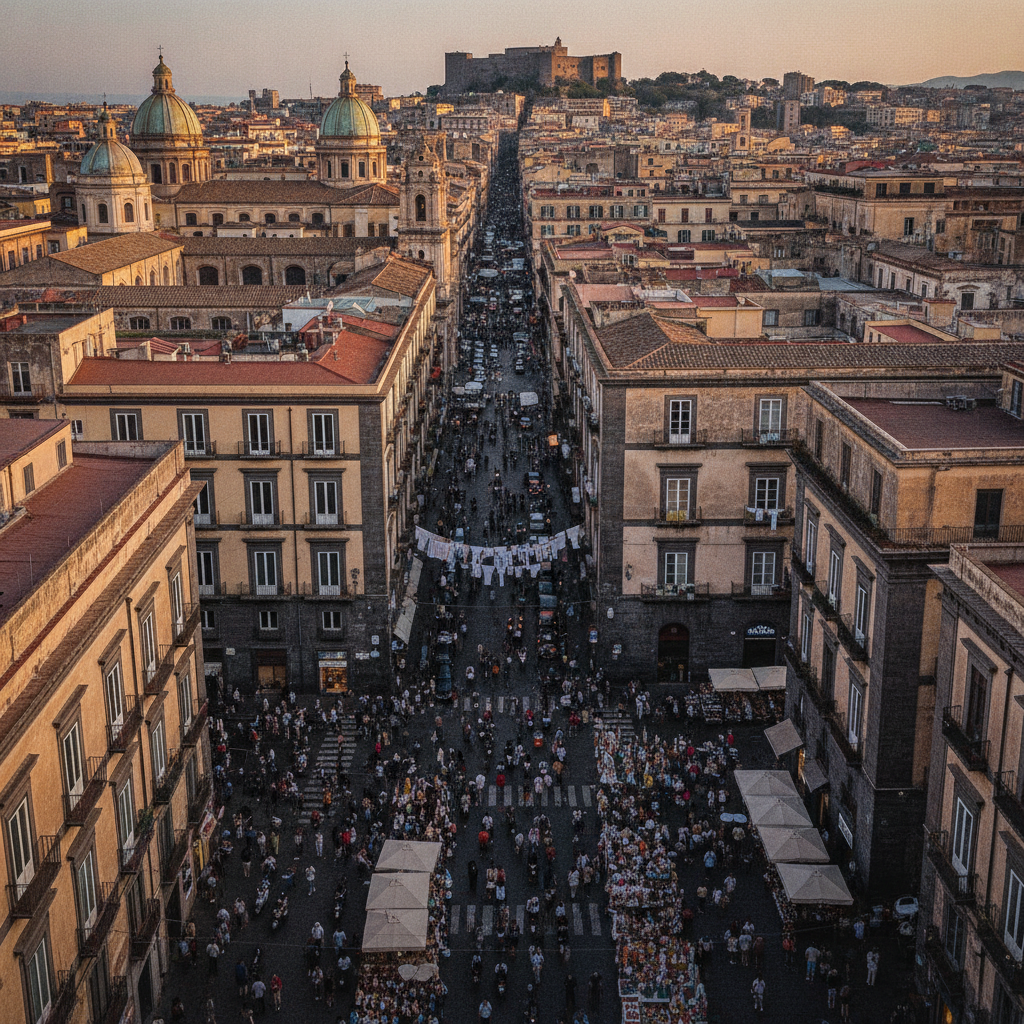
The Spaccanapoli (the 'Naples-splitter' — the perfectly straight road that bisects the historic centre of Naples along the path of the ancient Greek-Roman 'decumanus inferior', the east-west road of the ancient Greek city of Neapolis (founded approximately 470 BC): the street (the Spaccanapoli — the road known by different names as it crosses the historic centre from west to east: the 'Via Benedetto Croce' (the western section), the 'Via San Biagio dei Librai' (the central section — the 'Street of the Booksellers of Librai', the medieval street of the book trade of Naples), and the 'Via Vicaria Vecchia' (the eastern section)): the Via San Gregorio Armeno (the 'Street of San Gregorio Armeno' — the cross street off the Spaccanapoli that is the most famous street in Naples for the 'presepe' (the Nativity scene — the Neapolitan tradition of the elaborate Nativity scene miniature): the via San Gregorio Armeno is the centre of the Neapolitan 'presepe' craft industry, the street lined with the workshops and the shops of the 'pastori' (the artisans who make the figures for the Neapolitan Nativity scenes — the figures ranging from the traditional Nativity scene characters (the Holy Family, the Three Kings, the shepherds) to the contemporary satirical figures (the politicians, the celebrities, and the football players) that are the distinctive feature of the Neapolitan presepe tradition): the San Domenico Maggiore (the 'Church of San Domenico Maggiore' — the great Gothic church on the Piazza San Domenico Maggiore at the centre of the Spaccanapoli, the church built 1283-1324, the church where the philosopher and theologian Thomas Aquinas (1225-1274) taught (the 'Sacristy of San Domenico Maggiore' containing the 38 coffins of the members of the Aragonese royal family of Naples — the most macabre royal collection in Italy)).
- 2
Napoli Sotterranea — The Underground City
The 'Napoli Sotterranea' (the 'Underground Naples' — the network of tunnels, cisterns, aqueducts, catacombs, and underground spaces beneath the historic centre of Naples, one of the most extensive and the most visited underground urban networks in the world): the history (the Napoli Sotterranea — the underground network that was created over 2,400 years of construction and use: the original Greek rock-cut cisterns ('stipes') for the water supply of the ancient city of Neapolis (cut into the yellow volcanic tuff of the Campanian landscape in the 4th-3rd century BC), the Roman expansion of the water supply system (the 'cunicoli' — the tunnels connecting the cisterns to form the Roman aqueduct of Neapolis), the medieval and post-medieval use of the underground spaces (the cisterns of the Bourbon aqueduct system of the 18th-19th centuries — the 'Real Ferdinandeo' aqueduct built 1770-1885 that used the ancient underground cisterns as part of the Bourbon water supply system of the Kingdom of Naples), and the Second World War use (the underground spaces used as the civilian shelters during the Allied bombing of Naples in 1943 (the most heavily bombed city in Italy during the Second World War) — the underground spaces converted to bomb shelters for the population of the city): the tours (the 'Napoli Sotterranea' tours — the guided underground walking tours through approximately 2 km of the underground network beneath the historic centre of Naples, the tours passing through the Greek cisterns, the Roman tunnels, the Bourbon aqueduct sections, and the Second World War shelter spaces).
- 3
The 448 Churches of Naples — Baroque Capital of Italy
The churches of Naples (the 448 churches of the Naples historic centre — the most extraordinary concentration of religious art and architecture in any city in the world, the result of the patronage of the Kingdom of Naples (the most powerful kingdom in Italy for most of the medieval and early modern period): the baroque (the Naples baroque — the baroque art and architecture of Naples in the 17th-18th century, the period when Naples was the capital of the Spanish Viceroyalty of Naples (1503-1707) and the most populous city in Europe after Paris, the city that was the greatest patron of the baroque arts in Italy): the Gesù Nuovo (the 'Church of Gesù Nuovo' — the most spectacular baroque church facade in Naples: the church built 1584-1601 on the site of the 15th-century palazzo of the Sanseverino princes (whose facade of rusticated diamond-point stonework was preserved as the church facade — the unique 'diamante' rustication of the Gesù Nuovo that is unlike any other church facade in the world)): the Santa Chiara (the 'Basilica di Santa Chiara' — the greatest Gothic church in Naples, founded 1310-1328 by the Angevin queen Sancia of Majorca, the church that was destroyed in the Allied bombing of 1943 and rebuilt after the war: the 'chiostro delle clarisse' (the 'Cloister of the Poor Clares') — the 18th-century cloister decorated with the majolica tiles in the pastoral landscape designs that are the most famous decorative ensemble in Naples): the Duomo di Napoli (the Cathedral of Naples — the Duomo dedicated to San Gennaro (the patron saint of Naples), the cathedral built 1294-1323 on the site of the ancient Greek temple, the cathedral containing the 'Cappella di San Gennaro' (the chapel that houses the phials of the dried blood of San Gennaro — the blood that the Neapolitans believe liquefies three times a year in the miracle of the liquefaction of the blood of San Gennaro, the most important religious event in the Naples calendar).
- 4
Piazza del Plebiscito & the Royal Naples
The Piazza del Plebiscito (the largest piazza in Naples — the great ceremonial plaza in front of the Royal Palace of Naples, the plaza that is the civic and the symbolic heart of the city): the piazza (the Piazza del Plebiscito — the semicircular neoclassical colonnade (the 'colonnato' of the Church of San Francesco di Paola) embracing the great open space of the piazza: the piazza dominated by the Palazzo Reale (the 'Royal Palace of Naples' — the 17th-century royal palace of the Spanish Viceroys of Naples and subsequently the palace of the Bourbon Kings of the Two Sicilies: the 169-metre long palace facade facing the piazza, the palace containing the royal apartments of the Bourbons (now a museum) and the Biblioteca Nazionale (the National Library of Naples — the library with the most important manuscript collection in southern Italy, including the papyri from the Villa dei Papiri at Herculaneum)): the San Francesco di Paola (the Basilica di San Francesco di Paola — the neoclassical church built 1817-1846 to the design of Pietro Bianchi, the church modelled on the Pantheon in Rome (the circular colonnaded building with the central dome of 34 metres in diameter): the Castel Nuovo (the 'Castel Nuovo' — the 'New Castle' or 'Maschio Angioino', the great medieval fortress on the Naples waterfront, built 1279-1282 by Charles I of Anjou (the founder of the Angevin Kingdom of Naples): the castle with the five cylindrical towers and the Renaissance triumphal arch of Alfonso I of Aragon (the 'Arco di Trionfo' — the marble triumphal arch built 1453-1466 inserted between the two towers of the main gate of the Castel Nuovo, the most important Renaissance sculpture programme in southern Italy).
- 5
National Archaeological Museum — The Greatest Collection of Antiquity
The Museo Archeologico Nazionale di Napoli (the 'National Archaeological Museum of Naples' — the MANN: the most important collection of Greco-Roman antiquities in the world, the museum that houses the treasures recovered from the excavations of Pompeii and Herculaneum (the two Roman cities buried by the eruption of Mount Vesuvius in 79 AD) together with the Farnese collection (the greatest private collection of antiquities in the history of collecting, assembled by the Farnese Popes and cardinals in Rome and transferred to Naples in the 18th century)): the Farnese collection (the 'Collezione Farnese' — the antiquities collection assembled by the Farnese family, the most important noble family in the Italian Renaissance: the collection including the 'Toro Farnese' (the 'Farnese Bull' — the largest ancient sculpture group surviving from antiquity, the marble group of 3.7 metres height showing the punishment of Dirce at the hands of Amphion and Zethus), the 'Ercole Farnese' (the 'Farnese Hercules' — the colossal marble statue of the resting Hercules, a Roman copy of the 4th-century BC original by Lysippos), and the 'Flora Farnese' (the 'Farnese Flora' — the colossal marble statue of the goddess Flora, the 3.43-metre tall copy of an early 3rd-century BC original)): the Pompeii collection (the 'Sala della Villa dei Papiri' and the 'Sezione Pompeiana' — the collection from the excavations of Pompeii and Herculaneum: the most important collection of Roman paintings in the world (the frescoes from the 'Villa of the Mysteries' at Pompeii), the extraordinary collection of ancient bronzes from the Villa dei Papiri at Herculaneum (the 89 bronze sculptures, including the 'Dancer' and the 'Mercury at Rest'), and the 'Gabinetto Segreto' (the 'Secret Cabinet' — the collection of erotica from Pompeii and Herculaneum, the sexual art of the ancient Romans that was judged too explicit for public display and locked in the Secret Cabinet from 1821 to 2000)).
- 6
Piazza Bellini & the Greek Walls of Ancient Neapolis
The Piazza Bellini (the central square of the bohemian and student quarter of the Naples historic centre, the piazza that stands on the site of the most visible surviving section of the Greek defensive walls of the ancient city of Neapolis): the piazza (the Piazza Bellini — the square named after the Sicilian opera composer Vincenzo Bellini (1801-1835), the square flanked by the cafés, the bars, the bookshops, and the music venues of the alternative Naples: the piazza with the statue of Bellini (the marble statue of the composer in the centre of the piazza), the trees (the great trees shading the square), and the excavated Greek walls (the excavated section of the 4th-century BC defensive walls of the ancient Greek city of Neapolis visible in the sunken excavation area in the centre of the piazza — the yellow tuff walls of the 'mura greche' (the Greek walls) forming a rectangle approximately 15 metres long visible below the level of the modern piazza)): the Sant'Anna dei Lombardi (the 'Church of Sant'Anna dei Lombardi' — also known as 'Santa Maria di Monteoliveto': the 15th-century church that contains the finest collection of Renaissance sculpture in Naples, including the 'Pietà' (the terracotta Pietà by Guido Mazzoni (1478) — the eight life-size terracotta figures of the 'Compianto sul Cristo Morto' (the 'Lamentation over the Dead Christ') that represent the most emotionally powerful work of the Italian late-Gothic sculptural tradition): the Galleria Umberto I (the 'Galleria Umberto I' — the great 19th-century shopping arcade in the centre of Naples, built 1887-1890 to the design of Emanuele Rocco: the cross-shaped arcade with the 57-metre high glass and iron dome at the intersection of the four arms, the arcade modelled on the Galleria Vittorio Emanuele II in Milan and the most impressive 19th-century arcade in southern Italy).
Walk this route with audio
Stories play automatically as you reach each stop — no tapping needed.
More in naples
Via Toledo, Spanish Quarter & Neapolitan Street Life
Pizza Margherita, Street Food & Naples as the Gastronomic Capital of Italy
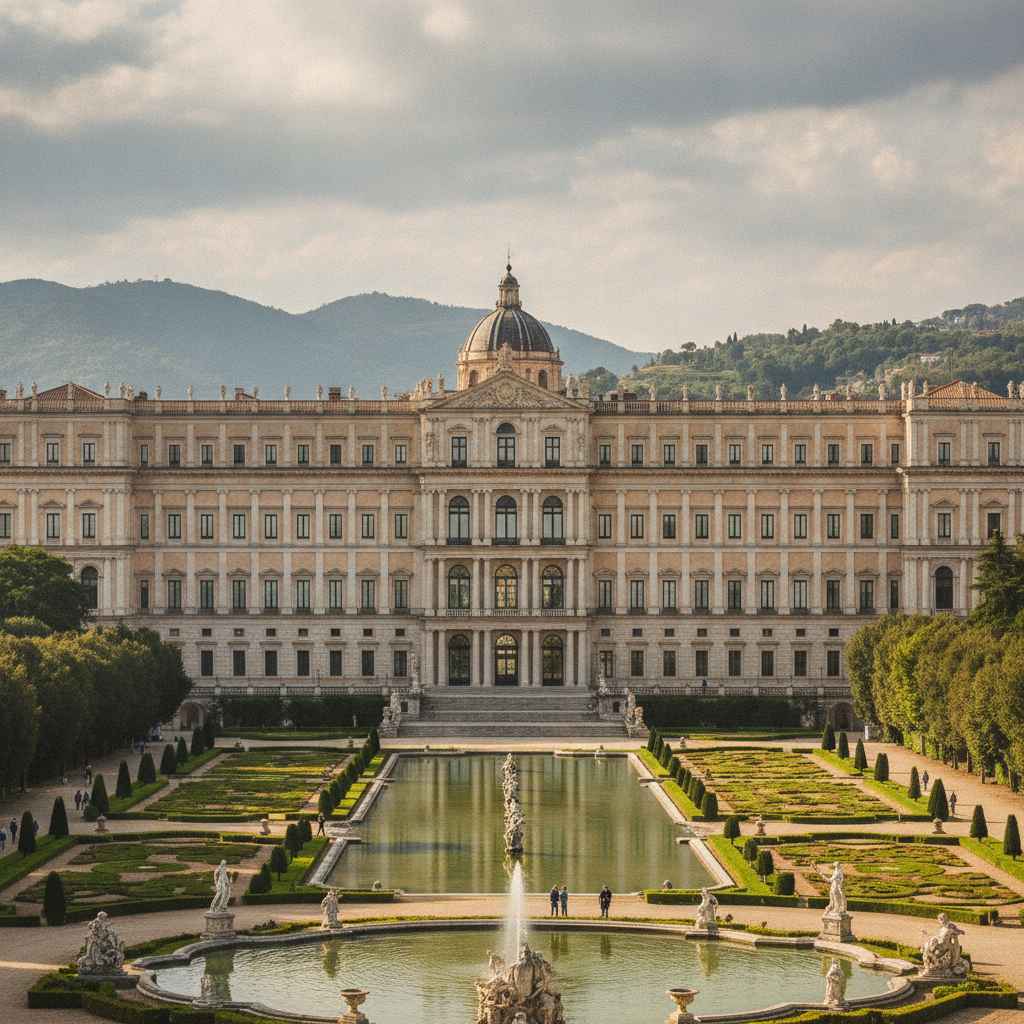
Caserta Royal Palace — The Versailles of Italy
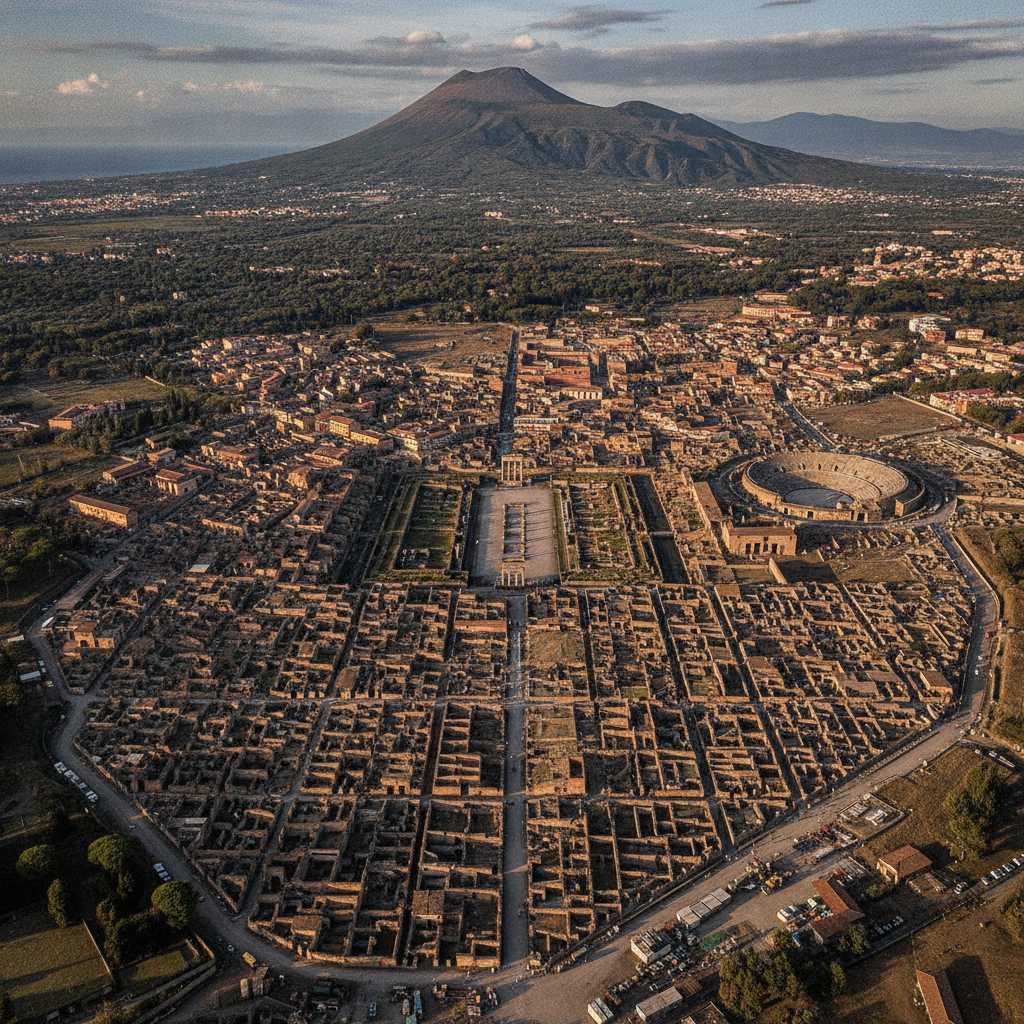
Pompeii, Mount Vesuvius & Herculaneum — Cities Frozen in Time
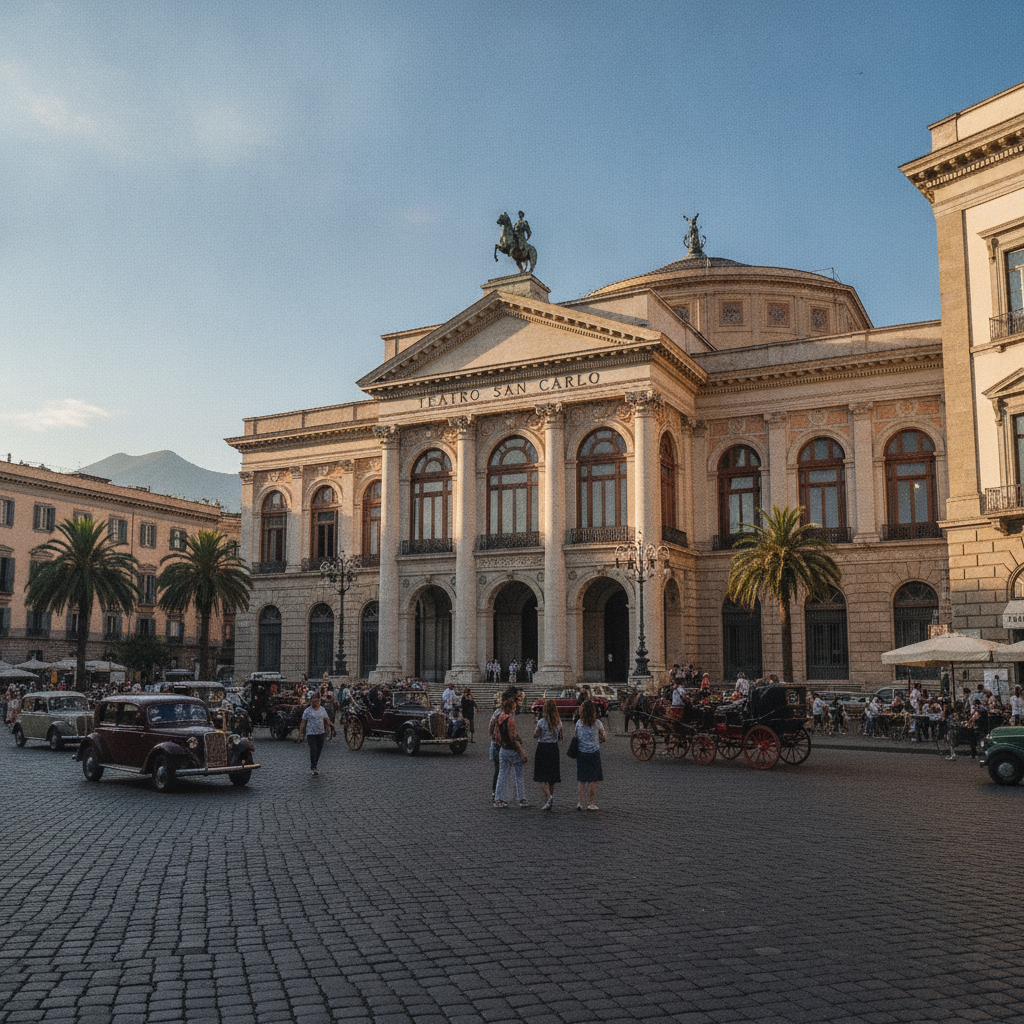
Teatro San Carlo — The World's Oldest Opera House