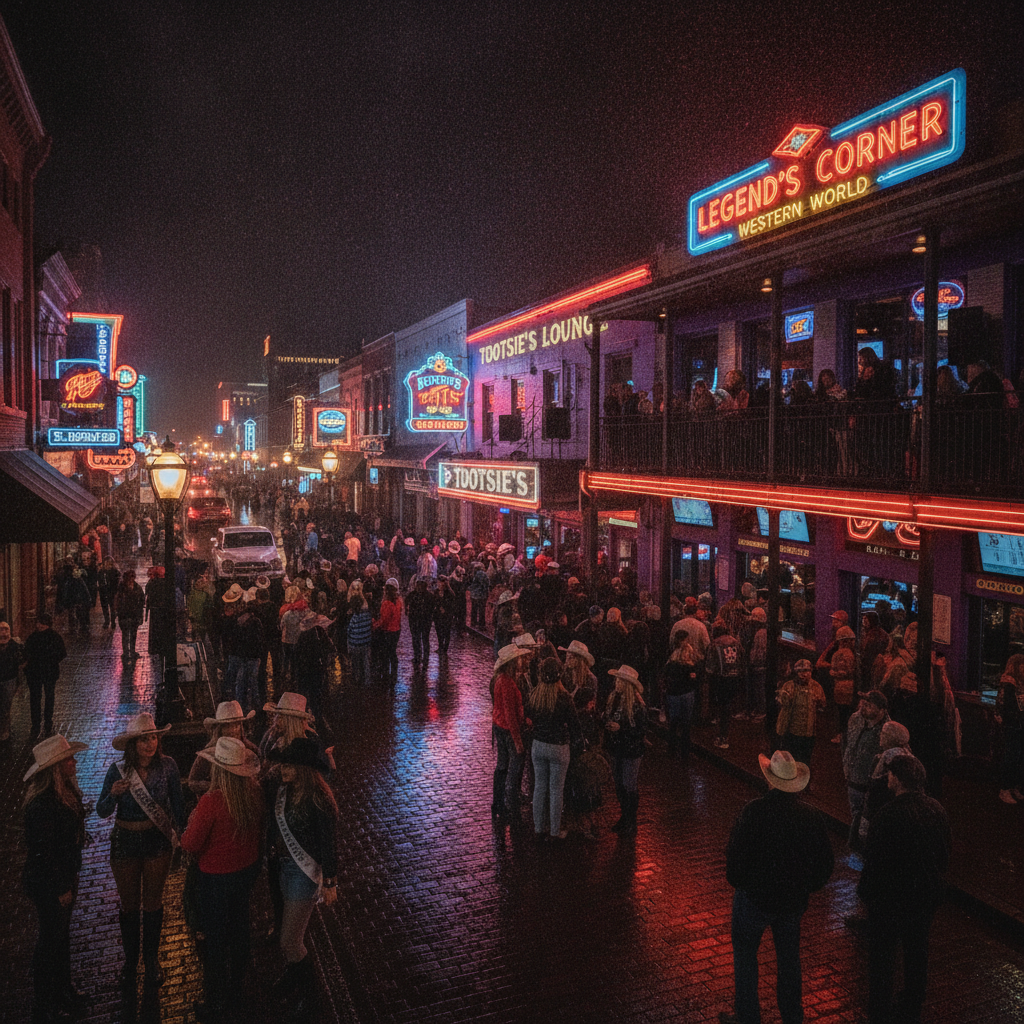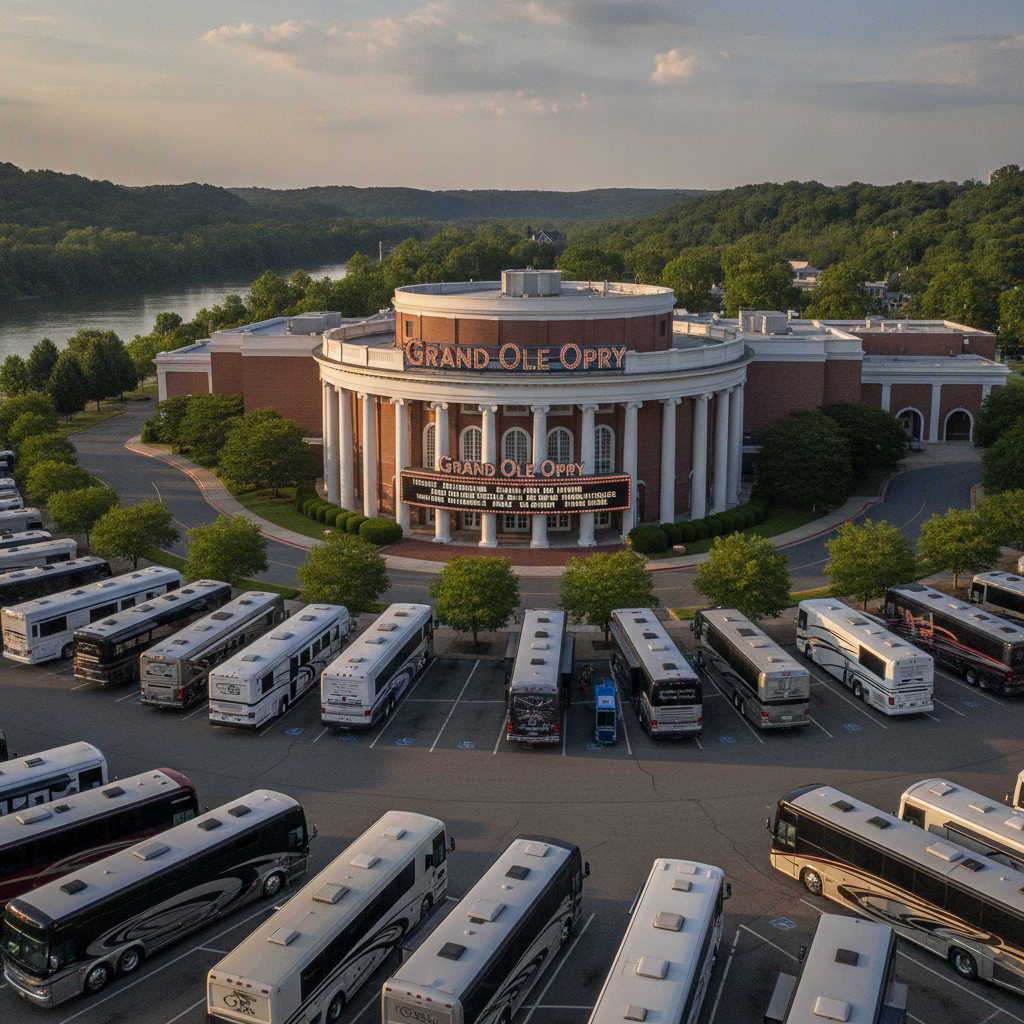
Grand Ole Opry, Country Music Heritage & the Soul of Nashville
The Grand Ole Opry (the weekly live country music concert and radio broadcast held at the Grand Ole Opry House in Nashville — the longest-running live radio broadcast in American history, begun October 5, 1927 on WSM Radio as the 'WSM Barn Dance' and renamed the Grand Ole Opry in 1927 by announcer George D. Hay) is the institution most responsible for the global spread and commercial success of country music, and the single institution most central to Nashville's identity as 'Music City USA'.
- 1
The Grand Ole Opry — America's Longest-Running Radio Broadcast
The Grand Ole Opry (the weekly live country music show broadcast on WSM Radio (650 AM Nashville — the 50,000-watt clear-channel AM radio station whose signal reaches across the entire eastern United States on clear nights, the radio station whose long reach made the Grand Ole Opry the most powerful promotional platform for country music artists in the pre-television era)): the Opry format (the variety show format — the Opry is not a concert by a single artist but a variety show featuring 8-12 acts of different styles (traditional country, bluegrass, country-pop, Americana, and contemporary country) taking turns performing 2-4 songs each, with the performances interspersed with scripted comedy segments, sponsor advertisements, and the announcements that maintain the Opry's sense of community): the Opry membership (the most prestigious honour in country music — the 'circle of induction' (the circular section of the stage of the Ryman Auditorium that was cut out of the original Ryman stage and installed in the stage of the Grand Ole Opry House when the Opry moved in 1974, so that all performers at the Opry stand on the original wood of the Ryman stage) into which new Opry members are inducted in a ceremony that is the most emotional and most watched event in the country music calendar): current members include Garth Brooks, Dolly Parton, Brad Paisley, Dierks Bentley, Carrie Underwood, and approximately 90 others.
- 2
Hank Williams, Johnny Cash & the Country Music Legends
The country music legends who define Nashville's musical identity: Hank Williams Sr. (born September 17, 1923 in Georgiana, Alabama; died January 1, 1953 in Oak Hill, West Virginia — the most influential country music songwriter and performer in the history of the genre, the man who more than anyone else shaped the emotional vocabulary of country music): Williams's Nashville career (the songwriter who came to Nashville in 1946 and within 3 years had established himself as the greatest country music star of the era, recording his signature songs — 'I'm So Lonesome I Could Cry' (1949), 'Cold Cold Heart' (1951), 'Your Cheatin' Heart' (1952), 'Jambalaya (On the Bayou)' (1952), 'I'll Never Get Out of This World Alive' (1952) — for MGM Records at Castle Studio in Nashville): Johnny Cash (born February 26, 1932 in Kingsland, Arkansas; died September 12, 2003 in Nashville — 'The Man in Black', the country musician who more than any other bridged the gap between country, rockabilly, folk, and rock, and whose recordings at Sun Studio in Memphis (1955-1958) and for Columbia Records in Nashville (1958-1994) constitute one of the most extensive and most varied recording careers in the history of popular music): Cash's Nashville career (the recording of 'Ring of Fire' (1963), 'Folsom Prison Blues' (the original 1956 version at Sun Studio and the live 1968 'At Folsom Prison' recording that revived Cash's career), and the American Recordings series (1994-2003, produced by Rick Rubin — the 'unplugged' late-career recordings that introduced Cash to a rock and alternative music audience and are now considered among the most important recordings in American music history)).
- 3
Dolly Parton & Loretta Lynn — Women Who Shaped Country Music
The women who shaped country music in Nashville: Dolly Parton (born January 19, 1946 in Locust Ridge, Sevier County, Tennessee — the most beloved country music star in history, the songwriter who wrote 'I Will Always Love You' (1973 — the song originally recorded as a gentle country ballad by Parton for RCA Records, later covered by Whitney Houston in 1992 in the version that became one of the best-selling singles in history), 'Jolene' (1973 — the song with the most distinctive opening guitar riff and the most compelling narrative in country music history), and 'Coat of Many Colors' (1971 — the autobiographical song about Parton's impoverished childhood in rural Tennessee that is considered her finest composition)): Parton's Nashville career (the move to Nashville at age 18 in 1964, the partnership with Porter Wagoner (the television host who gave Parton her first national television exposure on 'The Porter Wagoner Show' (1967-1974)), the transition from traditional country to country-pop crossover (the 'Here You Come Again' (1977) album that made Parton a mainstream pop star), and the Dollywood theme park (the amusement park in Pigeon Forge, Tennessee established 1986 that is the most visited attraction in Tennessee after the Great Smoky Mountains National Park)): Loretta Lynn (born April 14, 1932 in Butcher Hollow, Kentucky; died October 4, 2022 in Hurricane Mills, Tennessee — 'The Coal Miner's Daughter', the country music singer-songwriter whose autobiography and the subsequent Jack Nicholson-produced film (1980, directed by Michael Apted, with Sissy Spacek winning the Academy Award for Best Actress) is the defining story of the Nashville country music dream.
- 4
Opryland Hotel & the Cumberland River Greenway
Gaylord Opryland Resort & Convention Center (2800 Opryland Drive, Nashville — the 2,888-room hotel and convention center adjacent to the Grand Ole Opry House, the largest hotel in the United States outside of Las Vegas (by number of rooms), the largest non-gaming hotel in the world): the Opryland Hotel (the hotel famous for its three enormous glass-enclosed indoor atriums — the 'Cascades' atrium (the 4.5-acre (1.8-hectare) atrium with a 12,000 square-foot (1,115 m²) indoor river and boat rides), the 'Delta' atrium (the 4.5-acre (1.8-hectare) atrium with an indoor river (the 'Delta River' — the 110-foot (34-metre) wide, 110-foot (34-metre) long flatboat ride through the atrium), the flatboat rides, and the tropical plant and tree landscaping), and the 'Garden Conservatory' atrium): the Cumberland River Greenway (the 6.5-mile (10.5-km) paved multi-use trail along the Cumberland River between the Shelby Bottoms Greenway in East Nashville and the downtown Nashville riverfront — the most scenic cycling and running trail in Nashville, following the river that bisects the city and providing access to the Shelby Park and Bottoms (the 1,000-acre (405-hectare) park and wildlife area in East Nashville).
- 5
Tennessee State Capitol & Downtown Nashville History
Tennessee State Capitol (600 Charlotte Avenue, downtown Nashville — the Tennessee State Capitol building, designed by Philadelphia architect William Strickland (1788-1854) and built 1845-1859 in the Greek Revival style, one of the finest examples of Greek Revival civic architecture in the United States): the Tennessee State Capitol (the capitol building that Strickland considered his masterpiece — he died before it was completed and was entombed within the north wall of the building at his request (one of only two people to be interred within the structure of an American state capitol, the other being his assistant Harvey Akroyd, who is interred in the south wall)): the Tennessee State Museum (505 Deaderick Street — the major state history museum in the new building at Nashville Public Square Park, covering Tennessee history from pre-Columbian Native American civilizations through the Civil War (the Tennessee Theatre of the Civil War was one of the most active and most destructive — Nashville fell to Union forces in February 1862 and served as the primary Union supply base in the western theatre for the remainder of the war) to the civil rights movement and the modern era): the Nashville Public Square Park (the park in front of the Metropolitan Courthouse that serves as Nashville's principal public gathering space for outdoor concerts, festivals, and civic events).
- 6
East Nashville & the 5 Points Neighbourhood
East Nashville (the neighbourhood on the east bank of the Cumberland River, across the river from downtown Nashville — the neighbourhood that has transformed from a working-class residential area into Nashville's most vibrant arts, music, dining, and independent culture neighbourhood): the 5 Points neighbourhood (the intersection of 5 streets (Woodland Street, McFerrin Avenue, Clearview Avenue, Holly Street, and 11th Street) in East Nashville that serves as the social and commercial heart of the neighbourhood — the cluster of independent restaurants, coffee shops, bars, record stores, and boutiques that defines the character of East Nashville): the East Nashville dining scene (the neighbourhood has become the culinary frontier of Nashville, with restaurants (Mas Tacos Por Favor (732B McFerrin Avenue — the nationally acclaimed taqueria), the Pharmacy Burger Parlor & Beer Garden (731 McFerrin Avenue — the award-winning craft beer and gourmet burger restaurant with the finest beer garden in Nashville), Mitchell Delicatessen (1402 McGavock Pike — the neighbourhood Jewish-style deli), and Rolf and Daughters (700 Taylor Street, Germantown — Nashville's most acclaimed farm-to-table Italian restaurant, repeatedly named the best restaurant in Nashville by local and national food publications)): the East Nashville music scene (the neighbourhood that has replaced Music Row as the primary location for Nashville's independent and Americana music community, with venues (Dino's (411 Gallatin Avenue — the diviest and most beloved dive bar in Nashville, famous for the cheeseburger and the Tuesday residencies of Nashville's best independent country and Americana artists)).
Walk this route with audio
Stories play automatically as you reach each stop — no tapping needed.
More in nashville
Nashville Hot Chicken, Meat & Three & the Nashville Food Scene
Belle Meade Plantation, Civil War History & Tennessee Heritage
Natchez Trace Parkway, Percy Priest Lake & Nashville Outdoors
Fisk University, the Nashville Sit-Ins & Civil Rights History
Nashville Sports Culture — Predators, Titans & the Athens of the South