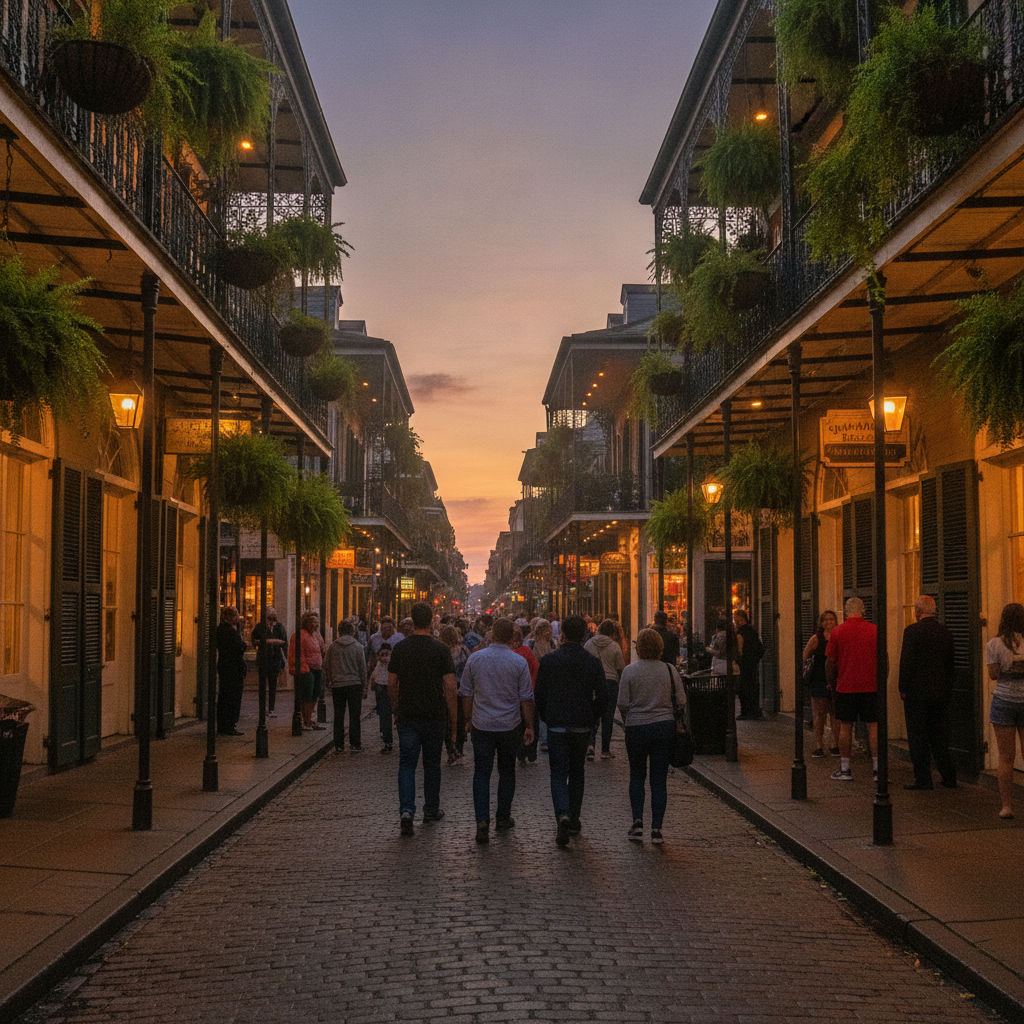
New Orleans Creole & Cajun Food — America's Greatest Culinary Tradition
New Orleans has the most distinctive and most historically layered food culture of any American city — the synthesis of French Creole haute cuisine, West African cooking traditions, Spanish colonial cooking, and the rustic Cajun tradition of the Acadian settlers has produced a food culture that is unlike any other in the United States, and that produces dishes (gumbo, jambalaya, red beans and rice, po-boy, muffuletta, bananas Foster, bread pudding) that are recognized worldwide as the emblems of American Southern cooking.
- 1
Gumbo — The Defining Dish of New Orleans
Gumbo (the thick, rich stew that is the most iconic and most culturally significant dish in the New Orleans culinary tradition): the word 'gumbo' (from 'ki ngombo' in the Central African Bantu language Ki-Kongo — the word for okra (Abelmoschus esculentus, the vegetable that gives the dish both its name and, in many versions, its thickening power)): the history of gumbo (the dish that synthesizes more culinary traditions than any other American dish: the French contribution (the roux — the slow-cooked mixture of fat and flour that serves as the thickening and flavour base of all gumbo, the French culinary technique that was brought to Louisiana by the French colonial settlers and that remains the foundation of all Creole cooking)); the West African contribution (the okra (brought to Louisiana by West African enslaved people who called it by the Bantu name 'gumbo' or 'gombo') and the file powder (the ground dried leaves of the sassafras tree (Sassafras albidum), a thickener and flavour agent used by the Choctaw people of Louisiana and adopted into Creole cooking)); the Spanish contribution (the tomatoes and peppers used in some versions of gumbo)); the gumbo styles: the 'Gumbo z'Herbes' (the herb gumbo traditionally made on Holy Thursday (the Thursday before Easter), the meatless gumbo made from up to seven different leafy green vegetables — the New Orleans Lenten tradition preserved by Leah Chase at Dooky Chase's), the chicken and andouille gumbo (the most common restaurant gumbo), and the seafood gumbo (the Gulf shrimp, blue crab, and oyster version typical of the restaurants nearest to the Gulf of Mexico).
- 2
Po-Boy, Muffuletta & the Sandwich Traditions of New Orleans
The po-boy (the New Orleans sandwich made on a 'French bread' baguette (the long, crispy-crusted, soft-crumbed white bread made by the New Orleans French bread bakeries (Leidenheimer Baking Company, founded 1896 — the primary supplier of the distinctive New Orleans French bread to restaurants throughout the city) in a style unique to New Orleans (longer and crustier than a standard French baguette, the result of the high-humidity baking environment of New Orleans)) filled with fried seafood (the shrimp po-boy (fried Gulf shrimp), the oyster po-boy (fried Gulf oysters from the famous Plaquemines and St. Bernard Parish oyster beds), the catfish po-boy, or the soft-shell crab po-boy in season) or roast beef 'debris' (the slow-braised beef roast served with the cooking juices soaked into the bread)): the po-boy history (the sandwich was invented in 1929 by the brothers Clovis and Benjamin Martin (the owners of Martin's Coffee Stand and Restaurant on St. Claude Avenue), who offered the sandwiches for free to the striking streetcar workers (the 'poor boys') of the 1929 New Orleans streetcar strike — the sandwich name ('po-boy') is the New Orleans pronunciation of 'poor boy')); the muffuletta (the round Italian-style sandwich on a sesame-seeded round loaf, filled with Italian cold cuts (Genoa salami, mortadella, ham), provolone, and the essential 'olive salad' (the chopped marinated olive and giardiniera mixture that is unique to the New Orleans muffuletta and the defining ingredient of the sandwich) — invented at Central Grocery (923 Decatur Street, established 1906) by the Sicilian immigrant Salvatore Lupo in approximately 1906)).
- 3
Red Beans & Rice — Monday's New Orleans Tradition
Red beans and rice (the traditional Monday dish of New Orleans, a dish so deeply embedded in the city's cultural identity that Louis Armstrong (1901-1971) — the greatest New Orleans jazz musician, the man most responsible for bringing jazz from New Orleans to the world) signed all his personal correspondence 'Red Beans and Ricely Yours'): the red beans and rice tradition (the Monday tradition arose from the practical reality of the weekly domestic routine in New Orleans: the heavy ham bone from Sunday's dinner could be slow-cooked all day Monday (washday — the day when the cook's attention was required for the laundry rather than the kitchen) with the red kidney beans (Phaseolus vulgaris), the 'holy trinity' of New Orleans cooking (the onion, celery, and bell pepper base of virtually all New Orleans Creole and Cajun dishes (the Creole version of the French mirepoix (the onion, celery, and carrot base of French cuisine) adapted to Louisiana's abundance of bell peppers), the andouille sausage (the Cajun smoked pork sausage seasoned with garlic, pepper, and Cajun spices), and the Creole seasoning, and served over long-grain white rice — the dish that has been served in New Orleans homes and restaurants every Monday for at least 200 years); the best red beans in New Orleans (Dooky Chase's (2301 Orleans Avenue, Tremé) and Mandina's (3800 Canal Street, Mid-City — the neighbourhood restaurant founded 1932 that serves the most beloved red beans in the city)).
- 4
Bourbon House & Casamento's — Oyster Traditions
Gulf oysters (the Eastern oyster (Crassostrea virginica) — the oyster farmed in the tidal estuaries of Lake Borgne, Lake Pontchartrain, Breton Sound, and Barataria Bay in the coastal wetlands of southeastern Louisiana — the primary ingredient of the most iconic New Orleans seafood dishes): Oysters Rockefeller (the dish invented by Jules Alciatore at Antoine's Restaurant (713 St. Louis Street, French Quarter) in 1899 as a replacement for French snails (escargots) when the supply of French snails to New Orleans dried up in the late 19th century): the original Oysters Rockefeller recipe (the secret recipe, never published by Antoine's and subject to numerous conflicting claims about its ingredients — the published 'versions' of the recipe are all approximations; the true recipe includes puréed fresh green herbs (not spinach, despite the most common version), bread crumbs, butter, and Herbsaint (the anise liqueur made in New Orleans as a substitute for absinthe), baked on the half shell under a layer of rock salt — the dish was named 'Rockefeller' for its richness, the Rockefeller family being the symbol of American wealth in 1899): Casamento's Restaurant (4330 Magazine Street, Uptown — the oyster restaurant established 1919 by Joe Casamento, famous for the oyster loaf (a po-boy filled with fried oysters on white sandwich bread), the raw oysters on the half shell, and the fried oysters in a cast-iron pan, and for the unique seasonal hours (the restaurant closes from June through August — the traditional 'months without an R' off-season for oysters, when the oysters are spawning and lower in quality) — the most authentic oyster restaurant in New Orleans.
- 5
Commander's Palace & Haute Creole Dining
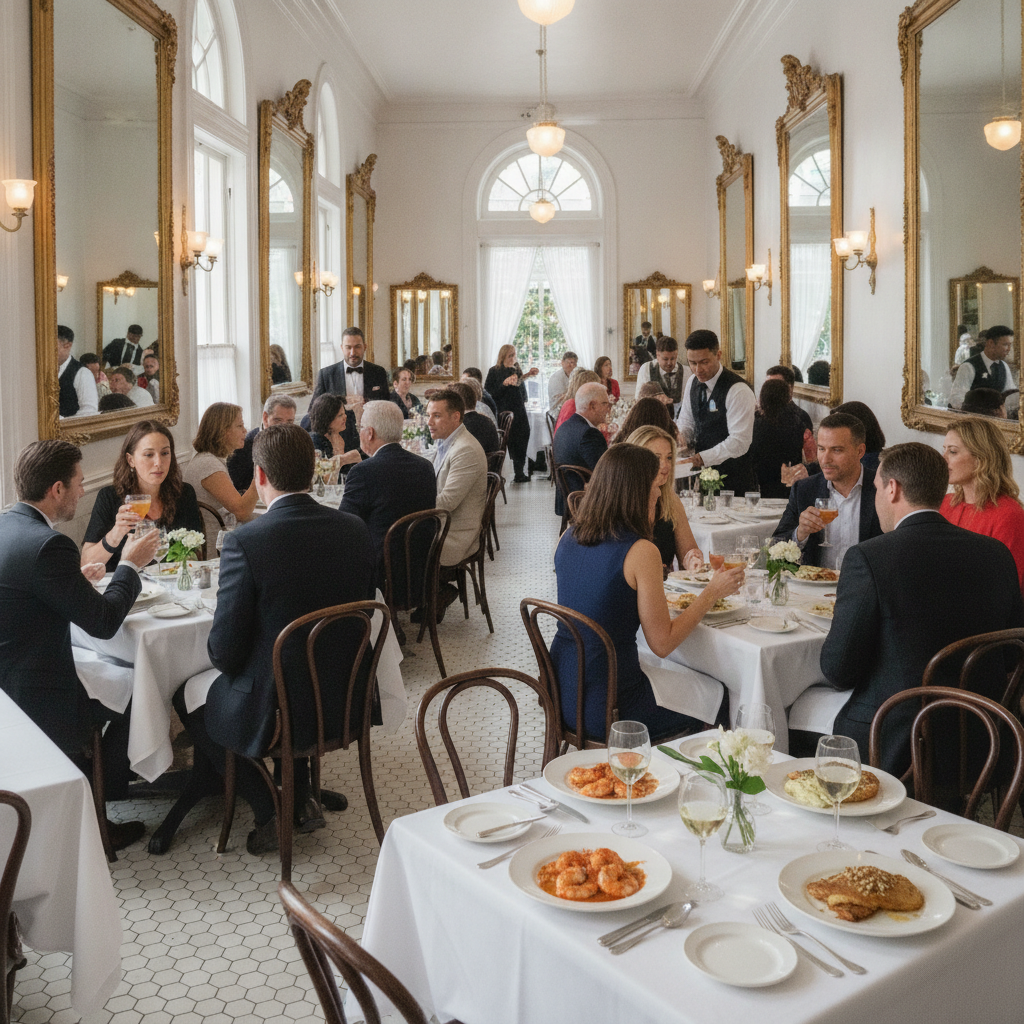
Commander's Palace (1403 Washington Avenue, in the Garden District of New Orleans — the flagship fine dining restaurant of the Brennan family (the Brennan family restaurant dynasty, the most important restaurant family in the history of New Orleans, who own or have owned Commander's Palace, Brennan's, Dickie Brennan's Steakhouse, Café Adelaide, Table One, Bon Temps, and numerous other New Orleans restaurants) and the restaurant that has more James Beard Foundation awards to its credit than any other restaurant in the southern United States): the Commander's Palace tradition (the restaurant established 1893 by Emile Commander and acquired by the Brennan family in 1974, which they have operated as the benchmark of New Orleans haute Creole cuisine ever since): the most famous Commander's Palace contributions to New Orleans food culture are: the creation of 'Haute Creole' cuisine (the cuisine developed by the chefs Paul Prudhomme (who ran Commander's kitchen 1975-1980, leaving to open K-Paul's Louisiana Kitchen) and his successor Emeril Lagasse (who ran Commander's kitchen 1982-1990, leaving to open Emeril's Restaurant) — the cuisine that combined the traditional Creole flavours of New Orleans with the technical precision of classical French cuisine, creating the standard of New Orleans fine dining that still prevails today); the jazz brunch (the famous Commander's Palace Saturday and Sunday jazz brunch — the refined brunch service accompanied by live jazz that is the finest Sunday brunch experience in New Orleans); and the 25-cent martini (the lunchtime 25-cent martini promotion — the Commander's Palace tradition of selling cocktails for 25 cents at lunch, the policy that has made a Commander's Palace Friday lunch the apex of New Orleans restaurant culture).
- 6
Bourbon Street Bars & the Open Container Culture
New Orleans open container culture (the city where public drinking of alcohol is legal throughout the city at all times (with the exception of near schools and churches), one of only a handful of American cities where drinking in public spaces (the 'open container') is permitted by law — the law that has shaped the entire social culture of New Orleans outdoor life): the 'go-cup' (the plastic cup in which bars serve drinks to customers who want to continue drinking as they walk the streets — the New Orleans 'go-cup' (or 'geaux-cup', in the alternative French spelling sometimes used)) is the most distinctive element of the New Orleans bar culture and the most practical expression of the city's laissez-faire attitude toward public revelry; the Hand Grenade (the bright green oversized cocktail sold from multiple Tropical Isle bars on Bourbon Street and at the French Quarter — the most famous New Orleans tourist cocktail, served in a distinctive long glass in the shape of a hand grenade, with its melon-liqueur-based (Midori) recipe — the Tropical Isle bars claim to have invented the Hand Grenade in 1984 and trademark the name): the Sazerac (the official cocktail of New Orleans (designated as such by the Louisiana Legislature in 2008) — the cocktail made from rye whiskey (or cognac, the original spirit), Peychaud's Bitters (the uniquely New Orleans bitters (created 1838 by the Creole apothecary Antoine Amédée Peychaud, who dispensed his medicinal bitters to customers in a coquetier (an egg cup) — the source of the word 'cocktail', according to one of the competing etymologies of the term)), a sugar cube, and an absinthe rinse — the oldest known American cocktail recipe).
Walk this route with audio
Stories play automatically as you reach each stop — no tapping needed.
More in new-orleans
Hurricane Katrina, the Lower Ninth Ward & New Orleans's Resilience
Garden District Mansions, St. Charles Streetcar & Uptown Life

Swamps, Bayous & Louisiana's Wild Cypress Country
Voodoo, Marie Laveau & the Supernatural Culture of New Orleans
The Mississippi River, Steamboats & New Orleans's Port Heritage