Central Park & Museum Mile: Art, Nature & the Heart of Manhattan
Central Park—843 acres of meadows, lakes, woodland and formal gardens in the middle of Manhattan, completed 1876 from a design by Frederick Law Olmsted and Calvert Vaux—is the most visited urban park in the United States (42 million visits a year). On its eastern edge runs Museum Mile: five blocks of Fifth Avenue containing the Metropolitan Museum of Art (the largest art museum in the Western hemisphere), the Guggenheim, and the American Museum of Natural History. This walk combines the park's best interior spaces with the world-class museums on its edge—a day that could easily expand to two or three.
1. Strawberry Fields — The John Lennon Memorial
- 1
Strawberry Fields — The John Lennon Memorial
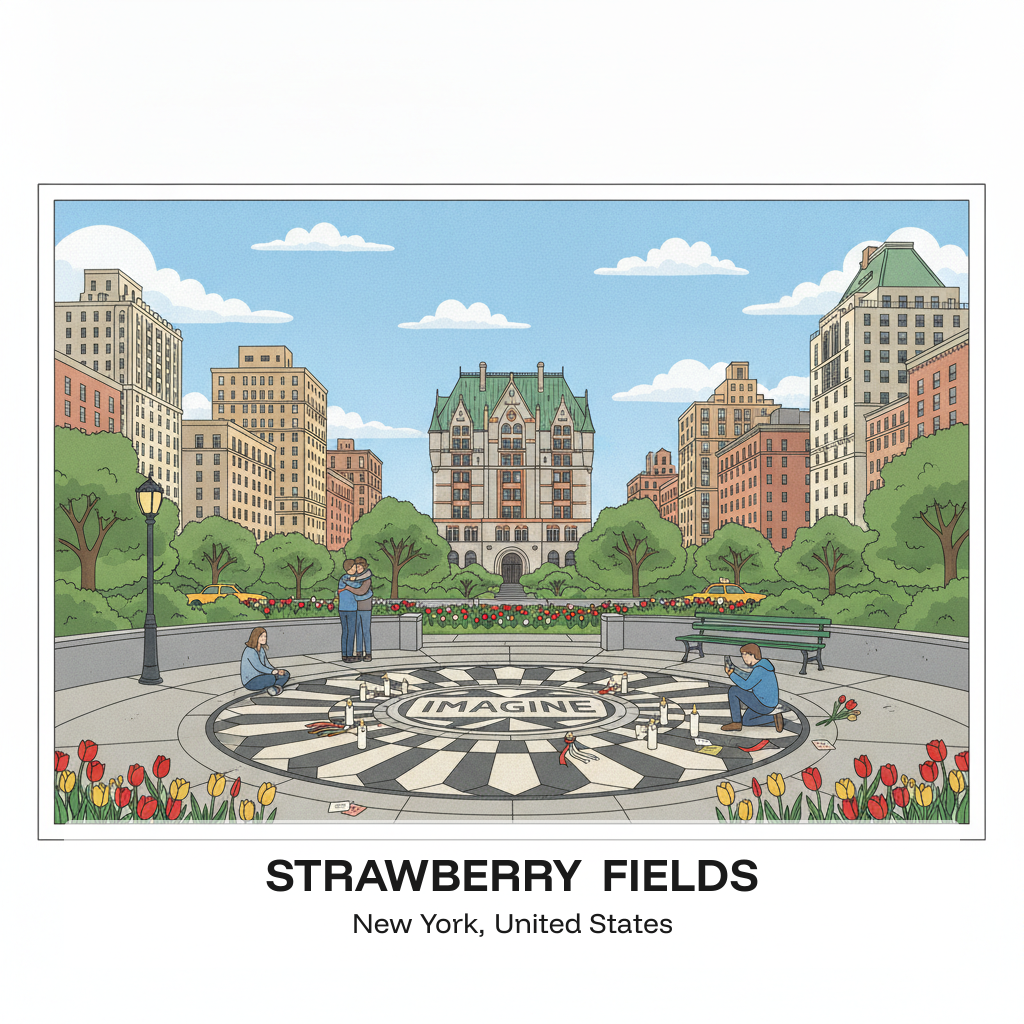
Strawberry Fields is a 2.5-acre section of Central Park on the Upper West Side, opposite the Dakota building (72nd Street and Central Park West) where John Lennon lived and was shot dead on 8 December 1980. The triangular garden—planted with trees and shrubs from every country in the world, donated by 121 nations as a peace garden—centers on a circular mosaic inlaid in the path, bearing the word IMAGINE. The mosaic, designed by Italian artist Franco Toselli and donated by the city of Naples, is a place of constant pilgrimage: at any hour of any day you will find flowers, candles and people sitting in silence. The Dakota, visible through the trees on Central Park West, is one of the most architecturally important residential buildings in New York (completed 1884), and has housed Yoko Ono, Lauren Bacall, Judy Garland, Boris Karloff, and Leonard Bernstein.
- 2
Bethesda Fountain & Terrace — The Heart of Central Park
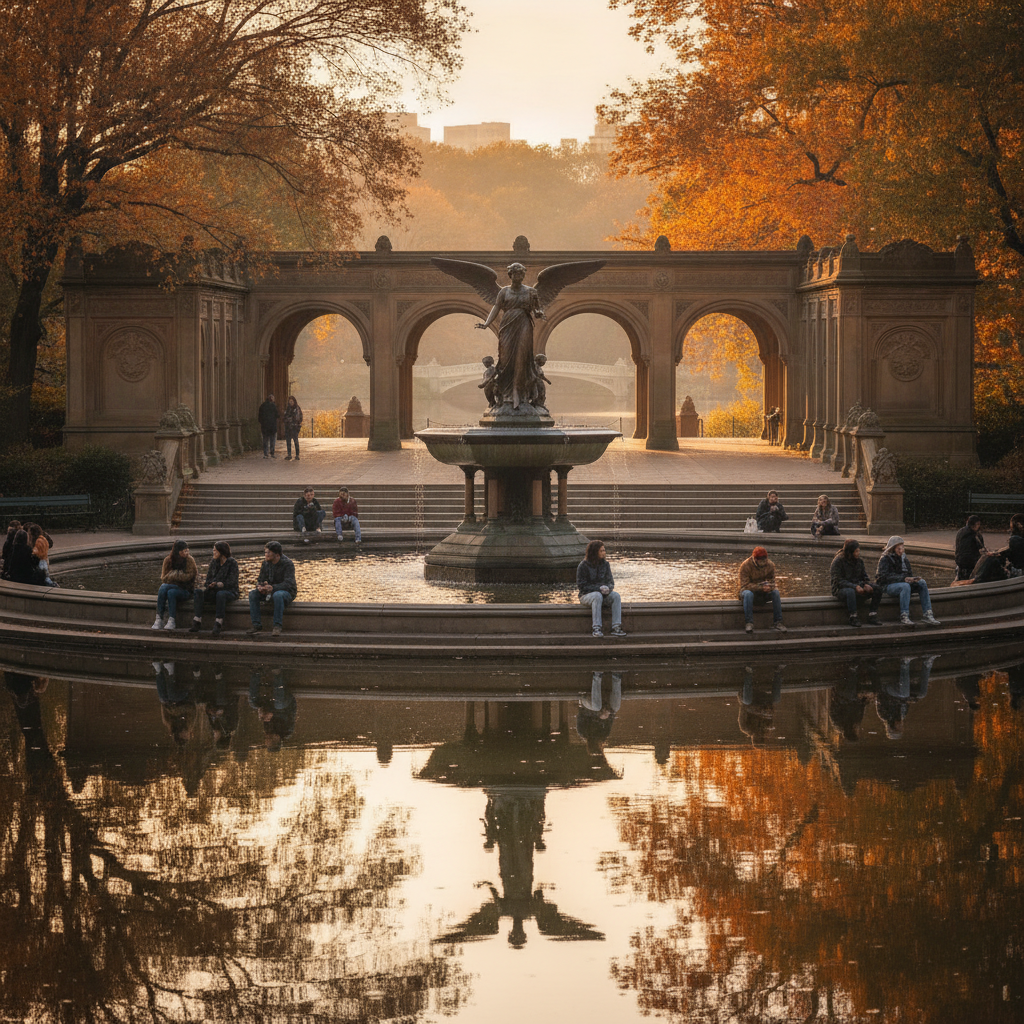
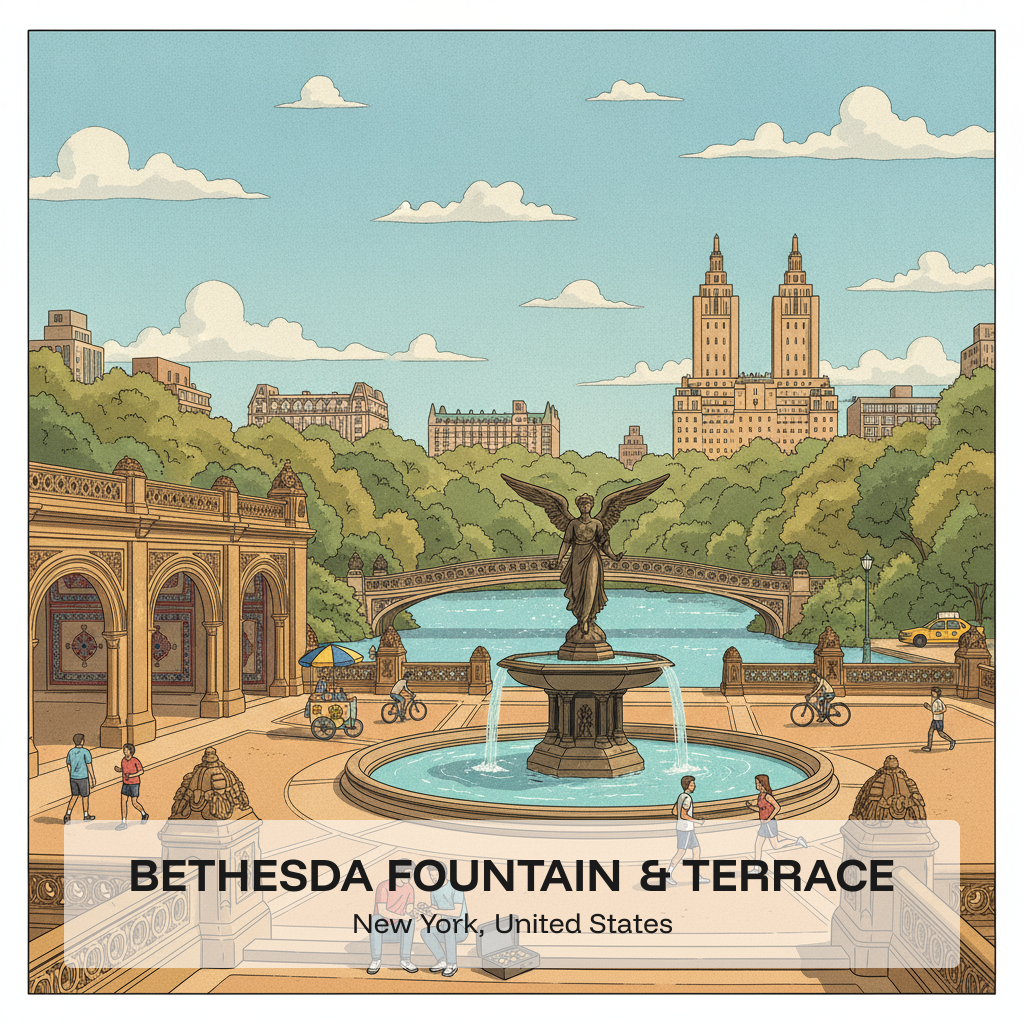
The Bethesda Fountain, at the center of the Bethesda Terrace overlooking the Lake, is the symbolic heart of Central Park. The fountain—designed by Emma Stebbins (the first woman to receive a major public art commission in New York City) and completed in 1873—is topped by the Angel of the Waters, a bronze figure commemorating the Croton Aqueduct that brought fresh water to Manhattan in 1842. The Bethesda Terrace itself—a two-level sandstone terrace connected by a staircase and passage with a ceiling of Minton encaustic tiles—is one of the finest examples of Victorian decorative stonework in America. The view from the terrace to the lake, the Bow Bridge, and the woodland of The Ramble is the definitive image of Central Park. On summer weekends there are often musicians playing in the Arcade below the terrace.
- 3
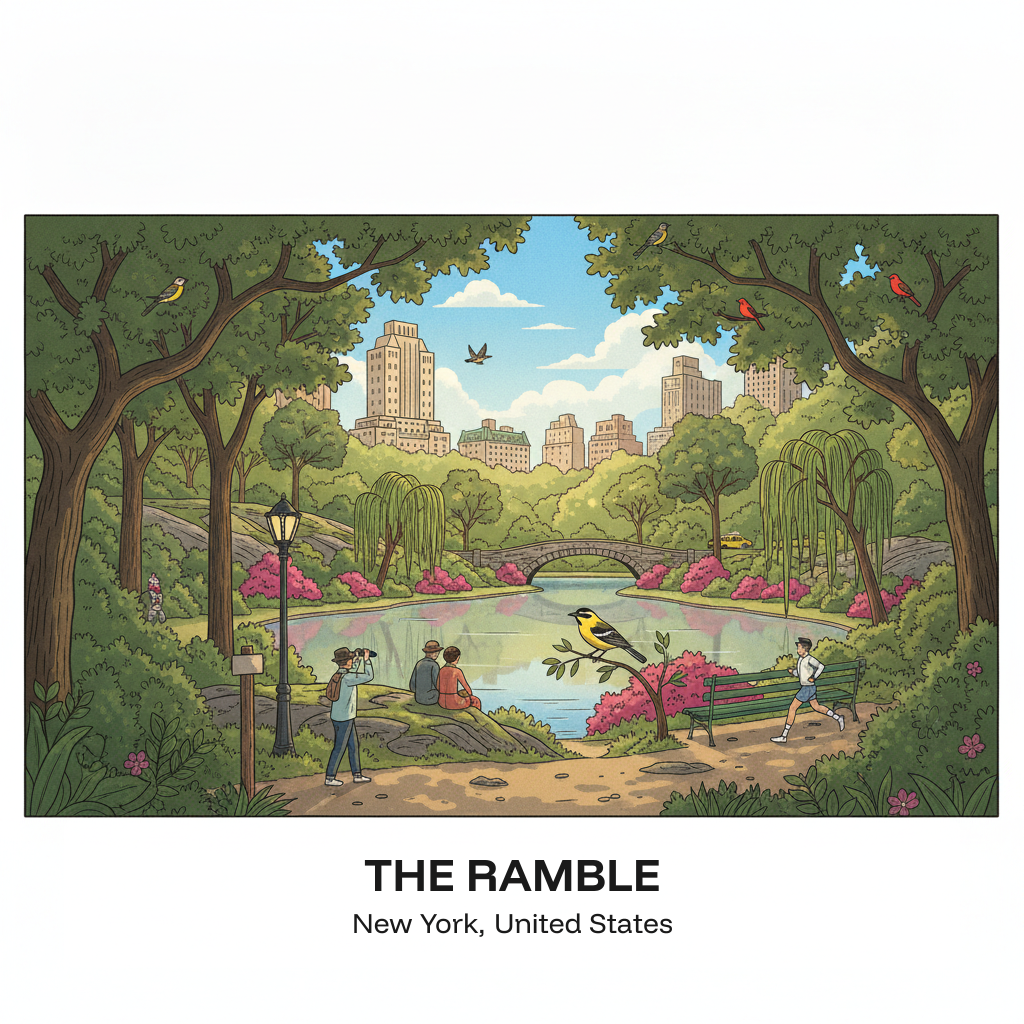
The Ramble — The Wild Heart of the Park
The Ramble is a 36-acre woodland in the center of Central Park—an intentionally wild landscape of winding paths, rocky outcrops, streams and dense plantings designed by Olmsted and Vaux to feel completely unlike the manicured lawns of the rest of the park. It is one of the best urban birdwatching spots in America: over 200 species of migrating birds pass through in spring and autumn, including many warblers, tanagers and thrushes. The paths deliberately disorient—you are supposed to feel lost. The Azalea Pond and Gill (a small artificial stream) are particularly beautiful in spring. Early morning in the Ramble, with birdsong and dappled light through the canopy, is one of the great secret pleasures of New York.
- 4
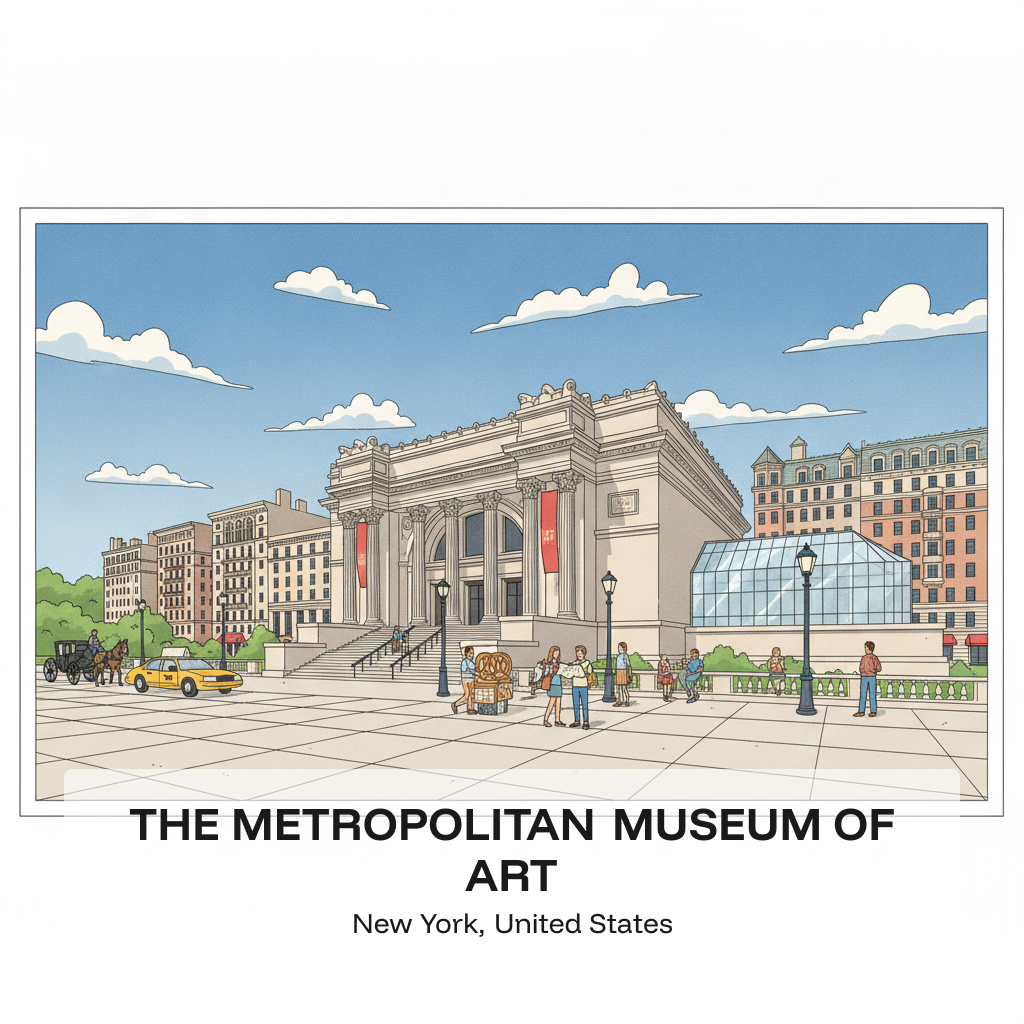
The Metropolitan Museum of Art — The Western World's Greatest Museum
The Metropolitan Museum of Art—'the Met'—is the largest art museum in the Western Hemisphere and one of the greatest museums in the world: 5,000 years of art from every civilization on Earth, in a building of 2 million square feet. The permanent collection includes 1.5 million works across 17 curatorial departments. Do not try to see everything: pick 3–4 highlights. Essential rooms: the Temple of Dendur (an Egyptian temple from 15 BC, relocated from Nubia in 1978, inside a dedicated glass-roofed hall); the American Wing (American art and decorative arts from 1620 to 1940, including the Frank Lloyd Wright Loggia from the Francis Little house); the Arms and Armor Gallery; and the Greek and Roman Galleries. The rooftop garden (open May–October) has contemporary sculpture with views over the Central Park treetops to the Midtown skyline. Suggested entry donation. Allow 3–4 hours minimum.
- 5
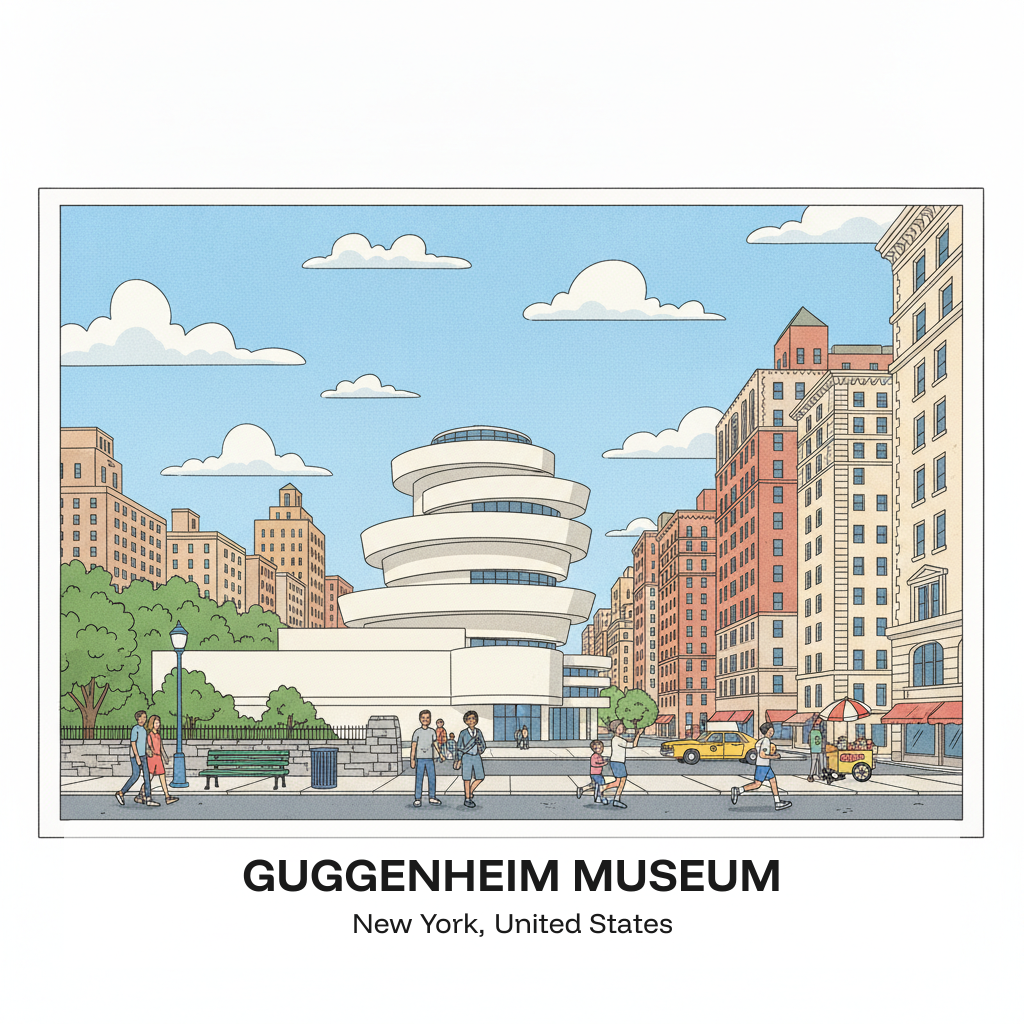
Guggenheim Museum — Frank Lloyd Wright's Only NYC Building
The Solomon R. Guggenheim Museum—Frank Lloyd Wright's only building in New York City, opened 1959, the year of his death—is both the finest modern building in New York and one of the most important architectural achievements of the 20th century. The building is a continuous spiral ramp rising around a central atrium (145 feet high)—the intention was that visitors would take the elevator to the top and walk down, viewing art on the curved walls of the ramp as they descended. The building is now a UNESCO World Heritage Site. The permanent collection (strong in Kandinsky, Klee, Mondrian, Picasso and Chagall) is displayed in the tower galleries; the main rotunda hosts major temporary exhibitions. Paid entry.
- 6
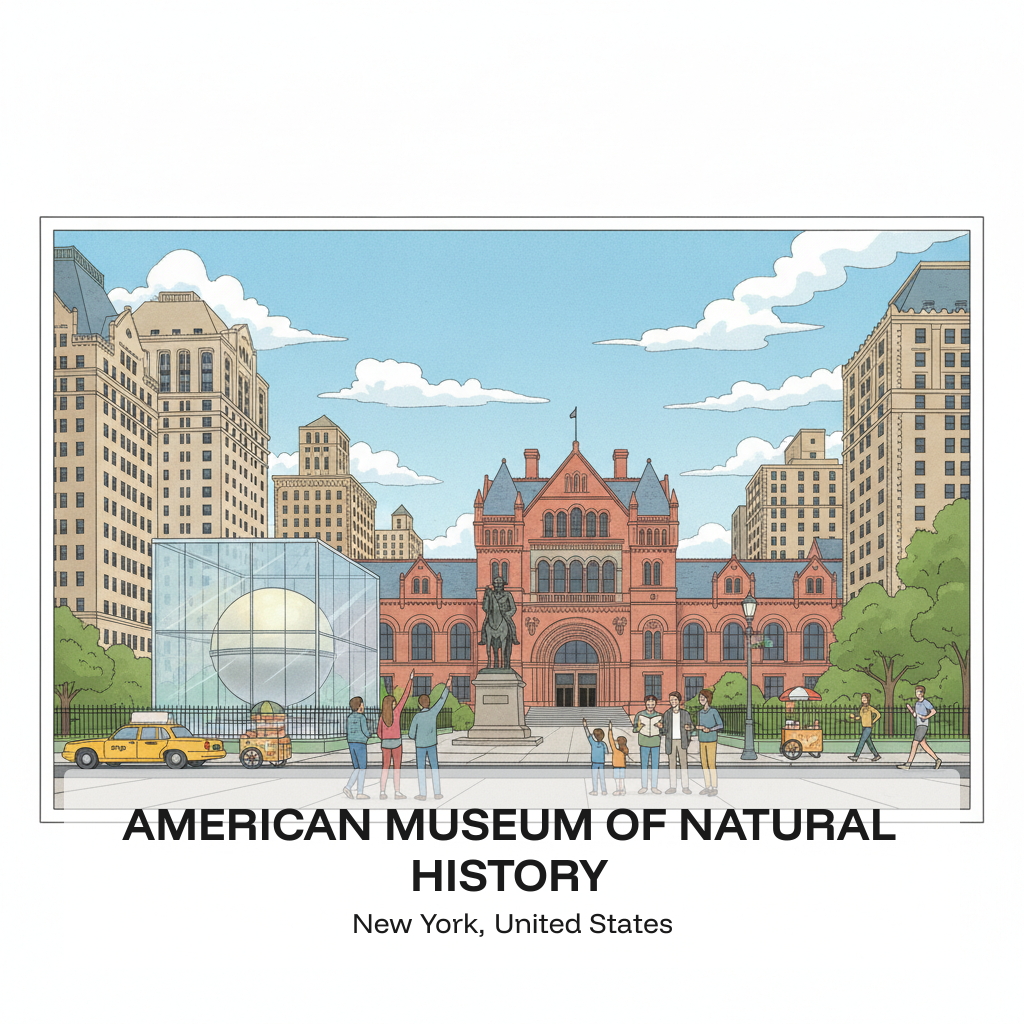
American Museum of Natural History — Dinosaurs, Meteorites & the Universe
The American Museum of Natural History on the western edge of Central Park (81st Street and Central Park West) is one of the largest natural history museums in the world: 45 permanent halls over 4 buildings. The Rose Center for Earth and Space—a glass cube containing a 10-story sphere that houses the Hayden Planetarium (shows every 30 minutes)—is the most visually striking modern addition. Essential halls: the Hall of Ocean Life (the 94-foot blue whale model suspended from the ceiling), the Hall of Planet Earth (the 563-pound Cape York meteorite), the Hall of Biodiversity, and the Hall of Vertebrate Origins (dinosaurs). The Museum Café is good. The museum has been a New York institution since 1869—the building itself (Victorian Gothic red brick, with turrets) is beautiful. Paid entry. Allow 3 hours.
Walk this route with audio
Stories play automatically as you reach each stop — no tapping needed.
More in new-york
Brooklyn: Food Markets, Art & the Best Views of Manhattan
Greenwich Village & SoHo: Bohemian Heart of Downtown Manhattan
Midtown Icons: Grand Central, Rockefeller Center & Times Square
Lower East Side & Chinatown: The Immigrant City
The High Line & Hudson Yards: New York's Reinvented West Side