Ngapali Rakhine History & Culture Walk
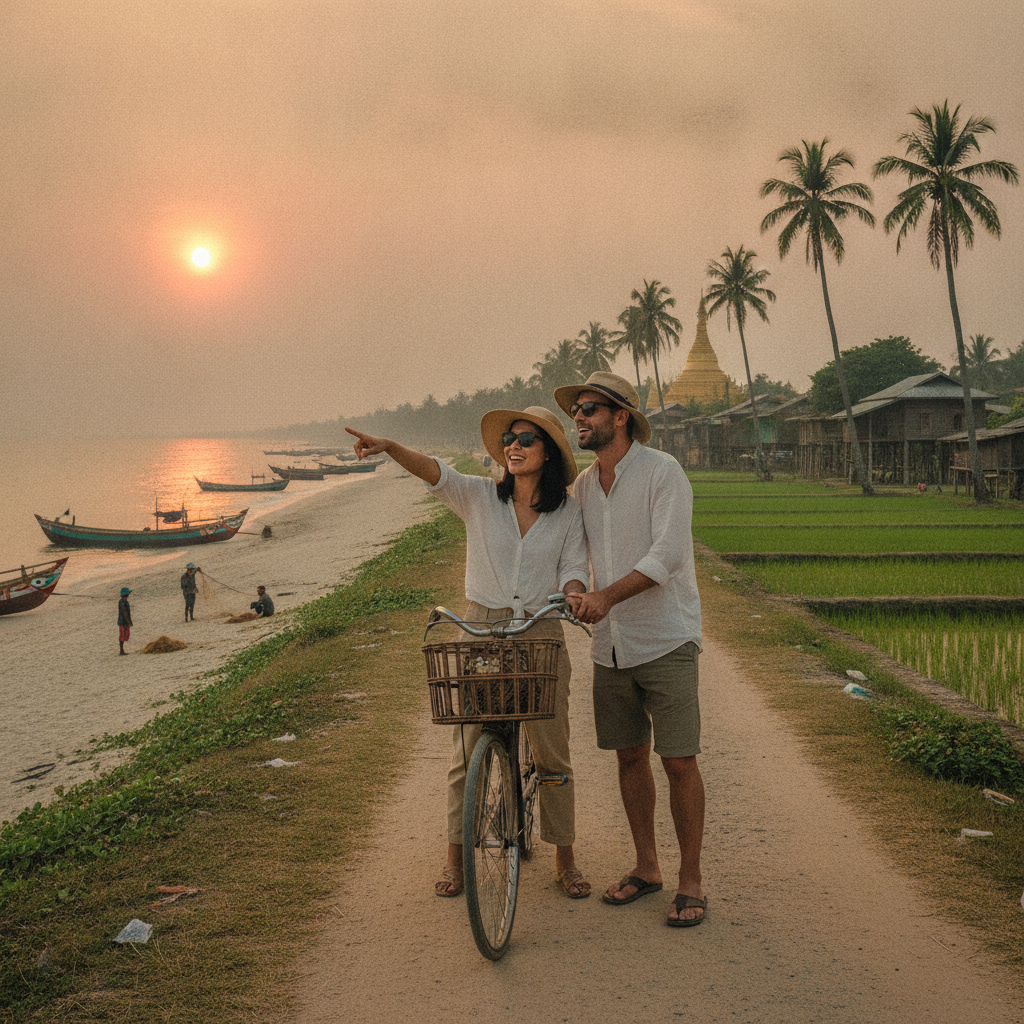
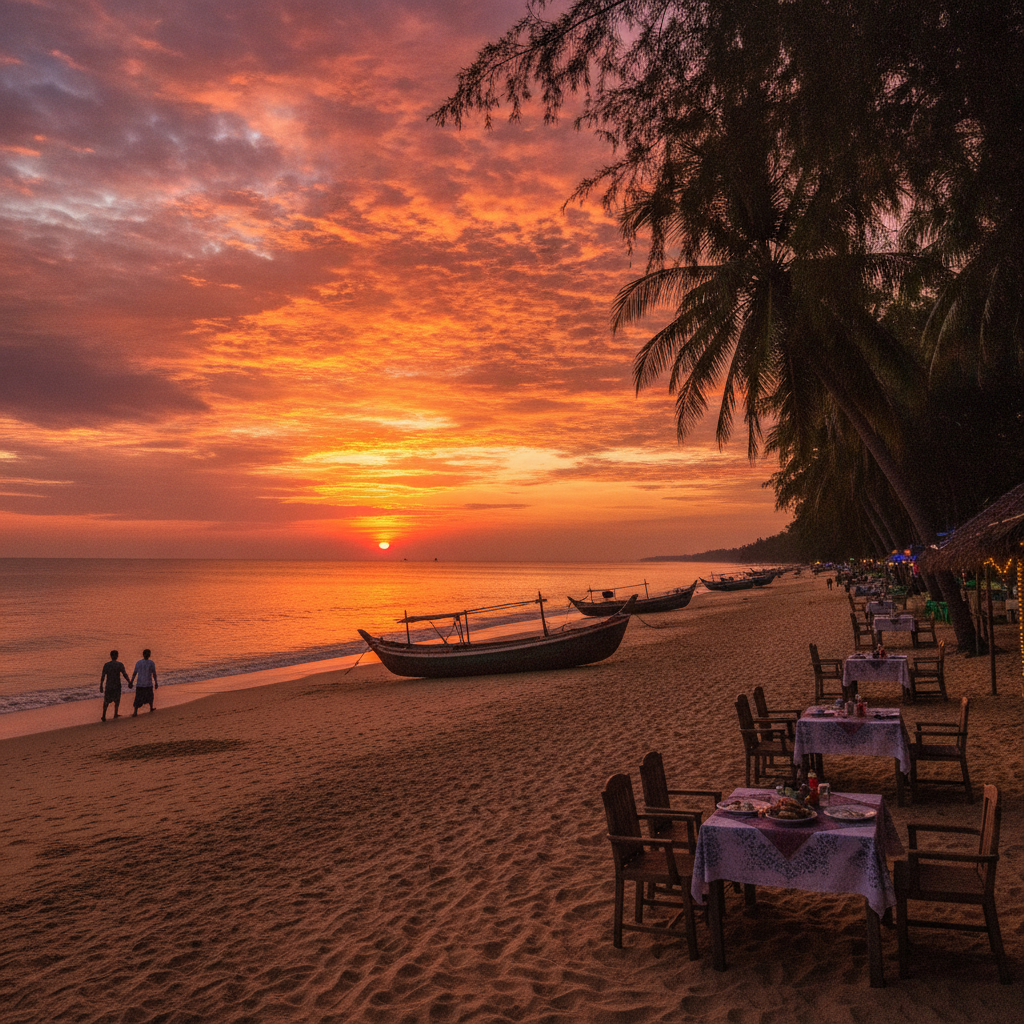
Discover Rakhine heritage near Ngapali — the Rakhine State coastline near Ngapali connects the beach environment to the rich Buddhist and pre-Buddhist history of the Rakhine kingdom, the ancient temples and the cultural traditions of this distinct Myanmar ethnic community.
- 1
Sandoway Monastery
The monastery at the edge of the Ngapali resort area (the active Theravada Buddhist monastery serving the Rakhine coastal community, where the monks' morning alms round through the village lanes is the most directly observable religious activity accessible from the beach resort area) is the most immediately accessible encounter with the Rakhine Buddhist tradition available at the Ngapali destination — the monastery's architecture (the distinctive Rakhine style, with the multi-tiered roof and the stucco ornamentation characteristic of the coastal Rakhine religious construction, distinguishable from the central Burmese Buddhist architecture by the local material traditions and the Bengal-influenced decorative vocabulary) documents the Rakhine cultural distinctiveness most directly in the religious domain. The monastery's community role (the focal point for the coastal village's social and religious calendar, the education provided by the monks to the village children, and the daily alms-giving practice that connects the lay community to the monastic tradition) is the most directly socially functional encounter with the Rakhine Buddhist tradition accessible at the beach destination.
- 2
Thandwe Town Market
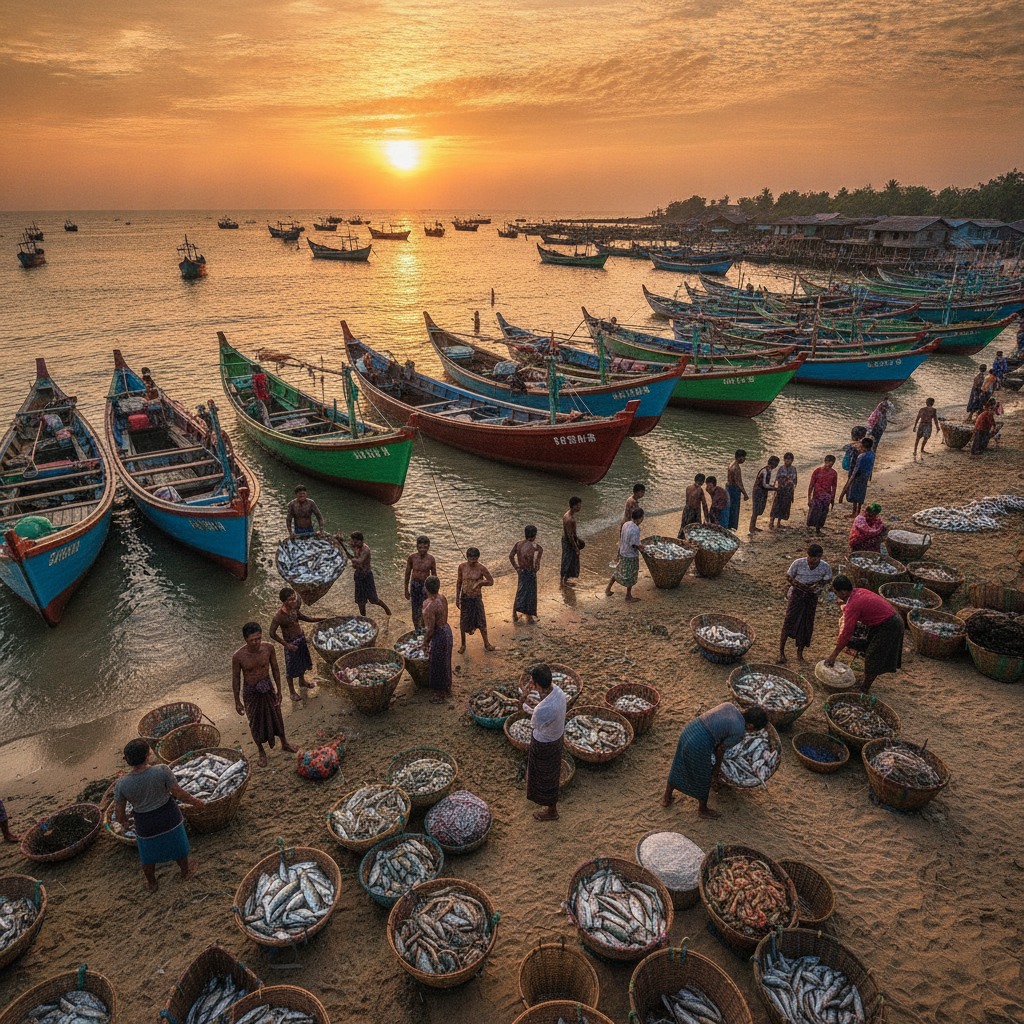
Thandwe town (the nearest urban centre to Ngapali Beach, approximately 10km north by road, with the small airfield that connects Ngapali to Yangon and the daily market that serves the wider Rakhine coastal community) is the most directly urban encounter accessible from the beach resort area — the Thandwe market (the most important commercial centre in the Ngapali area, with the fresh produce from the local agriculture, the seafood from the coast, and the manufactured goods from Yangon available at the market stalls that serve both the tourist beach economy and the surrounding Rakhine village community) provides the most complete single-site survey of the Rakhine coastal commerce accessible from the Ngapali base. The town's quieter commercial character (smaller than a major Myanmar city but larger than the beach village, with a functional urban atmosphere rather than the tourist-adjusted economy of the resort section) is the most directly local urban encounter accessible within a short transport distance of the beach.
- 3
Rakhine Cuisine Culture
The Rakhine cuisine (the most distinctively flavoured regional cooking in Myanmar, characterised by a spicier palate than the central Burmese dishes, a heavier use of the ngapi (fermented fish and shrimp paste) as the essential condiment, and the incorporation of the fresh seafood of the Bay of Bengal coast in the curry preparations that distinguish the Rakhine table from the landlocked cuisines of the Myanmar interior) is most directly accessible at the local Rakhine restaurants in the Ngapali village and Thandwe town areas — the Rakhine mohinga (the fish noodle soup preparation that is both similar to the national dish and distinctively regional in its spice level and the use of the specific coastal fish species), the Rakhine prawn curry (using the fresh Bay of Bengal prawns in the spicier coconut-enriched base), and the ngapi chet (the cooked fermented shrimp paste condiment served as the flavour foundation for the Rakhine meal) constitute the most complete regional cuisine accessible at any single Myanmar coastal destination.
- 4
Coconut Palm Groves
The coconut palm groves extending behind the Ngapali beach (the agricultural landscape that backs the coastal resort section, with the mature coconut palms whose leaning silhouettes create the most iconic single image of the Ngapali beach backdrop) are the most immediately tropical agricultural landscape accessible at the Myanmar beach destination — the coconut cultivation's scale in the Ngapali area (the groves extending several kilometres inland from the beach, the coconuts at various stages of development from the small green nuts to the mature brown-husked fruit ready for copra processing) creates the most thoroughly coconut-immersed beach environment in Myanmar. The palm groves' atmospheric character at different times of day (the morning light filtering through the palm canopy creating the dappled floor surface, the afternoon breeze visible in the frond movement above, and the evening light catching the palm trunks in the golden lateral illumination) provides a constantly changing visual environment behind the beach proper.
- 5
Buddhist Temple Visit
The Buddhist temples accessible in the Ngapali and Thandwe area (the Rakhine-style pagodas and monastery complexes that dot the coastal landscape between the fishing villages and the resort section) provide the most directly religious-cultural dimension available at the beach destination — the Rakhine Buddhist temple's architectural vocabulary (the stupa forms combining the central Myanmar bell-shaped base with the more elaborate multi-tiered spire characteristic of the coastal Rakhine tradition, and the terracotta ornamentation visible on the older undamaged structures) creates the most regionally distinctive religious architecture accessible at any beach in Myanmar. The temple compounds' community function (the weekly pwe performances, the festival gatherings, and the daily devotional visits of the Rakhine fishing community that make the temple the most active single social space in the coastal village) is the most directly observable expression of the Rakhine Buddhist community's daily religious practice accessible from the Ngapali resort area.
- 6
Local Fisherman Interaction
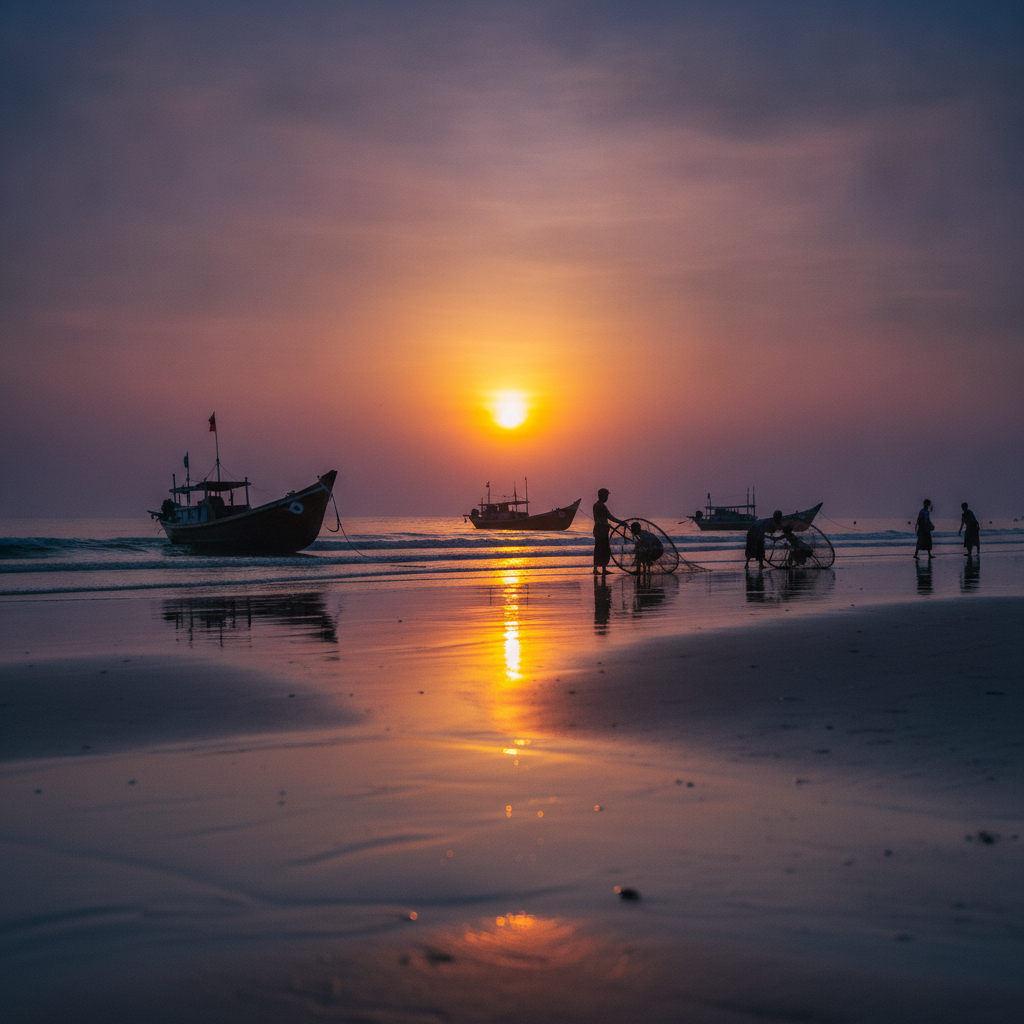
The direct interaction with the Lintha fishermen (the opportunity to accompany a fisherman on the morning boat to observe the net-hauling and fish-sorting process at the working fishing grounds accessible within the bay, arranged through the informal guide network connected to the beach resort community) provides the most completely immersive single encounter with the Rakhine fishing economy accessible at the Ngapali destination — the fisherman's knowledge (the ecological understanding of the bay's fish populations, the seasonal patterns that determine which grounds are productive at different times of year, and the traditional navigation knowledge of the coastal fishing community passed from father to son over generations) is the most environmentally specific human knowledge accessible at the destination. The boat journey (the early morning departure before the resort guests are awake, the diesel engine's sound diminishing as the fisherman cuts the throttle over the fishing ground, and the silent work of the net-hauling in the pre-dawn) is the most directly labour-sharing encounter available at the Ngapali beach.
Walk this route with audio
Stories play automatically as you reach each stop — no tapping needed.