Zapotec and Mixtec Civilization: The Cloud People Who Built Monte Alban Before Rome Was an Empire, the Mixtec Codices That Are the Only Pre-Columbian Books Surviving Complete, and the Tomb 7 Gold That Changed What Scholars Knew About Pre-Columbian Metalwork
The Zapotec civilization that built Monte Alban around 500 BCE was one of the earliest urban societies in the Americas, establishing a hierarchical city-state in the Oaxacan valley 200 years before Rome became a major Mediterranean power and contemporaneous with the flourishing of Athenian democracy and the early Zhou dynasty in China, making it a genuinely ancient civilization by any standard of comparison, and yet it remains far less known internationally than the Aztec or Maya cultures that produced the visual material most familiar to museum visitors outside Mexico. The Zapotec called themselves Be'ena'a, meaning the cloud people, and built not only Monte Alban but a network of secondary ceremonial centers including Yagul, Lambityeco, Dainzu, and Zaachila throughout the Oaxacan valley, each with architectural programs of pyramid platforms, ball courts, and carved stone stelae that document the political history, ritual calendar, and cosmological beliefs of a civilization that maintained cultural continuity in the Oaxacan valley from approximately 500 BCE to the Spanish conquest in 1521, nearly 2,000 years of documented presence. The Mixtec, the neighboring civilization of the western Oaxacan mountains who created the most sophisticated pre-Columbian pictorial manuscripts in existence, invaded the Valley of Oaxaca around 900 CE and occupied Mitla and other Zapotec centers, producing the cultural hybrid of Zapotec-Mixtec interaction that generates the most extraordinary artistic output in Oaxacan pre-Columbian history: the gold jewelry of Tomb 7 at Monte Alban, buried by a Mixtec lord in a previously Zapotec tomb, discovered in 1932 by the archaeologist Alfonso Caso.
- 1
Tomb 7 at Monte Alban and Mixtec Gold
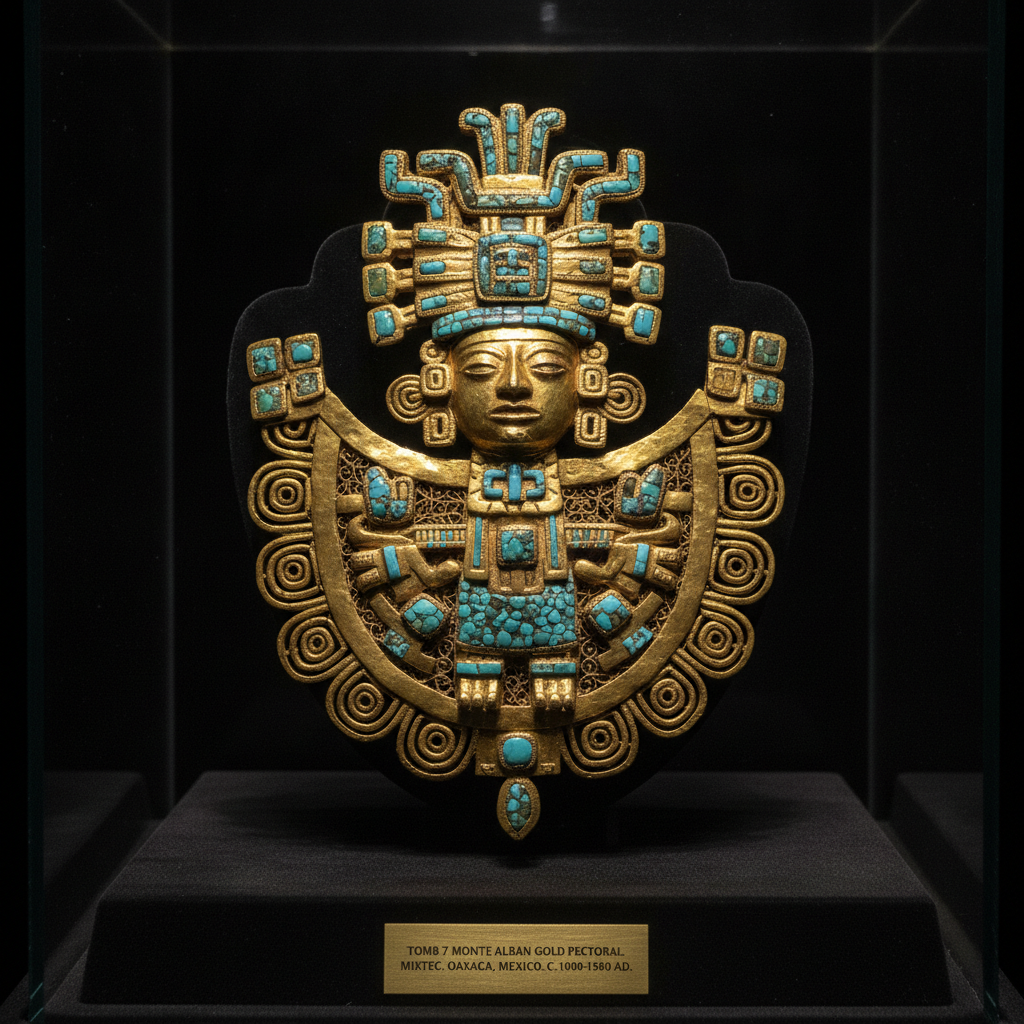
Tomb 7 at Monte Alban, a Zapotec burial chamber that was reused by Mixtec nobles around 1300 CE, was discovered in January 1932 by the Mexican archaeologist Alfonso Caso in the most significant single archaeological find in Mexican history after the 1978 discovery of the Coyolxauhqui stone in Mexico City, containing 121 gold objects including pectorals, rings, necklaces, and headdress ornaments of extraordinary technical quality executed in the lost-wax casting, filigree, and sheet metal repousse techniques that the Mixtec smiths had developed to a peak of refinement. The gold objects from Tomb 7, now in the Museo de las Culturas de Oaxaca in the Santo Domingo convent complex, include a pectoral ornament in the form of a descending deity, a skull with movable jaw covered in turquoise mosaic, gold ear spools with pendant bells, and a series of gold cups and plates that had been used in ritual feasting before interment. The technical quality of the Tomb 7 goldwork, which was analyzed in the 1970s and 1980s using X-ray fluorescence and metallographic examination, revealed that the Mixtec smiths had mastered depletion gilding, a technique that enriches the gold surface by removing base metals through repeated acid treatment, producing objects with surface gold purity far higher than the bulk alloy. The discovery of Tomb 7 in 1932 fundamentally revised the scholarly understanding of pre-Columbian metalwork, demonstrating that Mesoamerican civilizations had independently developed sophisticated metallurgical techniques previously attributed only to South American cultures.
- 2
Mixtec Codices and Pre-Columbian Writing
The Mixtec codices, the pictorial manuscripts produced by Mixtec scribes on long strips of deer skin or fig bark paper that were folded accordion-style and painted with mineral pigments in brilliant colors, are the only pre-Columbian books from Mesoamerica that survive in significant quantity and complete condition, with eight major Mixtec codices preserved in European libraries and museums where they arrived as royal gifts or colonial acquisitions in the 16th and 17th centuries. The Codex Vindobonensis Mexicanus I in the Austrian National Library in Vienna, the Codex Nuttall in the British Museum in London, and the Codex Bodley in the Bodleian Library in Oxford are the most significant of the surviving Mixtec manuscripts, containing genealogical histories, ritual calendars, and mythological narratives painted in a visual language that was partially decoded by scholars including Alfonso Caso who spent decades correlating the pictorial genealogies with Spanish colonial documents. The Mixtec manuscript tradition documents the genealogical histories of specific Mixtec ruling dynasties, tracing lines of descent across multiple generations with named individuals, dates in the Mixtec calendar system, and illustrated episodes of warfare, marriage alliance, and religious ceremony in a narrative format readable as historical documentation once the visual grammar was decoded. The survival of the Mixtec codices in European institutions while virtually all central Mexican manuscripts were destroyed by the Spanish colonial authorities reflects the accident of timing, with the Mixtec documents arriving in Spain before the systematic book destruction campaigns of the 1530s and 1540s.
- 3
Zapotec Calendar and Astronomical Knowledge
The Zapotec astronomical and calendrical tradition, documented through the orientation of buildings at Monte Alban and the carved stone monuments depicting calendar dates, demonstrates that the Zapotec civilization had independently developed a complex calendar system contemporaneous with and structurally similar to but distinct from the better-known Maya Long Count calendar. The Zapotec calendar used a 260-day ritual calendar, the piye in Zapotec, and a 365-day solar calendar, creating an interlocking system that produced a 52-year cycle used to track historical dates and ritual obligations. The astronomical observatory building at Monte Alban, Building J, is oriented 45 degrees off the main north-south axis of the plaza to align specific apertures with the rising and setting of the star Capella, which the Zapotec associated with their creation mythology, and with the zenith passage of the sun on specific days that defined the beginning of the agricultural calendar. The carved stone monuments called stelae at Monte Alban record specific calendar dates using the Zapotec bar-and-dot numeral system combined with the Zapotec glyph system, some of which represent a proto-writing system predating the Maya writing system that developed to its full complexity in the Classic period. The Zapotec script on the Stelae of Monte Alban, which has not been fully deciphered, appears to record place names and personal names in addition to calendar dates, suggesting a writing system more grammatically complex than a pure logo-syllabic script.
- 4
Valley Zapotec Communities and Living Culture
The Zapotec language, belonging to the Oto-Manguean language family that is entirely separate from the Nahuatl, Maya, and other major Mesoamerican language families, is spoken today by approximately 350,000 people in various dialects distributed across the Sierra Norte, the Central Valleys, the Sierra Sur, and the Isthmus of Tehuantepec regions of Oaxaca state, making it the largest indigenous language community in the state by speaker count. The valley Zapotec communities of the central Oaxacan valley — Teotitlan del Valle, Tlacolula, Mitla, Ocotlan, Zaachila, and dozens of smaller communities — maintain Zapotec as a daily language alongside Spanish in a pattern of community bilingualism where Spanish is the language of outside interaction and government and Zapotec is the language of family life, community ceremony, and the cargo system of communal governance. The Zapotec cosmological tradition, which attributes sacred character to specific mountains, springs, and landscape features throughout the valley, continues in practice through offerings left at pre-Hispanic sacred sites, the consultation of calendar specialists called calendarists who use the 260-day piye calendar to advise on planting, marriage, and health decisions, and the dream interpretation practices that the Zapotec tradition considers a primary means of communication between the living and the dead. The Day of the Dead celebration in the Zapotec communities of the valley, when families build elaborate grave altars and spend the night in the cemetery with their deceased relatives in a celebration that combines pre-Hispanic ancestor veneration with Catholic feast day observance, is among the most powerful living expressions of Zapotec culture accessible to visitors.
- 5
Benito Juarez and Oaxacan Political Legacy
Benito Juarez, the Zapotec indigenous man from the Sierra Norte village of Guelatao who became the President of Mexico and the leader of the liberal Reform War and the resistance against the French Imperial intervention, is the most significant political figure in Oaxacan history and one of the most significant in Mexican national history, celebrated on the 500-peso bill and in the names of the main plaza, the airport, and the state capital city of Oaxaca de Juarez. Juarez was born in 1806 in the Zapotec village of Guelatao in the Sierra Norte, was orphaned at three years old, came to Oaxaca city at twelve speaking only Zapotec, learned Spanish while working as a domestic servant, trained as a lawyer at the Institute of Sciences and Arts (now the Benito Juarez Autonomous University of Oaxaca), and entered politics through the liberal faction of the Reform War period, eventually serving as President of Mexico from 1858 to 1872 through one of the most turbulent periods in Mexican history. Juarez implemented the Reform Laws that nationalized Church property, established civil marriage, mandated secular public education, and separated Church from State in Mexico, and he maintained the constitutional republican government through the French intervention that installed Emperor Maximilian I, conducting the resistance from northern Mexico before returning to Mexico City after Maximilian's execution in 1867. His Zapotec origin and his national political achievement make him the primary symbol of indigenous dignity and political potential in Mexican national mythology.
- 6
Oaxaca Day of the Dead Traditions
The Day of the Dead celebration in Oaxaca, occurring from October 31 through November 2, is the most elaborate and culturally distinct version of the holiday in Mexico, extending beyond the cemetery altar visits that characterize the celebration throughout the country to include specific Oaxacan practices including the comparsas, costumed processions through the historic center streets on the nights of October 31 and November 1, the ofrendas in the Mercado 20 de Noviembre where market vendors build elaborate commercial altars, and the sand tapetes, intricate sand paintings covering the streets of specific communities outside the city. The Oaxacan ofrenda, the home altar constructed for the returning spirits of the dead, includes the pan de muerto bread specific to each Oaxacan community in distinct shapes and flavors that differ from the Mexico City standard pan de muerto — the Oaxacan versions include the bread figures of the region's traditions. The cemetery vigil at Xoxocotlan cemetery south of Oaxaca city, where families gather from midnight October 31 through the morning of November 1 beside the graves of family members decorated with marigold flowers and lighted candles, has become one of the most visited tourist events in Mexico, with the attendance of international visitors now a regular presence alongside the Oaxacan families for whom the occasion is a private family ritual. The tension between the private religious practice of ancestor veneration and the public tourism event that Day of the Dead has become in Oaxaca is navigated differently by different communities, with some welcoming visitor observation and others maintaining private celebrations.
Walk this route with audio
Stories play automatically as you reach each stop — no tapping needed.
More in Oaxaca
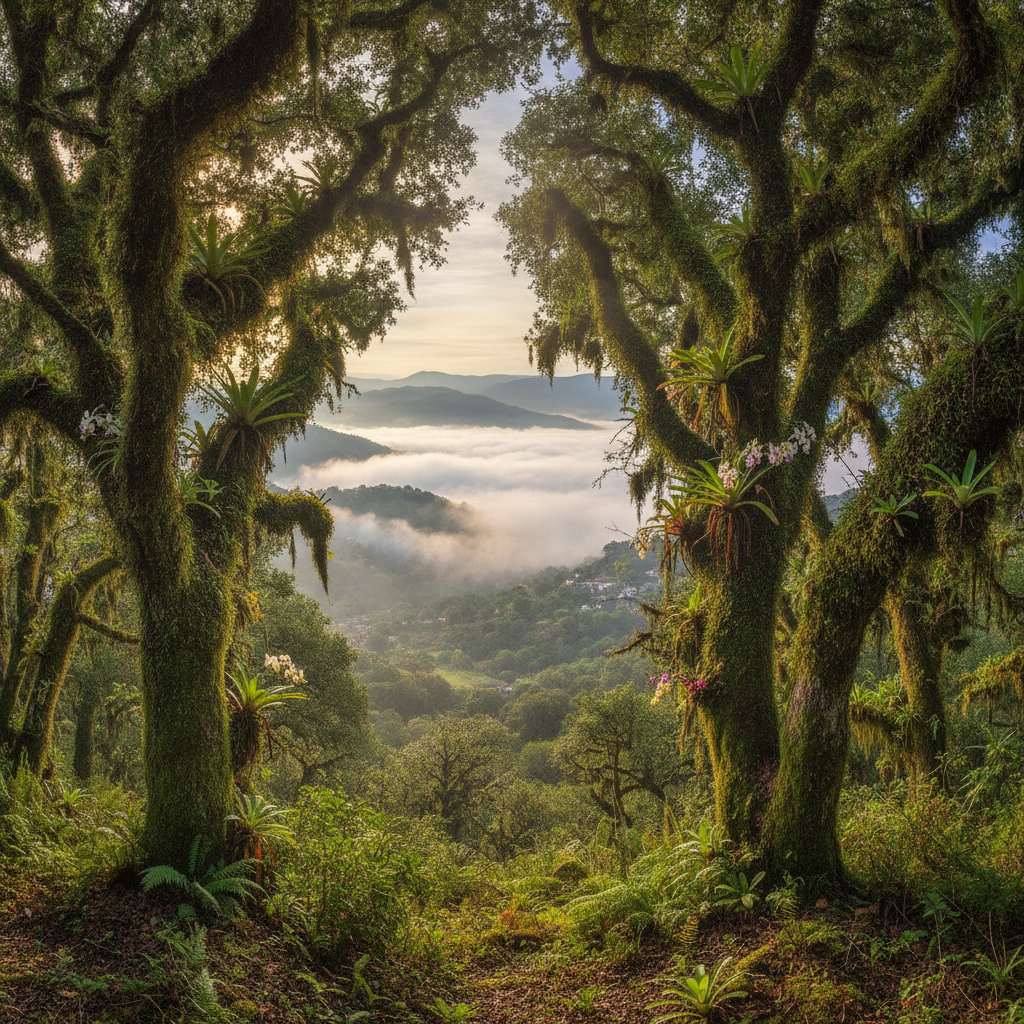
Oaxaca Landscape and Ecology: Cloud Forest Orchids in the Sierra Norte, the Monarch Butterfly Corridor Through the Sierra Sur, the Pacific Coast Turtle Nesting at Mazunte and the Lachatao Archaeological Botanical Garden
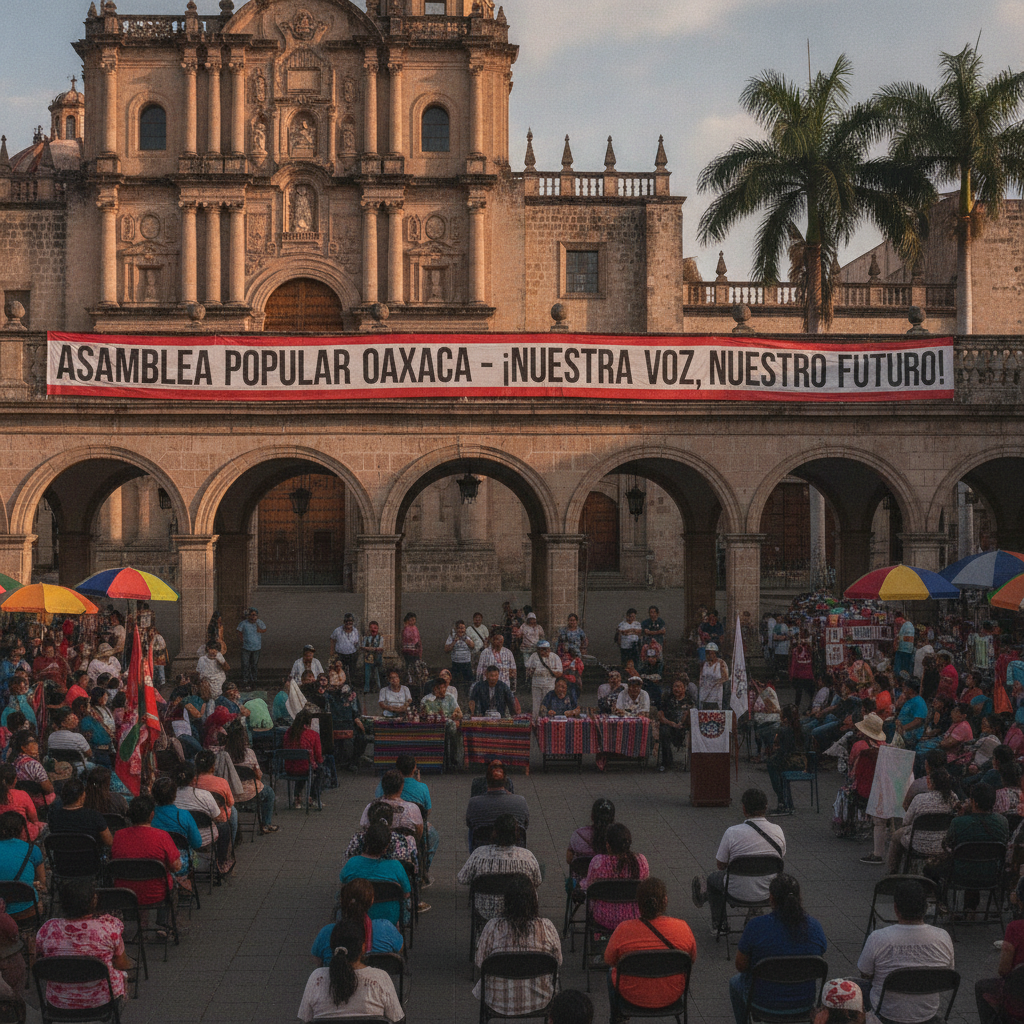
Oaxaca 2006 Uprising and the APPO: When Teachers Occupied the Zocalo for Six Months and the State Government Lost Control of Its Capital City in a Social Movement That the Rest of Mexico Watched and the International Press Covered as a Revolution
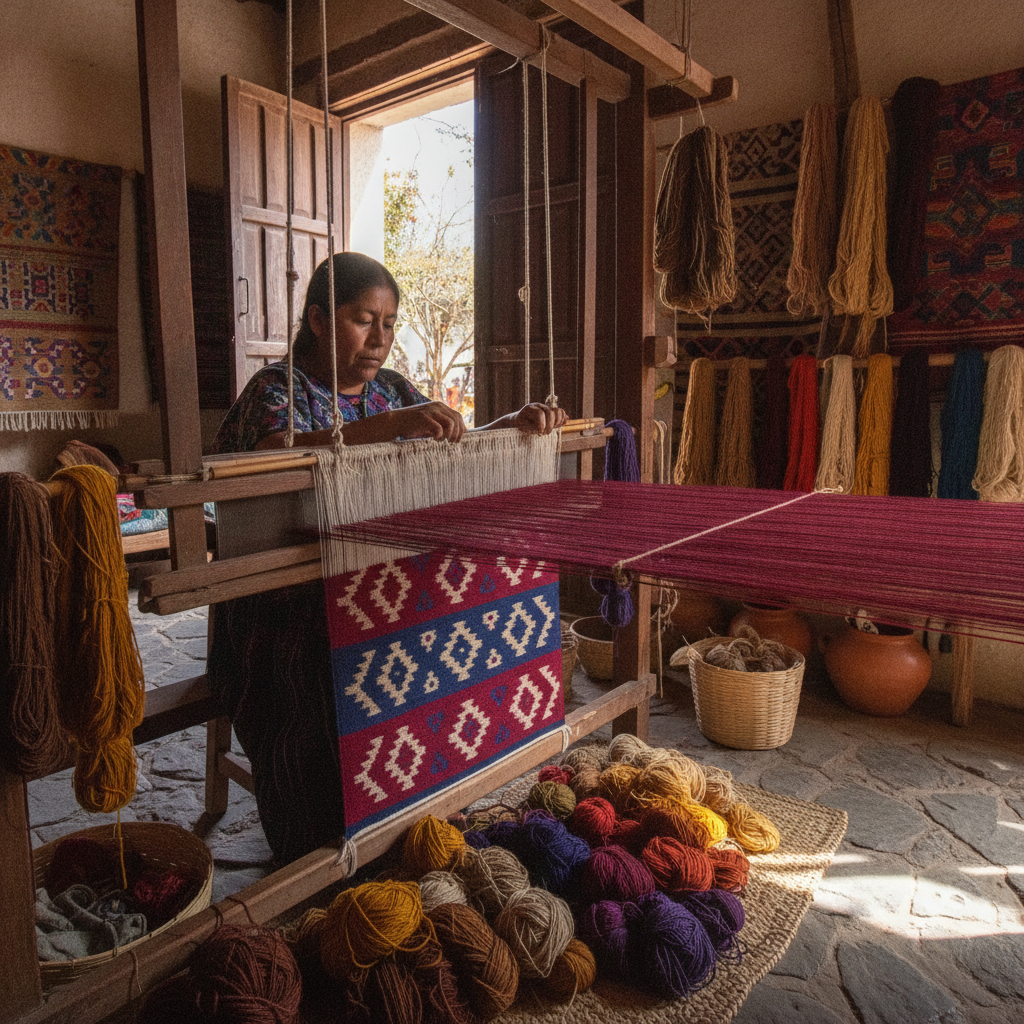
Oaxacan Textiles Alebrijes and Black Clay: The Village Craft Traditions That Survived Because They Were Too Remote for Factory Competition and Now Feed a Global Market That Values Handmade More Than Ever
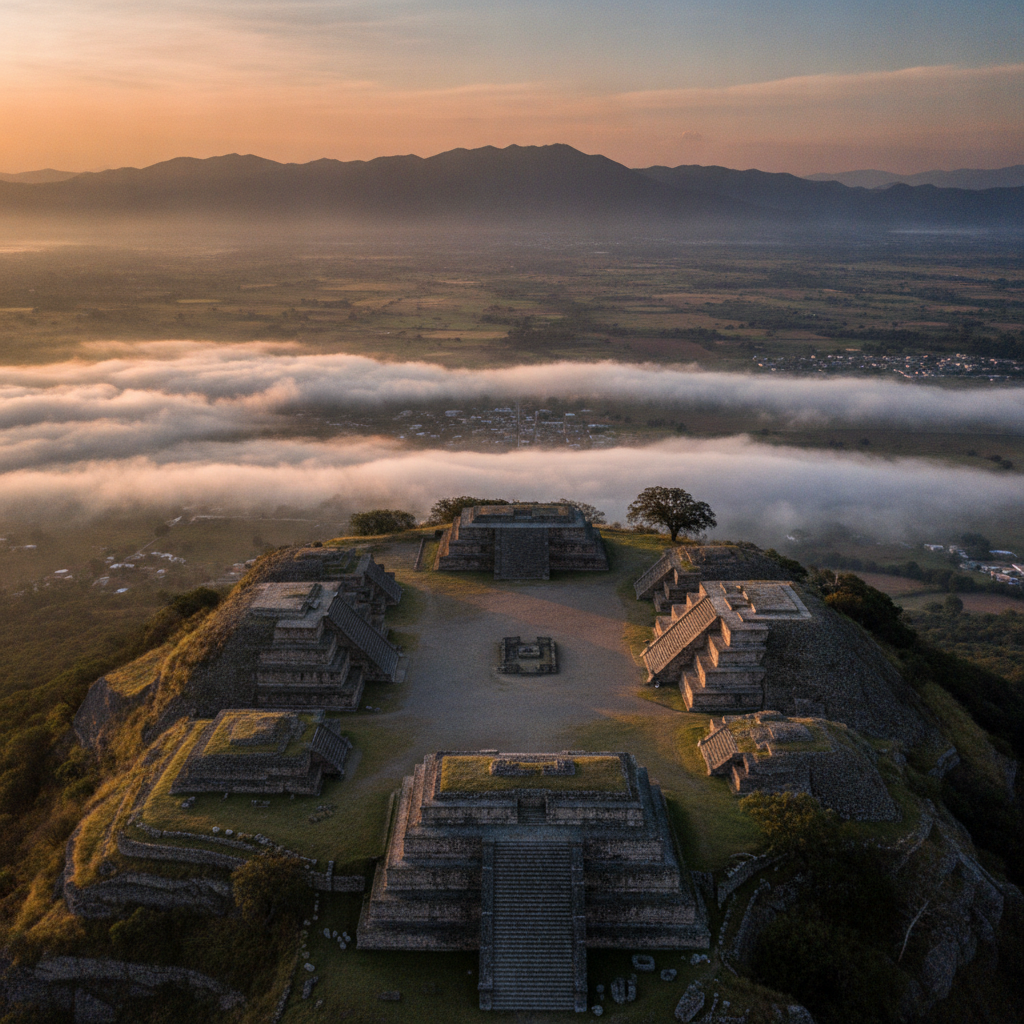
Oaxaca: The Valley City Below Monte Alban Where Zapotec Civilization Built Its Pyramid Capital, Where Mole Negro Takes Three Days to Make, and Where Every Street Has More Indigenous Cultural Survival Than Any Other City in Mexico
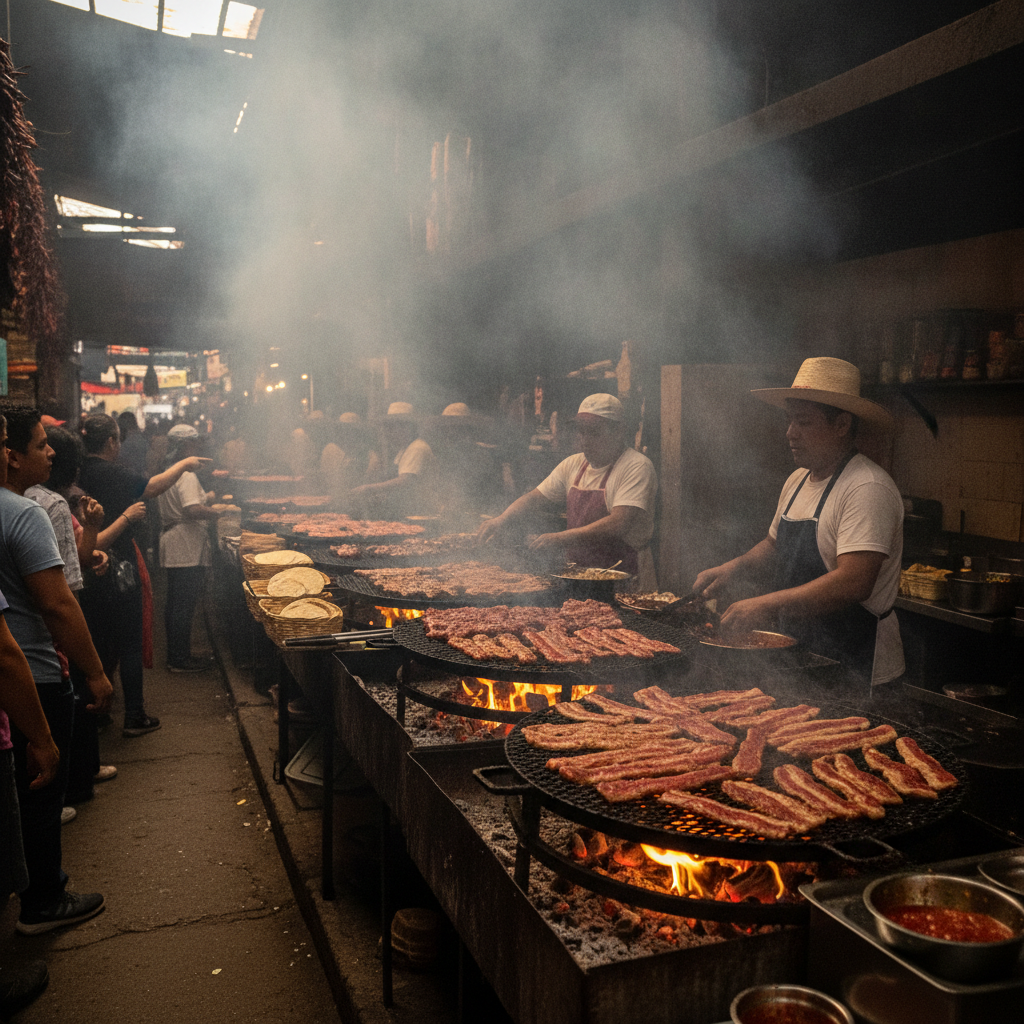
Oaxacan Markets Chocolate and Chapulines: The Mercado 20 de Noviembre Charcoal Corridor, the Chocolate Mills of the Mina Street and the Grasshopper Tradition That Foreign Food Writers Use as a Shortcut to Oaxaca and That Oaxacans Find Exhausting