Osaka Castle — Toyotomi Hideyoshi's Fortress & the City's Historic Heart
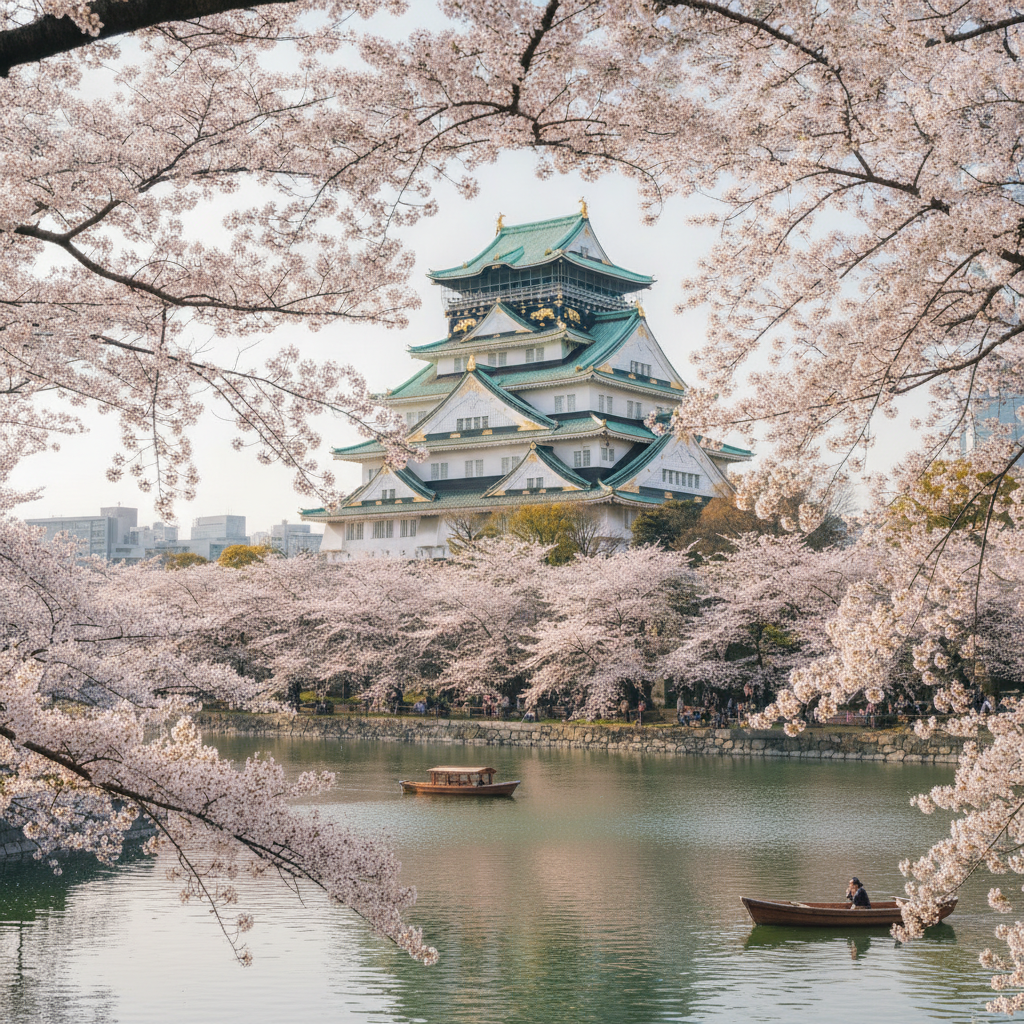
Osaka Castle (大阪城 — Ōsaka-jō — the castle originally built in 1583 by the warlord Toyotomi Hideyoshi (1537-1598) as the symbol of his unification of Japan — the most historically significant castle site in western Japan, now the centrepiece of the 106-hectare Osaka Castle Park): the castle tower museum and the surrounding park (famous for its 600 cherry trees, one of the finest hanami spots in Osaka) attract approximately 2-3 million visitors per year.
- 1
Osaka Castle Tower & Museum
Osaka Castle (大阪城 — the castle on the site in the Chūō ward of Osaka that has been the most strategically and symbolically significant fortification in Japan since Toyotomi Hideyoshi built the first castle here in 1583 (the largest castle in Japan at the time, using the labour of 30,000 workers)): the current main tower (the 1931 reinforced concrete reconstruction — the third tower on the site, following the Toyotomi original (1585, burned 1615) and the Tokugawa reconstruction (1629, destroyed by lightning 1665)) is 8 storeys tall and houses the Osaka Castle Museum (the museum of Osaka and Toyotomi history from the 16th to 19th centuries, with the finest collection of objects relating to Toyotomi Hideyoshi in Japan, including armour, weapons, letters, and artworks); the tower observation deck (the 8th floor) gives the finest view over the Osaka plain, the Ikoma and Kongō mountains to the east and south, and the Osaka Bay to the west; the famous gold-leaf ornaments (the pair of shachihoko (tiger fish mythological creatures) on the ridge ends and the thousand golden gourd (hyōtan) crests — the mon (family crest) of Toyotomi Hideyoshi) on the roof are visible from the castle park.
- 2
Osaka Castle Park — Japan's Finest Urban Cherry Blossom Spot
Osaka Castle Park (大阪城公園 — the 106-hectare public park surrounding the castle, the largest urban park in central Osaka): the park contains approximately 3,000 trees, including the celebrated Nishi-no-maru Garden (西の丸庭園 — the formal garden within the inner moat to the west of the main tower, containing 300 Yoshino cherry trees (somei-yoshino) — the finest concentrated cherry blossom viewing area in Osaka, open during the cherry blossom season (typically late March to mid-April)); the Osaka Castle Park is the most popular hanami (flower viewing) spot in Osaka during the cherry blossom season (approximately 1 million visitors during the peak blossom week); the park also contains the Plum Grove (梅林 — the 1,270 plum (Prunus mume) trees of 100 varieties that bloom in February-March, making the castle park the finest plum blossom (ume) viewing spot in Osaka); the Osaka Museum of History (大阪歴史博物館 — the museum in the high-rise building immediately west of the castle park, with the finest view of the castle tower from the upper floors).
- 3
Toyotomi Hideyoshi & the Unification of Japan
Toyotomi Hideyoshi (豊臣秀吉 — 1537-1598 — the second of Japan's three 'great unifiers' (the sequence: Oda Nobunaga (1534-1582) began the unification; Toyotomi Hideyoshi completed it; Tokugawa Ieyasu (1543-1616) institutionalized it in the Tokugawa shogunate that ruled Japan until 1868)): Hideyoshi (born the son of a peasant foot soldier, who rose through ability to become the most powerful man in Japan by 1590 — the only commoner in Japanese history to achieve complete political and military control of Japan) built Osaka as his capital, constructing the first Osaka Castle in 1583 as the symbol of unified Japan and developing Osaka into the commercial capital of the country; the Battle of Sekigahara (1600) between Hideyoshi's son Toyotomi Hideyori and Tokugawa Ieyasu, and the Siege of Osaka (1614-1615 — the final destruction of the Toyotomi clan) are the pivotal events in Japanese history between the Warring States period (Sengoku) and the Edo period (Pax Tokugawa); the museum in the castle tower tells this history in detail.
- 4
Tanimachi & Tennoji — Osaka's Historic District
Tanimachi (谷町 — the historic district of Osaka, running north-south along the Uemachi Plateau (the elevated ground where Osaka Castle and the historic temples and shrines of the city are located — the highest ground in the Osaka plain, the reason why both the Toyotomi and Tokugawa built their most important structures here)): the Tanimachi district (particularly the Tanimachi 4-chome and Tanimachi 6-chome areas) is notable for its concentration of antique shops (the Osaka antique district, comparable to Tokyo's Jinbocho) and traditional craft dealers; Shitennoji (四天王寺 — the Buddhist temple founded in 593 CE by Prince Shotoku (the son of Emperor Yomei and regent of Japan from 593-622), the oldest officially administered temple in Japan — one of the oldest Buddhist temples in the country): Shitennoji is the most historically significant Buddhist temple in Osaka, predating the city itself (the temple was founded before Osaka was developed as a commercial centre); the temple's distinctive orange-painted buildings and five-storey pagoda are visible from the Tennoji area.
- 5
Sumiyoshi Taisha — The Most Ancient Shrine Style in Japan
Sumiyoshi Taisha (住吉大社 — the head shrine of approximately 2,300 Sumiyoshi shrines across Japan, in the Sumiyoshi ward of southern Osaka — one of the oldest Shinto shrines in Japan, dedicated to the three Sumiyoshi deities (Sokotsutsu-no-o, Nakatsutsu-no-o, and Uwatsutsu-no-o — the three deities of the sea and seafaring) and to the Empress Jingu (legendary empress of the 3rd century, under whose name Japan is said to have sent an expedition to Korea)): the architectural style of Sumiyoshi Taisha (住吉造 — Sumiyoshi-zukuri) — the oldest surviving Shinto shrine architectural style, predating the influence of Buddhism and Chinese architecture on Japanese religious building — is characterized by the straight thatched roof (no curvature), the vertical planked walls without plaster, and the internal division of the shrine into an outer worship hall (haiden) and an inner sanctuary (honden); the arched Sori-bashi bridge (the red-lacquered wooden arch bridge over the ornamental pond — the most photographed image of Sumiyoshi Taisha) leads to the main shrine complex.
- 6
Osaka Bay — Universal Studios Japan & the Waterfront
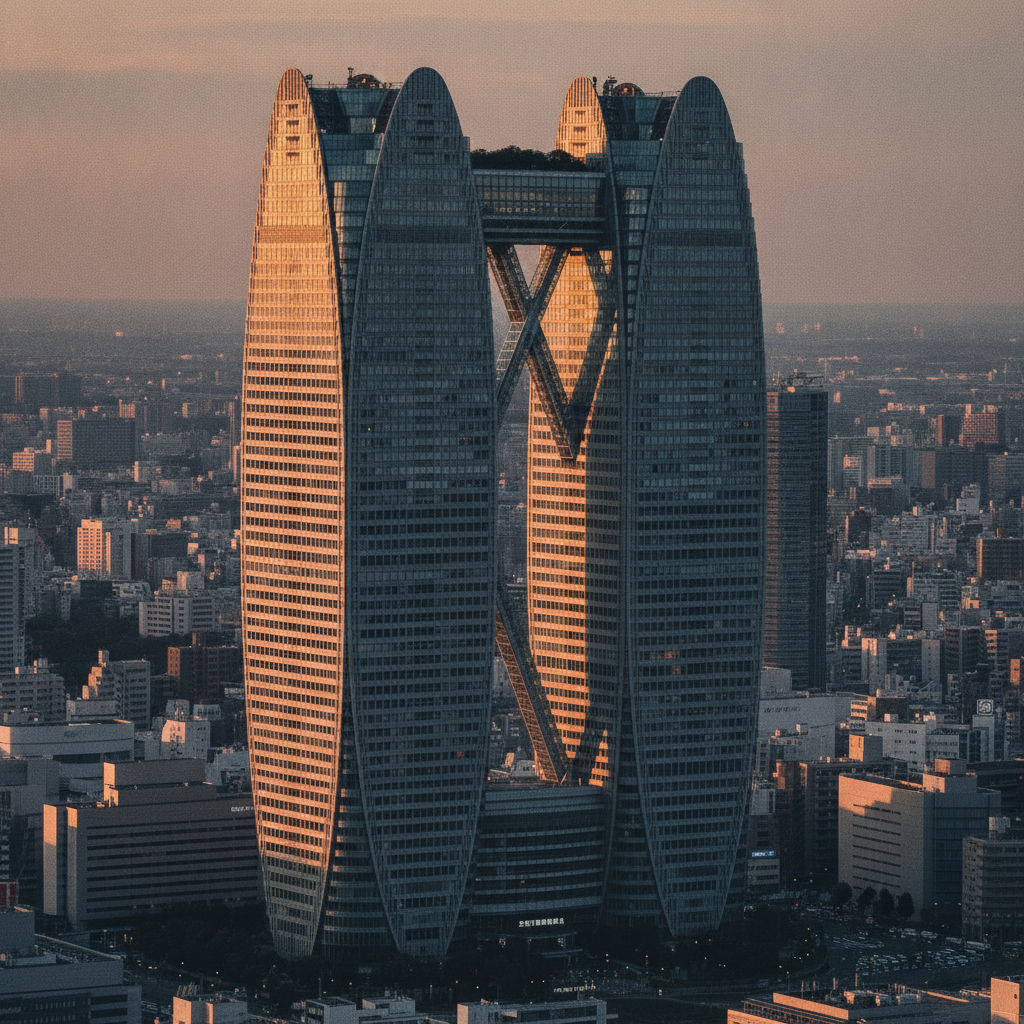
Osaka Bay (大阪湾 — the bay at the western end of the Osaka metropolitan area, on the shores of which the Osaka port, the reclaimed island of Sakishima (where the 256-metre WTC Cosmo Tower (the tallest building in Osaka, now the Osaka Prefectural Government South Building) is located), and the major waterfront attractions are built): Universal Studios Japan (USJ — the Universal Studios theme park opened in 2001 in the Konohana ward of Osaka Bay, 15 minutes by shuttle bus from Osaka Station — the second most visited theme park in Japan (after Tokyo DisneySea)): USJ's most popular attractions include The Wizarding World of Harry Potter (the Hogsmeade village and Hogwarts Castle attraction, opened 2014 — the most visited single attraction in the park), Super Nintendo World (the Mario-themed area opened in 2021, featuring the flagship Mario Kart: Koopa's Challenge ride), Jurassic Park, and Minion Park; the Osaka Aquarium Kaiyukan (海遊館 — the aquarium on Tempozan Harbour Village on Osaka Bay, the largest aquarium in Japan and one of the largest in the world, featuring a 9-metre-deep central tank housing whale sharks (Rhincodon typus — the largest fish species in the world), manta rays, and the full range of the Pacific Ocean ecosystem) is the finest aquarium experience in Japan.
Walk this route with audio
Stories play automatically as you reach each stop — no tapping needed.
More in osaka
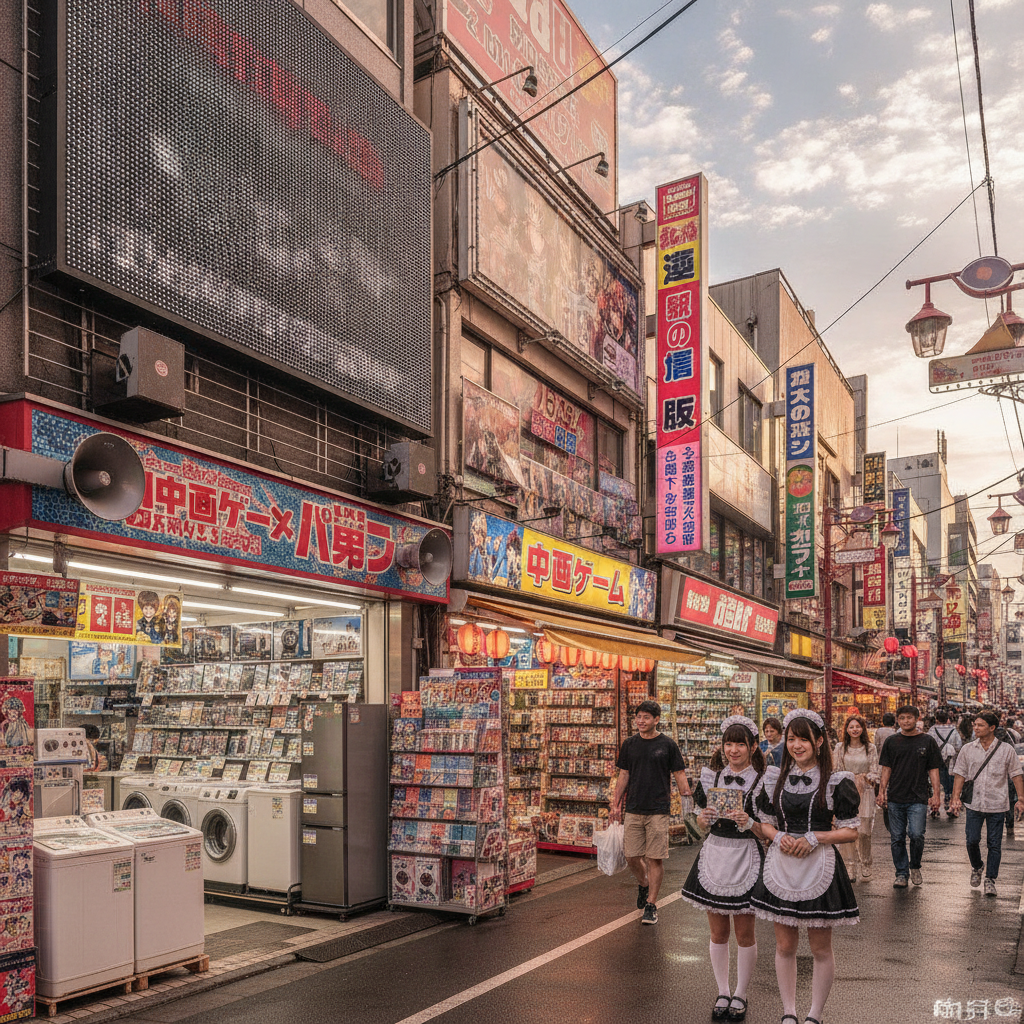
Den-Den Town, Namba & Osaka's Retail Landscape
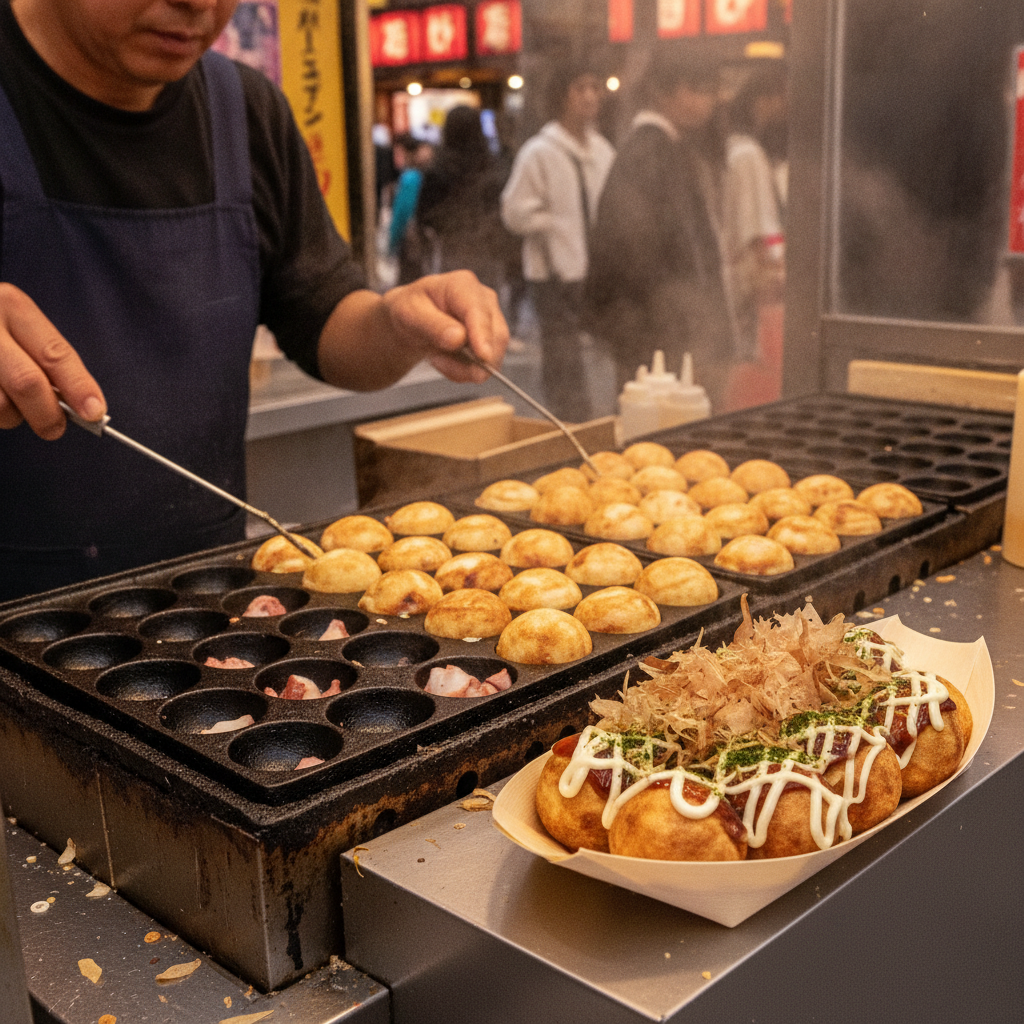
Osaka Food Deep Dive — Takoyaki, Ramen & the B-Gourmet Trail
Bunraku, Kabuki & the Traditional Performing Arts of Osaka
Japanese Sake, Craft Beer & Suntory Whisky — Osaka's Drinks Culture
Nara Day Trip — Sacred Deer, Todai-ji & Japan's Oldest Temples