Dotonbori, Namba & Osaka Street Food — The Kuidaore City
Osaka (大阪 — Japan's third largest city by population (approximately 2.7 million city / 19 million metropolitan area), the commercial and culinary capital of western Japan, nicknamed 'Naniwa' in the Heian period and now known as the city of 'kuidaore' (食い倒れ — 'eat until you drop') — the most food-obsessed city in Japan): Dotonbori and the Namba district are the entertainment and street food heart of Osaka.
- 1
Dotonbori Canal & the Glico Running Man
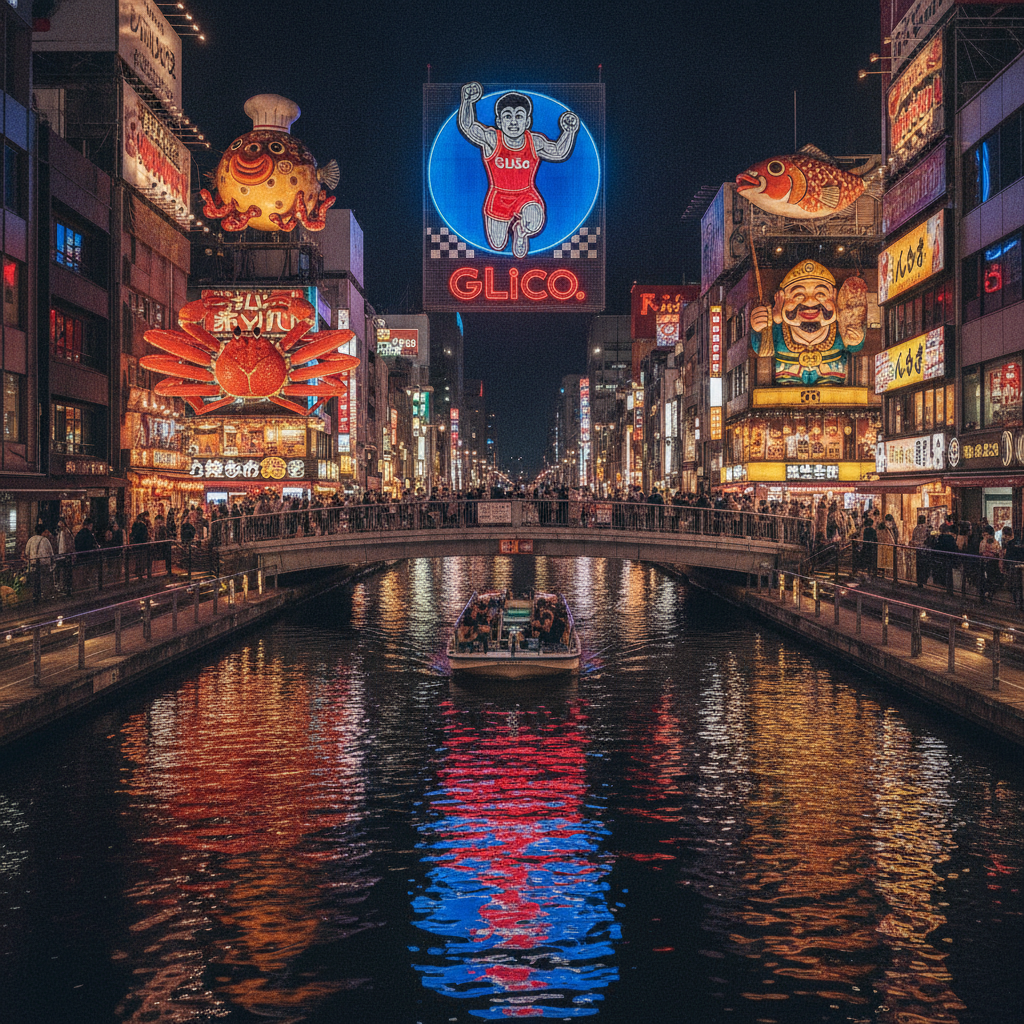
Dotonbori (道頓堀 — the entertainment district centered on the Dotonbori canal in the Namba area of central Osaka — the most famous single street in Osaka and one of the most vibrant entertainment districts in Japan): the Dotonbori canal (originally excavated in 1615 by the merchant Doton Yasui, who gave the district his name) is the spine of Osaka's southern entertainment district, the minami area (as distinct from the kita (north) area around Umeda Station — the two poles of Osaka's commercial geography); the Glico Running Man neon sign (the illuminated red athlete of the Glico confectionery company — the sign has stood on the Ebisu-bashi bridge end since 1935, with the current sixth-generation LED sign (updated in 2014) measuring 20 × 10 metres) is the most recognizable commercial sign in Japan and the defining image of Dotonbori; the canal banks are lined with the most extraordinary concentration of restaurant signage in Japan: the mechanical 3D crab of Kani Dōraku (the famous crab restaurant whose giant mechanical crab (4.5 metres wide) moves its legs and blows bubbles, visible from the Ebisu-bashi bridge), the Kinryu Ramen dragon, and dozens of restaurant facades competing for attention in the most visually dense commercial street in Japan.
- 2
Osaka Street Food — Takoyaki, Kushikatsu & Okonomiyaki
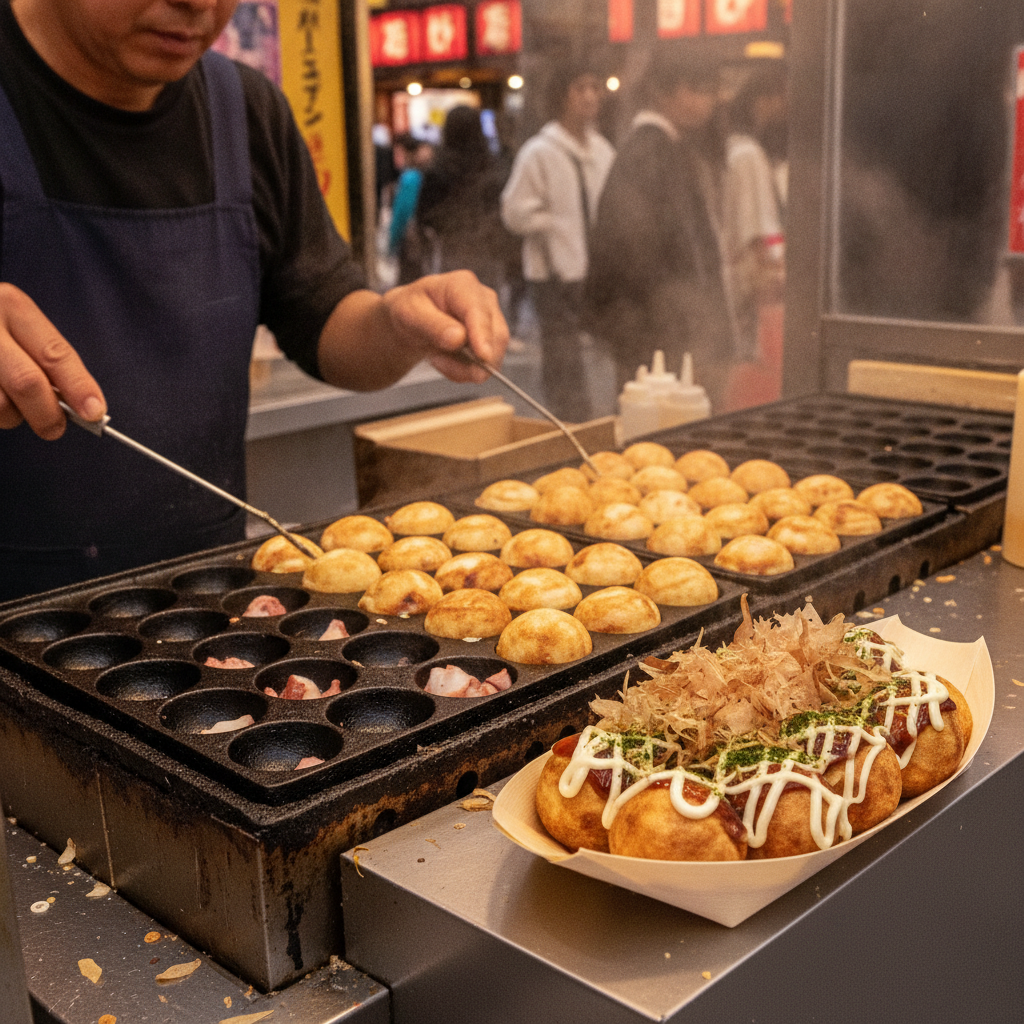
Osaka street food (the street food culture of Osaka — the city most associated with Japanese street eating, with the local concept of 'kuidaore' (食い倒れ — eating until ruin) expressing Osaka's reputation for spending all one's money on food): the three defining Osaka street foods are: Takoyaki (たこ焼き — the octopus balls, the dish most associated with Osaka (invented in Osaka in 1935 by the street vendor Tomekichi Endo, at a stall in Namba): small (approximately 4 cm diameter) balls of wheat flour batter containing a piece of octopus (tako), tenkasu (tempura scraps), pickled ginger (beni shoga), and green onion, cooked in a special dimpled cast-iron plate (the takoyaki pan), topped with okonomiyaki sauce, Japanese mayonnaise (the Kewpie brand — the rich, egg-yolk-heavy Japanese mayo that is the defining condiment of Osaka food), katsuobushi (dried bonito fish flakes that dance in the heat above the balls), and aonori (dried green seaweed)); Kushikatsu (串カツ — breaded and deep-fried skewers of meat, vegetables, and seafood, served with a communal dipping sauce (a Worcestershire-based sweet sauce with the famous Osaka rule: 'No double dipping' — once you have bitten a skewer and dipped it, you may not dip it again)); and Okonomiyaki (お好み焼き — the 'as-you-like-it' Japanese pancake of flour batter, cabbage, egg, and various ingredients (the Osaka style, mixed together before cooking, differing from the Hiroshima style where the ingredients are layered)).
- 3
Shinsaibashi-suji & Amerika-mura — Fashion & Youth Culture
Shinsaibashi-suji (心斎橋筋 — the covered shopping arcade running north-south between Shinsaibashi and Namba stations — the principal shopping street of Osaka, approximately 580 metres long, lined with international and domestic brand shops, department stores (the Shinsaibashi branch of the Daimaru department store occupies the southern end), and independent boutiques): Shinsaibashi-suji is the most continuously busy shopping street in western Japan; Amerika-mura (アメリカ村 — 'America Village' — the youth culture and fashion district in the western part of the Shinsaibashi area, centred on the small Triangle Park): Amerika-mura developed in the 1970s as the centre of vintage American clothing imports in Osaka, and evolved into the street fashion capital of western Japan, the Osaka equivalent of Tokyo's Harajuku; the takoyaki vendors, crepe shops, and vintage clothing stores of Amerika-mura are the defining commercial landscape of Osaka youth culture.
- 4
Namba Grand Kagetsu & Yoshimoto Kogyo — The Comedy Capital of Japan
Namba Grand Kagetsu (NGK — 難波グランド花月 — the main theatre of the Yoshimoto Kogyo entertainment company in the Namba district of Osaka — the most important comedy venue in Japan): Osaka is the undisputed comedy capital of Japan, the city where the manzai (漫才 — the fast-paced two-person stand-up comedy dialogue, the most popular comedy format in Japan) tradition originated and where the greatest Japanese comedians have always been based; Yoshimoto Kogyo (the talent agency and entertainment company that manages essentially all of Japan's major comedians, founded 1912 in Osaka) runs a permanent comedy programme at the NGK theatre (manzai and other comedy formats daily, 11am-5pm typically), making it the most accessible way for visitors to experience Japanese comedy culture; the Namba district is also home to the Shochiku-za theatre (the kabuki theatre), the Osaka Shochiku-za (the famous red-facade theatre building on Dotonbori, dating to 1923), and Zepp Osaka (the major live music venue for international touring acts).
- 5
Kuromon Ichiba — Osaka's Kitchen Market
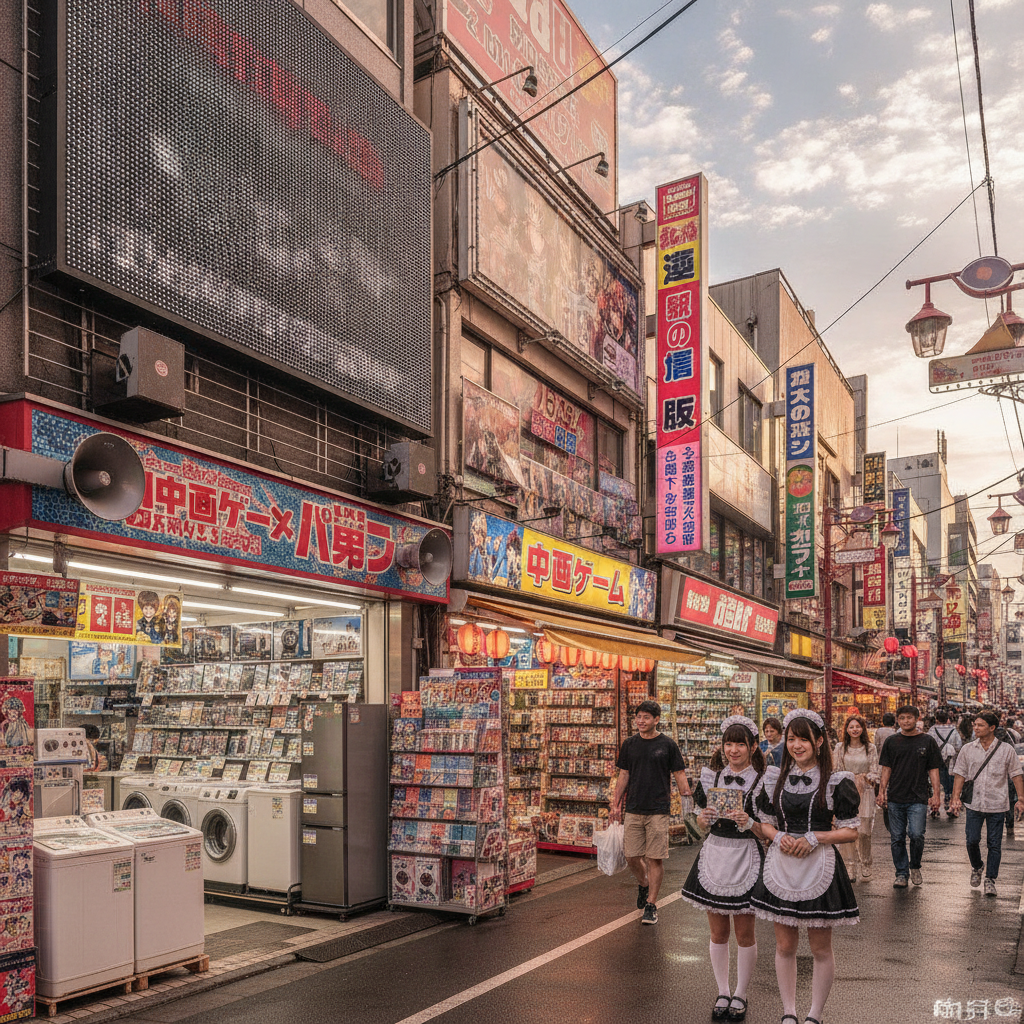
Kuromon Ichiba (黒門市場 — 'Black Gate Market' — the covered market in the Nipponbashi area of Namba, running approximately 580 metres — nicknamed 'Osaka's Kitchen' (大阪の台所 — Osaka no daidokoro), the principal wholesale and retail market for the restaurants and residents of central Osaka since the 19th century): the Kuromon Ichiba (approximately 170 shops and stalls) specializes in the fresh seafood, meat, and vegetables that supply Osaka's restaurant industry — the fresh seafood selection (tuna (maguro), sea urchin (uni), oysters (kaki), octopus (tako), fugu (puffer fish), and the full range of the Osaka seafood market) is the finest in the city; the market has increasingly catered to tourists with eat-as-you-go street food stalls (fresh oysters on the shell, giant scallops grilled on the spot, tuna sashimi cones) making it one of the best food market experiences in Japan; the Nipponbashi area adjacent to Kuromon Ichiba is also the centre of Osaka's 'Denden Town' (電気電器街 — the electronics and manga/anime goods district, the Osaka equivalent of Tokyo's Akihabara).
- 6
Namba Parks & the Namba Sky Garden
Namba Parks (なんばパークス — the mixed-use commercial development at the southern end of the Namba area, on the former site of Osaka Municipal Baseball Stadium (the Kintetsu Buffaloes baseball team's home ground, demolished 1998) — the 'urban canyon' landscape design with cascading terraced gardens (the 'Parks Garden', a rooftop botanical garden with approximately 30,000 plants) climbing the facade of the commercial building): Namba Parks represents the most ambitious attempt in Osaka to integrate green space with commercial development, the building's canyon-shaped exterior (designed by American architect Jon Jerde) creating a distinctive Osaka landmark visible from the JR Namba tracks; the Sky Garden at Namba Parks (the accessible rooftop garden on the 9th floor, with views over the Osaka plain south towards Sakai and north towards the Osaka Castle area) is the finest free public garden in the Namba district; the Namba area is also the departure point for the JR Kansai Airport Line (Namba to Kansai International Airport in approximately 40 minutes — the most convenient airport access from the Dotonbori area).
Walk this route with audio
Stories play automatically as you reach each stop — no tapping needed.
More in osaka
Den-Den Town, Namba & Osaka's Retail Landscape
Osaka Food Deep Dive — Takoyaki, Ramen & the B-Gourmet Trail
Bunraku, Kabuki & the Traditional Performing Arts of Osaka
Osaka Castle — Toyotomi Hideyoshi's Fortress & the City's Historic Heart
Japanese Sake, Craft Beer & Suntory Whisky — Osaka's Drinks Culture