Vigeland Park, the Munch Museum & Oslo's World-Class Art
Oslo (the capital and largest city of Norway, population 700,000 in the city proper (1.1 million in the wider metropolitan area), situated at the head of the Oslofjord — one of the wealthiest cities in the world (Norway's sovereign wealth fund, the Government Pension Fund Global, at approximately $1.7 trillion is the largest in the world) and a city of extraordinary artistic richness, home to two of the most important individual artistic legacies in European history: the sculptor Gustav Vigeland and the painter Edvard Munch.
- 1
Vigeland Park — The World's Largest Sculpture Park by a Single Artist
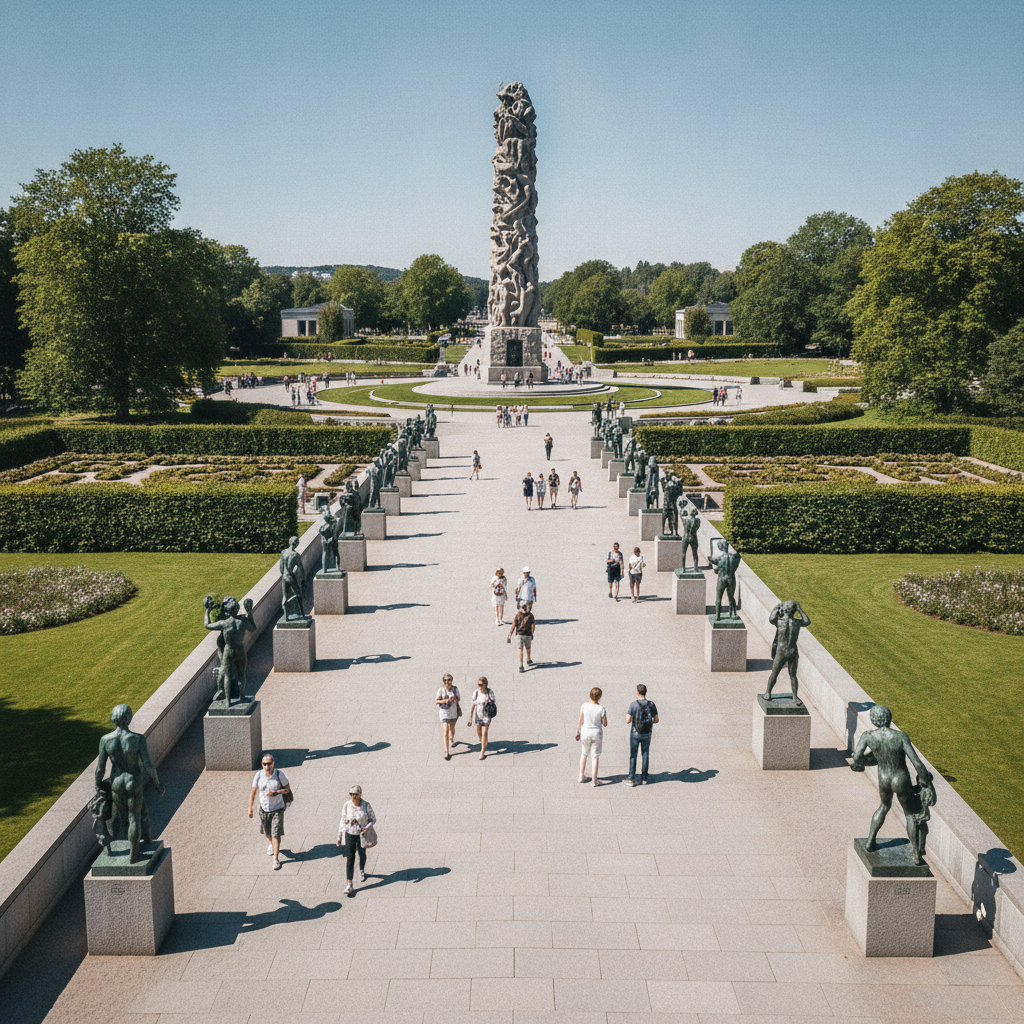
Vigeland Park (Vigelandsparken — in Frogner Park (Frognerparken), the large public park in the Frogner district of Oslo): the park contains 213 sculptures in bronze, granite, and wrought iron by the Norwegian sculptor Gustav Vigeland (1869-1943), created over a period of 40 years (1907-1943) in a unique arrangement with the city of Oslo (Vigeland was given a studio and a large stipend by the city in exchange for donating all his subsequent work to the city); the sculptures are arranged along an 850-metre axial pathway from the main gate through the bridge (the Broen — 58 bronze figures depicting the full cycle of human relationships from infancy to old age on the bridge parapet), past the Fountain (Fontenen — the large bronze fountain group depicting the life cycle of humanity around a massive bowl supported by six giants), to the Monolith Plateau (the Monolitten — the 14.12-metre granite column carved from a single block, depicting 121 human figures in a writhing spiral — the central symbol of Vigeland's world view that all human life is part of a universal cycle); Vigeland Park is the most visited tourist attraction in Norway, free and open 24 hours a day year-round.
- 2
Munch Museum — The Complete Legacy of Edvard Munch
MUNCH (the Munch Museum — Edvard Munchs plass 1, at Bjørvika on the Oslo waterfront, in the new 13-floor Estudio Herreros building (the angular white tower opened 2021, the most debated new building in Oslo's recent architecture) — the museum holding the most comprehensive collection of works by Edvard Munch (1863-1944, the Norwegian painter whose 'The Scream' (Skrik, 1893) is the most recognizable painting in history after the Mona Lisa)): Munch bequeathed his entire estate to the city of Oslo at his death in 1944, making it the only museum in the world with a complete record of a major artist's development — the museum holds approximately 28,000 works (1,200 paintings, 18,000 prints, 7,700 drawings and watercolours, notebooks, letters); 'The Scream' exists in four versions (oil, tempera, pastel, and crayon — the Oslo National Museum has the oil version (1893), while MUNCH has the 1910 tempera version); the museum's collection of Munch's self-portraits (70 self-portraits spanning his career from 1881 to 1944) is the most complete self-portrait series by any major Western artist.
- 3
National Museum (Nasjonalmuseet) — Norway's Art Treasure House
Nasjonalmuseet (The National Museum — Brynjulf Bulls plass 3, Aker Brygge waterfront — the new national museum building opened June 2022, the largest art museum in the Nordic countries by floor area (54,600 square metres), designed by Kleihues + Schuwerk (Germany) and costing approximately 6.5 billion NOK): the National Museum unites the former National Gallery, the Museum of Decorative Arts and Design, the Museum of Architecture, and the National Museum of Contemporary Art into a single building; the highlights of the collection include: Edvard Munch's 'The Scream' (1893, oil on canvas — the most famous painting in Norwegian history and one of the most internationally recognized images in art history), J.C. Dahl's Norwegian landscape paintings (Dahl (1788-1857), the founder of Norwegian landscape painting and one of the key figures in Northern European Romanticism), and the decorative arts collection (the finest collection of Norwegian folk art, Applied Arts, and design in existence).
- 4
Ekeberg Park — Outdoor Art & The Scream's Viewpoint
Ekebergparken (the sculpture park and forest park on the Ekeberg hill south of central Oslo, with 40 permanent outdoor sculptures by international and Norwegian artists including James Turrell, Jenny Holzer, Salvador Dalí, Tracey Emin, and Tony Oursler): Ekeberg Hill (the forested hill above the Oslofjord, 97 metres above sea level, offering the finest panoramic view of Oslo's waterfront, the Oslofjord, and the surrounding hillscape) is significant in art history as the location from which Edvard Munch witnessed the atmospheric phenomenon that inspired 'The Scream' — in 1892, Munch wrote in his diary: 'I was walking along the road with friends. The sun was setting — suddenly the sky turned blood red... I stood there trembling with anxiety — and I sensed an endless scream passing through nature'; the viewpoint from Ekeberg Hill (approximately the spot where Munch was standing) is marked, and the panoramic view of the Oslofjord at sunset (when the sky turns red, as Munch described) remains one of the most atmospheric in Oslo.
- 5
Oslo City Hall — The Nobel Peace Prize Building
Oslo rådhus (Oslo City Hall — Fridtjof Nansens plass 1, Aker Brygge waterfront — the large red-brick building (built 1931-1950, designed by Arnstein Arneberg and Magnus Poulsson in a Functionalist-Classicist hybrid style), the seat of Oslo municipal government and the venue for the annual Nobel Peace Prize ceremony (the only Nobel Prize awarded in Norway — Alfred Nobel specified in his will that the Peace Prize be awarded by a Norwegian committee, while the other prizes are awarded in Stockholm)): the Nobel Peace Prize ceremony is held each December 10 in the Main Hall (Rådhushallen — the large interior decorated with murals by Norwegian artists depicting Norwegian history and culture), with the prize awarded by the Norwegian Nobel Committee (appointed by the Norwegian parliament); past laureates include Martin Luther King Jr. (1964), Nelson Mandela and F.W. de Klerk (1993), Malala Yousafzai (2014), and the International Campaign to Abolish Nuclear Weapons (2017); the City Hall's exterior (two square brick towers, 63 metres high) is the most recognizable building on the Oslo waterfront.
- 6
Aker Brygge & Tjuvholmen — Oslo's Waterfront Renaissance
Aker Brygge (the former Aker shipyard (1854-1982), converted from 1986 to a mixed commercial, residential, and restaurant development on the Oslo inner harbour waterfront — one of the most successful urban waterfront redevelopment projects in Europe): Aker Brygge is the social heart of modern Oslo, with restaurants, bars, and the promenade overlooking the Oslofjord and the Akershus Fortress; the adjacent Tjuvholmen ('Thieves' Island' — the former peninsula used for public executions, now the most expensive real estate in Norway, developed 2007-2015 as a luxury residential and cultural district with the Astrup Fearnley Museum of Modern Art (designed by Renzo Piano (2012), the private modern art collection of the Fearnley family, with an outstanding collection of American contemporary art including Cindy Sherman, Jeff Koons, and Damien Hirst)) and the Oslofjord waterfront connecting to the Opera House (the Oslo Opera House (Operahuset) — designed by Snøhetta and opened 2008, the white marble building that appears to rise from the water, the most awarded new building in Norway, with a sloping roof that is a public walkway with fine harbour views).
Walk this route with audio
Stories play automatically as you reach each stop — no tapping needed.
More in oslo
Viking Ship Museum, Kon-Tiki & Bygdøy — Norway's Maritime Heritage
Northern Lights (Aurora Borealis) & Oslo in Winter
Oslofjord Cruise & the Fjord Islands

Sámi Culture, Reindeer & Norway's Arctic North
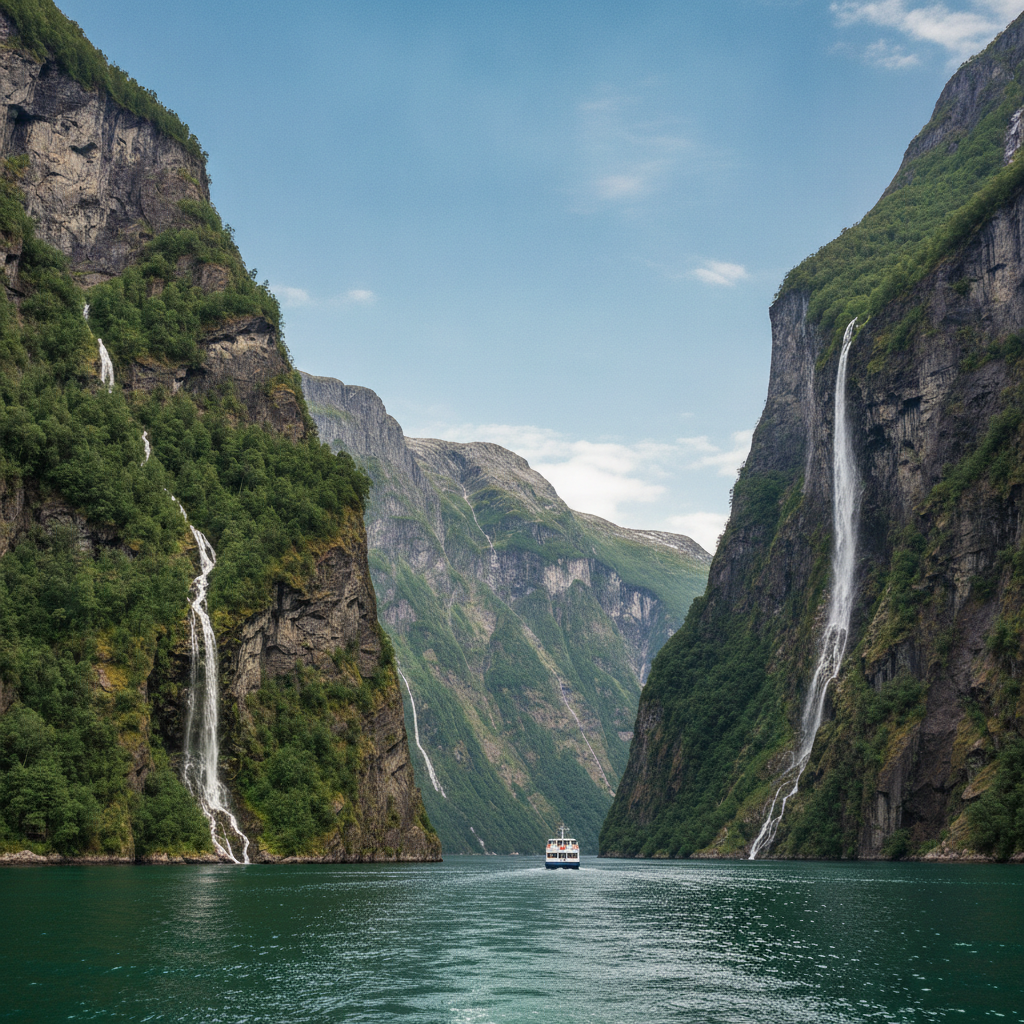
Norwegian Fjords — Bergen, Flåm & Day Trips from Oslo