Ottawa: The Constitution That Took 115 Years to Bring Home From Britain, the Playing Card Money Used When New France Ran Out of Coins and the Neighborhood Cleared in the 1960s That Is Still Empty
Understand the Official Languages Act of 1969 that made French and English co-equal from coast to coast and what it cost politically to pass it in a country where one province barely wanted to remain, see the Charter of Rights and Freedoms that for the first time gave Canadian courts power to strike down laws that violated fundamental rights, find the Currency Museum collection of Hudson Bay Company trade tokens and the playing card money New France printed when coin supply ran out, walk a pedestrian mall created in 1967 that was the first in Canada and is now a cautionary tale about retail decline, track the Trudeau dynasty from the father who patriated the constitution to the son who served as prime minister 40 years later, and see LeBreton Flats where the NCC cleared a working-class neighborhood in the 1960s and left the land empty for 60 years as the most visible planning failure in Canadian capital history.
- 1
Bilingualism and Language Policy in Ottawa
Ottawa is the only fully bilingual city in Canada as defined by federal law, where all federal services must be available in both official languages and where the National Capital Region functions as the practical testing ground for the Official Languages Act of 1969, which made English and French the two official languages of the Government of Canada. The act, championed by Prime Minister Pierre Trudeau, was one of the most consequential policy decisions in Canadian history, creating the framework within which French-speaking Canadians could access federal services in their language from coast to coast and within which English-speaking Canadians in Quebec were guaranteed language rights. The Commissioner of Official Languages, an independent officer of Parliament headquartered in Ottawa, monitors compliance with the act and investigates complaints. The practical experience of bilingualism in Ottawa is visible on every government building, every federal form, every piece of currency, and every food package sold in Canada. The Cite Collegiale and the University of Ottawa, both in Ottawa, provide French-language education in the heart of the English province of Ontario, maintaining a Francophone community of over 150,000 in the Ottawa-Gatineau region.
- 2
Ottawa Museum of Nature and Science
The Canadian Museum of Nature, housed in the Victoria Memorial Museum Building, a Gothic Revival stone building completed in 1912 on McLeod Street in central Ottawa, is the national natural history museum, with collections of over 14.6 million specimens including fossils, minerals, plants, birds, mammals, and invertebrates. The building itself has a complicated history: it served as the temporary Parliament buildings after the 1916 fire, meaning that the Confederation Debates of 1917 were held in a natural history museum. The Teck Suite of Galleries holds a fossil gallery with complete dinosaur skeletons including a Pachyrhinosaurus that was discovered in Alberta and is one of the most complete specimens of its species. The bird gallery, with over 10,000 specimens, is one of the largest bird collections in the world. The museum also holds the Sheguiandah archaeological collection from Manitoulin Island, which represents some of the oldest confirmed evidence of human habitation in Canada. The Science and Technology Museum in the eastern suburbs houses the national collection of Canadian scientific and technological innovation, including the Avro Arrow replica, a controversial Canadian jet fighter whose cancellation in 1959 remains a political controversy.
- 3
Ottawa Sparks Street and Shopping
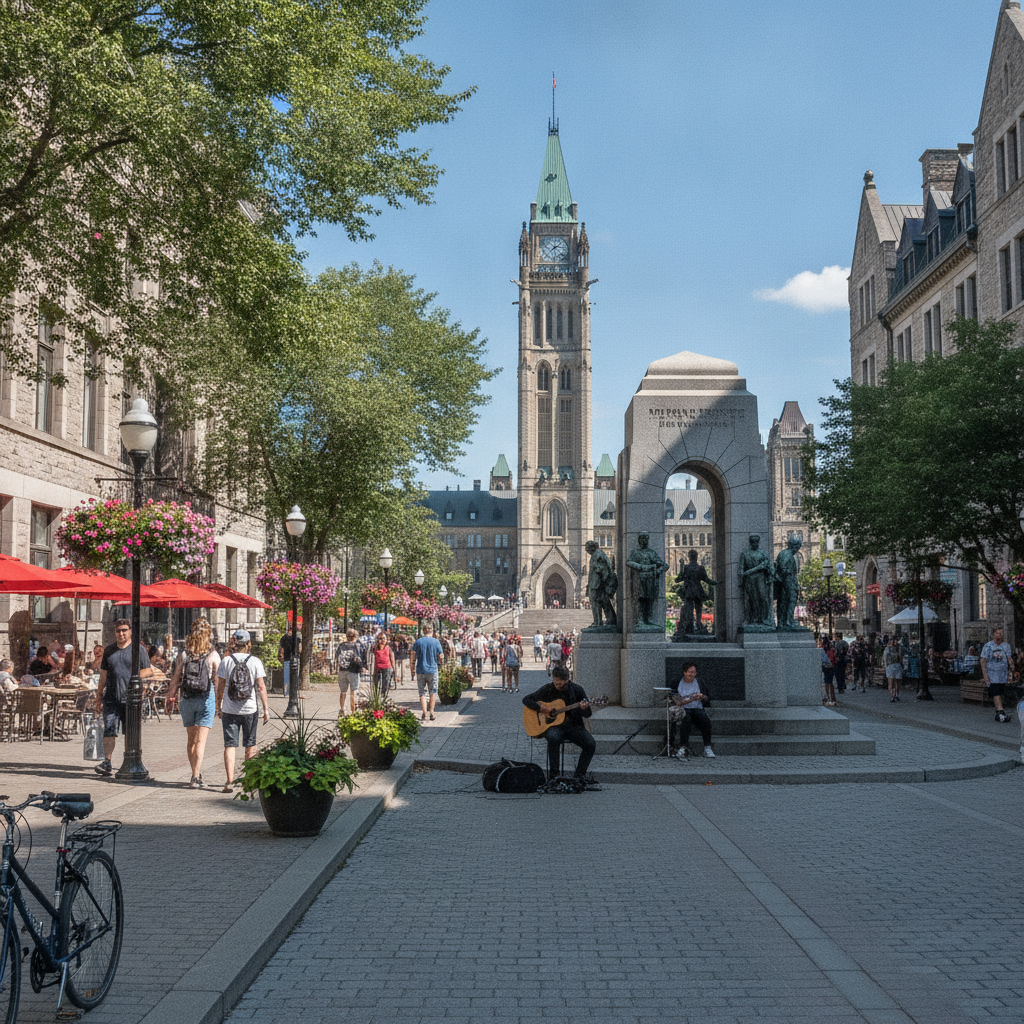
Sparks Street, a pedestrian mall running four blocks west from the Bank of Canada on Wellington Street, was the first permanent pedestrian mall in Canada when it was closed to traffic experimentally in 1960 and permanently in 1967, making it an early example of the urban pedestrianization movement that was simultaneously occurring in Copenhagen, Vienna, and other European cities. The Sparks Street Mall was enormously successful in its early years but declined through the 1980s and 1990s as suburban malls drew shoppers away. The street now holds restaurants, government offices, a few remaining specialty retailers, and the Bank of Canada Currency Museum, which tells the history of Canadian money and maintains an extraordinary collection of currencies from across history. The Currency Museum collection includes ancient coins, playing card currency used in New France when coin supply ran out, and Hudson Bay Company trade tokens. The Rideau Centre, the major downtown shopping mall attached to the Westin Hotel on Rideau Street, anchors the eastern end of the downtown retail district and connects via underground Rideau Station to the Confederation Line light rail.
- 4
Ottawa Pierre Trudeau Legacy
Pierre Elliott Trudeau, Prime Minister of Canada from 1968 to 1979 and from 1980 to 1984, transformed Canadian national identity and constitutional structure more fundamentally than any other leader in the 20th century through the Official Languages Act of 1969, the Constitution Act of 1982 which patriated the Canadian constitution from Britain after 115 years and added the Charter of Rights and Freedoms, the National Energy Program, and the Just Society social policy framework. Trudeau was simultaneously the most celebrated and most divisive political figure in Canadian history: celebrated in Quebec as a brilliant defender of federalism against separatism, despised in Alberta for the National Energy Program that transferred oil revenues eastward during the energy crisis. The Charter of Rights and Freedoms has been described by legal scholars as the most significant constitutional document in Canadian history because it gave courts power to strike down federal and provincial legislation that violated fundamental rights, a power Canadian courts had not previously held. The Trudeau legacy is debated continuously in Ottawa political culture. Justin Trudeau, his son, served as Prime Minister from 2015 to 2025, making the Trudeau name the most dynastic in Canadian political history.
- 5
Ottawa Public Art and Urban Design
Ottawa has developed one of the most significant collections of public art in Canada through National Capital Commission programs that have commissioned sculptures, murals, and installations throughout the ceremonial core and urban landscape since the 1960s. The Reconciliation sculpture by artist Tyler Fauvelle installed at Confederation Park in 2017, a bronze bear-paw print embedded in the pavement acknowledging the Algonquin territory, represents the newer direction of public art in Ottawa toward Indigenous acknowledgment and treaty relationship. The NCC Sparks Street public art program and the various commemorative monuments along Confederation Boulevard represent decades of commissioning decisions. The urban design of Ottawa has been governed by the National Capital Commission plan since 1950, when city planner Jacques Greber produced the Greber Plan, a comprehensive urban design blueprint that established the greenbelt, the parkway system, and the protection of the ceremonial core from commercial development. The Greber Plan was influential internationally as a model of postwar capital planning. The LeBreton Flats, adjacent to the War Museum, was cleared in the 1960s in a catastrophic urban renewal that demolished an established working-class neighborhood, and remains largely undeveloped 60 years later, the most visible failure of the NCC planning vision.
- 6
Ottawa Practical Travel Information
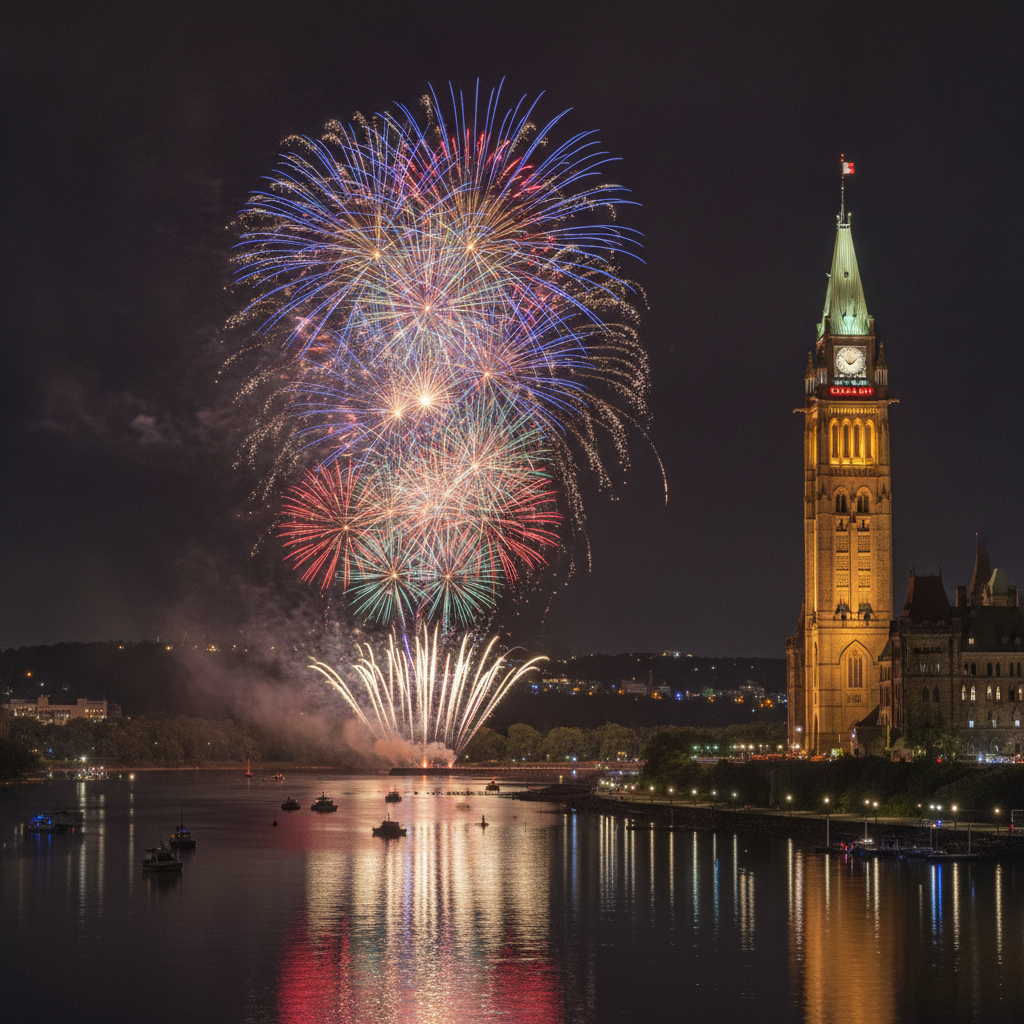
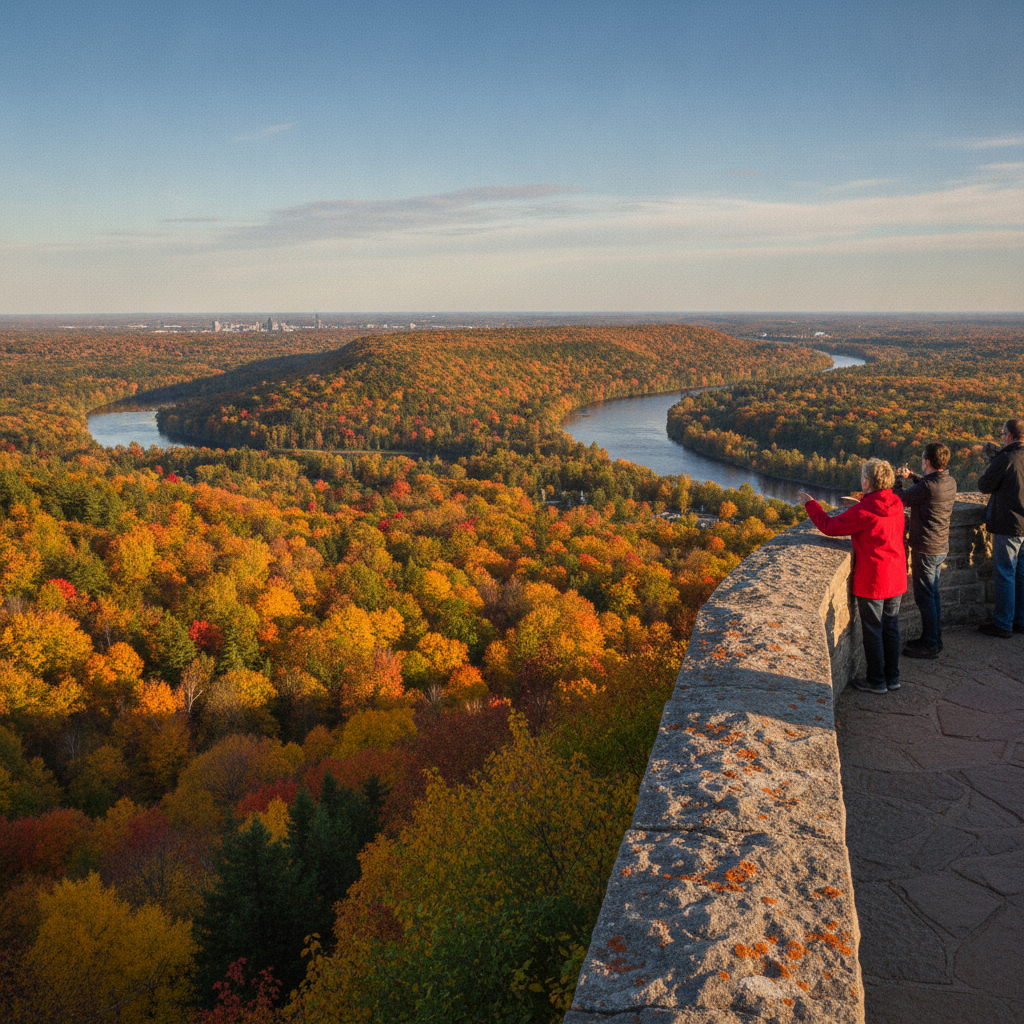
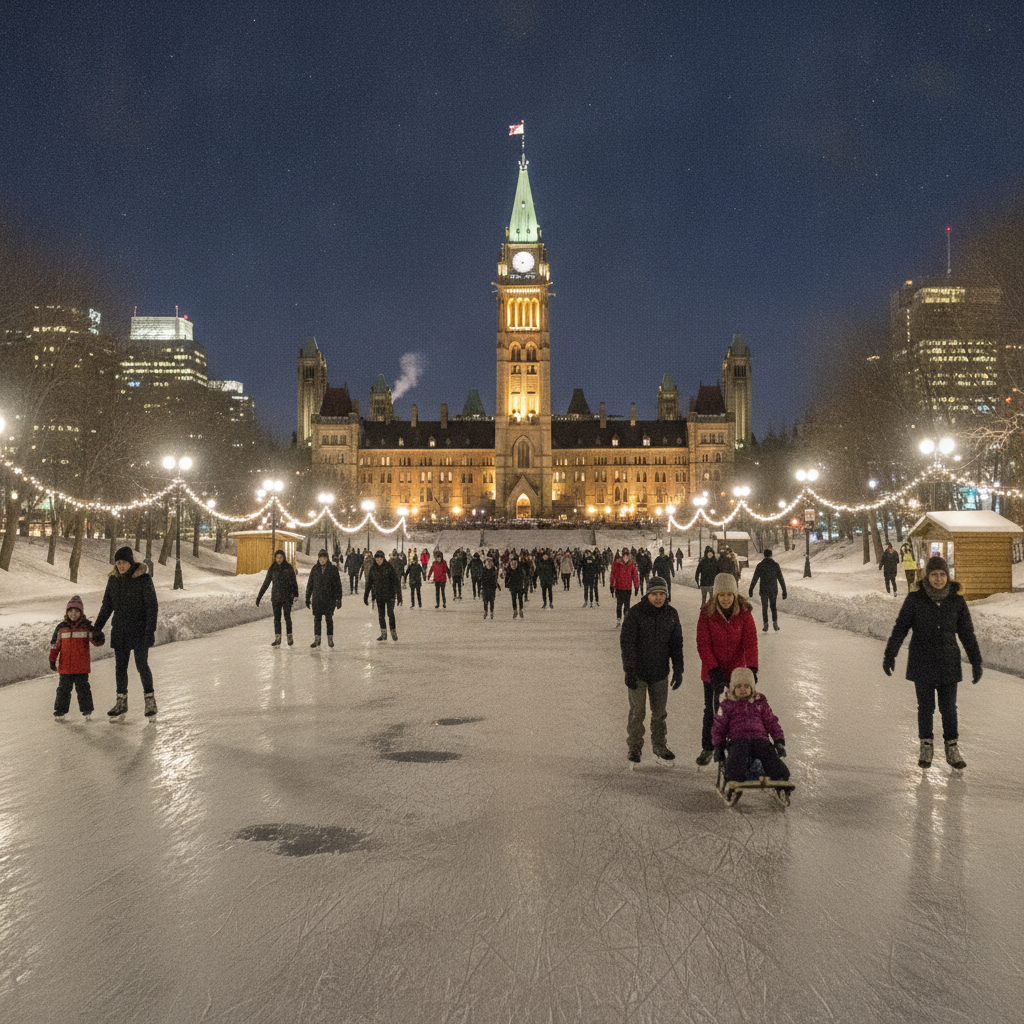
Ottawa Macdonald-Cartier International Airport, 10 kilometres south of downtown, serves major Canadian cities and several American and European destinations directly. The Confederation Line light rail, opened in 2019 after years of construction delays and cost overruns, connects the airport and eastern suburbs through downtown to the western suburbs and has been extended in subsequent phases. Downtown Ottawa is compact and walkable, with the major parliamentary, museum, and market attractions within 2 kilometres of each other. The best travel times for Ottawa are July for the Canada Day celebrations on Parliament Hill, which draw 100,000 people for the largest outdoor party in Canada, late September for fall foliage in Gatineau Park, and February for the Rideau Canal skating and Winterlude festival. Hotel costs in Ottawa are moderate by capital city standards, reflecting the government and business travel demand rather than leisure tourism peak pricing of coastal cities. Ottawa is directly connected to Montreal by VIA Rail in 2 hours and to Toronto in 4.5 hours. The National Capital Commission provides free admission to the Rideau Hall grounds and grounds of the Supreme Court. Parliament Hill tours are free when Parliament is not in session.
Walk this route with audio
Stories play automatically as you reach each stop — no tapping needed.
More in Ottawa
Ottawa: 130000 Federal Employees Who Never Lose Their Jobs in a Recession, the Sacred Falls That Were Industrialized for 150 Years and 1 Billion Year Old Rock Visible From Parliament
Ottawa: Second Coldest Capital City in the World Where 15000 People Commute on Ice, the Confederation Documents in Fireproof Vaults and the Lookout Where You Can See New York State
Ottawa: The Library Saved by a Clerk Who Closed One Door, an Unresolved Land Claim on the Ground Under Parliament and a Farm Doing Agricultural Research Since 1886 Inside the City
Ottawa: The Skating Rink That Is Also a UNESCO World Heritage Site, the Marshmallow Incident That Extinguished the Eternal Flame and the Most Photographed Spider in Canada
Ottawa: The Nobel Prize That Invented Peacekeeping, a Capital Built on Unceded Algonquin Land That Has Been in Legal Negotiation for 40 Years and the Only Bilingual National Theatre in the World