Ottawa: The Prime Minister Who Governed 21 Years While Consulting His Dead Mother, the Jet Destroyed on Purpose and the 500 Varieties of Tulips That Are an Annual Apology for Not Surrendering Sooner
Walk to Kingsmere estate to see the ruins a prime minister assembled including bombed British Parliament stones while he held seances with his dead Irish terrier and governed Canada through World War II, visit Laurier House where the portrait of a prime ministers mother watched over a third-floor study used to make wartime decisions, ski 200 kilometres of Gatineau Park groomed Nordic trails 15 kilometres from Parliament Hill or drive 20 minutes to the ski area operating since 1922, find the full-scale Avro Arrow replica at the Science Museum and understand that Canada designed and built a Mach 2 interceptor in 1959 and then deliberately destroyed every copy of every drawing, watch 500 varieties of Dutch tulips bloom each May at Dows Lake as a thank-you for wartime shelter that the Netherlands has maintained continuously since 1945, and tour the 426-hectare agricultural research farm inside the Ottawa city limits that has been doing science since the year the Eiffel Tower was built.
- 1
Ottawa Chinatown and Multicultural Neighborhoods
Ottawa Chinatown, centered on Somerset Street West between Bay Street and Rochester Street, is one of the oldest Chinatowns in Canada, established in the 1890s when Chinese workers who had completed the Canadian Pacific Railway settled in Eastern Canadian cities. The Somerset Street Chinatown has contracted significantly since its 1970s and 1980s peak as the Chinese-Canadian community has dispersed to suburban areas, but retains restaurants, grocery stores, and community organizations as its cultural core. The adjoining Little Italy on Preston Street south of the Queensway is a similar heritage commercial district from the postwar Italian immigration wave, now serving as a restaurant strip for pasta, wine bars, and gelato. The Glebe neighborhood along Bank Street south of the Queensway is the most affluent urban residential neighborhood, with Victorian and Edwardian houses, independent shops, and restaurants representing the comfortable liberal professional culture of Ottawa. The Vanier neighborhood east of downtown is the most socioeconomically diverse area, with significant Francophone, African, and Middle Eastern communities. Ottawa receives approximately 10,000 immigrants annually through the federal refugee and immigration programs, making it consistently one of the most actively diversifying cities in Canada.
- 2
Ottawa Mackenzie King and Eccentricities of Power
William Lyon Mackenzie King, the longest-serving Prime Minister in Canadian history with 21 years in office across three terms from 1921 to 1948, governed Canada through the Great Depression, World War II, and the beginning of the postwar welfare state while maintaining a private life of remarkable eccentricity: he consulted the spirit of his dead mother at seances at his Kingsmere estate in Gatineau Park, believed that his Irish terrier Pat communicated guidance from the spirit world, read omens in the shapes of clouds and the hands of clocks, and maintained a detailed diary of these supernatural consultations that he left to the National Archives and has been published. King was simultaneously a highly effective political manager who held the Liberal Party together through impossible contradictions and a deeply lonely man whose inner life was recorded in a document of extraordinary psychological peculiarity. The Kingsmere estate, now operated as a National Capital Commission heritage property in Gatineau Park, features the ruins he collected including stones from the British Houses of Parliament and a fake abbey doorway from a demolished Ottawa bank. Visitors can walk the grounds and see the ruins that King assembled as a romantic garden during his years of power.
- 3
Ottawa Sandy Hill and University of Ottawa
Sandy Hill, the residential neighborhood immediately east of Parliament Hill and the Rideau River, contains the University of Ottawa main campus, the largest bilingual university in the world by enrollment with approximately 42,000 students, and the highest concentration of heritage residential architecture in Ottawa, including Victorian and Edwardian houses on streets including Laurier Avenue, Daly Avenue, and Wilbrod Street where prime ministers and governors general lived in the early 20th century. Laurier House on Laurier Avenue East, a Victorian house that was home to Prime Ministers Wilfrid Laurier from 1897 to 1919 and then William Lyon Mackenzie King from 1923 to 1950, is now a National Historic Site open to visitors, with the third floor study preserved as King left it including the portrait of his mother that he consulted for spiritual guidance. The Sandy Hill neighborhood is walkable, diverse, and student-influenced but retains the physical fabric of its late 19th-century development. The Rideau River bicycle path through Sandy Hill connects to the broader NCC pathway network. The neighbourhood was the site of major student housing development in the 1960s and 1970s that destroyed some of the heritage residential stock.
- 4
Ottawa Gatineau Hills Skiing
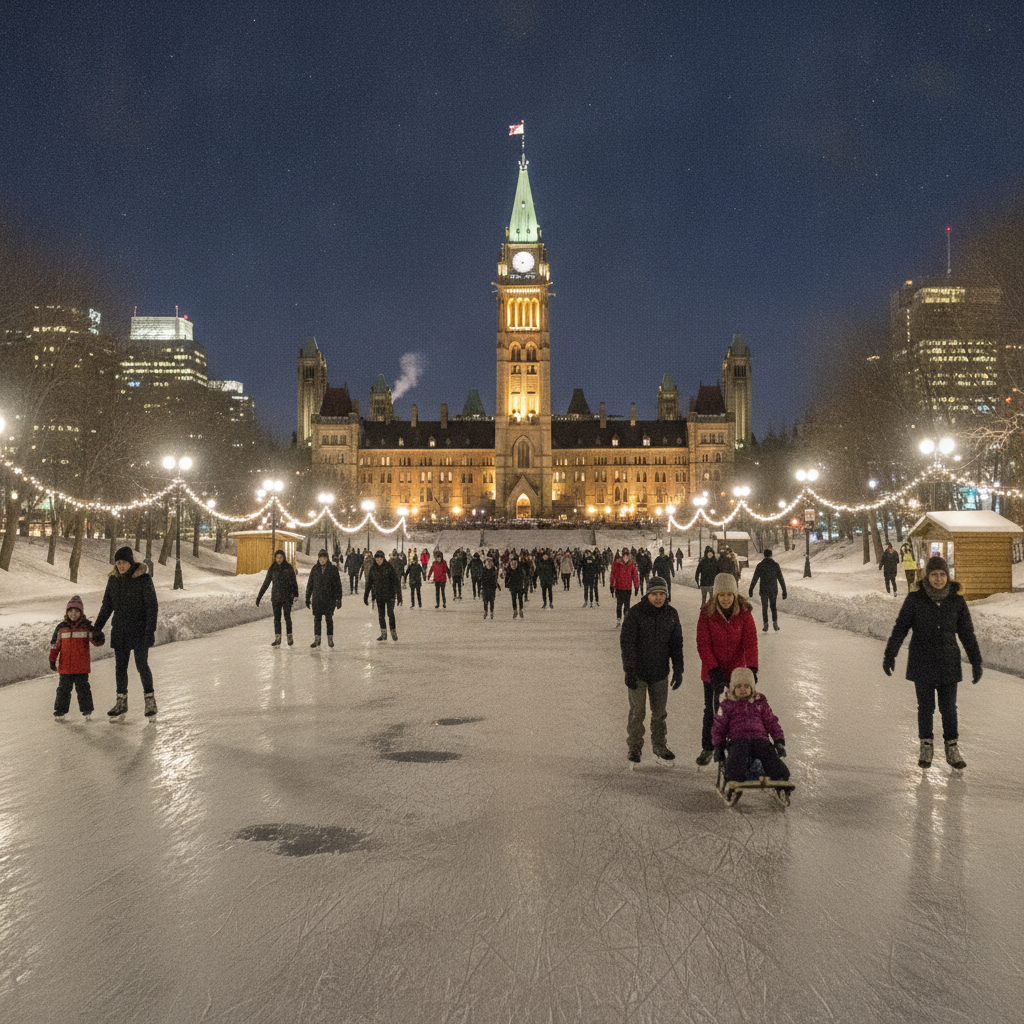
Mont Cascades, Ski Vorlage, and Camp Fortune are three ski areas in the Gatineau Hills north of Gatineau that provide downhill skiing within 40 minutes of downtown Ottawa, making the capital one of the most accessible cities to alpine skiing in eastern Canada. Camp Fortune, the closest to Ottawa at 20 kilometres, has been operating since 1922 and is the oldest continuously operating ski area in eastern Canada, with a modest vertical drop of 180 metres but reliable snow and a loyal local following. The cross-country ski trails of Gatineau Park, with 200 kilometres of groomed trails maintained by the National Capital Commission through the winter season, are among the finest urban-adjacent Nordic skiing facilities in North America, equivalent in quality to the trail systems of dedicated Nordic destinations. The park trails pass frozen lakes, through boreal forest, and to viewpoints at the Champlain Lookout. The Rideau Canal skating surface, groomed by the NCC to a mirror finish in ideal conditions, is technically a speed skating oval design stretched over 8 kilometres, meaning that the canal ice is maintained at a higher standard than most public rinks. In peak years the canal draws over 1.5 million visitors during the skating season.
- 5
Ottawa Aviation History and Avro Arrow
The Avro Canada CF-105 Arrow, a twin-engine supersonic interceptor jet designed and built in Malton, Ontario between 1949 and 1959, was the most technically sophisticated aircraft manufactured in Canada and was cancelled by Prime Minister John Diefenbaker in February 1959 in a decision that remains among the most controversial in Canadian political history, with all aircraft, engineering drawings, and tooling ordered destroyed in a further decision that eliminated the complete program documentation. The Arrow was designed to intercept Soviet bombers entering North American airspace from the Arctic, achieving speeds above Mach 2 and altitudes above 18,000 metres in test flights that exceeded the performance specifications of contemporary American and British aircraft. The cancellation was motivated by cost overruns, American pressure to purchase American defense equipment under the NORAD agreement, and the perceived shift from bombers to missiles as the primary Soviet nuclear delivery vehicle. The destruction of the prototypes has been interpreted as a deliberate suppression of Canadian aerospace capability. The Science and Technology Museum holds an accurate full-scale replica of the Arrow. Several of the program engineers subsequently joined NASA and contributed to the Mercury and Gemini programs.
- 6
Ottawa Tulip Season and Capital Gardens
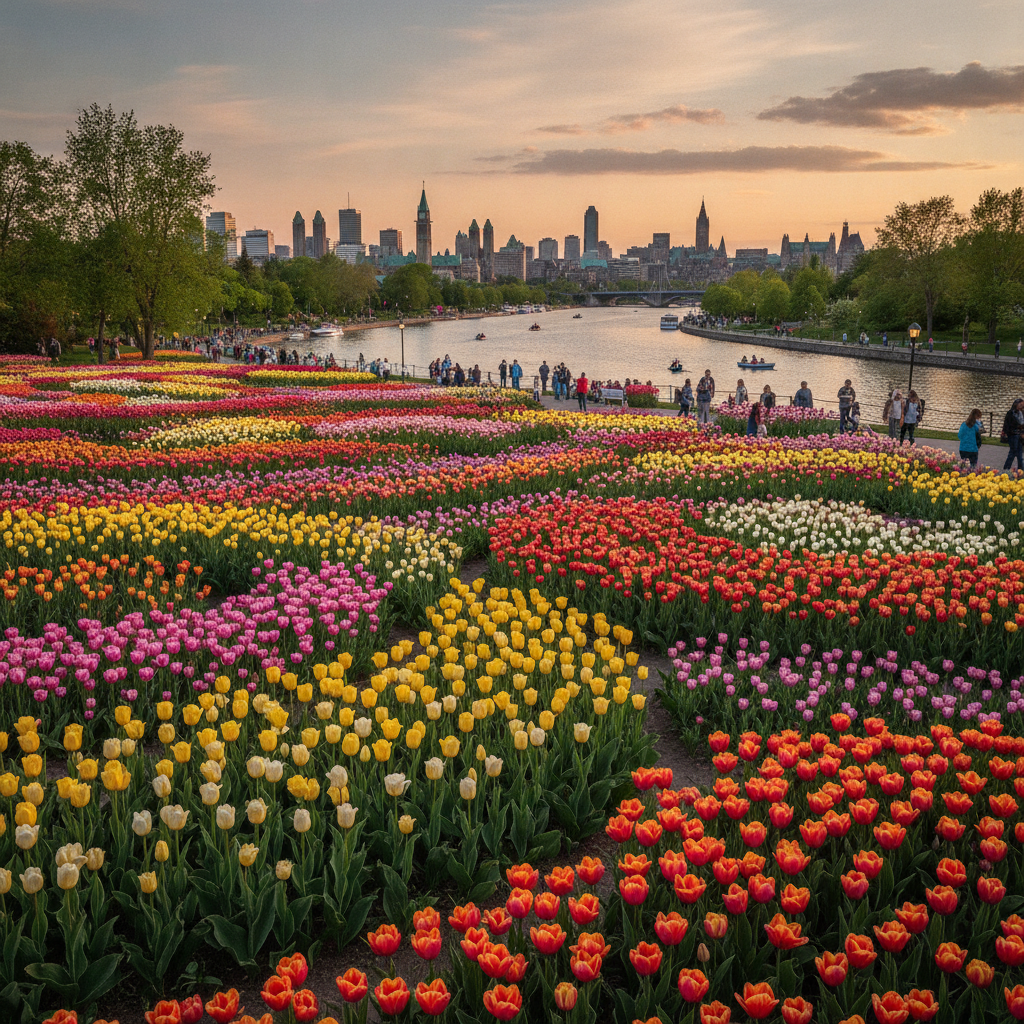
The Central Experimental Farm in Ottawa, a 426-hectare working agricultural research station operated by Agriculture and Agri-Food Canada within the Ottawa urban area since 1886, contains the largest ornamental display garden in the national capital region and an arboretum of over 2,000 trees and shrubs representing the most comprehensive collection of cold-hardy ornamental plants in Canada. The arboretum is open to the public year-round. The tulip displays along the Rideau Canal and at Commissioners Park at Dows Lake, installed each fall and blooming each May as part of the Canadian Tulip Festival, represent 500 to 600 varieties of tulip planted by a volunteer-supported program coordinated by the Canadian Tulip Festival organization with bulb donations continuing annually from the Netherlands. The Commissioners Park site at Dows Lake, where the canal widens into a small lake, is the primary photography location for the festival, with tulip beds bordering the canal and the Dows Lake Pavilion providing waterside dining and boat rentals. The annual bloom timing depends entirely on spring temperature, varying from late April to mid-May. Late frost can damage the display. The farm also operates a demonstration dairy herd, crop research plots, and apiary visible to the public on farm tours offered from May to October.
Walk this route with audio
Stories play automatically as you reach each stop — no tapping needed.
More in Ottawa
Ottawa: The Constitution That Took 115 Years to Bring Home From Britain, the Playing Card Money Used When New France Ran Out of Coins and the Neighborhood Cleared in the 1960s That Is Still Empty
Ottawa: 130000 Federal Employees Who Never Lose Their Jobs in a Recession, the Sacred Falls That Were Industrialized for 150 Years and 1 Billion Year Old Rock Visible From Parliament
Ottawa: Second Coldest Capital City in the World Where 15000 People Commute on Ice, the Confederation Documents in Fireproof Vaults and the Lookout Where You Can See New York State
Ottawa: The Library Saved by a Clerk Who Closed One Door, an Unresolved Land Claim on the Ground Under Parliament and a Farm Doing Agricultural Research Since 1886 Inside the City
Ottawa: The Skating Rink That Is Also a UNESCO World Heritage Site, the Marshmallow Incident That Extinguished the Eternal Flame and the Most Photographed Spider in Canada