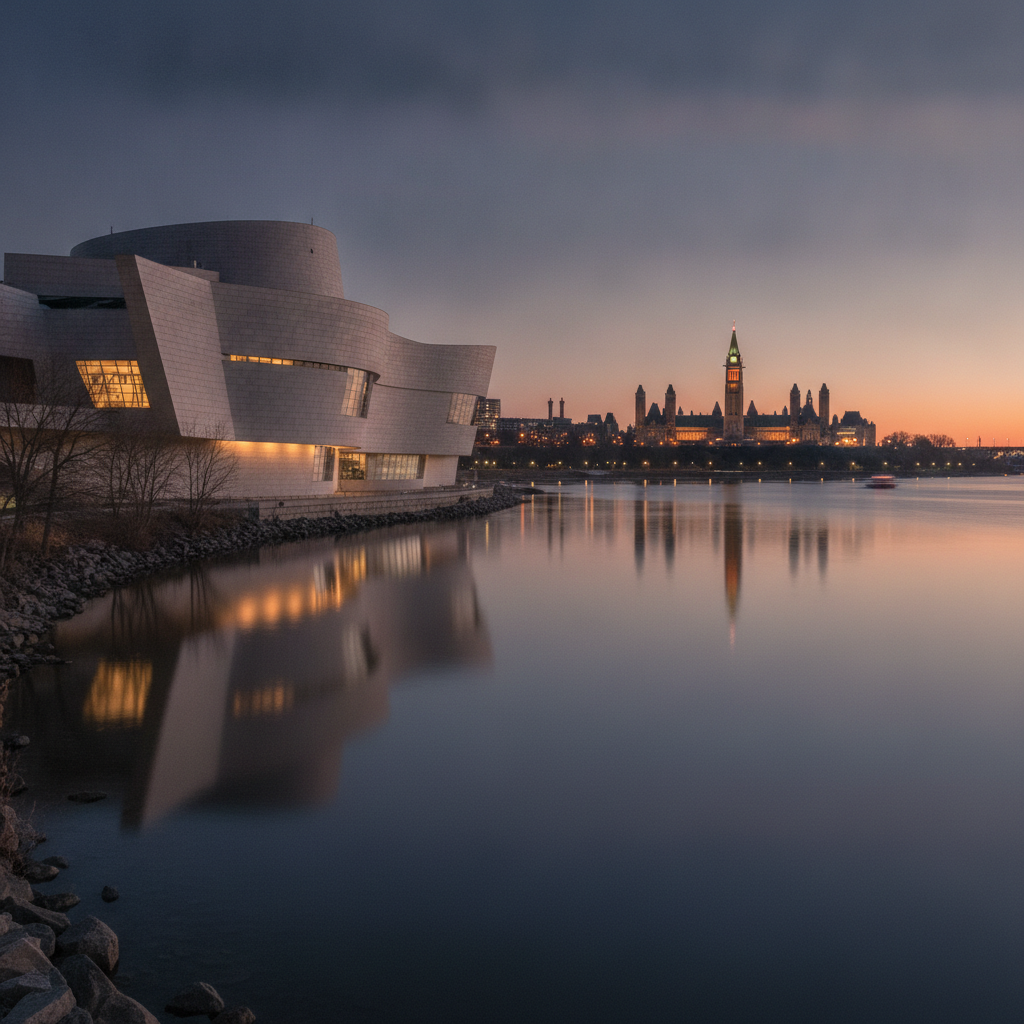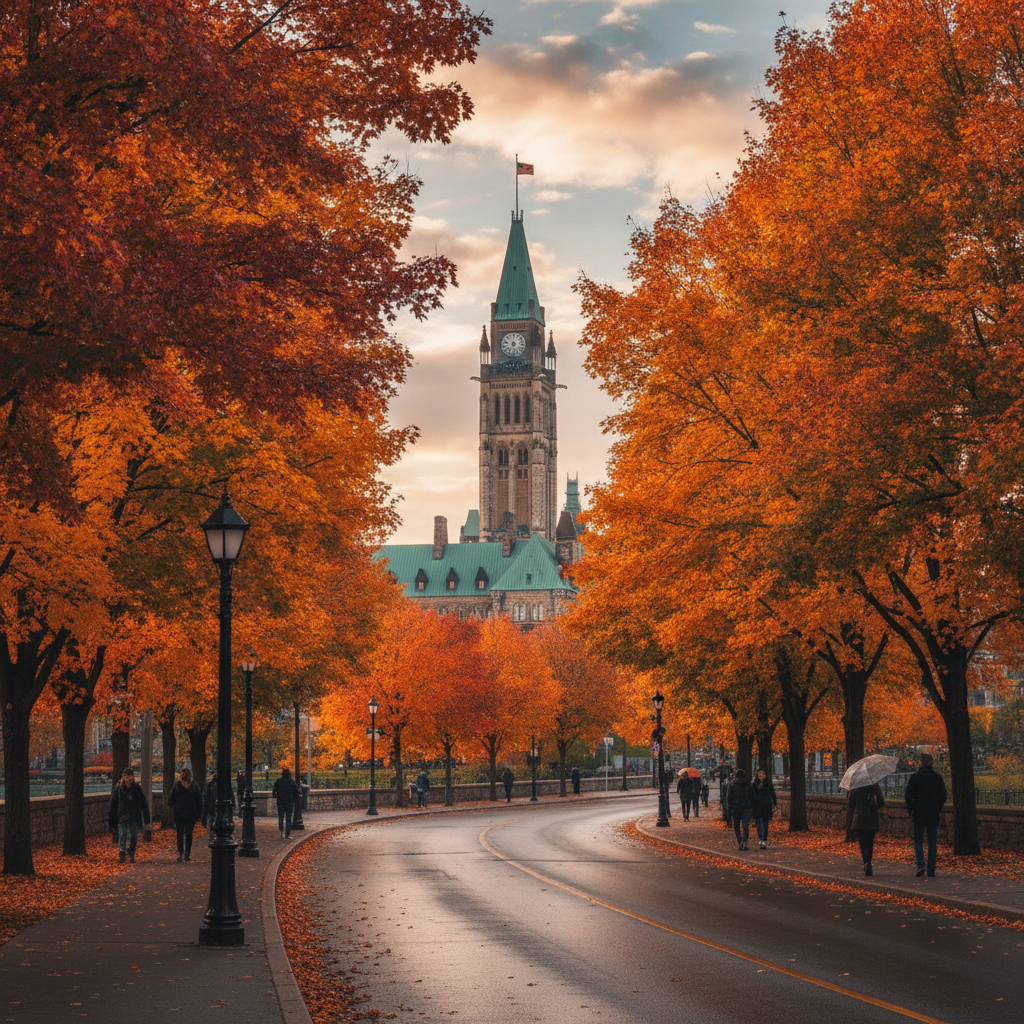
Ottawa: The Library Saved by a Clerk Who Closed One Door, an Unresolved Land Claim on the Ground Under Parliament and a Farm Doing Agricultural Research Since 1886 Inside the City
See the only building to survive the 1916 Parliament fire because one person had the presence of mind to close iron doors in time, walk 8 kilometres of Confederation Boulevard past the Supreme Court and National Archives and the War Memorial where the Tomb of the Unknown Soldier was brought from Vimy Ridge in 2000, understand that Queen Victoria chose Ottawa as capital in 1857 specifically because it was harder for America to attack than Toronto or Montreal, buy Ontario vegetables and Quebec ice cider at the same market ten minutes from Parliament while a 426-hectare federal research farm operates inside the city limits, follow the Ottawa Senators from an expansion franchise in 1991 back to the original team that won the Stanley Cup four times in the 1920s before going broke in the Depression, and skate the Rideau Canal with 1 million other users in a season on a UNESCO World Heritage Site that was built to fight a war that ended before construction started.
- 1
Parliament Hill Library of Parliament
The Library of Parliament, the domed rotunda connected to the Centre Block by a short corridor, is the only structure to survive the 1916 Centre Block fire intact, saved when a quick-thinking clerk closed the iron fire doors separating the library from the main building. The library has been in continuous use since 1876 and contains 650,000 items including the original Confederation documents, rare parliamentary records, and a statue of Queen Victoria at its center. The current renovation of the Centre Block, the most expensive construction project in Canadian history at approximately 5 billion dollars, is expected to complete in the late 2020s. The West Block, built in the 1860s and completed in a style matching the Centre Block, has been converted to serve as the temporary House of Commons chamber, with a full glass atrium built inside the historic stone shell to create an indoor public courtyard. The Senate moved temporary operations to the Senate of Canada Building, formerly the Government Conference Centre on Sparks Street. Parliamentary debates are broadcast on CPAC, the Cable Public Affairs Channel, and are streamed online and subtitled in both official languages.
- 2
Ottawa Rideau Hall Gardens and Protocol
The grounds of Rideau Hall, open to the public year-round for walking and seasonal activities, contain the largest collection of trees in Ottawa with over 200 species planted by visiting heads of state, prime ministers, and royals since the tradition of tree-planting ceremonies began in the early 20th century. Each tree has a small marker identifying the person who planted it and the occasion. Prince Charles, President Obama, and dozens of other world leaders have planted trees on the grounds. The skating rink on the Rideau Hall grounds, maintained by the National Capital Commission and open to the public on weekends, is used for official public skating events where the Governor General skates with visitors and residents in an informal display of Canadian democratic accessibility. The Changing of the Guard ceremony on Parliament Hill, held each morning at 10am from late June to late August when Parliament is in summer recess, is a 30-minute ceremony involving guards in bearskin hats and scarlet tunics modeled on the Buckingham Palace ceremony. The ceremonial landscape of Ottawa, including Sussex Drive, Parliament Hill, and Rideau Hall, is managed as a unified national ceremonial precinct.
- 3
Ottawa Valley Lumbering History
Ottawa was founded as Bytown in 1826 during the construction of the Rideau Canal and rapidly became the center of the Ottawa Valley timber trade, the largest timber export industry in the British Empire during the 19th century, when the vast white pine forests of the Ottawa Valley were systematically harvested and floated in enormous rafts down the Ottawa River to Quebec City for export to Britain. The timber trade made the fortunes of early Ottawa merchants and created a rough-and-tumble lumber town culture documented in the history of Irish and French-Canadian lumber workers who fought bitterly over work, wages, and religion in the early years of Bytown. The poverty and violence of early Bytown contrasted with the administrative aspirations of the colonial government. Queen Victoria selected Ottawa as the capital of the Province of Canada in 1857, reportedly because it was less vulnerable to American attack than Toronto or Montreal due to its inland position and access to the Rideau Canal military route. The lumber barons who built fortunes in the Ottawa Valley timber trade left commercial buildings along Sparks Street and residential mansions in Sandy Hill and Rockcliffe that remain the finest Victorian domestic architecture in the city.
- 4
Ottawa Food Markets and Local Agriculture
The Ottawa agricultural hinterland in the Ottawa Valley and across the Ottawa River in Quebec provides an exceptional supply of local and regional food products within reach of the capital. The Ottawa Farmers Market at Lansdowne Park on Bank Street in the Glebe, operating on weekends from May to November, is the primary urban farmers market with 80 to 100 vendors selling vegetables, fruits, meats, cheeses, baked goods, and prepared foods from Ontario and Quebec farms. The ByWard Market indoor hall, operating year-round, is the historic center of fresh food retail in Ottawa. The Calabogie and Lanark County areas west of Ottawa produce maple syrup, organic vegetables, and artisan dairy products. The Pontiac and Outaouais regions of Quebec across the river provide French-Canadian food traditions including artisan cheeses, foie gras, and ice cider. Ottawa chefs use these local supply chains as a foundation for restaurants ranging from traditional Canadian to contemporary fusion. The Central Experimental Farm, a 426-hectare working research farm operated by Agriculture and Agri-Food Canada within the urban area of Ottawa, has conducted agricultural research since 1886 and maintains ornamental gardens and an arboretum open to the public.
- 5
Ottawa Sports and Professional Teams
Ottawa has a passionate sports culture centered on the Ottawa Senators NHL hockey team, founded in 1991 as an expansion franchise and representing a city with a continuous hockey tradition since the original Ottawa Senators won the Stanley Cup four times in the 1920s before folding in 1934 during the Depression. The Canadian Football League Ottawa Redblacks, founded in 2014 at the rebuilt TD Place stadium at Lansdowne Park, won the Grey Cup in 2016. The Ottawa Fury soccer club and various other professional sports franchises have operated with varying success. University of Ottawa Gee-Gees athletics and Carleton University Ravens basketball, whose mens program has won more CIS national championships than any other university program in Canada, generate strong student and local followings. The Ottawa 67s junior hockey team, founded in 1967 as part of the centennial year expansion of the OHL, has been the primary development program for Ottawa hockey since its founding. Skating on the Rideau Canal is the most widely participated sport in the city, with over 1 million uses of the canal skating surface recorded in peak seasons.
- 6
Confederation Boulevard and Ceremonial Ottawa
Confederation Boulevard, the ceremonial route designated by the National Capital Commission that links the major federal institutions of Ottawa and Gatineau through a circuit crossing the Alexandra Bridge and the Portage Bridge, passes in front of Parliament Hill, the Supreme Court, the National Archives, the War Memorial, the National Gallery, and across to the Canadian Museum of History, creating a continuous heritage walk of approximately 8 kilometres that encompasses the primary symbols and institutions of Canadian national identity. The Supreme Court of Canada, in a 1938 Art Deco building designed by Ernest Cormier on Wellington Street west of Parliament Hill, is the final court of appeal for all Canadian law including constitutional questions under the Canadian Charter of Rights and Freedoms. The National Archives and Library of Canada holds the documentary heritage of the country. The War Memorial on Confederation Square, where the Tomb of the Unknown Soldier was installed in 2000 after the remains of an unidentified Canadian soldier were brought from Vimy Ridge in France, is the primary site of national commemoration and was the scene of a terrorist attack in 2014 when a gunman killed a soldier on ceremonial guard duty before being shot inside the Centre Block by the Sergeant-at-Arms.
Walk this route with audio
Stories play automatically as you reach each stop — no tapping needed.
More in Ottawa
Ottawa: The Constitution That Took 115 Years to Bring Home From Britain, the Playing Card Money Used When New France Ran Out of Coins and the Neighborhood Cleared in the 1960s That Is Still Empty
Ottawa: 130000 Federal Employees Who Never Lose Their Jobs in a Recession, the Sacred Falls That Were Industrialized for 150 Years and 1 Billion Year Old Rock Visible From Parliament
Ottawa: Second Coldest Capital City in the World Where 15000 People Commute on Ice, the Confederation Documents in Fireproof Vaults and the Lookout Where You Can See New York State
Ottawa: The Skating Rink That Is Also a UNESCO World Heritage Site, the Marshmallow Incident That Extinguished the Eternal Flame and the Most Photographed Spider in Canada
Ottawa: The Nobel Prize That Invented Peacekeeping, a Capital Built on Unceded Algonquin Land That Has Been in Legal Negotiation for 40 Years and the Only Bilingual National Theatre in the World