Ottawa: The Skating Rink That Is Also a UNESCO World Heritage Site, the Marshmallow Incident That Extinguished the Eternal Flame and the Most Photographed Spider in Canada
Stand on Parliament Hill where the Eternal Flame has burned since 1967 except for the night students toasting marshmallows accidentally put it out, skate 8 kilometres through the capital on the Rideau Canal that was built as a military route against America after a war that ended before construction started and is now the worlds largest naturally refrigerated rink, find the 9-metre spider outside the gallery that holds the painting whose creators manifesto in 1948 launched the Quebec Quiet Revolution, eat a BeaverTail pastry at a market operating since 1826 where an American president created international news by ordering the same thing, walk free into the Governor General estate to skate on the same rink used for state ceremonies where the first Indigenous Governor General was recently installed, and cross the bridge to Quebec where the museum of Canadian history was built by an Indigenous architect and the federal government deliberately placed major offices to serve two languages.
- 1
Parliament Hill and the Centre Block
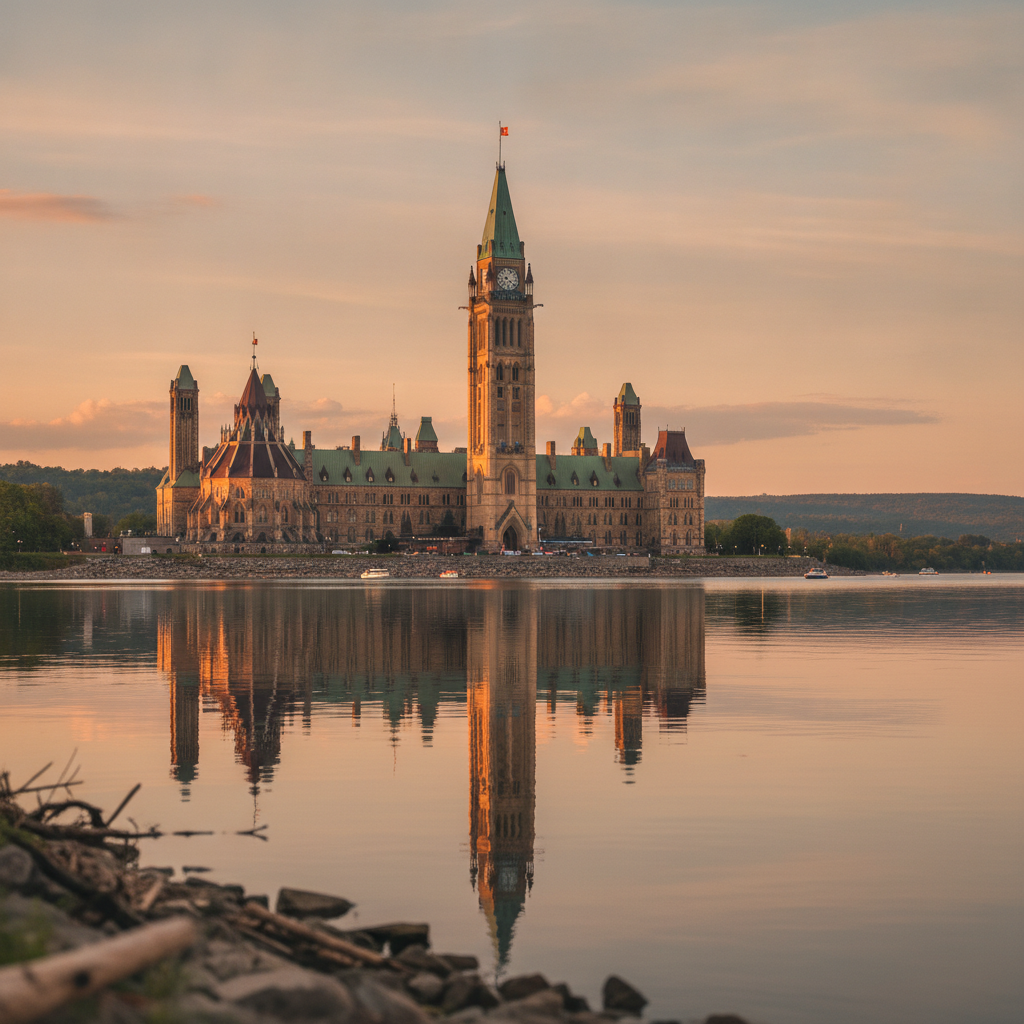
Parliament Hill in Ottawa, a dramatic Gothic Revival complex on a limestone promontory 60 metres above the Ottawa River, houses the Senate of Canada and the House of Commons in the Centre Block, a building completed in 1927 to replace the original Centre Block destroyed by fire in 1916, with only the Library of Parliament surviving the blaze because its iron doors were closed in time. The Peace Tower, at 92 metres the most recognizable element of Parliament Hill, was completed in 1927 and houses a 53-bell carillon that plays at 11am daily and a Memorial Chamber containing Books of Remembrance listing the names of every Canadian killed in service. The Eternal Flame at the base of the Peace Tower, burning since 1967 for the Canadian centennial, went out only once, in 1999, when a group of students accidentally put it out while toasting marshmallows and were forgiven. The Centre Block is currently undergoing a major renovation expected to last until 2030, with parliamentary functions relocated to the West Block. Free public tours of Parliament Hill are available throughout the year except when parliament is in session.
- 2
Rideau Canal National Historic Site
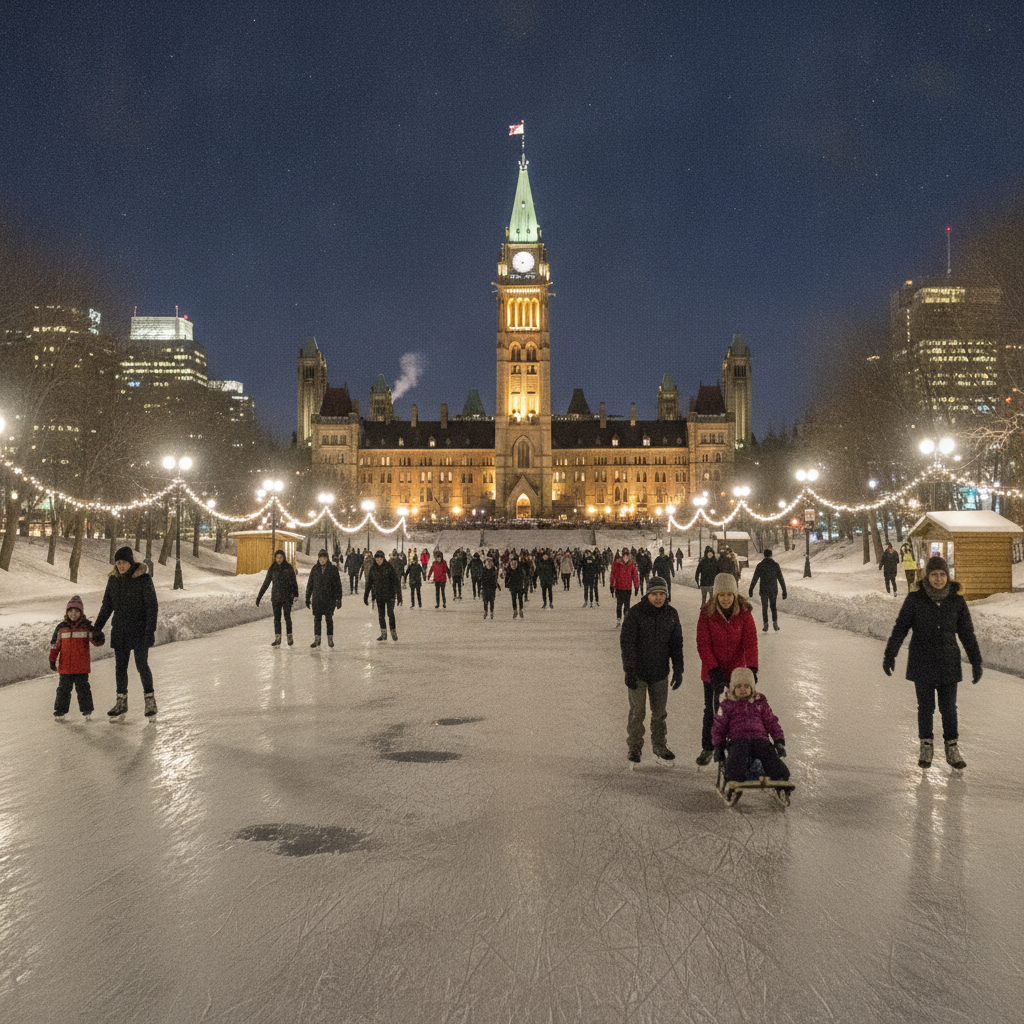
The Rideau Canal, a 202-kilometre waterway connecting Ottawa to Kingston on Lake Ontario through 45 locks and 24 lock stations completed in 1832, was built by Lieutenant Colonel John By of the Royal Engineers as a military supply route allowing British forces to move troops and materiel from Montreal to the Great Lakes without using the St. Lawrence River, which ran along the American border and was vulnerable to interdiction. The canal was the largest construction project in Canadian history to that point, employed thousands of Irish and French-Canadian workers, killed hundreds of them to malaria from the swamps that were drained to create the canal, and was never used for its military purpose because the War of 1812 ended before construction began in earnest. The Rideau Canal is now a UNESCO World Heritage Site and in winter becomes the worlds largest naturally refrigerated skating rink, with an 8-kilometre section through Ottawa maintained by the National Capital Commission for public skating. Ottawa residents commute to work on skates during the skating season. The Hartwell Locks and the Ottawa Locks, where the canal meets the Ottawa River beside Parliament Hill, are operating heritage locks still used by pleasure boats in summer.
- 3
National Gallery of Canada
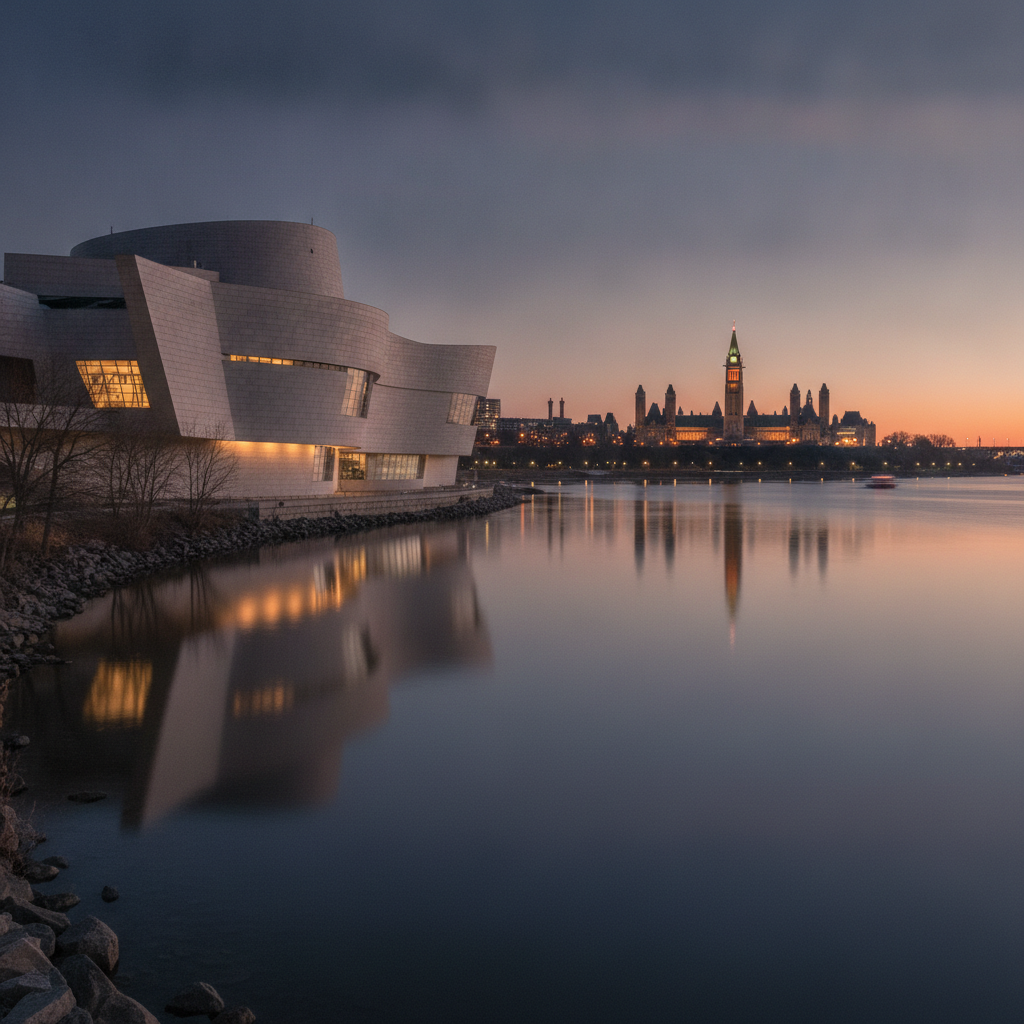
The National Gallery of Canada, housed in a glass and granite building designed by Moshe Safdie and opened in 1988 on a site overlooking Parliament Hill and the Ottawa River, holds the most comprehensive collection of Canadian art in the world, with particular strength in Inuit art, the Group of Seven landscape painters, and contemporary Canadian art. The Rideau Chapel, a reconstructed Gothic Revival chapel from the nearby Convent of Notre Dame of the Sacred Heart, was incorporated into the Gallery building when the convent was demolished in 1972, with the fan-vaulted stone ceiling of the chapel reassembled stone by stone inside the gallery. The large sculpture Spider by Louise Bourgeois, standing 9 metres tall, occupies the plaza outside the gallery entrance and is among the most photographed public sculptures in Canada. The gallery holds key works by Paul-Emile Borduas, whose manifesto Refus Global, published in 1948 while he was an art teacher in Montreal, is considered a founding document of the Quebec Quiet Revolution by denouncing the conservatism of Quebec Catholic culture and demanding artistic and intellectual freedom.
- 4
ByWard Market Ottawa
The ByWard Market, the oldest and largest public market in Canada in continuous operation since 1826, occupies a series of market buildings and a surrounding commercial district in the Lower Town of Ottawa east of the Rideau Canal, where market vendors have sold produce, meat, cheese, and flowers from outdoor stalls and indoor halls for nearly two centuries. The market building itself, the original 1827 structure rebuilt and expanded multiple times, holds fresh food vendors on the ground floor and restaurants above. The surrounding streets of the ByWard Market quarter contain the highest concentration of restaurants, bars, and nightlife venues in Ottawa, making it the primary entertainment district for government workers, foreign embassy staff, and university students. The BeaverTails pastry chain, a fried dough pastry pulled into the shape of a beaver tail and topped with cinnamon sugar or other toppings, was invented at the ByWard Market in 1978 and is now an Ottawa cultural institution. Barack Obama ate a BeaverTail at the market during his first foreign trip as US president in February 2009, generating international media coverage.
- 5
Rideau Hall and Governors General
Rideau Hall, the official residence of the Governor General of Canada since 1867, is a 175-acre estate 2 kilometres east of Parliament Hill on the Sussex Drive, where the Crown is represented in Canada and where state functions including swearing-in ceremonies for prime ministers and the presentation of Order of Canada honors are conducted. The 34-room main building was originally a private house built in 1838 and has been continuously expanded and modified for official use. The grounds are open to the public free of charge and include a skating rink, cricket pitch, and curling rink used by the Governor General for public skating events. The Governor General of Canada, appointed on the advice of the prime minister, has been in recent decades selected with attention to regional representation, bilingualism, gender, and increasingly Indigenous representation. Mary Simon, appointed Governor General in 2021, is the first Indigenous person to hold the role. Rideau Hall protocol includes the Governor General inspecting a Guard of Honour, receiving visiting heads of state, and hosting National Awards ceremonies where Order of Canada and other national honors are presented.
- 6
Ottawa-Gatineau National Capital Region
The National Capital Region of Canada spans both Ottawa in Ontario and Gatineau in Quebec across the Ottawa River, joined by five bridges, creating a binational capital territory where federal institutions are distributed between two provinces and two official languages are in daily functional use. The Canadian Museum of History in Gatineau, designed by Indigenous architect Douglas Cardinal in a building of sinuous curved forms representing the Canadian Shield landscape, holds the largest collection of human history artifacts in Canada and presents the Indigenous history of North America with extraordinary depth. The Hull-Ottawa federal office complex on the Quebec side of the river houses tens of thousands of federal public servants. Gatineau Park, a 361-square-kilometre wilderness park within the urban region, provides hiking, skiing, and cycling at the edge of the Laurentian Mountains. The deliberate placement of major federal institutions on the Quebec side of the river, a policy established to ensure that the capital served both English and French Canada, reflects the constant political management of linguistic duality that characterizes the Canadian federal system.
Walk this route with audio
Stories play automatically as you reach each stop — no tapping needed.
More in Ottawa
Ottawa: The Constitution That Took 115 Years to Bring Home From Britain, the Playing Card Money Used When New France Ran Out of Coins and the Neighborhood Cleared in the 1960s That Is Still Empty
Ottawa: 130000 Federal Employees Who Never Lose Their Jobs in a Recession, the Sacred Falls That Were Industrialized for 150 Years and 1 Billion Year Old Rock Visible From Parliament
Ottawa: Second Coldest Capital City in the World Where 15000 People Commute on Ice, the Confederation Documents in Fireproof Vaults and the Lookout Where You Can See New York State
Ottawa: The Library Saved by a Clerk Who Closed One Door, an Unresolved Land Claim on the Ground Under Parliament and a Farm Doing Agricultural Research Since 1886 Inside the City
Ottawa: The Nobel Prize That Invented Peacekeeping, a Capital Built on Unceded Algonquin Land That Has Been in Legal Negotiation for 40 Years and the Only Bilingual National Theatre in the World