Panama Canal History: The French Failure, the American Triumph, and the 1999 Transfer
The Panama Canal is the result of one of the most consequential engineering projects in human history, preceded by one of the most catastrophic failures. The French attempt under Ferdinand de Lesseps from 1881 to 1889 killed over 20,000 workers from yellow fever and malaria and went bankrupt. The American project from 1904 to 1914, benefiting from Walter Reed's discovery of mosquito-borne disease transmission, succeeded through an unprecedented mobilization of labor and earth-moving technology. The canal then operated under US sovereignty until the 1999 handover negotiated by Omar Torrijos and Jimmy Carter, one of the defining moments of twentieth century Latin American history.
- 1
The French Disaster: De Lesseps and the Sea-Level Canal Attempt
Ferdinand de Lesseps, hero of the Suez Canal completed in 1869, launched the Compagnie Universelle du Canal Interoceanique in 1881 with the intention of building a sea-level canal across the isthmus, as at Suez. The fundamental error was the assumption that the Panama terrain was comparable to the flat Egyptian desert. The Culebra Cut through the continental divide required excavation of hundreds of meters of unstable volcanic rock. Landslides refilled the excavation repeatedly. But the decisive factor was disease: yellow fever and malaria killed an estimated 22,000 workers between 1881 and 1889, including nearly every European engineer who arrived. The company went bankrupt in 1889 in one of the largest financial collapses of the nineteenth century, wiping out the savings of 800,000 French investors.
- 2
Walter Reed, Mosquitoes, and the American Medical Revolution
The American project succeeded partly because of the epidemiological work that preceded construction. Walter Reed's 1900 confirmation that yellow fever was transmitted by the Aedes aegypti mosquito, building on Carlos Finlay's earlier hypothesis, enabled William Gorgas's systematic mosquito eradication campaign in Panama from 1904. Gorgas drained standing water, fumigated buildings, and screened hospitals, reducing yellow fever cases to zero by 1906 and cutting malaria mortality by 90 percent. The public health campaign was as consequential as the engineering: without it, the American project would have repeated the French outcome. The medical infrastructure Gorgas built in Panama also became the model for tropical disease control applied across the colonial world in the early twentieth century.
- 3
The Culebra Cut and the Engineering Achievement
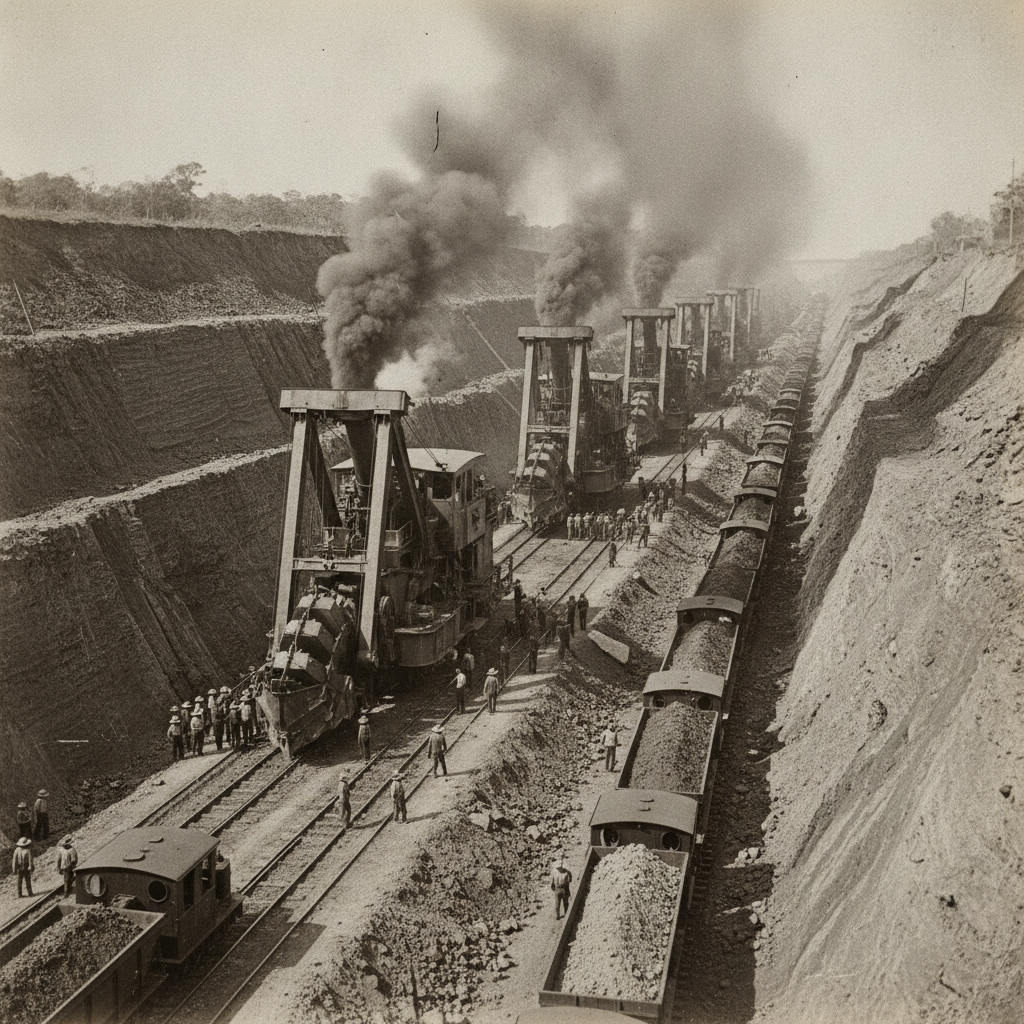
The Culebra Cut, renamed the Gaillard Cut after the chief engineer who oversaw its excavation, required removing approximately 100 million cubic meters of earth and rock from the nine-kilometer continental divide section. At peak construction in 1909 and 1910, over 6,000 workers operated 100 steam shovels simultaneously in the cut. The excavated material was transported on a railway network and dumped to form the Miraflores and Pedro Miguel dams. The cut was completed in 1913; the final flooding of the canal route began when the Gamboa Dike was dynamited on October 13, 1913, in a ceremony attended by US President Woodrow Wilson who detonated it remotely from Washington. The first ocean-to-ocean transit was made by the dredge Ancon on August 15, 1914, eighteen days before the outbreak of World War I.
- 4
Panamanian Sovereignty and the Flag Riots of 1964
The Canal Zone, a 10-mile-wide strip of Panamanian territory under US administration, was a colonial enclave that Panamanians resented from its creation. The January 1964 flag riots began when US high school students at Balboa High School in the Zone refused to fly the Panamanian flag alongside the US flag, as required by a new policy. Panamanian students marched into the Zone to plant their flag and were attacked; the resulting riots lasted three days, killed 21 Panamanians and 4 US soldiers, and led Panama to break diplomatic relations with the United States. The riots were the catalyst for negotiations that eventually produced the Torrijos-Carter Treaties of 1977, under which the canal would revert to Panamanian sovereignty on December 31, 1999.
- 5
The 1977 Torrijos-Carter Treaties and the Handover
Omar Torrijos, the Panamanian military leader who governed from 1968 to 1981, made canal sovereignty the central project of his political identity. The Torrijos-Carter Treaties signed in September 1977 provided for the gradual transfer of canal operations to Panama and full sovereignty by December 31, 1999. The treaties were intensely controversial in the US Senate and passed by a single vote. The handover ceremony on December 31, 1999, was attended by President Jimmy Carter and marked the end of American colonial administration of the zone. Panama has operated the canal through the Panama Canal Authority (ACP) since then, with revenues flowing entirely to the Panamanian government. The canal expansion completed in 2016, adding a third lane for Neo-Panamax ships, was financed and executed entirely by Panama.
- 6
Canal Economics: Revenue, Tolls, and Panama's National Budget
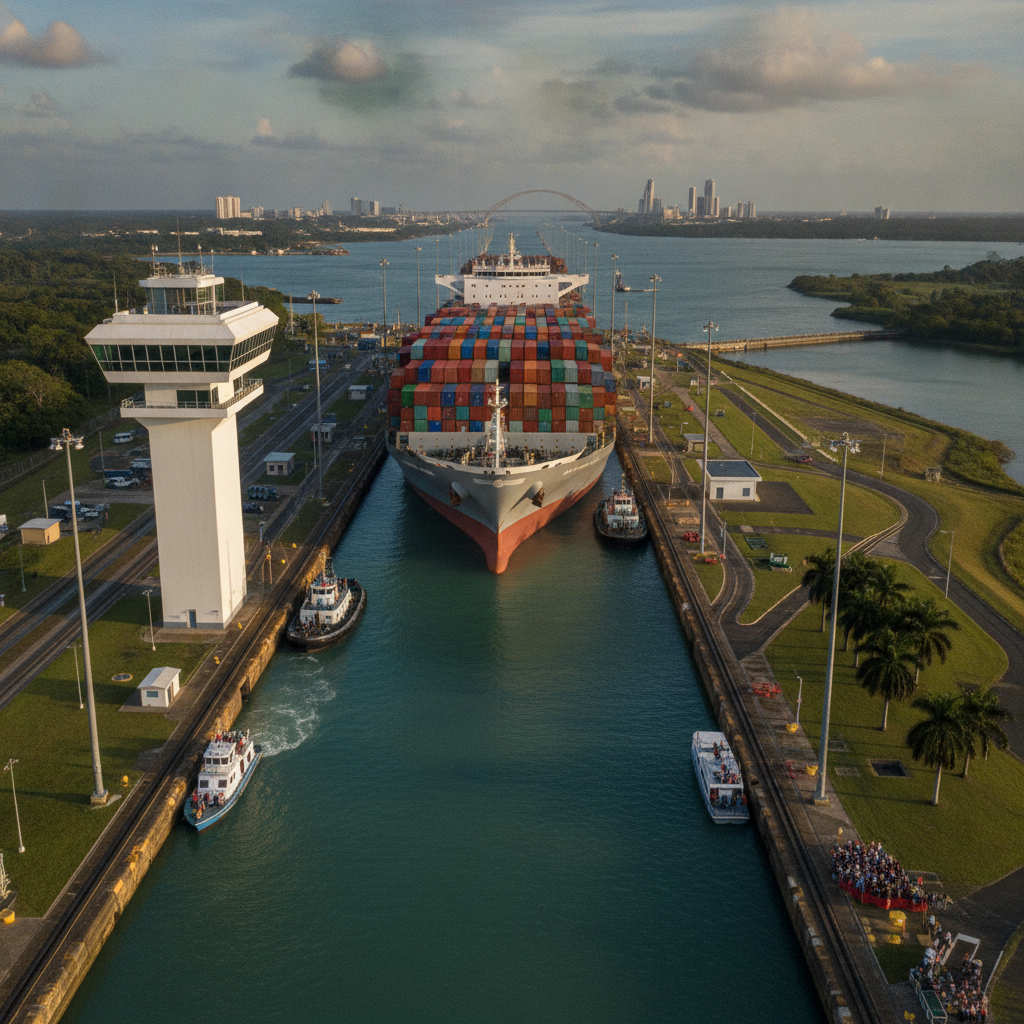
The Panama Canal generates approximately 4 billion USD in annual revenue, of which roughly 2 billion USD flows to the Panamanian national government after operating costs. Canal tolls are calculated by the Panama Canal Universal Measurement System (PC/UMS) based on vessel volume; the toll for a large container ship crossing can exceed 500,000 USD. The expansion of 2016 allowed Neo-Panamax ships up to 366 meters in length and 49 meters wide, nearly triple the cargo capacity of the original Panamax ships the locks were designed for. The canal's economic significance extends beyond direct revenue: the Colon Free Trade Zone, the banking sector, and the ship registry (Panama hosts the world's largest ship registry by tonnage) are all downstream effects of the geographic position the canal exploits.
Walk this route with audio
Stories play automatically as you reach each stop — no tapping needed.
More in Panama City
Panama City as a Financial Hub: Banking, the Dollar Economy, and Free Trade Zones
Barro Colorado Island and the Smithsonian Tropical Research Institute
San Blas Islands, Bocas del Toro, and Day Trips from Panama City
Panama City: Canal Locks, Casco Viejo, and the Crossroads of the World
Panama City Nightlife, Arts, and the Cosmopolitan Capital Scene