Panama City Food Scene: Ceviche, Sancocho, and the International Melting Pot
Panama City has one of the most ethnically diverse food cultures in Latin America, the result of the canal construction labor migration that brought Chinese, West Indian, Greek, Spanish, and Colombian workers, followed by American zone residents, Lebanese merchants, and more recently Colombian, Venezuelan, and Chinese immigrant communities. The resulting food landscape spans traditional Panamanian sancocho and ceviche de corvina to Afro-Caribbean rice and beans, Chinese Panamanian chop suey, and a contemporary restaurant scene that draws on all of these traditions.
- 1
Ceviche de Corvina and the Mercado de Mariscos
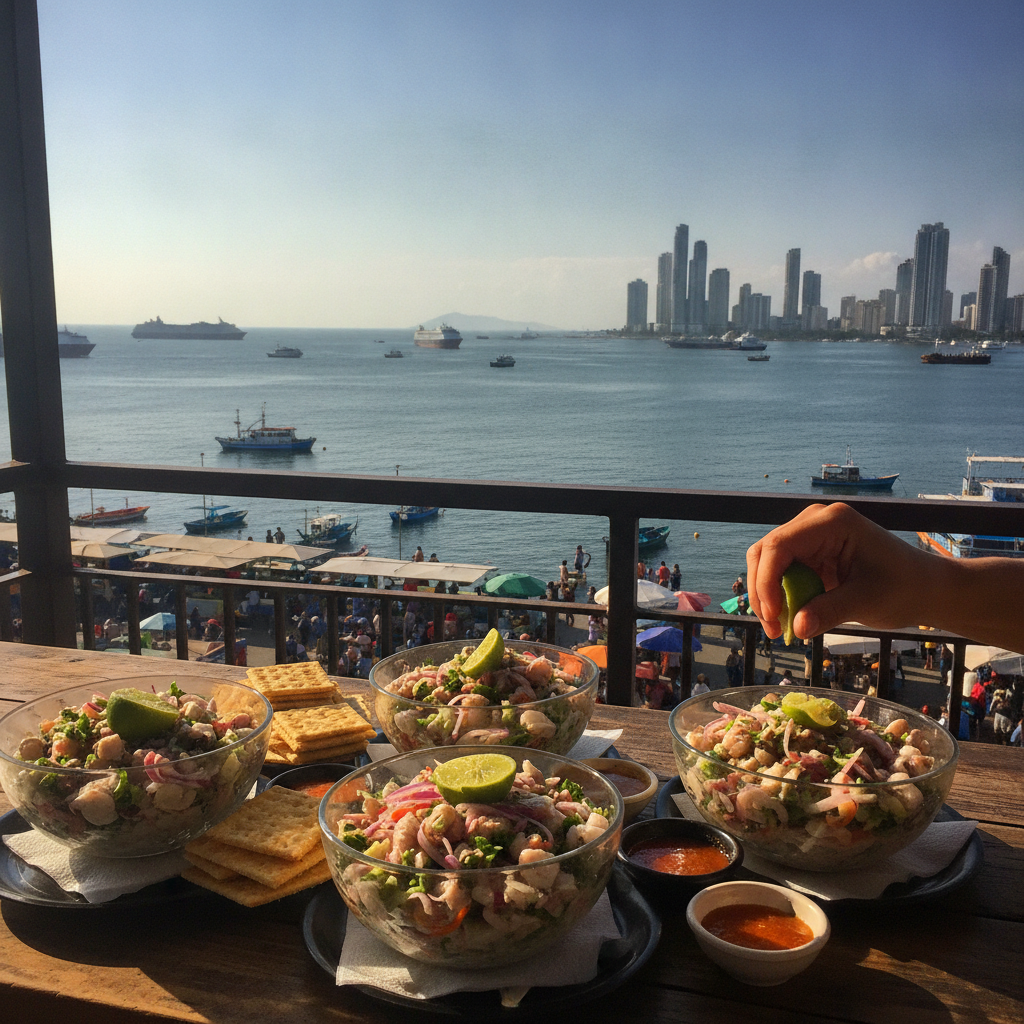
The Mercado de Mariscos on the Cinta Costera waterfront is the most celebrated food destination in Panama City, a two-story fish market where the ground floor sells the daily catch to restaurants and households and the upper floor contains a line of open-air restaurants serving ceviche and fried fish to a crowd of local workers and tourists. The Panamanian ceviche uses corvina (a white sea bass from the Pacific) marinated in lime juice with onion, culantro, and aji chombo chili. The style is wetter and more heavily marinated than Peruvian ceviche and is typically served with saltine crackers. The view from the upper floor across the Bay of Panama toward the downtown skyline, with frigatebirds and pelicans circling below, makes this the best-positioned inexpensive lunch in the city.
- 2
Sancocho: The National Soup and the Hangover Cure
Sancocho de gallina is considered the national dish of Panama: a hearty soup made with free-range chicken, otoe (taro root), ñame, yuca, corn, and culantro, slow-cooked until the broth develops a deep poultry richness. The dish appears on menus throughout the country and is the traditional Sunday lunch in Panamanian households. It is also the canonical hangover cure, served in specialized sancocho restaurants that operate specifically on Saturday night and Sunday morning. The sancocho tradition connects to the West Indian and indigenous cooking of the interior provinces; the specific combination of root vegetables reflects the agricultural heritage of the Panamanian heartland rather than the coastal seafood economy of the capital.
- 3
Chinatown and Chinese-Panamanian Cuisine
Panama City has one of the oldest and most significant Chinese communities in Latin America. The first Chinese workers arrived during the canal construction era, and subsequent waves of immigration from Guangdong province built a commercial community centered on the Barrio Chino near Santa Ana. Chinese-Panamanian cuisine is a distinct fusion: chop suey adapted to include Panamanian ingredients, fried rice served alongside rice and beans, and noodle dishes incorporating Caribbean and Pacific coast seafood. The contemporary Chinese-Panamanian restaurant scene extends far beyond Chinatown, with Chinese-owned restaurants present in every neighborhood. The community also operates a significant portion of the retail economy of the interior provinces through tiendas that serve rural communities.
- 4
West Indian Food Legacy: Rice and Beans on the Caribbean Coast
The West Indian workers who came from Barbados, Jamaica, and Trinidad to build the canal between 1904 and 1914 brought a Caribbean food culture that established itself particularly on the Atlantic coast and in the former canal zone communities. Rice and beans cooked in coconut milk, stewed chicken with thyme and allspice, roti and fried plantains of the Caribbean style, and the distinctive Panamanian version of the West Indian bread called pan bon appear in restaurants and households across the city. The Afro-Panamanian community, now several generations from the Caribbean migrant origin, maintains this food culture as an identity marker alongside the Spanish-heritage cuisine of the interior province families.
- 5
Casco Viejo Restaurant Scene: Contemporary Panama City Dining
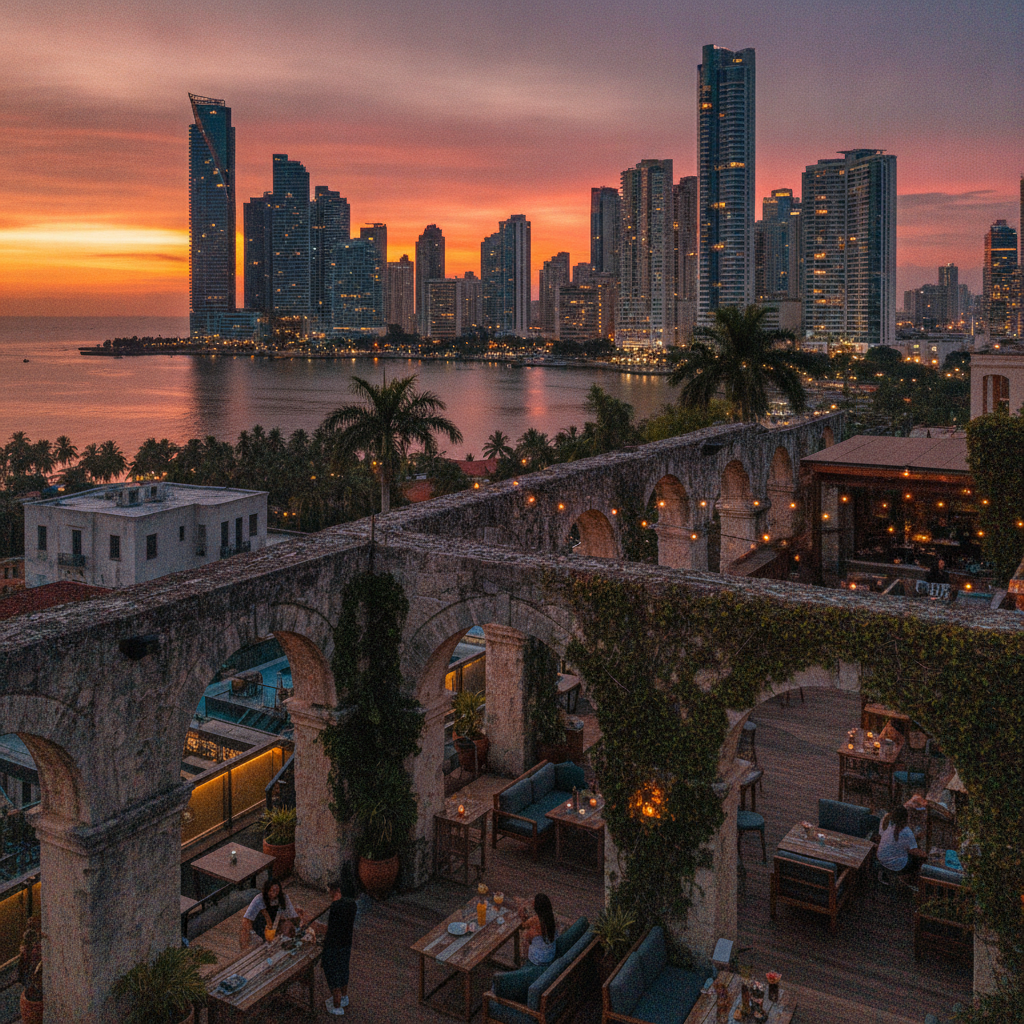
Casco Viejo has become the center of the upscale contemporary restaurant scene in Panama City, with dozens of restaurants occupying the restored colonial buildings of the peninsula. The genre spans Panamanian ingredients with international technique, traditional cevicherias in atmospheric colonial interiors, rooftop bars with views over the bay, and international restaurants serving Italian, Japanese, and Middle Eastern food to the business class and tourist market. The restaurant opening pace has accelerated since the UNESCO heritage designation made Casco Viejo internationally recognizable. The economic dynamic of restaurant gentrification, in which working-class residents are displaced by the commercial uses that serve higher-income visitors, is particularly visible in the Casco Viejo context.
- 6
Panamanian Rum, Seco, and the Cocktail Culture
The distilled spirit most associated with Panama is seco herrerano, a clear sugarcane spirit produced in the Herrera province and consumed across all economic levels in Panama. Seco is mixed with milk or with natural fruit juices and is the foundation of the working-class bar culture in a way that rum is not, despite rum also being produced in Panama. The Carta Vieja and Ron Abuelo rums are the internationally exported Panamanian rum brands. The cocktail culture in Casco Viejo and the financial district hotels has developed around both local spirits and imported brands. Chicha, a fermented corn drink with indigenous roots, has been adapted into a soft-drink version sold at street stalls throughout the city using rice, corn, or tamarind as the base.
Walk this route with audio
Stories play automatically as you reach each stop — no tapping needed.
More in Panama City
Panama City as a Financial Hub: Banking, the Dollar Economy, and Free Trade Zones
Barro Colorado Island and the Smithsonian Tropical Research Institute
San Blas Islands, Bocas del Toro, and Day Trips from Panama City
Panama Canal History: The French Failure, the American Triumph, and the 1999 Transfer
Panama City: Canal Locks, Casco Viejo, and the Crossroads of the World