Panama City Nightlife, Arts, and the Cosmopolitan Capital Scene
Panama City has developed a nightlife and arts scene that reflects its status as the financial and transit hub of Central America. The city receives more international visitors than any other Central American capital, and the corresponding demand has produced a layered cultural economy from the rooftop bars of Casco Viejo to the electronic music clubs of the financial district. The arts scene, concentrated in Casco Viejo and the Miraflores area, includes galleries, the restored National Theater, and a film festival that has become regionally significant.
- 1
Casco Viejo Rooftop Bars and the Sunset Circuit
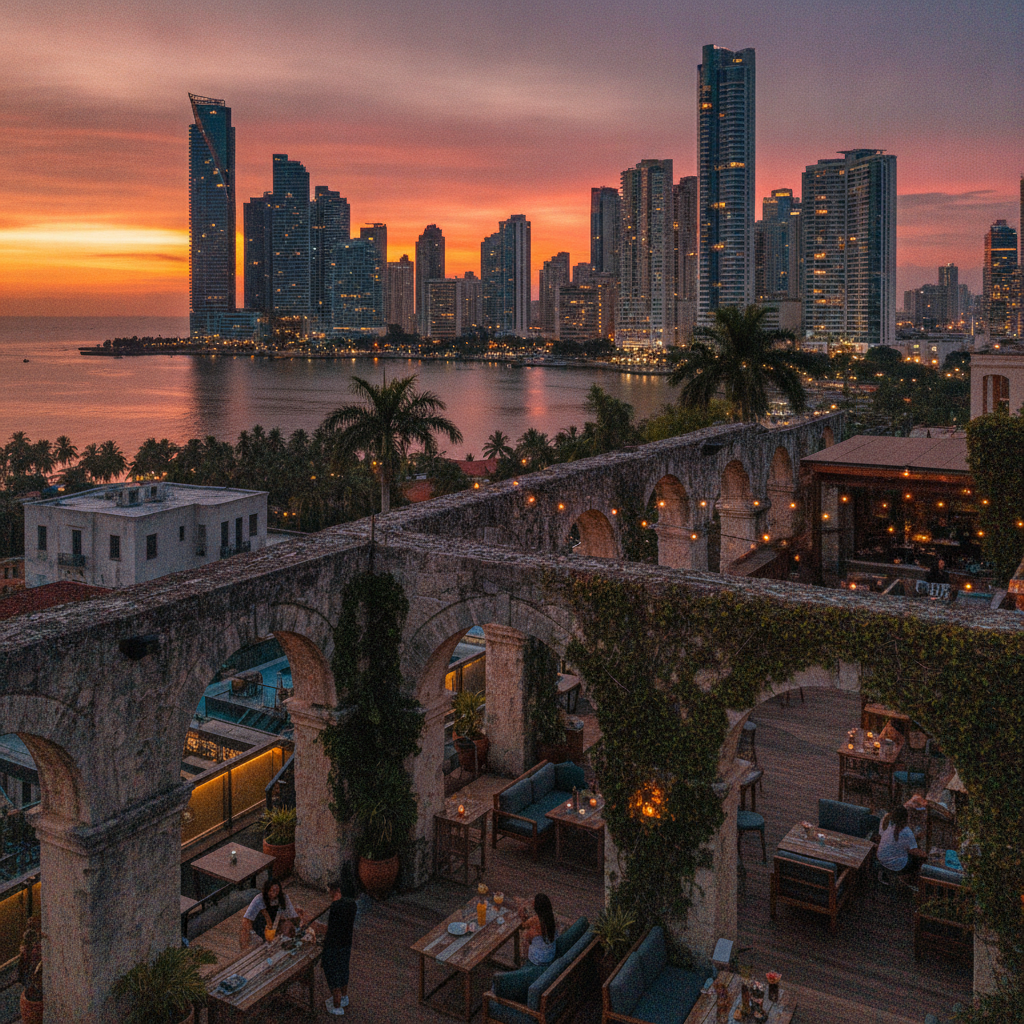
The peninsula of Casco Viejo, surrounded on three sides by the Bay of Panama, has developed a rooftop bar circuit that exploits the views over the bay toward the modern skyline to the east and the Pacific entrance to the canal to the west. Sunset from the rooftops of Casco Viejo, when the glass towers catch the last light and frigatebirds circle over the colonial ruins, is the signature visual experience of Panama City. The bars that have developed this format range from informal rooftop terraces on converted colonial buildings to designed cocktail bars with full menus. The social mix is international, reflecting the transit-hub character of the city: business travelers, gap-year backpackers, Colombian and Venezuelan migrants, and the small local creative class who work in the Casco renovation economy.
- 2
Nightclubs and the Electronic Music Scene
Panama City has the most developed electronic music club scene in Central America outside of Mexico City. Several clubs in the Marbella and Punta Pacifica neighborhoods operate on a scale and with an international booking profile comparable to mid-tier European clubs. The Latin club tradition is also strong: salsa, merengue, and reggaeton venues operate in parallel with the electronic music scene, appealing to the Venezuelan and Colombian communities and to Panamanians who maintain the Caribbean dance tradition. The club economy operates later than in many Latin American cities, with venues filling after midnight and operating until 5 or 6 AM. The Causeway (Calzada de Amador), the breakwater connecting the three former canal zone islands to the mainland, has developed a string of bars and restaurants operating in a pedestrian-friendly outdoor environment.
- 3
Teatro Nacional and the Performing Arts
The Teatro Nacional in Casco Viejo, restored in the 1970s and again in the 2000s, is Panama City's primary venue for classical music, opera, ballet, and theater. The building, inaugurated in 1908 during the canal construction era, has a painted ceiling by Roberto Lewis, Panama's first internationally recognized painter, depicting allegorical figures in a style influenced by the European academic painting of the period. The National Symphony Orchestra performs here. The performing arts calendar also includes productions by the National Ballet of Panama and visiting international companies. Ticket prices are accessible and the venue is significantly underutilized relative to the cultural ambitions the building represents.
- 4
Contemporary Art Galleries: Casco Viejo and the Emerging Scene
The contemporary art scene in Panama City is concentrated in Casco Viejo, where gallery spaces have opened in restored colonial buildings and attracted both Panamanian artists and the international market created by the banking and business community. The Arteconsult gallery and several smaller spaces have developed reputations for showing serious contemporary work from Panama and the broader Latin American region. The Canal Museum also holds changing exhibitions connecting Panamanian art history to the canal construction and sovereignty narrative. The scene is smaller than in comparable Latin American capitals but growing, driven by the purchasing power of the financial sector expat community and the increasing visibility of Panamanian artists in international biennial circuits.
- 5
Panama Jazz Festival and Cultural Calendar
The Panama Jazz Festival, established in 2003 by pianist Danilo Perez with support from the Smithsonian Tropical Research Institute, has become one of the major international jazz events in the Americas, held in January each year. The festival brings together Latin jazz, jazz fusion, and Afro-Caribbean jazz with Panama's distinctive cultural position at the intersection of North and South American musical traditions. Free outdoor concerts alongside ticketed performances make the festival accessible across economic levels. The Panama International Film Festival (IFF Panama) runs in April and has developed into a significant regional event, focusing on Latin American cinema with a geographic emphasis on Central America and the Caribbean. The cultural calendar reflects the ambitions of a city that sees itself as a hub rather than a backwater.
- 6
Miraflores and the Canal Zone Legacy Architecture
The former Canal Zone, the 10-mile strip administered by the United States until 1999, left behind a distinctive built environment: American suburban neighborhoods, commissaries, churches, and schools built in a neocolonial style that is simultaneously nostalgic and incongruous in a tropical Latin American context. The former zone communities of Ancon, Balboa, and Albrook have been converted to Panamanian government offices, the University of Panama campus, and the Albrook bus terminal and shopping mall. The Albrook Market, a converted US Air Force facility, is one of the largest indoor markets in Central America. The canal zone legacy architecture represents a layer of the Panama City landscape that the city's rapid modernization has partly erased and partly preserved through institutional reuse.
Walk this route with audio
Stories play automatically as you reach each stop — no tapping needed.
More in Panama City
Panama City as a Financial Hub: Banking, the Dollar Economy, and Free Trade Zones
Barro Colorado Island and the Smithsonian Tropical Research Institute
San Blas Islands, Bocas del Toro, and Day Trips from Panama City
Panama Canal History: The French Failure, the American Triumph, and the 1999 Transfer
Panama City: Canal Locks, Casco Viejo, and the Crossroads of the World