Perth: Ningaloo Reef Whale Shark Swimming, Karijini Ancient Gorges, Southwest Karri Forest Giants, Noongar Indigenous Country, Albany Historic Whaling and Stirling Range Wildflowers, Four-Route Perth Assessment
Perth extended: Ningaloo Reef UNESCO (whale shark tours, manta ray snorkeling, fringing reef access), Karijini National Park gorges in 2.5-billion-year-old Pilbara rock, southwest forests (Valley of the Giants tingle trees, Gloucester Tree karri climb), Noongar native title settlement, Albany historic whaling station and Stirling Range wildflowers, and the complete Perth four-route verdict.
- 1
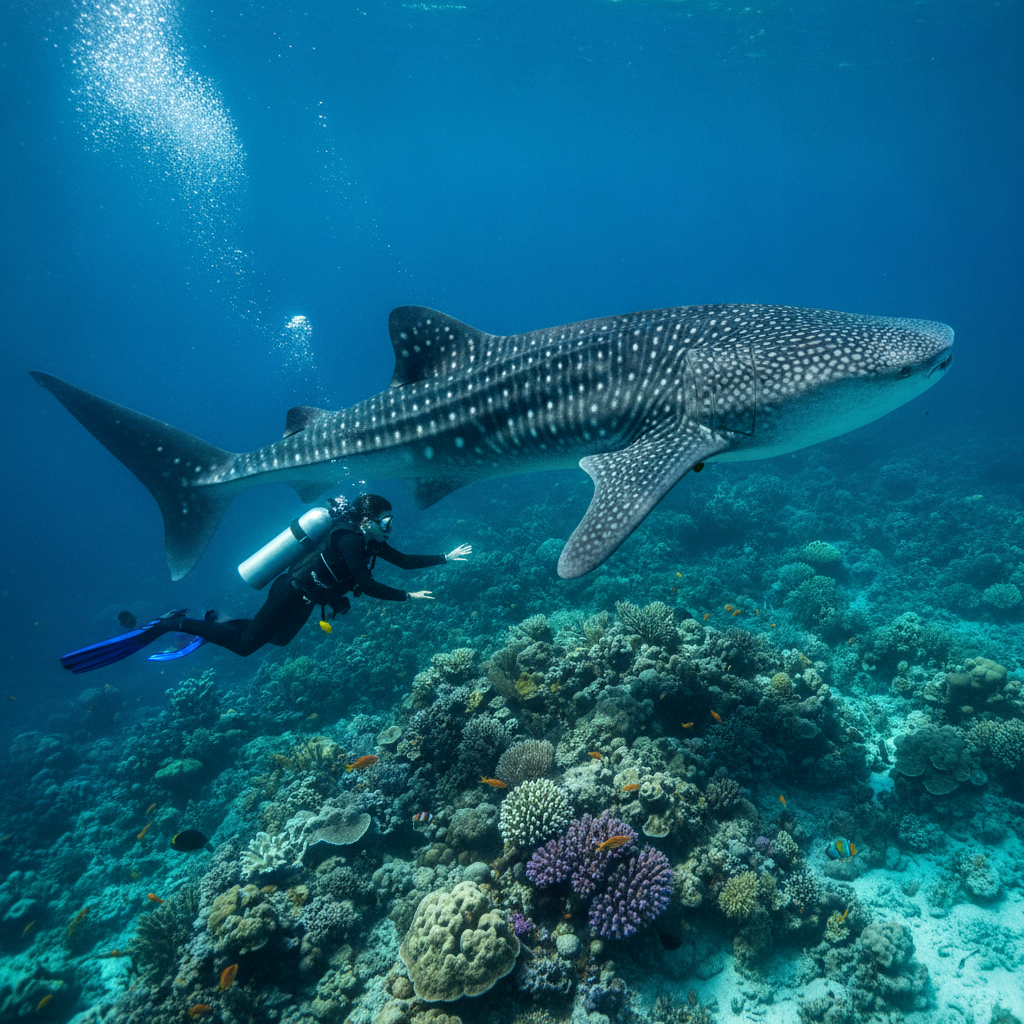
Ningaloo Reef and Exmouth - Swimming with Whale Sharks
Ningaloo Reef (the fringing coral reef along the Northwest Cape of Western Australia, UNESCO World Heritage Site 2011, approximately 1,250 km north of Perth): the longest fringing coral reef in Australia (260 km) and the world largest accessible fringing reef (the reef edge comes within 100 m of the shore at some points, making snorkeling access without a boat possible). Exmouth (the primary town for Ningaloo Reef access, 1,270 km north of Perth by road or 2 hours by flight): the base for whale shark tours, manta ray snorkeling, and reef diving. The whale shark season at Ningaloo: the whale shark (Rhincodon typus, the world largest fish, reaching 12 m and 20 tonnes) aggregates at Ningaloo each year from approximately March to July to feed on the coral spawn. Ningaloo whale shark tours: the spotter plane locates the whale sharks from the air; the snorkelers enter the water to swim alongside; the experience is one of the most extraordinary wildlife encounters in the world. The manta ray season (May to November): the reef manta ray (Mobula alfredi) aggregates at Ningaloo year-round, with peak numbers in winter. The Cape Range National Park (adjacent to Ningaloo): the rocky limestone range with deep gorges descending to the turquoise lagoon, with the Yardie Creek gorge (the only permanent freshwater gorge in the cape range) and the black-footed rock wallaby.
- 2
Karijini National Park - Ancient Gorges in the Pilbara
Karijini National Park (in the Pilbara region, approximately 1,400 km north of Perth by road, or accessible by flight to Tom Price or Newman): the most spectacular inland national park in Western Australia, with deep gorges carved into the ancient Hamersley Range (the oldest exposed rock on earth, approximately 2.5 billion years old). The Karijini gorges: the narrow slot canyons carved into the banded iron formation (the ancient seabed rock that is also the primary iron ore deposit of the Pilbara, the richest iron ore province on earth). The primary gorge experiences: Dales Gorge and Circular Pool (the most accessible gorge, with the Fortescue Falls waterfall), Hancock Gorge and Kermits Pool (the narrow slot canyon requiring swimming through the dark, cold water to reach the pool), Weano Gorge and Handrail Pool (the sheer vertical walls and the narrow water passage), and Spider Walk (the two-wall chimney traverse in the Handrail section). The Karijini safety: the gorges involve swimming in cold water (approximately 20 degrees C year-round in the deep gorge pools), climbing down rock faces, and navigating narrow rock passages; the experience involves real physical risk. The Hamersley Iron ore mines: the iron ore mines of the Pilbara (BHP, Rio Tinto, and Fortescue Metals Group) process and export over 800 million tonnes of iron ore per year, shipped from Port Hedland to China, Japan, and South Korea.
- 3
The Southwest Forests - Karri and Tingle Giants
The southwest corner of Western Australia (the region bounded by Perth, Albany, and Esperance): one of the world 25 biodiversity hotspots, with over 5,000 plant species, 50% of which are endemic (found nowhere else on earth). The karri forest (the tall eucalyptus forest of the southwest, growing in the high-rainfall zone south of Pemberton, approximately 330 km south of Perth): the karri (Eucalyptus diversicolor) is one of the tallest trees in the world, reaching 80-90 m. The Valley of the Giants Tree Top Walk (near Walpole, 430 km south of Perth): the elevated metal walkway through the canopy of the tingle forest (the red tingle, Eucalyptus jacksonii, with the massive hollow base trunk that visitors can stand inside), at 40 m above the forest floor. The Gloucester Tree (in the Gloucester National Park near Pemberton): the 58 m karri tree with the steel climbing pegs driven into the trunk for the full height, open to the public to climb; one of the most unusual climbing experiences in Australia. The Boranup Karri Forest (in the Leeuwin-Naturaliste National Park, near Margaret River): the 200-hectare karri forest accessible by a loop drive or walking trail, the closest tall karri forest to Perth. The Cape to Cape Track (135 km, 8-10 days): the coastal walking track from Cape Naturaliste to Cape Leeuwin along the southwest coast, through the Margaret River wine country.
- 4
Perth Indigenous History - Noongar Country
Noongar Country (the traditional country of the Noongar people: the 14 language groups of the southwest corner of Western Australia, from Geraldton in the north to Esperance in the southeast): the largest Indigenous land claim in Australian history. The Noongar Native Title Settlement (2015, the South West Native Title Settlement): the settlement of six separate Noongar native title claims covering 200,000 square kilometres, with a AUD 1.3 billion settlement package over 12 years; the largest native title settlement in Australian history. The Noongar calendar: six seasons (Birak - summer/first summer, Bunuru - second summer, Djeran - autumn, Makuru - winter, Djilba - first spring, Kambarang - second spring), each associated with different weather patterns, plant flowering, and animal behaviour. The Swan River (Derbarl Yerrigan in Noongar) and the significance of the river as a life-giving resource for the Noongar people: freshwater, fish, ducks, and the paperbark (Noongar: borrn) swamps of the lower river. Perth CBD stands on Whadjuk Noongar country (the Whadjuk being the specific Noongar group of the Perth area). The Waugal (the rainbow serpent of the Noongar people): the Waugal created the Swan River, the rivers, and the waterways of the southwest, and continues to inhabit the waterways.
- 5
Albany and the Great Southern - History and Wilderness
Albany (approximately 400 km south of Perth, 4 hours by road): the oldest European settlement in Western Australia (established 1826, two years before Perth) and the primary city of the Great Southern region. Albany character: the town has the strongest historic character of any city in Western Australia, with the old gaol (1852), the Patrick Taylor Cottage (1832, the oldest surviving building in Western Australia), and the Discovery Bay tourism precinct (the former whaling station, converted to a museum of the whaling era). The Albany Historic Whaling Station (at Frenchman Bay, 20 km from Albany): the last whaling station to operate in Australia (closed 1978); now a museum with the preserved whale chaser Cheynes IV and the restored flensing deck. The Stirling Range National Park (approximately 80 km north of Albany): the dramatic mountain range rising from the flat coastal plain, with the Bluff Knoll (1,095 m, the highest peak in southern Western Australia) and extraordinary wildflower diversity (1,500 plant species, 87 endemic to the Stirling Range). The Torndirrup National Park (the coastal headlands south of Albany): the Gap (the ocean sluice between the granite headlands), the Natural Bridge, and the Blowholes. The Fitzgerald River National Park (east of Albany): one of the largest national parks in Western Australia and one of the most biodiverse, with 1,800 plant species.
- 6
Perth Four-Route Complete - Indian Ocean City Assessment
Perth four-route complete summary. Route 1: Fremantle UNESCO prison and Markets, Rottnest Island quokkas and beaches, Swan Valley and Margaret River wine, Pinnacles Desert, Kings Park wildflowers, practical guide. Route 2 (this route): Ningaloo Reef (whale shark swimming, manta rays, fringing reef snorkeling), Karijini ancient gorges and Pilbara iron ore, southwest karri and tingle forests, Noongar native title and Indigenous history, Albany and the Great Southern. Perth final verdict: the most underrated city in Australia. The combination of year-round sunshine (3,200 hours per year), the Indian Ocean beaches (warm water, no crowds), the proximity to Rottnest Island (quokkas, turquoise bays, 30 minutes by ferry), and the day trip infrastructure (the Pinnacles, the Swan Valley, the southwest forests, Margaret River) makes Perth the most consistently sunny and relaxed visitor experience in Australia. The isolation that Perth residents lament (the nearest comparable city is 2,700 km away) is an asset for the visitor: the beaches are uncrowded, the city is not overcrowded with tourists, and the Indian Ocean light and the white-sand coast create a quality of experience that is genuinely rare. Allow 4-5 days for the city and Rottnest; add 3-4 days for Margaret River or the Coral Coast.
Walk this route with audio
Stories play automatically as you reach each stop — no tapping needed.
More in perth
Perth: Wave Rock and Wheatbelt Granite, Esperance Lucky Bay (Whitest Sand in Australia), Perth CBD Culture Walk and Northbridge, Nullarbor Plain Crossing, Unique Western Australian Wildlife (Sea Lions, Numbat, Southern Right Whale), and Four-Route Final Verdict
Perth: Beach Culture (Cottesloe, Scarborough, Marmion Reef), Craft Beer and Food Scene, Broome and the Kimberley Wilderness, Perth Events, and the Complete Western Australia Visitor Assessment